Block and Beam Floor Construction: Types and Installation
By Housey · Last reviewed 5th of May 2026
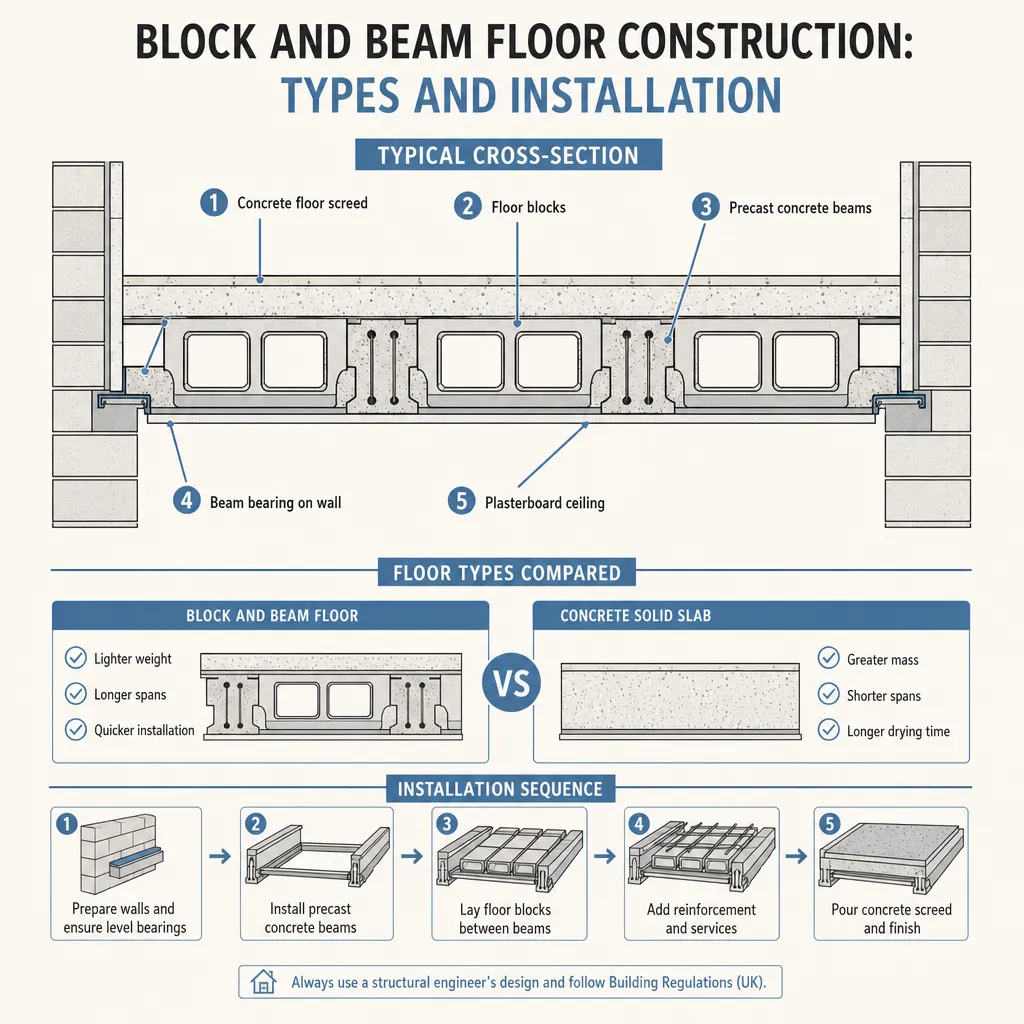
Block and Beam Floor Construction: Types and Installation
Block and beam — also called beam and block — is the most common suspended ground floor system in new-build homes across England and Wales, having largely replaced in-situ concrete slabs in residential construction since the 1990s. If you are planning a new extension, a self-build, or a ground floor replacement, understanding how the system works and who needs to be involved will help you budget accurately, satisfy Building Control, and avoid expensive remedial work later.
Key points
- Block and beam floors must be designed by a structural engineer; beam sizes, spans, and block specifications depend on load, soil conditions, and Building Regulations Part A.
- New domestic ground floors in England must achieve a U-value of 0.13 W/m²K under Approved Document L (2021 edition), typically requiring approximately 100 mm of PIR insulation above the block deck.
- A ventilated void of at least 150 mm clear height must be maintained beneath the floor to prevent moisture accumulation, per Approved Document C; NHBC Standards Chapter 5.2 recommends 225 mm as good practice.
- Precast concrete T-beams arrive site-ready and require no in-situ pour, allowing faster installation than ground-bearing concrete slabs.
- A Building Control stage inspection must be booked before the screed is poured so the void depth, damp-proof course continuity, and insulation specification can be verified.
What is block and beam floor construction?
A block and beam floor consists of prestressed precast concrete beams laid parallel across a foundation perimeter or internal sleeper walls, with infill blocks — usually 100 mm dense aggregate concrete or lightweight aircrete blocks — placed between them. The assembled deck is grouted to lock the joints, then insulated and finished with a sand and cement or liquid screed to produce a level, loadbearing surface.
The void beneath the floor must remain permanently ventilated to outside air. This prevents ground moisture and radon from accumulating beneath the structure, a requirement enforced through Building Control inspections during construction.
Types of block and beam system
Several variants exist, each suited to different site conditions, spans, and load requirements.
System type | Beam profile | Infill block | Best for | Limitations |
|---|---|---|---|---|
Standard T-beam | Inverted T-section precast concrete | Dense aggregate concrete block | Most domestic ground floors | Requires careful grouting; heavier delivery logistics |
Shallow T-beam | Narrower inverted T | Lightweight aircrete (e.g. Toplite GT) | Extensions with restricted floor-to-ceiling height | Lower thermal mass; thinner profile reduces span capacity |
Wide-rib beam | Wider bottom flange | Polystyrene void former | Larger spans, higher superimposed loads | Higher unit cost; less common in domestic projects |
Hollowcore plank | Prestressed hollow slab | None — planks span the full bay | Upper floors, garages, long residential spans | Crane required on site; more common in commercial or high-specification domestic |
The appropriate system depends on the span between supports, the superimposed load, and the ground-bearing capacity — all calculated by a structural engineer from site investigation data and architectural drawings.
How block and beam floors are installed
Installation typically follows this sequence:
- Foundation or sleeper wall preparation — the perimeter foundation or internal sleeper walls are built or trimmed to a consistent bearing level, usually with a damp-proof course on top.
- Beam delivery and placing — precast beams are lifted (manually for shorter spans, mechanically for longer) and placed at centres specified in the structural engineer's drawings, typically 225 mm or 326 mm.
- Infill block laying — blocks are slid into the T-beam slots and tapped level. No mortar is required between beams and blocks at this stage.
- Grouting — a dry-mix cement grout is brushed into all joints and wetted, locking the deck together and completing the composite structural action.
- Edge upstand and insulation — rigid insulation (typically 100 mm PIR board or EPS) is laid over the block deck; an edge insulation strip prevents cold bridging at the perimeter wall junction.
- Screed or topping — a sand and cement screed (typically 65 mm) or a flowing anhydrite screed is poured over the insulation. Underfloor heating pipes are embedded at this stage where specified.
- Building Control inspection — a stage inspection must be booked before the screed covers the floor; the inspector will check void depth, damp-proof course continuity, and insulation specification against the approved drawings.
Block and beam vs alternative ground floor systems
Choosing the right ground floor system depends on site conditions, programme, and budget.
Floor system | Typical domestic use | Key advantage | Key disadvantage | Who designs it |
|---|---|---|---|---|
Block and beam | Extensions, new builds on conventional foundations | Fast installation; no curing wait; suits sloping sites | Requires a structural engineer's design and site delivery logistics | Structural engineer |
Ground-bearing reinforced concrete slab | Level sites with good load-bearing subsoil | Lower material cost at small scale | Cannot bridge over voids or poor ground; slower programme due to curing | Structural engineer |
Timber suspended floor | Older properties, heritage or sensitive sites | Lightweight; familiar to traditional builders | Requires ventilation; susceptible to rot and pest damage without maintenance | Engineer or experienced builder |
Hollowcore plank | Long spans, upper floors, garages | High load capacity; rapid erection | Crane required; less layout flexibility | Structural engineer |
Thermal performance and Part L compliance
From June 2022, new domestic ground floors in England must achieve a U-value of 0.13 W/m²K under Approved Document L (2021 edition). In practice this means:
- Approximately 100 mm of PIR (polyisocyanurate) insulation above the block deck for most domestic floor geometries, though the precise specification depends on the floor's exposed perimeter-to-area ratio.
- An edge insulation strip at the perimeter wall junction to limit cold bridging.
- SAP (Standard Assessment Procedure) calculations — usually prepared by an energy assessor or the structural engineer — to confirm compliance before Building Control sign-off.
Wales and Scotland have their own versions of Part L with similar but distinct requirements. Always confirm the applicable approved document with your Building Control body before specifying insulation.
How ventilation beneath the floor works
Adequate sub-floor ventilation is a requirement under Approved Document C. The key rules are:
- A minimum clear void of 150 mm between the underside of the floor and the ground surface, with NHBC Standards recommending 225 mm as good practice.
- Cross-ventilation through airbricks or equivalent openings on opposite sides of the building; minimum free area is typically 1,500 mm² per metre run of external wall.
- Airbricks must not be blocked by hardcore, raised soil levels, or hard landscaping — a common defect identified during RICS surveys and Building Control inspections.
In radon-affected areas (check the UK Health Security Agency radon map), a gas-resistant membrane may be required beneath or within the floor build-up, and additional precautions specified in Approved Document C must be followed.
Important limitations
This article provides general information about block and beam floor construction in the UK. The structural design of any suspended floor — including beam sizes, block specifications, spans, bearing details, and insulation requirements — must be calculated by a qualified structural engineer for your specific site, loading conditions, and applicable Building Regulations. Building Regulations compliance requires approval from a Local Authority Building Control body or an Approved Inspector. Rules may differ in Scotland, Wales, and Northern Ireland — always consult the relevant technical standards for your location. Nothing in this article constitutes a substitute for site-specific professional advice.
What to ask a qualified professional
Before instructing a structural engineer or contractor for a block and beam floor installation, ask:
- What information do you need from a site investigation or ground report before you can complete the floor design?
- Which beam manufacturer and block type are you specifying, and why are they appropriate for my site conditions and span?
- What void depth are you designing to, and how will cross-ventilation be achieved given my site layout and airbrick positions?
- What insulation specification will achieve Part L compliance for my floor's perimeter-to-area ratio?
- Which Building Control stage inspections will be needed, and when should each be booked?
- What are the beam delivery and installation access requirements, and are there any constraints on my site?
- Is screed supply and laying included in your scope, or do I need a separate screed contractor?
When to get professional help
Always engage a structural engineer before installing a block and beam floor in any new build, extension, or ground floor replacement. Seek professional advice particularly if:
- The site has sloping ground, filled ground, or made ground — ground conditions significantly affect beam design and sub-base requirements.
- There are signs of existing ground movement or nearby subsidence.
- The floor spans more than approximately 4–5 metres without an intermediate sleeper wall.
- The property is in a radon-affected area, where additional membranes or ventilation measures may be required under Approved Document C.
- The floor forms part of a listed building or a structure in a conservation area, where specific material constraints may apply.
How Housey can help
Housey connects homeowners and developers with verified structural engineers and civil engineers who can design, specify, and certify block and beam floor installations to Building Regulations standards. Request quotes through Housey to compare credentials and costs before instructing.
Frequently asked questions
Do I need Building Regulations approval for a block and beam floor?
Yes. Any new ground floor construction — including extensions and floor replacements — requires Building Regulations approval under Part A (Structure) and Part C (Moisture). You will need either a full plans application with Local Authority Building Control or an approved inspector, or an LABC building notice. A structural engineer's design will typically form part of the submission documents.
How long does a block and beam floor take to install?
The block deck can usually be installed in one to two days for a typical domestic ground floor of up to approximately 50 m², depending on access and crew size. Allow 24–48 hours before laying insulation and screed. Sand and cement screed typically needs 28 days to cure before floor finishes are applied; liquid screeds may cure faster. Your contractor should confirm specific timescales.
Can block and beam floors be used for house extensions?
Yes, and they are frequently chosen for single-storey extensions precisely because no in-situ concrete pour is required, which reduces programme time. The beam ends bear on the extension's strip or pad foundations. Your structural engineer will specify the required bearing length and detail the damp-proof course arrangement at the perimeter wall junction.
Is block and beam floor suitable for underfloor heating?
Yes. Underfloor heating pipes are commonly installed above the insulation layer before the screed is poured. A structural or services engineer should confirm the screed depth suits the pipe diameter and system heat output. Anhydrite liquid screed is frequently used with underfloor heating because it encapsulates pipes efficiently and has good thermal conductivity compared with sand and cement mixes.
How much does block and beam floor installation cost in the UK?
Indicative UK costs, last reviewed 2026-05-05. Block and beam supply and installation typically ranges from £80 to £130 per m² for the structural deck (beams, blocks, and grouting), excluding insulation, screed, and Building Control fees. Structural engineer design fees for a domestic floor typically range from £500 to £1,500 depending on complexity. Costs vary by region, span, site access, and specification — always obtain at least three quotes.
Sources and further reading
- Building Regulations Approved Document A: Structure — GOV.UK
- Building Regulations Approved Document C: Site preparation and resistance to contaminants and moisture — GOV.UK
- Building Regulations Approved Document L: Conservation of fuel and power (2021) — GOV.UK
- NHBC Standards: Suspended ground floors (Chapter 5.2) — NHBC
- Radon in homes: guidance for homeowners — UK Health Security Agency
Useful next reads
 Planning & Pre-Build
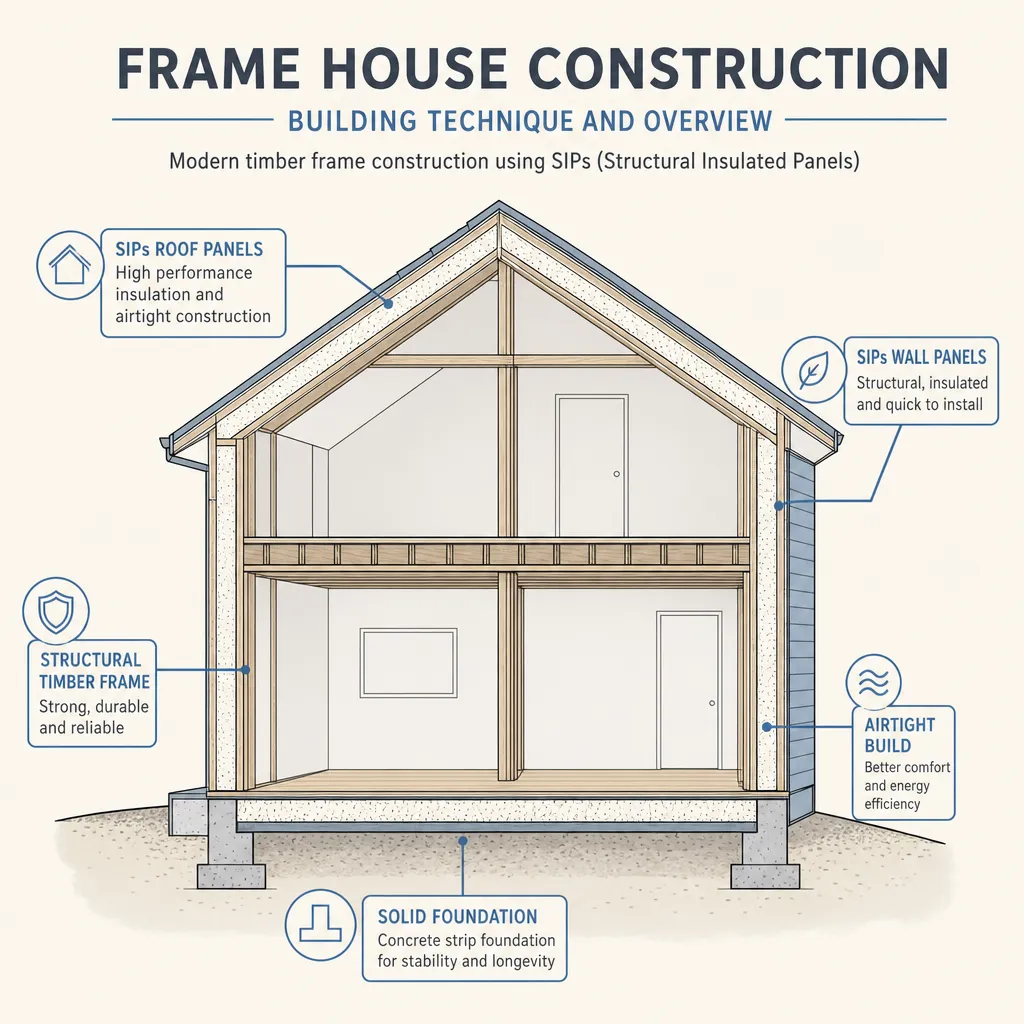
Frame House Construction: Building Technique and Overview
Frame house construction uses a structural skeleton — most commonly timber, steel, or structural insulated panels — rather than load-bearing masonry walls.
 Planning & Pre-Build
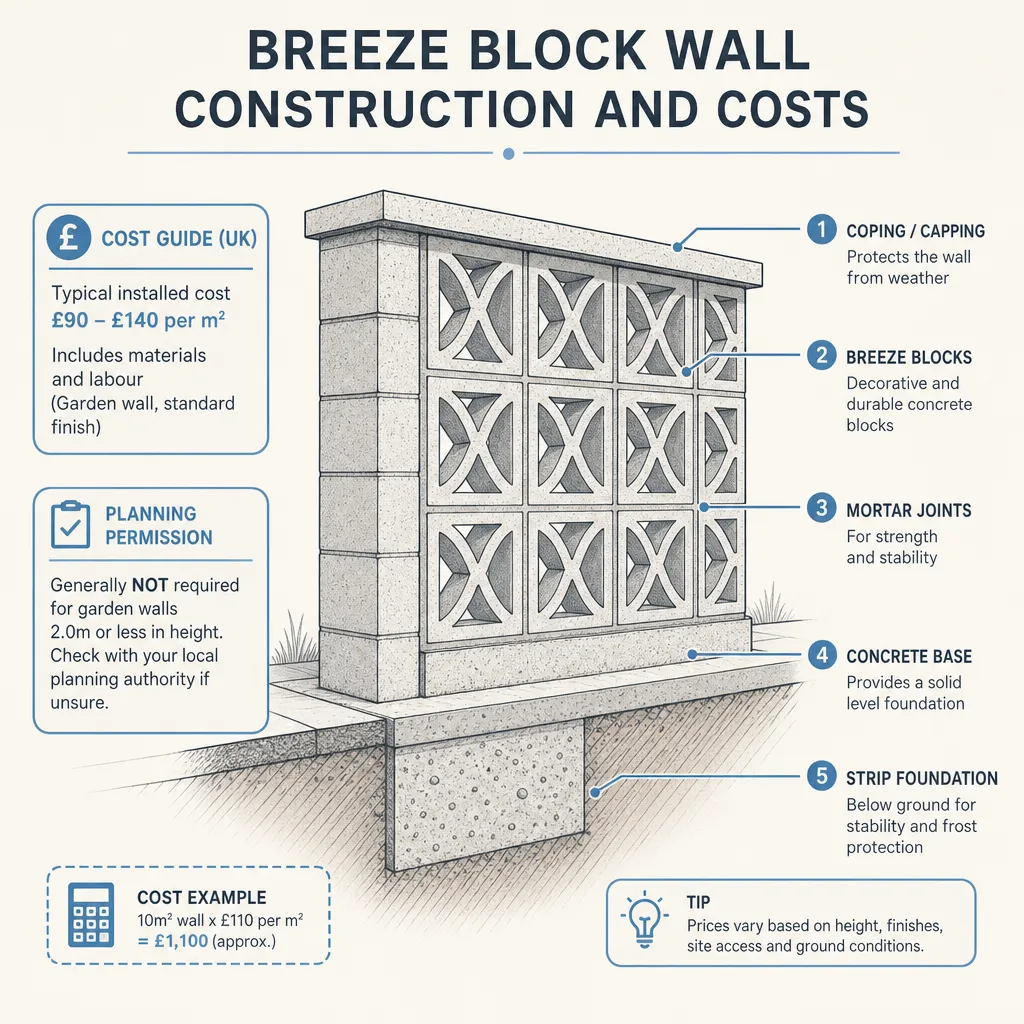
Breeze Block Wall Construction and Costs
Breeze blocks (concrete masonry units) are used across UK construction for garden walls, extensions, and structural applications.
 Planning & Pre-Build
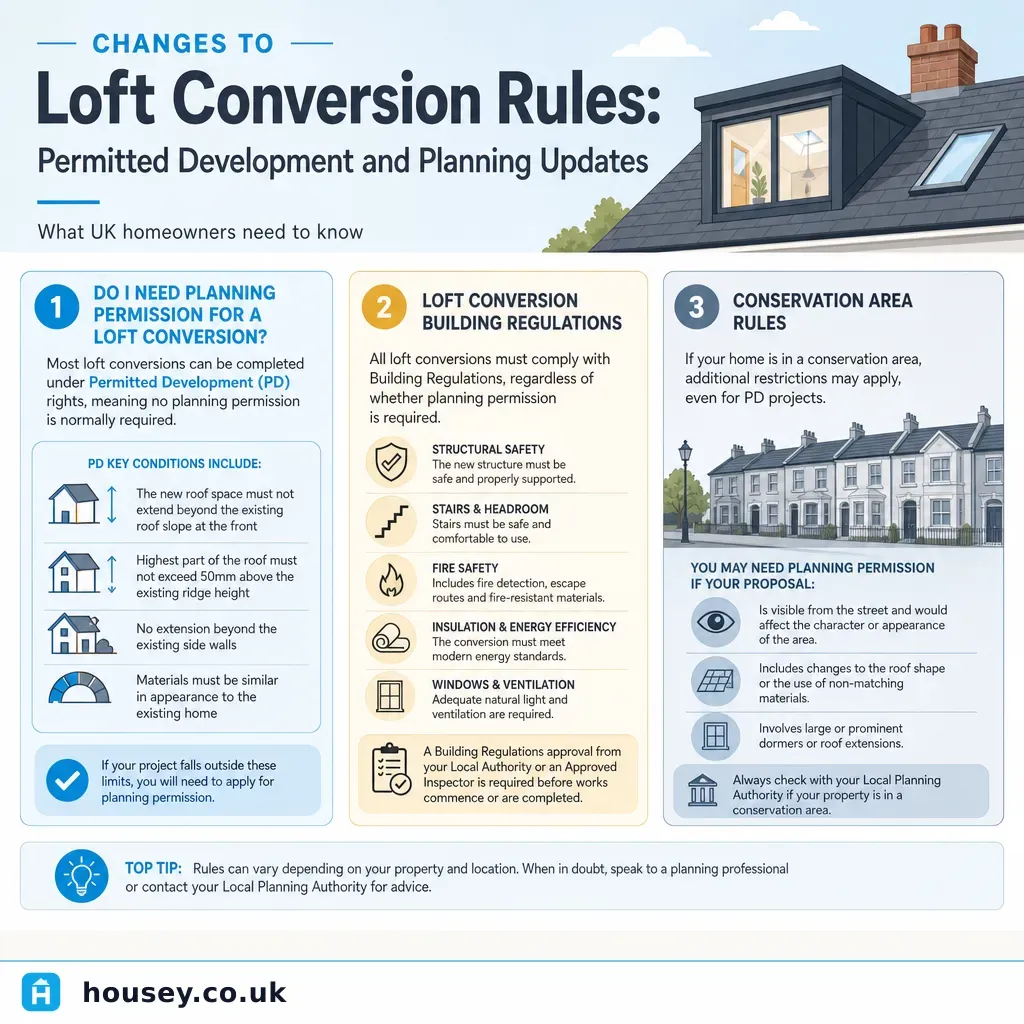
Changes to Loft Conversion Rules: Permitted Development and Planning Updates
In England, most loft conversions on standard houses qualify as Permitted Development under Class B of the GPDO 2015, allowing up to 40 cubic metres (terraced) or 50 cubic metres (detached or semi-detached) without a planning application — if conditions are met.
 Planning & Pre-Build
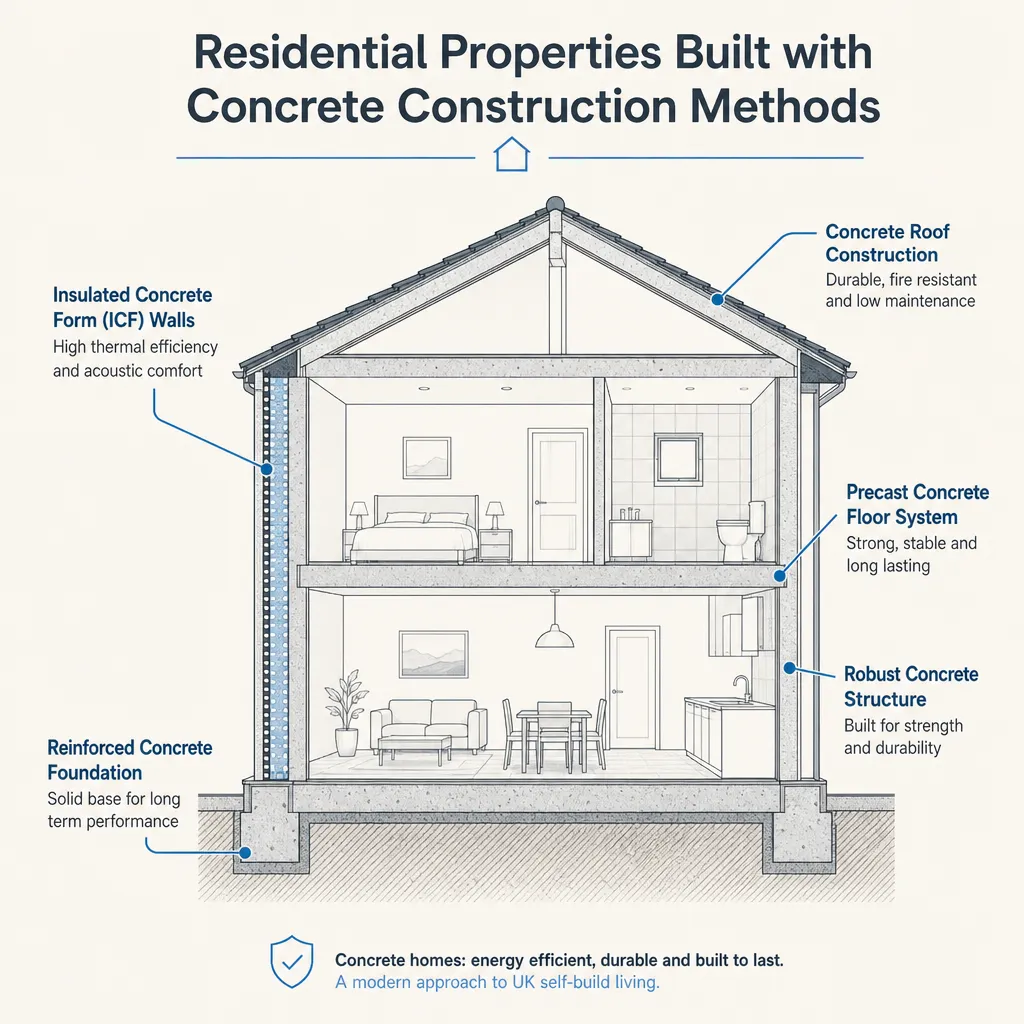
Residential Properties Built with Concrete Construction Methods
UK homes are built using several concrete methods: in-situ cast concrete, precast panel systems, insulating concrete formwork (ICF), and older non-traditional types such as Wimpey No-Fines and Laing Easiform.
 Planning & Pre-Build
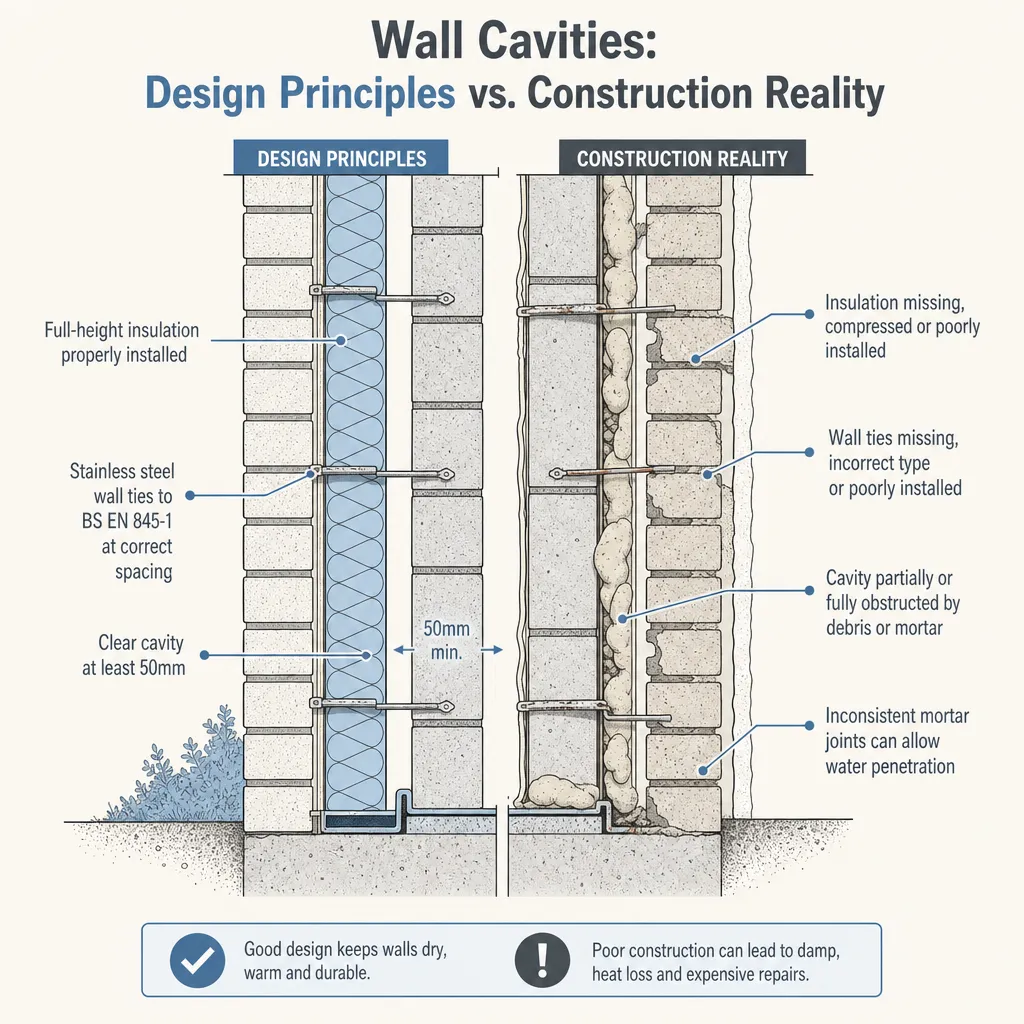
Wall Cavities: Design Principles vs. Construction Reality
A UK cavity wall is designed to resist weather, control heat loss, and structurally link two masonry leaves.