Frame House Construction: Building Technique and Overview
By Housey · Last reviewed 31st of May 2026
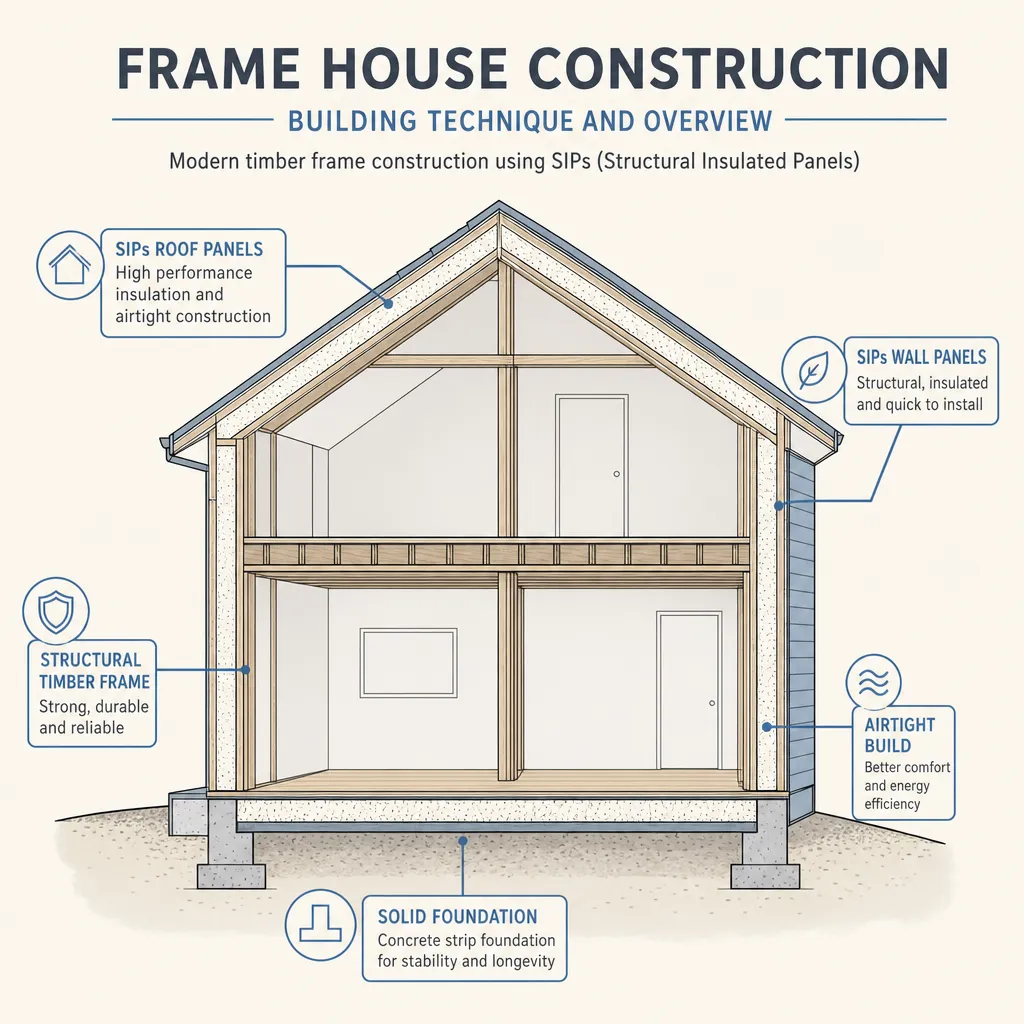
Frame House Construction: Building Technique and Overview
Choosing a structural system is one of the earliest and most consequential decisions in any new-build or major renovation project in the UK. Frame construction — whether timber, steel, or composite panel — is increasingly common across England and Scotland, yet many homeowners and self-builders encounter it without a clear understanding of how it differs from traditional masonry, what the Building Regulations implications are, or how lenders and insurers view it.
Key points
- Timber frame accounts for the majority of new-build homes in Scotland (typically around 75–80%) and a significant and growing share in England, according to the UK Timber Frame Association.
- Building Regulations Approved Document A sets the structural performance requirements that all frame construction in England and Wales must meet, regardless of material.
- The three main frame systems used in UK residential construction are platform timber frame, light-gauge steel frame, and structural insulated panels (SIPs).
- Mortgage lenders generally treat standard timber frame and steel frame as acceptable security, but may require specialist survey or valuation reports for non-standard or post-war frame systems.
- Building Regulations Part L (conservation of fuel and power) sets minimum U-value requirements for external walls; frame systems can meet these efficiently but require careful junction detailing to avoid cold bridges and condensation risk.
What is frame construction?
Frame construction uses a structural skeleton — columns, beams, or panels — to carry the loads of the building, rather than relying on the mass of load-bearing masonry walls. The frame itself provides structural integrity; the external cladding (brick slip, render, timber boarding, or other finish) is non-structural and can be changed independently of the structure.
In UK residential building, the three most common systems are:
Platform timber frame — The dominant UK method. Storey-height wall panels and floor cassettes are factory-fabricated off-site, then erected on a prepared foundation. Structural integrity comes from the engineered timber frame; external brickwork or render is a tied cladding, not a load-bearing element.
Steel frame (light-gauge cold-formed steel) — Used in both residential and commercial construction. Steel sections replace engineered timber, suiting self-build, modular construction, and projects where fire resistance requirements or span geometry favour steel.
Structural Insulated Panels (SIPs) — Factory-manufactured panels with an insulating foam core bonded between two structural boards, typically oriented strand board (OSB). SIPs act as both structure and insulation, enabling very high thermal performance within thinner wall sections.
Comparing frame construction systems
Feature | Platform timber frame | Steel frame (light-gauge) | SIPs |
|---|---|---|---|
Typical UK use | New-build houses and extensions | Self-build, modular, commercial conversions | High-performance self-build, extensions |
Off-site fabrication | Usually — panels and cassettes | Yes | Yes — panels cut to design |
On-site erection speed | Fast — frame typically up in 2–4 days | Fast | Fast |
Thermal performance | Good; requires insulated cavity detail | Good; thermal bridging must be carefully managed | Excellent; inherently high U-values |
Approved Document B (fire) | Met via cavity barriers, intumescent linings, and plasterboard | Non-combustible frame; fire stopping required at junctions | Core requires protection; must meet Part B |
Mainstream lender acceptance | Yes — widely accepted | Yes — widely accepted | Check with your specific lender; some require specialist valuation |
Design flexibility | High | High | Moderate — changes after fabrication are costly |
Indicative comparison only. Consult a structural engineer or architect for project-specific advice.
Building Regulations and frame construction
All frame construction must comply with the Building Regulations. The key Approved Documents are:
Approved Document A (Structure): Covers loading, ground movement, and structural robustness. Frame systems are designed by structural engineers to meet these requirements; calculations are typically submitted as part of the building regulations application.
Approved Document L (Conservation of fuel and power): Sets minimum thermal performance for walls, floors, and roofs. Frame construction is often well-suited to meeting Part L targets, but junction detailing — where wall, floor, and roof elements meet — must be carefully specified to prevent thermal bridging and associated condensation risk.
Approved Document B (Fire safety): Requires that structural elements maintain load-bearing function for a minimum period in a fire. Timber frame meets this through cavity barriers, intumescent products, and protective plasterboard linings specified by the frame manufacturer.
Building control sign-off — via the local authority or an approved inspector — is required at foundation, frame, weathertight, and completion stages. Retaining the completion certificate is important for future sales and remortgages.
Which frame system should you choose?
- Choose platform timber frame if you want a well-established, widely understood system with broad lender acceptance, a large supplier base, and a straightforward building control process.
- Choose steel frame (light-gauge) if fire resistance requirements are elevated, the design involves larger spans or unusual geometry, or you are building a modular or multi-unit scheme.
- Choose SIPs if thermal performance is a primary design driver, if you want a quick on-site programme with minimal wet trades, or if your design suits the precision of factory-manufactured panels.
- Ask a structural engineer if the project involves unusual ground conditions, large spans, conversions of existing buildings, or any structural alteration to an existing frame.
- Check with your mortgage lender or broker before committing to any non-standard system — particularly SIPs or hybrid structures — to confirm your chosen lender will lend against that construction type.
Surveying a frame property before purchase
When buying a property built using frame construction, a surveyor's approach differs from traditional masonry in a few key areas:
- Moisture in the timber frame cavity is a known risk if the vapour control layer or cavity barrier was improperly installed. A RICS Level 3 Building Survey can include moisture readings in accessible areas and flag signs of condensation within the structure.
- Light-gauge steel frame is susceptible to corrosion in persistently damp conditions — a concern particularly in older systems from the 1970s and 1980s.
- Non-standard post-war frame systems — including Airey, BISF, Reema, and Wimpey no-fines — are classified as non-standard construction by most lenders. A specialist survey report is typically required before a mainstream mortgage will be offered.
When to get professional help
Commission a structural engineer or specialist architect if:
- You are altering or extending an existing frame building and need to assess the structural implications of removing or modifying panels or members.
- You are self-building and have chosen a system outside the standard platform timber frame range.
- A survey has identified moisture in a timber frame cavity, movement in structural members, or corrosion in a steel frame.
- Your building control application requires structural calculations or engineered drawings — most frame systems do.
How Housey can help
Housey connects homeowners and self-builders with qualified structural engineers and architects experienced in frame construction projects across England, Scotland, and Wales. Whether you are planning a new build, an extension, or buying a frame-construction property and want an informed inspection, finding the right specialist early avoids costly design changes later in the project.
Frequently asked questions
Is timber frame construction as durable as brick and block?
Yes, when correctly designed, built, and detailed. Timber frame homes built to modern UK standards using pressure-treated or engineered timber can have design lives equivalent to masonry construction. The critical factors are moisture management during construction, correct installation of vapour control layers, and adequate cavity ventilation.
Do I need planning permission for a timber frame extension?
The structural system does not affect permitted development rights. Whether an extension needs planning permission depends on its size, height, position, and the constraints of your property and local area — not whether it uses frame or masonry construction. Check with your local planning authority before starting work.
Will a timber frame house be harder to sell?
Standard platform timber frame homes are widely accepted by mainstream mortgage lenders and do not present a particular selling difficulty. Non-standard post-war frame systems — such as Airey or BISF houses — are a different matter and may require specialist lender products and separate valuation reports.
How long does a timber frame take to build?
The structural frame is typically erected in two to four days for a standard two-storey house. However, the overall build programme — including foundations, weathertight envelope, fit-out, and building control inspections — is broadly similar in duration to a comparable masonry construction project.
Sources and further reading
- Structure: Approved Document A — GOV.UK
- Conservation of fuel and power: Approved Document L — GOV.UK
- UK Timber Frame Association — industry statistics and technical guidance on timber frame construction
- Permitted development rights for householders: technical guidance — GOV.UK
Useful next reads
 Planning & Pre-Build
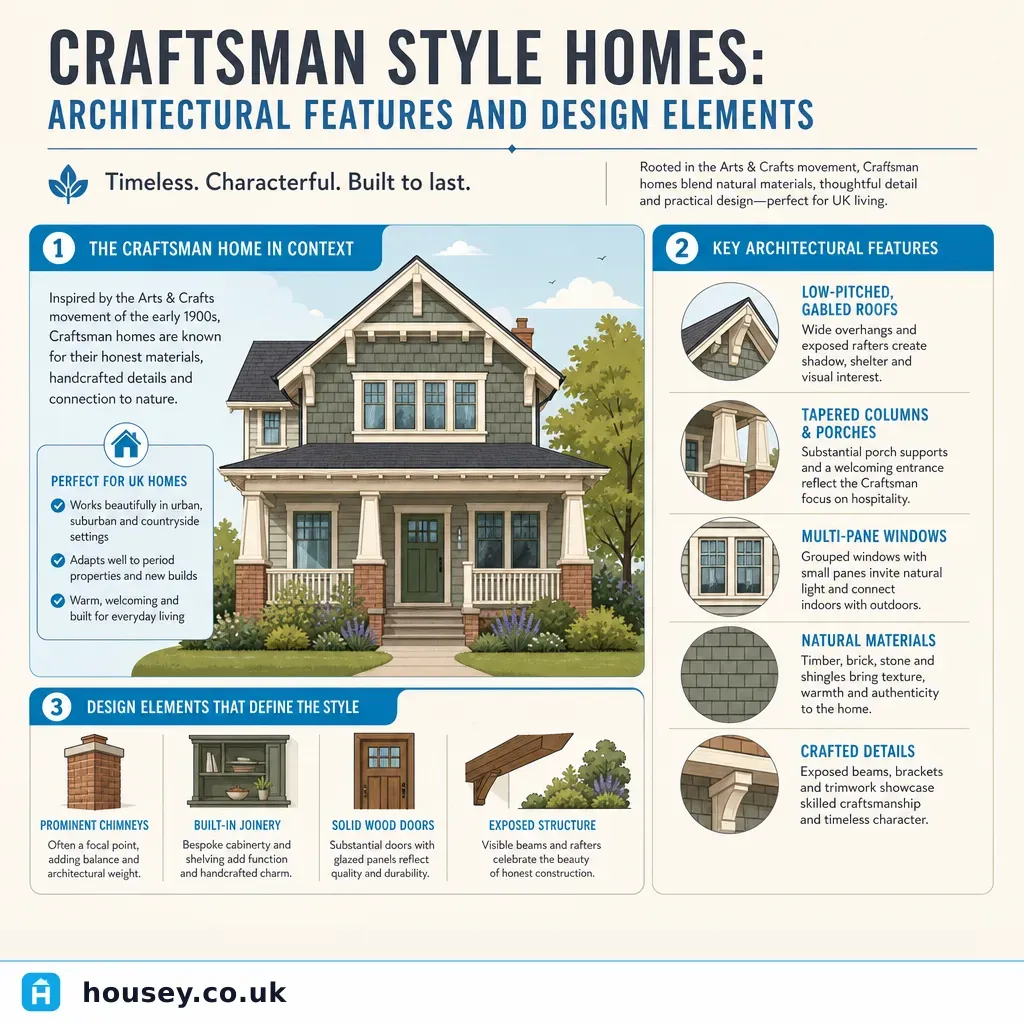
Craftsman Style Homes: Architectural Features and Design Elements
Craftsman style homes are defined by natural materials, low-pitched gabled roofs with wide eaves, covered porches, exposed timber details, and grouped casement windows.
 Planning & Pre-Build
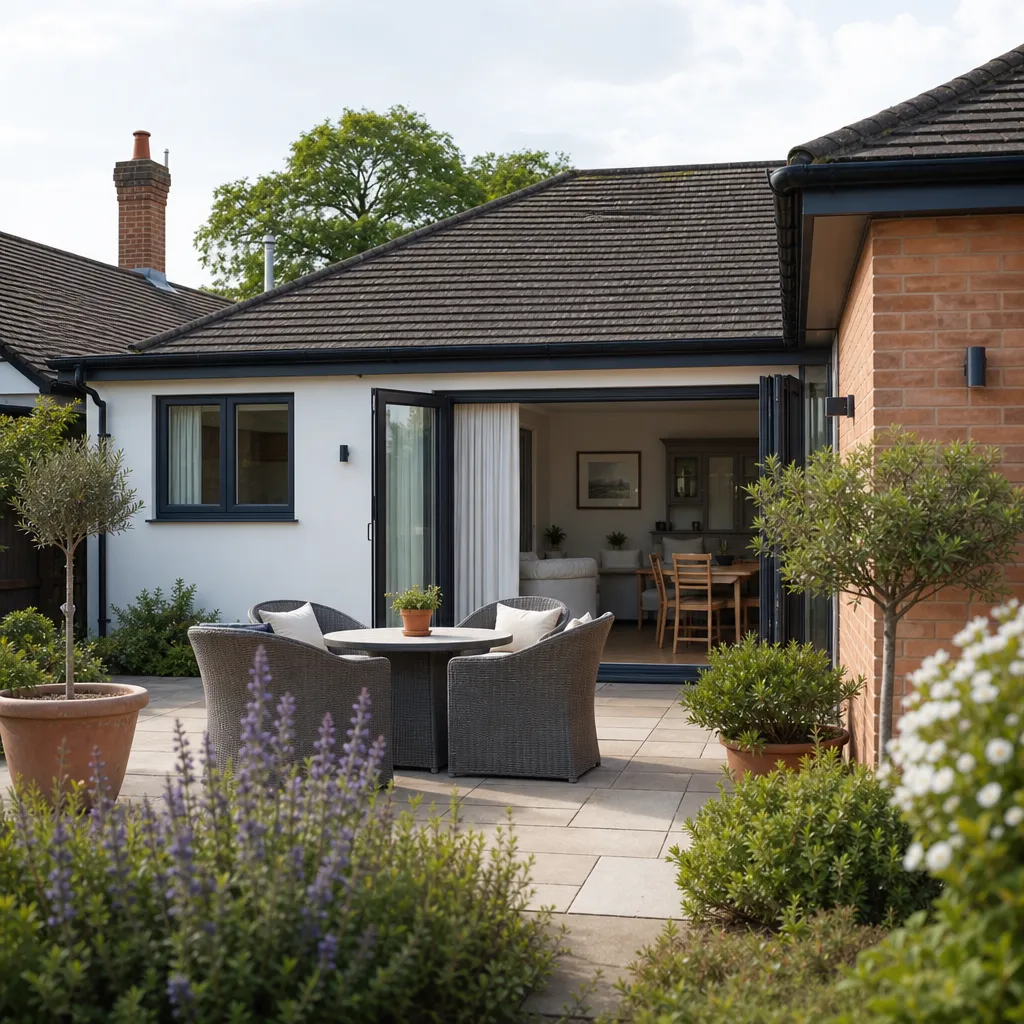
What Is a Patio Home? Understanding This Property Type in the UK
A patio home is a compact, low-maintenance property designed around a private patio or courtyard rather than a traditional lawn garden.
 Planning & Pre-Build
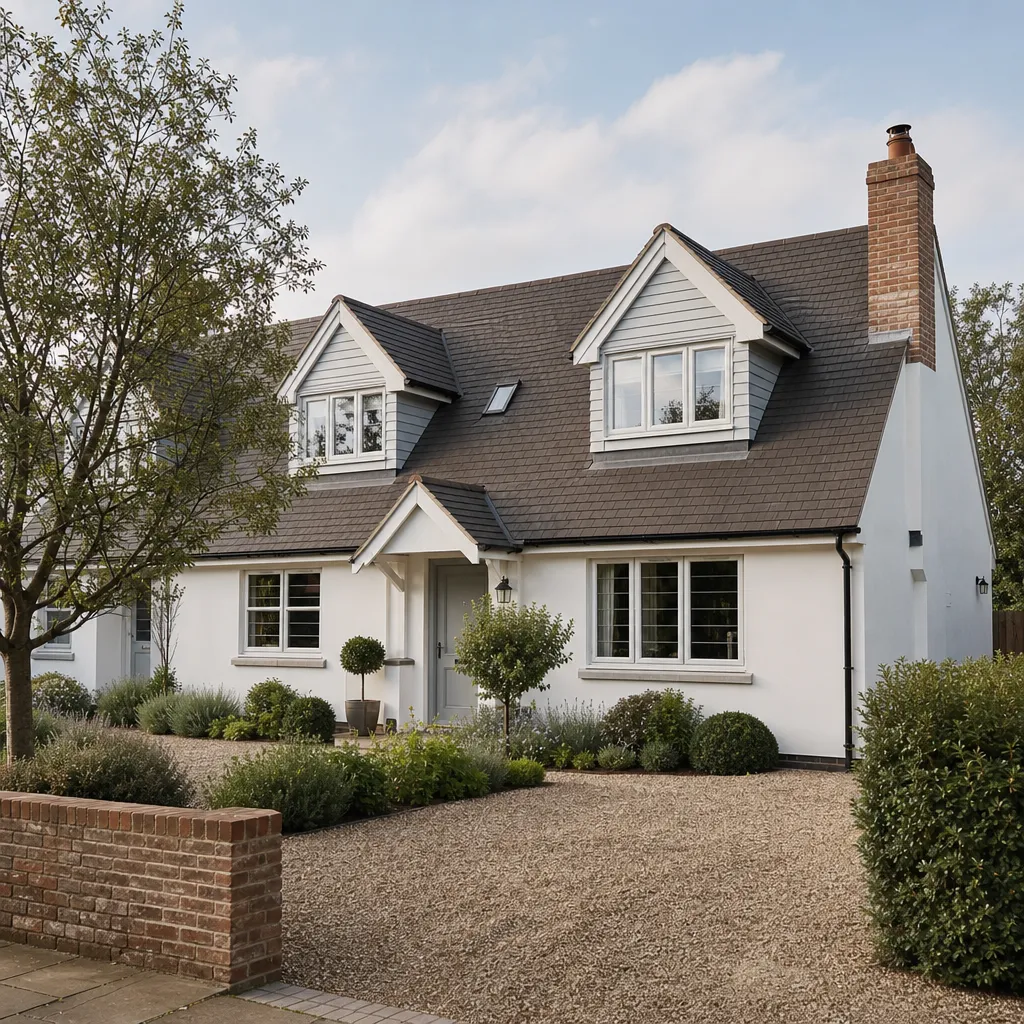
Cape Cod Style Homes: Design Elements and Characteristics
A Cape Cod home is defined by its steep symmetrical gabled roof, compact 1.
 Planning & Pre-Build
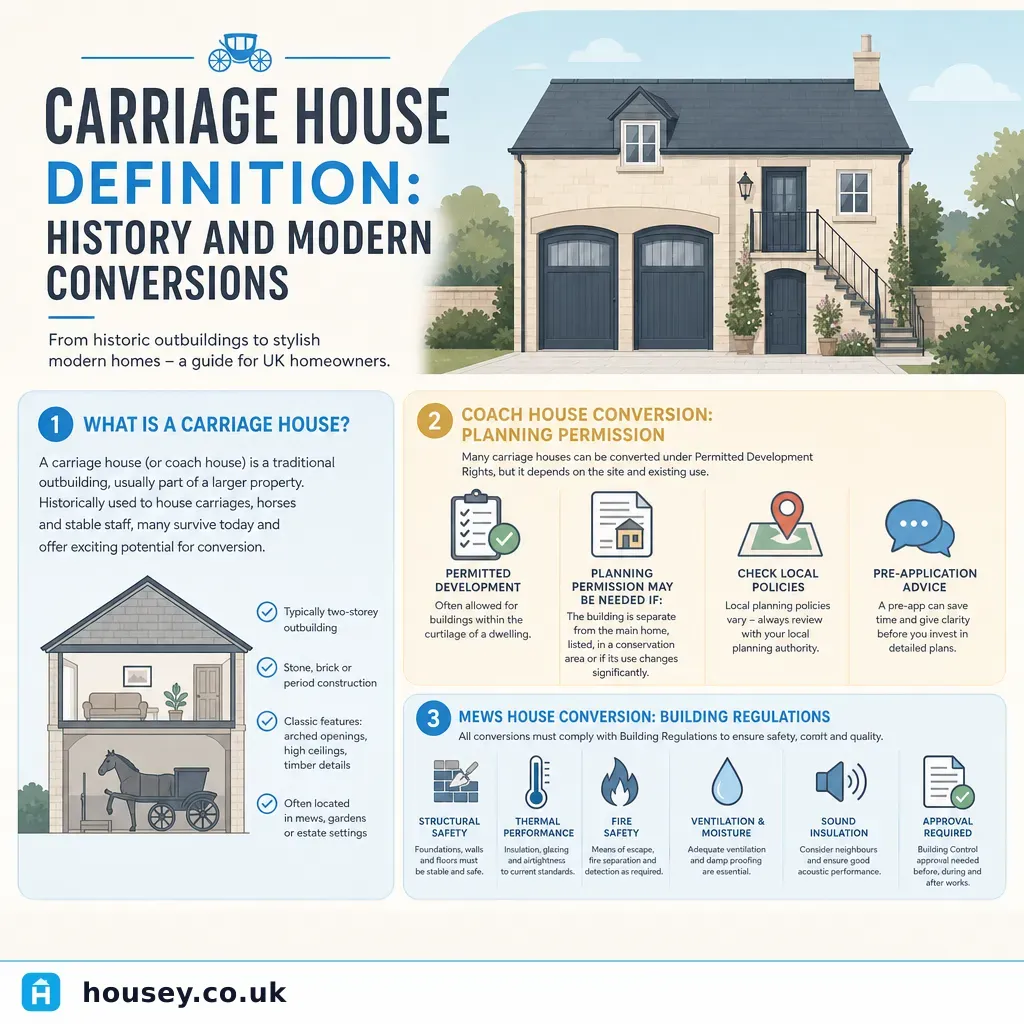
Carriage House Definition: History and Modern Conversions
A carriage house is a Victorian or Edwardian outbuilding originally used to shelter horse-drawn vehicles, often with groom's accommodation above.
 Planning & Pre-Build
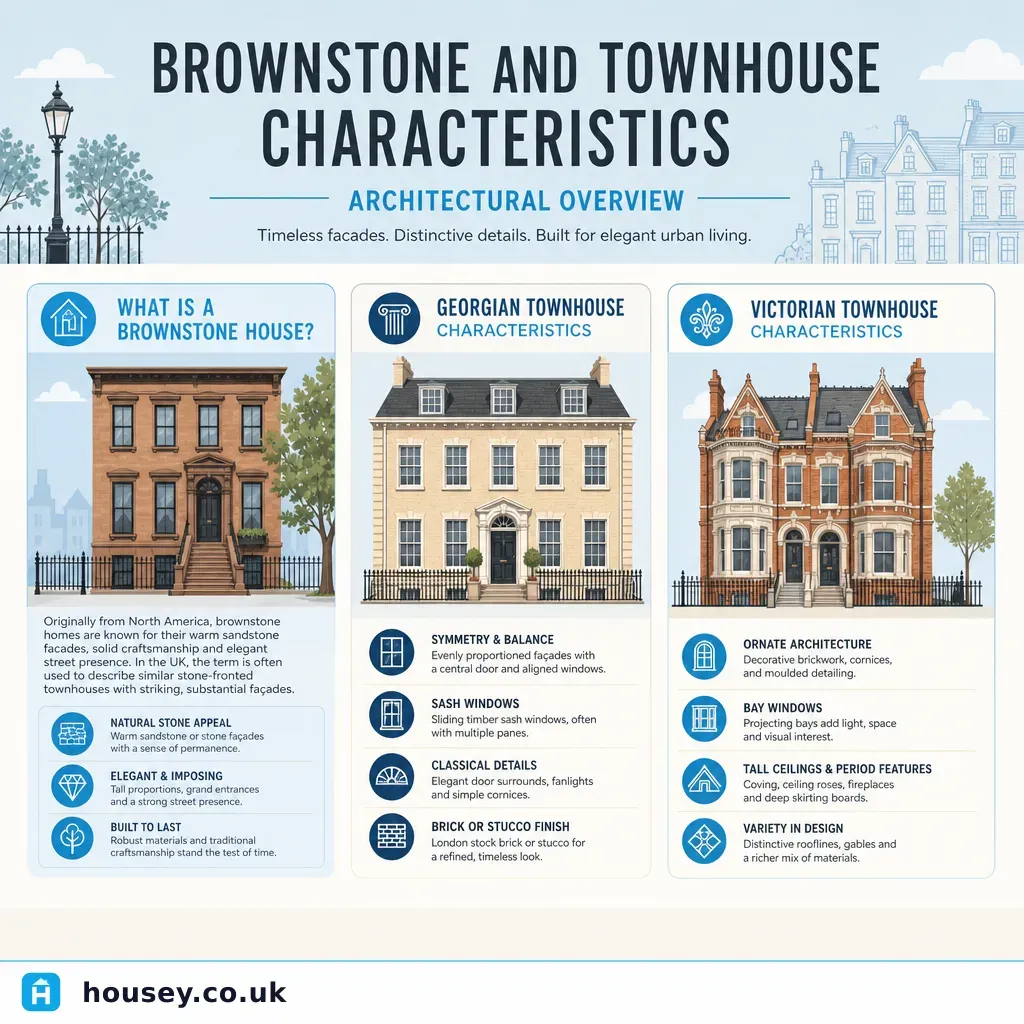
Brownstone and Townhouse Characteristics: Architectural Overview
Brownstones are a North American building type — sandstone-fronted urban terraced houses associated with 19th-century US cities.