Block Paving Driveway Costs: Calculator and Estimator
By Housey · Last reviewed 5th of May 2026
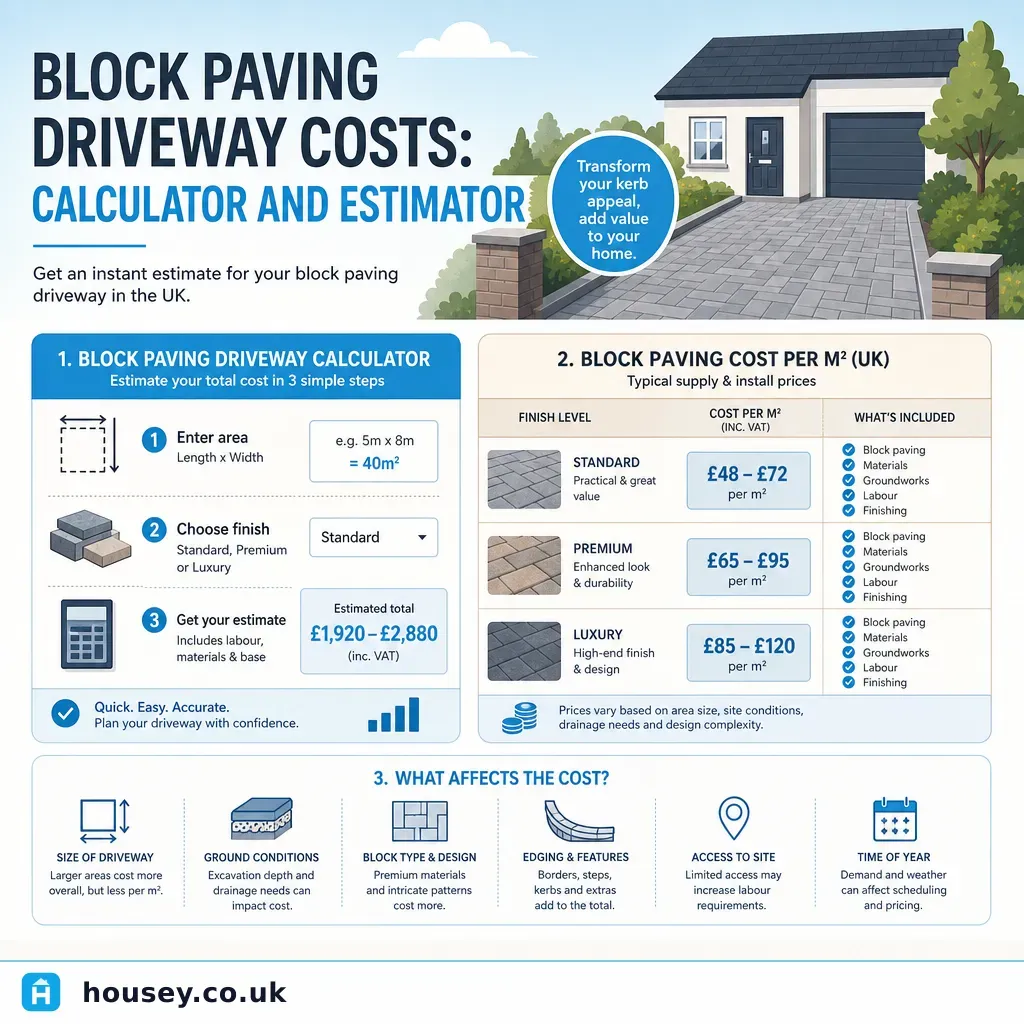
Block Paving Driveway Costs: Calculator and Estimator
Block paving is the most popular premium driveway surface in the UK, valued for its durability, appearance, and the ability to repair or replace individual blocks without lifting the entire surface. Cost estimates vary widely depending on driveway size, block type, site conditions, and regional labour rates — which makes it difficult to budget accurately from a single headline figure.
Key points
- Block paving driveway installation typically costs £80–£150 per m² in the UK (supply and installation combined); Indicative UK costs, last reviewed 2026-05-05.
- Driveways larger than 5 m² using impermeable surfaces require planning permission under the Town and Country Planning Act 1990 (as amended) unless permeable paving is used or run-off drains to a lawn or border.
- A full installation includes excavation, a compacted MOT Type 1 hardcore sub-base (minimum 100 mm per BALI guidance), a 50 mm sharp sand laying course, block laying, edge restraints, and kiln-dried jointing sand.
- Cheaper quotes often omit adequate sub-base depth — the most common cause of premature block sinking, rocking, and joint failure.
- Block paving has higher upfront costs than tarmac or gravel but typically lasts 20–30 years and allows individual block repairs without full resurfacing.
How much does block paving cost? A UK size estimator
The table below gives indicative installed costs for common driveway sizes, based on standard concrete block paving, adequate groundworks, and normal site access. Costs in London and the South East typically sit at or above the upper end of each range.
Indicative UK costs, last reviewed 2026-05-05. Costs vary by region, block type, site conditions, and contractor. Always obtain at least three quotes.
Driveway size | Approximate area | Indicative cost range |
|---|---|---|
Single car (standard) | 20–25 m² | £1,600–£3,750 |
Single car (generous) | 30 m² | £2,400–£4,500 |
Double (side by side) | 45–50 m² | £3,600–£7,500 |
Triple or large | 60–70 m² | £4,800–£10,500 |
These ranges include block supply, sub-base, laying labour, edge restraints, and jointing sand. They exclude drainage work, planning application fees, and dropped kerb applications.
What affects block paving driveway cost?
Block type and material
Block type | Indicative material cost per m² | Characteristic |
|---|---|---|
Standard concrete block (e.g. Marshalls Drivesett, Tobermore) | £15–£30 | Most common; wide colour and pattern range |
Permeable concrete block | £20–£40 | Meets sustainable drainage rules; avoids planning requirement for impermeable surfaces |
Clay brick paver | £25–£50 | Traditional appearance; very durable with low colour fade |
Natural stone sett (granite, sandstone) | £50–£120 | Premium aesthetic; longest lifespan; higher laying complexity |
Material costs above are for blocks only. Sub-base, laying labour, and edging are additional.
Groundwork and sub-base
If an existing surface — old tarmac, concrete, or compacted soil — needs breaking out and removing, expect to add approximately £10–£25 per m² for excavation and skip hire. Soft subsoil, tree roots, or a high water table can increase costs significantly and may require a geotextile separation membrane or a deeper sub-base than standard.
Drainage and planning
If the driveway slopes towards the house or the highway, a channel drain or gully will be needed. A standard channel drain run of three to five metres typically costs £150–£500 depending on length and connection type. Where impermeable blocks are used on a driveway over 5 m², check permitted development rules with your local planning authority before proceeding.
Edging and kerbing
Concrete or block edging restraints prevent block creep over time and are essential to a stable installation. These are usually included in a full installation quote but are worth confirming explicitly, as some low-cost quotes omit them.
Worked UK property scenario
A semi-detached 1960s house in the East Midlands replaces a tired gravel driveway with block paving for two cars side by side. Existing gravel and membrane are removed to reveal firm subsoil in reasonable condition. The homeowner selects a mid-range concrete block (charcoal Tegula pattern) with a channel drain at the property boundary.
Cost element | Estimated cost |
|---|---|
Excavation and gravel removal (45 m²) | £600 |
MOT Type 1 sub-base (100 mm compacted) | £500 |
Sharp sand laying course (50 mm) | £200 |
Concrete block paving supply (45 m² at ~£25/m²) | £1,125 |
Block laying labour | £1,800 |
Concrete edge restraints and kerbing | £350 |
Channel drain (3 m run, connected to gully) | £280 |
Kiln-dried jointing sand and final compaction | £120 |
Total (indicative) | £4,975 |
Indicative UK costs, last reviewed 2026-05-05. This is an illustrative scenario; your costs will depend on site conditions, block choice, location, and contractor.
Decision tree: which driveway surface is right for you?
- Choose block paving if you want a durable, repairable surface with strong kerb appeal and plan to remain in the property long term.
- Consider tarmac if minimising upfront cost is the priority and you are comfortable with periodic resurfacing every 15–20 years.
- Choose permeable block paving if your driveway exceeds 5 m², you want to avoid a planning application, or your area has surface water flooding risk.
- Consider resin-bound gravel if you want a permeable, lower-maintenance surface with a more contemporary look and lower upfront cost than block paving.
- Check with your local planning authority if the property is in a conservation area or is listed — additional restrictions on materials and appearance may apply regardless of driveway size.
- Ask a drainage contractor if the site slopes towards the house or if neighbouring properties have experienced surface water flooding — a drainage assessment may be needed before design begins.
What to ask before accepting a quote
- What sub-base depth and material are you specifying (MOT Type 1 or Type 3), and will it be mechanically compacted?
- Will you provide a written specification including block manufacturer, block thickness, and jointing sand type?
- Is excavation, spoil disposal, and skip hire included in the price?
- What edge restraints are you using, and how are they fixed?
- Does the price include a channel drain or gully connection, and where does it discharge?
- Is VAT included in the quoted price?
- What is your written guarantee period for the installation?
- Are you a member of BALI (British Association of Landscape Industries) or the Association of Professional Landscapers (APL)?
- What happens if soft ground, tree roots, or unexpected obstructions are found during excavation — will you notify me before proceeding with any cost variation?
Block paving vs alternative driveway surfaces
Surface | Indicative installed cost per m² | Typical lifespan | Maintenance | Planning note |
|---|---|---|---|---|
Concrete block paving | £80–£150 | 20–30 years | Low (re-sand joints every 5–10 years) | Impermeable: check permitted development rules if >5 m² |
Tarmac (macadam) | £40–£80 | 15–20 years | Low–medium (reseal periodically) | Impermeable: same rule applies |
Resin-bound gravel | £50–£90 | 15–25 years | Low | Permeable: generally permitted development compliant |
Loose gravel | £10–£30 | Ongoing (top up annually) | Medium (raking, weed control) | Permeable: generally permitted development compliant |
Natural stone setts | £100–£200+ | 30–50+ years | Low (occasional re-pointing) | Conservation area rules may apply regardless of surface type |
Indicative UK costs, last reviewed 2026-05-05. Sources: BALI guidance; GOV.UK Planning Portal.
When to get professional help
Most block paving work is carried out by specialist driveway installers. Seek professional advice or engage a qualified specialist if:
- Your driveway exceeds 5 m² and you want to use impermeable paving — confirm permitted development rules with your local planning authority before starting.
- There are signs of ground instability, significant slope, or proximity to large tree root zones.
- Your property is in a conservation area or is listed — planning permission may be required regardless of driveway size or surface type.
- Surface water drainage connects to a public sewer — you may need to notify your water company under the Building Act 1984.
- You are replacing a driveway over a cellar, culverted watercourse, or shallow services — a structural or drainage assessment may be needed before work begins.
How Housey can help
Housey makes it straightforward to compare quotes from vetted driveway installers across the UK. Describe your driveway project, receive quotes from up to four local specialists, and review their credentials and pricing side by side — with no obligation to proceed.
Frequently asked questions
Do I need planning permission for block paving a driveway?
In England, you do not need planning permission if you use permeable block paving or direct run-off to a lawn or border, regardless of driveway area. If you use impermeable blocks on a driveway larger than 5 m², planning permission is required. Scotland, Wales, and Northern Ireland have their own permitted development rules — always check with your local planning authority before starting work.
How long does block paving last?
A well-installed block paving driveway with an adequate sub-base typically lasts 20–30 years. Individual blocks can be lifted and replaced if damaged or stained, which is a significant advantage over poured concrete or tarmac. Re-sanding the joints every five to ten years helps prevent weed growth and maintains the long-term stability of the surface.
How long does block paving installation take?
For a typical two-car driveway of 45–50 m², installation usually takes two to four days: one day for excavation and sub-base, one to two days for block laying, and a final day for edging, drainage, and jointing. The driveway can usually bear light traffic within 24–48 hours of completion once the kiln-dried jointing sand has been compacted and settled.
Can block paving be laid over an existing concrete base?
Sometimes. If the existing concrete is sound, level, and at an appropriate height, a contractor may lay blocks onto a sand laying course over it. However, cracked, uneven, or poorly drained concrete usually warrants breaking out and installing a proper compacted sub-base — which delivers a better long-term result. Your installer should assess the existing surface before finalising a quote.
Why do block paving quotes vary so much?
Quotes vary due to differences in sub-base depth and specification, block quality and thickness, drainage provision, whether excavation and skip hire are included, regional labour rates, and contractor accreditation. A notably low quote often omits adequate groundwork, which can lead to premature sinking or block movement within a few years of installation.
Sources and further reading
- When is planning permission required: front gardens and driveways — GOV.UK
- Driveways and dropped kerbs — Planning Portal
- Sustainable Drainage Systems: non-statutory technical standards — GOV.UK
- BALI technical guidance for landscape contractors — British Association of Landscape Industries
Useful next reads
 Improvement & Build
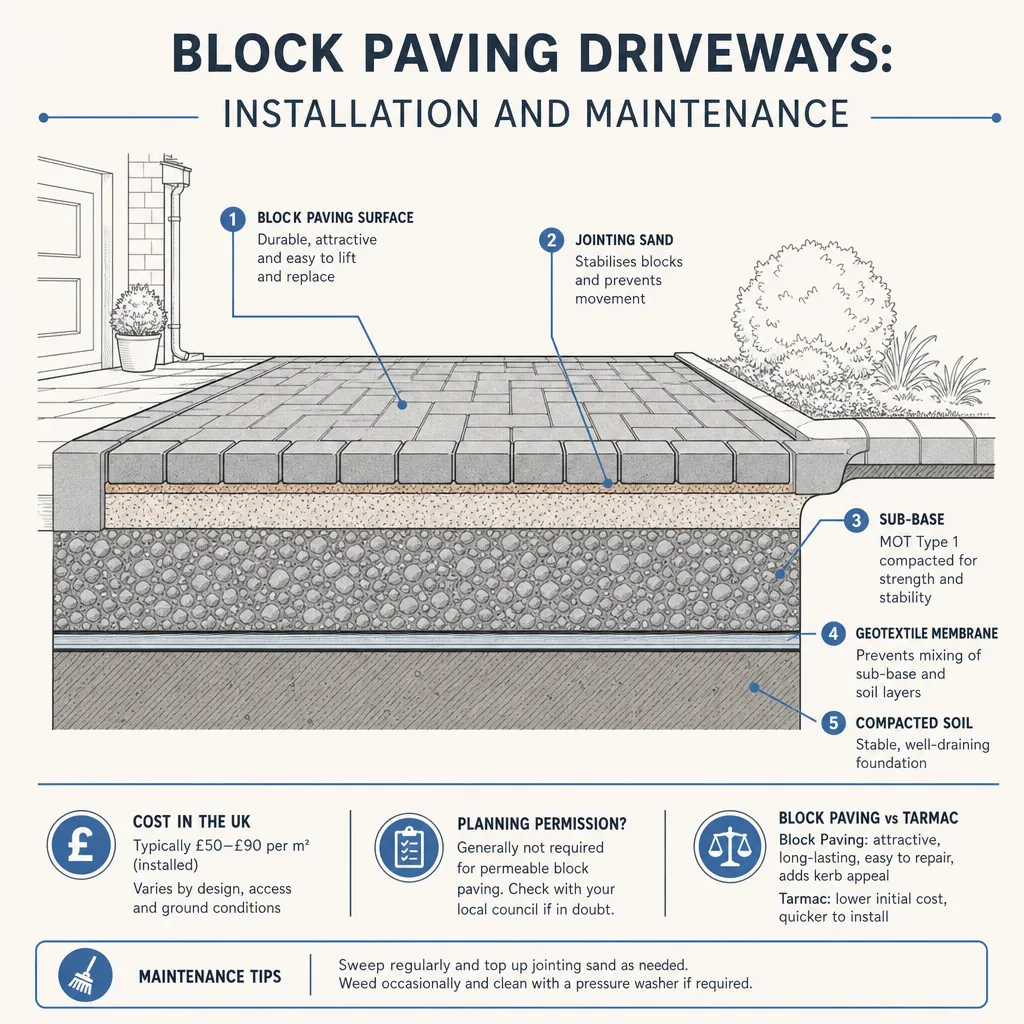
Block Paving Driveways: Installation and Maintenance
Block paving driveways typically cost £50–£120 per m² installed and last 20–30 years with good maintenance.
 Improvement & Build
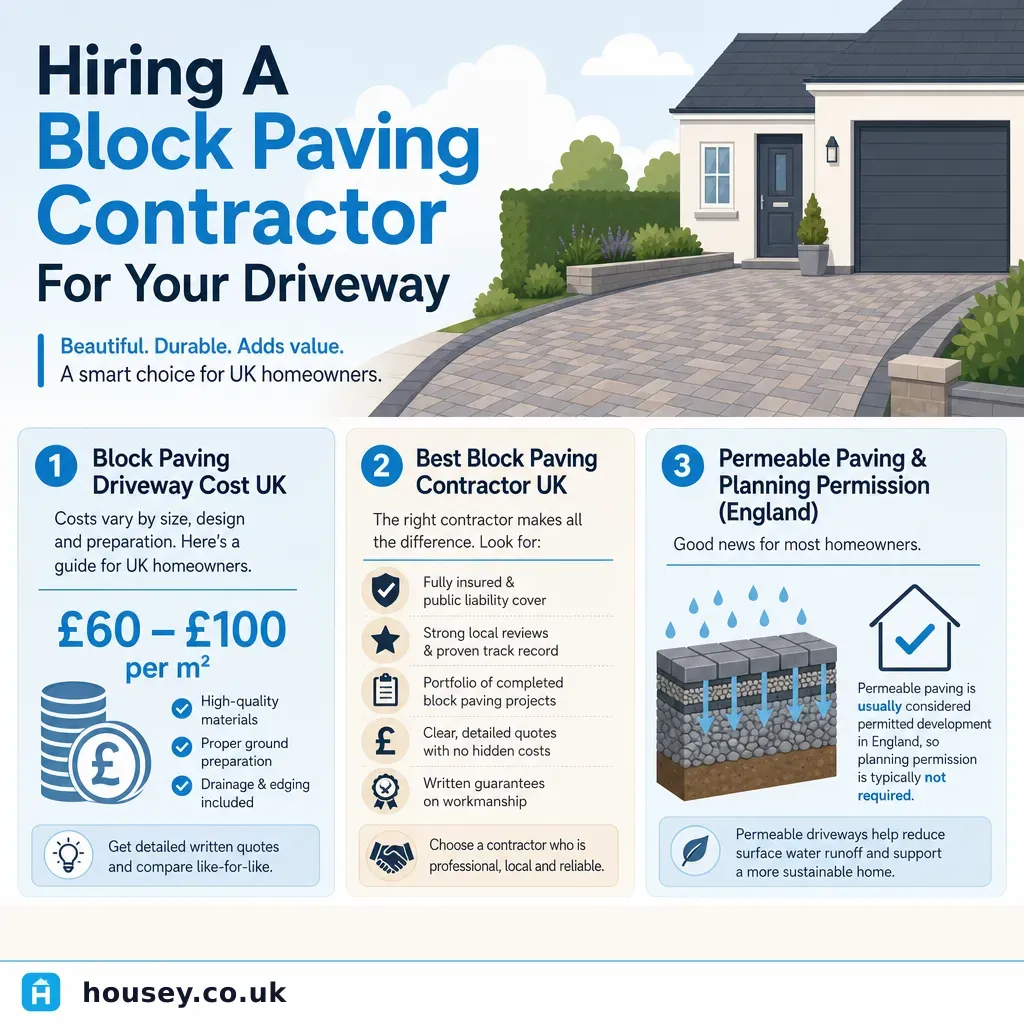
Hiring A Block Paving Contractor For Your Driveway
Block paving driveways are installed by specialist driveway or hard landscaping contractors.
 Improvement & Build
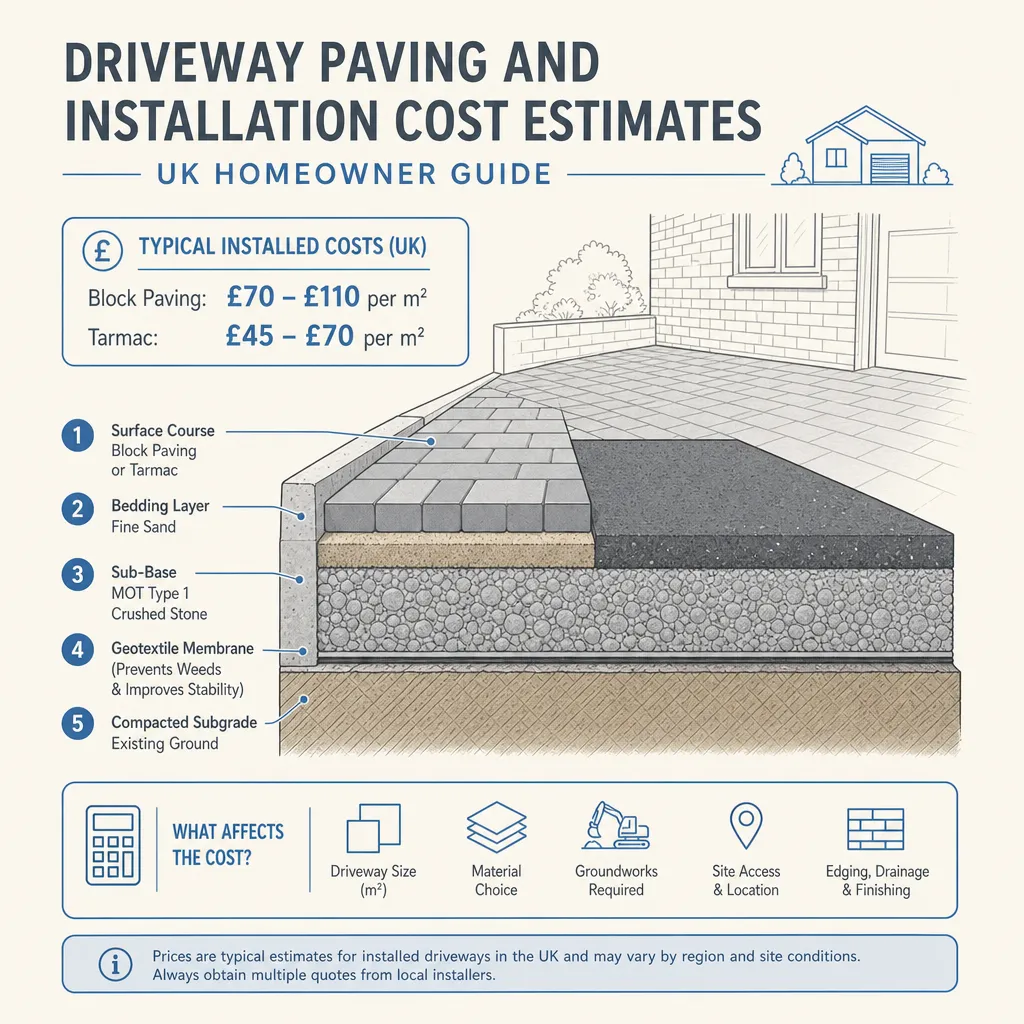
Driveway Paving and Installation Cost Estimates
Installing a new driveway in the UK typically costs £25–£120 per square metre depending on material.
 Improvement & Build
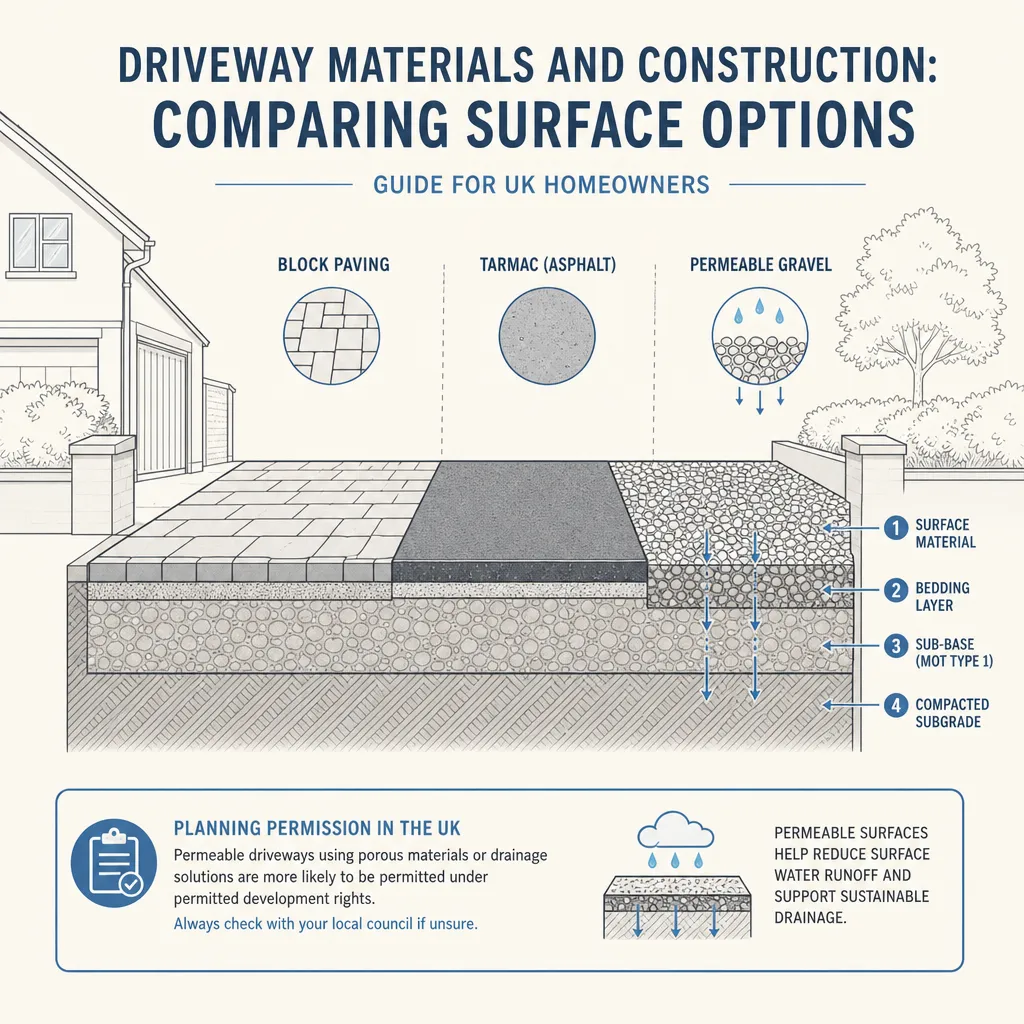
Driveway Materials and Construction: Comparing Surface Options
Common driveway surfaces in the UK include block paving, tarmac, concrete, gravel, and resin-bound aggregate.
 Improvement & Build
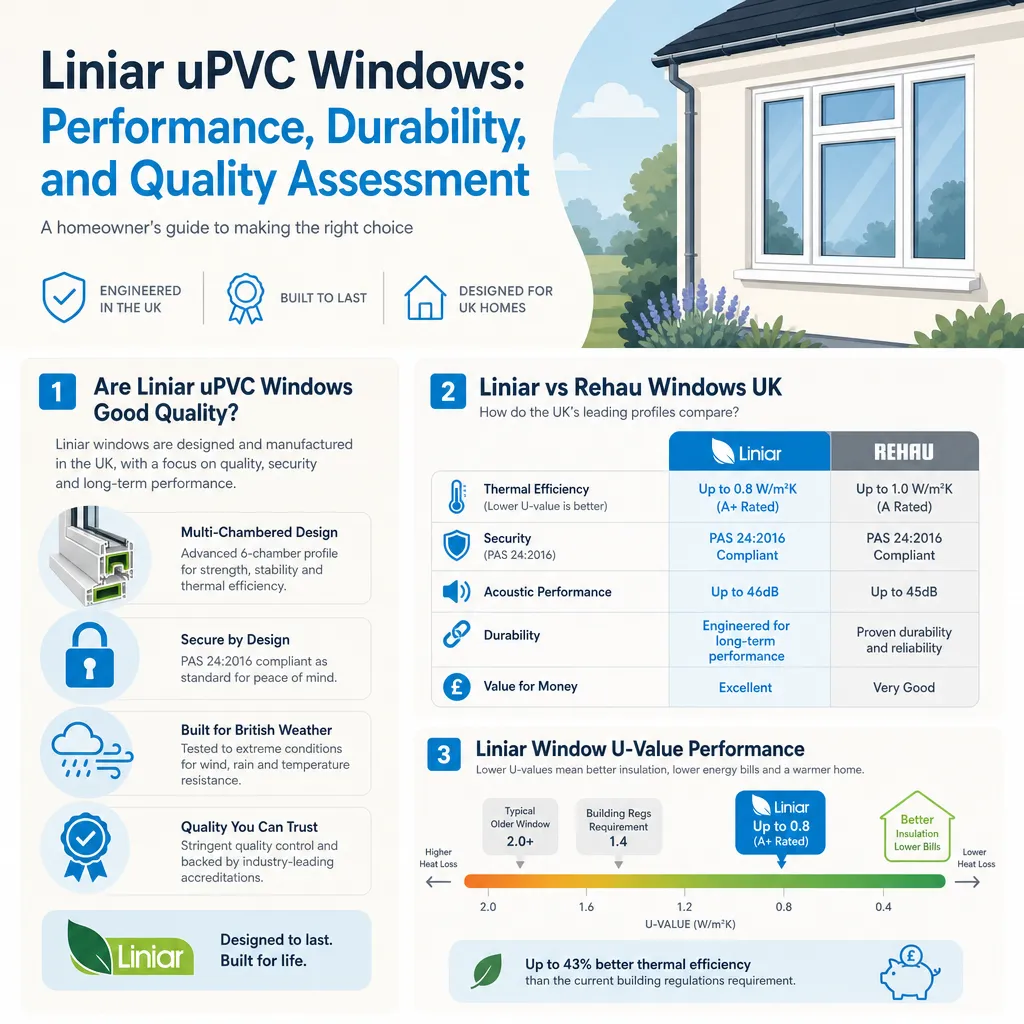
Liniar uPVC Windows: Performance, Durability, and Quality Assessment
Liniar uPVC window profiles are manufactured in the UK using multi-chambered, foamed frames.