Boundary Fence Height Requirements: What Installers and Property Owners Need to Know
By Housey · Last reviewed 3rd of May 2026
Boundary Fence Height Requirements: What Installers and Property Owners Need to Know
Few home improvement jobs appear more straightforward than putting up a garden fence — yet fence height disputes are among the most common planning and boundary conflicts in UK residential areas. Whether you are a property owner replacing a damaged fence, installing a new boundary structure for privacy or security, or a contractor asked to erect panels that feel unusually tall, understanding the planning rules in advance can prevent enforcement notices, neighbour disputes, and costly removal orders. The rules are more nuanced than most people realise, and the consequences of getting them wrong fall squarely on the property owner.
Key points
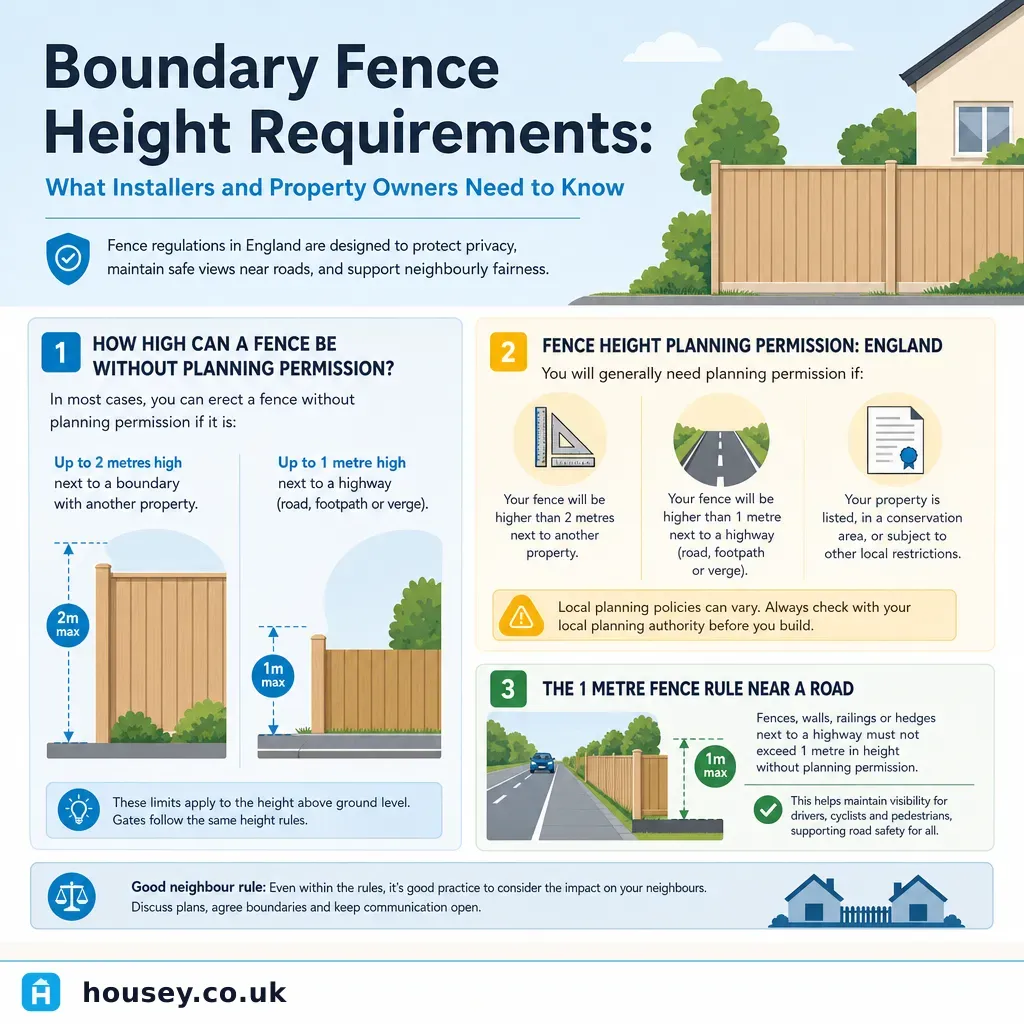
- In England, permitted development rights allow fences up to 2 metres in height without planning permission, but only 1 metre adjacent to a highway used by vehicles — which includes most adopted residential roads.
- Conservation areas, Article 4 Directions, and planning conditions on the property itself may remove or restrict permitted development rights for fences — check before starting any work.
- Listed buildings require listed building consent for any fence that would affect the character of the listed building or its curtilage, regardless of height.
- Permitted development does not override private covenants in your title deeds — some properties have deed restrictions on fence height enforced separately from planning law.
- Planning rules in Scotland, Wales, and Northern Ireland differ from those in England — the 2-metre rule applies in England; equivalent but not identical provisions exist in the devolved nations.
What the planning rules actually say
In England, the primary legislation is the Town and Country Planning (General Permitted Development) (England) Order 2015 (GPDO), specifically Class A of Part 2 (minor operations). Under Class A, erecting a fence, wall, or gate is permitted development — no planning permission required — provided:
- The height does not exceed 1 metre where the fence is adjacent to a highway used by vehicular traffic.
- The height does not exceed 2 metres in all other cases.
- The property is not a listed building.
- Permitted development rights have not been removed by an Article 4 Direction, a planning condition, or a prior approval condition.
Height is measured from ground level at the base of the fence — not from the road or pavement level, though planners may consider visual impact from both sides when assessing complaints.
What counts as "adjacent to a highway"?
This is one of the most widely misunderstood aspects of the fence height rules. In planning law, a highway is not only a main road — it includes:
- Adopted residential roads, including quiet cul-de-sacs and estate roads.
- Public footpaths and bridleways adjoining the property.
- Unadopted roads that are nonetheless publicly used (these can be ambiguous — check with your local highway authority).
In practice, a fence on the front boundary of most houses faces an adopted road or public footpath, meaning the 1-metre limit applies, not the 2-metre limit. This surprises many homeowners and some installers.
Decision tree: which height limit applies to my fence?
- Is the property a listed building or in the curtilage of one? → Listed building consent required regardless of height — seek specialist advice before proceeding.
- Is there an Article 4 Direction covering fences at this property? → Check with your local planning authority before erecting any fence.
- Does the property's planning permission or title contain a condition restricting fence height? → That condition applies — comply with it or apply for a variation.
- Is the fence adjacent to a highway used by vehicular traffic? → Maximum 1 metre without planning permission.
- Does the title deed contain a restrictive covenant on fence height? → The covenant applies regardless of planning rules — comply or take legal advice.
- None of the above? → Maximum 2 metres without planning permission in England.
Conservation areas and Article 4 Directions
In a conservation area, permitted development rights for fences fronting a highway are already more restricted, and many conservation areas have Article 4 Directions that further remove permitted development rights for side and rear fences visible from public land.
Before erecting any fence in a conservation area:
- Contact your local planning authority's conservation officer.
- Check whether an Article 4 Direction applies to your street or property.
- Consider whether the fence design is in keeping with the area's character — even where permission is not strictly required, enforcement action can follow if a fence is considered harmful to the conservation area.
What installers need to check before starting work
The legal responsibility for planning compliance rests with the property owner, but installers who knowingly erect non-compliant fences risk reputational and professional consequences. Before accepting a job:
- Ask the owner whether the property has an Article 4 Direction or planning condition affecting fences.
- Confirm whether the property is listed or in a conservation area.
- If the fence is adjacent to a road, remind the client that the permitted development limit is 1 metre in that location.
- Ask whether the title deed contains any covenant on fence type or height.
Red flags to watch for as an installer:
- Client is unable or unwilling to clarify why they need a fence taller than 2 metres.
- Property fronts an adopted road but the client insists the 2-metre limit applies.
- Property is in a visibly historic or character area but no conservation area check has been done.
- Existing fence is clearly non-compliant and the client wants a like-for-like replacement — replacement fences must comply with current rules, not those that applied to the predecessor.
Party wall and boundary considerations
Even a fence within permitted development can raise issues under the Party Wall etc. Act 1996 if structural work — such as setting posts in concrete close to the legal boundary — is involved. A party wall surveyor can advise whether the Act applies before work begins.
Separately, the fence must be erected on the correct side of the legal boundary. Installing a fence even a few centimetres over the boundary can constitute encroachment regardless of planning status. A boundary surveyor can confirm the legal line before any contractor starts work — particularly important on older properties where boundary positions may be unclear or disputed.
Important limitations
Planning rules for fences involve interactions between national permitted development rights, local planning conditions, conservation area designations, Article 4 Directions, and private legal covenants. Rules vary by local planning authority and devolved nation. Nothing in this article is a substitute for checking with your local planning authority or instructing a planning professional for your specific property and proposal. The rules in Scotland, Wales, and Northern Ireland differ from those in England described above.
What to ask a qualified professional
Before proceeding with a fence where you are uncertain about permissions, ask a planning consultant:
- Does an Article 4 Direction apply to my property that removes permitted development rights for fences?
- Does my property's planning permission or title contain conditions restricting fence height or type?
- If planning permission is required, what supporting information will the local planning authority need?
- Is the proposed fence line on the legal boundary? (Confirm with a boundary surveyor if in doubt.)
- Does the Party Wall etc. Act 1996 apply to the structural work associated with the fence?
When to get professional help
Seek professional advice before erecting a fence if:
- The fence would be taller than 2 metres anywhere, or taller than 1 metre adjacent to a highway.
- The property is listed or in a conservation area.
- You have received a planning enforcement notice relating to an existing fence.
- There is any dispute about where the legal boundary lies — never rely on assumption or an old fence line as proof of ownership.
- Your title deeds contain a restrictive covenant about fences — a solicitor or boundary surveyor should advise before work proceeds.
A party wall surveyor should be consulted if posts or foundations near the boundary fall within the scope of the Party Wall etc. Act 1996.
How Housey can help
Housey can connect you with planning consultants who know your local planning authority's requirements and can confirm whether your fence needs permission or is genuinely permitted development. If the boundary position is uncertain, Housey can help you find boundary surveyors to confirm the legal line before any contractor starts work.
Frequently asked questions
Can my neighbour object to my fence if it is within permitted development?
A neighbour cannot prevent you from erecting a fence that genuinely falls within permitted development rights. However, if they believe it exceeds the permitted height or breaches a planning condition, they can complain to the local planning authority, who may investigate and issue an enforcement notice requiring removal or reduction at your expense.
Does the 2-metre rule apply to the full fence structure, including trellis on top?
Yes. The height limit applies to the full structure — panels, coping, posts, and any trellis fitted above the panels. Trellis added on top of a 2-metre fence would likely take the total height above the permitted development limit, requiring planning permission for the additional element.
Can I replace an existing fence taller than 2 metres without planning permission?
No. Replacement of a non-compliant fence does not benefit from permitted development rights simply because a non-compliant structure previously existed. If the replacement fence would also exceed the permitted development height limit, planning permission should be sought before the work begins.
What happens if I erect a fence without permission and it is non-compliant?
Your local planning authority can issue an enforcement notice requiring you to remove or reduce the fence at your own expense. There is generally a four-year limitation period for enforcement action on operational development such as fences, but action can be taken within that period.
Do the same height rules apply to walls and gates?
Yes. Class A of Part 2 of the GPDO applies to walls, fences, and gates. The same height limits apply: 1 metre adjacent to a highway used by vehicles, 2 metres elsewhere, with the same exceptions for listed buildings, Article 4 Directions, and planning conditions.
Sources and further reading
- Town and Country Planning (General Permitted Development) (England) Order 2015, Part 2 Class A — legislation.gov.uk
- Permitted development rights for householders: technical guidance — GOV.UK
- Planning enforcement guidance — GOV.UK Planning Practice Guidance
- Party Wall etc. Act 1996 — explanatory booklet — GOV.UK
- Conservation areas: designation, appraisal and management — Historic England
Useful next reads
 Planning & Pre-Build
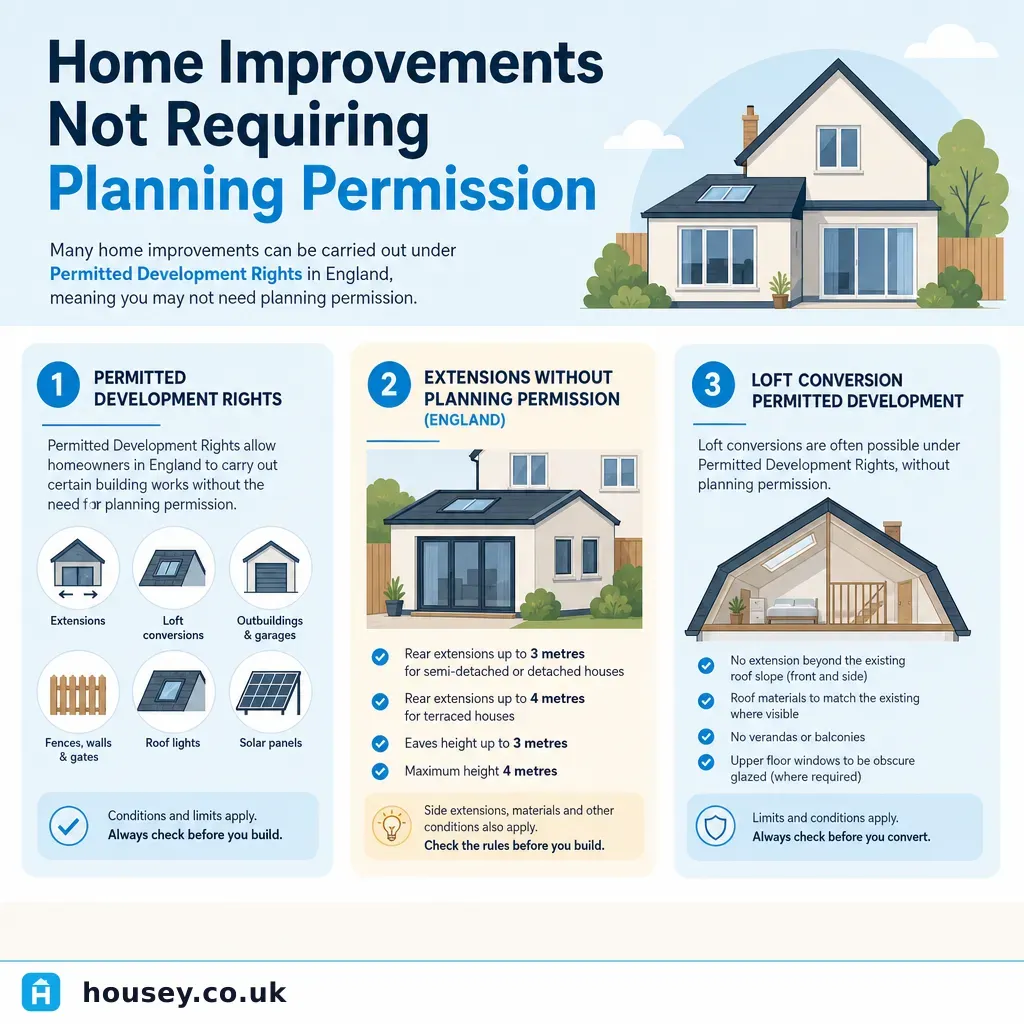
Home Improvements Not Requiring Planning Permission
Many common home improvements in England fall under Permitted Development Rights and do not require a planning application.
 Planning & Pre-Build
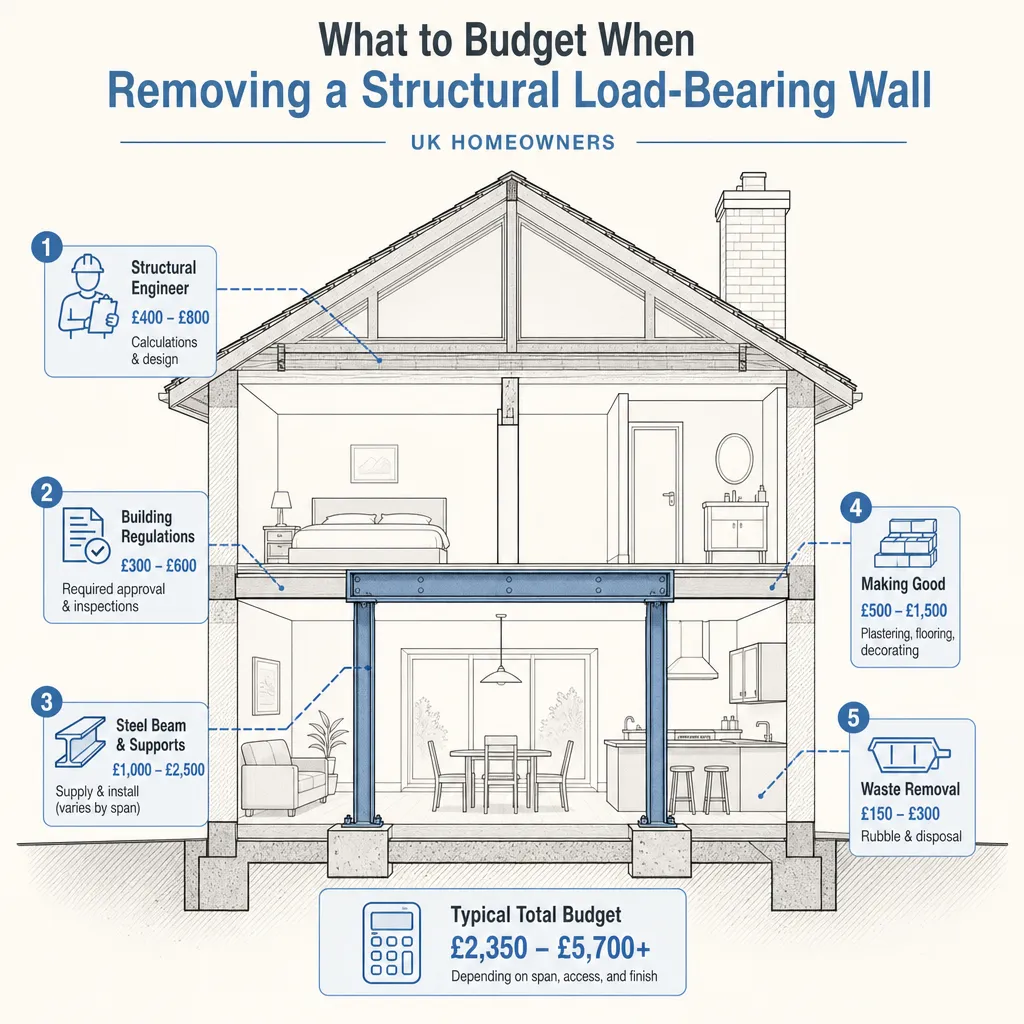
What to Budget When Removing a Structural Load-Bearing Wall
Removing a load-bearing wall in a typical UK home costs £2,500–£8,000 or more in total, covering a structural engineer's calculations, Building Regulations approval, the steel beam, builder's labour, and replastering.
 Planning & Pre-Build
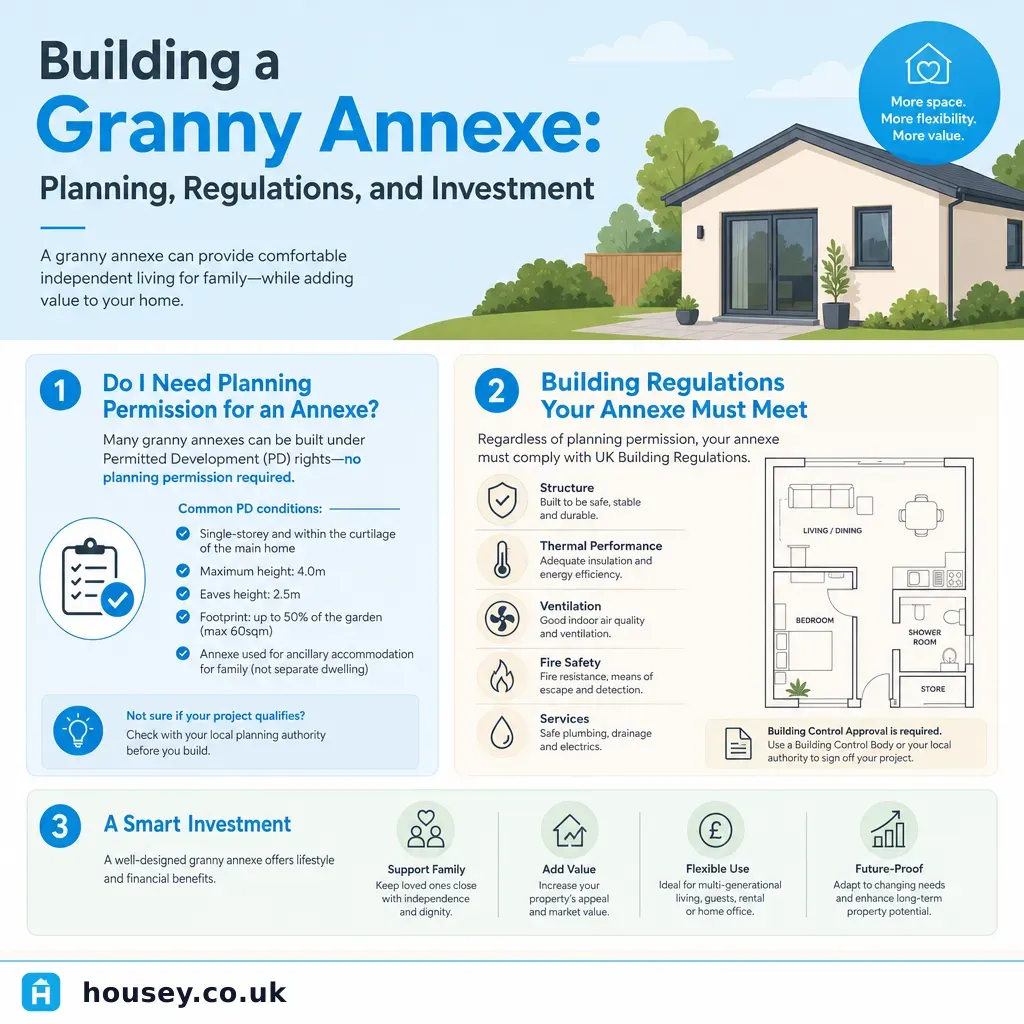
Building a Granny Annexe: Planning, Regulations, and Investment
A granny annexe in the UK may or may not need planning permission depending on whether it is classed as incidental to the main house or as a separate dwelling.
 Planning & Pre-Build
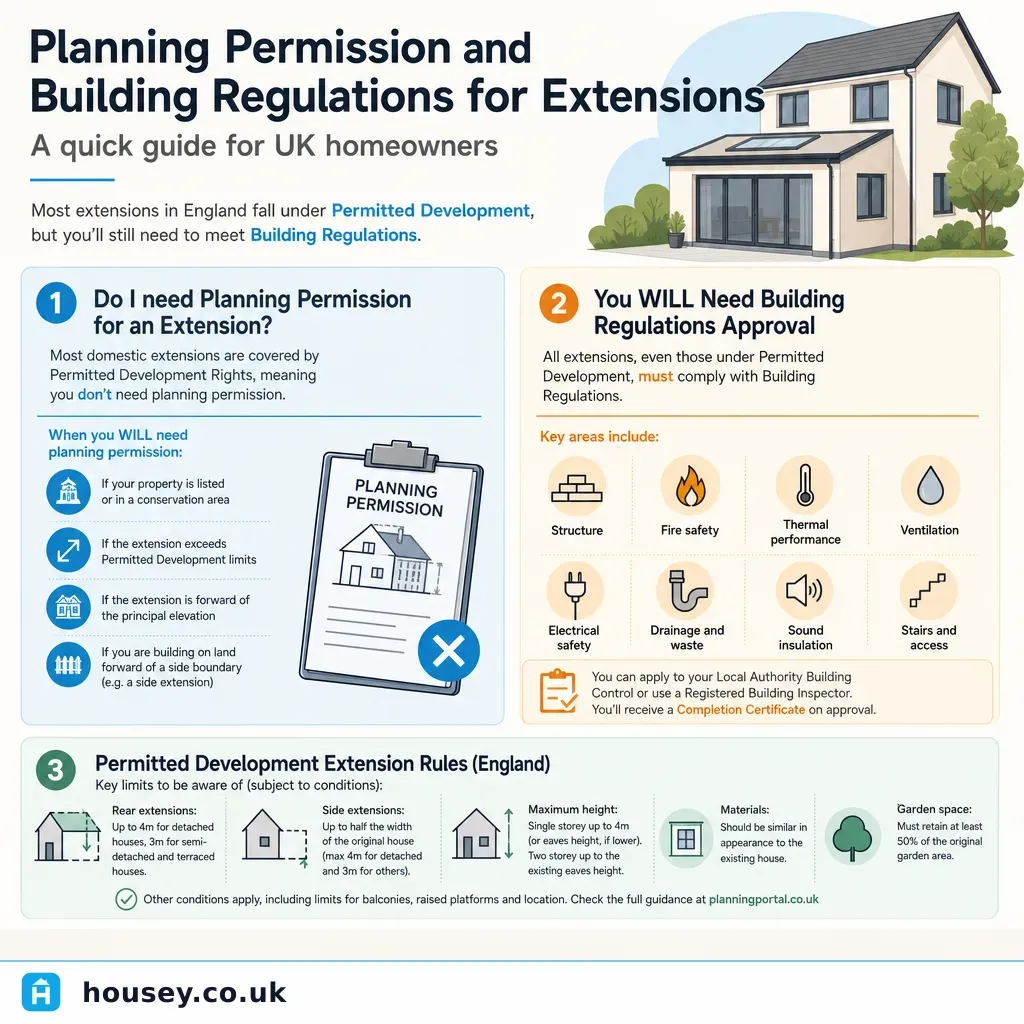
Planning Permission and Building Regulations for Extensions
UK home extensions usually require both planning permission and Building Regulations approval, though most smaller rear extensions qualify as Permitted Development under the GPDO 2015 and need no planning application.
 Planning & Pre-Build
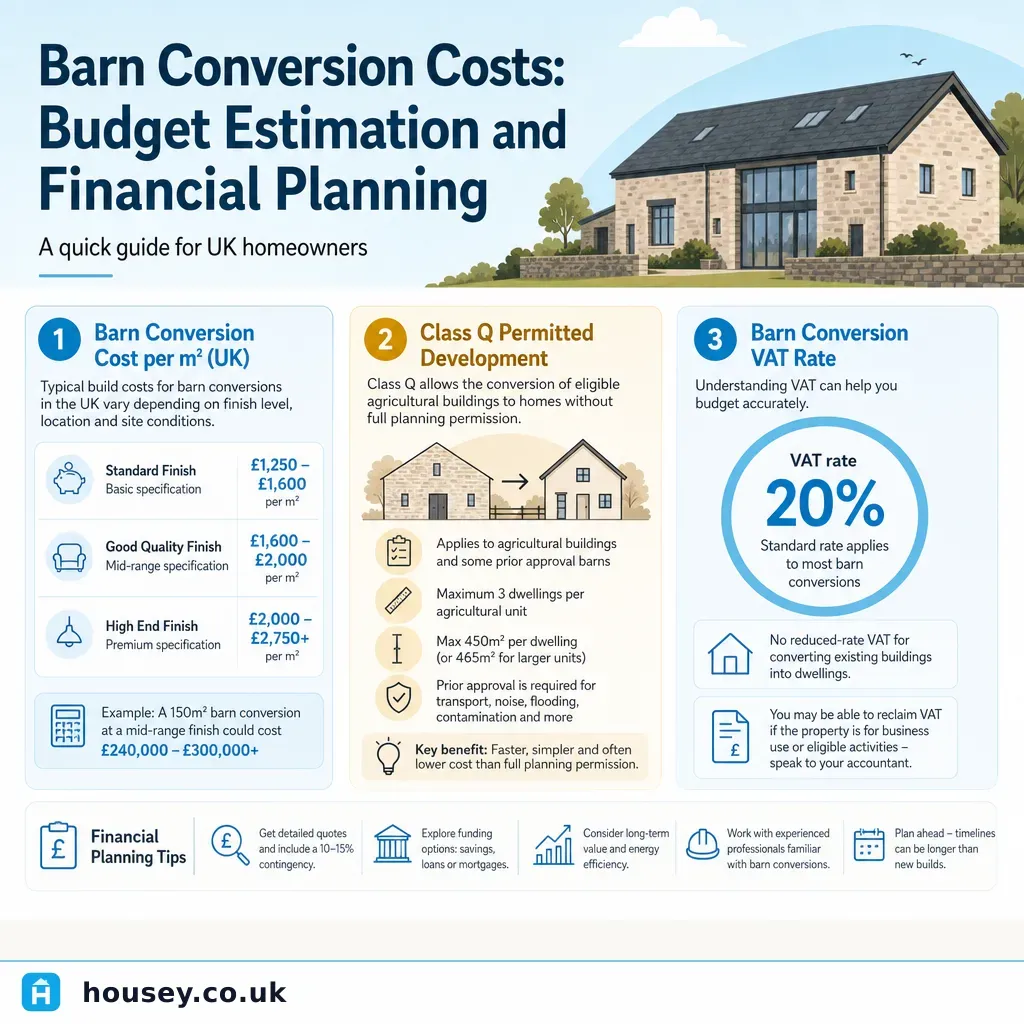
Barn Conversion Costs: Budget Estimation and Financial Planning
Barn conversions in the UK typically cost £1,500–£3,000 or more per square metre depending on structural condition, specification, and location.