Boundary Fencing Options and Installation Costs
By Housey · Last reviewed 10th of May 2026
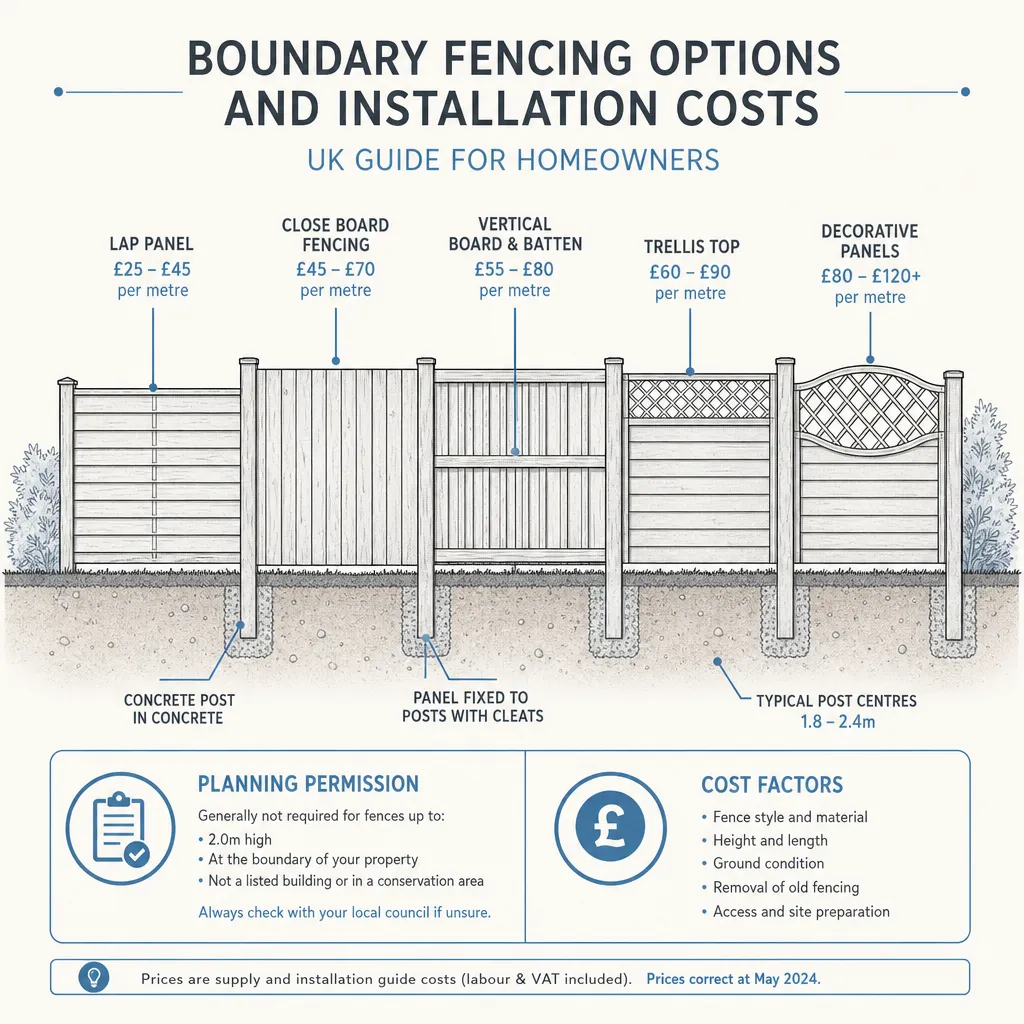
Boundary Fencing Options and Installation Costs
Replacing or installing a boundary fence is one of the most common garden improvement projects for UK homeowners, yet it raises surprisingly complex questions about materials, planning rules, and legal responsibility. Whether you are replacing ageing timber panels after a winter storm or installing new close-board fencing around a newly purchased property, getting the specification, permissions, and contractor right from the start will save you cost and conflict.
Key points
- Most domestic garden fences up to 2 metres high (1 metre if fronting a highway) fall within permitted development rights and do not require planning permission — but this can be restricted in conservation areas, listed buildings, or new-build estates with covenant restrictions.
- Boundary ownership — and therefore who pays for and maintains the fence — is recorded in your title deeds or HM Land Registry title plan, often indicated by a 'T' mark on the boundary plan.
- Close-board (feather-edge) fencing typically costs £80–£180 per linear metre installed; timber lap-panel fencing £50–£120; metal palisade £100–£250+. Indicative UK costs, last reviewed 2026-05-10.
- Concrete or steel posts outlast timber posts by 20 or more years and provide a more durable anchor for fence panels.
- Planning permission is required for any fence over 2 metres in height, over 1 metre adjacent to a highway, or where permitted development has been removed by an Article 4 Direction, planning condition, or conservation area designation.
Fencing material options compared
The right material depends on your priorities — privacy, durability, cost, aesthetics, and site conditions including slope, access, and soil type.
Material | Best for | Not ideal for | Typical lifespan | Approx. installed cost per linear metre |
|---|---|---|---|---|
Timber lap panel | Budget installs, quick coverage | Exposed or windy sites, longevity | 10–15 years | £50–£120 |
Close-board (feather-edge) | Privacy, robust domestic boundaries | Can look heavy in smaller gardens | 15–25 years | £80–£180 |
Post-and-rail | Rural or paddock boundaries, open look | Privacy | 20–30 years | £30–£80 |
Metal palisade | Security, commercial-style perimeters | Residential aesthetics | 30+ years | £100–£250+ |
Composite (timber/plastic blend) | Low maintenance, colour choice | Higher upfront cost | 25+ years | £120–£300 |
Trellis/open-panel | Decorative use, climbing plants | Privacy, security | 10–20 years | £40–£100 |
Indicative UK costs, last reviewed 2026-05-10. Prices vary by region, ground conditions, post specification, gravel boards, and contractor rates.
Permitted development rules for garden fencing
Under the Town and Country Planning (General Permitted Development) (England) Order 2015, householders may erect, maintain, or alter a fence, wall, or gate without planning permission, provided:
- The height does not exceed 2 metres anywhere in the garden.
- The height does not exceed 1 metre if the fence is adjacent to a highway (including a public footpath).
- The property is not in a conservation area, World Heritage Site, or National Park where additional restrictions apply.
- No permitted development restriction has been imposed by an Article 4 Direction, planning condition, or estate covenant.
Rules differ in Wales, Scotland, and Northern Ireland. Check with your local planning authority (LPA) if you are unsure whether permitted development applies to your property.
Some new-build estates carry covenant restrictions enforced by the developer or an estate management company rather than the local authority — these are recorded in your title deeds, not on the Planning Portal.
Boundary ownership: who is responsible?
Before instructing a contractor, establish which boundaries you are legally responsible for. Boundary ownership is recorded in your title deeds or HM Land Registry title register. A 'T' mark on the boundary plan indicates which owner bears responsibility for that feature; where 'T' marks face each other (forming an 'H'), responsibility may be shared.
The common assumption that 'the left-hand fence is always yours' has no legal basis. If the deeds are unclear or a dispute with a neighbour arises, a boundary surveyor or solicitor specialising in property law can advise on the correct legal position.
If your neighbour owns the boundary and their fence is in poor condition, they may not be legally obliged to repair or replace it. You may erect a new fence on your own side of the boundary line without needing their consent, provided you stay clearly within your land.
Homeowner checklist: before you install fencing
What to ask before accepting a quote
- What species and treatment grade is the timber — pressure-treated to BS 8417, or only dip-treated?
- What is the post size and specification, and will posts be concrete-set?
- Are gravel boards included to protect panel bases from ground contact?
- Is removal and disposal of the existing fencing included in the price?
- Is VAT included, and what is the payment schedule?
- What warranty does the installer offer on materials and workmanship?
When to get professional help
Most domestic fencing projects can be managed by a competent local fencing contractor or landscaper. Seek additional professional advice if:
- The boundary location is genuinely disputed — a boundary surveyor or property solicitor should assess the legal position before any physical work begins.
- The ground involves a significant slope, proximity to a watercourse, or a tree root protection zone.
- You are in a conservation area, near a listed building, or uncertain whether permitted development applies.
- The fence forms part of a wider landscaping or drainage scheme that requires design input.
How Housey can help
Housey connects you with experienced local landscapers and garden designers who can advise on boundary treatment options, source competitive quotes, and oversee installation from specification through to completion.
Frequently asked questions
Do I need planning permission to replace an existing fence?
Replacing a like-for-like fence at the same height usually falls within permitted development and does not require planning permission. However, if the fence is adjacent to a highway, if you are in a conservation area, or if a planning condition removes permitted development rights on your property, you may need consent. Check with your local planning authority if uncertain.
Can my neighbour attach things to my fence without permission?
No — if the fence sits on your land, it is your property. Your neighbour cannot attach trellis, fixings, or any structure to it without your consent. Doing so could amount to trespass. If the fence belongs to your neighbour, the same principle applies in reverse.
How long does fence installation typically take?
For a standard domestic boundary run of 20–30 metres, a competent contractor can usually complete installation in one to two days. Longer runs, difficult ground conditions, significant level changes, or bespoke gate work will require additional time. Ask for a realistic programme before committing.
What is a gravel board and do I need one?
A gravel board is a horizontal board fitted at the base of a panel fence between posts, preventing the panel from sitting directly in soil. It significantly extends the lifespan of timber fencing and is recommended for close-board and lap-panel systems.
Sources and further reading
- Fences, gates and garden walls — Planning Portal
- Town and Country Planning (General Permitted Development) (England) Order 2015 — legislation.gov.uk
- Property boundaries, walls, trees and hedges — Citizens Advice
- Get information about property and land — HM Land Registry
Useful next reads
 Improvement & Build
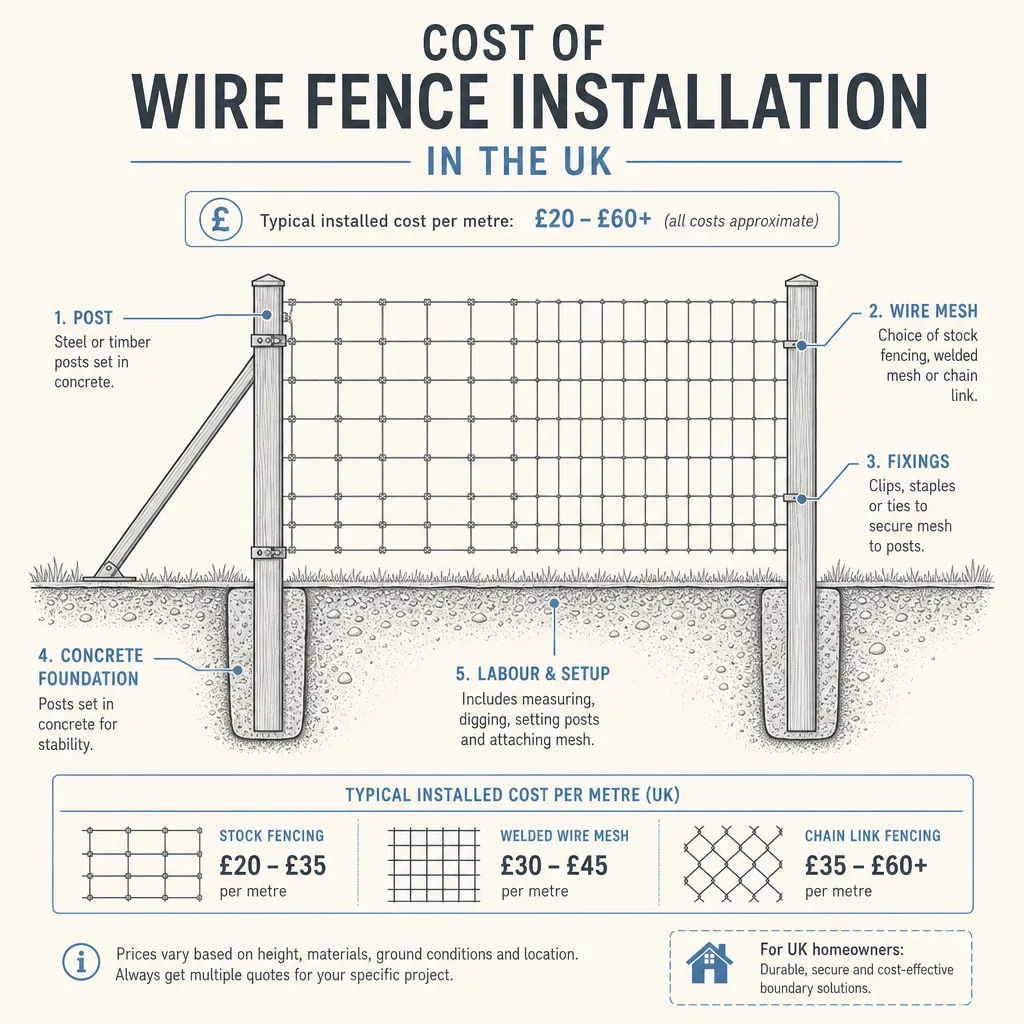
Cost of Wire Fence Installation in the UK
Wire fence installation in the UK typically costs £8–18 per metre for stock fencing, £15–35 per metre for chain-link, and £20–45 per metre for welded wire mesh panels, all installed.
 Improvement & Build
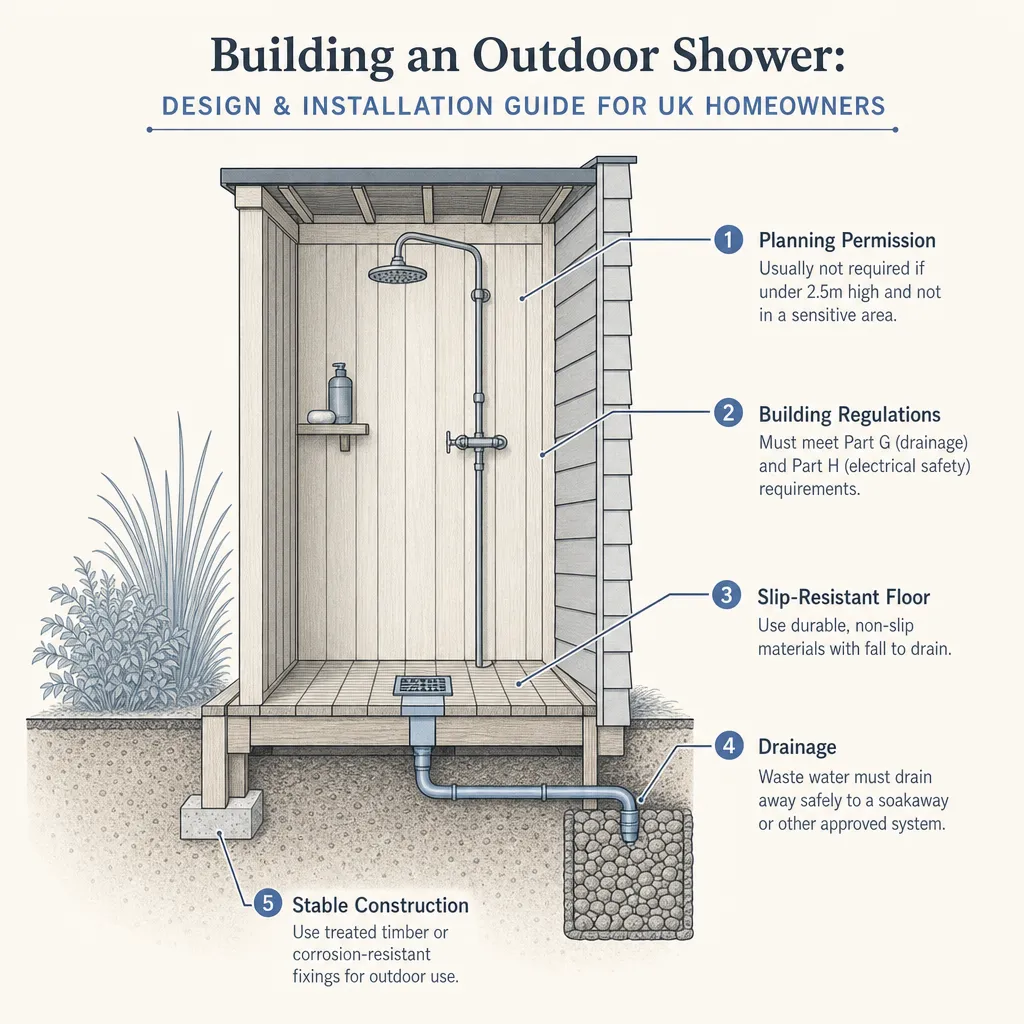
Building an Outdoor Shower: Design and Installation Guide
Building an outdoor shower in the UK typically requires checking Permitted Development limits for outbuildings, complying with Building Regulations Part H for any drainage connection, and using a Gas Safe engineer or Part P electrician for any hot water supply.
 Improvement & Build
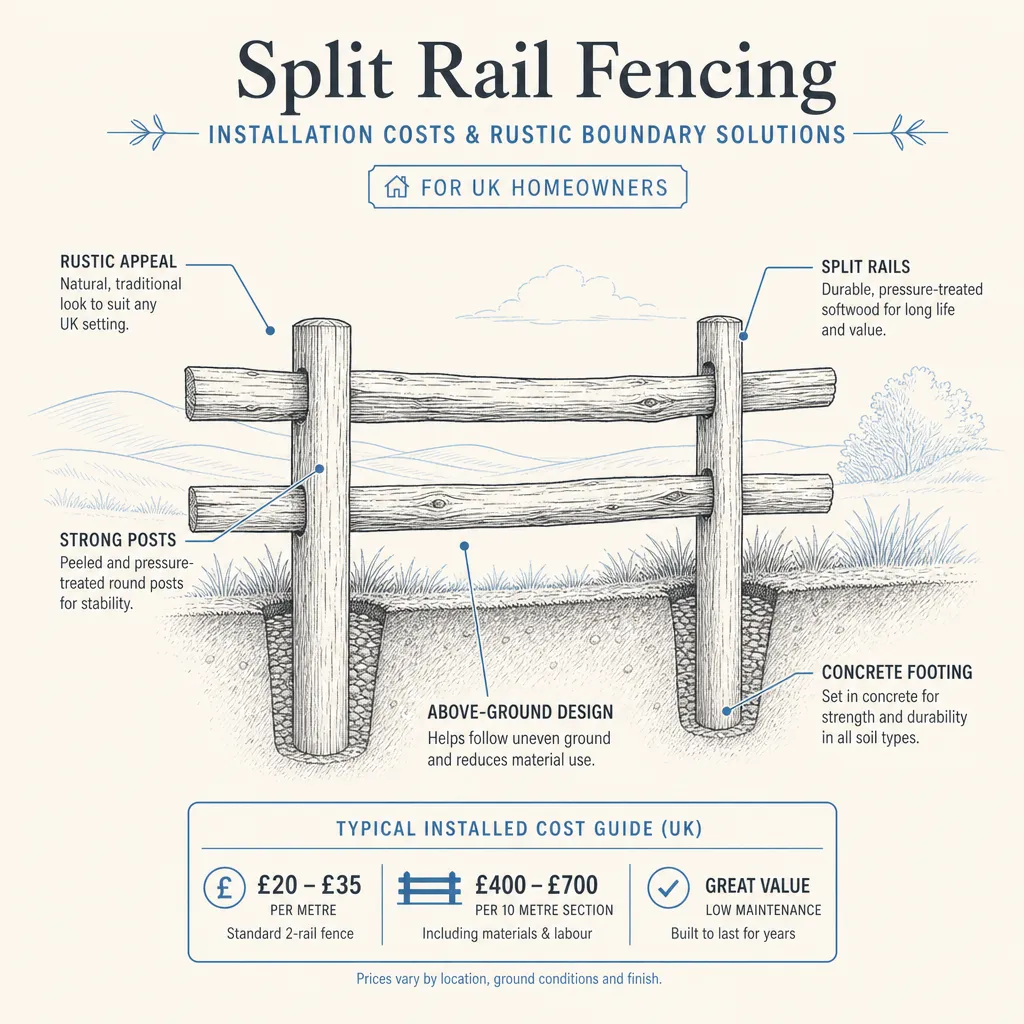
Split rail fencing: installation costs and rustic boundary solutions
Split rail fencing typically costs between £30 and £60 per linear metre installed in the UK, depending on timber species, number of rails, and local labour rates.
 Improvement & Build
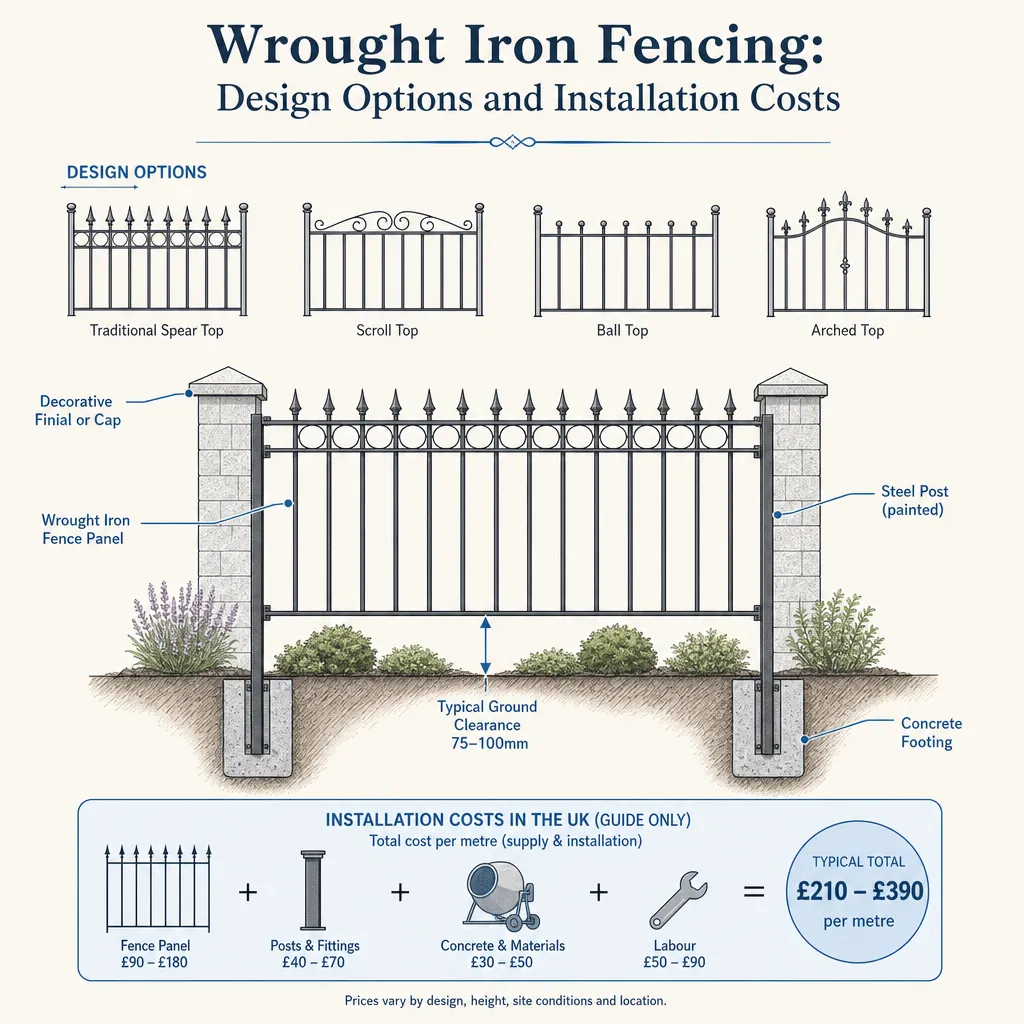
Wrought Iron Fencing: Design Options and Installation Costs
Wrought iron style fencing in the UK is typically mild steel, powder-coated or hot-dip galvanised for rust resistance.
 Improvement & Build
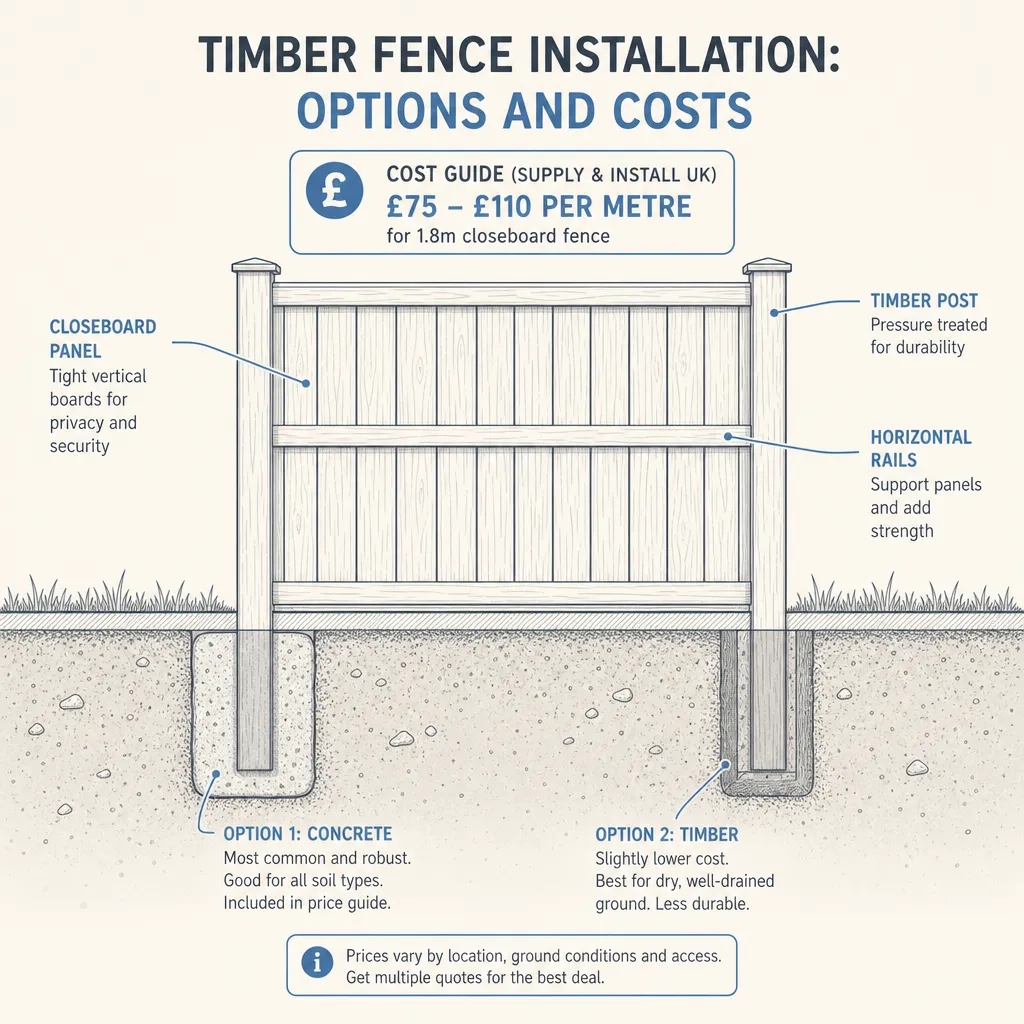
Timber Fence Installation: Options and Costs
Timber fence installation in the UK typically costs £60–£150 per metre installed, depending on fence type, post material, and ground conditions.