Wrought Iron Fencing: Design Options and Installation Costs
By Housey · Last reviewed 30th of May 2026
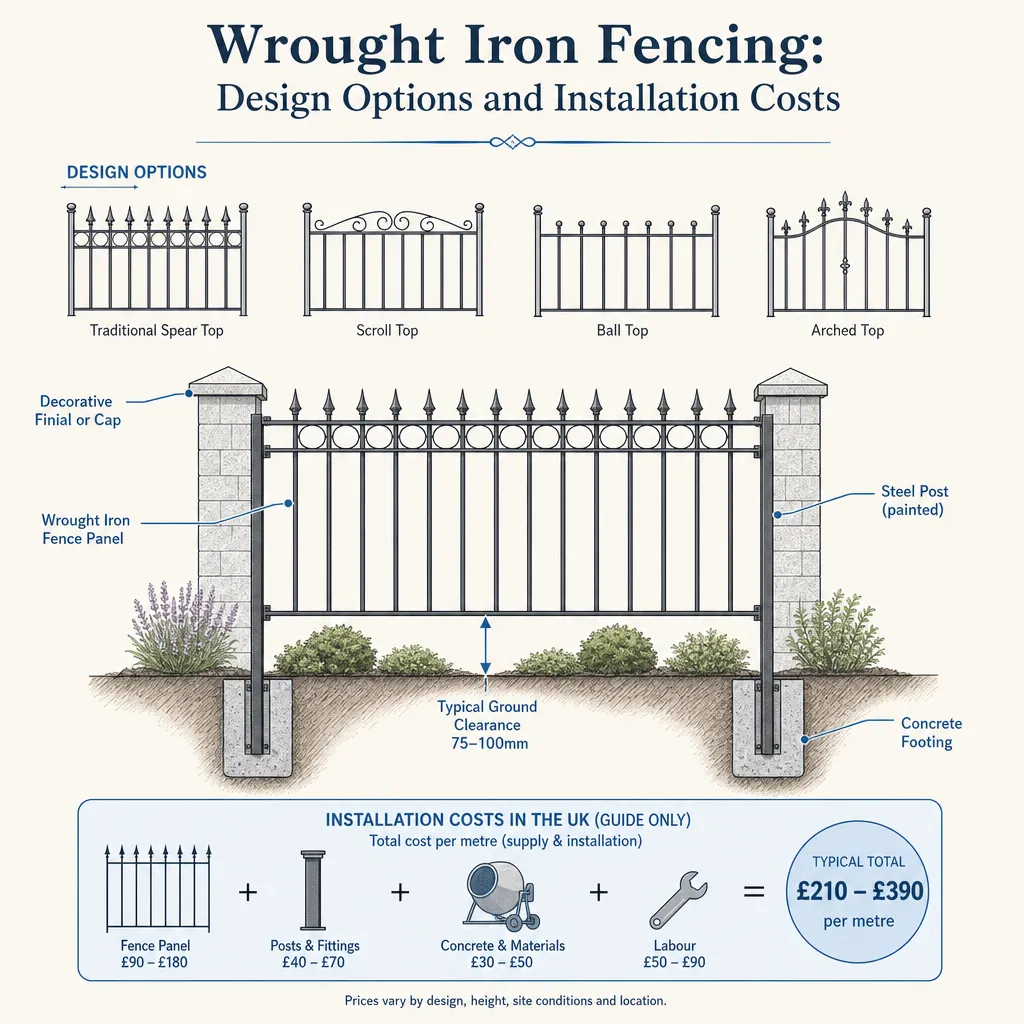
Wrought Iron Fencing: Design Options and Installation Costs
Replacing a tired fence or installing new boundary treatment is one of the most visible improvements a homeowner can make. Wrought iron-style fencing is popular on Victorian terraces, Edwardian semis, and period properties where a traditional aesthetic matters, as well as on modern homes where a strong boundary statement is wanted. Understanding the cost drivers, design options, and planning considerations before requesting quotes helps you get accurate prices and avoids surprises once work is underway.
Key points
- Genuine wrought iron is rarely manufactured today; most fencing sold as wrought iron in the UK is mild steel, sometimes hot-dip galvanised for enhanced corrosion resistance.
- Planning permission is required for fences over 1 m in height adjacent to a highway (including footpaths alongside a road), or over 2 m elsewhere — check the Town and Country Planning (General Permitted Development) (England) Order 2015 before proceeding.
- Hot-dip galvanising provides substantially better long-term rust protection than powder coating alone and is strongly worth specifying in coastal or high-rainfall locations.
- Installation costs depend heavily on ground conditions: removal of existing hard standing, concrete footings, and uneven terrain all increase labour time and therefore total cost.
- Boundary responsibility is a legal matter determined by title deeds — check your Land Registry title register to confirm which boundaries are yours before commissioning any work.
What is wrought iron fencing?
The term wrought iron is widely used in marketing but is largely historical. True wrought iron — a hand-worked alloy with slag inclusions providing natural corrosion resistance — was largely superseded by mild steel during the 20th century. Most decorative iron-style fencing sold in the UK today is one of the following:
- Mild steel — welded and powder-coated or painted. More affordable and widely available, but requires regular maintenance to prevent rust penetration at chips or scratches.
- Hot-dip galvanised mild steel — steel dipped in molten zinc for significantly enhanced corrosion resistance. Recommended for coastal locations, high-rainfall regions, and wherever a longer maintenance-free lifespan is a priority.
- Cast iron — historically used for period railings; now mainly specified for high-end restoration work on listed or historic properties. Heavier, more expensive, and requiring specialist fabrication.
For most UK homeowners replacing or installing boundary fencing, mild steel with a quality powder-coat finish — or hot-dip galvanised steel where longevity matters — is the practical choice.
Design options
Wrought iron-style fencing is available in a wide range of panel designs. The table below summarises the most common options:
Style | Best for | Not ideal for | Notes |
|---|---|---|---|
Vertical bar (standard) | Front gardens, general boundaries | Contemporary minimalist schemes | Most common; clean period-appropriate look |
Bow-top | Family gardens, public areas | Period properties wanting authentic style | Rounded tops reduce injury risk |
Spear-top (finial) | Victorian and Edwardian period homes | Households with young children | Sharp tops; check local aesthetic guidance |
Flat-top | Contemporary and traditional settings | Highly decorative period schemes | Versatile; works well with brick pillars |
Decorative scroll | Victorian terraces, listed properties | Budget-conscious projects | Higher cost; bespoke fabrication available |
Height, bar spacing, infill panels, and finish colour are all configurable. Most suppliers offer standard panel widths (typically 1.2 m or 1.8 m) alongside bespoke fabrication for non-standard runs or complex corners.
Planning permission and permitted development
Before installation, confirm whether planning permission is required. Under the Town and Country Planning Act 1990 and the Town and Country Planning (General Permitted Development) (England) Order 2015, fences, walls, and gates are permitted development if:
- They are 1 m or less in height adjacent to a highway used by vehicles (including footpaths alongside a road).
- They are 2 m or less in height elsewhere on the boundary.
If the property is listed or in a conservation area, permitted development rights may be restricted or removed entirely. Listed building consent or conservation area consent may be required even for like-for-like replacements. Always check with your local planning authority before proceeding, and consult Historic England's guidance if the property is designated.
Boundary responsibility is a separate legal matter. There is no general rule that the left-hand or right-hand boundary is yours — responsibility is stated in your title deeds. Check via HM Land Registry if the deeds are unclear.
Installation costs
Indicative UK costs, last reviewed 2026-05-30. Costs vary by region, supplier, ground conditions, and specification. Always obtain at least three written quotes.
Specification | Approximate cost per linear metre |
|---|---|
Standard mild steel, powder-coated (supply only) | £40–£80 |
Standard mild steel, supply and installation | £80–£150 |
Hot-dip galvanised steel, supply and installation | £120–£200 |
Bespoke or decorative panels, supply and installation | £200–£400+ |
Cost drivers include panel design and height, steel gauge and finish specification, removal of existing fencing or hard standing, post depth and concrete footing requirements, the number and type of gates, and site access. VAT at 20% applies to labour and materials.
What to ask before accepting a quote
Before instructing a fencing contractor, ask:
- What steel grade and wall thickness are being used?
- Is the coating hot-dip galvanised, powder-coated, or both — and what is the specified coating thickness?
- What finish colours are available, and are they included in the quoted price?
- Who will carry out the installation, and do they have relevant experience with metalwork boundary work?
- How deep will posts be set, and will they be concreted into the ground?
- What happens if the ground contains rubble, old concrete, or tree roots?
- Is VAT included in the quoted price?
- What warranty is offered on fabrication and on the surface finish?
- Will the fencing meet or exceed BS 1722 (the British Standard for fencing specification)?
- Is disposal of old fencing materials included, and how will the site be left on completion?
When to get professional help
Iron-style fencing installation involves heavy metalwork, concrete mixing, and precise post alignment that is difficult to manage as a DIY project for most homeowners. Use a professional contractor when:
- The run is more than a few metres, or corners and returns are involved
- Ground conditions are hard, uneven, or require excavation to remove old footings
- You need gates, particularly vehicle-width gates with heavy hinges and latching gear
- The property is listed or in a conservation area and specialist advice is needed
- You are uncertain about boundary responsibility or a boundary is shared with a neighbour
How Housey can help
For fencing installation as part of a wider hard landscaping project, a qualified landscaper will assess ground conditions, source appropriate materials, and ensure posts are correctly set for long-term stability. Housey connects you with local landscaping professionals with relevant metalwork and boundary installation experience, so you can compare quotes and appoint with confidence.
Frequently asked questions
Does wrought iron fencing need regular maintenance?
Yes. Mild steel fencing will rust if the protective coating is chipped or scratched. Annual inspection, prompt touching up of chips with a compatible metal primer and topcoat, and cleaning off any surface rust will extend the life of a powder-coated finish significantly. Hot-dip galvanised fencing requires less frequent attention but should still be checked periodically for damage to the zinc layer.
How long does wrought iron style fencing last?
With proper maintenance, powder-coated mild steel fencing can last 15 to 25 years or more before requiring significant remediation. Hot-dip galvanised fencing can last considerably longer — 40 to 70 years in many environments — because the zinc layer corrodes sacrificially to protect the underlying steel. Coastal and high-humidity sites will see reduced lifespans for any coating system.
Can I paint wrought iron fencing myself?
Yes. Use a metal primer followed by a compatible topcoat or specialist metal paint. Ensure the surface is clean, dry, and free of loose rust before painting — wire-brushing loose scale back to sound metal improves adhesion. For large sections or a full colour change, a professional metalwork painter will achieve a more durable and even finish than DIY brushwork.
Who is legally responsible for a boundary fence?
Boundary responsibility is determined by your title deeds, not by any general convention. The idea that you always own the fence on a particular side has no legal basis in England and Wales. Check your title register via HM Land Registry or ask your conveyancer if the deeds are ambiguous. Any work affecting a shared boundary may also engage the Party Wall etc. Act 1996.
Sources and further reading
- Planning Portal: Fences, Gates and Garden Walls — Planning Portal
- Town and Country Planning (General Permitted Development) (England) Order 2015 — legislation.gov.uk
- Find a Property — HM Land Registry
- Permitted Development in Conservation Areas — Historic England
- Party Wall etc. Act 1996 — legislation.gov.uk
Useful next reads
 Improvement & Build
Designing an outdoor kitchen for entertaining and garden living
An outdoor kitchen in a UK garden needs a stable, level base — typically a concrete slab or quality paving — with weather-rated materials such as stainless steel grade 316 or frost-rated porcelain.
 Improvement & Build
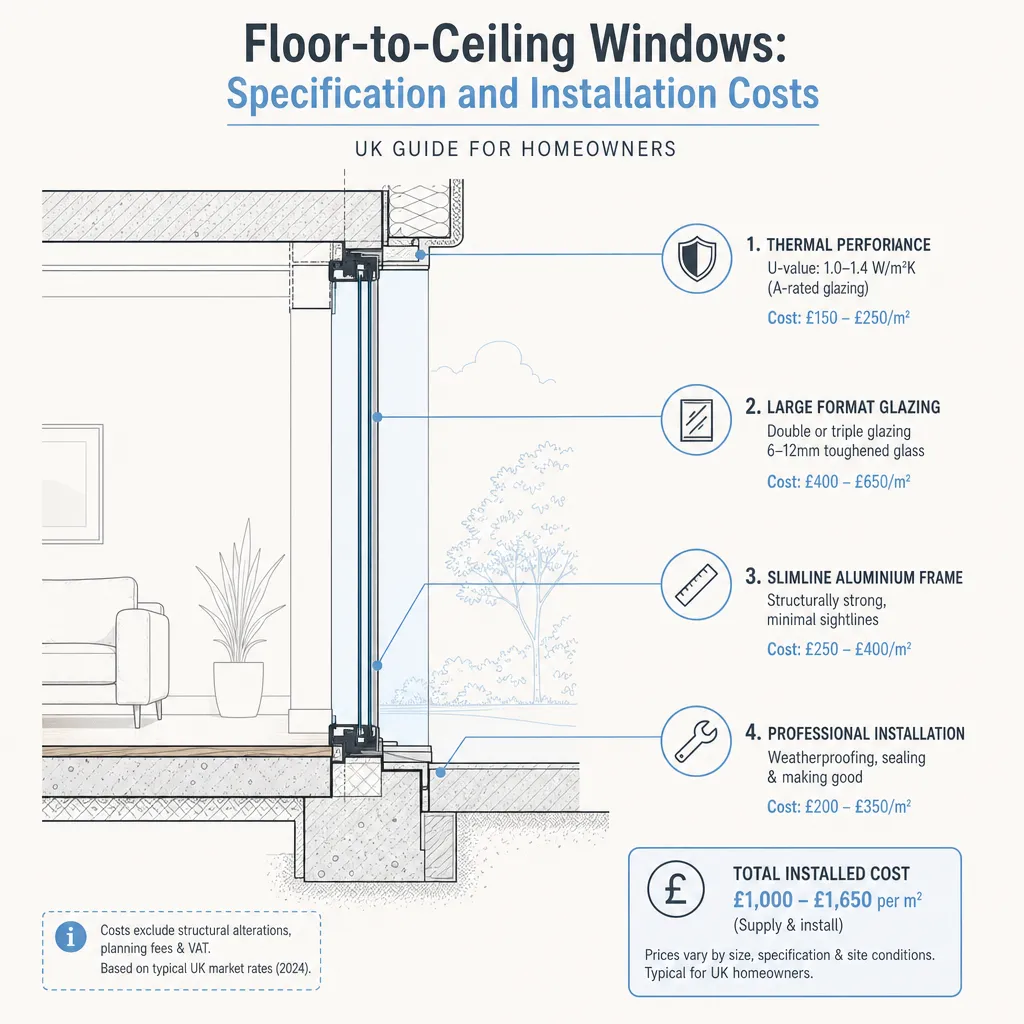
Floor-to-Ceiling Windows: Specification and Installation Costs
Floor-to-ceiling windows in the UK typically cost £1,800–£6,500 per unit installed, depending on glazing type, frame material, and whether structural alterations are needed.
 Improvement & Build
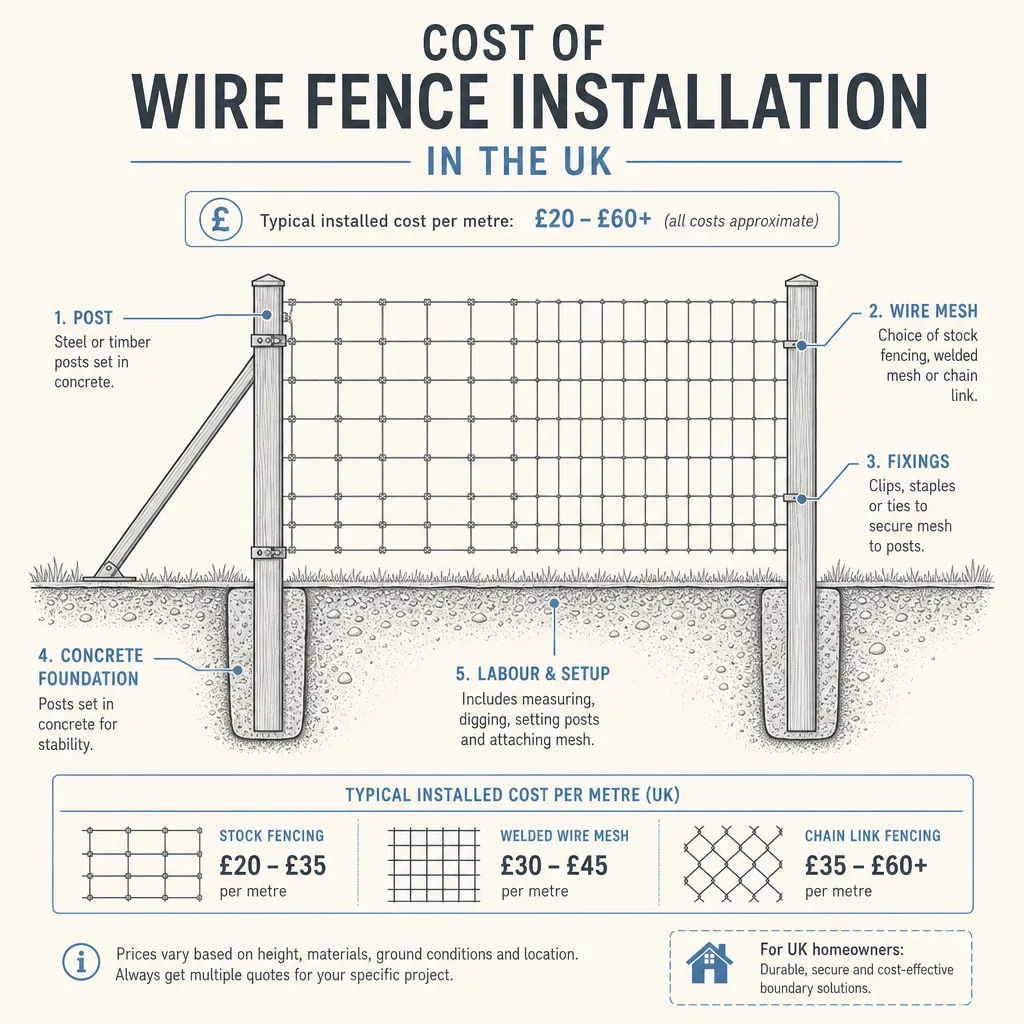
Cost of Wire Fence Installation in the UK
Wire fence installation in the UK typically costs £8–18 per metre for stock fencing, £15–35 per metre for chain-link, and £20–45 per metre for welded wire mesh panels, all installed.
 Improvement & Build
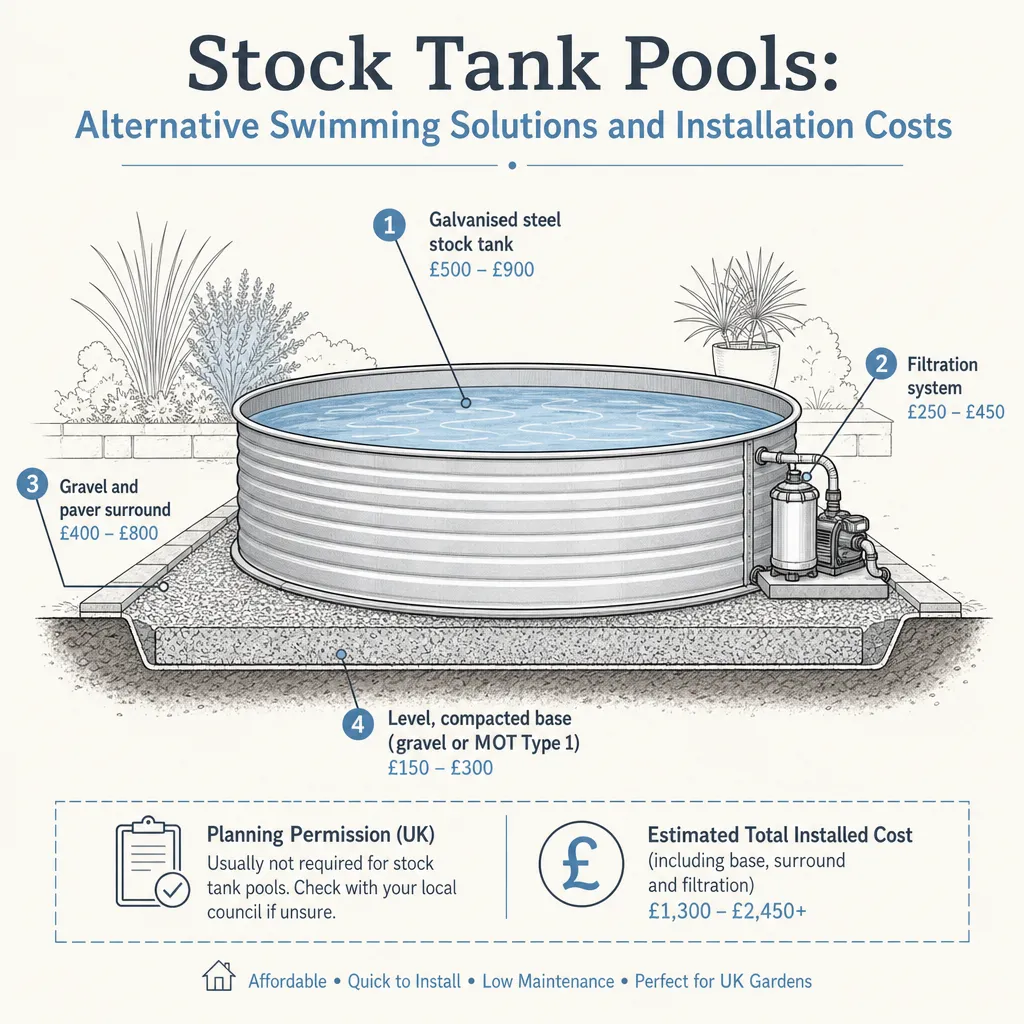
Stock Tank Pools: Alternative Swimming Solutions and Installation Costs
A stock tank pool is a galvanised steel agricultural trough repurposed as a garden plunge or swimming pool.
 Improvement & Build
Vinyl Fencing Installation Costs
Vinyl fencing in the UK costs roughly £60–£200 per metre for supply and installation, depending on fence style, height, and ground conditions.