Brick Wall Construction and Maintenance: Understanding Masonry Integrity
By Housey · Last reviewed 19th of May 2026
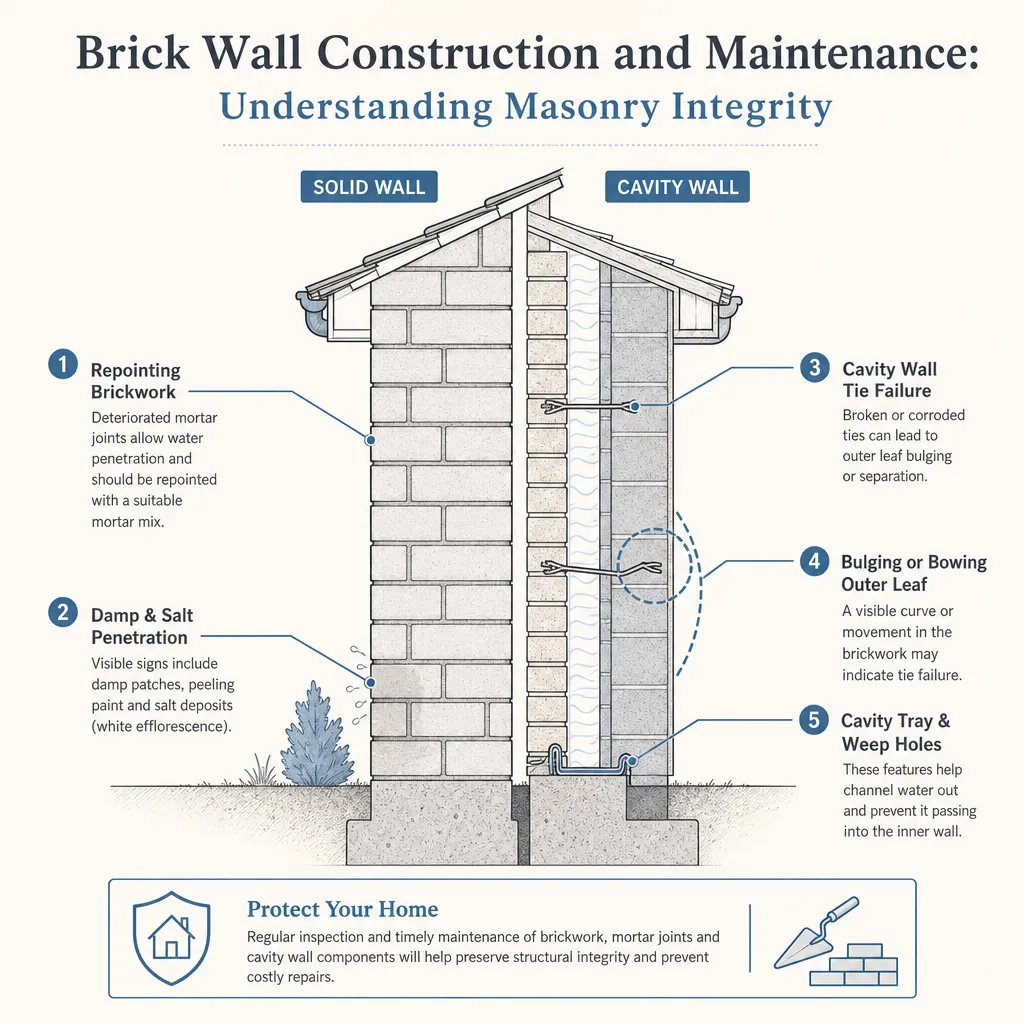
Brick Wall Construction and Maintenance: Understanding Masonry Integrity
Brick is the dominant external wall material in UK housing, forming the structure, weatherproofing, and visual character of millions of homes built across the last two centuries. Whether you are planning an extension, investigating damp patches, monitoring cracks in a wall, or simply trying to maintain a property in good condition, understanding how brick walls are built — and how they deteriorate — is essential context for making sound decisions about repairs, inspections, and professional involvement.
Key points
- Post-1920s UK homes are typically built with cavity wall construction: two leaves of masonry separated by a 50–100 mm cavity, often filled with blown or injected insulation from the 1970s onward.
- Pre-1920 properties generally have solid masonry walls, usually 215 mm (single-brick) or 327 mm (one-and-a-half brick) thick, which behave very differently from cavity walls with respect to moisture movement and thermal performance.
- Cavity wall tie failure is a documented defect in properties built roughly 1920–1981, when ferrous metal wall ties corrode, expand, and cause characteristic horizontal cracking at regular vertical intervals along mortar courses.
- Mortar repointing is typically required when joints have eroded more than 10–15 mm below the brick face, at which point water ingress, frost damage, and internal dampness become likely.
- Building Regulations Approved Document A (Structure) covers structural requirements for masonry walls; structural repairs and new masonry construction must meet these standards and may require building control notification.
Solid walls versus cavity walls: key differences
Understanding which wall type your home has affects every decision from insulation retrofit to damp diagnosis to repair specification.
Feature | Solid masonry wall | Cavity wall |
|---|---|---|
Typical era | Pre-1920 (Victorian, Edwardian) | Post-1920s (interwar, post-war, modern) |
Construction | Single or double leaf, no gap | Inner and outer leaf, 50–100 mm cavity |
Wall thickness | ~215 mm (one brick) or ~327 mm | ~260–330 mm including cavity |
Moisture behaviour | Absorbs and releases moisture (breathes); managed with lime mortar and breathable finishes | Outer leaf gets wet; cavity drains; risk of damp if cavity is bridged |
Insulation options | External wall insulation (EWI) or internal insulation — both affect floor area or façade appearance | Cavity fill with blown mineral wool or EPS beads |
Structural ties | Not applicable | Metal wall ties link inner and outer leaves — prone to corrosion in older stock |
Identifying from outside | Alternating stretcher and header bricks visible in regular pattern | Stretcher bond only on outer leaf (all bricks laid lengthways) |
How to identify your wall construction
Decision tree: what wall type do I have?
- Measure wall thickness at a window or door reveal. A thickness of roughly 215–330 mm suggests solid construction; 260–350 mm with an obvious internal cavity at a broken edge suggests cavity construction.
- Look at the external brick pattern. If you can see header bricks (short end facing outward) in alternating courses, it is usually solid.
- Check for small circular plug holes on the external wall face (typically 22 mm diameter), which indicate past cavity wall insulation injection.
- Ask a chartered surveyor or energy assessor if you are purchasing a property and the wall type is unclear — it affects heating costs, retrofit options, and defect risk significantly.
- Check original building control drawings if available from your local authority for new-build properties.
Common brick wall defects and their causes
Mortar joint erosion and repointing
Mortar joints are the sacrificial element in masonry construction — they are designed to be softer than the bricks, so that weathering erodes the joint rather than the brick face. When joints erode beyond 10–15 mm, water tracks into the wall, freezes, expands, and can cause:
- Spalling — the brick face flakes away under freeze-thaw pressure
- Frost damage to the brick body, particularly in pre-war soft handmade bricks
- Damp penetration through to the internal wall face
- In cavity walls, an increased risk of water bridging the cavity
Repointing — raking out old mortar and replacing it with a fresh mix — restores the weatherproof joint. The mortar specification matters critically: using a mix stronger than the bricks (typically Portland cement-rich mixes on soft Victorian bricks) forces cracking into the bricks themselves rather than the joints. Pre-1920 properties generally require a lime-based mortar matched to the original specification. Historic England guidance on mortars for historic masonry is a useful reference for pre-1919 properties.
Cavity wall tie failure
Properties built approximately 1920–1981 often used steel (ferrous) wall ties to link the inner and outer leaves of the cavity wall. These ties can corrode over time — particularly in coastal areas, exposed elevations, and properties where cavity fill or persistent damp has accelerated rusting. As corroded ties expand, they force characteristic horizontal cracking along mortar courses at regular vertical intervals, typically every 450 mm, reflecting the standard tie spacing.
Wall tie failure is a structural issue. Do not attempt to diagnose or repair it without professional assessment. A specialist contractor can carry out a wall tie survey using a borescope to inspect the cavity, supplemented by electromagnetic scanning to locate existing ties. Stainless steel replacement ties are drilled through the outer leaf and chemically anchored; the corroded ties are neutralised in place.
Identifying crack patterns
Not all cracking in masonry is structural, but all cracking warrants monitoring and, where indicated, professional assessment.
Crack pattern | Likely cause | Recommended action |
|---|---|---|
Horizontal cracks at regular 450 mm vertical spacing | Cavity wall tie failure | Wall tie survey; structural engineer assessment |
Stepped diagonal cracks in brickwork, particularly from openings | Differential settlement; thermal movement | Monitor width and progression; RICS surveyor or structural engineer if widening |
Vertical cracks at corners or around window or door reveals | Thermal expansion; absent movement joints | Monitor; structural engineer if widening or recurrent |
Map cracking (crazing) on render | Render failure; sulphate attack on mortar | Remove render; inspect masonry below before re-rendering |
Spalling brick face in localised area | Frost damage; over-strong repointing mortar | Repoint with appropriate lime mortar; replace spalled bricks |
Rising damp and penetrating damp
Water in masonry arrives via two distinct routes:
- Penetrating damp: through failed mortar, cracked bricks, or absent external weatherproofing — most common in solid walls and cavity walls with bridged cavities.
- Rising damp: water drawn upward through the wall by capillary action where the damp proof course (DPC) has failed, is absent, or has been bridged by raised external ground levels or mortar droppings in the cavity.
Distinguishing the two requires professional diagnosis — a damp and timber surveyor or a RICS surveyor with damp expertise. Surface moisture meter readings alone can mislead; they measure surface resistance, not the source or extent of moisture. The BRE guidance on damp diagnosis covers appropriate investigation techniques.
Red flags that require professional assessment
The following signs in brickwork warrant professional inspection before any repair work is carried out:
- Horizontal cracking at regular vertical intervals across the elevation (possible tie failure)
- Any crack wider than approximately 1 mm, or any crack that is visibly widening over time
- Stepped diagonal cracks running from window or door openings toward the corners of the building
- Visible bowing, bulging, or displacement of the outer leaf of masonry
- Internal damp that does not respond to ventilation improvements or surface treatment
- Extensive white salt deposits (efflorescence) indicating sustained water movement through the masonry
- Sections of mortar that can be raked out by hand pressure alone
- Any boundary wall, retaining wall, or garden wall that appears to be leaning or destabilised
Masonry maintenance checklist
Important limitations
This article provides general background information on brick wall construction and masonry maintenance in the UK. Structural defects, cavity wall tie failure, rising damp, and significant cracking can each have multiple causes and often interact — diagnosis from a guide is not a substitute for a professional assessment of your specific property. Building regulations compliance for structural repairs is a legal requirement. Always consult a qualified professional — a RICS-accredited surveyor, a chartered structural engineer (MIStructE or CEng), or a specialist masonry contractor — before undertaking significant repair work or making decisions affecting structural elements.
When this becomes urgent
Seek professional assessment without delay if:
- Cracking is widening visibly over days or weeks
- Doors or windows are suddenly sticking or jamming, which may indicate movement in the structure
- There is visible bowing, bulging, or displacement of any part of the external wall
- A retaining wall, boundary wall, or garden wall appears unstable or is leaning noticeably
- The property has been affected by subsidence, flooding, or nearby excavation work, and new cracks have appeared
What to ask a qualified professional
Before instructing a surveyor, structural engineer, or masonry contractor:
- Are you RICS-accredited, a member of the Chartered Institute of Building (CIOB), or a chartered structural engineer (MIStructE or CEng)?
- Will you provide a written report identifying defects, likely causes, and recommended remediation with a clear specification?
- If wall ties are being assessed, will you use both borescope inspection and electromagnetic scanning?
- What mortar specification do you propose for repointing, and why is it appropriate for this property's age and brick type?
- Will the proposed work require building control notification, and will you manage that process?
- Is scaffolding access included in the quotation?
- What guarantee do you provide for the completed work, and is it insurance-backed?
- Is VAT included in the quoted price?
When to get professional help
Routine visual inspection and minor repointing of soft, eroded joints on a standard post-1920 property are within the capability of experienced contractors. Any structural concerns — wall tie failure, settlement cracking, bowing masonry, retaining wall instability — require a RICS-accredited surveyor or chartered structural engineer to assess before any remedial work begins. Do not attempt to diagnose structural cracking from a guide alone.
How Housey can help
Housey connects homeowners with vetted extension builders and masonry specialists experienced in UK brick construction across all eras. Whether you are planning new masonry work, dealing with defects, or need a professional structural assessment, Housey can help you find qualified contractors and compare itemised quotes.
Frequently asked questions
How often should brick walls be repointed?
There is no fixed interval — mortar lifespan depends on the original mix, exposure, brick type, and local climate. In practice, many properties require repointing of exposed elevations every 50–80 years, with localised repairs more frequently. Annual visual inspection after winter is the most practical maintenance approach.
Can I repoint brick walls myself?
Raking out and replacing small areas of mortar on a post-1920 cavity wall property is a task some competent DIYers undertake with an appropriate bagged mortar mix. However, for pre-1920 properties, an incorrect mortar specification can damage the bricks. For large areas, height access, or where specification is uncertain, instruct a qualified masonry contractor.
Does repointing require planning permission or building regulations approval?
Like-for-like repointing of existing brickwork is generally maintenance and requires neither planning permission nor building control notification. However, if the property is listed, any repair — including repointing — may require Listed Building Consent, particularly if the mortar type, colour, or joint profile differs from the original.
What is the difference between pointing and repointing?
Pointing refers to finishing mortar joints during original construction. Repointing is the repair process of raking out deteriorated mortar and replacing it, without rebuilding the masonry itself. The mortar specification used for repointing should match the original mix strength and composition, particularly in pre-1920 lime-mortar construction.
Sources and further reading
- Building Regulations Approved Document A (Structure) — GOV.UK
- Historic England: Mortars for Historic Masonry — Historic England
- BRE: Understanding dampness in buildings — Building Research Establishment
- RICS: Dampness in Buildings guidance — RICS
Useful next reads
 Improvement & Build
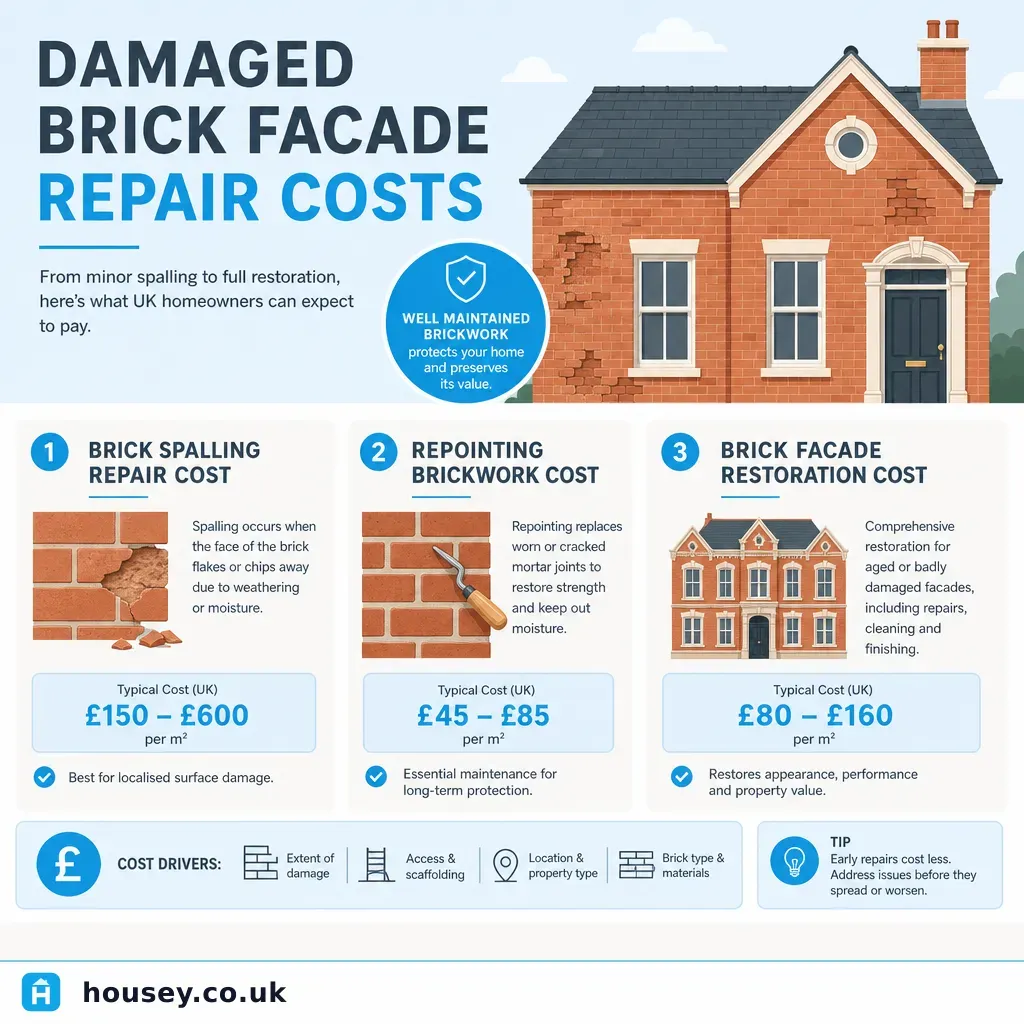
Damaged Brick Facade Repair Costs
Repairing a damaged brick facade in the UK typically involves repointing mortar joints, replacing spalled bricks, or full masonry restoration.
 Improvement & Build
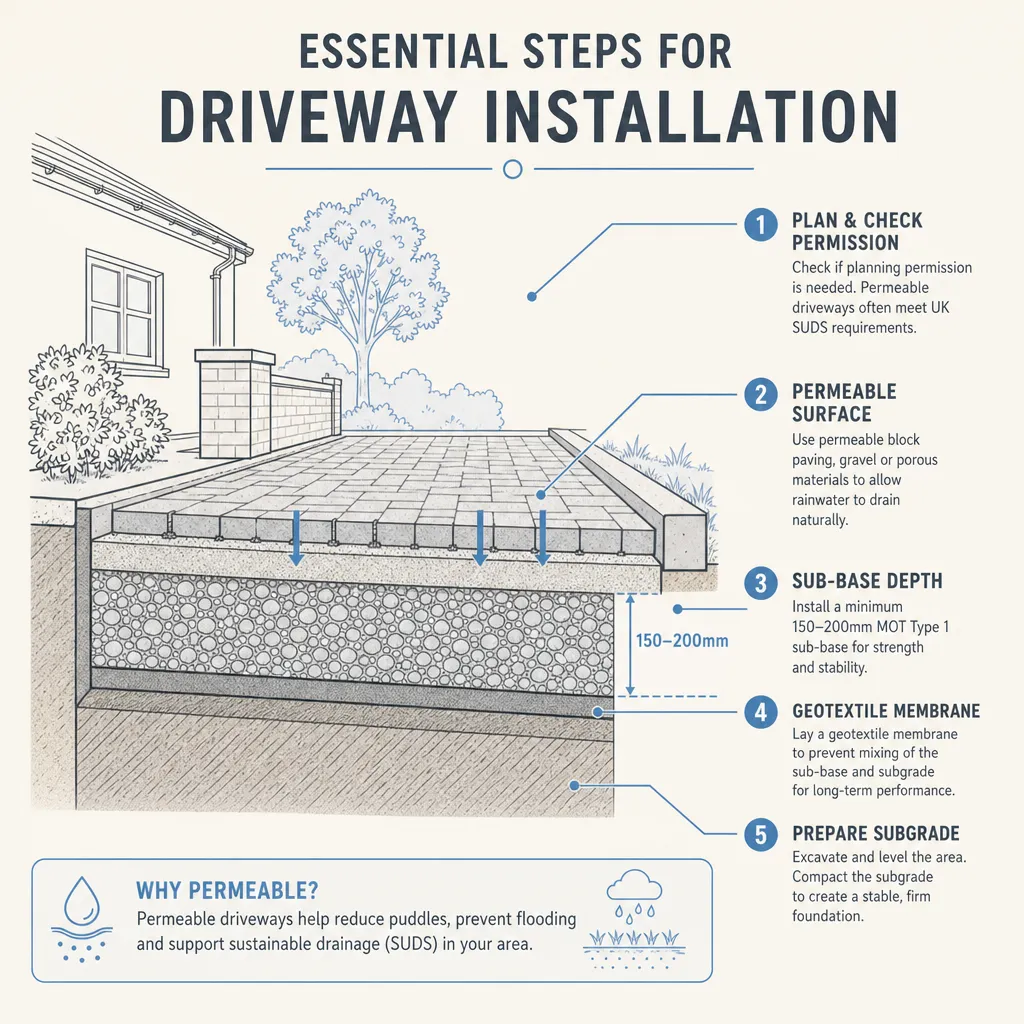
Essential Steps for Driveway Installation
Installing a driveway in England requires planning permission only when using an impermeable surface (standard tarmac, concrete, or block paving) on a front garden area over 5 m².
 Improvement & Build
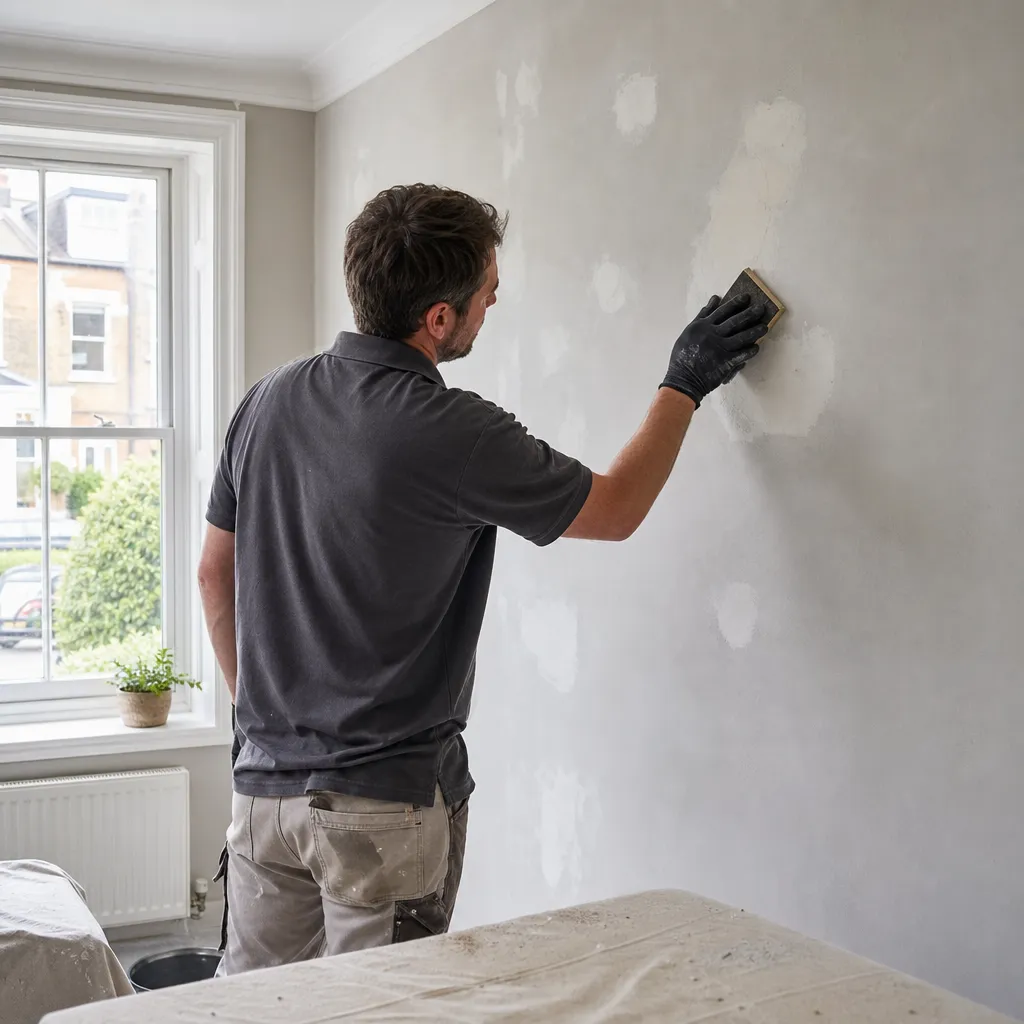
Preparing Walls for Patching: Surface Preparation Best Practice
Durable wall patching starts with removing all loose material, cutting back to a clean and stable edge, cleaning the substrate, and priming with a construction-grade PVA bonding agent before applying any filler or plaster.
 Improvement & Build
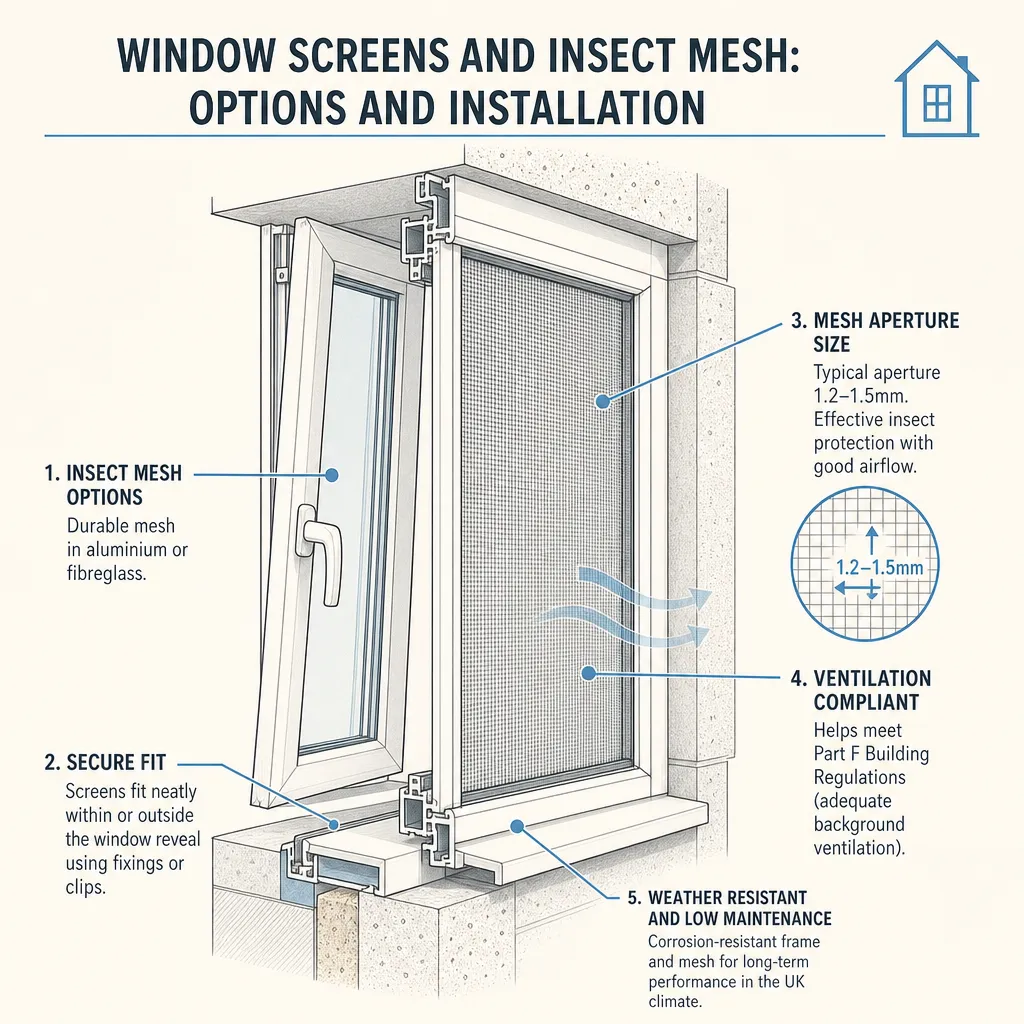
Window Screens and Insect Mesh: Options and Installation
UK window screens fall into four main types: fixed frame, roller retractable, pleated folding, and magnetic snap-fit.
 Improvement & Build
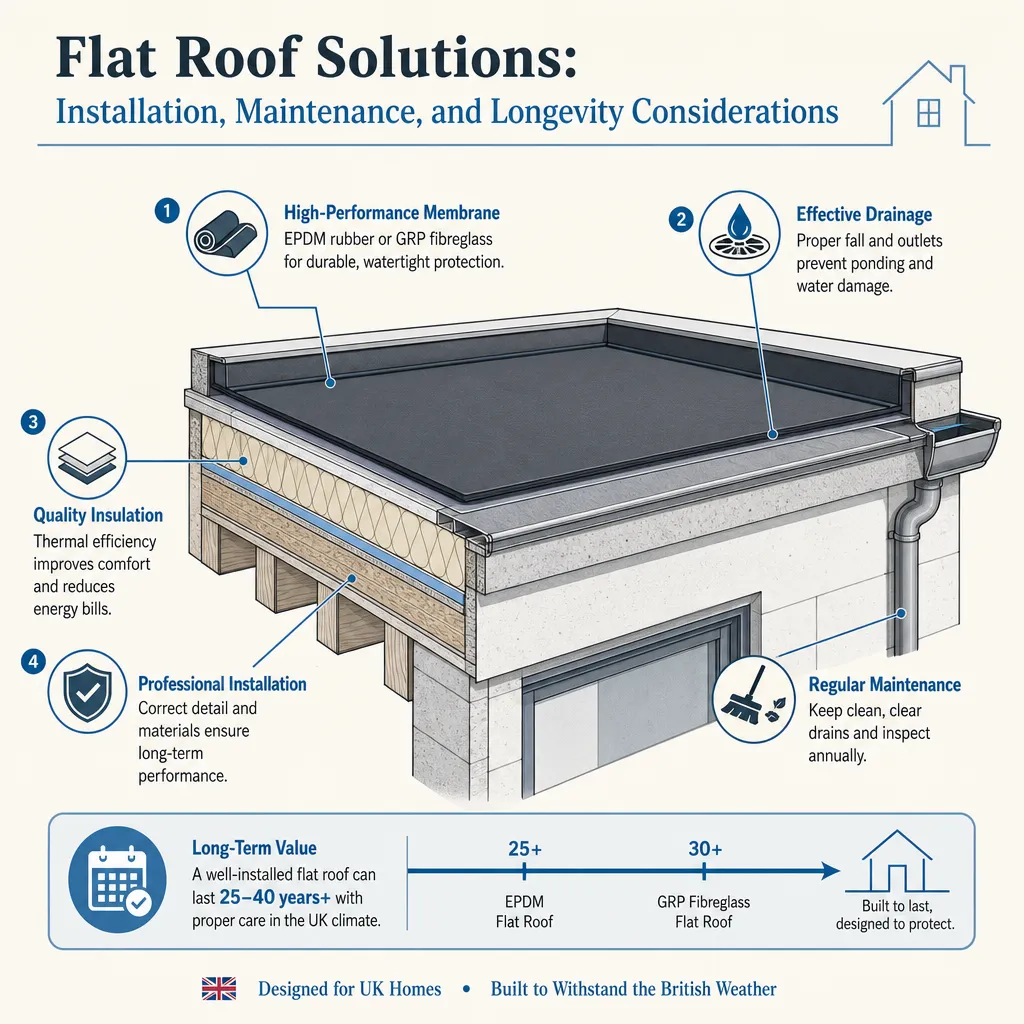
Flat Roof Solutions: Installation, Maintenance, and Longevity Considerations
Flat roofs use several waterproofing systems — EPDM rubber, GRP fibreglass, liquid-applied coatings, modified bitumen felt, lead, and zinc — each with different lifespans and installation requirements.