Window Screens and Insect Mesh: Options and Installation
By Housey · Last reviewed 26th of May 2026
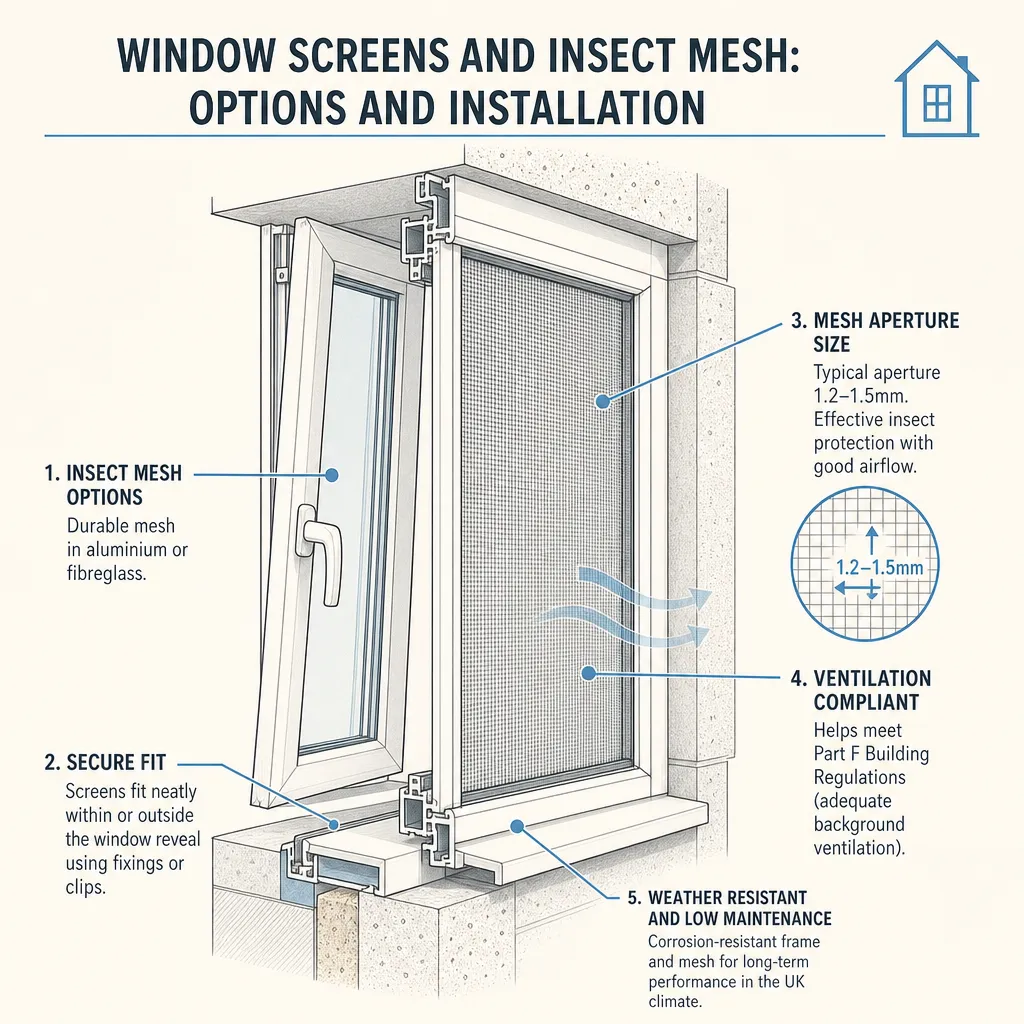
Window Screens and Insect Mesh: Options and Installation
Insect screens and fly mesh have become increasingly popular in UK homes, particularly as warmer summers and milder winters extend the season when open windows attract unwanted visitors. Whether you are dealing with midges in Scotland, mosquitoes near wetlands, or simply want to keep flies out of a kitchen, the choice of screen type and mesh material affects both performance and aesthetics. Getting the specification right also matters if your windows are adjacent to trickle vents or the property is listed or in a conservation area.
Key points
- Mesh aperture of 1.2 mm stops most common flying insects including mosquitoes and house flies; 0.6 mm ultra-fine mesh is needed for very small biting insects such as Scottish midges.
- Insect mesh fitted over or near trickle vents must not reduce the minimum equivalent area below 8,000 mm² per habitable room, as required under Approved Document F of the Building Regulations (ventilation).
- Listed buildings require listed building consent before fitting visible external screens; properties in conservation areas may also need local planning authority (LPA) approval.
- The four main screen types are fixed frame, roller retractable, pleated folding, and magnetic snap-fit — each suited to different window types, budgets, and aesthetic requirements.
- Professionally installed retractable roller screens typically cost £80–£250 per window; fixed frame screens start from around £30–£80 supply-only. Indicative UK costs, last reviewed 2026-05-26.
What types of window screen are available?
Window screens in the UK fall into four main categories, each suited to different window types and situations.
Fixed frame screens are the simplest option: a rigid aluminium or uPVC frame with mesh stretched across it, fitted magnetically or with clips to the window reveal. They suit casement and sash windows that open inward, require no specialist tools to fit, and are straightforward to remove for cleaning. Cost-effective and widely available from builders merchants and online suppliers.
Roller retractable screens roll into a cassette housing at the top or side of the window frame when not in use. They suit windows where unobstructed views matter and work with most opening types. Installation is more involved and is typically best carried out by a window installer.
Pleated folding screens concertina to one side when not needed. Popular for larger openings, bifold doors, and wide windows. They are more complex to measure and install accurately than fixed or roller options.
Magnetic snap-fit screens use a magnetised perimeter strip to allow rapid removal and refitting without tools. A practical choice for rented properties where permanent fixings are undesirable, or where screens need to be swapped seasonally.
Screen type | Best for | Not ideal for | Fitting | Approximate supply cost |
|---|---|---|---|---|
Fixed frame | Standard casement/sash windows, budget installs | Windows needing frequent unobstructed opening | DIY or professional | £30–£80 per window |
Roller retractable | Sliding, tilt-and-turn, casements where view matters | Very wide spans without a mid-rail | Professional recommended | £80–£200 per window |
Pleated folding | Large openings, bifold doors, wide windows | Budget-constrained projects | Professional recommended | £100–£300 per opening |
Magnetic snap-fit | Rentals, temporary or seasonal use | Exposed, windy, or coastal locations | DIY | £15–£50 per window |
Indicative UK supply costs, last reviewed 2026-05-26. Installation adds approximately £40–£100 per window depending on access and complexity.
Which mesh material is right for your home?
Fibreglass mesh is the most common choice in the UK. Grey or charcoal fibreglass transmits good light, resists denting, and does not rust. Standard 1.2 mm aperture is widely available; 0.6 mm ultra-fine versions suit midge-prone locations. Not recommended where pets may scratch against it regularly.
Aluminium mesh is more rigid than fibreglass and slightly more durable. It can corrode in coastal or high-salt environments unless powder-coated. Suits properties where a longer-lasting, harder-wearing mesh is worth the modest extra cost.
Stainless steel mesh is the most durable option, resisting pets, coastal conditions, and general wear. It is heavier and more expensive, but appropriate for ground-floor windows in high-traffic homes. Note that stainless steel mesh is not a security grille and will not deter a determined intruder.
Polyester solar mesh combines insect exclusion with solar shading, reducing glare and heat gain while maintaining airflow. Popular for south-facing conservatories and roof-light windows. Aperture is typically 0.8–1.0 mm.
Does insect mesh affect ventilation?
This is an important technical consideration under UK Building Regulations. Approved Document F requires background ventilators (trickle vents) to provide a minimum free area — typically 8,000 mm² equivalent area per habitable room. Fitting mesh over or adjacent to a trickle vent will reduce airflow, particularly once the mesh collects dust and pollen.
A standard 1.2 mm fibreglass mesh retains approximately 60–70% of its gross area as open area. A vent providing 12,000 mm² gross area may deliver only around 7,200–8,400 mm² through the mesh — potentially below the regulatory minimum. Check the product's declared open-area specification before purchasing, and if in doubt choose a mesh with a higher free area or position the screen away from the vent opening.
Which screen should you choose?
- Choose a fixed frame screen if you have standard casement or sash windows and want a low-cost, removable option.
- Choose a roller retractable screen if unobstructed views are important and you do not want a visible frame when the window is in use.
- Choose a pleated folding screen if you have wide openings, bifold doors, or large windows where roller cassettes would be impractical.
- Choose a magnetic snap-fit screen if you rent your property, require no permanent fixings, or want to swap screens seasonally between windows.
- Choose stainless steel mesh if you have pets, live in a coastal area, or need the most durable mesh available.
- Choose polyester solar mesh if you want combined insect exclusion and solar shading, particularly for conservatories or south-facing rooms.
- Consult your local planning authority (LPA) before fitting any visible external screen if the property is listed or in a conservation area.
Installation checklist for homeowners
Before ordering or fitting window screens, work through the following:
- Measure each window reveal at multiple points — width and height — as reveals are rarely perfectly square.
- Confirm whether the windows include trickle vents and verify the mesh open-area specification does not reduce airflow below 8,000 mm² per habitable room under Approved Document F.
- Check whether the property is listed or in a conservation area via your LPA's planning portal using your postcode.
- For roller or pleated systems, check reveal depth — most cassettes require 25–40 mm clearance within the reveal.
- If fitting screens in a rented property, review the tenancy agreement for permitted fixings before drilling or adhering frames.
- Order a mesh sample before committing to a full order — colour and opacity can look quite different in person compared with online images.
When to get professional help
Most fixed-frame and magnetic screens are within DIY capability for a confident homeowner with basic tools. Consider professional installation when:
- Installing roller or pleated retractable screens that require precise cassette alignment and routing into the window reveal.
- Working on first-floor or above windows where ladder safety is a concern — working at height above 2 m carries specific risks and requires appropriate equipment.
- Windows are in a listed building, conservation area, or other designated property where consent may be required prior to installation.
- Window shapes are non-standard — arched, circular, or angled reveals typically require bespoke frames that benefit from professional measurement and fitting.
How Housey can help
If you are planning to fit fly screens or insect mesh as part of a wider window improvement project, Housey can connect you with vetted window and door installers who can measure, supply, and professionally fit screens to a range of window types across the UK.
Frequently asked questions
Do I need planning permission for window fly screens in the UK?
In most cases, no — fitting fly screens to standard residential windows falls under permitted development rights. However, listed buildings require listed building consent for any changes to windows, and conservation area restrictions may affect external alterations. Check with your local planning authority if your property is listed or in a designated area before fitting visible external screens.
Can insect mesh reduce ventilation in my home?
Yes. Mesh fitted over or near trickle vents reduces airflow, particularly as it accumulates dust. Building Regulations Approved Document F requires background ventilators to provide a minimum free area of 8,000 mm² per habitable room. Check that mesh near ventilators still meets this requirement by reviewing the product's open-area specification before purchase.
What mesh aperture stops midges in Scotland?
Standard 1.2 mm aperture mesh stops most flying insects including mosquitoes and house flies. For Scottish midges, which can squeeze through standard mesh, specify 0.6 mm ultra-fine mesh. Bear in mind that finer mesh reduces airflow more significantly, so ventilation checks are especially important when using ultra-fine specifications near trickle vents in habitable rooms.
How do I clean and maintain fly screens?
Remove the screen and brush off loose debris with a soft brush. Wash with warm water and mild detergent using a soft cloth, rinse thoroughly, and allow to dry completely before reinstalling. Avoid pressure washers or abrasive cleaners. Inspect the frame and mesh for tears or corrosion each year and replace damaged sections promptly to maintain effective insect protection.
Sources and further reading
- Approved Document F: Ventilation — HM Government
- Listed buildings and development management — GOV.UK
- The Building Regulations 2010 — legislation.gov.uk
Useful next reads
 Improvement & Build
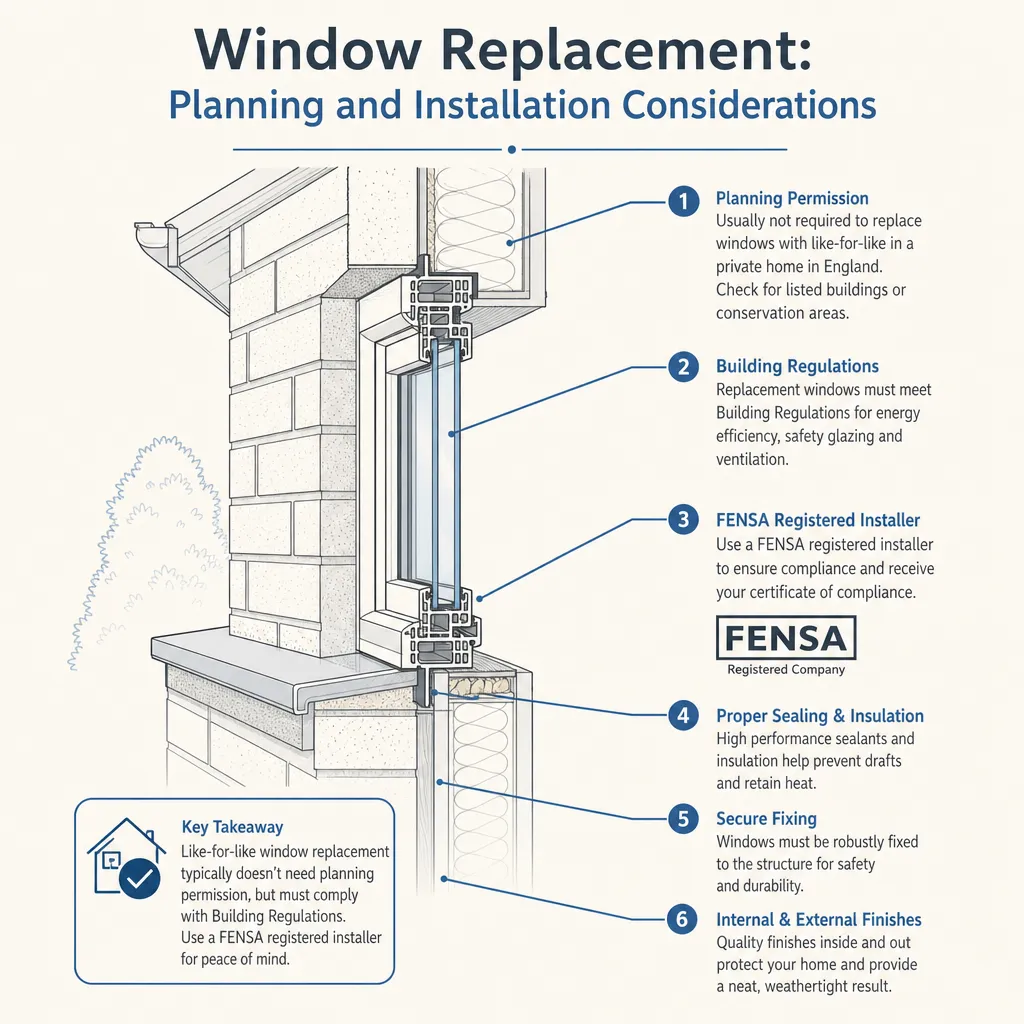
Window Replacement: Planning and Installation Considerations
Most window replacements in England fall under permitted development and do not need planning permission, though listed buildings, flats, and conservation areas are exceptions.
 Improvement & Build
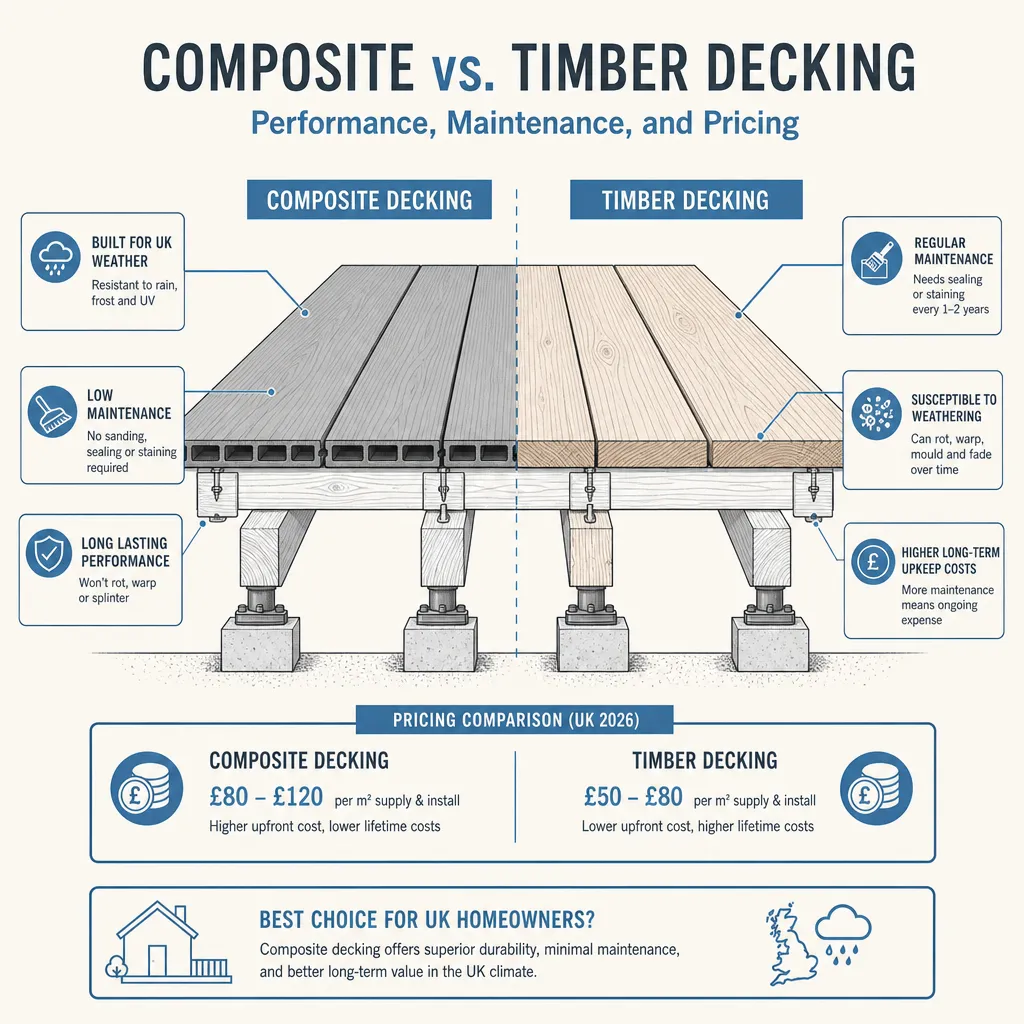
Composite vs. Timber Decking: Performance, Maintenance, and Pricing
Composite decking costs more upfront — typically £120–£220 per m² installed versus £80–£150 for treated softwood — but requires far less maintenance and carries a 25-year warranty.
 Improvement & Build
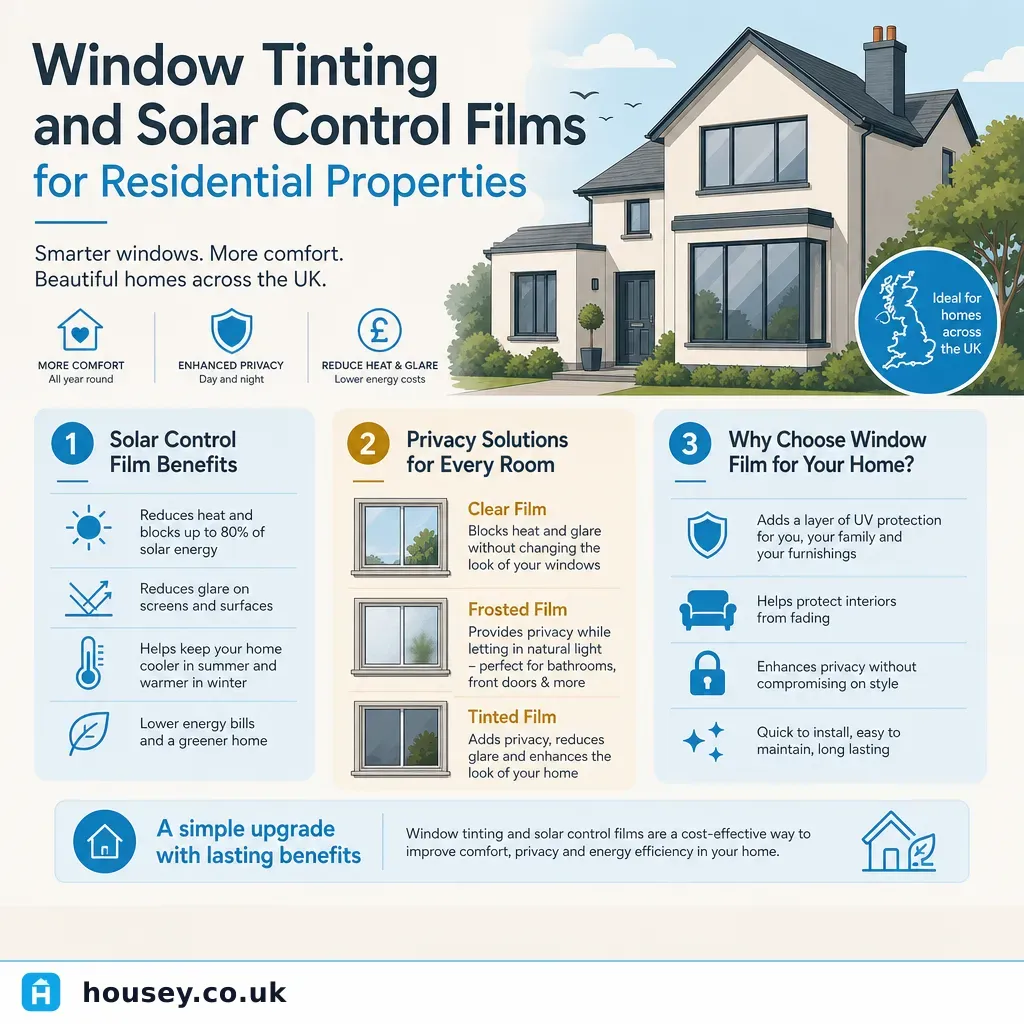
Window Tinting and Solar Control Films for Residential Properties
Solar control window films reject 40–80% of total solar energy and block 99% of UV radiation, reducing overheating and fading without replacing glazing.
 Improvement & Build
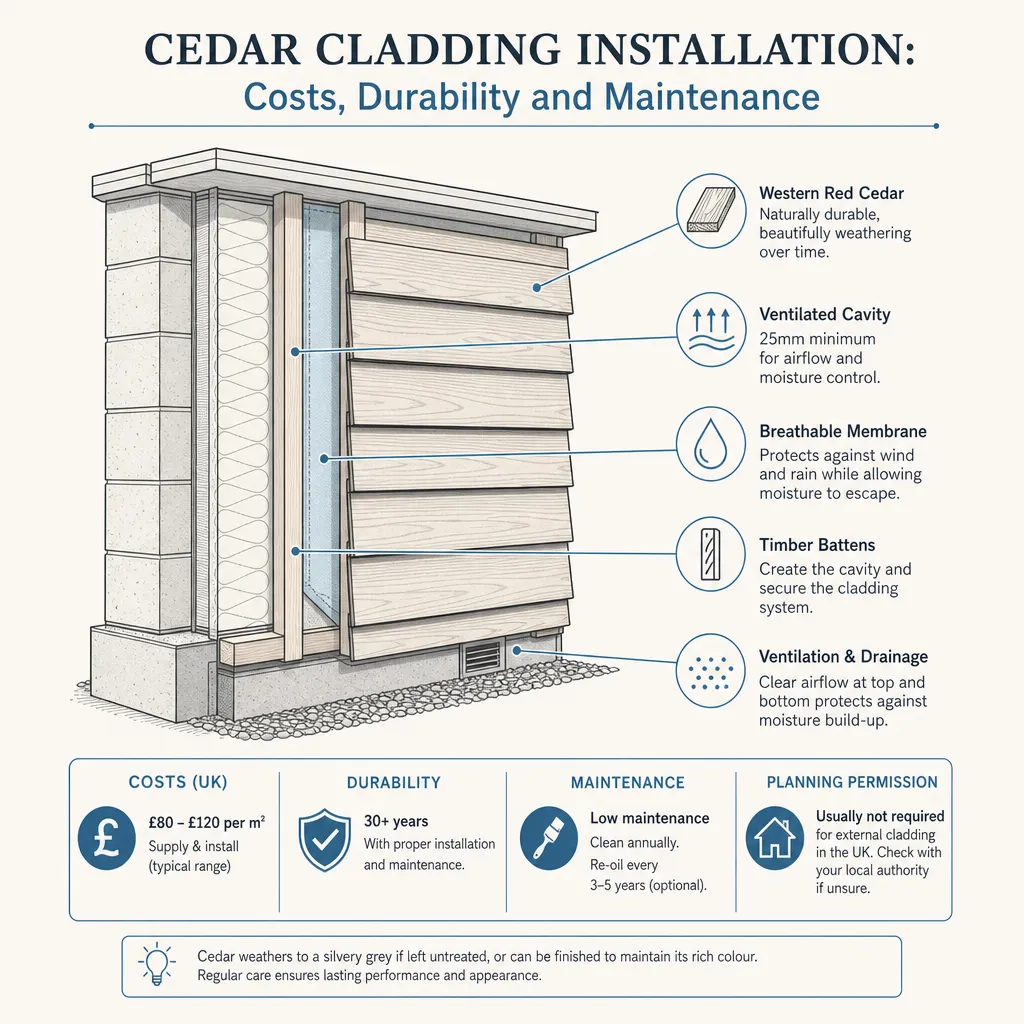
Cedar Cladding Installation: Costs, Durability and Maintenance
Cedar cladding is a natural timber exterior finish popular for UK homes and extensions.
 Improvement & Build
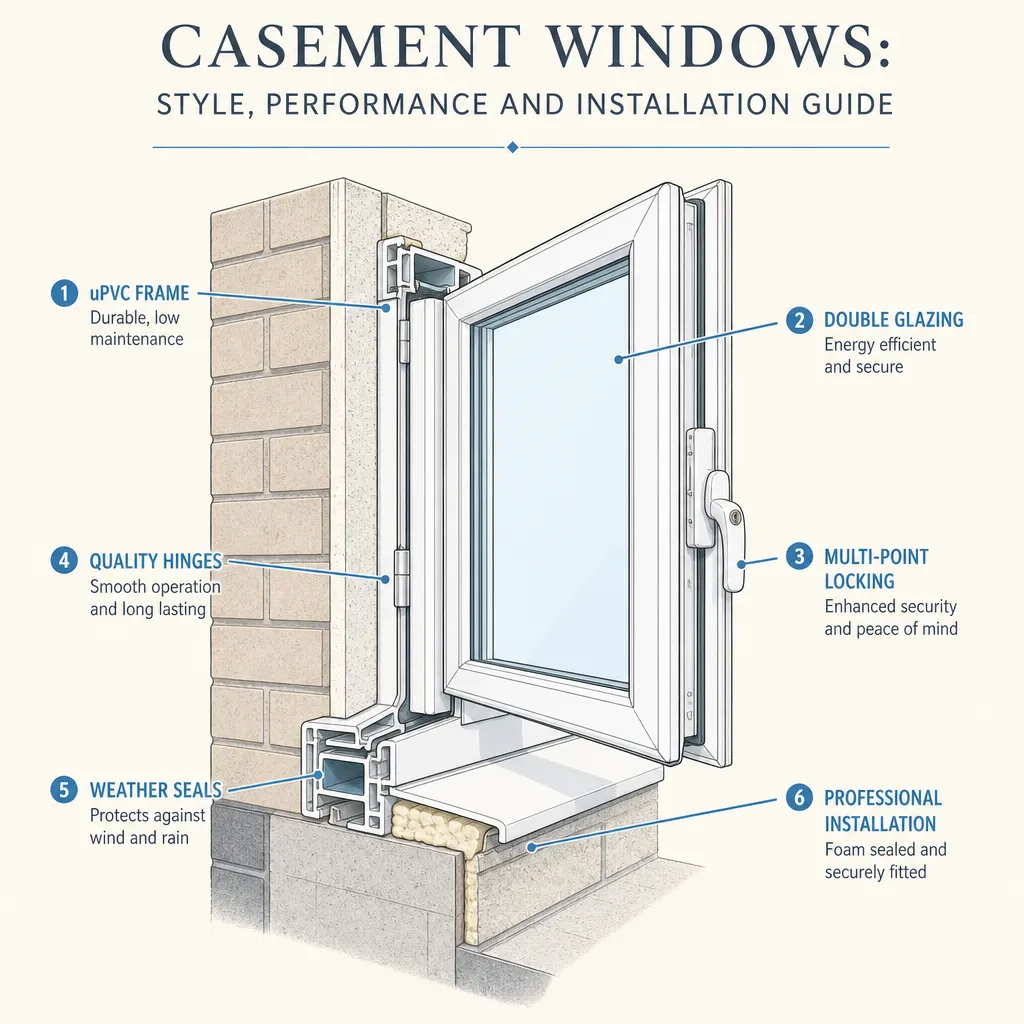
Casement Windows: Style, Performance and Installation Guide
Casement windows are hinged on one side and open outward, making them the most widely fitted window type in UK homes.