Costs for Replacing or Rehanging a Door Frame
By Housey · Last reviewed 6th of May 2026
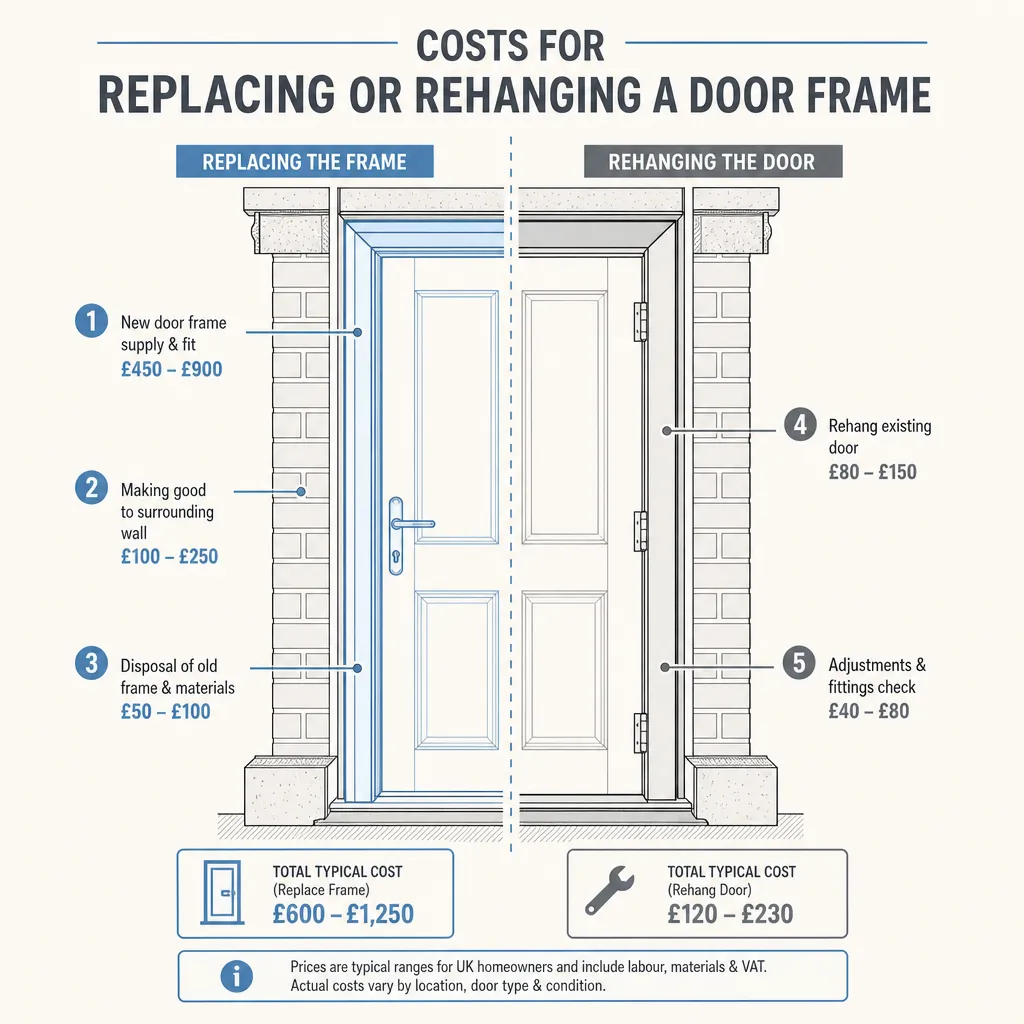
Costs for Replacing or Rehanging a Door Frame
A door frame that has rotted, warped, been damaged in a break-in, or simply worn out over decades is a familiar problem in UK homes — from Victorian terraces with successive layers of paint compressing tired softwood, to modern new-builds where timber movement has caused twisting or binding. Whether you need a straightforward rehang, a partial frame repair, or a complete new frame and door set, the cost varies considerably depending on door type, location, material choice, and the condition of the surrounding structure.
Key points
- Rehanging a door on an existing sound frame typically costs £75–£200 in labour; a full internal door frame replacement (supply and fit) usually costs £150–£600.
- External door frame replacement typically costs £400–£1,200 or more, reflecting weatherproofing requirements, security hardware, and threshold or sill work.
- FENSA or CERTASS certification is required in England and Wales if the door unit includes glass and forms part of the thermal envelope of the property.
- In a listed building or conservation area, replacing an external door or frame may require listed building consent or prior approval from your local planning authority before work starts.
- Composite and aluminium external frames cost more than standard softwood or uPVC; material choice affects both upfront cost and ongoing maintenance requirements.
Rehang vs full replacement: which do you need?
Many homeowners assume a sticking or rattling door requires a new frame; often it does not. Correctly diagnosing the problem saves time and money.
Situation | Likely remedy | Approximate cost (labour and materials) |
|---|---|---|
Door drops and catches on the floor | Rehang or adjust hinges | £75–£150 |
Door sticks in summer, fine in winter | Plane door edge and rehang if needed | £100–£200 |
Frame is sound; door leaf is warped or cracked | New door leaf only | £150–£400 |
Frame is split, rotted, or no longer square | Full frame replacement | £250–£700 internal / £500–£1,200+ external |
Break-in damage to external door and frame | New door, frame, and security hardware | £600–£2,000+ |
Widening doorway for wheelchair or accessibility use | Structural work plus new frame | £1,500–£4,000+ |
Indicative UK costs, last reviewed 2026-05-06. Prices vary by region, access difficulty, material specification, and whether making-good and decoration are included.
What drives door frame replacement costs?
Several factors push costs up or down significantly:
Location — internal vs external: External frames require weatherproof materials, continuous draughtproofing, structural fixings through masonry, and a threshold or sill. This adds both materials cost and labour time compared with internal frames, which are generally straightforward carpentry jobs.
Material choice:
- Timber — traditional and repairable; softwood is standard for internal doors; hardwood is more durable externally and costs more.
- uPVC — low maintenance, common for external doors in UK homes built from the 1980s onwards; generally mid-range cost.
- Composite — durable and thermally efficient; typically higher cost than uPVC but good for external applications.
- Aluminium — modern appearance, slim sightlines, higher cost; often specified for glazed entrance doors or bifold configurations.
Condition of the surrounding structure: Removing an old frame sometimes reveals rot in the lintel or structural subframe, deteriorated masonry, or previous damp ingress. Remedial work adds cost and time — and is common in older UK properties where water penetration has gone unnoticed for years.
Access and making good: Tight stairwells, restricted rear access, or the need for plaster patching and redecorating after the frame is fitted all affect the final bill. Ask before you accept a quote whether making-good is included.
Security hardware: For external doors, multi-point locking mechanisms (BS 3621-compliant mortice locks are recommended), letterbox reinforcements, and hinge bolts add to materials costs.
Red flags to note before getting quotes
Before calling in a tradesperson, look for any of the following — they indicate a more complex or potentially more costly job:
- Soft or spongy timber around the frame, sill, or threshold — likely rot that may extend further into the subframe than is visible from the surface.
- Gaps filled with expanding foam between frame and wall — often a sign of previous movement, inadequate original installation, or a frame that was never truly square.
- Damp staining or tide marks on the wall near an external frame — may indicate failed weatherproofing, a cracked sill, or faulty flashings that need addressing before any new frame is fitted.
- Cracks running from the corners of the door opening — may indicate structural movement; if cracks are recent, widening, or stepped through brickwork, consult a chartered surveyor before proceeding with any replacement work.
- A frame that is noticeably out of plumb or square — a new door hung in an unresolved opening may not seal correctly, which defeats the purpose of the replacement.
What a quote should include
When obtaining quotes from door and frame installers, ask for written confirmation of:
- Whether removal and disposal of the old frame and door leaf are included in the price
- What making-good is covered — plaster patching, finishing bead, external mastic sealing, and any brickwork repairs
- Whether the threshold, sill, and any associated weatherproofing components are included
- What locks, hinges, and hardware are specified, and whether they meet relevant British Standards (BS 3621 for external mortice locks)
- Whether FENSA or CERTASS certification will be provided for external glazed units
- What the contractor will do — and charge — if hidden rot, damp, or structural damage is discovered during removal
- Whether VAT is included in the quoted figure
Planning and building regulations considerations
For most straightforward internal door frame replacements, no planning permission or building regulations approval is required. However, there are important exceptions:
- Glazed external door replacement: In England and Wales, replacing or installing a door that includes glazing and forms part of the thermal envelope requires either a FENSA or CERTASS competent-person registration from your installer or a separate building regulations application to your local authority.
- Listed buildings: Any alteration to a door, frame, or opening in a listed building — internal or external — may require listed building consent. Always check with your local planning authority before ordering materials or starting work.
- Conservation areas: Replacing an external door in a conservation area may require prior approval or a householder application where permitted development rights have been withdrawn. Check with your local planning authority before proceeding.
- Fire doors: In flats, HMOs, and commercial premises, fire doors (FD30 or FD60 rated) must meet Building Regulations Part B standards. Replacement must be carried out by a suitably qualified installer using a tested and certified door and frame assembly — not a standard domestic door set.
Worked example: Victorian terrace, south London
A homeowner in an 1890s Victorian terrace finds the front door is draughty, difficult to close, and the lower section of the external frame shows visibly soft timber. A window and door installer inspects and finds:
- The existing softwood frame is split along the bottom rail, with rot extending into the structural subframe behind
- The threshold is cracked and no longer weather-tight
- The door itself is solid timber, approximately 80 years old, and structurally sound
The contractor recommends a new hardwood external door frame to match the property's existing aesthetic, a new composite threshold, and rehanging the original door with adjustment and overhauling of the mortice lock. Total quoted cost: £920, including materials, making good, and a FENSA certificate for a small glazed sidelight. A second quote came in at £1,050 but included a new door leaf the homeowner did not want; they chose the first quote, preserving the original door.
Key lesson: separating the frame and door as components — and getting at least two detailed quotes — produced a better outcome and saved over £100.
When to get professional help
Most door frame replacements are routine carpentry, but seek additional expert input if:
- You suspect structural movement around the opening — get a crack survey or structural engineer's assessment before any frame replacement begins
- The property is listed or in a conservation area — confirm consent requirements before ordering anything
- A fire door needs replacing in a flat, HMO, or commercial premises — instruct a qualified, accredited installer who can certify the complete assembly
- Significant rot, damp, or insect damage is found during survey — a specialist damp and timber inspection may be needed before fitting a new frame into a compromised structure
How Housey can help
Housey makes it straightforward to find and compare quotes from vetted window and door installers across the UK. Whether you need a simple rehang, a new internal door frame, or a fully certified external replacement with FENSA documentation, you can request quotes and compare them in one place.
Frequently asked questions
How do I know if a door frame needs full replacement or just rehanging?
If the frame is structurally sound — no rot, splits, or significant movement — rehanging the door is usually sufficient. Run your finger along the frame: soft or spongy timber indicates rot. Check the corners of the opening for cracks. If the frame is visibly warped, split at joints, or no longer square, full replacement is likely more cost-effective than repair, particularly for an external door where weatherproofing and security are critical.
Do I need building regulations approval to replace a door frame?
For most internal door frame replacements, no building regulations approval is required. For external glazed doors forming part of the thermal envelope, you will need either a FENSA or CERTASS registration from your installer or a separate building regulations application. Listed buildings and some conservation areas have additional requirements — always check with your local planning authority before proceeding, as retrospective enforcement can be costly.
How long does door frame replacement take?
Replacing a standard internal door frame typically takes half a day to a full day. An external frame with threshold work and making good usually takes one to two days. If structural remediation, significant plastering, or bespoke joinery is involved, allow longer. Your installer should give you a realistic programme before starting work so you can plan around access and any decorating needed afterwards.
Can I replace a door frame myself?
An internal door frame is within the range of a competent DIYer with joinery experience. However, external frames require accurate weatherproofing, structural fixings, and — for glazed units — FENSA or CERTASS certification, which only registered competent persons can issue. Fire doors must never be fitted by unqualified individuals. For most homeowners, the risk of a poorly fitted external frame — affecting security, weather exclusion, and condensation — outweighs the potential labour saving.
Sources and further reading
- Building regulations approved documents — GOV.UK
- FENSA competent-person scheme for windows and doors — FENSA
- Making changes to your listed building — Historic England
- Fire door safety — FireSafe.org.uk
Useful next reads
 Improvement & Build
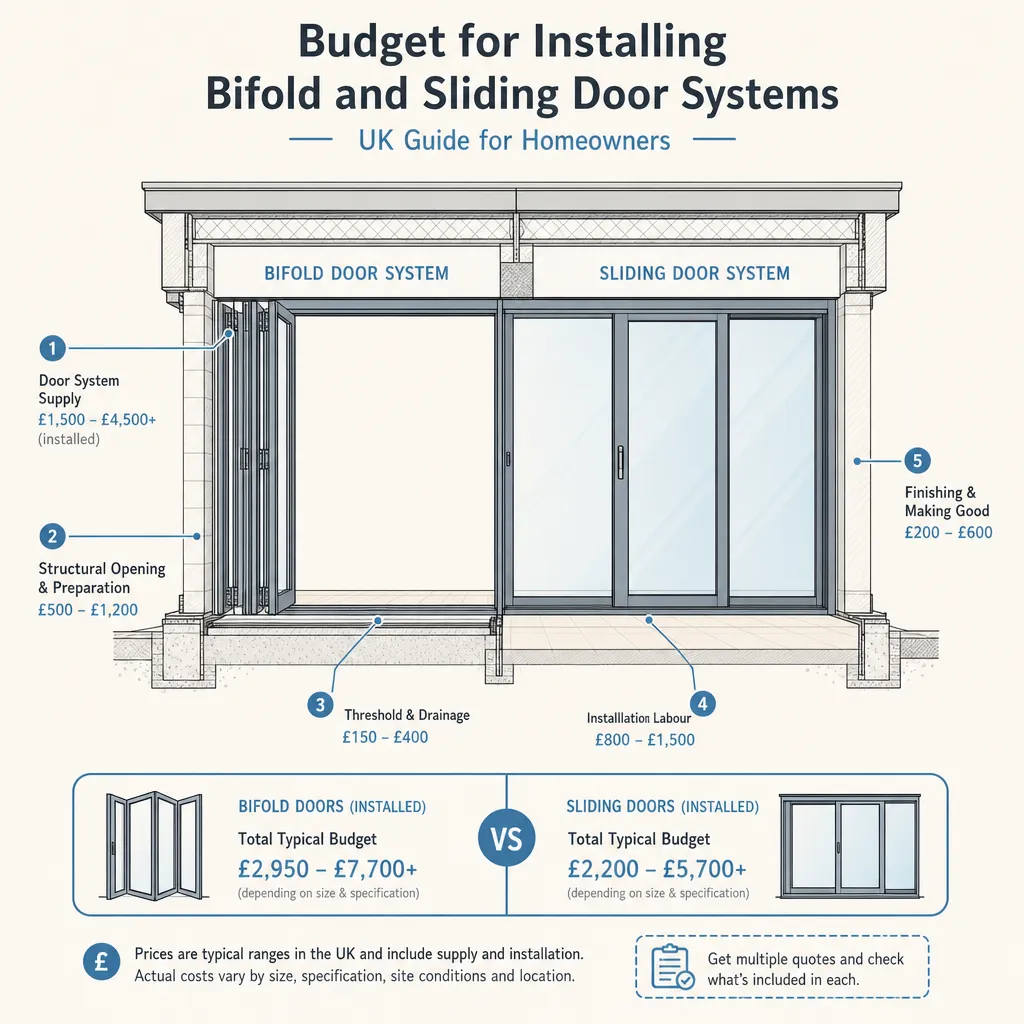
Budget for Installing Bifold and Sliding Door Systems
Aluminium bifold doors typically cost £4,000–£12,000 supplied and installed; uPVC bifolds run £2,500–£6,000.
 Improvement & Build
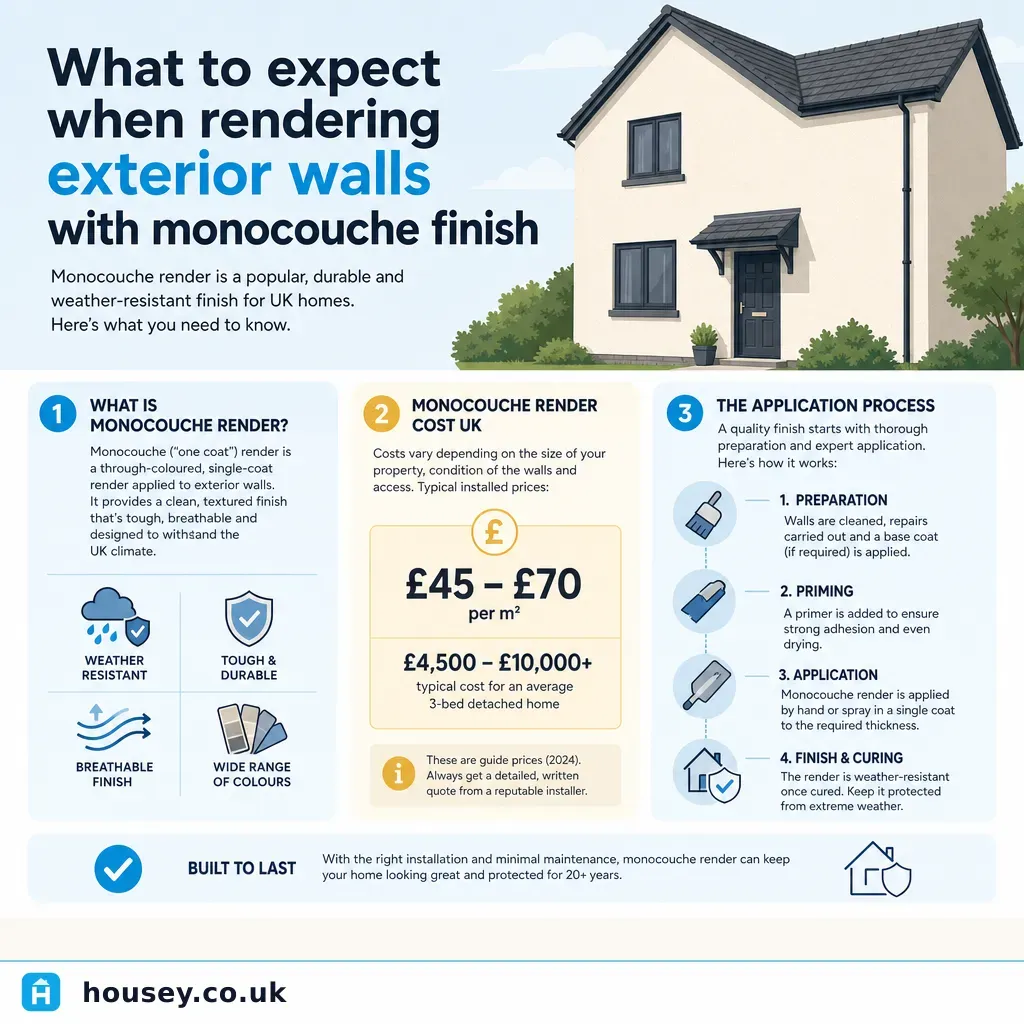
What to expect when rendering exterior walls with monocouche finish
Monocouche is a single-coat, through-coloured cement-based render applied at 15–20 mm onto brick or dense blockwork.
 Improvement & Build
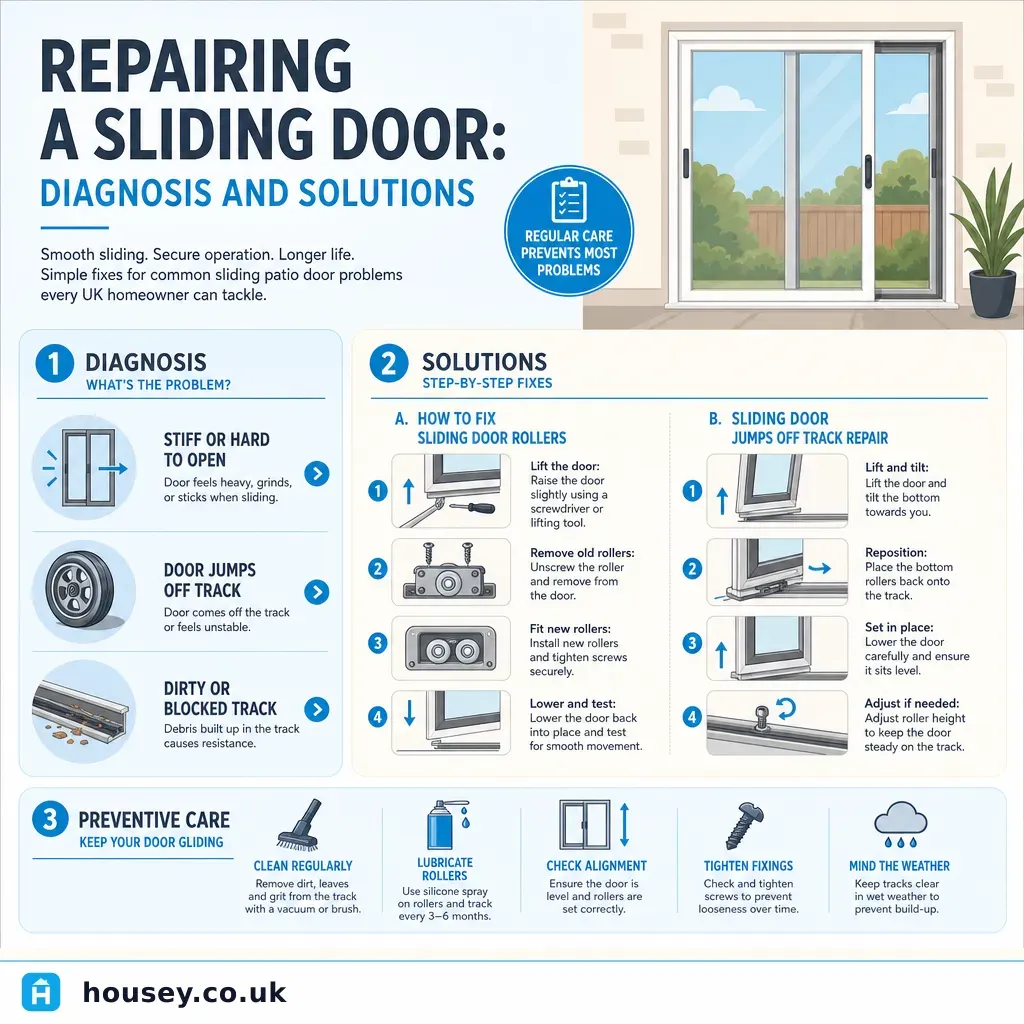
Repairing a Sliding Door: Diagnosis and Solutions
Most sliding door problems — stiffness, jumping off track, or draughts — are caused by dirty tracks, worn rollers, or misaligned guides.
 Improvement & Build
Concrete Sealing: Protecting and Maintaining Your Driveway
Sealing a concrete driveway protects against water ingress, freeze-thaw damage, oil stains, and surface wear.
 Improvement & Build
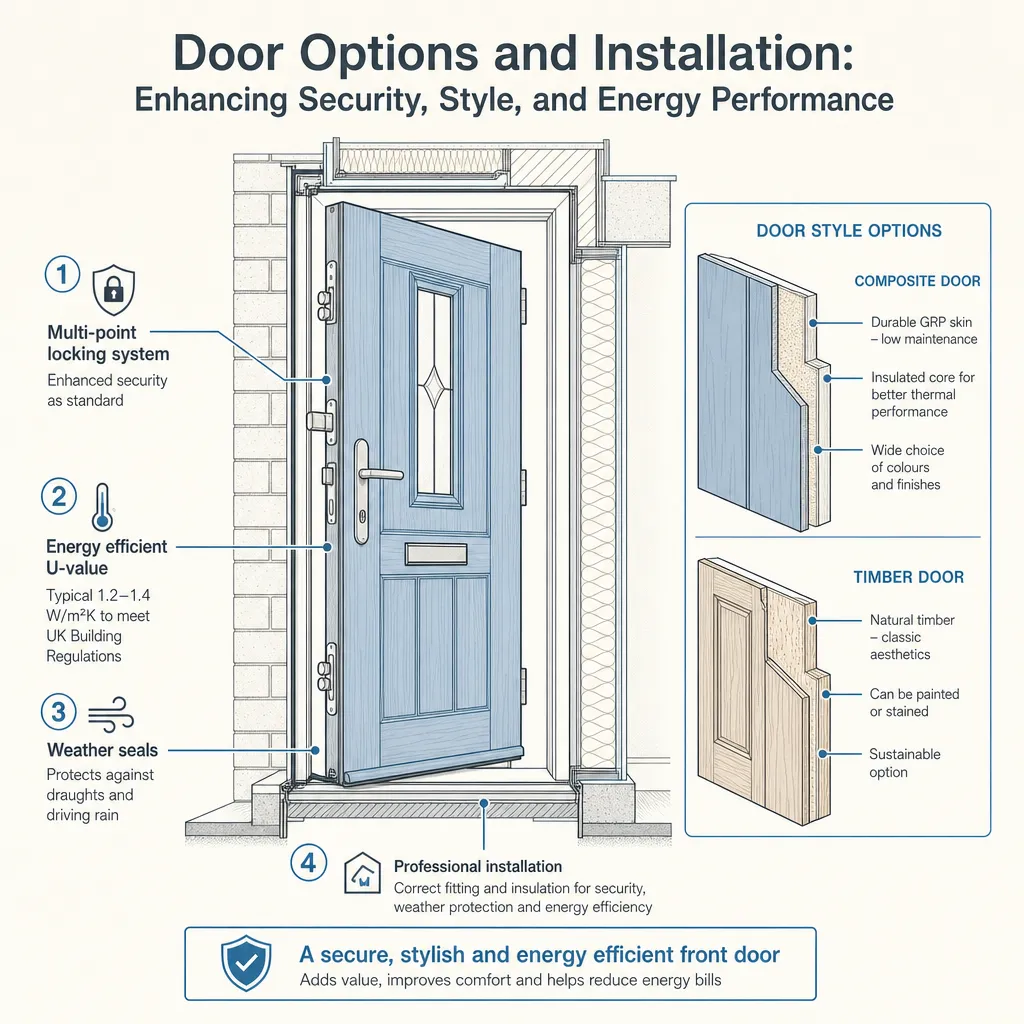
Door Options and Installation: Enhancing Security, Style, and Energy Performance
Choosing a new external door involves balancing security ratings, thermal performance, and style.