Budget for Relocating a Staircase During Renovation
By Housey · Last reviewed 6th of May 2026
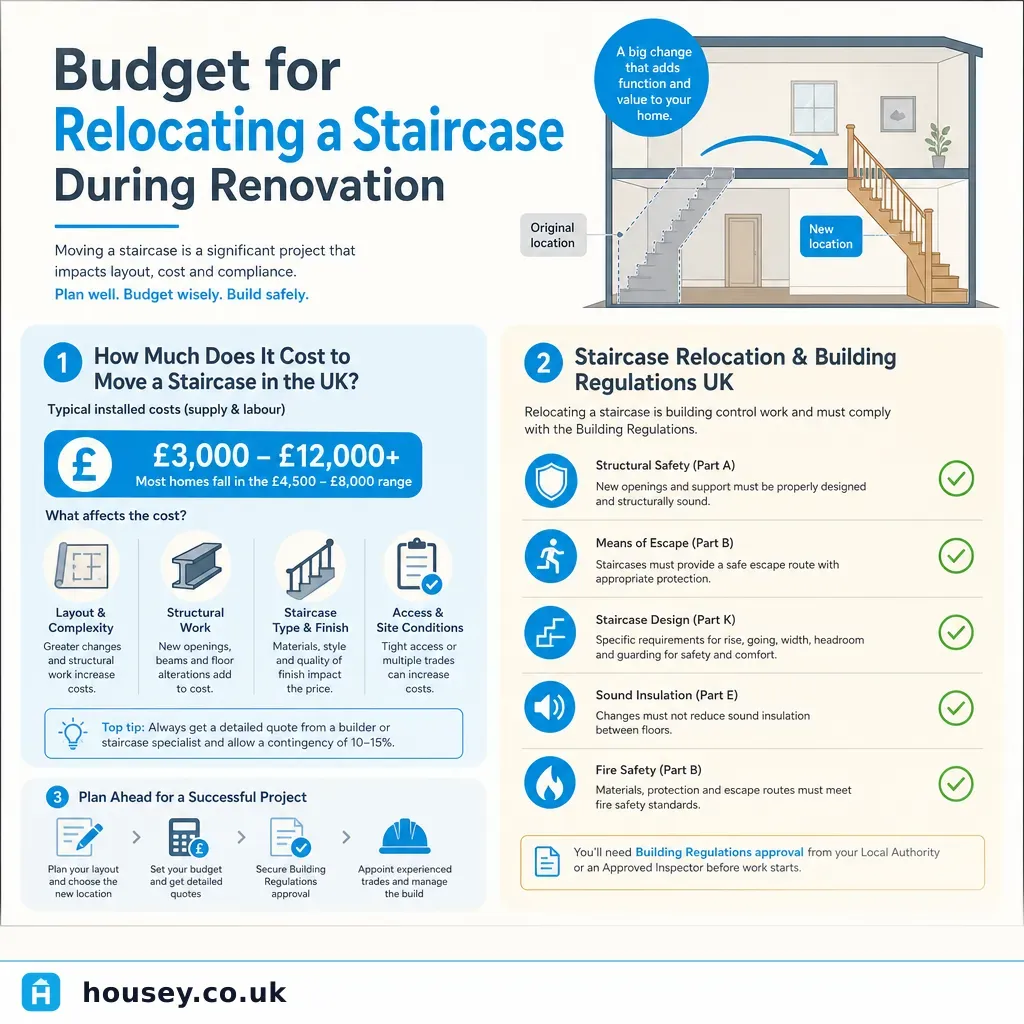
Budget for Relocating a Staircase During Renovation
Staircase relocation typically arises when homeowners are fundamentally rethinking a ground-floor layout — perhaps to open up a kitchen extension, create a wider hallway, or convert a side return. It is one of the more involved structural alterations you can make to a house, affecting floor joists, ceiling structure, and fire compartmentation. Understanding what drives the cost before you engage contractors helps you plan a realistic budget and avoid mid-project surprises.
Key points
- Building Regulations Approved Document K sets mandatory staircase geometry: maximum pitch of 42°, minimum going of 220mm, maximum rise of 220mm, and minimum handrail height of 900mm above the pitch line.
- A structural engineer is almost always required to assess the existing floor structure and specify any new trimmer joists or steel beams where the staircase opening is formed or closed.
- Building Control approval is mandatory in England and Wales — submit a Full Plans or Building Notice application before any structural work begins.
- Indicative total costs range from approximately £6,000 to £20,000 or more depending on property type, structural complexity, and staircase specification (indicative UK costs, last reviewed 2026-05-06).
- Listed buildings require listed building consent in addition to building regulations approval — confirm your property's status before instructing any professional.
What makes staircase relocation structurally significant?
Moving a staircase is not simply a carpentry job. The existing staircase passes through at least one floor structure, so its removal creates an opening that must be correctly formed with trimmer joists and possibly a steel beam. The new position must satisfy Approved Document K (stairs, ramps and guards) and Approved Document B (fire safety) — in a two-storey house the staircase is usually a protected escape route, so the new design must maintain adequate means of escape from upper-floor rooms.
In pre-1919 properties with original timber floors, floor joists may already be at the lower limit of current standards, and a structural engineer may specify remedial strengthening beyond what the relocation itself strictly requires.
What drives the cost?
Cost driver | Lower-cost scenario | Higher-cost scenario |
|---|---|---|
Staircase design | Simple straight flight, painted softwood | Bespoke quarter-turn or helical, hardwood finish |
Property construction | Post-war conventional joists | Pre-1919 timber frame, shallow or irregular joists |
Structural work required | Minor trimmer joists, no steelwork | New RSJ or steel beam, padstones, temporary propping |
Making good | One wall and ceiling to replaster | Multiple rooms affected, floor void to reinstate |
Listed building status | Not listed | Grade II or above — listed building consent required |
Indicative cost breakdown
The following figures vary by region, specification, and contractor. Always obtain at least three itemised quotes.
- Structural engineer (assessment and calculations): £500–£1,500
- Building Control application and inspections: £400–£1,000 (local authority) or £300–£900 (approved inspector)
- Architectural or structural drawings: £600–£2,000
- Staircase supply — softwood straight flight: £800–£3,000; bespoke or hardwood designs can exceed £8,000
- Carpentry and installation labour: £1,500–£4,000
- Structural work (beam, trimmer joists, padstones): £800–£4,000 depending on extent
- Making good (plastering, flooring, decoration): £1,000–£3,500
Indicative total: £5,500–£20,000+ (indicative UK costs, last reviewed 2026-05-06). Unusual structures, bespoke staircases, or listed buildings will cost more.
Source: Indicative ranges compiled from RICS Build Cost Information Service guidance and published contractor price guides; individual quotes will vary.
Does relocating a staircase need planning permission?
For most properties in England, internal staircase relocation is permitted development — it does not change the external appearance or volume of the dwelling. However, check with your local planning authority if:
- The property is listed — listed building consent is required for any alteration affecting the character of a listed building.
- The property is in a conservation area — internal structural changes are usually exempt, but confirm if the works affect any externally visible element.
- The property is subject to an Article 4 Direction — some councils remove permitted development rights in specific areas.
Decision tree: which professionals do you need?
- Engage a structural engineer if any floor joists or ceiling timbers must be cut, if a steel beam may be required, or if the property predates 1919.
- Engage an architectural technologist if your primary need is Building Regulations drawings and the structural implications appear minor.
- Ask your local planning authority before instructing anyone if the property is listed or subject to an Article 4 Direction.
- Pause and seek professional advice if a contractor discovers unexpected steelwork, concrete, or evidence of past structural movement during exploratory works.
Red flags to watch for
- A contractor who says building regulations approval is not needed — it is, and without a completion certificate you will face complications at the point of sale.
- A quote that excludes structural drawings or building control fees — these are genuine costs that should be itemised.
- No mention of making good the old staircase opening — walls, ceilings, and floors all require reinstatement.
- Signs of pre-existing structural movement such as diagonal cracks or sloping floors — these must be assessed by an engineer before any staircase work proceeds.
Important limitations
This article provides general budgeting guidance for staircase relocation projects in England. Costs and regulatory requirements vary by property age, construction type, local authority, and project scope. The figures given are indicative only and are not a substitute for a site-specific professional assessment. Building Regulations and permitted development rules can change — always verify current requirements with your local Building Control body or a qualified structural engineer before beginning work.
What to ask a qualified professional
- Which Approved Documents apply to this project — Part K, Part B, Part A — and what will each require of the design?
- Will the work require a Full Plans application or is a Building Notice sufficient?
- What structural calculations will you produce, and will Building Control review them at design stage?
- Is making good the old staircase opening included in your scope?
- How will phasing work — can I remain in the property during construction?
- If the property is listed, who will prepare and submit the listed building consent application, and what is the expected timescale?
When to get professional help
Instruct a structural engineer before any exploratory or demolition work begins. If a contractor discovers unexpected steelwork, unusual framing, or evidence of past movement during initial works, pause all activity and commission an engineering assessment before allowing any trade to continue. For listed buildings, contact your local authority listed buildings officer at the earliest stage — not once drawings are already prepared.
How Housey can help
Housey can connect you with qualified specialists for both technical aspects of a staircase relocation. Find a structural engineering consultant to assess your floor structure and produce the calculations Building Control requires, or request quotes from building control consultants to manage your application and inspection schedule through to your completion certificate.
Frequently asked questions
Do I need planning permission to move a staircase?
For most residential properties in England, relocating a staircase internally is permitted development and does not require a planning application. Exceptions apply to listed buildings, where listed building consent is always required, and to properties subject to an Article 4 Direction. Confirm your property's status with your local planning authority before starting work.
How long does a staircase relocation take?
Most projects take eight to sixteen weeks from structural engineer instruction to Building Control completion certificate. The physical construction phase is typically two to four weeks. Delays can occur if structural calculations reveal unexpected complications or if a listed building consent application is required alongside the building regulations process.
Will moving a staircase affect my home insurance?
Structural alterations can affect your buildings insurance policy. Notify your insurer before work starts and again on completion. Retain the Building Control completion certificate as evidence of compliance — insurers and future buyers or their solicitors may ask to see it as part of the conveyancing process.
What happens if I sell without building control sign-off?
A solicitor acting for a buyer or mortgage lender will require evidence of building regulations compliance for any notifiable work. Without a completion certificate you may need retrospective regularisation or indemnity insurance. Neither option is as straightforward or inexpensive as obtaining sign-off at the time of the original works.
Sources and further reading
- Approved Document K: Protection from falling, collision and impact — MHCLG / GOV.UK
- Approved Document B: Fire safety — MHCLG / GOV.UK
- Approved Document A: Structure — MHCLG / GOV.UK
- Planning Portal: Do I need permission? Internal works — Planning Portal / GOV.UK
- RICS: Find a surveyor or structural engineer — RICS
Useful next reads
 Improvement & Build
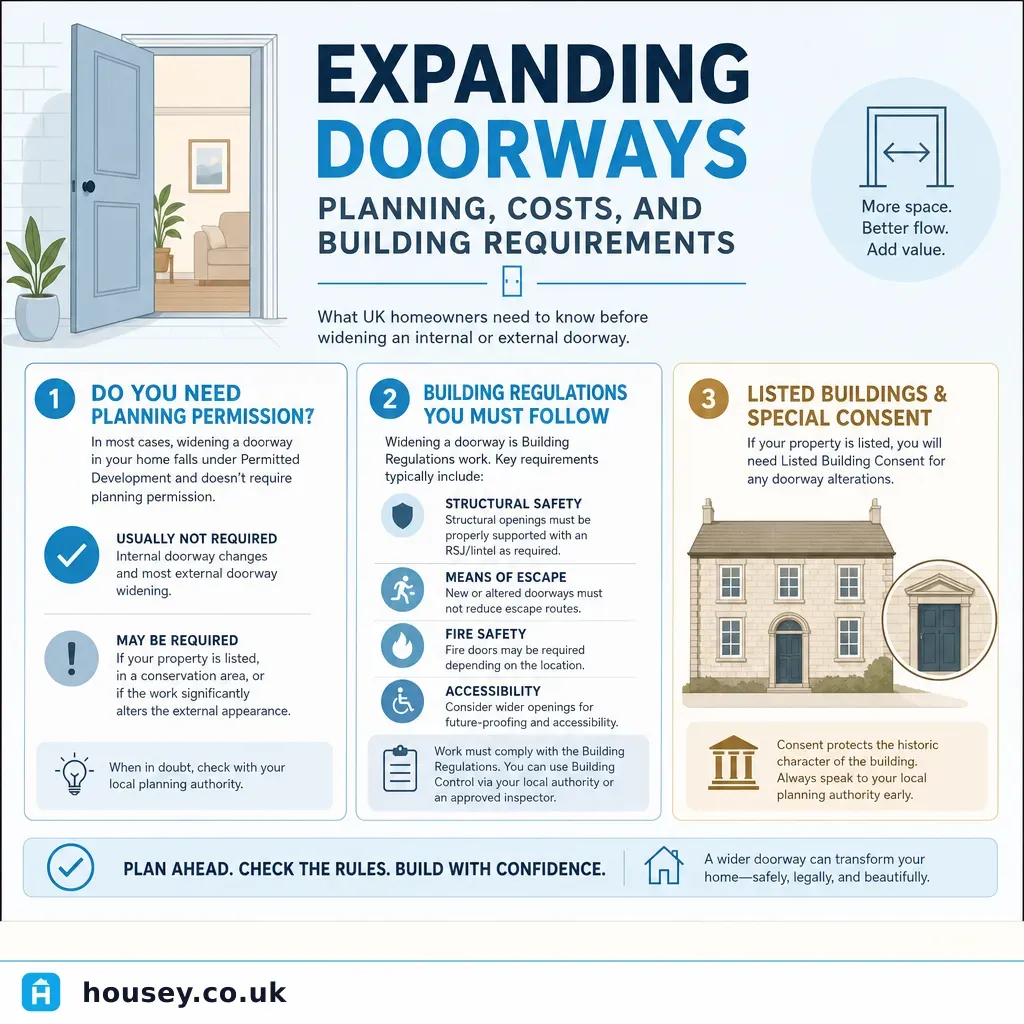
Expanding Doorways: Planning, Costs, and Building Requirements
Expanding a doorway in a load-bearing wall requires Building Regulations Part A approval and a structural engineer's lintel design.
 Improvement & Build
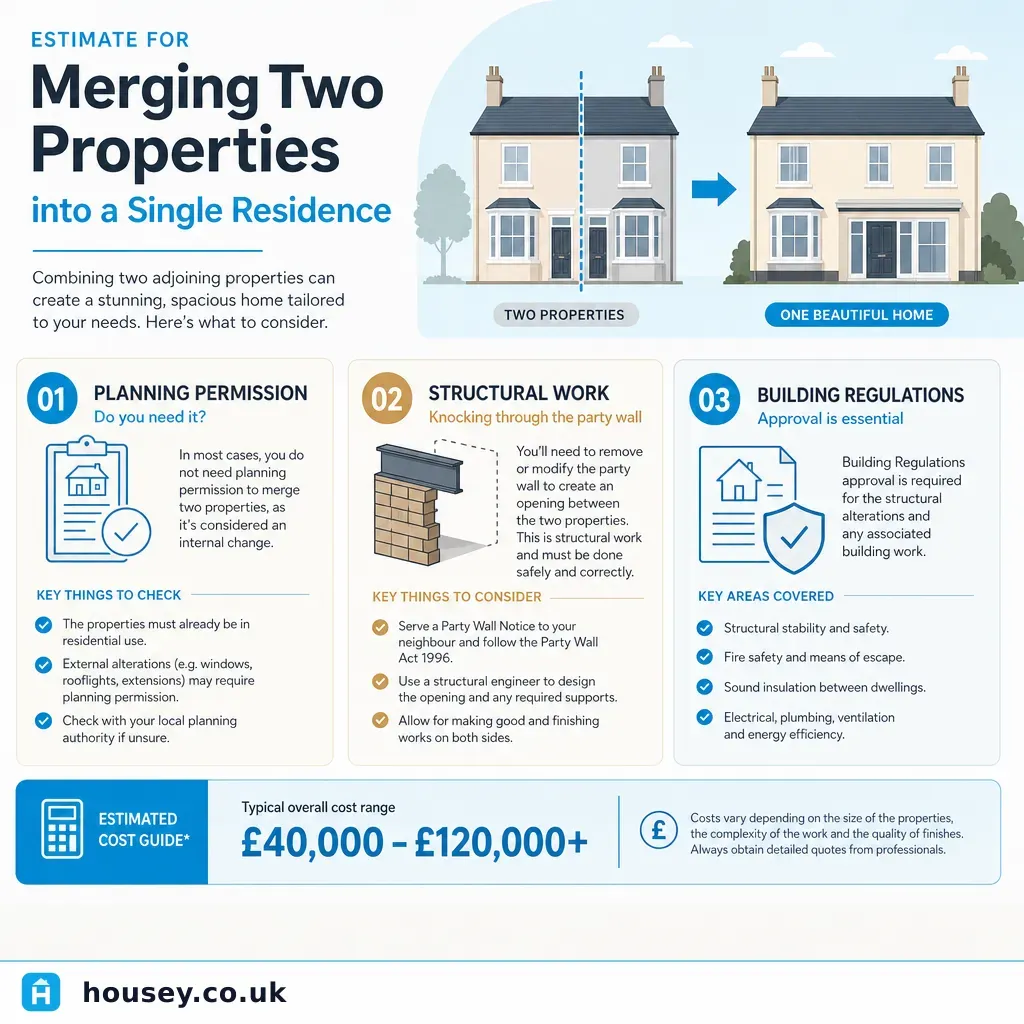
Estimate for Merging Two Properties into a Single Residence
Merging two properties into one typically costs £30,000–£120,000 or more, depending on property type, structural complexity, and professional fees.
 Improvement & Build
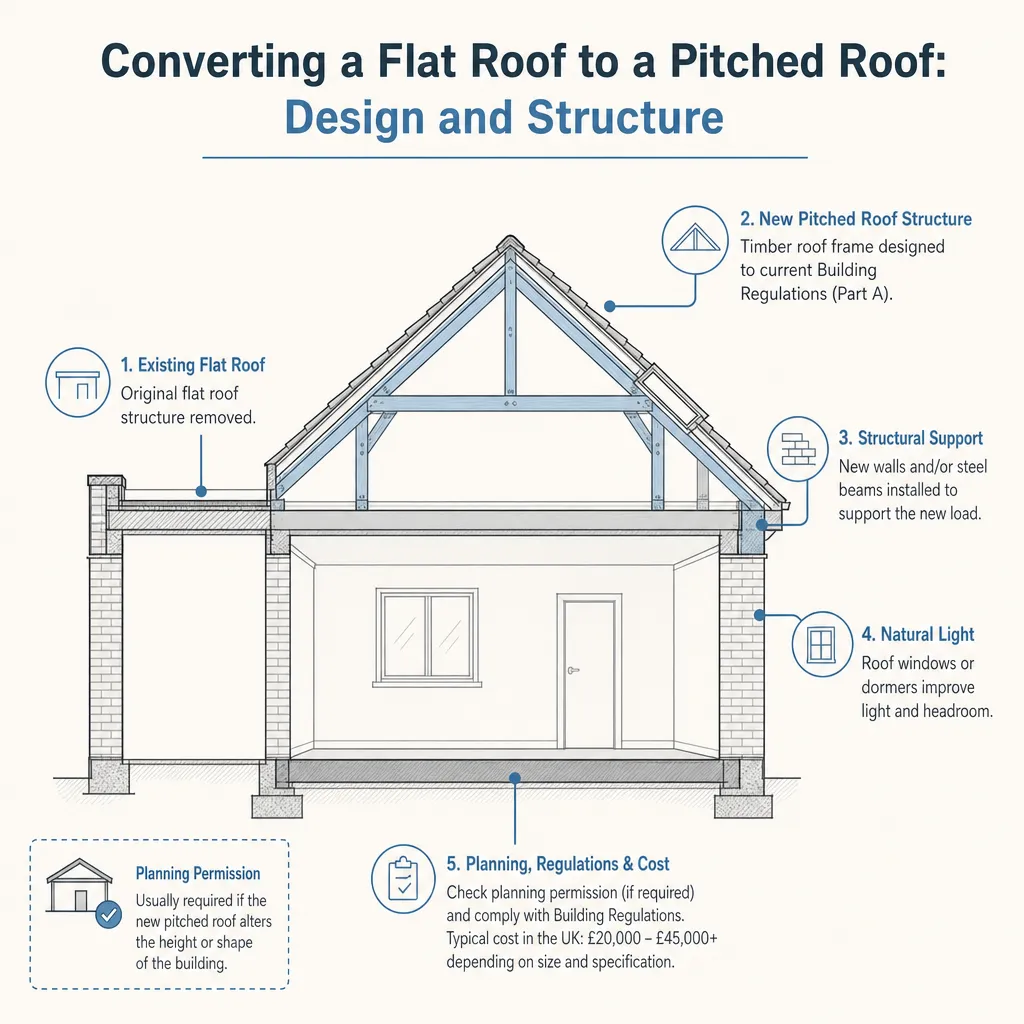
Converting a Flat Roof to a Pitched Roof: Design and Structure
Converting a flat roof to a pitched roof almost always requires Building Regulations approval and a structural engineer's design.
 Improvement & Build
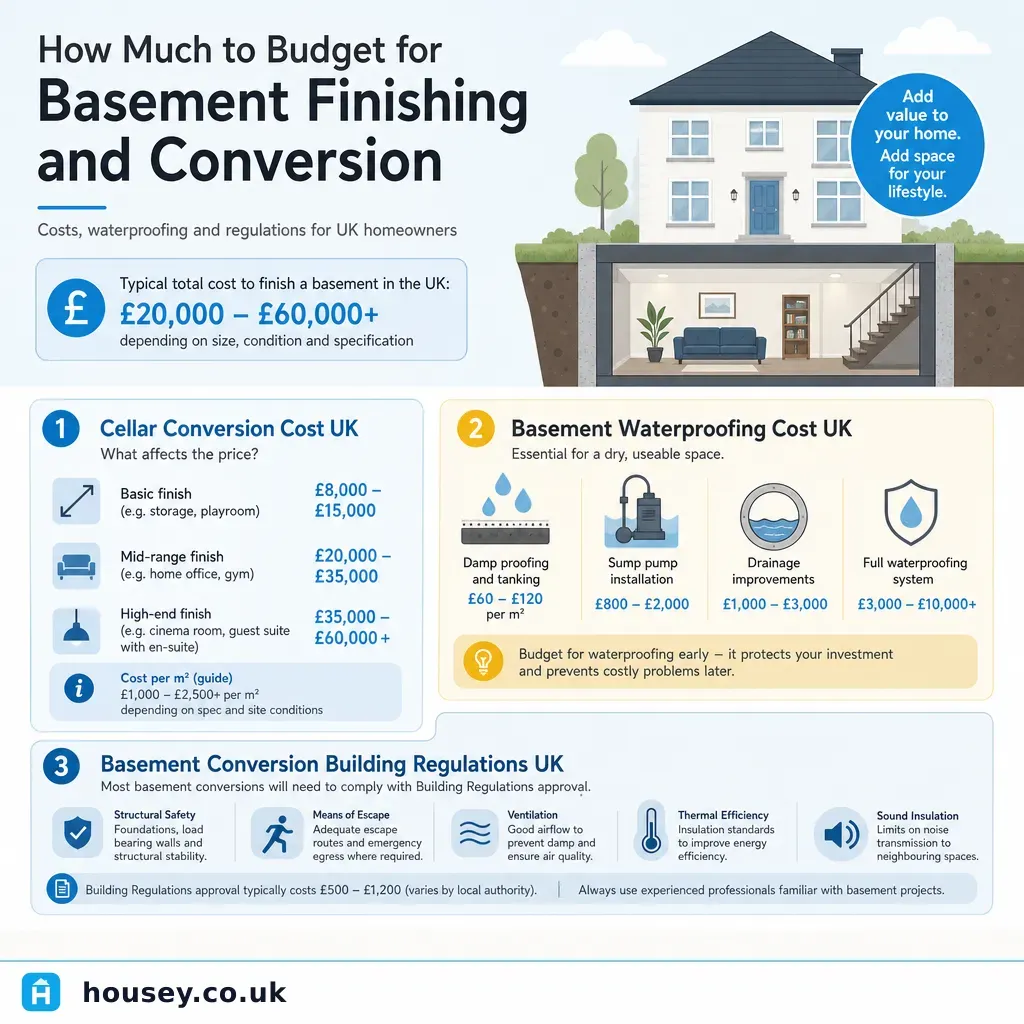
How Much to Budget for Basement Finishing and Conversion
Basement conversions in the UK typically cost £700–£1,500 per square metre for a simple cellar finish with existing headroom, rising to £1,500–£3,500 per square metre for a full conversion with underpinning.
 Improvement & Build
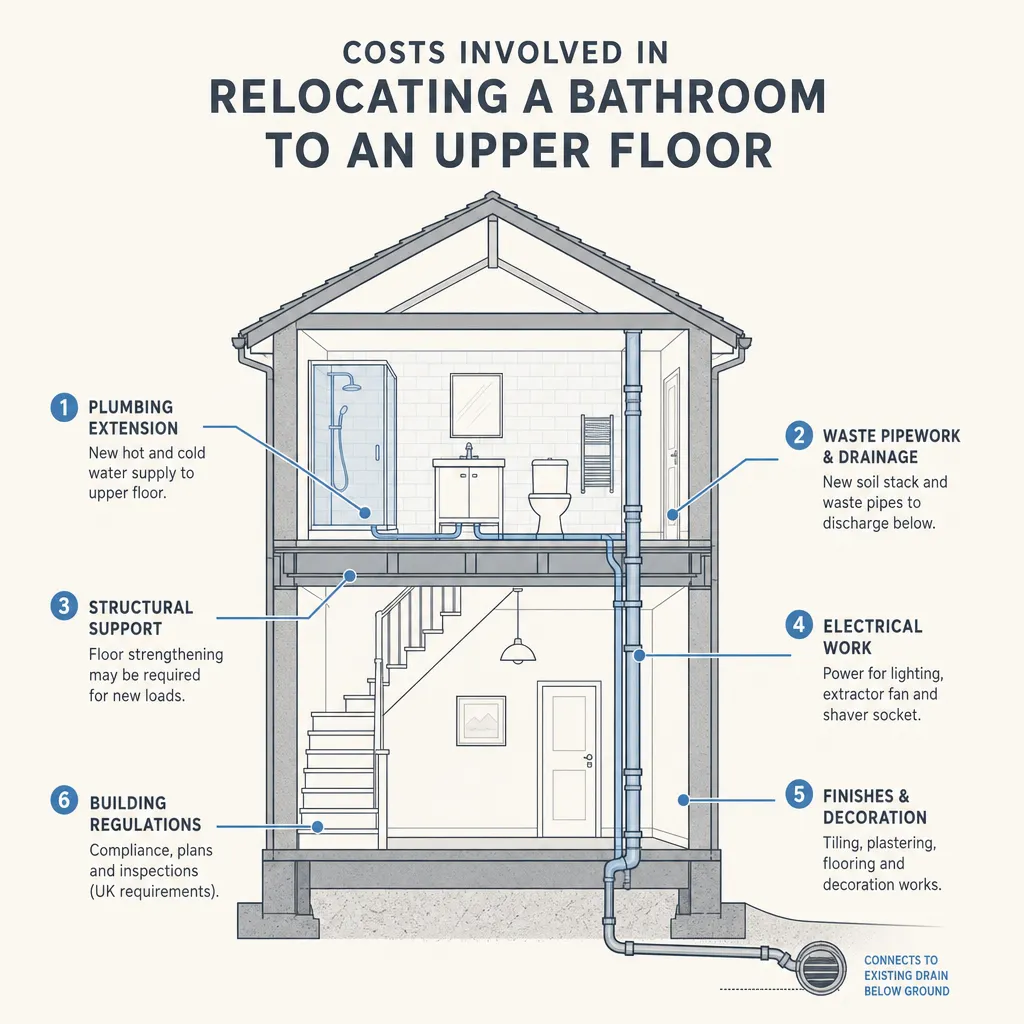
Costs Involved in Relocating a Bathroom to an Upper Floor
Moving a bathroom to an upper floor in a UK home typically costs £7,000 to £20,000 or more, depending on drainage method, structural work required, and finishes chosen.