Building a Carport: Costs and Planning Guide
By Housey · Last reviewed 6th of May 2026
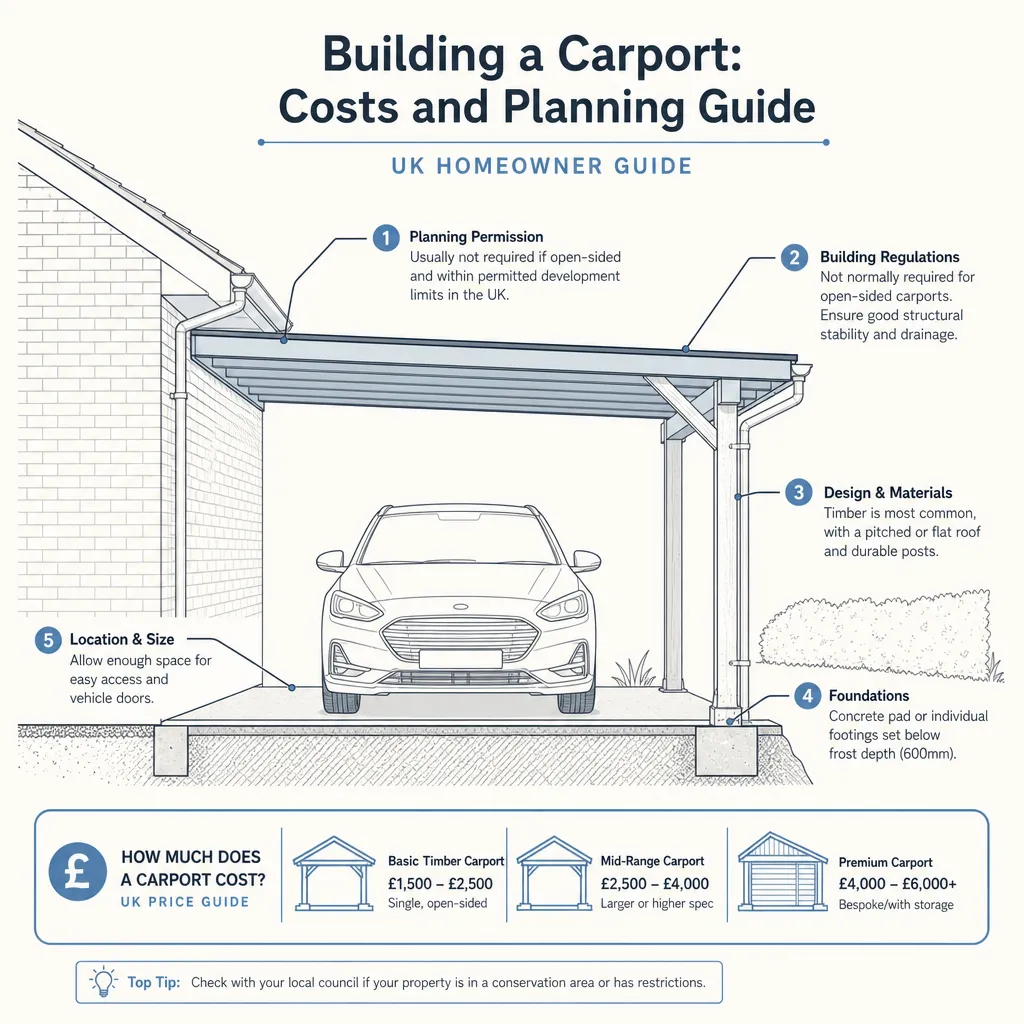
Building a Carport: Costs and Planning Guide
UK homeowners adding a carport face two overlapping practical questions from the outset: whether planning permission or Building Regulations approval is required, and how much the project should realistically cost. These decisions typically arise when upgrading an open driveway, replacing a deteriorating garage, or adding covered parking alongside an EV charging point. Getting both the regulatory and cost picture clear before approaching contractors prevents abortive spending and avoids delays on site.
Key points
- A carport attached to a house may qualify as permitted development under the Town and Country Planning (General Permitted Development) (England) Order 2015, but must not cover more than 50% of the land around the original house when combined with all other outbuildings.
- A detached carport exceeding 30m² floor area requires Building Regulations approval regardless of planning status.
- Installed carport costs range from approximately £3,000 for a basic lean-to to £12,000+ for a bespoke steel-framed design (indicative UK costs, last reviewed 2026-05-06).
- Article 4 directions, conservation area designations, and listed-building status can remove permitted development rights — always confirm with your local planning authority before starting.
- Ground preparation and drainage typically add £1,500–£4,000 to project cost; any new impermeable surface over 5m² must drain to a soakaway or use permeable surfacing.
Do you need planning permission for a carport?
Under the Town and Country Planning (General Permitted Development) (England) Order 2015 (as amended), a domestic carport may be built without a planning application if:
- It is within the curtilage of a dwelling house (not a flat or maisonette).
- It does not project in front of the principal elevation facing a highway.
- It covers no more than 50% of the total garden area, including all other outbuildings.
- Maximum eaves height is 2.5m; maximum overall height is 4m (dual-pitch roof) or 3m (any other roof type).
- It is not within 2m of a boundary if the structure exceeds 2.5m in height.
Scotland, Wales, and Northern Ireland operate separate permitted development regimes — always check with the relevant local authority. Permitted development rights may not apply to listed buildings, properties in conservation areas or AONBs, or estates subject to Article 4 directions. Check your title deeds or the local planning register if you are unsure.
Does a carport need Building Regulations approval?
Planning permission and Building Regulations are separate requirements. Detached carports of 30m² or less are generally exempt from Building Regulations if set at least 1m from a boundary or constructed from substantially non-combustible materials. Carports over 30m² require a Building Regulations application. Open-sided lean-to carports are typically exempt where they are open on at least two sides — confirm with your local building control body before starting.
If you combine a carport with an EV charger installation, the electrical work requires notification under Part P of the Building Regulations and must be carried out by a Part P-registered electrician.
How much does a carport cost in the UK?
Indicative UK costs, last reviewed 2026-05-06:
Carport type | Typical installed cost | Notes |
|---|---|---|
Lean-to timber, basic (1 bay) | £3,000–£5,500 | Requires sound wall; felt or polycarbonate roof |
Freestanding timber (1 bay) | £4,500–£7,000 | Posts and concrete pad footings included |
Freestanding steel-framed (1 bay) | £5,000–£9,000 | Durable; powder-coated finish |
Freestanding steel-framed (2 bay) | £8,000–£14,000 | May need engineer-specified footings |
Oak or hardwood (bespoke) | £8,000–£20,000+ | Used on period or conservation area properties |
Key cost drivers: ground preparation (£1,500–£4,000 depending on conditions), drainage management for run-off, roof specification, and EV charger conduit runs. Always request itemised quotes so you can compare like for like.
Decision guide: which carport type suits your property?
- Choose a lean-to timber carport if you have a suitable blank wall and want the lowest installed cost.
- Choose a freestanding timber carport for a mid-budget option with a traditional aesthetic that can be painted or stained.
- Choose a steel-framed carport if longevity and low maintenance are priorities and you prefer a modern finish.
- Choose oak or hardwood if the property is period, listed (subject to consent), or in a conservation area where character matters.
- Consult your local planning authority if the property is listed, in a conservation area, or subject to an Article 4 direction before spending on drawings or materials.
- Appoint a structural engineer if the carport exceeds 30m², attaches to a party wall, or involves complex or waterlogged ground conditions.
What to ask before accepting a quote
- Is the price fully installed, including groundworks and base preparation?
- What foundation specification is being used, and is it appropriate for my ground conditions?
- Who is responsible for obtaining planning permission or building control notification?
- Is the timber pressure-treated to Use Class 4 for in-ground posts?
- Is VAT included in the quoted price?
- What warranty is offered on the structure and roof covering?
- Will EV charger conduit runs be included if required?
When to get professional help
Most carport builds can be managed with a competent builder or specialist installer, but consider additional professionals when the site has poor drainage, made ground, or tree root proximity; when the carport abuts a party wall (Party Wall etc. Act 1996 notices may apply); when the property is listed or in a conservation area; or when a Part P EV charger installation is involved.
How Housey can help
Housey can connect you with vetted driveway installers to specify and price the base and surfacing, and with groundworkers for excavation, drainage, and concrete work. Getting multiple itemised quotes through Housey makes it straightforward to compare what is included before committing to a contractor.
Frequently asked questions
Do I need planning permission for a lean-to carport?
Not necessarily. In England, a lean-to carport attached to a dwelling house may qualify as permitted development under the 2015 GPDO if it meets size, height, and position criteria. Flats, listed buildings, and conservation areas are excluded from these rights. Always confirm with your local planning authority before starting work.
Can I build a carport without foundations?
A concrete slab or pad footings are strongly recommended for any permanent UK carport. Ground anchors can be used for very lightweight structures, but inadequate foundations increase the risk of movement, twisting, and premature deterioration, and may not satisfy a building control inspection.
How long does a carport build take?
A single-bay carport typically takes 2–5 days on site once groundworks are complete. Groundworks — excavation, base preparation, and concrete curing — add a further 3–7 days. Total duration from instruction to handover is usually 2–3 weeks depending on contractor availability and weather.
Does a carport add value to my property?
A carport generally adds convenience value and may improve kerb appeal where off-street parking is scarce. However, it adds less value than a fully enclosed garage. The exact impact depends on local demand, build quality, and whether planning compliance can be demonstrated to a buyer's solicitor during conveyancing.
Is a carport cheaper than a garage?
Yes, in most cases. A carport omits walls, insulation, doors, and electrical fit-out, typically costing 30–50% less than an equivalent new-build garage. The trade-off is reduced security, less weather protection for stored items, and no lockable space.
Sources and further reading
Useful next reads
 Improvement & Build
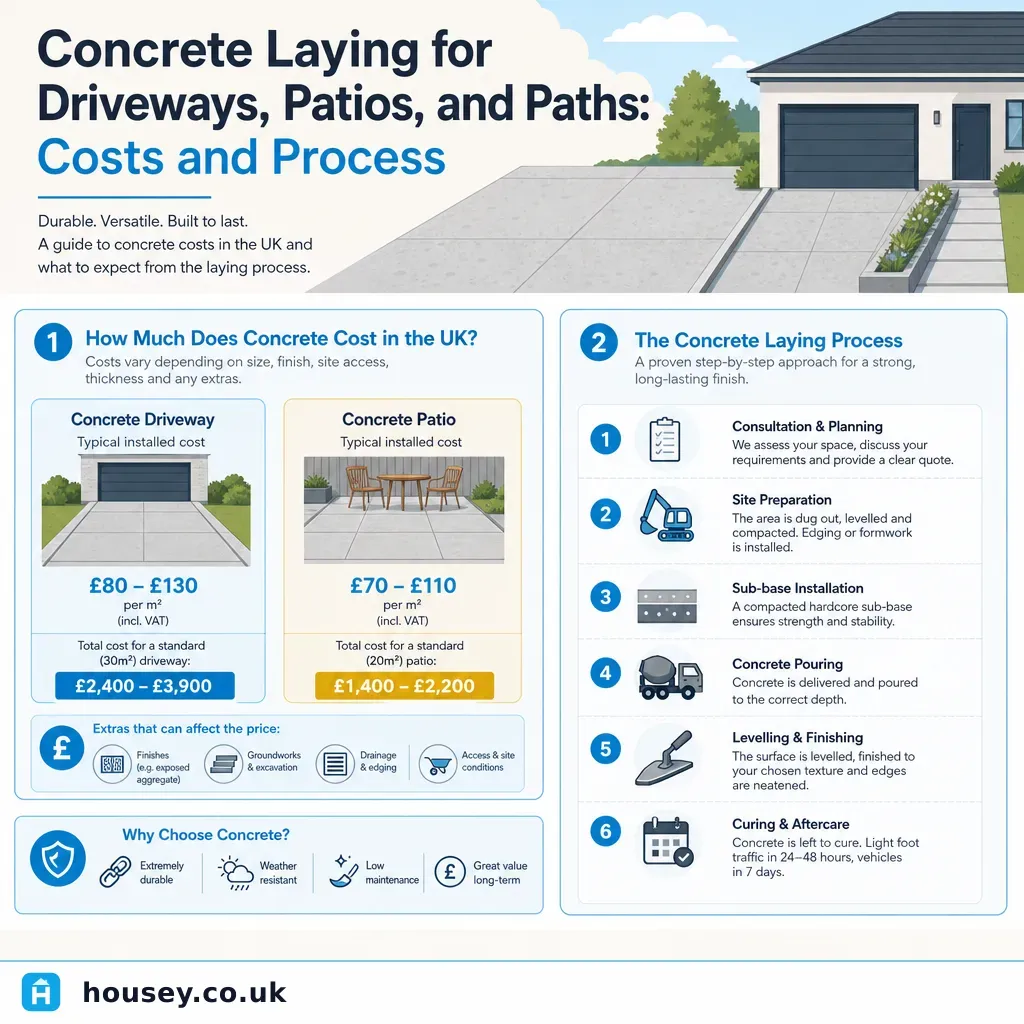
Concrete Laying for Driveways, Patios, and Paths: Costs and Process
Concrete laying for a UK driveway typically costs £65–£110 per square metre, including sub-base, reinforcement, formwork, and finishing.
 Improvement & Build
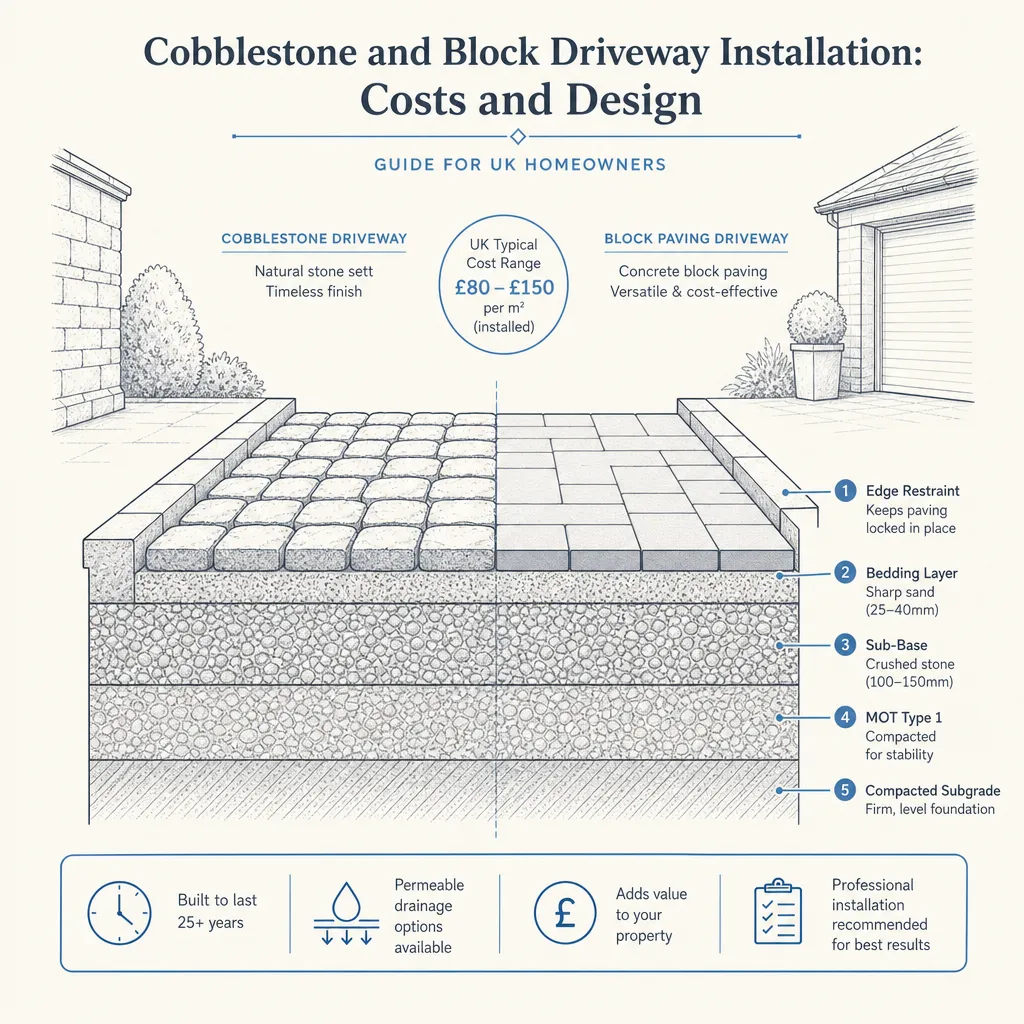
Cobblestone and Block Driveway Installation: Costs and Design
Cobblestone and block paving driveways cost roughly £50–£200 per m² installed in the UK, depending on material and site conditions.
 Improvement & Build
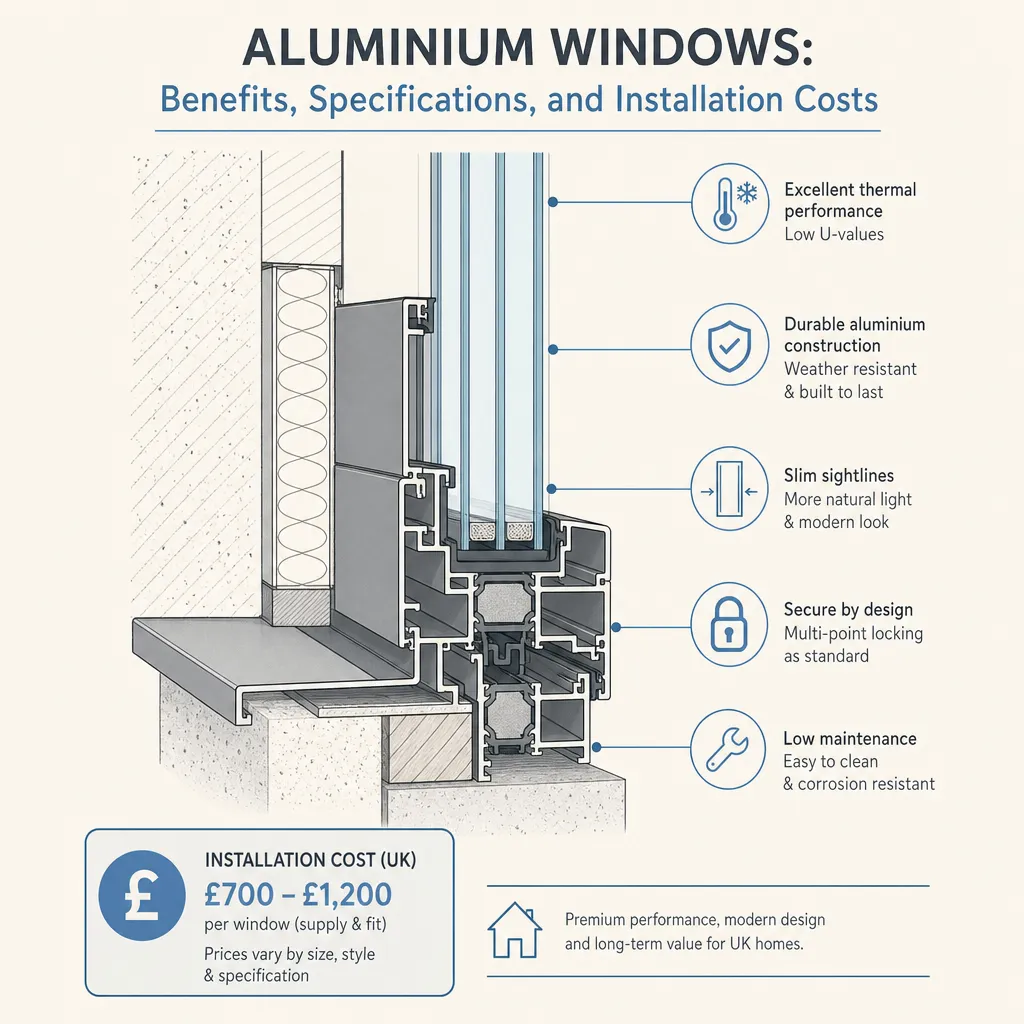
Aluminium Windows: Benefits, Specifications, and Installation Costs
Aluminium windows typically cost £600–£1,800 per window installed in the UK, depending on size and specification.
 Improvement & Build
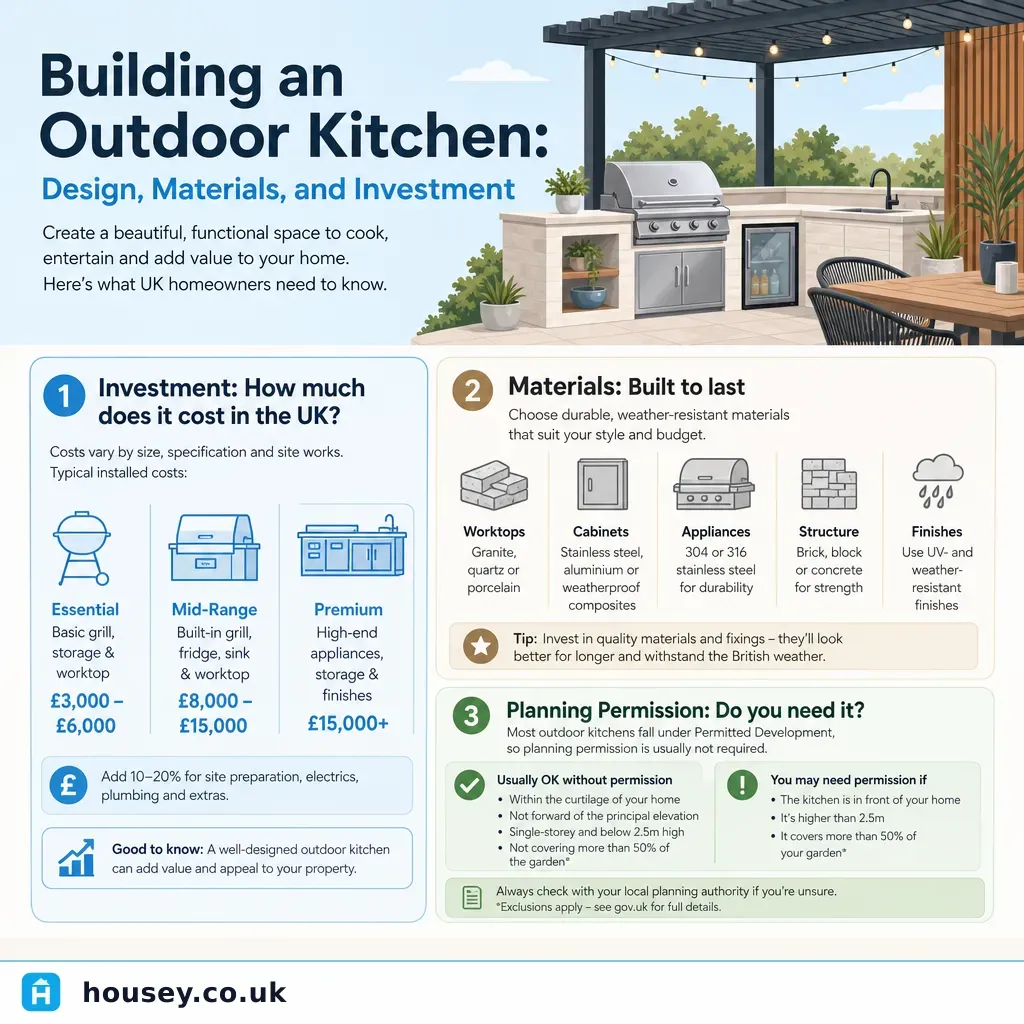
Building an Outdoor Kitchen: Design, Materials, and Investment
Building an outdoor kitchen in the UK costs roughly £3,000–£25,000 depending on size and materials.
 Improvement & Build
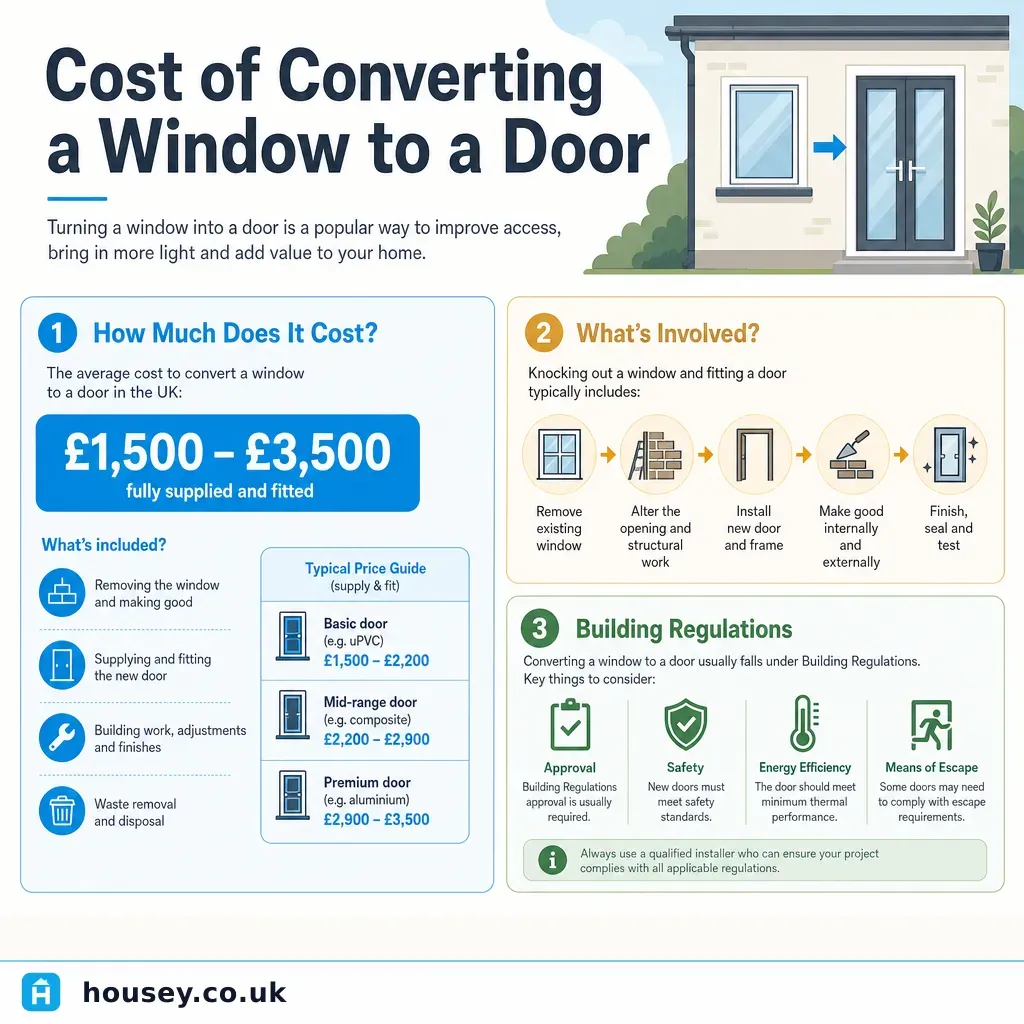
Cost of converting a window to a door
Converting a window to a door in the UK typically costs £1,500–£5,000 or more, depending on wall construction (cavity, solid, or timber frame), the type of door fitted, and whether a new or enlarged lintel is required.