Building an Outdoor Kitchen: Design, Materials, and Investment
By Housey · Last reviewed 5th of May 2026
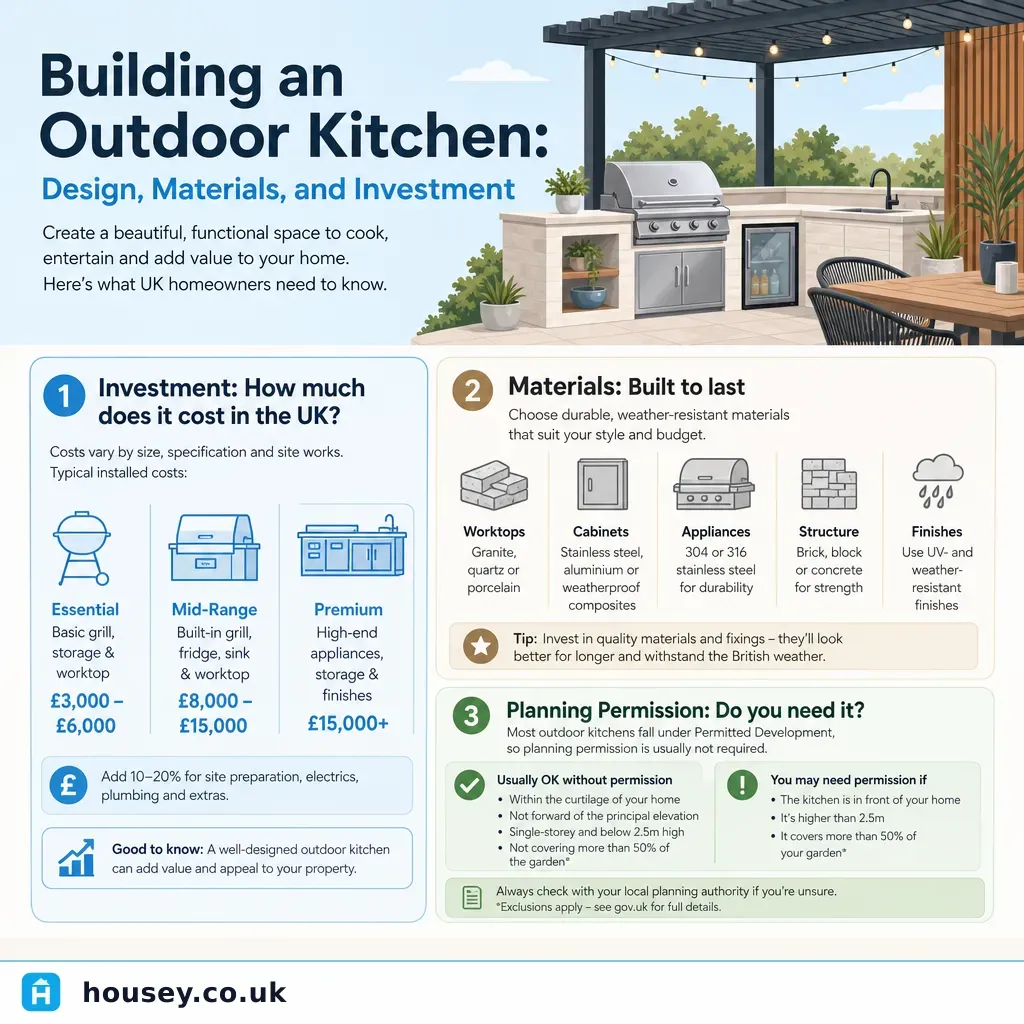
Building an Outdoor Kitchen: Design, Materials, and Investment
Outdoor kitchens have moved from a niche luxury to a realistic project for UK homeowners with a decent garden and a taste for al fresco entertaining. Whether you are extending a timber deck or building a standalone cooking area in a courtyard, the decisions you make early — around materials, services, and layout — will determine how well the space performs through British winters and wet summers alike.
Key points
- Most outdoor kitchens fall within permitted development rights and do not need planning permission, but structures higher than 3m (or 2.5m within 2m of a boundary), covering more than 50% of the garden, or in a conservation area or listed building curtilage may require consent.
- Gas connections for outdoor kitchens must be installed by a Gas Safe registered engineer — a legal requirement under the Gas Safety (Installation and Use) Regulations 1998, not a recommendation.
- All outdoor electrical supplies should be RCD-protected and installed to Part P of the Building Regulations by a registered electrician or a self-certifying competent person.
- Marine-grade stainless steel (grade 316) is the recommended specification for outdoor cabinetry frames and appliance housings in the UK's wet climate; standard grades corrode significantly faster.
- Indicative costs range from around £3,000 for a basic modular setup to £25,000 or more for a bespoke masonry build with integrated gas, water, and refrigeration (Indicative UK costs, last reviewed 2026-05-05).
Does building an outdoor kitchen need planning permission?
In most cases, no. Outdoor kitchens are typically treated as garden structures under Permitted Development (PD) rights in England. The relevant thresholds under the Town and Country Planning (General Permitted Development) Order 2015 are:
- The structure must not cover more than 50% of the total garden area (excluding the original house footprint).
- Height must not exceed 2.5m if within 2m of a property boundary, or 3m otherwise (4m for a dual-pitched roof structure with ridgeline).
- The structure must not be used as habitation and must be within the curtilage of a dwelling house.
You may need planning permission if:
- Your property is in a conservation area, Area of Outstanding Natural Beauty (AONB), or World Heritage Site.
- The building is listed.
- Permitted development rights have been removed by an Article 4 Direction.
- The structure exceeds the height or coverage thresholds above.
Always check with your local planning authority (LPA) before starting if you are uncertain. Permitted development rules in Wales, Scotland, and Northern Ireland differ from those in England.
Choosing materials for the UK climate
An outdoor kitchen in a UK garden faces rainfall, humidity, frost, and temperature swings that quickly degrade the wrong materials. Here is a comparison of the main structural options:
Material | Best for | Drawbacks | Typical lifespan with maintenance |
|---|---|---|---|
Concrete block / masonry | Permanence, heat retention, custom shapes | Higher build cost, slower to construct | 30+ years |
Stainless steel grade 316 | Appliance housings, worktops, wet areas | Can feel industrial; premium cost | 20+ years |
Powder-coated aluminium | Lightweight framing, modular builds | Less structural than masonry | 15–20 years |
Pressure-treated hardwood | Cabinetry, cladding (check FSC certification) | Needs annual oiling | 10–15 years with maintenance |
Composite cladding | Low-maintenance cladding panels | Quality varies significantly | 15–25 years |
Rendered blockwork | Integrated, fire-safe finish | Labour-intensive; cracking if unsealed | 20+ years |
Worktops: Granite, porcelain, and concrete are the most durable choices outdoors. Frost-resistant porcelain slabs need no sealing and handle freeze-thaw cycles well. Granite needs annual sealing in exposed UK positions. Avoid laminate or solid timber worktops in permanently outdoor applications.
Layout and design: planning the space before you build
Zone your outdoor kitchen before specifying anything
A well-designed outdoor kitchen divides into three functional zones:
- Preparation zone: Worktop area with a sink (if plumbed in) and cold storage.
- Cooking zone: BBQ, plancha, pizza oven, or gas hob — position this downwind of the seating area.
- Serving zone: Counter overhang for bar seating, or a pass-through to an adjacent dining table.
A compact L-shaped layout works well for gardens under 10m wide. A straight run suits narrow side-return spaces. U-shaped layouts allow separate cooking and prep zones and suit larger terraces.
Utility connections to plan before work starts
- Gas: A dedicated garden gas supply requires a Gas Safe registered engineer to design, install, and commission the pipework. Do not use LPG cylinders as a permanent solution without appropriate ventilation and a purpose-built housing.
- Water: A cold-water supply and waste connection add cost but improve usability significantly. Building Regulations may apply depending on the scope of plumbing work.
- Electricity: An outdoor socket circuit must be RCD-protected and run in armoured cable buried to the correct depth (typically 450mm under paving, 600mm under soil as per BS 7671). Only a Part P-registered electrician or a self-certifying competent person should carry out this work.
- Drainage: A waste gulley or connection to surface water drainage is needed if you include a sink.
Project costs: what to budget
Outdoor kitchen costs in the UK vary significantly depending on size, materials, and the number of utility connections.
Project type | Indicative cost range | Typically includes |
|---|---|---|
Modular flat-pack / prefab | £3,000–£6,000 | Pre-built units, basic gas or electric BBQ, self-installation option |
Contractor-built modular | £6,000–£12,000 | Landscaper installation, worktop, basic utility connections |
Custom masonry outdoor kitchen | £12,000–£25,000 | Blockwork build, integrated appliances, gas/water/electric, porcelain worktop |
Premium bespoke with pizza oven, fridge, and sink | £20,000–£40,000+ | Designer involvement, high-end finishes and appliances |
Indicative UK costs, last reviewed 2026-05-05. Costs vary by region and contractor; obtain at least three written quotes.
Cost drivers that can push budgets higher:
- Adding a sink, waste connection, and water supply
- Underground gas pipework from the house
- Armoured electrical cable installation
- A covered pergola or overhead structure
- Premium appliances (built-in pizza ovens start at around £1,500–£3,000 for the appliance alone)
- Planning or building control fees where consent is required
Outdoor kitchen planning checklist
Work through these decisions before briefing a contractor or designer:
When to get professional help
A garden designer or specialist outdoor kitchen company will add clear value if your project involves:
- Integrating a gas supply — this must involve a Gas Safe registered engineer regardless of project size
- Installing an outdoor electrical circuit — Part P requires a registered competent person
- Applying for planning permission or building in a conservation area
- A masonry or reinforced concrete build with implications for drainage or ground stability
- A project over around £8,000 where specification decisions and contractor management carry meaningful financial risk
Red flags during a contractor conversation:
- No Gas Safe registration number offered for gas work
- Suggesting that exposed copper gas pipe is acceptable outdoors
- Not mentioning RCD protection for outdoor electrical supplies
- Unable to provide a fixed-price quote or a clear payment schedule
- No mention of Part P compliance for electrical work
How Housey can help
Whether you are still refining your layout or ready to brief a contractor, connecting with a professional early makes a measurable difference to outdoor kitchen projects. Use Housey to request quotes from experienced garden designers who can help you plan the layout and specification, or from landscapers who can handle groundworks, paving, and structural elements.
Frequently asked questions
Do I need planning permission for an outdoor kitchen in the UK?
In most cases, no. Outdoor kitchens typically fall within permitted development rights, provided the structure does not exceed 2.5m within 2m of a boundary (3m otherwise), does not cover more than 50% of the garden, and is not in a conservation area or listed building curtilage. Rules differ in Wales, Scotland, and Northern Ireland. Always check with your local planning authority if uncertain.
Does an outdoor kitchen gas supply need a Gas Safe registered engineer?
Yes. Connecting any appliance to a permanent gas supply must be carried out by a Gas Safe registered engineer. This is a legal requirement under the Gas Safety (Installation and Use) Regulations 1998. Using an unregistered tradesperson for gas work is illegal and dangerous, regardless of how simple the task appears.
What is the best worktop material for a UK outdoor kitchen?
Frost-resistant porcelain is widely considered the most practical choice — it requires no sealing and handles freeze-thaw cycles well. Granite is also durable but needs annual sealing in exposed positions. Avoid laminate, solid timber, and engineered stone in permanently outdoor applications, as they are susceptible to moisture damage, staining, and frost degradation.
Can I build part of an outdoor kitchen myself?
Some elements suit a competent self-builder — groundworks, paving, and assembling modular units, for example. However, any new gas connections must involve a Gas Safe registered engineer and any new electrical circuits must comply with Part P of the Building Regulations. DIY gas or electrical work in this context is both dangerous and unlawful.
How long does it take to build an outdoor kitchen?
A modular installation on an existing paved terrace can take one to three days. A custom masonry build with utility connections typically takes two to four weeks, depending on design complexity, materials lead times, and contractor availability. Allow eight weeks if a planning application is required — the standard determination period for householder applications in England.
Sources and further reading
- Outbuildings — Permitted Development — Planning Portal
- Gas Safe Register — find a registered engineer — Gas Safe Register
- Gas Safety (Installation and Use) Regulations 1998 — legislation.gov.uk
- Approved Document P: Electrical Safety — Dwellings — GOV.UK
- IET Wiring Regulations (BS 7671) — Institution of Engineering and Technology
Useful next reads
 Improvement & Build
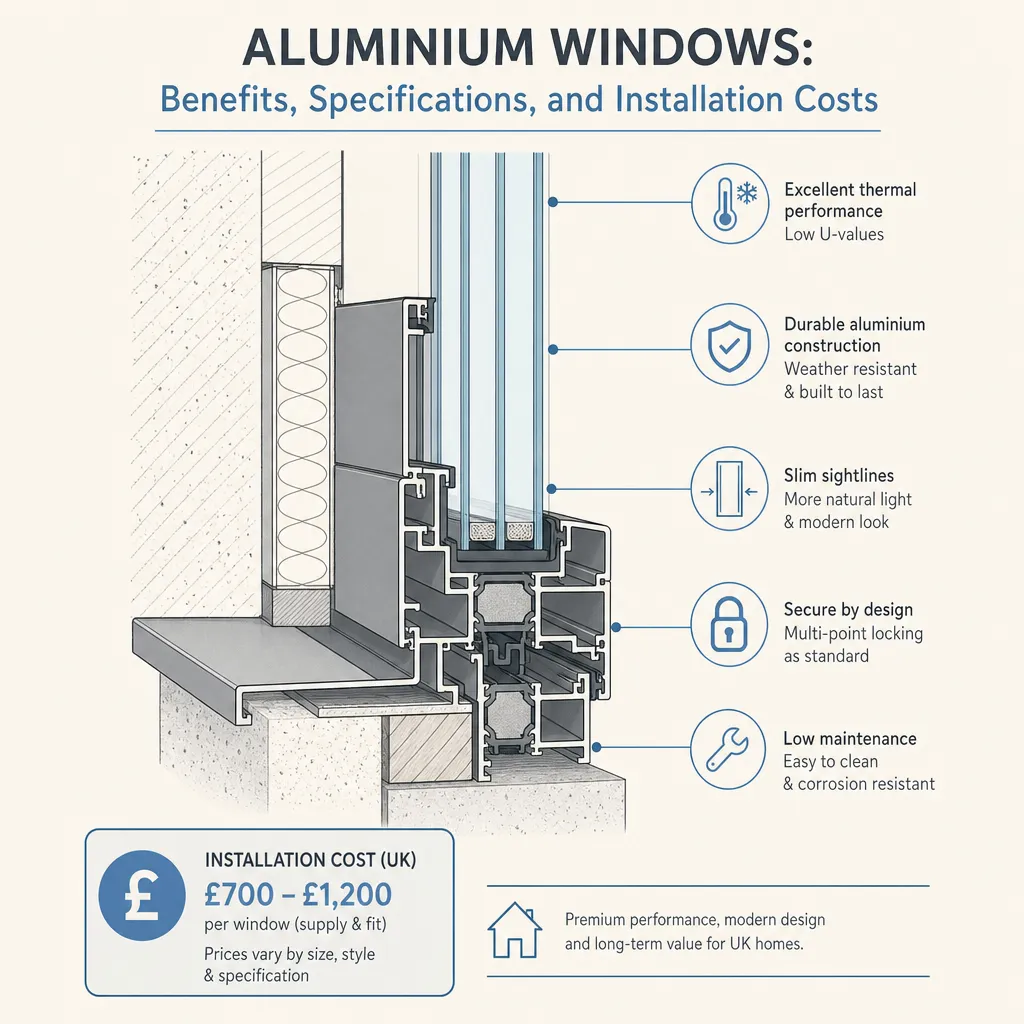
Aluminium Windows: Benefits, Specifications, and Installation Costs
Aluminium windows typically cost £600–£1,800 per window installed in the UK, depending on size and specification.
 Improvement & Build
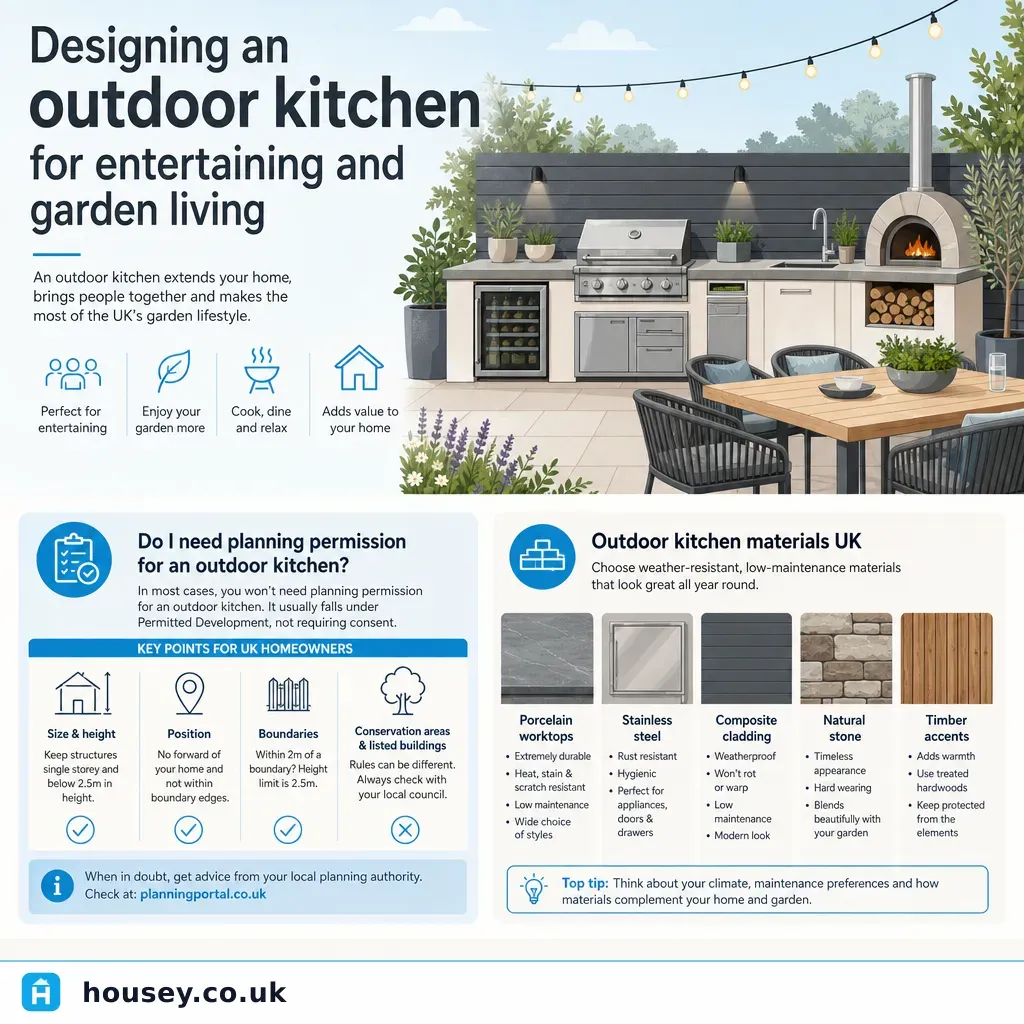
Designing an outdoor kitchen for entertaining and garden living
An outdoor kitchen in a UK garden needs a stable, level base — typically a concrete slab or quality paving — with weather-rated materials such as stainless steel grade 316 or frost-rated porcelain.
 Improvement & Build
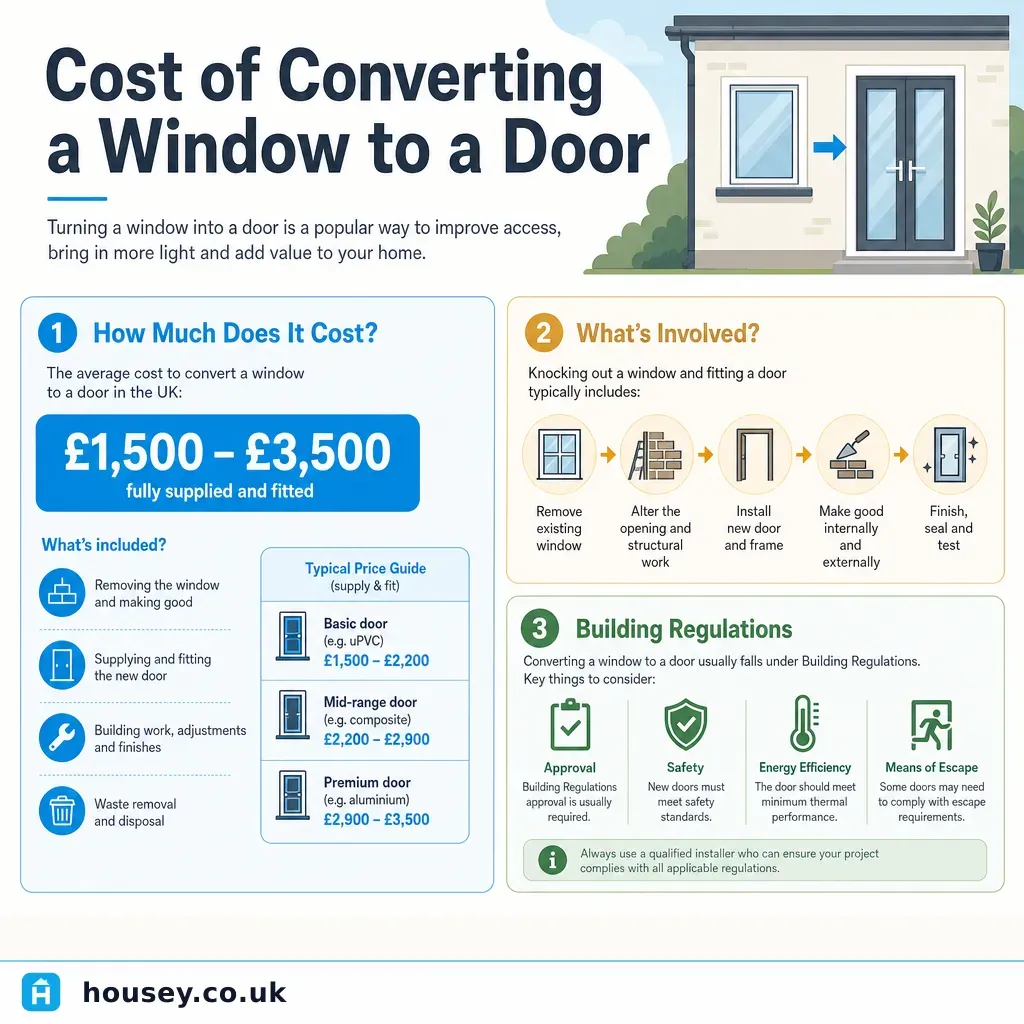
Cost of converting a window to a door
Converting a window to a door in the UK typically costs £1,500–£5,000 or more, depending on wall construction (cavity, solid, or timber frame), the type of door fitted, and whether a new or enlarged lintel is required.
 Improvement & Build
Custom Glass Solutions: Windows, Doors, and Glazing Services
Replacement windows and doors in England and Wales must comply with Building Regulations Approved Document L (2022), requiring a whole-window U-value of 1.
 Improvement & Build
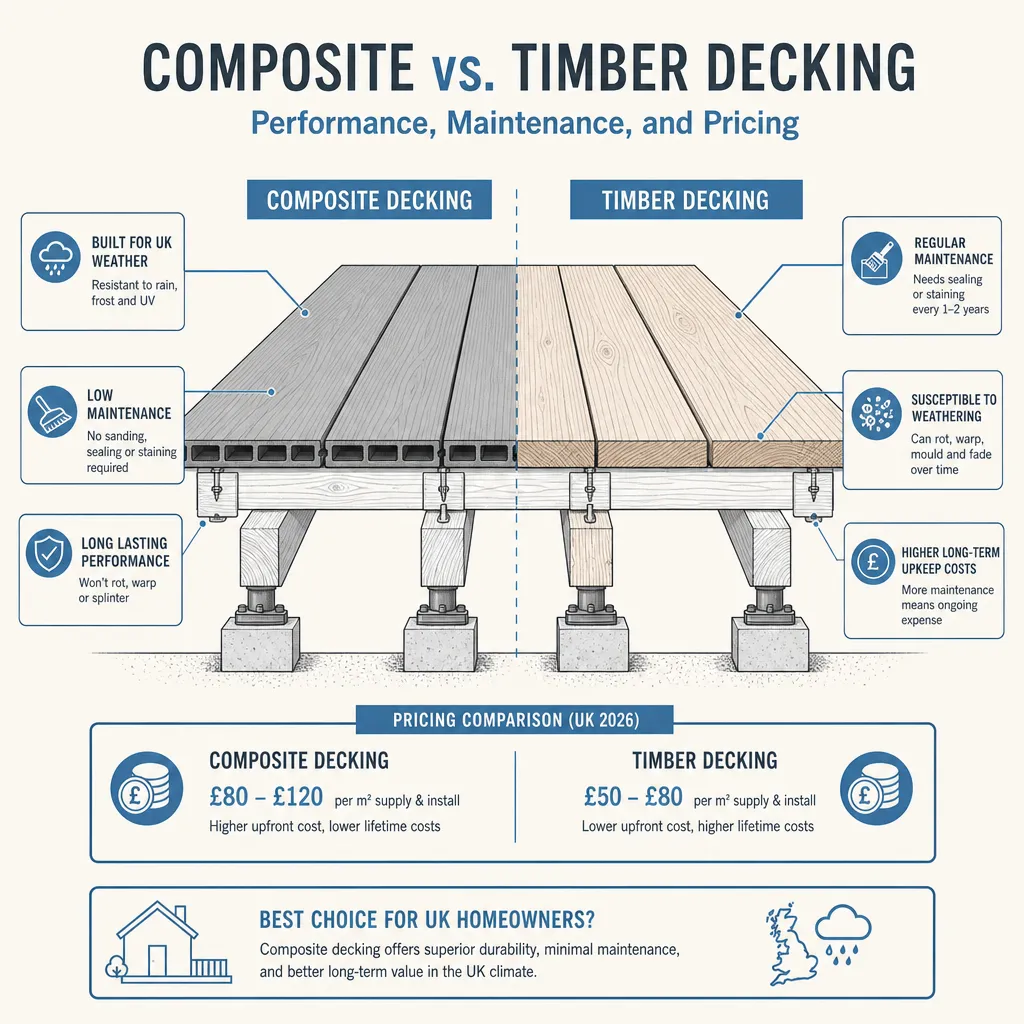
Composite vs. Timber Decking: Performance, Maintenance, and Pricing
Composite decking costs more upfront — typically £120–£220 per m² installed versus £80–£150 for treated softwood — but requires far less maintenance and carries a 25-year warranty.