Cost of converting a window to a door
By Housey · Last reviewed 19th of May 2026
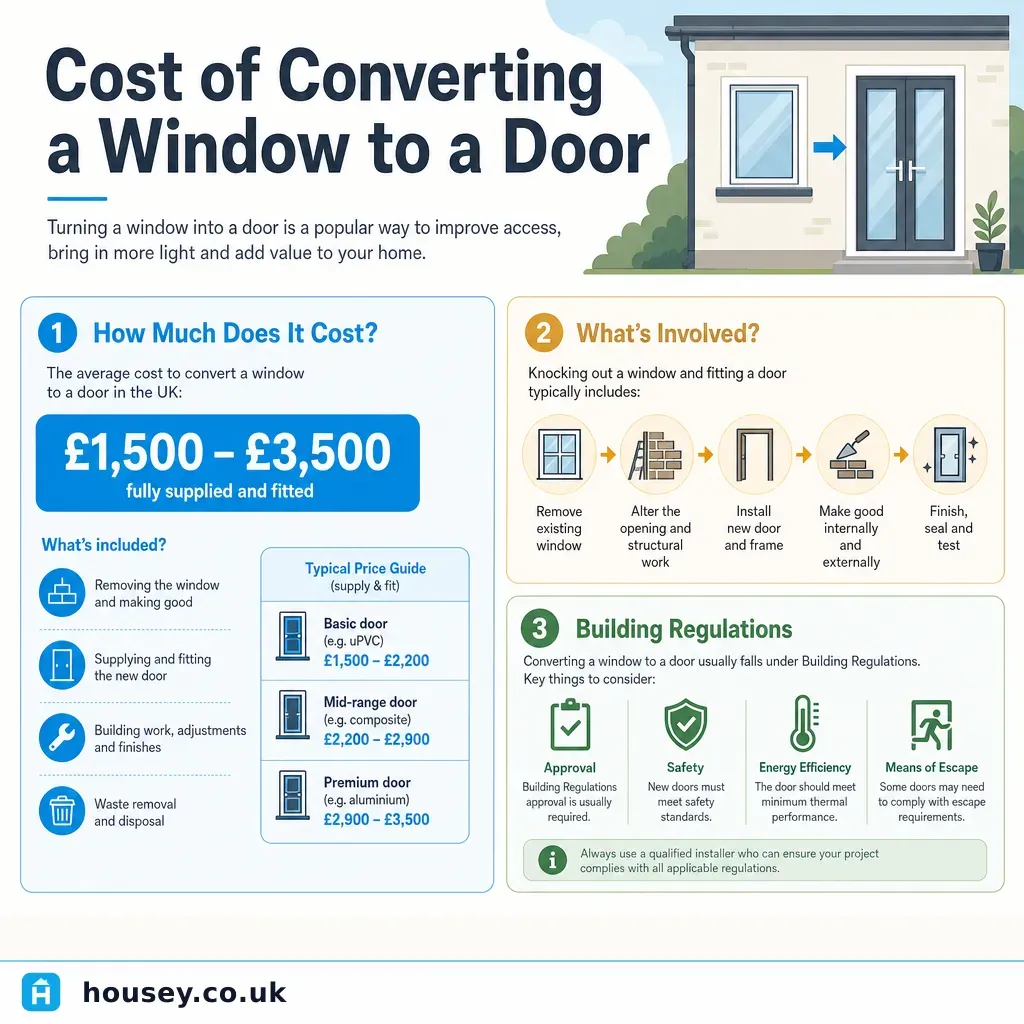
Cost of converting a window to a door
Converting a window opening into a doorway is a popular improvement in UK homes — it might open a ground-floor living room directly onto a garden, improve flow between kitchen and utility spaces, or add a second exit from a rear extension. Because the work involves enlarging or modifying a structural opening in a wall, it is considerably more involved than a standard door installation. A structural engineer or experienced building contractor must assess the existing lintel, building regulations approval is required in England and Wales under Approved Document A (Structure), and certain properties need planning consent before work can begin. Understanding the full cost picture — structural work, door supply and fit, making good, and regulatory fees — prevents unwelcome surprises once the scaffolding goes up.
Key points
- Converting a window to a door in the UK typically costs £1,500–£5,000 or more, depending on wall type, door specification, and whether the existing lintel can be retained (indicative UK costs, last reviewed 2026-05-19).
- Building regulations approval under Approved Document A (Structure) is required in England and Wales whenever a structural opening is altered or enlarged.
- A new or larger lintel is almost always needed when the opening is widened; lintel supply and installation typically costs £300–£800 depending on span, type, and access.
- Cavity brick or block construction (post-1945) is generally less complicated to adapt than solid brick; timber-frame properties require specialist engineering sign-off to avoid cutting structural bracing.
- Planning permission is not usually required for a rear ground-floor conversion on a standard dwellinghouse under permitted development, but conservation area, listed building, and flat restrictions apply.
What drives the cost?
Wall construction type
The single biggest cost driver is the type of wall being altered.
Wall type | Complexity | Key considerations |
|---|---|---|
Cavity brick/block (post-1945) | Moderate | New lintel almost always needed if widening the opening |
Solid brick (pre-1919) | Higher | Heavier lintels required; masonry shoring needed during works |
Timber frame (modern new-build) | Specialist | Structural engineer sign-off usually essential; risk of cutting load-bearing bracing |
Concrete panel (1960s–1980s system build) | High | Specialist assessment required; conversion may be complex or inadvisable |
Door type and supply cost
The door unit itself varies considerably:
- Standard single door (uPVC or composite): £500–£1,200 supply-only; £800–£1,800 supply-and-fit.
- French doors (uPVC or composite): £900–£2,000 supply-only; £1,500–£3,000 supply-and-fit.
- Bifold or sliding patio doors: £1,500–£4,000+ supply-only; £2,500–£6,000+ supply-and-fit.
Indicative UK costs, last reviewed 2026-05-19. Prices vary substantially by region, specification, and supplier.
Structural engineering and building control
- Structural engineer's site visit and calculations: £300–£600 for a straightforward residential case.
- Local Authority Building Control (LABC) full plans application fee: typically £200–£600 for a small domestic structural alteration. An approved inspector (accredited via CICAIR) may be used as an alternative.
Making good
Once the structural opening is formed and the door installed, the surrounding wall needs making good — external rendering, internal plastering, and decoration, with possible floor-level adjustment at the new threshold. Budget £200–£600 for straightforward making good, more for larger openings or premium internal finishes.
Worked UK property scenario
Scenario: A homeowner in a 1960s cavity-wall semi-detached house wants to convert a ground-floor rear window into French doors opening onto a new patio. The existing window opening is 900 mm wide; the proposed French doors require a 1,600 mm clear opening, so the opening must be widened.
Cost item | Estimated range |
|---|---|
Structural engineer (site visit + calculations) | £350–£500 |
LABC building regulations full plans application | £250–£400 |
Demolition and forming the enlarged opening | £400–£700 |
New 1,800 mm steel lintel (supply and install) | £350–£600 |
uPVC French doors (supply and fit) | £1,200–£2,200 |
Making good (external render, internal plaster, redecoration) | £300–£600 |
Indicative total | £2,850–£5,000 |
Indicative UK costs for illustrative purposes only, last reviewed 2026-05-19. Actual costs depend on contractor, region, specification, and site conditions.
Do you need planning permission?
Under permitted development rights for a dwellinghouse in England, most external alterations that do not materially affect the principal elevation do not require a planning application. A rear window-to-door conversion typically falls within permitted development.
However, check with your local planning authority (LPA) before starting if any of the following apply:
- The property is in a conservation area — permitted development rights for changes to elevations facing a highway are restricted.
- The property is listed — listed building consent is required for any alteration, including a window-to-door conversion, however minor it appears.
- Permitted development rights have been removed by a planning condition (common on estates built from the 1980s onwards).
- The property is a flat — permitted development rights are more limited; planning permission is often required.
- The proposed opening faces the principal elevation (the front of the property).
Use the Planning Portal's permitted development guidance or speak to your LPA's duty planning officer to confirm before work begins.
What to ask before accepting a quote
- Is a structural engineer's assessment included in the quote, or do I need to appoint one separately?
- Will the builder manage the building regulations application, or is that my responsibility?
- What lintel specification will be used, and has it been designed to carry the full load above the opening?
- How will the wall be supported (propped or shored) while the opening is being formed?
- What does "making good" include — internal plaster only, or external render and decoration as well?
- How long will the opening be exposed to weather during the works, and how will it be weatherproofed?
- What guarantee or warranty is provided on the door unit and on the structural work?
- Is VAT included in the quoted price?
- What site conditions or hidden features could cause the price or timeline to change?
Important limitations
This article provides general guidance only. Structural work carries real risk if poorly specified or executed — an under-sized or inadequate lintel can cause wall or roof settlement that is expensive to rectify and potentially dangerous. Rules on building regulations, planning permission, permitted development, and structural requirements vary by property type, construction method, age, and local authority. Do not rely on this article as the basis for structural decisions on your property. A structural engineer, architect, or experienced building contractor should assess your specific situation before any structural opening is modified.
When this becomes urgent
Do not proceed without professional assessment if:
- The wall is load-bearing or is a party wall shared with a neighbour, and no structural engineer has been consulted.
- There are visible cracks in the masonry above the existing window lintel — this may indicate the lintel is already under stress.
- The property is listed or in a conservation area and consent has not yet been obtained.
- The wall forms part of a timber-frame structure — cutting structural members without engineering approval can critically compromise the building.
- A builder quotes to carry out the work without mentioning building regulations approval — this is a significant red flag.
What to ask a qualified professional
Ask the following before instructing a structural engineer or contractor:
- Is this wall load-bearing, and what is the full load path above the proposed opening?
- What lintel span, type, bearing length, and padstone specification are required?
- Is building regulations approval needed, and will you manage the full plans application and inspections?
- Does the work affect a party wall, and if so, does the Party Wall etc. Act 1996 require notices to be served on adjoining owners?
- Are there any signs of existing lintel distress that should be addressed before the opening is enlarged?
- What temporary propping method will be used, and for how long will the wall be unsupported?
When to get professional help
Any conversion of a window to a door in a structural or party wall requires a structural engineer's involvement and building regulations approval before work begins. If you are not certain whether the wall is structural, treat it as structural until a qualified engineer confirms otherwise. Using extension builders or window and door installers with demonstrable experience in structural alterations and building control processes reduces risk considerably.
How Housey can help
Housey connects you with vetted window and door installers and extension builders who have experience in structural alterations, lintel replacements, and building regulations compliance — and can co-ordinate the engineering assessment, building control application, and installation as a single managed project.
Frequently asked questions
Do I need planning permission to convert a window to a door?
Usually not for a rear elevation on a standard dwellinghouse in England, under permitted development rights — but there are important exceptions for listed buildings, conservation areas, flats, and properties where permitted development rights have been removed by planning condition. Always confirm with your local planning authority before starting work to avoid enforcement action.
Will I always need a new lintel when converting a window to a door?
Not necessarily — if the opening is not being widened and an adequate lintel already sits above the existing frame, it may be possible to retain it. However, if you are widening the opening for French doors or bifold doors, a new, longer lintel is almost certainly required. A structural engineer's assessment will confirm what is needed for your specific opening.
How long does a window-to-door conversion take?
For a straightforward cavity-wall conversion, the structural work and door installation typically takes two to four days on site. If you use the full plans route for building regulations approval, allow two to four additional weeks before starting. Factor in lead times for bespoke door units, which can be four to twelve weeks from order.
Can a window-to-door conversion be done on any wall?
No. Structural walls, party walls shared with neighbours, and walls forming fire-separation elements all have particular constraints. Party walls may engage the Party Wall etc. Act 1996, requiring notices to adjoining owners before work begins. Non-structural stud partitions are simpler cases, but even these may require building control sign-off for larger openings.
Sources and further reading
- Planning Portal: permitted development for dwellings — Planning Portal / GOV.UK
- Building Regulations Approved Document A: Structure — GOV.UK
- Party Wall etc. Act 1996 — explanatory booklet — GOV.UK
- Historic England: listed buildings and alterations — Historic England
- RICS: building surveys and structural inspections — RICS
Useful next reads
 Improvement & Build
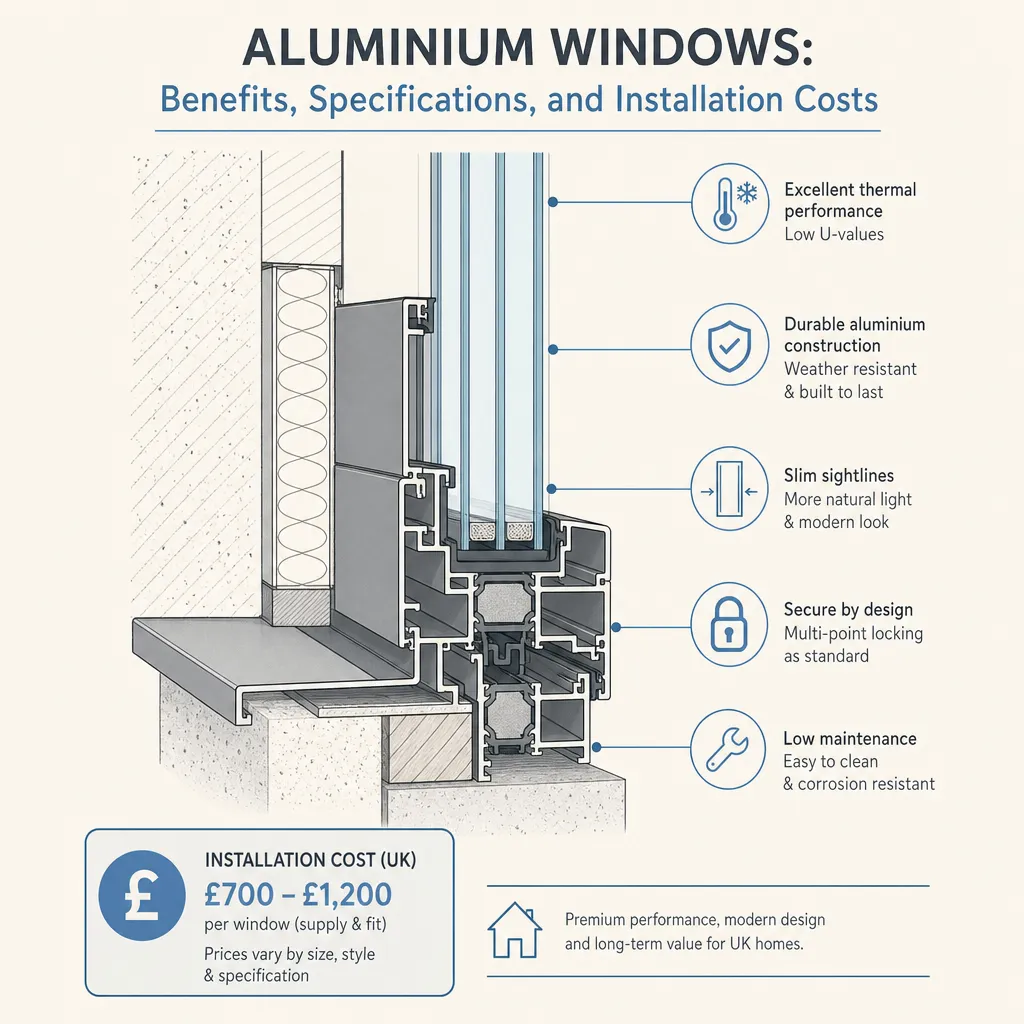
Aluminium Windows: Benefits, Specifications, and Installation Costs
Aluminium windows typically cost £600–£1,800 per window installed in the UK, depending on size and specification.
 Improvement & Build
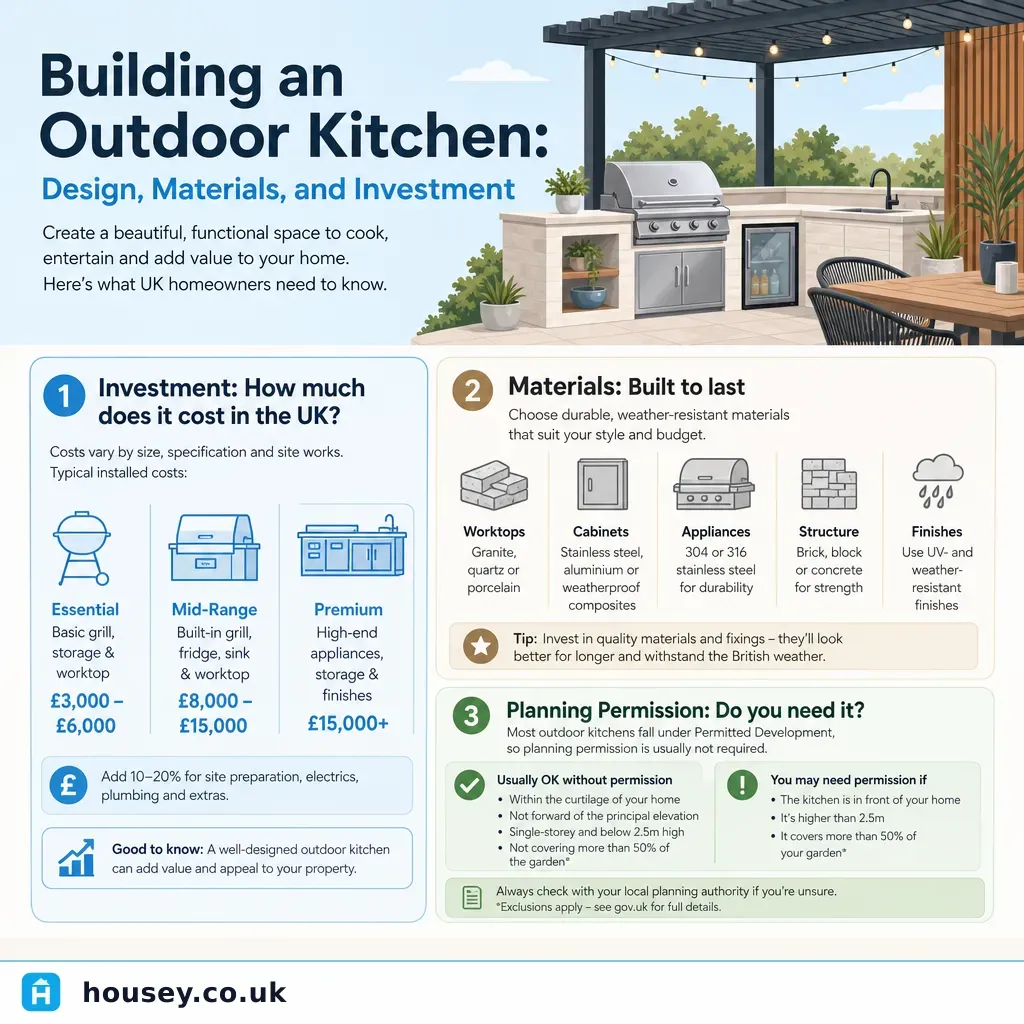
Building an Outdoor Kitchen: Design, Materials, and Investment
Building an outdoor kitchen in the UK costs roughly £3,000–£25,000 depending on size and materials.
 Improvement & Build
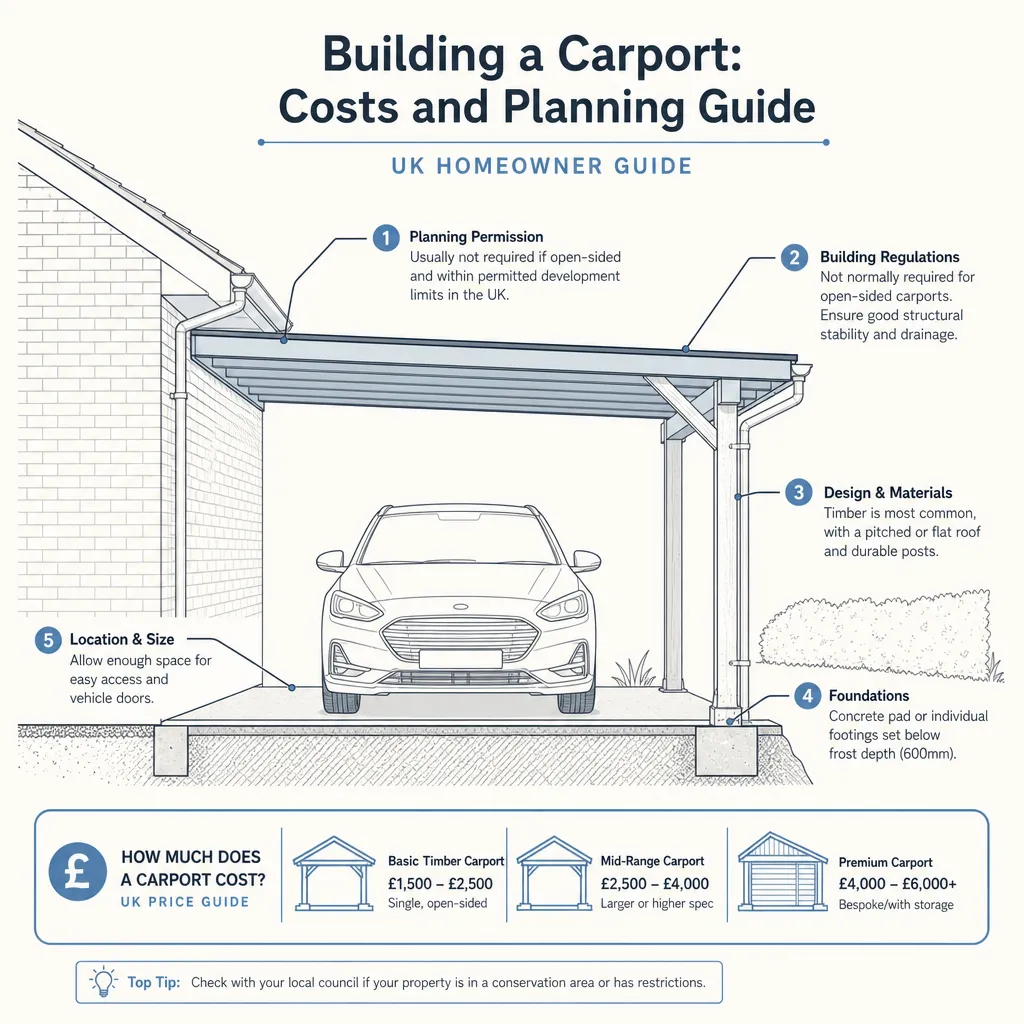
Building a Carport: Costs and Planning Guide
A single-bay carport in the UK typically costs £3,000–£12,000 installed, depending on material and groundworks.
 Improvement & Build
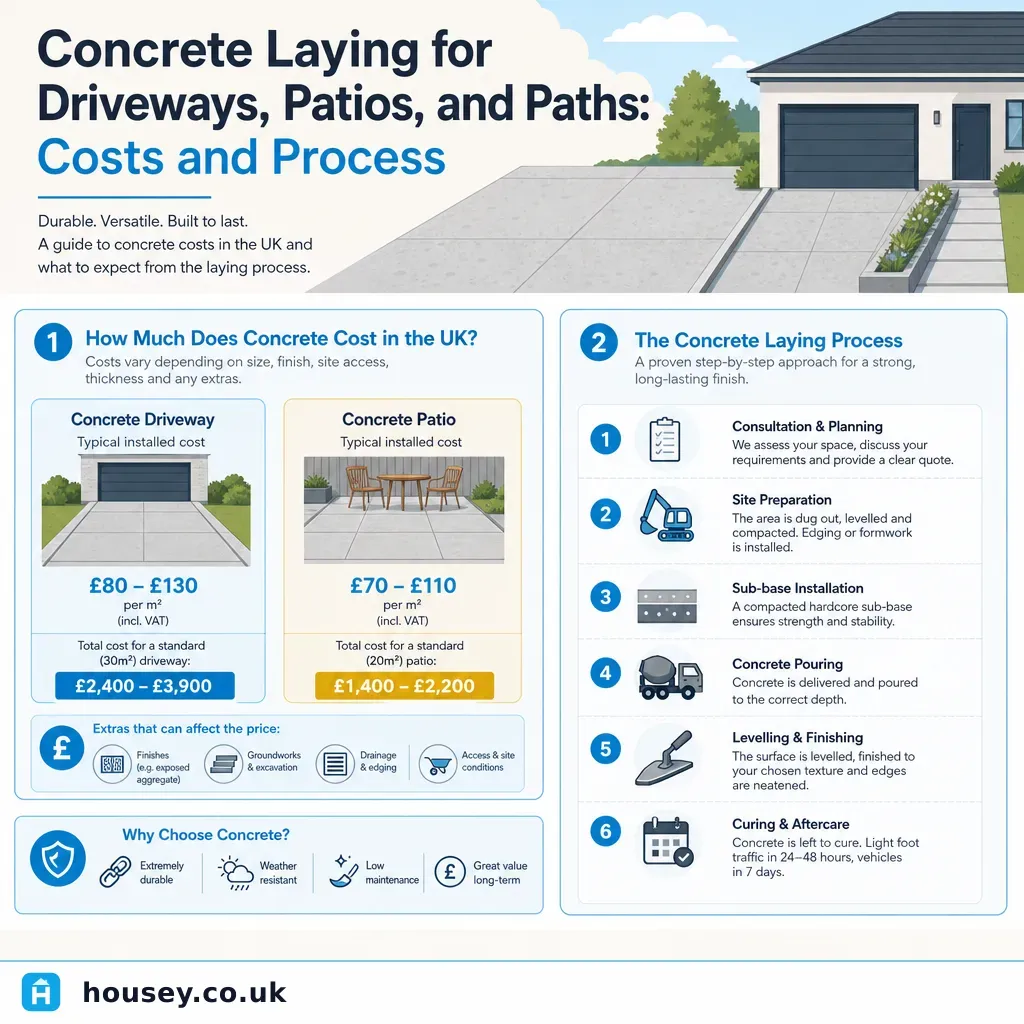
Concrete Laying for Driveways, Patios, and Paths: Costs and Process
Concrete laying for a UK driveway typically costs £65–£110 per square metre, including sub-base, reinforcement, formwork, and finishing.
 Improvement & Build
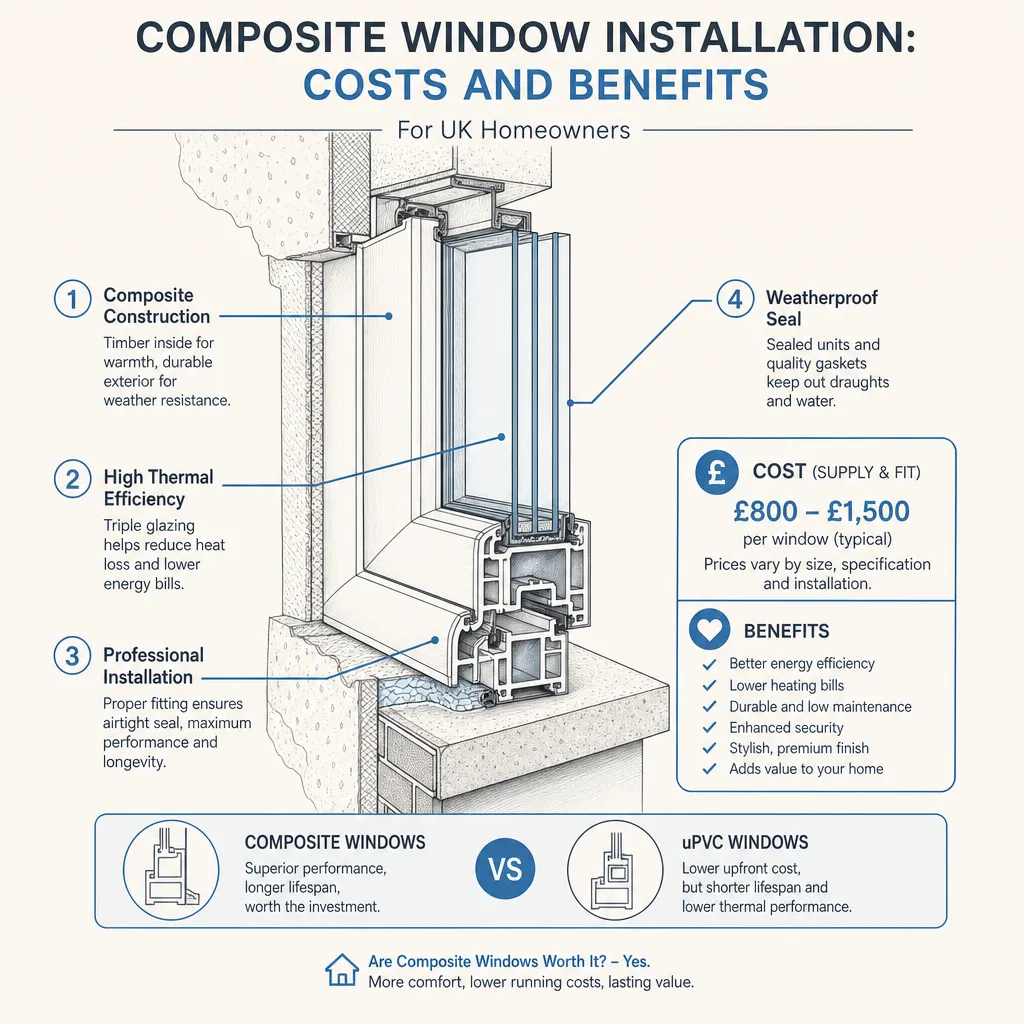
Composite Window Installation: Costs and Benefits
Composite windows combine two or more frame materials — typically a timber or aluminium core with a uPVC or aluminium outer casing — for better thermal performance and durability than standard uPVC.