Cobblestone and Block Driveway Installation: Costs and Design
By Housey · Last reviewed 5th of May 2026
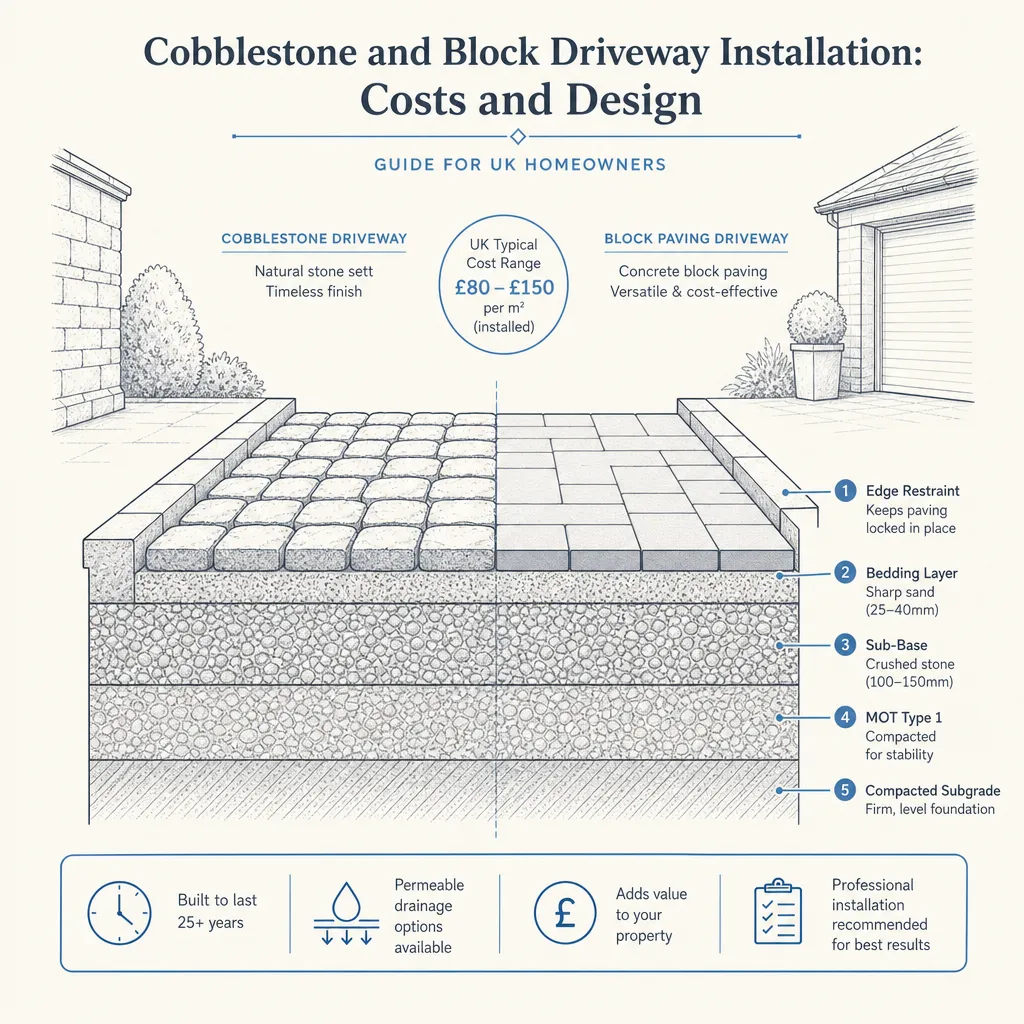
Cobblestone and Block Driveway Installation: Costs and Design
Driveways are among the most visible improvements a UK homeowner can make, and the choice between natural cobblestones and concrete block paving shapes both the character and the long-term running cost of the surface. Whether you are replacing a tired tarmac drive on a 1930s semi or laying a new entrance on a self-build plot, understanding the materials, costs, and installation process helps you get meaningful quotes and avoid surprises on site.
Key points
- Block paving typically costs £50–£120 per m² installed; natural cobblestone and granite sett installations range from £80–£200 per m², depending on stone type and laying pattern.
- Impermeable surfaces over 5 m² at the front of a dwelling require householder planning permission; permeable surfaces or those draining to a lawn or border are generally Permitted Development under the Town and Country Planning (General Permitted Development) Order 2015.
- A properly prepared sub-base — usually 100–150 mm of compacted Type 1 MOT crushed stone — is the single most important factor in preventing early settlement and surface failure.
- SuDS (Sustainable Drainage Systems) requirements mean new or substantially altered driveways must not direct uncontrolled surface water onto the highway; a permeable surface, linear drain, or soakaway may be required.
- Block and cobblestone driveways typically carry a 15–25 year lifespan (block) or 30–50+ years (natural stone) with routine maintenance; individual units can be lifted and re-laid if localised settlement occurs.
Cobblestone vs block paving: which suits your property?
Feature | Natural cobblestone / sett | Concrete block paving |
|---|---|---|
Appearance | Traditional, textured, period character | Uniform, range of colours and finishes |
Best for | Victorian, Edwardian, and cottage-style homes | Modern homes built from the 1980s onward |
Not ideal for | Very large flat areas (labour-intensive); wheelchair or pushchair access | Period or rural settings where character matters |
Typical installed cost | £80–£200 per m² | £50–£120 per m² |
Lifespan | 30–50+ years (natural stone) | 15–25 years |
Maintenance | Re-jointing every 5–10 years; occasional re-levelling | Weeding, re-jointing, occasional re-levelling |
Permeability | Permeable if open-jointed with granular fill | Permeable variants available (SuDS-compliant) |
Planning note | Check conservation area or listed building restrictions | Impermeable surfaces over 5 m² on front drives need consent |
Indicative UK costs, last reviewed 2026-05-05. Prices vary by region, stone type, site conditions, and access constraints.
What affects the cost of a cobblestone or block driveway?
Stone or block choice Natural granite setts cost significantly more than concrete block pavers. Reclaimed cobblestones can be cost-competitive but require sourcing and additional preparation. Porcelain pavers have risen in popularity and typically cost £90–£160 per m² installed.
Removing the existing surface Breaking out and disposing of existing tarmac, concrete, or old paving adds roughly £15–£35 per m² to the project. Skip hire or licensed waste disposal is usually factored into contractor quotes — confirm this before signing.
Sub-base preparation A weak or absent sub-base is the leading cause of driveway failure. On clay soils or where tree roots are nearby, a deeper or more engineered sub-base is necessary and increases cost. Excavation to reach firm bearing ground can add £20–£50 per m² in difficult conditions.
Access and site constraints Narrow side gates, restricted parking for plant, or multiple levels can extend labour time and increase cost. Discuss access at the site visit stage.
Kerb and edging Concrete haunching and edging kerbs are usually included in quotes but confirm this. Decorative granite or bullnose edging costs more than standard concrete kerb.
Drainage New or substantially altered driveways should not direct uncontrolled surface water onto highways under SuDS guidance. A linear channel drain, soakaway, or permeable surface may be needed — add £500–£2,000 depending on the solution required.
Planning permission and Permitted Development
Under the Town and Country Planning (General Permitted Development) Order 2015, paving the front of a house is Permitted Development only if:
- The surface is permeable (permeable block paving, gravel, open-jointed setts), or
- Surface water drains to a lawn or border and not onto the highway, or
- The area being paved is no more than 5 m².
Impermeable surfaces over 5 m² at the front of a dwelling require householder planning permission. Conservation area properties and listed buildings often have additional restrictions on materials and surface type — check with your local planning authority before any work begins.
Properties in Scotland, Wales, and Northern Ireland operate under separate devolved planning regimes; rules may differ from those in England.
The installation process: what to expect
- Site survey and design — A reputable installer visits to measure, assess ground conditions, and agree on patterns, materials, and drainage.
- Excavation — Existing surface, topsoil, and turf are removed to the required depth, typically 250–350 mm below finished level.
- Sub-base installation — Type 1 MOT crushed stone is laid and compacted in layers, usually to 100–150 mm depth. This is the structural foundation of the finished surface.
- Bedding layer — Sharp sand (or a dry mortar mix for setts) is screeded to a consistent depth of 25–50 mm.
- Block or sett laying — Pavers are laid to the agreed pattern; cuts to borders and channels are made with a disc cutter.
- Edge restraints — Concrete haunching or edging kerbs are installed to prevent lateral spread over time.
- Jointing and compaction — Kiln-dried sand is brushed into joints and the surface is compacted with a plate compactor.
- Drainage installation — Linear drains or channels are set at finished level and connected to the agreed drainage route.
- Clean-up and sign-off — The contractor removes waste and walks through the finished work with you before final payment is made.
A typical domestic driveway of 30–50 m² usually takes 3–5 working days from excavation to completion.
Homeowner checklist before signing a contract
What to ask before accepting a quote
- What sub-base depth and specification will you use, and why is that appropriate for my ground conditions?
- What block or sett brand and grade are you quoting — can I see a physical sample?
- How will surface water be managed, and does your proposal comply with SuDS guidance?
- Who carries out the work — your own employees or subcontractors?
- What is the payment schedule? (Avoid paying more than 25–30% upfront.)
- What happens if ground conditions are worse than expected once excavation begins?
- Is VAT included in this price?
When to get professional help
Most driveway projects are relatively straightforward, but call in specialist support if:
- Your property is listed or in a conservation area — restrictions on materials may apply, and consent is likely needed before work starts.
- Tree roots are close to the surface — an arborist should advise before excavation, particularly for trees subject to a Tree Preservation Order.
- Ground conditions are poor or the drive slopes towards the house — a drainage or groundworks specialist should assess before work begins.
- You discover underground services during excavation — stop work immediately and contact the relevant utility provider.
How Housey can help
If you are ready to get quotes for a cobblestone or block driveway, Housey connects you with vetted driveway installers across the UK. For projects involving significant excavation, drainage design, or site preparation, you can also request quotes from experienced groundworkers through the same platform.
Frequently asked questions
Does a block paving driveway add value to my home?
A well-installed block or cobblestone driveway can improve kerb appeal and modestly support saleability, particularly where off-street parking is scarce. However, estate agents rarely assign a precise premium and value depends heavily on finish quality, materials, and local demand. A poorly installed drive may put buyers off rather than attract them.
How long does block paving last?
Concrete block paving typically lasts 15–25 years with routine maintenance including weed control and re-jointing. Natural granite setts can last 50 years or more. Sub-base preparation matters far more than the block itself — a poorly compacted base causes settlement within a few years regardless of surface quality.
Can I lay block paving or cobblestones myself?
Block paving over a small area can be a DIY project for a confident homeowner, but correct sub-base preparation and drainage are critical. Natural sett laying requires skill to achieve consistent falls and levels. Errors in sub-base depth or drainage design are expensive to remedy; for driveways over around 20 m², professional installation is strongly advisable.
Do I need to tell my council before installing a new driveway?
You need planning permission only if the new surface is impermeable and over 5 m² at the front of the house, or if the property is in a conservation area or is listed. Otherwise, most drives qualify as Permitted Development. Always check with your local planning authority before work begins, as Article 4 Directions can remove Permitted Development rights in some areas.
Will my home insurance cover a new driveway installation?
A new driveway installation is not typically covered by standard home insurance during or after works. Notify your buildings insurer of significant improvements, as failing to do so could affect future claims. Confirm that your contractor holds adequate public liability insurance — at least £2 million — before any work starts on site.
Sources and further reading
- Planning Portal: Paving your front garden — Planning Portal
- Town and Country Planning (General Permitted Development) Order 2015 — legislation.gov.uk
- Sustainable Drainage Systems (SuDS) — GOV.UK
- Interpave: The Concrete Block Paving Association — design guidance — Interpave
Useful next reads
 Improvement & Build
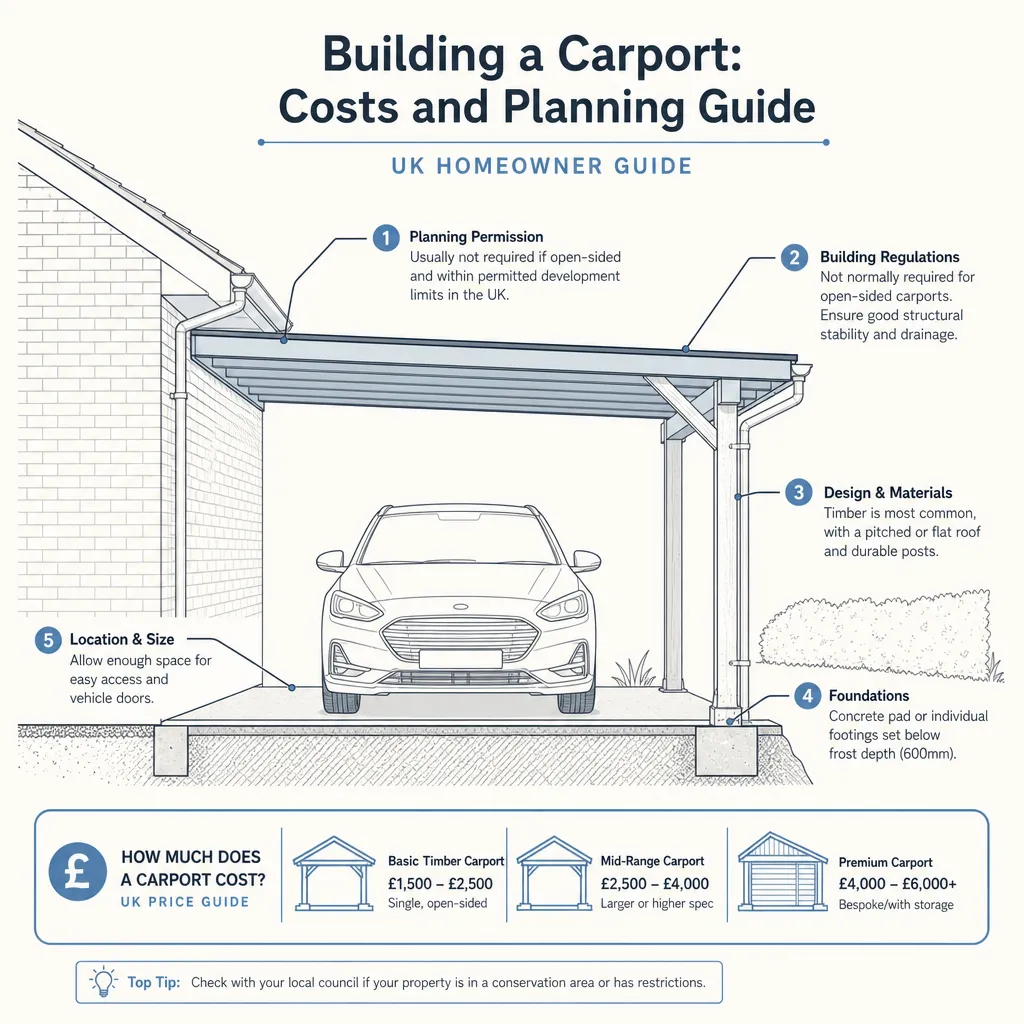
Building a Carport: Costs and Planning Guide
A single-bay carport in the UK typically costs £3,000–£12,000 installed, depending on material and groundworks.
 Improvement & Build
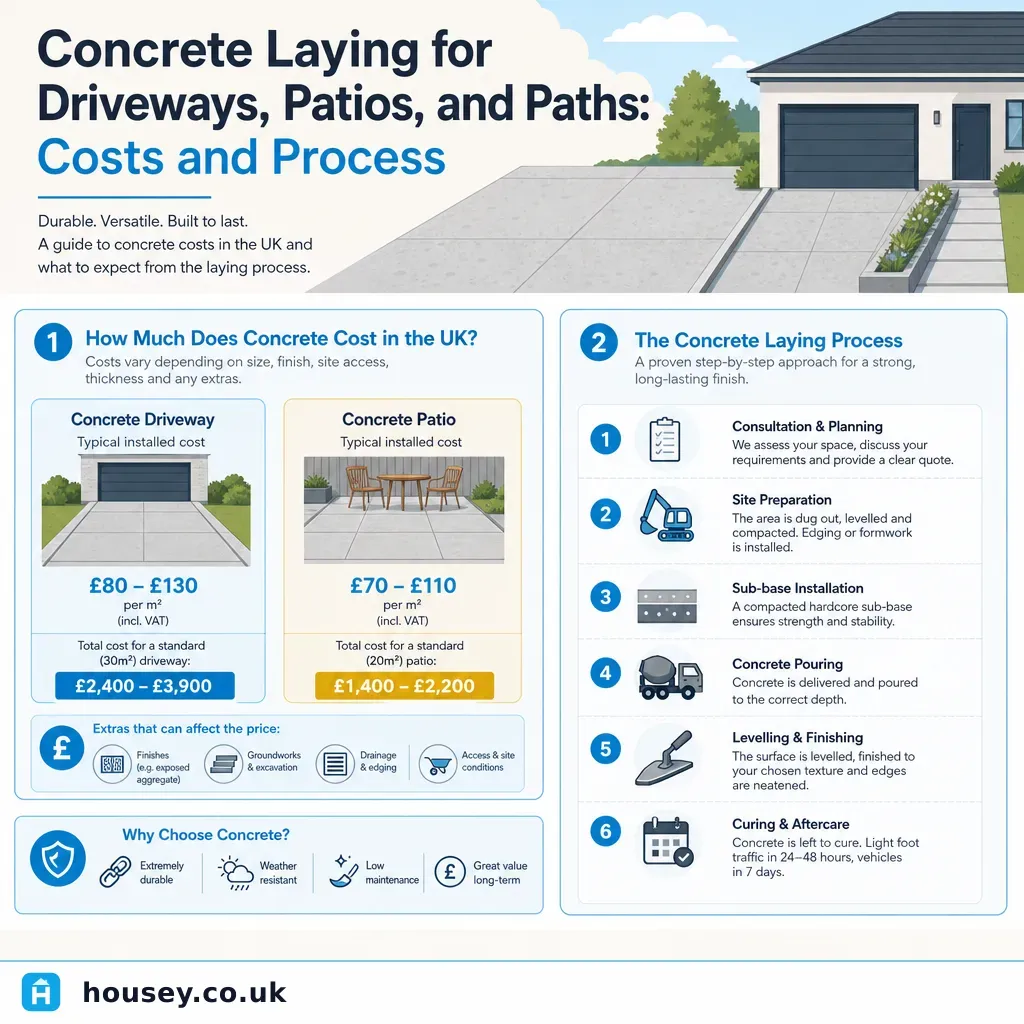
Concrete Laying for Driveways, Patios, and Paths: Costs and Process
Concrete laying for a UK driveway typically costs £65–£110 per square metre, including sub-base, reinforcement, formwork, and finishing.
 Improvement & Build
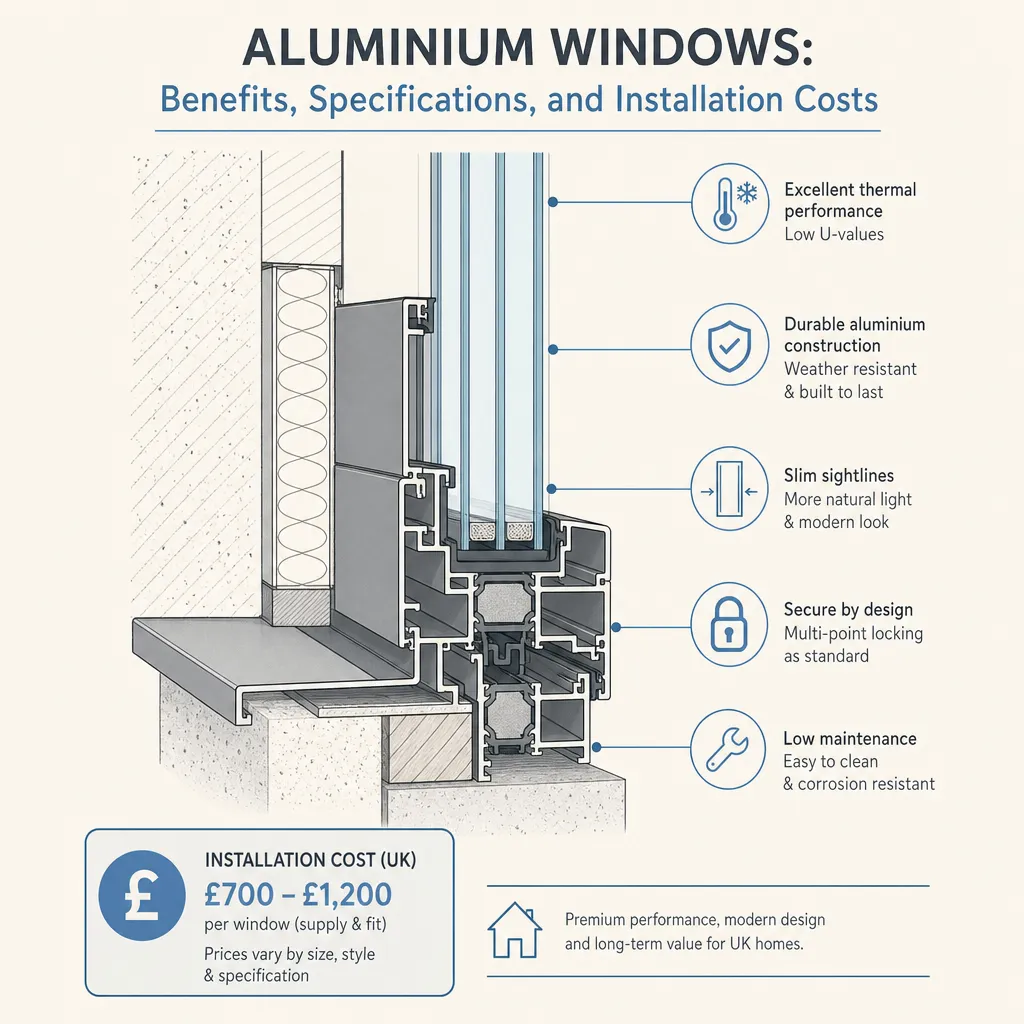
Aluminium Windows: Benefits, Specifications, and Installation Costs
Aluminium windows typically cost £600–£1,800 per window installed in the UK, depending on size and specification.
 Improvement & Build
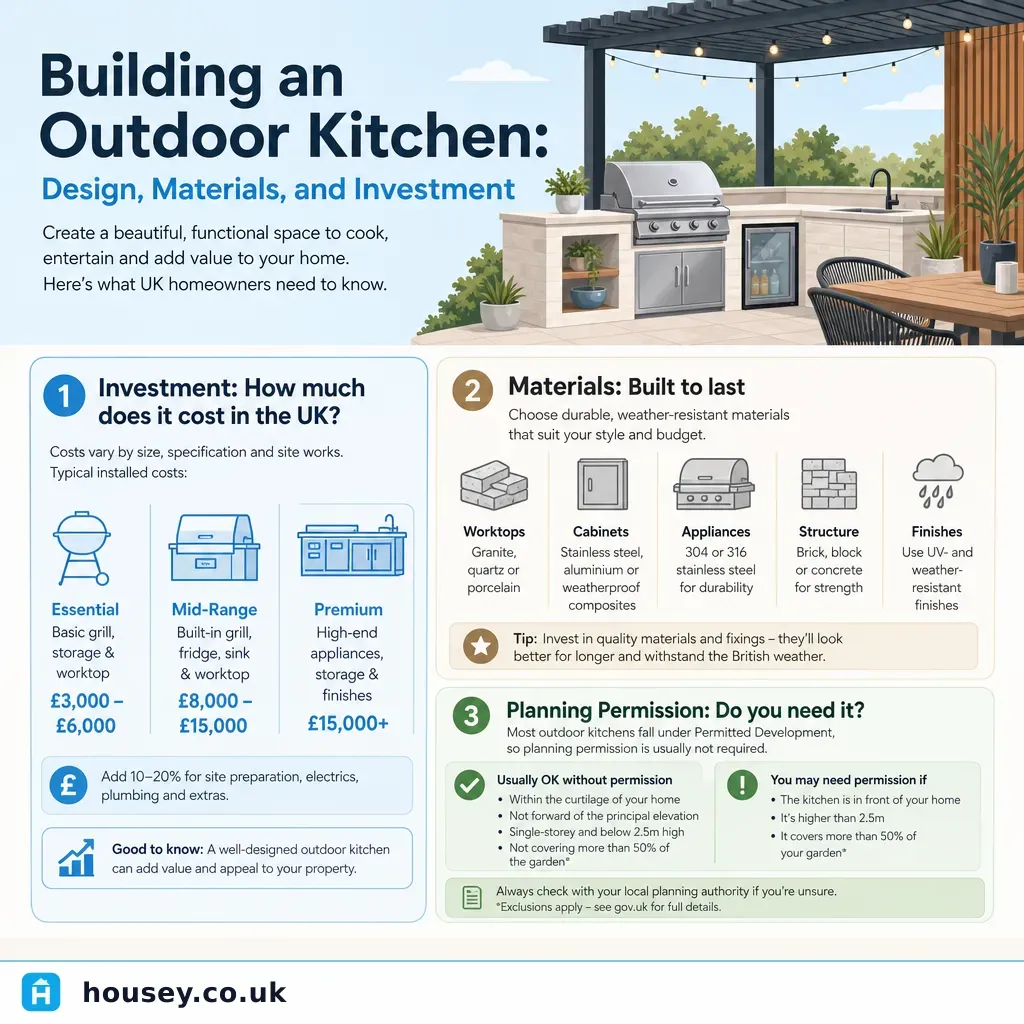
Building an Outdoor Kitchen: Design, Materials, and Investment
Building an outdoor kitchen in the UK costs roughly £3,000–£25,000 depending on size and materials.
 Improvement & Build
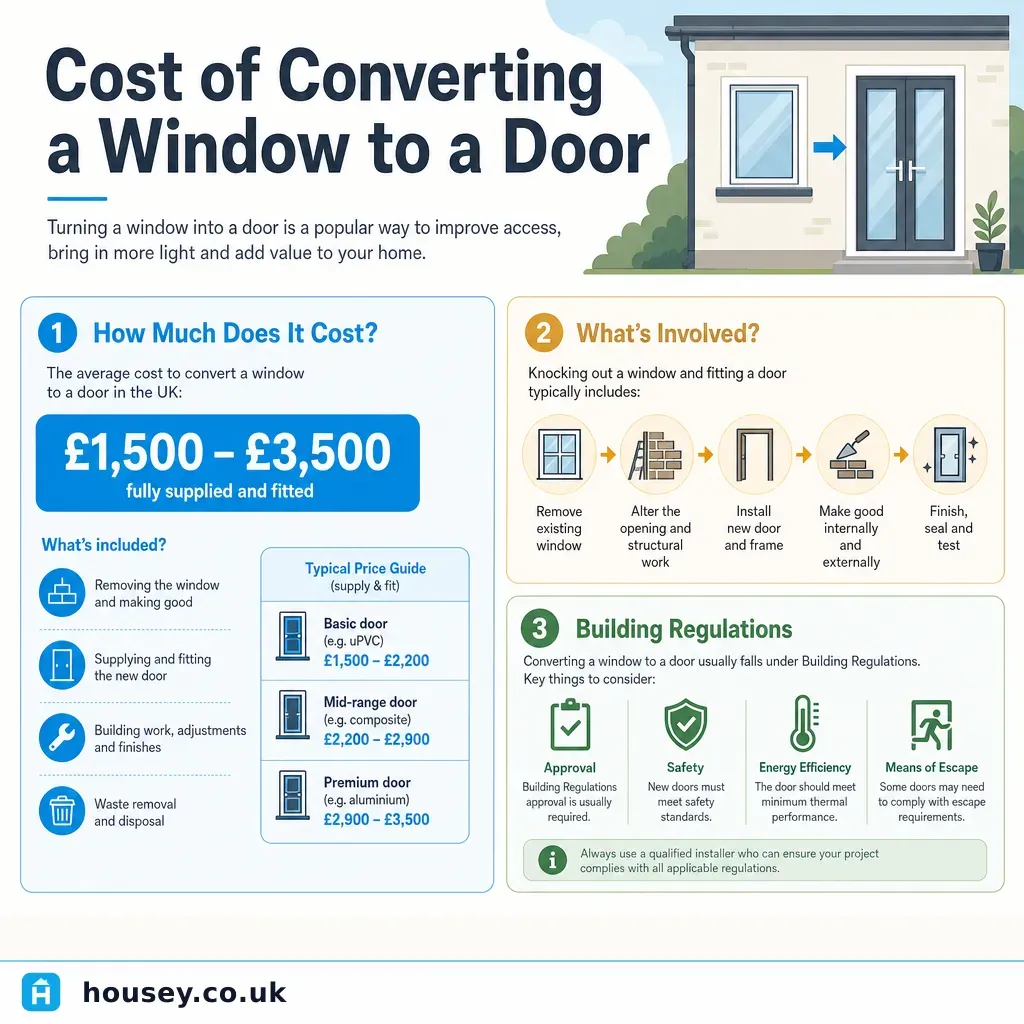
Cost of converting a window to a door
Converting a window to a door in the UK typically costs £1,500–£5,000 or more, depending on wall construction (cavity, solid, or timber frame), the type of door fitted, and whether a new or enlarged lintel is required.