Concrete Laying for Driveways, Patios, and Paths: Costs and Process
By Housey · Last reviewed 5th of May 2026
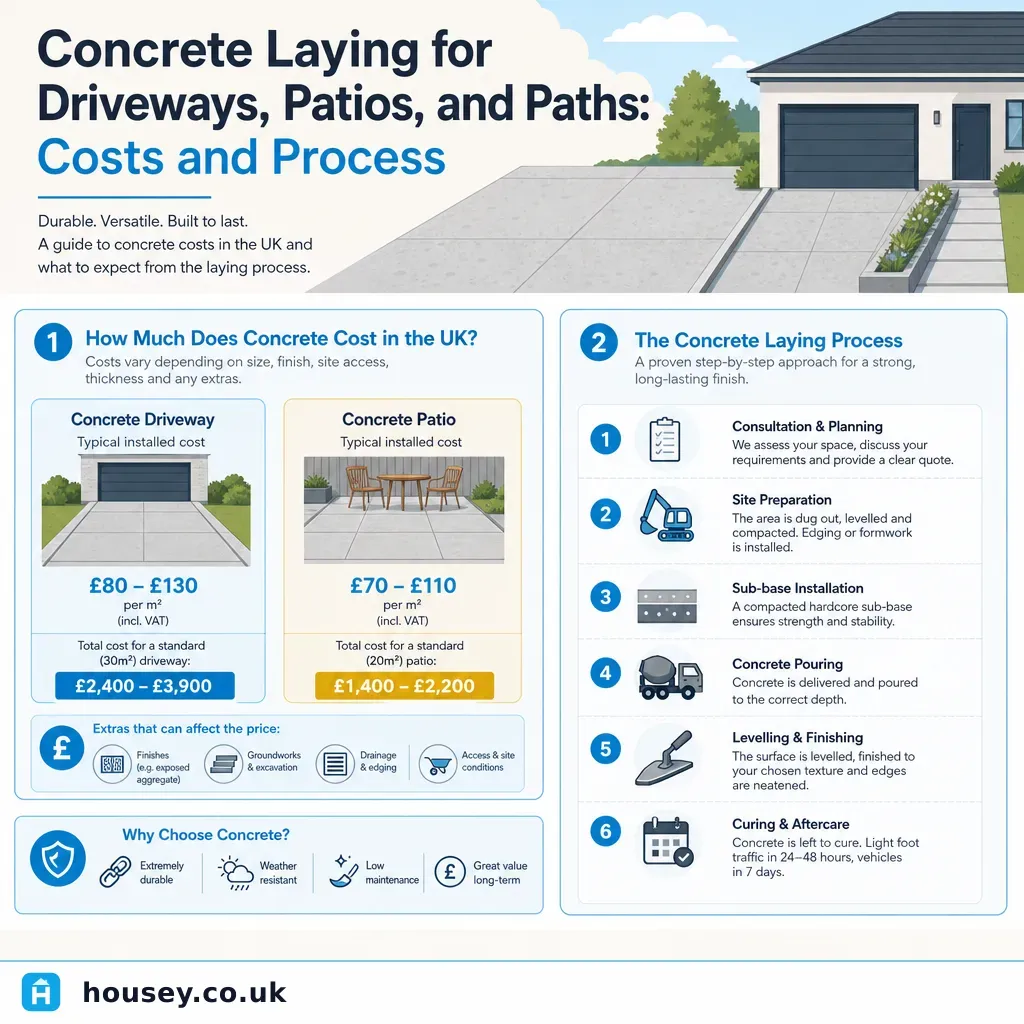
Concrete Laying for Driveways, Patios, and Paths: Costs and Process
Concrete is one of the most durable surfaces available for UK residential driveways, patios, and garden paths, but it rewards careful planning. Cost, suitability, and planning questions tend to arise when homeowners are replacing a failing surface, completing an extension project, or redesigning outdoor space — and the answers depend heavily on the specific site and specification.
Key points
- In England, driveways over 5m² using an impermeable surface require planning permission unless surface water drains to a lawn, border, or soakaway rather than a highway drain (GOV.UK guidance on paving front gardens).
- A residential concrete driveway slab should typically be at least 100mm thick; areas subject to heavier vehicle loads are often specified at 150mm.
- A compacted sub-base of at least 100mm of MOT Type 1 granular material is required beneath the slab.
- Steel reinforcement mesh — such as A142 or A193 fabric — is commonly specified for driveways to resist cracking under vehicle loads.
- Concrete needs at least 24–48 hours before foot traffic and a minimum of 7 days before vehicles are driven on it.
Planning permission and drainage
Standard dense concrete is largely impermeable. In England, if a new concrete driveway exceeds 5m² and surface water cannot drain to a lawn, border, or soakaway on your own land, you will need planning permission. GOV.UK guidance on paving front gardens sets this out clearly. Permeable concrete products — which allow water to pass through — can sidestep this requirement entirely.
Patios and garden paths are generally not subject to these drainage rules, but conservation area restrictions or listed building consent may apply. Rules differ in Scotland, Wales, and Northern Ireland; always confirm with your local planning authority before work starts.
What the process involves
A standard concrete laying project follows six stages:
- Excavation — existing surface and topsoil stripped to around 200–250mm depth for a driveway.
- Sub-base — MOT Type 1 granular material laid and compacted to at least 100mm using a wacker plate or roller.
- Formwork — timber shuttering set around the perimeter to contain the pour and set finished levels; gradients checked to ensure water drains away from the building.
- Reinforcement — A142 or A193 steel mesh placed on plastic spacer chairs inside the formwork.
- Pouring and finishing — C25 or C30 ready-mix concrete poured, screeded, and finished (typically brushed for slip resistance); expansion joints inserted at regular intervals.
- Curing — slab sheeted or misted for several days to develop full strength; light foot traffic after 24–48 hours, vehicles after 7 days minimum.
Concrete compared with other driveway surfaces
Material | Typical lifespan | Relative cost | Permeable option | Maintenance |
|---|---|---|---|---|
Concrete | 25–40 years | Medium–high | Yes (permeable mix) | Low — occasional sealing |
Tarmac/asphalt | 15–25 years | Medium | Yes (porous asphalt) | Low — periodic re-sealing |
Block paving | 20–30 years | Medium–high | Yes (open-jointed) | Low–medium — weeding, re-sanding |
Gravel | 10–20 years | Low | Yes (inherently) | Medium — raking, topping up |
Resin-bound | 15–25 years | High | Yes | Low — occasional cleaning |
Indicative costs
Indicative UK costs, last reviewed 2026-05-05. Quotes vary by location, access, ground conditions, and specification.
Project type | Indicative range | Notes |
|---|---|---|
Concrete driveway (100mm slab) | £65–£110/m² | Sub-base, reinforcement, formwork, finish included |
Concrete patio | £55–£100/m² | Lighter specification than driveway |
Concrete path (narrow) | £50–£90/m² | More formwork per m²; may cost more per unit area |
Exposed aggregate finish | Add £10–£20/m² | Surface aggregate exposed by washing |
Coloured or pattern-imprinted finish | Add £15–£30/m² | Extra labour and materials |
Figures typically include material, labour, sub-base, and disposal of excavated material. Large volumes may attract additional skip hire costs. Always request itemised written quotes.
Worked UK scenario: 30m² driveway, East Midlands
A homeowner replaces a cracked tarmac driveway (5m × 6m, firm clay ground) with concrete. A ready-mix lorry can access the front of the property directly.
- Contractor inspects ground conditions and confirms surface water will drain to a border — no planning permission needed.
- Old tarmac broken out; excavation to 220mm (100mm sub-base plus 120mm slab).
- MOT Type 1 sub-base compacted to 100mm.
- A142 mesh placed on 40mm spacer chairs.
- C25 ready-mix poured, brushed finish applied, expansion joints inserted at 3m intervals.
- Slab sheeted and left for 7 days before vehicle use.
Duration: two to three days. At £85/m², total cost approximately £2,550 (indicative only — not a quote).
What to ask before accepting a quote
- What concrete mix and slab thickness is specified, and is it appropriate for your vehicle type?
- Is steel reinforcement included, and to what specification?
- What sub-base depth and material is proposed?
- What surface finish is included, and are expansion joints specified?
- How will surface water drainage be managed?
- Is removal and disposal of the existing surface included?
- Is VAT included in the quoted total?
- What is the minimum curing period before vehicle use?
- What guarantee is offered on the finished work?
Red flags when getting concrete laying quotes
- No mention of drainage or planning rules for front driveways using impermeable concrete.
- No sub-base specification — pouring onto unprepared ground causes premature settling and cracking.
- Quote excludes excavation, disposal, or formwork without clear explanation.
- Pressure to start immediately or requests for full payment upfront.
- No written quotation or specification provided before work begins.
When to get professional help
Concrete laying for anything beyond a small garden path is specialist groundwork. Use a qualified contractor for any project involving vehicle loads, work near drainage runs or underground services, driveways with drainage compliance requirements, or sites with tree roots or unstable ground. If you are uncertain whether your ground conditions need a deeper sub-base, a groundworker can assess the site before any work begins.
How Housey can help
Housey connects you with vetted driveway installers and groundworkers who can assess your site and provide itemised written quotes. For projects combining concrete laying with garden redesign, you can also request quotes from landscapers.
Frequently asked questions
How long does a concrete driveway last in the UK?
A well-laid concrete driveway with a correctly prepared sub-base, appropriate slab thickness, and steel reinforcement typically lasts 25–40 years with minimal maintenance. Surface sealing helps protect against staining and freeze-thaw damage. The most common cause of premature failure is inadequate sub-base preparation or insufficient slab thickness rather than the concrete mix itself.
Can concrete be laid in cold weather?
Concrete should not generally be poured when temperatures are at or below 5°C, or when frost is forecast within 24 hours. Cold conditions slow curing and can damage the surface if the slab freezes before gaining strength. Contractors may use heated mixing water, admixtures, or insulating covers in borderline conditions. Most residential concrete work is planned for spring through to autumn.
Do I need planning permission for a concrete driveway in England?
Planning permission is needed if your concrete driveway is over 5m² and surface water drains to a highway drain rather than to a lawn, border, or soakaway on your own land. Permeable concrete products avoid this requirement. Rules differ in Scotland, Wales, and Northern Ireland — always check with your local planning authority before starting work.
What is the difference between C20, C25, and C30 concrete?
These designations refer to characteristic compressive strength in N/mm². C25 is most commonly specified for residential driveways; C30 suits heavier loads or exposed conditions. C20 is typically used for paths and patios with foot traffic only. Your contractor should specify the appropriate mix for your vehicle type and site conditions and confirm this in writing before work starts.
How soon can vehicles use a new concrete driveway?
Most contractors recommend a minimum of 7 days before light passenger vehicles use the surface, and 28 days for full design strength. Heavy vehicles — vans, lorries, or skips — should wait the full 28-day period. Cold temperatures during curing can extend these timescales. Ask your contractor to advise based on the specific conditions and mix used on your project.
Sources and further reading
- Paving your front garden — GOV.UK
- Approved Document H: Drainage and waste disposal — HM Government
- Planning Portal: driveways — Planning Portal
- The Concrete Centre: residential concrete guidance — The Concrete Centre (MPA Concrete)
Useful next reads
 Improvement & Build
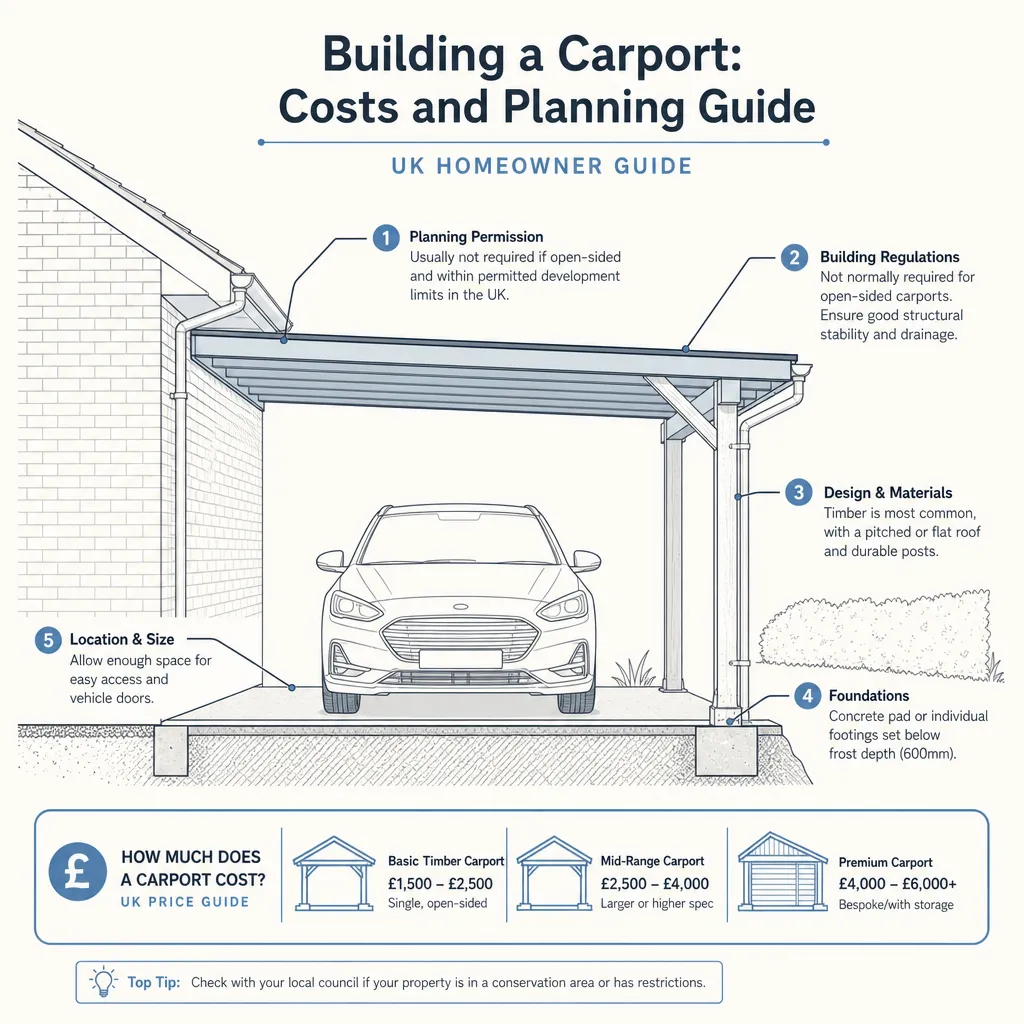
Building a Carport: Costs and Planning Guide
A single-bay carport in the UK typically costs £3,000–£12,000 installed, depending on material and groundworks.
 Improvement & Build
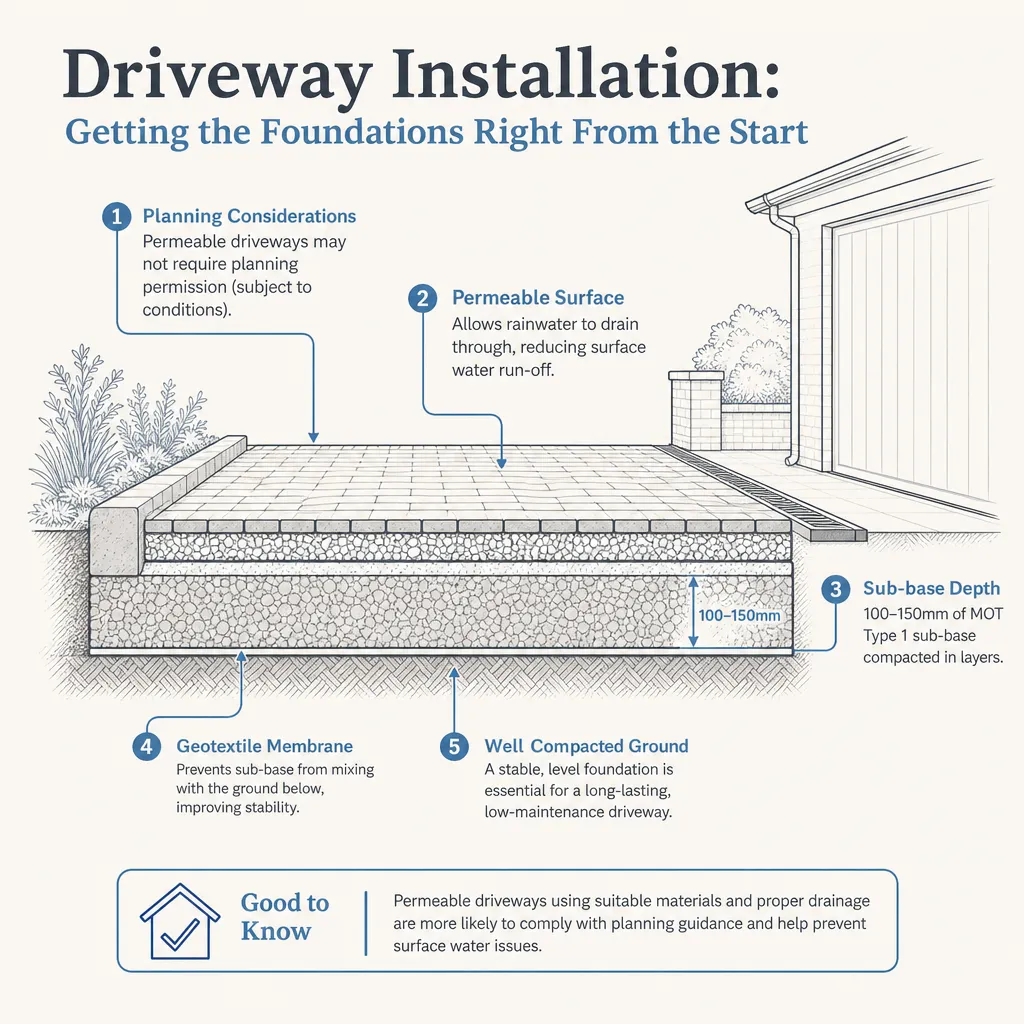
Driveway Installation: Getting the Foundations Right From the Start
A long-lasting driveway depends more on sub-base depth and drainage design than on the surface material chosen.
 Improvement & Build
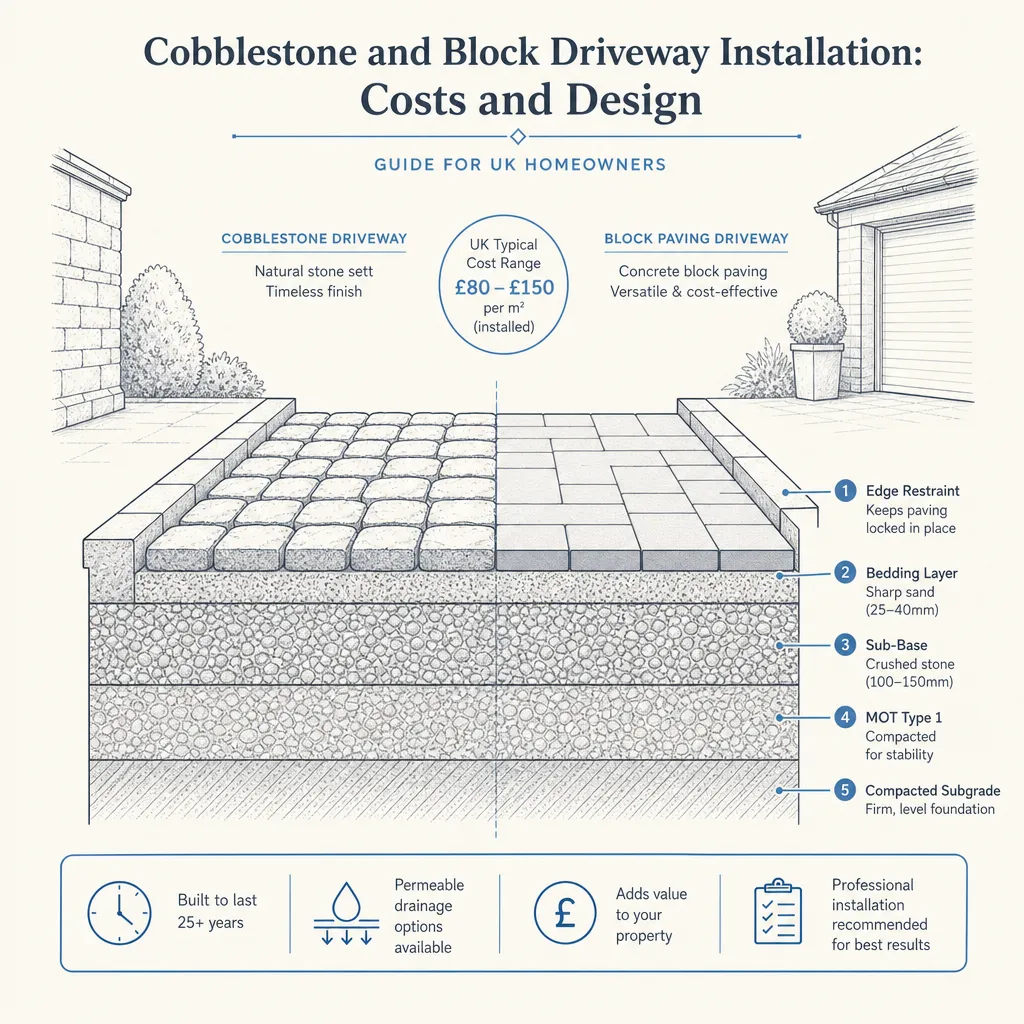
Cobblestone and Block Driveway Installation: Costs and Design
Cobblestone and block paving driveways cost roughly £50–£200 per m² installed in the UK, depending on material and site conditions.
 Improvement & Build
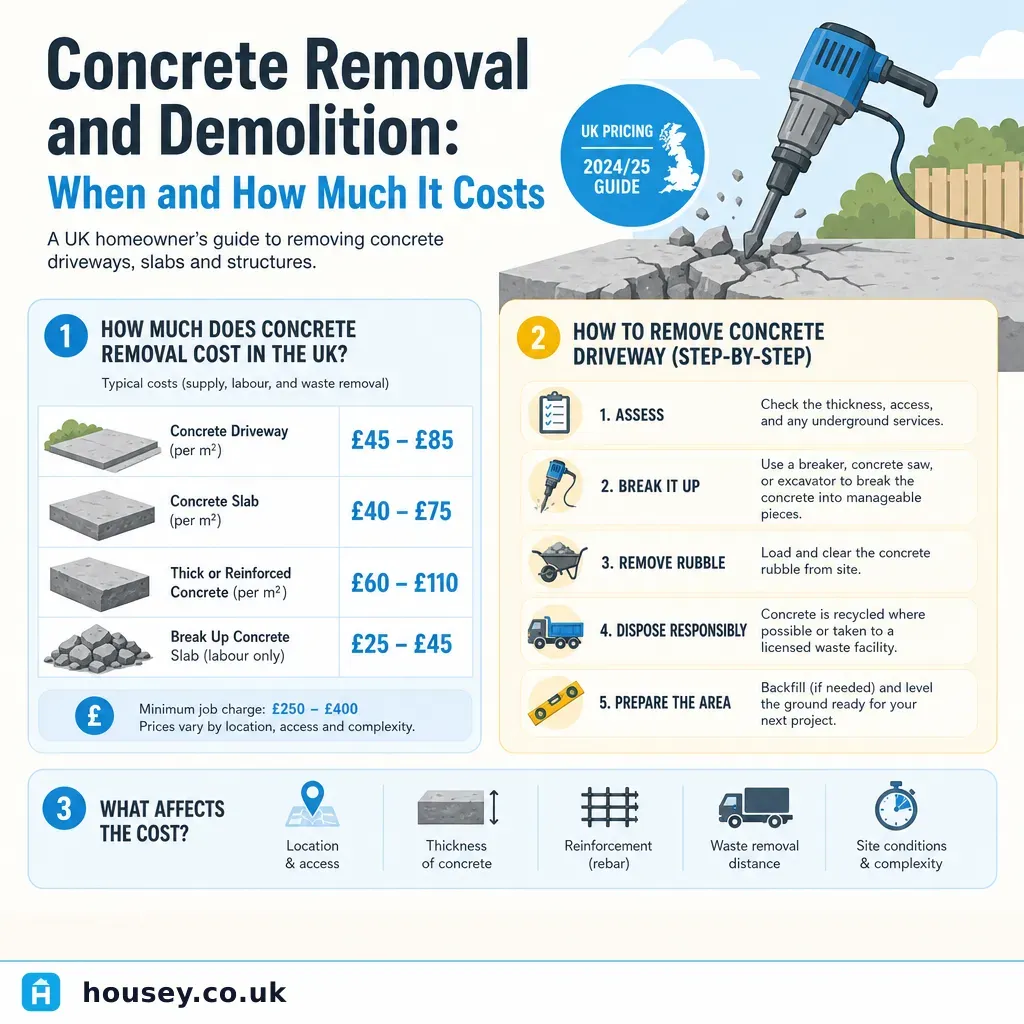
Concrete Removal and Demolition: When and How Much It Costs
Concrete removal in the UK typically costs £25–£65 per square metre for unreinforced slabs, rising to £55–£110 per square metre for reinforced concrete containing rebar.
 Improvement & Build
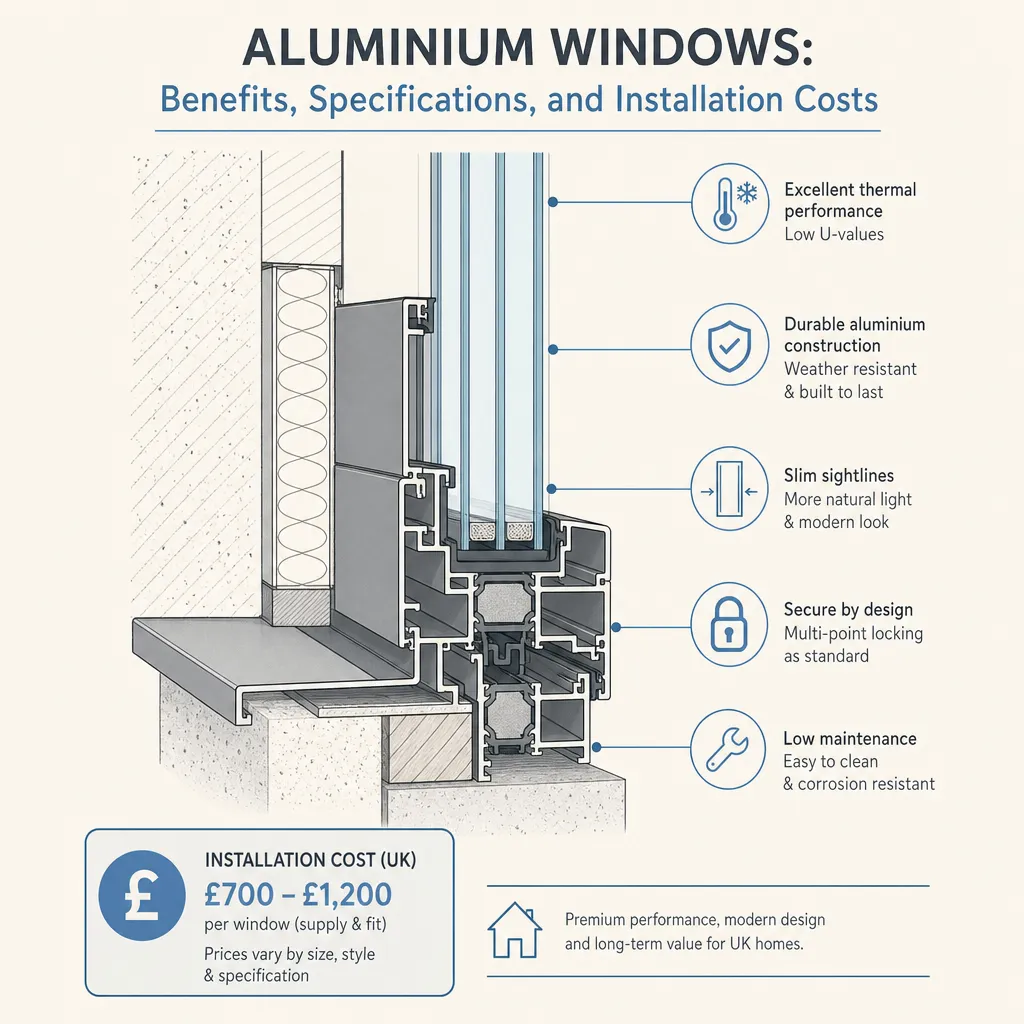
Aluminium Windows: Benefits, Specifications, and Installation Costs
Aluminium windows typically cost £600–£1,800 per window installed in the UK, depending on size and specification.