Building a Conservatory: Costs, Planning, and Installation Guide
By Housey · Last reviewed 5th of May 2026
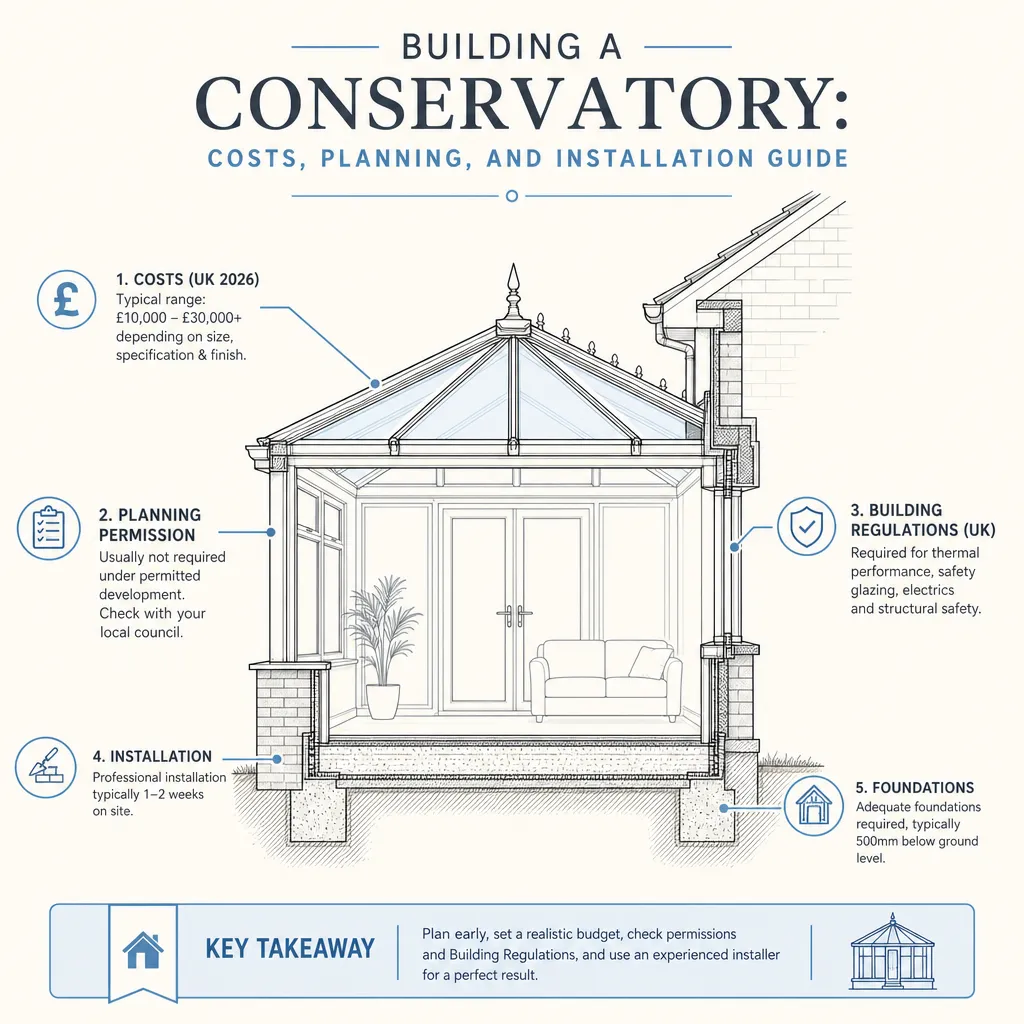
Building a Conservatory: Costs, Planning, and Installation Guide
A conservatory is one of the more popular ways to extend usable living space in a UK home, connecting the house to the garden in a light-filled room that sits somewhere between indoors and out. Decisions typically arise when a family needs more space, a dining area feels cramped, or a homeowner wants to increase the property's appeal before selling. Getting the planning and building regulations position clear from the outset avoids costly retrospective applications and delays.
Key points
- Most conservatories in England fall under permitted development (PD) rights and do not require a planning application, provided they meet conditions set out in the Town and Country Planning (General Permitted Development) (England) Order 2015.
- Conservatories are generally exempt from building regulations under Schedule 2, Class VII of the Building Regulations 2010, if they are at ground level, under 30 m², separated from the house by external-quality walls and doors, and have a self-supporting transparent or translucent roof.
- Planning permission is required for conservatories on flats, listed buildings, and properties in Conservation Areas, National Parks, or Areas of Outstanding Natural Beauty.
- Scotland, Wales, and Northern Ireland operate under separate planning regimes — permitted development rules differ significantly from England in each jurisdiction.
- Indicative costs range from approximately £8,000 for a small uPVC lean-to to over £60,000 for a bespoke orangery; size, glazing specification, and groundwork requirements drive most of the variation.
Do you need planning permission for a conservatory?
In England, most conservatories attached to a dwelling house qualify as permitted development, meaning no formal planning application is needed. Key PD conditions include:
- Rear projection: the conservatory must not extend beyond the original rear wall by more than 4 metres for a detached house, or 3 metres for a semi-detached or terraced property.
- Height: maximum 4 metres for a dual-pitched roof, or 3 metres for any other roof form; eaves must not exceed 3 metres where the conservatory comes within 2 metres of a boundary.
- Total footprint: all extensions combined must not cover more than 50% of the land around the original house.
- Roof material: the roof must be transparent or translucent.
Decision tree: do I need planning permission?
- Your property is a flat or maisonette → Planning permission required.
- Your property is listed → Listed building consent and planning permission required.
- Your property is in a Conservation Area, National Park, AONB, or World Heritage Site → Check with your LPA — permission is likely required.
- An Article 4 direction has removed your PD rights → Planning permission required.
- Your property is in Scotland, Wales, or Northern Ireland → Check with your devolved local authority; rules differ from England.
- None of the above apply and you meet the PD size and height conditions → Planning permission probably not required — confirm with your LPA before starting work.
If you are unsure about your permitted development position, a planning consultant can assess this before you commit to a design or spend on drawings.
Do conservatories need building regulations approval?
Building regulations are not required for a conservatory that meets all of the following (Schedule 2, Class VII, Building Regulations 2010):
- It is at ground level with a floor area not exceeding 30 m².
- It is separated from the house by external-quality walls, windows, or doors.
- The roof is transparent or translucent and self-supporting — it does not rely on the main dwelling's roof structure.
- Any fixed electrical installations comply with Part P.
If your conservatory will exceed 30 m², or if you plan to remove the internal dividing wall or doors to integrate the space fully with the house, building regulations apply — covering structural adequacy, thermal performance (Part L), drainage, and ventilation. In that case, a building control consultant can guide you through the compliance and approval process before your design is finalised.
Types of conservatory and indicative costs
Indicative UK costs, last reviewed 2026-05-05. Costs vary significantly by region, specification, ground conditions, and installer. Obtain at least three detailed written quotes before committing.
Type | Typical cost range | Best for | Key consideration |
|---|---|---|---|
Lean-to (uPVC) | £8,000 – £15,000 | Bungalows; rear sites with limited height | Simplest construction; most cost-effective option |
Victorian / Edwardian (uPVC) | £15,000 – £30,000 | Traditional semi-detached or terraced homes | Faceted front design; more decorative appearance |
Gable-fronted | £18,000 – £35,000 | Properties where internal head height matters | Greater volume and natural light |
Aluminium-framed | £20,000 – £45,000 | Contemporary homes; slim sightlines preferred | Better thermal performance than standard uPVC |
Orangery | £25,000 – £60,000+ | Year-round use; larger footprint required | Solid roof sections; treated as closer to a full extension |
Bespoke timber or oak-frame | £40,000 – £100,000+ | Heritage or rural properties; premium finish | High visual appeal; longer manufacture lead times |
Key cost drivers include: size and shape, frame material (uPVC, aluminium, or timber), glazing specification (U-values, solar control, self-cleaning coatings), roof type (polycarbonate, glass, or solid insulated), groundwork and drainage requirements, and the scope of heating and electrical installation.
The installation process and typical timeline
A conservatory project follows a broadly predictable sequence:
- Design and quotation (2–4 weeks). Agree the footprint, specification, and materials. Receive a written quote covering all works including groundworks, disposal, electrics, and any building control fees.
- Planning or PD confirmation (0–8 weeks). Confirm in writing that permitted development applies, or submit a planning application if required (8-week statutory determination target in England).
- Manufacture (4–10 weeks). Frames and glazing units are made to order; lead times vary by manufacturer and current demand.
- Groundworks and base (2–5 days). Foundations and the concrete or block-paved base are prepared. Difficult ground conditions or drainage issues can extend this phase.
- Frame and glazing installation (3–10 days). A simple lean-to may be completed in 3 days; a larger orangery can take two weeks.
- Electrics and finishes (2–5 days). Lighting, sockets, underfloor heating if specified, and any internal finishing.
- Building control completion certificate (if applicable). A final inspection and certificate are required where building regulations apply.
Total elapsed time from first enquiry to practical completion is typically 3–6 months for a standard conservatory.
What to ask an installer before accepting a quote
- Is the permitted development or planning position confirmed in writing before work starts?
- Does the quote include groundworks, excavation disposal, and reinstatement of any disturbed paving?
- What glazing specification is included — double or triple-glazed, and what U-values are being quoted?
- What roof type is included, and what are the thermal performance differences between polycarbonate, glass, and solid insulated options?
- Will electrical work be carried out by a Part P registered electrician, or signed off separately by building control?
- What manufacturer's guarantee applies to frames and glazing, and what workmanship guarantee does the installer provide?
- If building regulations apply, who arranges the building control application, and is the fee included in the quote?
- What are the payment stages, and what documentation is provided at each milestone?
Important limitations
This article provides general guidance on conservatory planning and building regulations in England as of May 2026. Rules can change, and your local planning authority may have additional restrictions — including Article 4 directions, locally adopted design guides, or conditions attached to your property's existing planning permissions — that are not reflected here. Rules differ materially in Scotland, Wales, and Northern Ireland. This article is not a substitute for professional planning or building control advice specific to your property and circumstances.
What to ask a qualified professional
Before instructing a planning consultant or submitting to building control, ask:
- Does my specific property have any Article 4 directions or planning conditions that restrict or remove permitted development rights for extensions?
- Has the local planning authority adopted supplementary planning documents that affect glazed extensions or conservatories in this area?
- Does my proposed design fully comply with current permitted development conditions, or is a formal planning application required?
- If building regulations apply, what documents — structural calculations, thermal performance data, drainage details — will need to be submitted?
- Who carries out the staged building control inspections, and what is the total fee?
- What is the likely determination timescale for any required planning or building control approvals?
When to get professional help
Consider involving a specialist in the following situations:
- The planning position is uncertain — particularly for listed buildings, Conservation Areas, or properties with a complex extension history. A planning consultant can advise before you commit to a design.
- Building regulations apply — if the conservatory will exceed 30 m² or you plan to remove internal dividing walls, a building control consultant should be involved early.
- Structural work is required — removing a load-bearing wall to open the conservatory into the main house requires a structural engineer's calculations and building regulations approval as a minimum.
- A quote is unusually low and makes no mention of groundworks, building control fees, or electrical certification.
How Housey can help
Whether you need an installer, want to check your planning position, or need building control advice, Housey connects you with the right specialists. Browse extension builders for conservatory and orangery installation quotes, speak to a planning consultant if your permitted development position is uncertain, or contact a building control consultant if your project falls outside the standard building regulations exemption.
Frequently asked questions
Does a conservatory add value to a home?
A well-designed, thermally efficient conservatory generally adds value to a UK home, though the amount varies by property type, location, and build quality. A cold polycarbonate-roofed conservatory that is unusable in winter may add limited value. Estate agents typically view good-quality glazed extensions positively, particularly where they provide genuinely usable year-round space rather than a seasonal overflow room.
Can I build a conservatory on a leasehold property?
Most leasehold agreements require the freeholder's or management company's written consent before any structural alterations, including adding a conservatory. Check your lease carefully and obtain formal written consent before proceeding, even if the conservatory would otherwise qualify as permitted development. Failing to do so may constitute a breach of lease and could complicate or delay any future sale of the property.
What is the difference between a conservatory and an orangery?
A conservatory has a predominantly glazed roof — typically polycarbonate or glass. An orangery has a solid brick or masonry perimeter with a central glazed lantern, giving it the appearance of a full extension. Orangeries generally offer better thermal performance and are treated as closer to a permanent room in planning and building regulations terms. They also cost considerably more to build than standard conservatories.
Do I need planning permission for a conservatory in Scotland?
Scotland operates under separate permitted development rules from England. Many single-storey conservatories still benefit from permitted development rights under Scottish planning legislation, but the thresholds and conditions differ from those in England. Contact your Scottish local authority planning department to confirm the position for your specific property and proposed design before committing to any expenditure or drawings.
Will a previous extension affect my permitted development allowance for a conservatory?
Yes. Permitted development is assessed against the original house as built, or as it stood on 1 July 1948. Any previous extensions count towards the total allowable extension area. If prior extensions have used up your permitted development allowance, a formal planning application may be required for the conservatory. A planning consultant can quickly assess what allowance, if any, remains for your property.
Sources and further reading
- Permitted development rights for householders: technical guidance — GOV.UK
- Planning permission: conservatories — Planning Portal
- Building Regulations 2010, Schedule 2 — legislation.gov.uk
- Conservation areas: designation, appraisals, management and review — Historic England
Useful next reads
 Improvement & Build
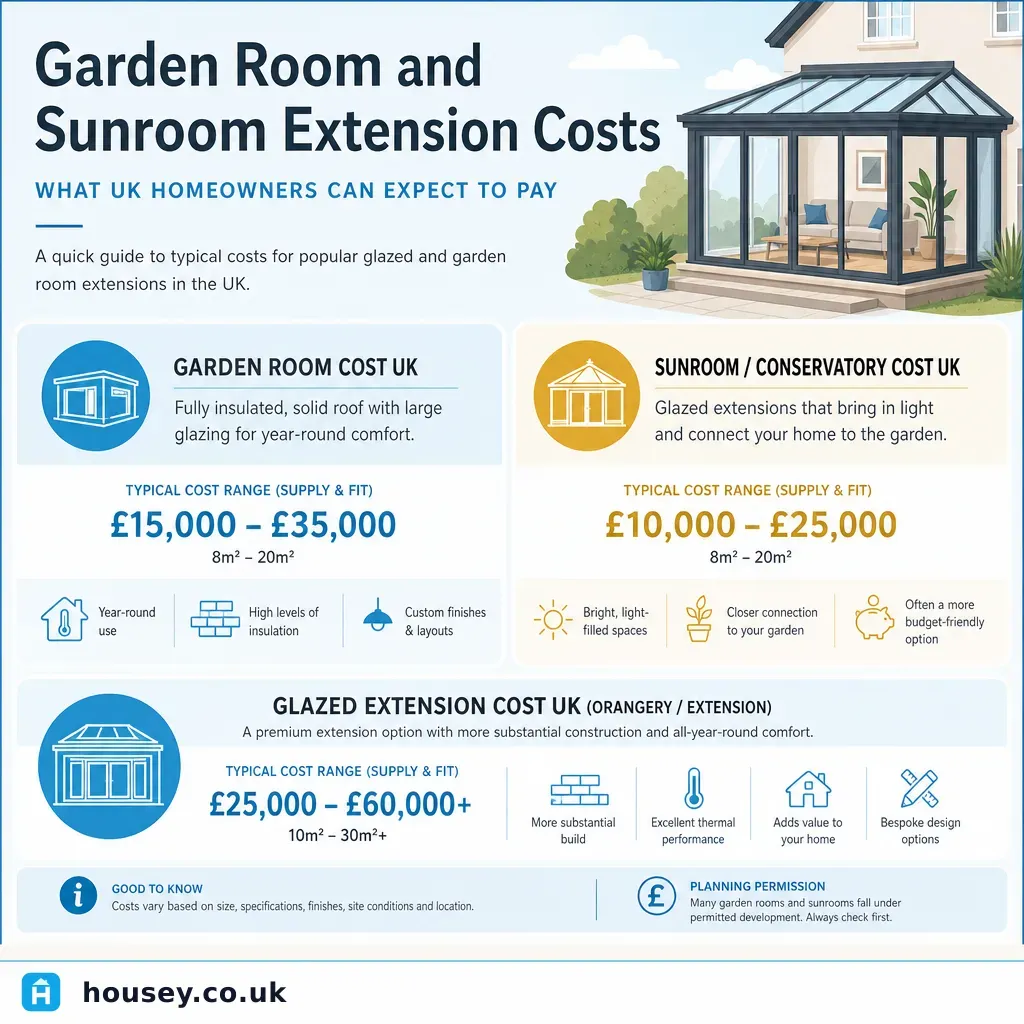
Garden Room and Sunroom Extension Costs
Garden rooms and sunroom extensions cost roughly £10,000–£80,000 installed in the UK depending on type, size, and glazing specification.
 Improvement & Build
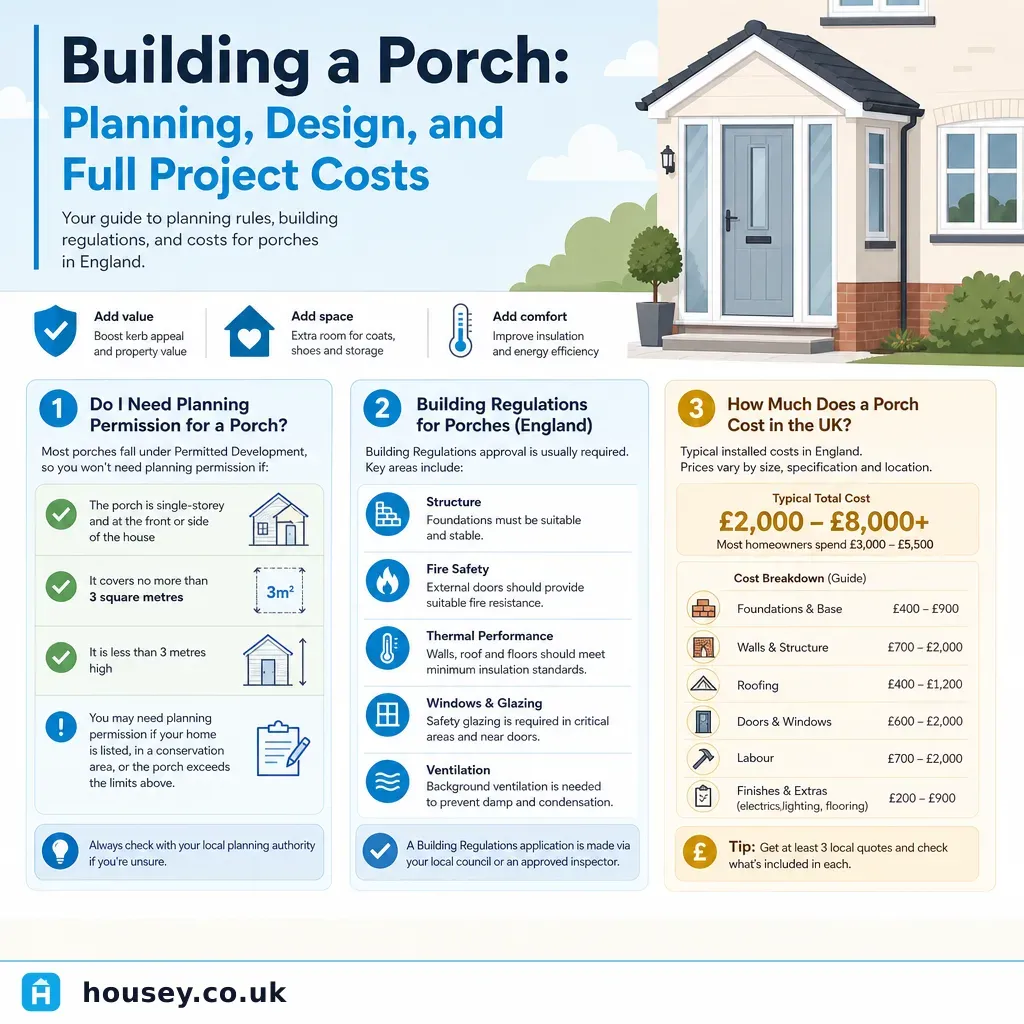
Building a Porch: Planning, Design, and Full Project Costs
Most porches with an external floor area of 3m² or less can be built without planning permission in England under permitted development rights, but building regulations approval is almost always required.
 Improvement & Build
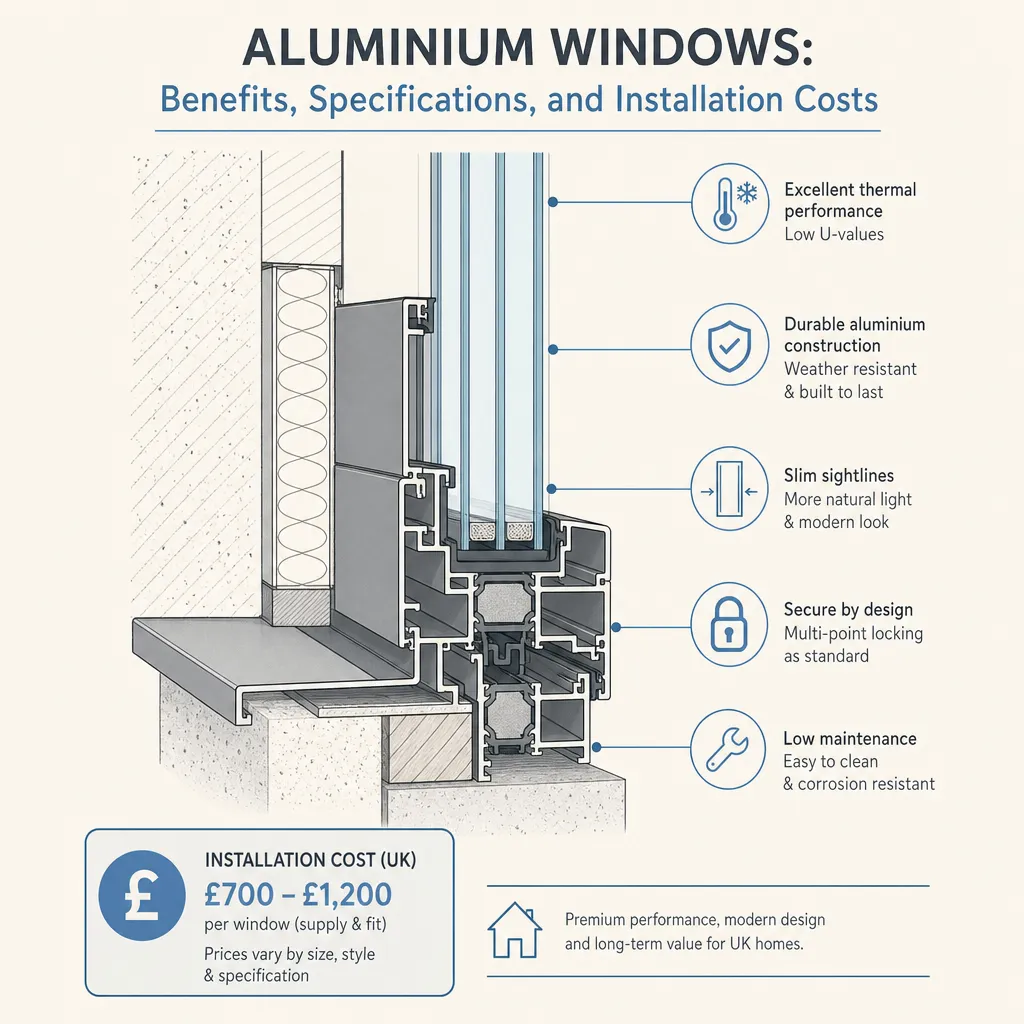
Aluminium Windows: Benefits, Specifications, and Installation Costs
Aluminium windows typically cost £600–£1,800 per window installed in the UK, depending on size and specification.
 Improvement & Build
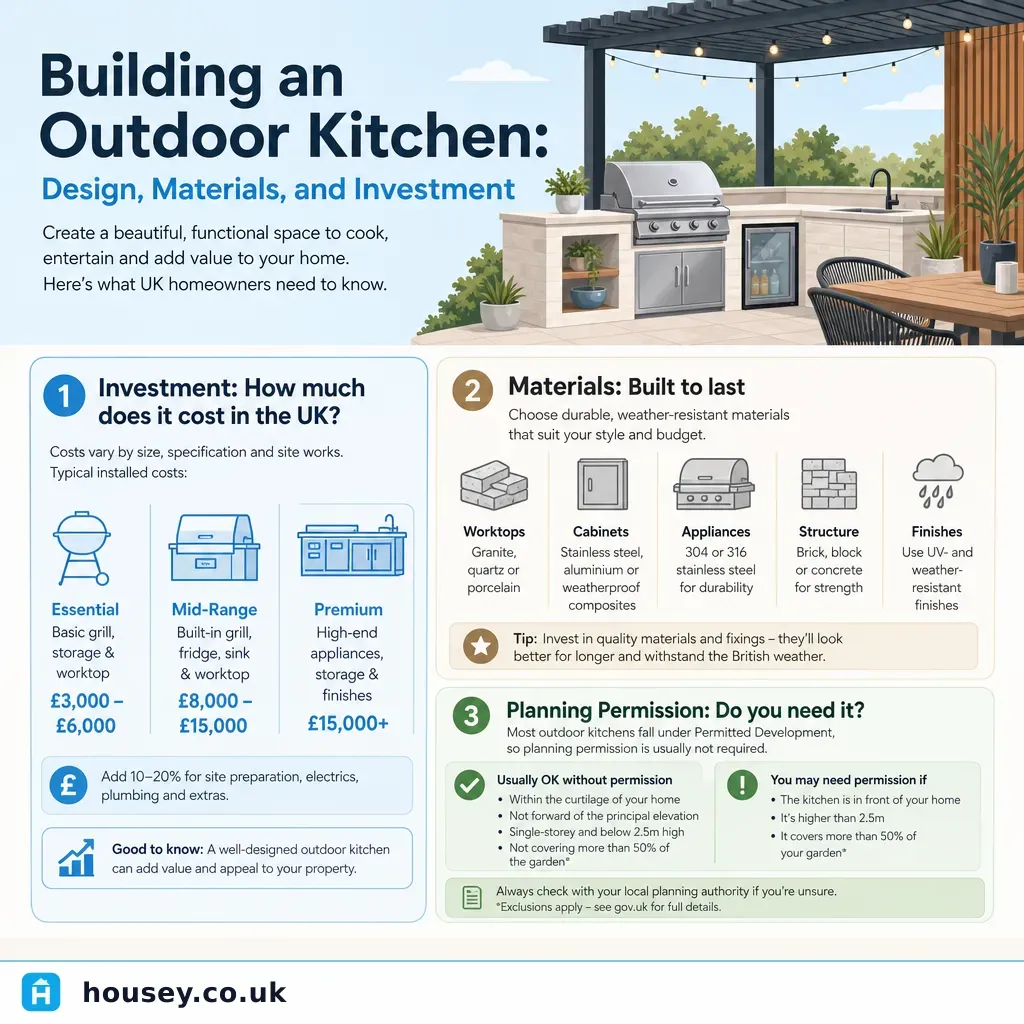
Building an Outdoor Kitchen: Design, Materials, and Investment
Building an outdoor kitchen in the UK costs roughly £3,000–£25,000 depending on size and materials.
 Improvement & Build
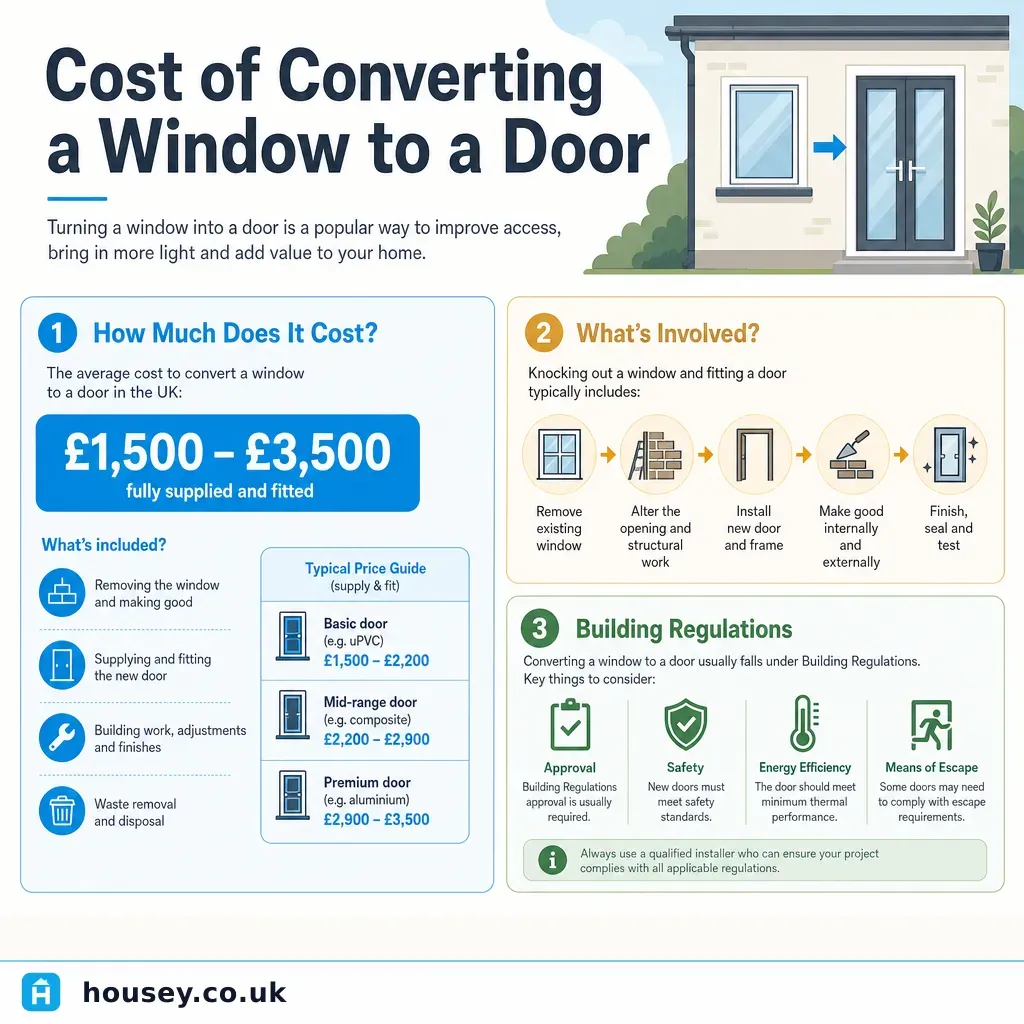
Cost of converting a window to a door
Converting a window to a door in the UK typically costs £1,500–£5,000 or more, depending on wall construction (cavity, solid, or timber frame), the type of door fitted, and whether a new or enlarged lintel is required.