Garden Room and Sunroom Extension Costs
By Housey · Last reviewed 11th of May 2026
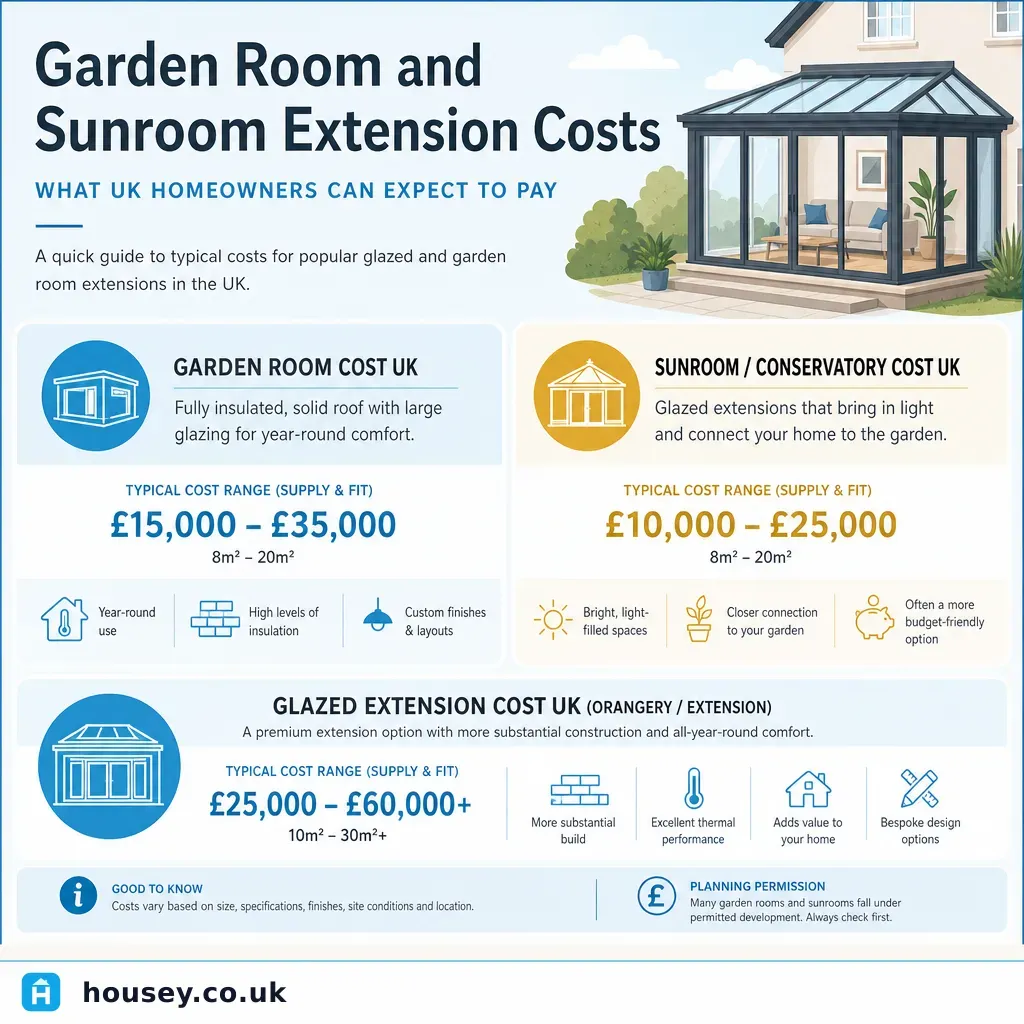
Garden Room and Sunroom Extension Costs
Garden rooms and sunroom extensions have become one of the most popular ways UK homeowners add usable space without committing to a full two-storey extension. Whether you are equipping a home office, creating a garden studio, or bringing more light into a living area, the range of structures on the market — and their widely differing price points — makes it worth understanding exactly what you are buying before you commission a build.
Key points
- A standalone garden room under 2.5 m tall at the eaves, single-storey, covering less than 50% of the original garden, and used as an ancillary outbuilding may qualify as permitted development — no planning application required.
- Sunrooms and glazed extensions attached to the house require full Building Regulations approval, including Part L (energy efficiency) and Part A (structural) compliance.
- Garden rooms used as sleeping accommodation or primary living space always require Building Regulations approval, regardless of size.
- Indicative UK installed costs range from approximately £10,000–£25,000 for a modular timber garden room to £30,000–£80,000+ for a bespoke glazed extension. Indicative UK costs, last reviewed 2026-05-11.
- A householder planning application in England costs £258 (2025/26 fee); building control fees are set separately by the local authority or a private Approved Inspector.
Garden room, sunroom, conservatory, or glazed extension — what is the difference?
These terms are used loosely across the market. Understanding the distinctions helps you compare quotes and clarify which planning and building control obligations apply.
Structure | Attached to house? | Typical glazing proportion | Usual planning route | Building Regs required? |
|---|---|---|---|---|
Standalone garden room / studio | No | 0–30% | Permitted Development (conditions apply) | Only if used as habitable space |
Conservatory | Yes | More than 50% walls, 75%+ roof | Permitted Development (size/height limits) | Usually exempt from Part L if thermally separated |
Sunroom / glazed extension | Yes | 30–70% walls, solid or glazed roof | Permitted Development or full planning | Yes — Part A, L, F at minimum |
Structural glass box extension | Yes | 70–100% glazed walls and roof | Permitted Development or full planning | Yes — full Building Regs |
The conservatory versus sunroom distinction matters for Building Regulations. A true conservatory — more than 50% glazed walls, more than 75% glazed roof, thermally separated from the main house by an external-quality wall and door — has traditionally been exempt from the energy efficiency requirements of Part L. A sunroom or garden room extension connected to the main heated space is not exempt and must comply in full.
How much does a garden room or sunroom extension cost?
Costs vary substantially by structure type, size, specification, and location. The figures below are indicative; always obtain at least three comparative quotes from accredited contractors.
Indicative UK costs, last reviewed 2026-05-11.
Structure type | Typical size | Indicative installed cost |
|---|---|---|
Modular timber garden room (basic) | 10–20 sq m | £10,000–£20,000 |
Modular garden room (mid-spec, insulated) | 15–30 sq m | £15,000–£35,000 |
Bespoke timber or steel garden studio | 20–40 sq m | £25,000–£60,000 |
Conservatory (uPVC or aluminium) | 15–25 sq m | £12,000–£30,000 |
Sunroom / glazed extension | 15–30 sq m | £20,000–£50,000 |
Structural glass box extension | 20–40 sq m | £40,000–£100,000+ |
Contractor quote ranges compiled by Housey, 2026. Figures are indicative; quotes vary by region, specification, and ground conditions.
Key cost drivers
- Size and footprint — the single largest variable. Foundations, frames, and glazed elements all scale with floor area.
- Roof type — a flat polycarbonate or glass roof is cheaper than a pitched tiled or sedum roof. A lantern or roof light addition typically adds £2,000–£8,000.
- Glazing specification — standard double-glazed units, triple glazing, or structural glass carry different price points. Low-e coatings and solar-control glass add cost but reduce heat gain and loss.
- Foundation type — a concrete slab is standard; screw-pile or pad foundations for lighter garden rooms can reduce groundworks cost but may not suit all soil types.
- Services — running electricity, underfloor heating, or plumbing to a garden room typically adds £1,500–£5,000+ depending on distance and ground conditions.
- Planning and building control — a householder planning application costs £258 in England (2025/26); building control fees vary by authority and project value.
Do I need planning permission?
Planning rules depend on whether the structure is attached or detached, its size and height, its location, and whether your property has previously used its permitted development rights through prior works.
Which planning route applies?
- Permitted Development applies if: the structure is a detached outbuilding, single-storey under 2.5 m at the eaves (or under 4 m for a dual-pitched roof), covers less than 50% of the original garden, is not forward of the principal elevation, and is not in a conservation area or listed building curtilage.
- Apply for householder planning permission if: the extension is attached to the house and exceeds Permitted Development size limits, or you are in an Article 4 Direction area, conservation area, or national park.
- Check with your local planning authority (LPA) if: the property is in a conservation area, a national park, or is listed. In these locations even small outbuildings may need consent.
- Appoint a planning consultant or architect if: the site has complex constraints, you have already extended previously, or you want written certainty before committing to a build.
The GOV.UK Planning Portal interactive guide provides a useful starting point, but always confirm with your LPA before commencing work.
Building Regulations — what applies?
For attached sunroom and glazed extensions, full Building Regulations approval is required. This typically covers:
- Part A (Structure) — foundations and frame must be structurally sound; engineer's calculations are usually required for structural glazing schemes.
- Part L (Conservation of fuel and power) — the extension must meet current U-value standards. Under Part L 2021, maximum U-values include 0.15 W/m²K for flat roofs and 0.18 W/m²K for walls.
- Part F (Ventilation) — adequate ventilation must be demonstrated, particularly where fully glazed roofs are used.
- Part P (Electrical safety) — any new electrical circuits must be installed by a Part P registered electrician or notified to building control.
Standalone garden rooms used only as ancillary outbuildings are generally not subject to Building Regulations. Sleeping accommodation, bathrooms, or mains electrical installation within a garden room brings building control into scope.
When to get professional help
Most garden room and sunroom extension projects benefit from professional design input before obtaining contractor quotes. Consider appointing an architect or architectural designer if:
- The project involves an attached extension rather than a standalone structure.
- You need planning permission because the build exceeds Permitted Development limits.
- The site has unusual constraints — sloping ground, tree protection orders (TPOs), a shared boundary wall, or conservation area restrictions.
- You want detailed drawings so that contractors can price accurately and competitively.
Red flags when assessing contractor quotes:
- No mention of building control or planning compliance in the scope of works.
- Quotations that exclude foundations or services without stating this clearly.
- No reference to Part L compliance or energy performance targets.
- Absence of public liability insurance or recognised trade body membership (e.g., Federation of Master Builders).
- A request for more than 10–20% upfront deposit before materials are ordered or work starts.
How Housey can help
Housey connects you with vetted extension builders and architects who can advise on the right structure for your budget and site, manage planning applications where needed, and deliver a build that complies with current Building Regulations. Request comparable quotes through Housey to check professional credentials and scope before committing.
Frequently asked questions
Do I need planning permission for a garden room?
A standalone garden room that is single-storey, under 2.5 m at the eaves, covers less than 50% of the original garden, and sits behind the front elevation usually qualifies as permitted development — no planning application needed. Conservation areas, listed building curtilages, and Article 4 Direction areas all remove this right. Always confirm with your local planning authority if you are unsure.
What is the difference between a sunroom and a conservatory?
A conservatory has more than 50% glazed walls and more than 75% glazed roof and is thermally separated from the house by an external-quality wall and door. In this configuration it may be exempt from Part L energy efficiency requirements. A sunroom is more integrated with the main house, often has a partly solid roof, and must comply with full Building Regulations including Part L. Thermal separation is the critical legal distinction.
How much does a garden room or sunroom cost?
Costs range from approximately £10,000 for a basic modular timber garden room to £80,000 or more for a bespoke structural glazing extension. The main cost drivers are size, glazing specification, roof type, foundation method, and whether electricity, heating, or plumbing are needed. Indicative UK costs, last reviewed 2026-05-11. Always obtain at least three comparable quotes.
Can I use a garden room as a home office without planning permission?
In most cases, yes — provided the garden room meets permitted development criteria and is used as ancillary to the main house. If the garden room includes sleeping accommodation or is to be used as a self-contained unit, planning permission and Building Regulations approval are more likely to be required.
Will a garden room or sunroom add value to my property?
A well-designed, properly built extension with appropriate planning permission and building control sign-off generally adds value and is more straightforward at point of sale. A garden room built without the correct approvals may create complications when a buyer's solicitor raises enquiries during conveyancing. Always obtain the correct permissions and retain the documentation.
Sources and further reading
- Planning Portal — permitted development rights for householders — Planning Portal
- Approved Document L: Conservation of fuel and power — UK Government
- Building Regulations and approved documents — GOV.UK
- Federation of Master Builders — find a builder — Federation of Master Builders
Useful next reads
 Improvement & Build
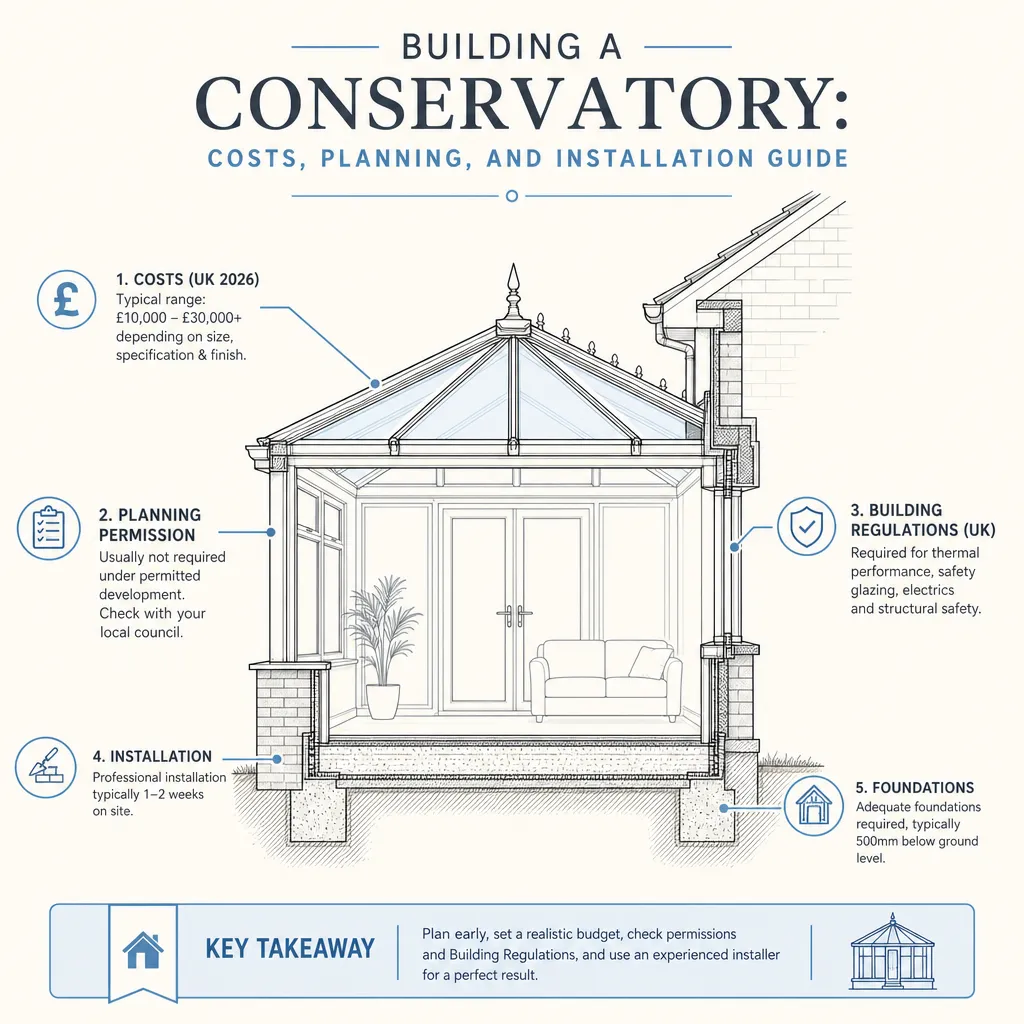
Building a Conservatory: Costs, Planning, and Installation Guide
Most UK conservatories qualify as permitted development and do not need a planning application, provided they meet the size, height, and location conditions in the Town and Country Planning (General Permitted Development) (England) Order 2015.
 Improvement & Build
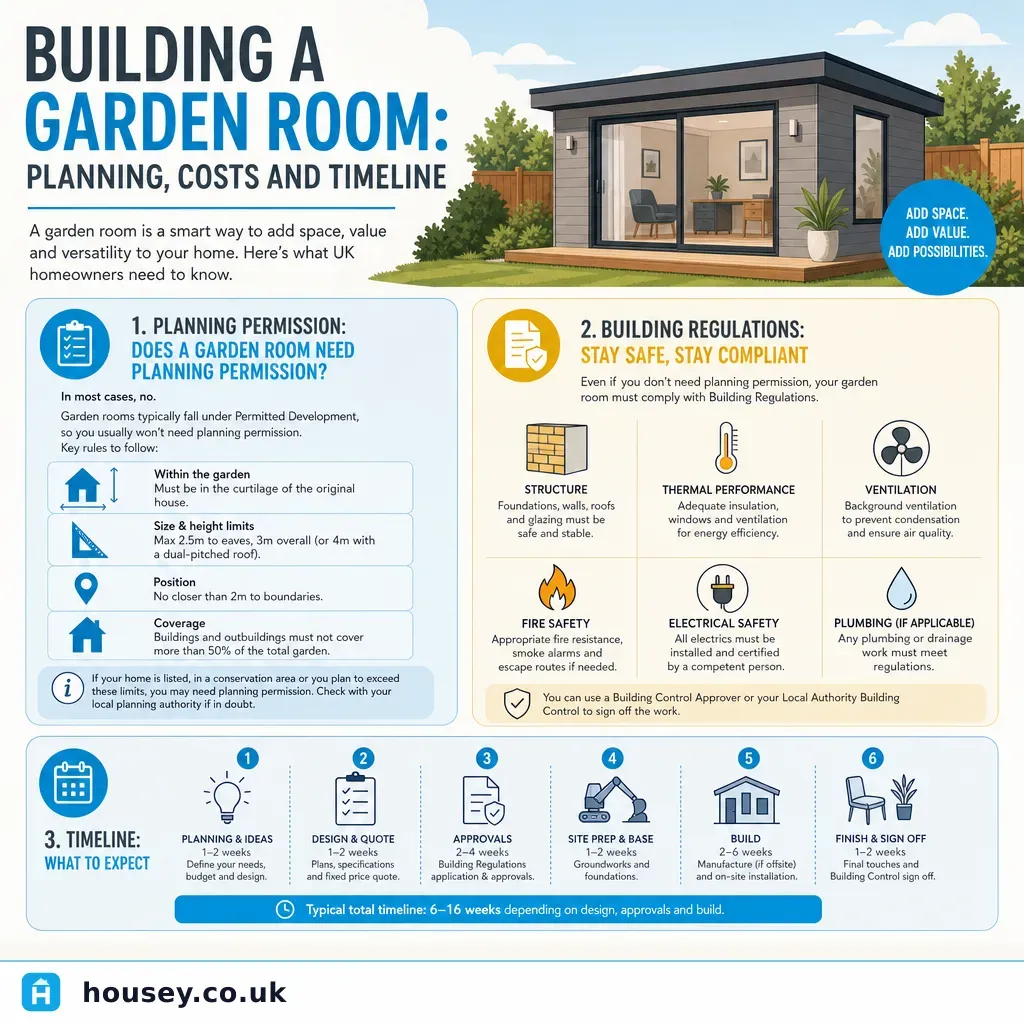
Building a Garden Room: Planning, Costs and Timeline
Most garden rooms in England fall under permitted development and don't need planning permission, provided the structure meets height, coverage, and boundary conditions.
 Improvement & Build
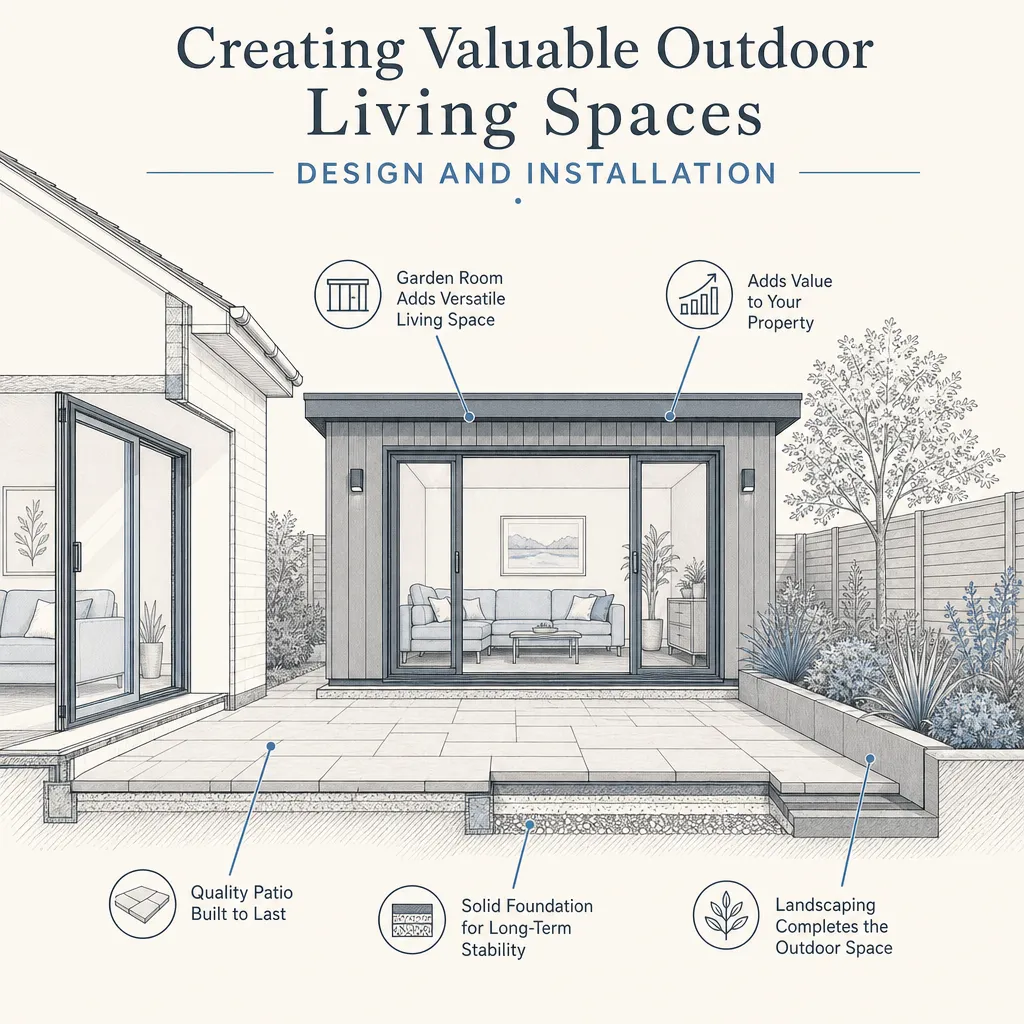
Creating Valuable Outdoor Living Spaces: Design and Installation
Creating an outdoor living space — patio, deck, garden room, or landscaped area — can add usable space and kerb appeal to a UK home.
 Improvement & Build
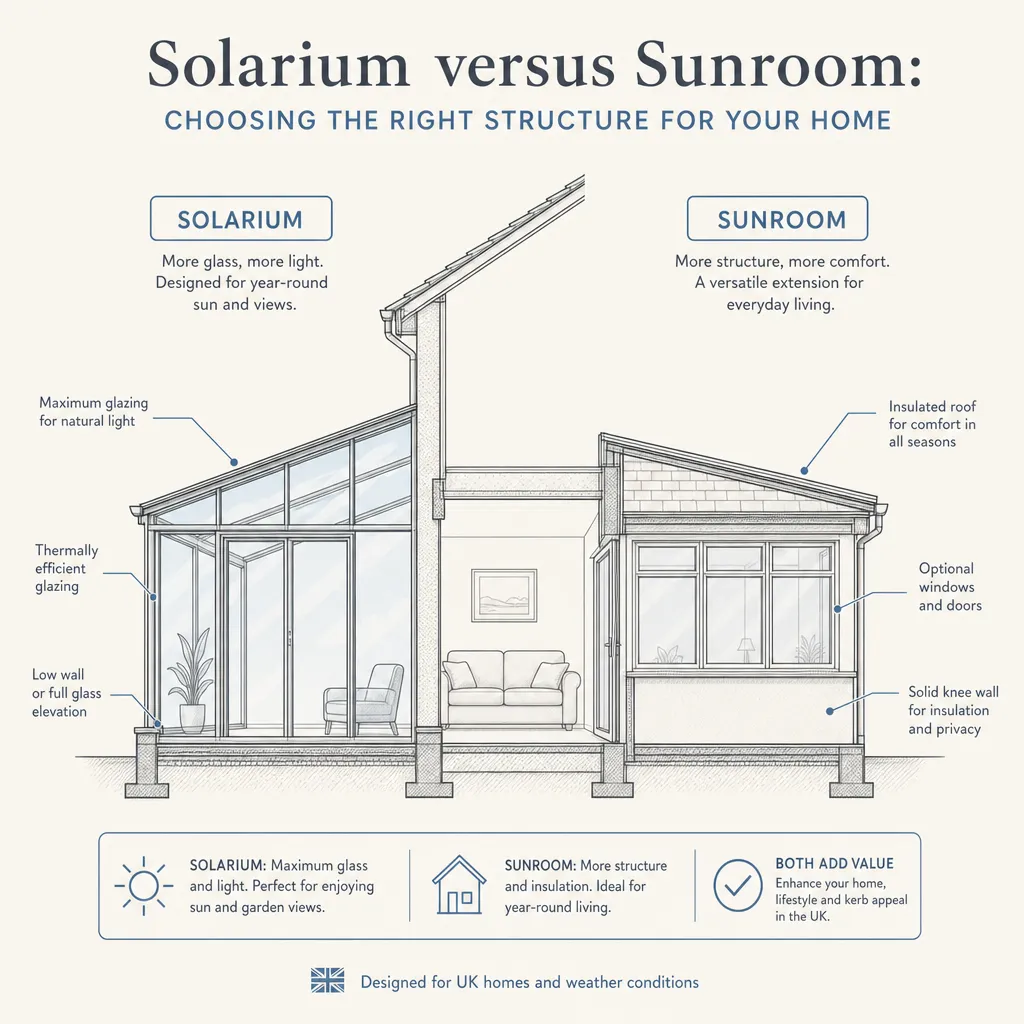
Solarium versus sunroom: choosing the right structure for your home
A solarium is a predominantly glazed structure designed for light and solar connection, best suited to seasonal use.
 Improvement & Build
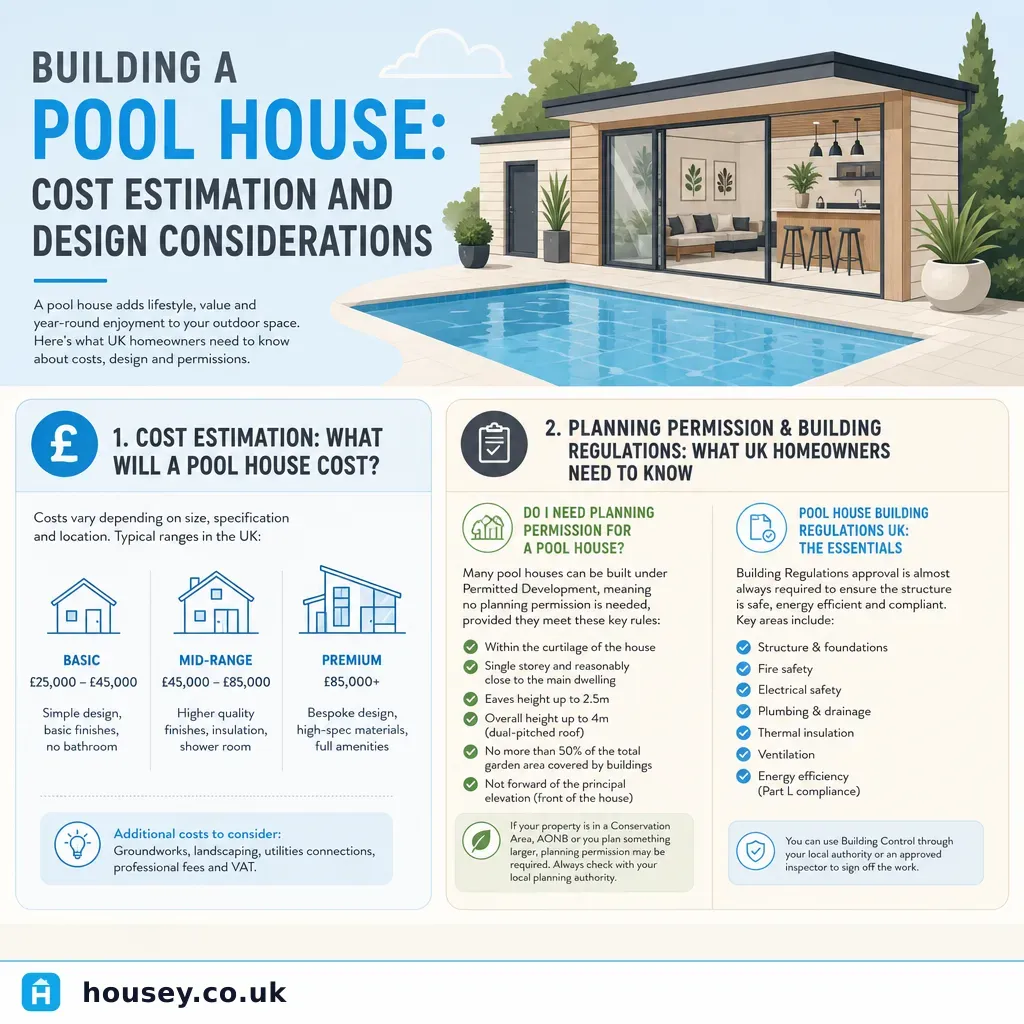
Building a Pool House: Cost Estimation and Design Considerations
A pool house in the UK typically costs between £20,000 and £180,000 depending on size, construction method, and specification.