Building a Porch: Planning, Design, and Full Project Costs
By Housey · Last reviewed 5th of May 2026
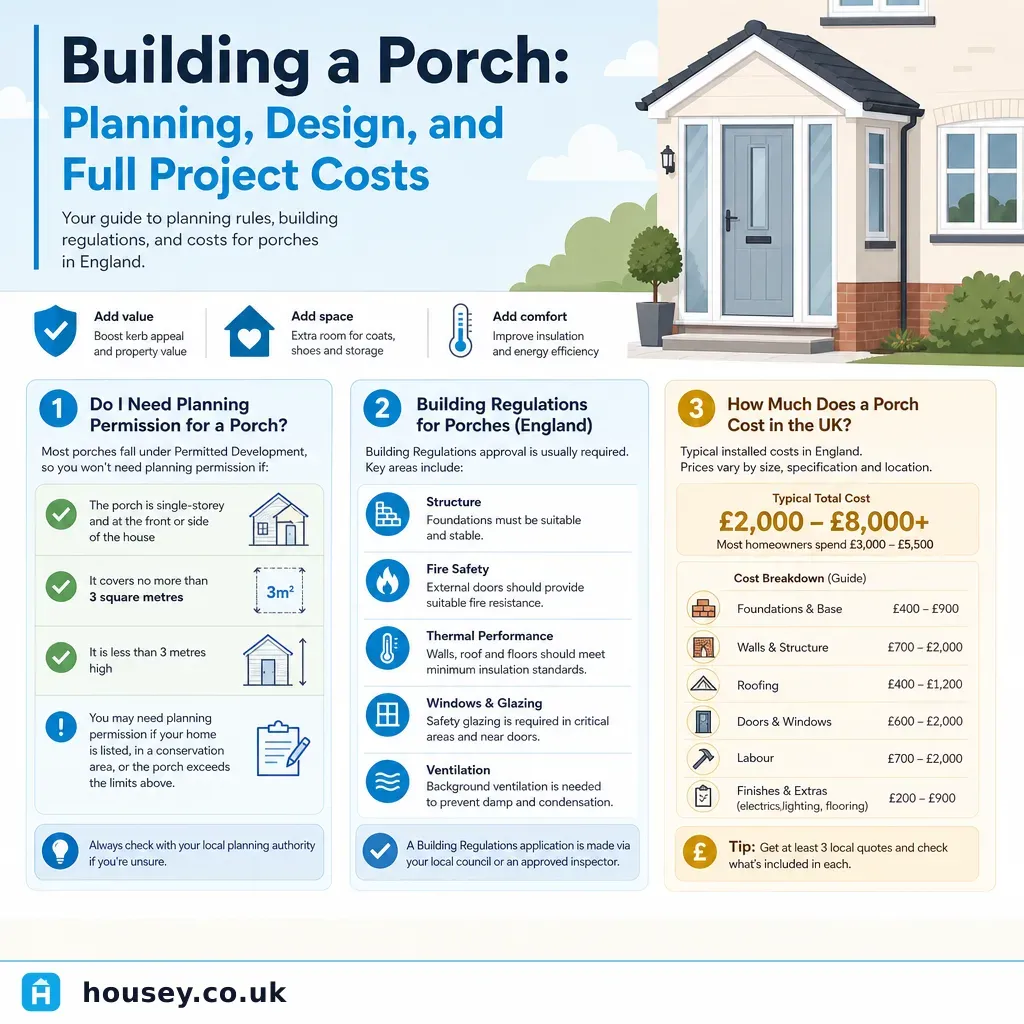
Building a Porch: Planning, Design, and Full Project Costs
A porch is one of the most practical improvements a UK homeowner can make — adding a draught lobby, a secure secondary entry, and useful storage without the scale of a full extension. The question of whether planning permission is needed, and whether building regulations apply, catches many homeowners out. Getting either wrong can delay a future sale, attract an enforcement notice, or leave a structure that cannot be formally signed off.
Key points
- Most porches with an external floor area of 3m² or less do not need planning permission in England under permitted development rights in the Town and Country Planning (GPDO) 2015, subject to specific height and boundary conditions.
- Building regulations approval is required for almost all new porches under the Building Regulations 2010, even those exempt from planning — covering Part A (structure), Part L (thermal performance), and Part B (fire safety).
- Permitted development rights are removed for listed buildings, flats, and properties subject to an Article 4 Direction; conservation area properties face additional restrictions.
- A building regulations completion certificate is essential for any future sale — mortgage lenders and buyers' solicitors will require it.
- Indicative costs range from approximately £3,000 for a basic uPVC lean-to to £15,000 or more for a brick-built, tiled structure.
Do you need planning permission for a porch?
Under the Town and Country Planning (General Permitted Development) (England) Order 2015 (as amended), a porch may be built as a permitted development right, provided all of the following conditions are met:
- The porch is at ground level only.
- The total external floor area does not exceed 3m².
- No part of the porch exceeds 3 metres in height.
- No part of the porch is within 2 metres of any boundary adjacent to a highway.
If any condition is not met, a householder planning application is required. PD rights also do not apply if the property is a flat or maisonette, is a listed building, has had PD rights removed by an Article 4 Direction, or is in a conservation area where the porch would front a highway or waterway. Rules differ in Wales, Scotland, and Northern Ireland.
Decision tree: does my porch need planning permission?
- Is the property listed? → Yes: listed building consent and planning permission required.
- Is it a flat or maisonette? → Yes: planning permission required.
- Does an Article 4 Direction apply? → Check with your LPA.
- Will the external floor area exceed 3m²? → Yes: planning permission required.
- Will any part exceed 3m in height? → Yes: planning permission required.
- Will any part be within 2m of a highway boundary? → Yes: planning permission required.
- None of the above? → Likely permitted development — but building regulations almost certainly still apply.
Do you need building regulations approval?
Almost certainly yes, even if planning permission is not required. The Building Regulations 2010 require approval for most new porches. The only narrow exemption is a porch that does not affect the existing building's means of escape, is not attached to a building of a relevant use (such as a care home), and does not include drainage or a WC.
For a typical domestic porch, building regulations cover:
- Part A (Structure): foundations, roof, and structural connections to the existing building.
- Part L (Conservation of fuel and power): thermal performance of new external doors and any glazed elements — particularly relevant if the original front door is removed, making the porch the new thermal boundary.
- Part B (Fire safety): means of escape implications if the original front door is the only exit from a habitable room.
Approval is obtained through your local authority building control (LABC) department or a Registered Building Inspector (RBI) — the designation introduced under the Building Safety Act 2022. Submit a building notice or full plans application before work starts, and ensure a completion certificate is issued on completion.
Porch types and materials: comparison
Porch type | Best for | Typical construction | Approximate cost range | Planning note |
|---|---|---|---|---|
uPVC lean-to | Budget builds; quick install | uPVC frame; polycarbonate or glass roof | £3,000–£6,000 | Usually within PD if under 3m² |
Timber-framed | Period properties; paintable | Hardwood or softwood frame; tile or slate roof | £6,000–£12,000 | Check conservation area rules |
Brick-built | Long-term durability; matching house | Brick to match existing; tiled or flat roof | £8,000–£15,000+ | May exceed 3m²; planning likely |
Storm porch / canopy | Minimal cost; no enclosed floor area | Steel or timber canopy over existing door | £1,500–£4,000 | Generally no planning or building regs |
Glazed extension porch | Contemporary; maximum light | Steel or aluminium frame; full glazing | £10,000–£20,000+ | Usually needs planning and building regs |
Indicative UK costs, last reviewed 2026-05-05. Costs vary by region, specification, and contractor. Exclude VAT unless stated.
Design and specification considerations
Materials matching: In conservation areas or on characterful period homes, matching brick type, roof tile, and window profile matters both aesthetically and for planning compliance.
Thermal performance: If the existing front door is removed and the porch outer door becomes the primary thermal barrier, that door and all glazed elements must meet Part L of the Building Regulations. Double or triple glazing, an insulated roof, and effective draught-sealing are standard in a well-specified porch.
DPC continuity: The new porch foundation and floor must maintain the continuity of the existing damp-proof course (DPC). A competent builder will tie a new DPC or cavity tray into the existing structure — this is a common point of failure in cheaply built porches and can lead to damp problems in the main hallway.
Draught lobby effectiveness: For a porch to function as a true draught lobby, a minimum of 1.2–1.5m between inner and outer doors is recommended. Smaller porches may look attractive but deliver limited thermal benefit.
Full project costs
Cost element | Indicative range | Notes |
|---|---|---|
Porch structure (supply and build) | £3,000–£15,000+ | Depends on size, materials, and spec |
Building regulations application fee (England) | £206–£462 | Check current LABC fee schedule |
Structural drawings (where required) | £500–£1,500 | Not always needed for simple lean-to |
Planning application fee (England, if required) | £234 | 2025/26 fee schedule |
External door and glazing upgrade | £800–£3,000 | If replacing existing front door |
Tiling, flooring, and decoration | £500–£2,000 | Variable by finish |
Indicative UK costs, last reviewed 2026-05-05. Obtain at least three itemised quotes before committing.
Homeowner checklist: before you start
Important limitations
This article provides general information about planning and building regulations as they apply to porches in England. Rules differ in Wales, Scotland, and Northern Ireland. Permitted development rights depend on the specific property, its planning history, any Article 4 Directions, listing status, and conservation area designations. This guide is not a substitute for professional advice from a qualified planning consultant or building control professional. Always verify the current position with your LPA before starting any work.
What to ask a qualified professional
Before instructing a builder or submitting any application, ask:
- Does my property have any restrictions on permitted development rights? (Ask your LPA or a planning consultancy.)
- Will the porch affect the fire escape route from any room? (Ask a building control consultant.)
- What foundation specification is appropriate for my ground conditions?
- How will DPC continuity be maintained in the new structure?
- Will a structural engineer's calculations be needed for the connection to the existing building?
- What is the expected completion certificate timeline, and who will sign it off?
When to get professional help
Seek professional advice before starting if:
- The property is listed or in a conservation area
- You are unsure whether an Article 4 Direction has removed permitted development rights
- The proposed porch exceeds 3m² external floor area or 3m in height
- The porch will affect a window or door that serves as the sole fire escape from a room
- You are buying or selling and need to regularise an existing porch that was built without building regulations approval
A planning consultancy can confirm your PD rights quickly. A building control consultant can advise on building regulations before you commit to a specification.
How Housey can help
Housey connects UK homeowners with qualified construction professionals. Whether you need extension builders to price and build your porch, a planning consultancy to confirm your permitted development position, or a building control consultant to manage building regulations approval, you can request and compare quotes through Housey.
Frequently asked questions
Can I build a porch on a listed building without consent?
No. Listed building consent is required for any works — internal or external — that would affect the character of a listed building, including adding a porch of any size. Planning permission will also normally be required. Proceeding without consent is a criminal offence under the Planning (Listed Buildings and Conservation Areas) Act 1990. Contact your LPA conservation officer before starting any work.
Does a porch need foundations?
Yes. All porches connected to the existing building require adequate foundations suited to the ground conditions. For a simple small porch on stable ground, strip foundations at 450–600mm depth are typical. Your builder should confirm the specification before work starts, and building control will inspect foundations before concrete is poured as part of the building regulations process.
Will a porch add value to my home?
A well-designed porch that matches the property's character can improve kerb appeal and saleability, and provides practical benefits — draught lobby, secure entry, and storage — that many buyers value. A porch built without building regulations sign-off can complicate a future sale, as buyers' solicitors will identify the missing completion certificate during conveyancing.
How long does it take to build a porch?
A typical domestic porch takes 1–3 weeks of active construction, depending on size and materials. Allow additional time for building regulations approval — a building notice allows work to start relatively quickly but inspections must be booked in advance. If planning permission is required, allow 8–10 weeks for a householder application to be determined in England.
Do I need an architect for a porch?
Not usually. For a straightforward domestic porch, an experienced builder with building regulations knowledge can manage the project without an architect. For larger or more complex porches on listed buildings or in conservation areas, an architect or architectural technologist can assist with design coordination, drawings, planning applications, and building regulations management.
Sources and further reading
- Permitted development rights for householders: technical guidance — GOV.UK
- Planning Portal — porches guidance — Planning Portal
- Building Regulations 2010 — legislation.gov.uk
- Registered Building Inspectors — Building Safety Act 2022 — GOV.UK
- Listed buildings — Historic England — Historic England
- Planning permission — Citizens Advice — Citizens Advice
Useful next reads
 Improvement & Build
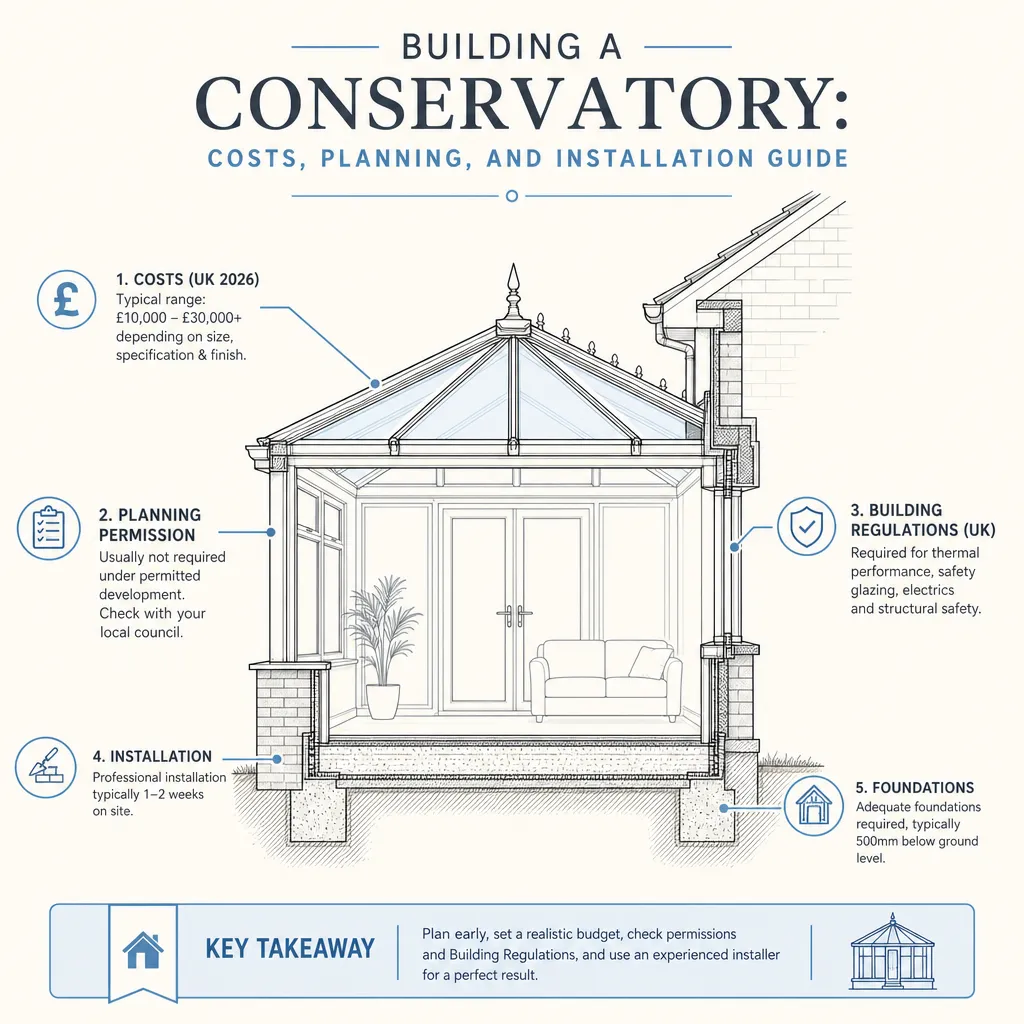
Building a Conservatory: Costs, Planning, and Installation Guide
Most UK conservatories qualify as permitted development and do not need a planning application, provided they meet the size, height, and location conditions in the Town and Country Planning (General Permitted Development) (England) Order 2015.
 Improvement & Build
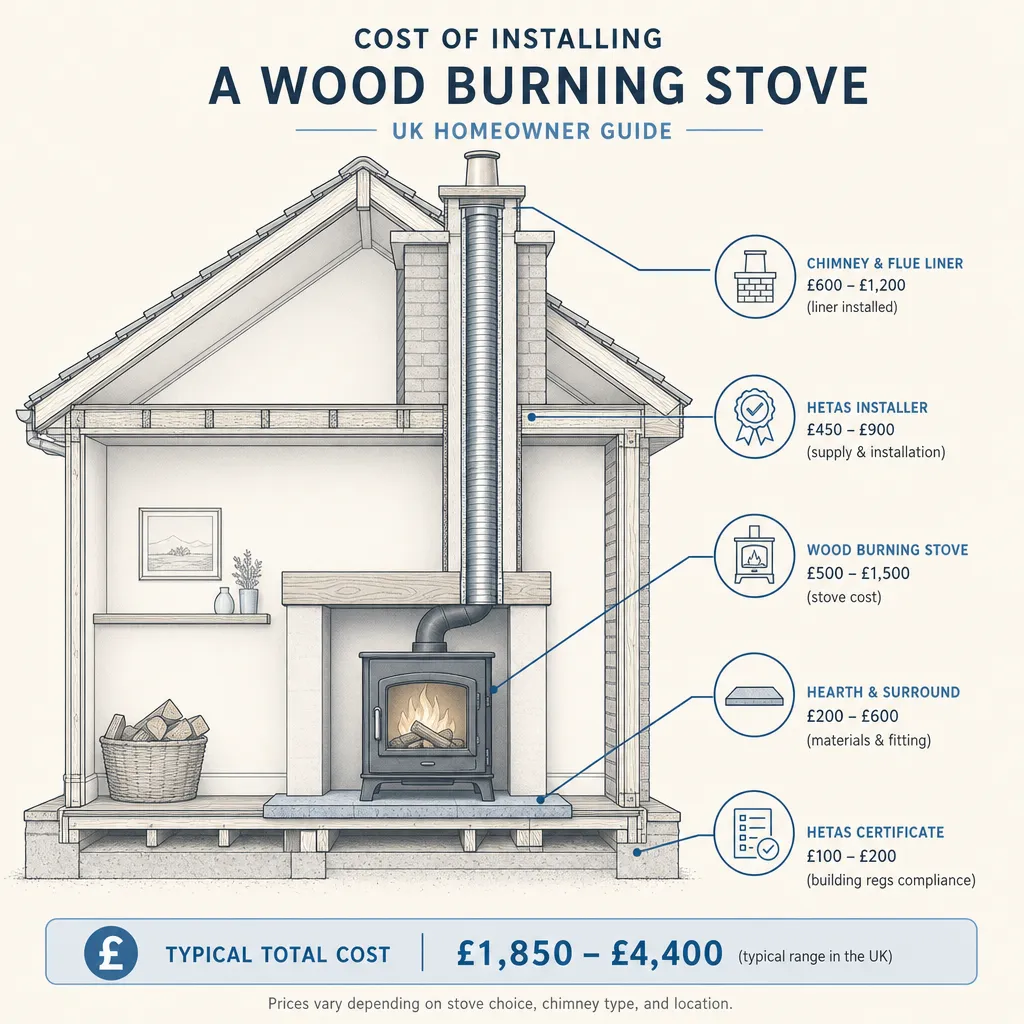
Cost of installing a wood burning stove
Installing a wood burning stove in the UK typically costs £2,000–£5,500 in total, covering the stove, flue liner, hearth, and HETAS-registered installation.
 Improvement & Build
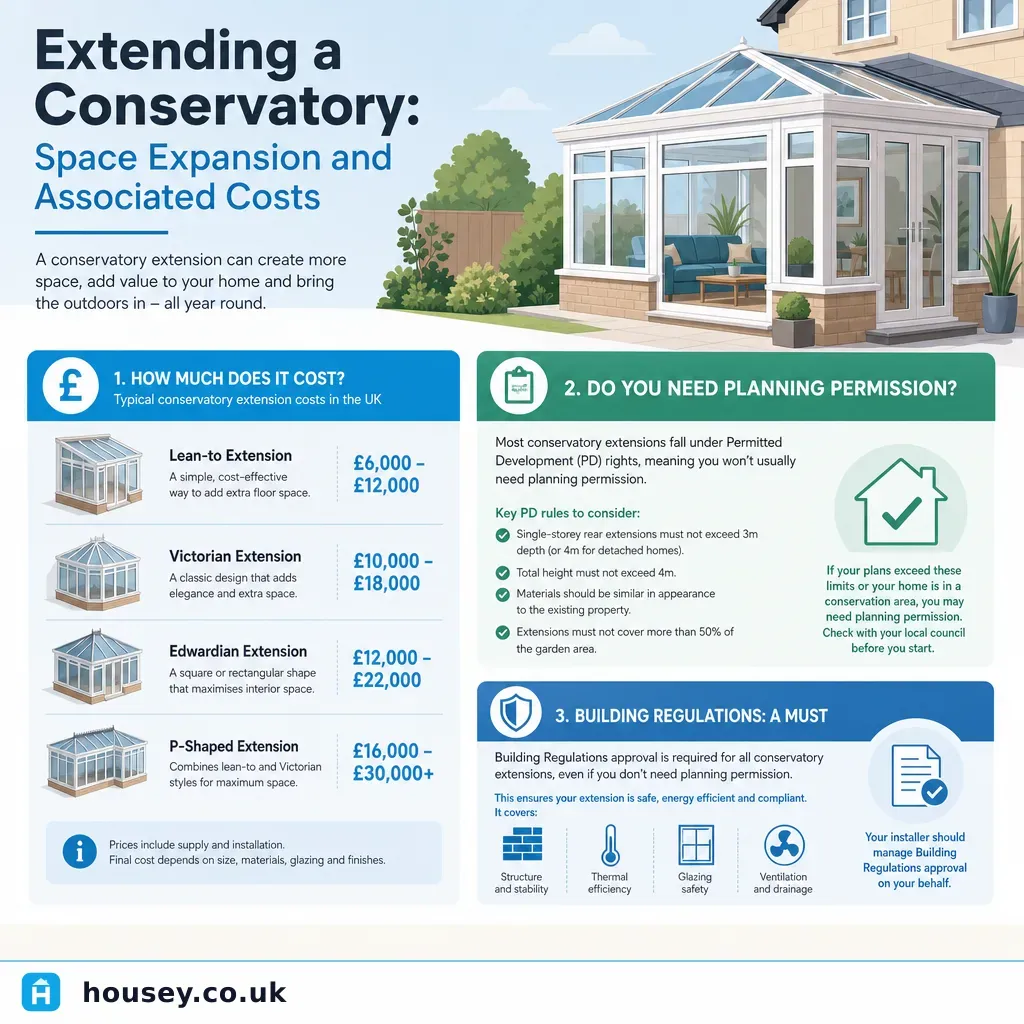
Extending a Conservatory: Space Expansion and Associated Costs
Extending a conservatory usually falls under permitted development rights if the enlarged footprint stays within depth limits — 4m for detached houses, 3m for others.
 Improvement & Build
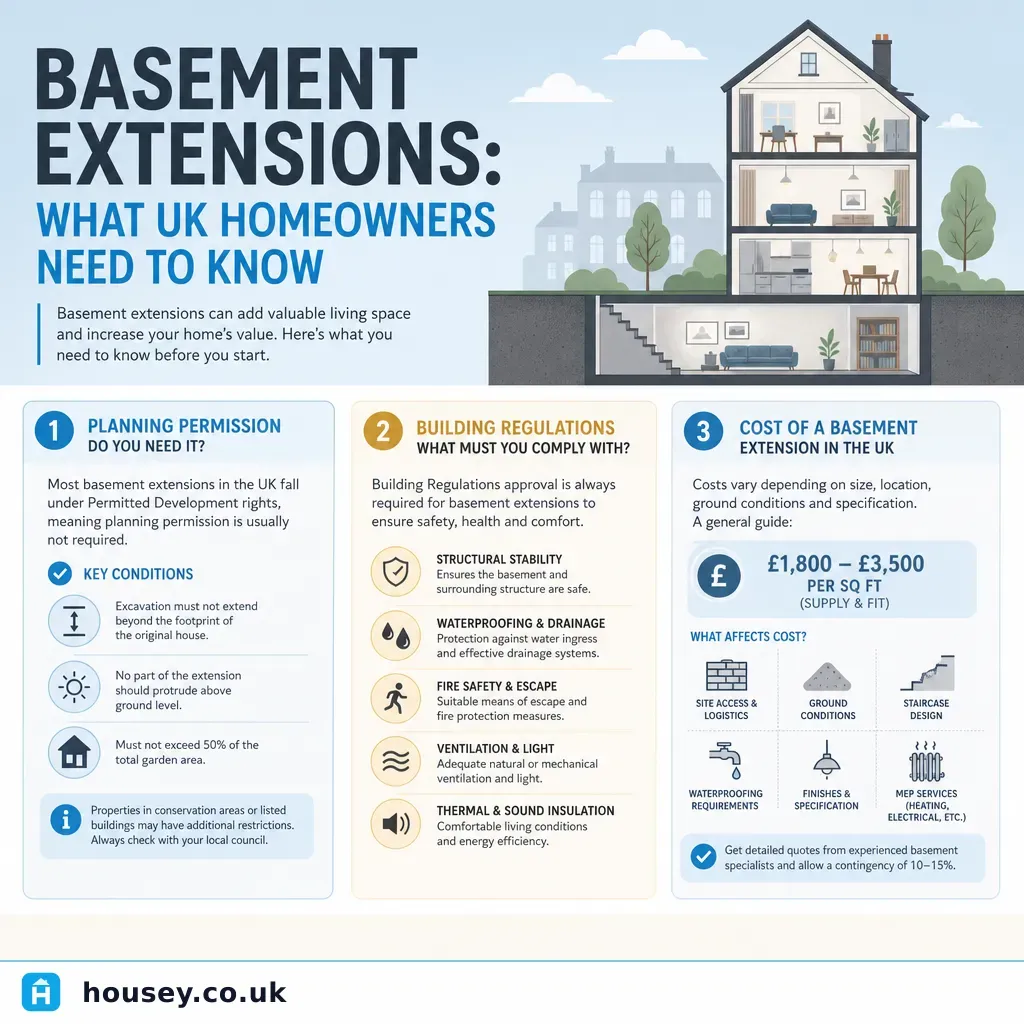
Basement Extensions: What UK Homeowners Need to Know
Most basement extensions in the UK require full planning permission and Building Regulations approval under Parts A, C, F, H, and L.
 Improvement & Build
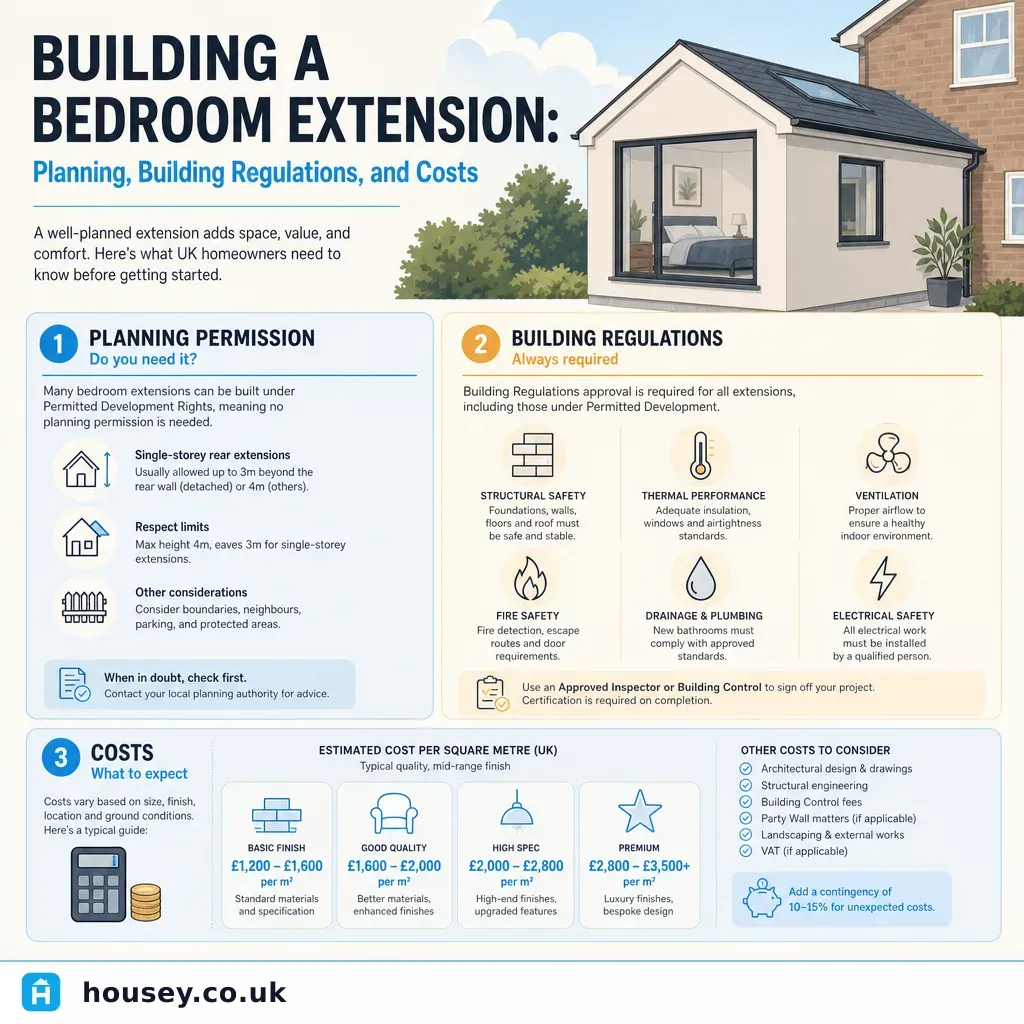
Building a Bedroom Extension: Planning, Building Regulations, and Costs
A bedroom extension requires either permitted development approval or full planning permission, plus building regulations sign-off in all cases.