Building a Custom Home: Essential Questions Before Breaking Ground
By Housey · Last reviewed 7th of May 2026
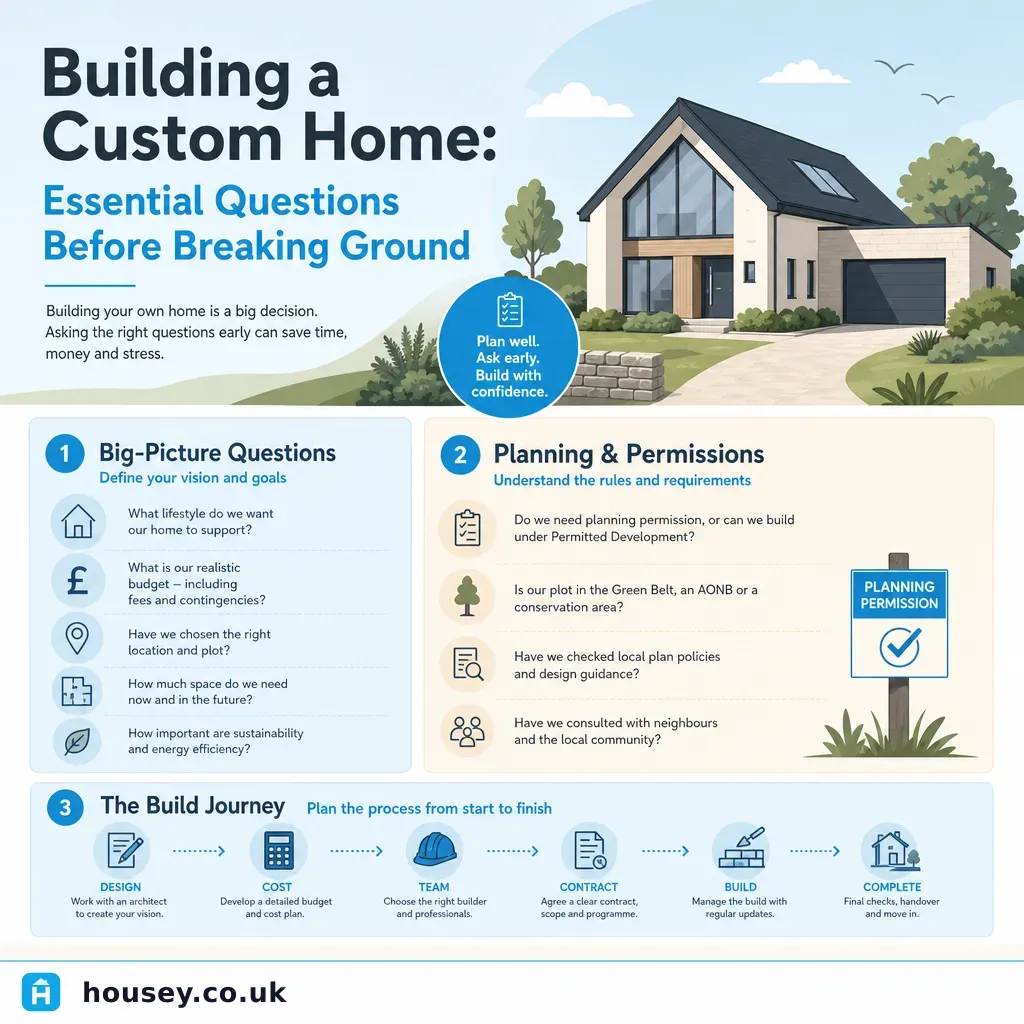
Building a Custom Home: Essential Questions Before Breaking Ground
Whether you have found a plot or are weighing up different self-build routes, the decisions made before a single foundation is dug will shape the project for years to come. In the UK, building a bespoke home involves a distinct set of regulatory, design, and contractual steps that differ significantly from extending or renovating an existing property — and many of the most common delays and cost overruns can be traced back to questions that were never asked at the outset. Understanding those questions early is one of the most practical things any prospective self-builder can do.
Key points
- Planning permission is almost always required for a new dwelling in England, Wales, and Scotland; permitted development rights do not apply to new-build homes.
- A RIBA/ARB-registered architect or CIAT-registered architectural technologist can prepare planning drawings and Building Regulations drawings — these are separate submissions with different requirements, timescales, and fees.
- Self-build homes in England may be eligible for the Community Infrastructure Levy (CIL) self-build exemption, provided the exemption claim is submitted to the local planning authority before work commences.
- Building Regulations approval is required in addition to planning permission; a building control body must inspect work at specified key stages throughout the build.
- The average UK self-build takes 18–24 months from planning submission to completion; delays most commonly occur at planning, groundworks discovery, and first fix.
Do you need planning permission?
In almost every case, yes. A new dwelling is not covered by permitted development rights, so you will need to apply for full planning permission through your local planning authority (LPA). A standard application typically takes 8–13 weeks for a decision, though complex or contested sites can take considerably longer.
Key planning considerations include:
- Site constraints: green belt designation, flood risk zones, conservation area status, and tree preservation orders (TPOs) can all restrict what you can build and may require additional documents — such as flood risk assessments or arboricultural reports — to accompany your application.
- Local design policy: LPAs have local design policies and design guides that new homes must respond to. Pre-application advice, usually available from the LPA for a fee, can clarify expectations before you commit to a formal submission.
- Prior planning history: if the plot was previously part of a domestic curtilage, is subject to a live application, or has an extant consent, this can affect your own application timeline and options.
- Ecology and heritage: certain sites require ecology surveys (bat surveys, great crested newt reports, phase 1 habitat assessments) or heritage impact assessments before the LPA can determine your application.
Which professionals do you need — and when?
Assembling the right team early is one of the most consequential decisions in a custom build project. The table below shows the core professional roles and when they typically enter.
Professional | Role | When needed | Regulated by |
|---|---|---|---|
Architect (RIBA/ARB) | Concept design, planning drawings, contract administration | Feasibility through construction | ARB / RIBA |
Architectural technologist (CIAT) | Technical design, Building Regulations drawings, construction detailing | Design development through Building Regs | CIAT |
Structural engineer | Foundation design, beam calculations, structural approvals | After planning, before Building Regs | IStructE / ICE |
Civil engineer | Drainage design, groundworks, infrastructure connections | Pre-build and during groundworks | ICE |
Building control body | Inspect and certify compliance with Building Regulations | From Building Regs submission to completion | CICAIR / local authority |
Project manager | Programme, cost control, contractor coordination | Pre-contract through handover | CIOB / RICS |
Build cost estimator | Budget development, cost planning, tender analysis | Feasibility, pre-planning, pre-contract | RICS |
Note: a single practice may offer several of these services. Always confirm at the outset which team member is responsible for each deliverable and what their professional indemnity cover is.
Decision tree: which design route suits your project?
- Choose an architect if your site has design challenges, planning sensitivity, conservation area constraints, or you want creative input on the spatial arrangement and character of your home.
- Choose an architectural technologist if the design brief is well defined and your priority is technical delivery, Building Regulations compliance, and rigorous construction detailing.
- Use both on complex projects — an architect for planning and design development, an architectural technologist for technical production drawings.
- Engage a project manager early if you plan to use multiple sub-contractors, have limited time to manage the build yourself, or the programme and budget require formal control.
- Seek structural and civil engineering input before accepting a land price — ground conditions and drainage constraints can significantly affect build cost and viability.
- Check with a planning consultant if the site has heritage, ecology, or green belt complications before committing to a professional team or exchanging on the land.
Essential questions to ask before breaking ground
About the plot and planning
- What planning constraints apply to this plot — flood risk zone, conservation area, green belt, TPO, ecology triggers?
- Has there been any previous planning history on this site, including extant consents, conditions, or enforcement notices?
- Is pre-application advice from the LPA available, and is it recommended for this site?
- Will the application require an ecological survey, heritage statement, flood risk assessment, or transport statement?
About design and specification
- What is the target energy performance standard? Building Regulations Part L sets the minimum; many self-builders now aim for a higher standard such as Passivhaus or EPC band A.
- Is the specification fixed, or will it develop during detailed design? How are changes and their cost implications managed?
- What level of specification certainty is needed before a reliable cost plan can be produced?
About the build contract and programme
- What form of building contract will be used? JCT contracts are commonly used for UK residential builds; the contract should address retention, defects liability periods, and the variation procedure.
- What are the key programme milestones and critical dependencies?
- What contingency is included for groundworks surprises, weather delays, or material supply issues?
About cost and funding
- Is the cost plan based on a fixed price or a schedule of rates?
- Are professional fees included in the cost plan, or shown separately?
- What level of contingency is recommended? Ten per cent is often cited for well-defined projects; 15–20% is more appropriate for complex or phased builds.
- Is VAT recoverable? Most materials for new-build homes are zero-rated under HMRC Notice 708; self-builders may also be eligible for the DIY Housebuilders Scheme (VAT Notice 431NB).
Homeowner checklist: before you instruct anyone
Important limitations
This article provides general information for UK homeowners and prospective self-builders. Planning rules, permitted development thresholds, CIL exemption procedures, ecology and heritage requirements, and Building Regulations requirements vary by local planning authority, property type, site conditions, and planning history. Nothing in this article constitutes planning advice, legal advice, structural advice, or a substitute for professional assessment of your specific project and plot. Always engage qualified professionals before committing to a site purchase or agreeing a design programme.
What to ask a qualified professional
Before instructing an architect, architectural technologist, or other design professional, ask:
- Are you RIBA-registered or ARB-registered (architects), or CIAT-registered (architectural technologists)? Can I verify this on your professional body's public register?
- Have you worked on comparable projects in terms of scale, location, and planning complexity?
- What does your fee proposal include, and what will be charged additionally (for example, planning application fees, specialist report coordination, or post-planning amendments)?
- Who will be the named project lead, and who will I deal with on a day-to-day basis?
- How do you handle planning refusals, material amendments, or Building Regulations queries during the construction phase?
- Do you carry professional indemnity insurance, and to what level of cover?
When to get professional help
A qualified professional should be involved from the earliest feasibility stage — ideally before you commit to purchasing a plot. Seek professional input without delay if:
- You are considering a plot in a conservation area, on green belt land, or adjacent to a listed building.
- The site has any history of flooding, industrial use, landfill, or unknown ground conditions.
- There is any ambiguity about planning history, restrictive covenants, rights of way, or ownership boundaries.
- The build programme or budget requires formal cost management from the outset.
- You have received pre-application advice that raises design or local policy concerns.
How Housey can help
Housey connects you with qualified UK professionals at every stage of a custom home project. Whether you need architecture services for concept design and planning, structural engineering to assess your plot and foundation options, build cost estimating to develop a reliable budget before committing to land, or project managers to coordinate contractors and control the programme, Housey lets you request quotes and compare providers side by side. Start by identifying which professional role is the priority for your current project stage.
Frequently asked questions
Do I need an architect to build a custom home in the UK?
You are not legally required to use a registered architect, but professional design input is strongly recommended for a bespoke new build. An ARB/RIBA-registered architect, or a CIAT-registered architectural technologist, can prepare planning and Building Regulations drawings and help navigate local design policy. For planning-sensitive or structurally complex sites, an architect's experience is particularly valuable.
What is the difference between planning permission and Building Regulations approval?
Planning permission determines whether a building can be constructed in a particular location and governs its external appearance. Building Regulations approval covers how it is built — structural integrity, fire safety, thermal performance, drainage, and accessibility. Both are required for a new dwelling, involve separate applications to different bodies, and require input from different professionals.
How long does it take to build a custom home in the UK?
From the start of feasibility to moving in, the typical timeline is 24–36 months. Planning alone can take 3–6 months on contested or complex sites, and Building Regulations approvals add further time before groundworks can begin. The construction phase for a single house typically takes 10–18 months depending on specification, size, and contractor programme.
Can I claim VAT back on building a new home?
Under HMRC's DIY Housebuilders Scheme (VAT Notice 431NB), eligible self-builders can reclaim VAT on most building materials used in a new home. This is a one-off claim made after completion. Professional fees and most labour costs are not eligible. Always confirm eligibility with a tax adviser or HMRC directly before budgeting for VAT recovery.
What is the CIL self-build exemption?
The Community Infrastructure Levy (CIL) is charged by some local planning authorities on new development. Self-builders who will occupy the home as their principal residence may be exempt, provided the exemption claim is submitted to the LPA before development commences. Claiming after work starts may forfeit the exemption entirely. Check whether your LPA charges CIL and what documentation is required.
Sources and further reading
- Planning Portal — New dwelling — Planning Portal (GOV.UK partner)
- GOV.UK — Building Regulations approval — GOV.UK
- HMRC — VAT Notice 431NB: VAT refunds for DIY housebuilders — HMRC
- HM Land Registry — Search the property register — HM Land Registry
- RIBA — Find an architect — Royal Institute of British Architects
- CIAT — Find a practice — Chartered Institute of Architectural Technologists
Useful next reads
 Planning & Pre-Build
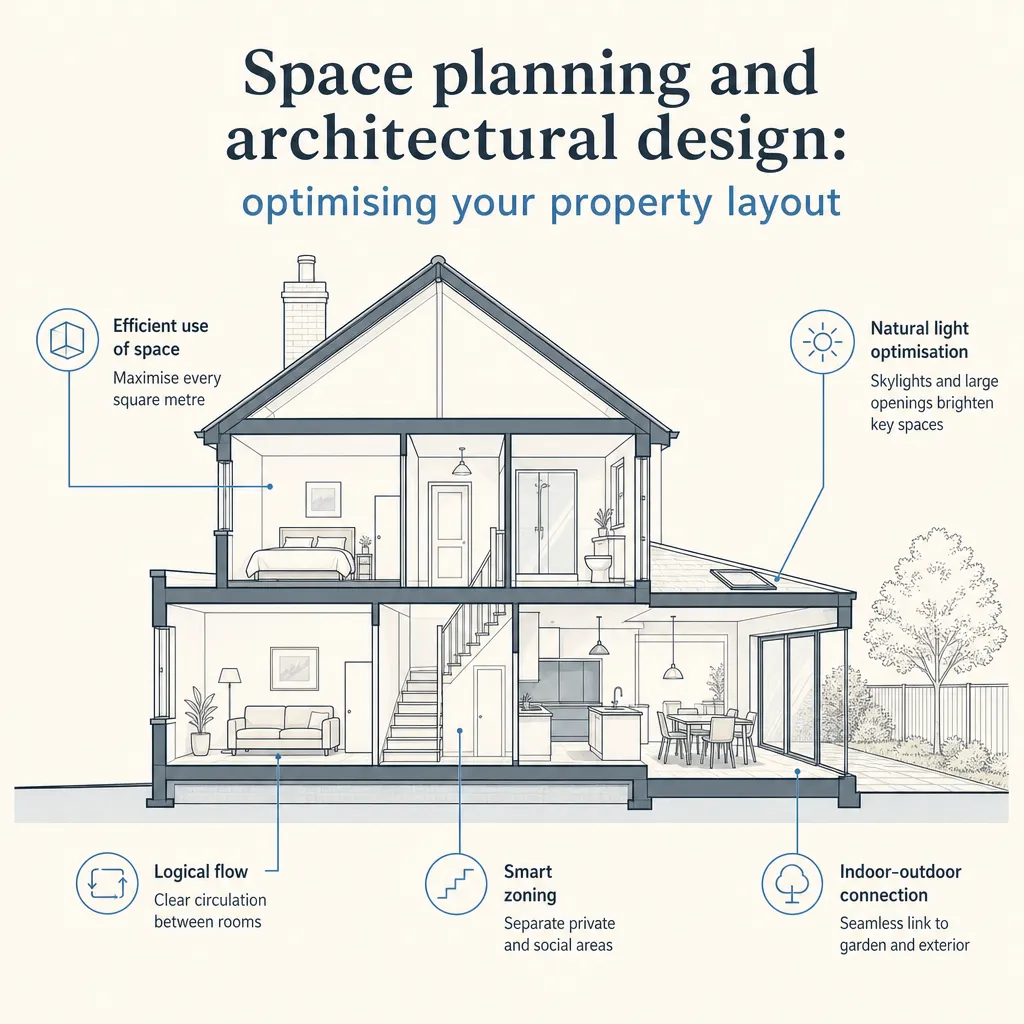
Space planning and architectural design: optimising your property layout
Space planning defines how rooms, circulation routes, and services are arranged within a property to make the best use of available area.
 Planning & Pre-Build
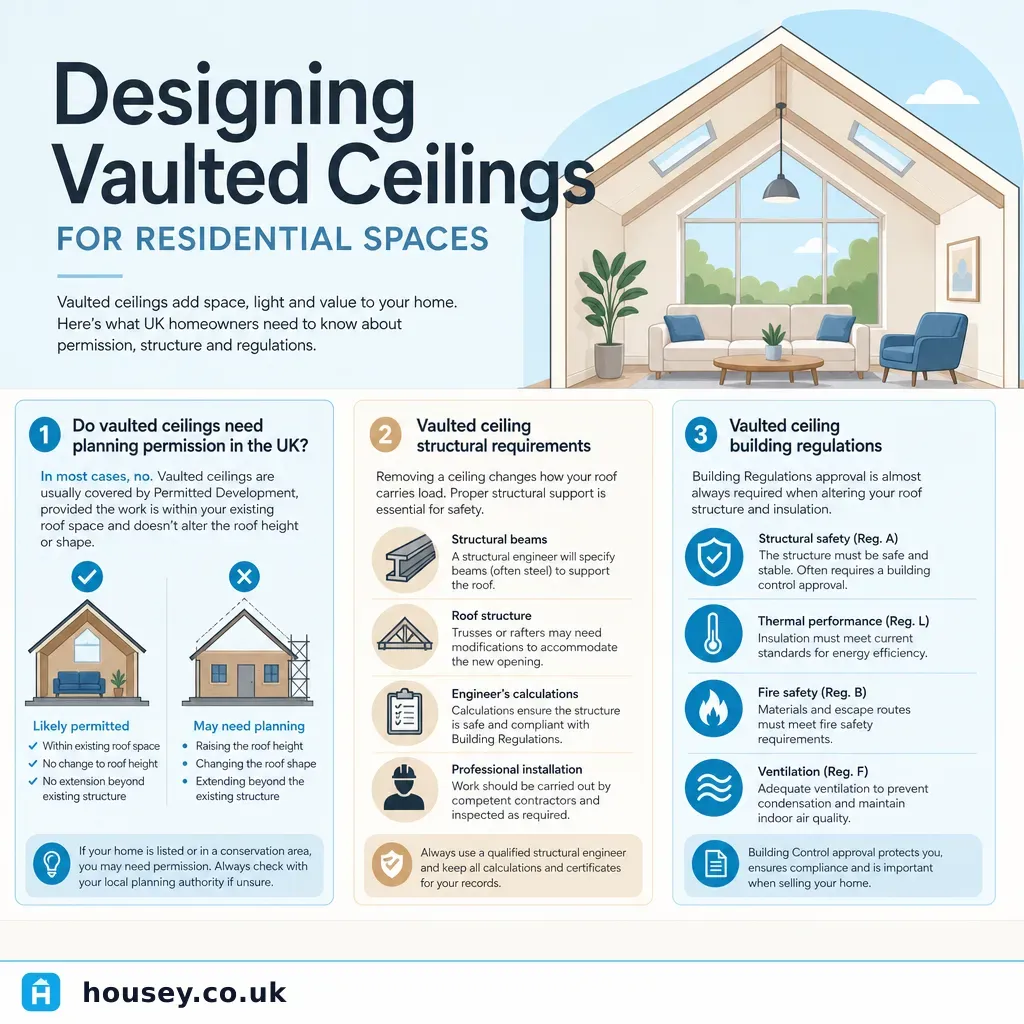
Designing vaulted ceilings for residential spaces
Creating a vaulted ceiling in an existing home involves restructuring the roof timbers that form the structural triangle, which always requires a structural engineer's calculations and Building Regulations approval under Approved Document A.
 Planning & Pre-Build
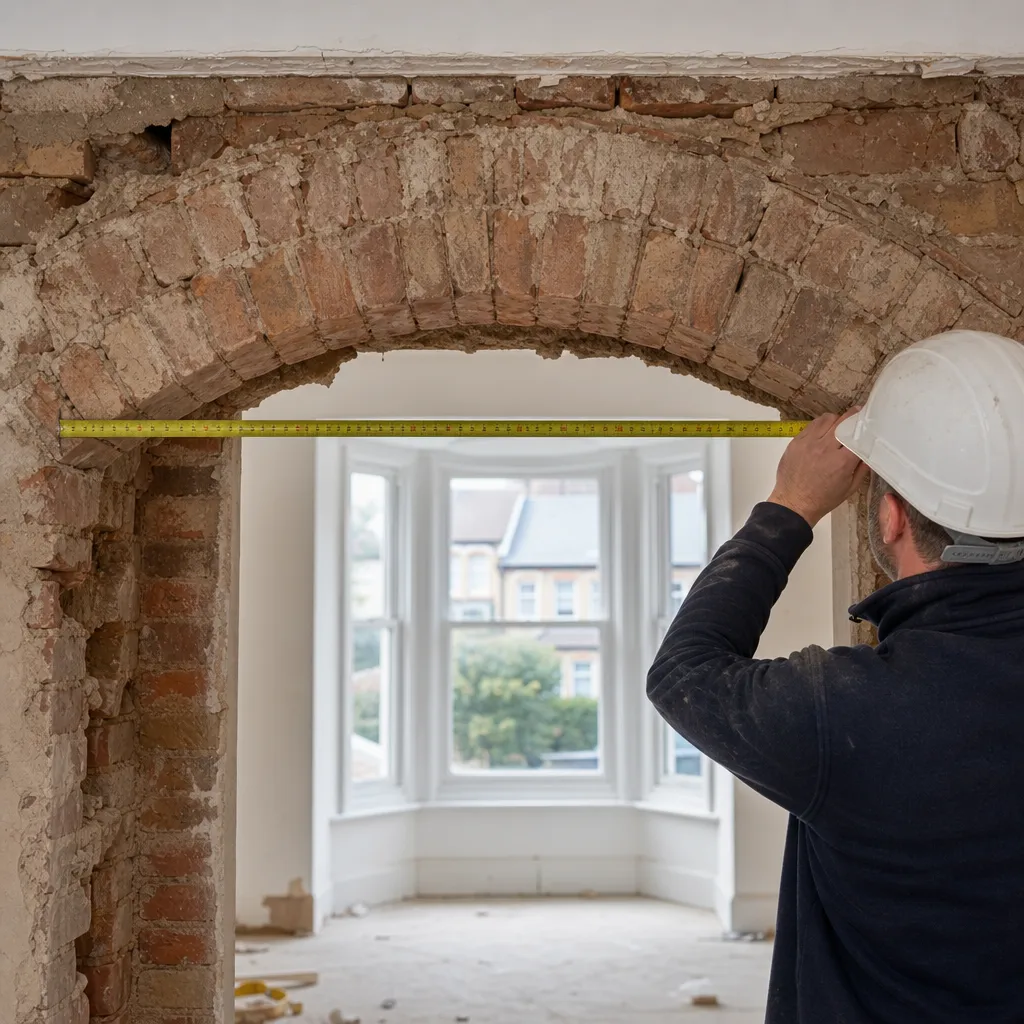
Structural Arching in Walls: Load Distribution and Design
Structural arching occurs when masonry redistributes compressive loads in a triangular or parabolic path around an opening, reducing the load on the lintel below.
 Planning & Pre-Build
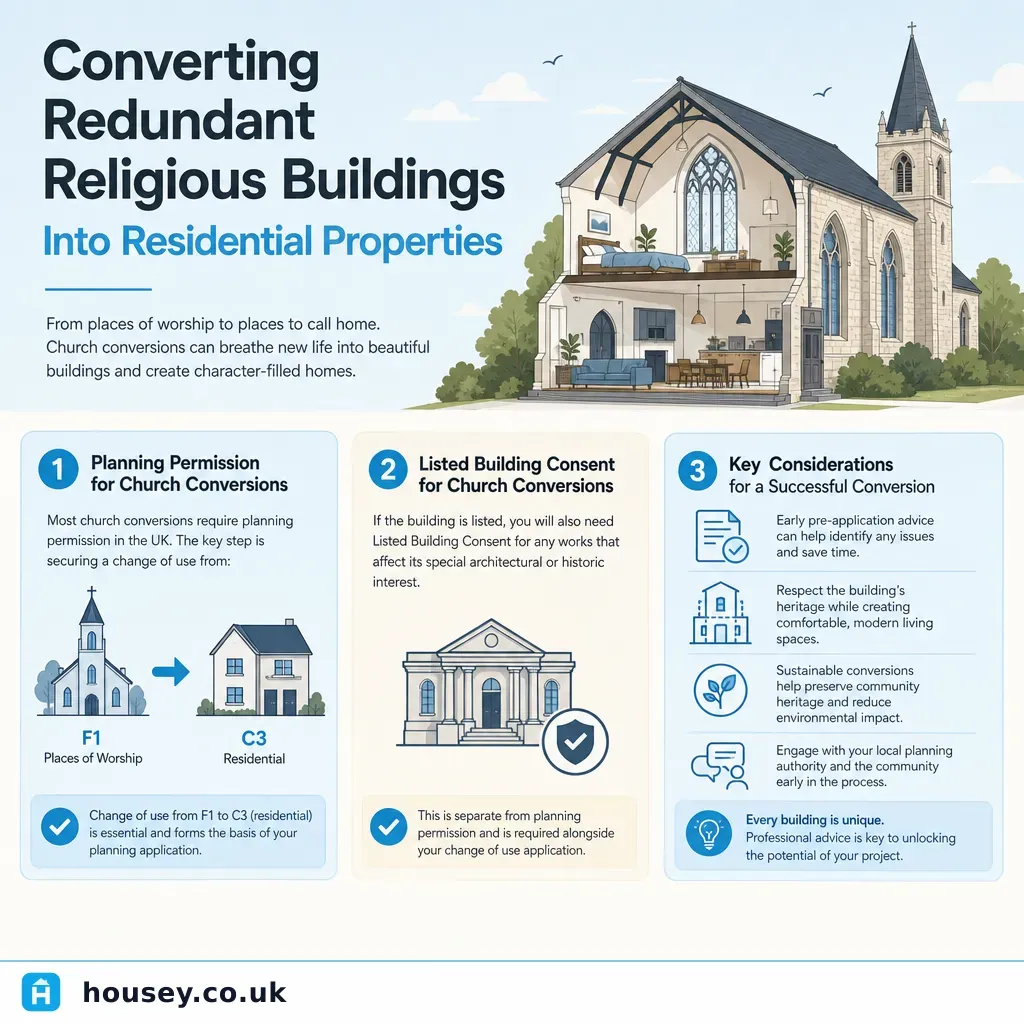
Converting Redundant Religious Buildings Into Residential Properties
Converting a redundant religious building to residential use in the UK requires planning permission for change of use from Use Class F.
 Planning & Pre-Build
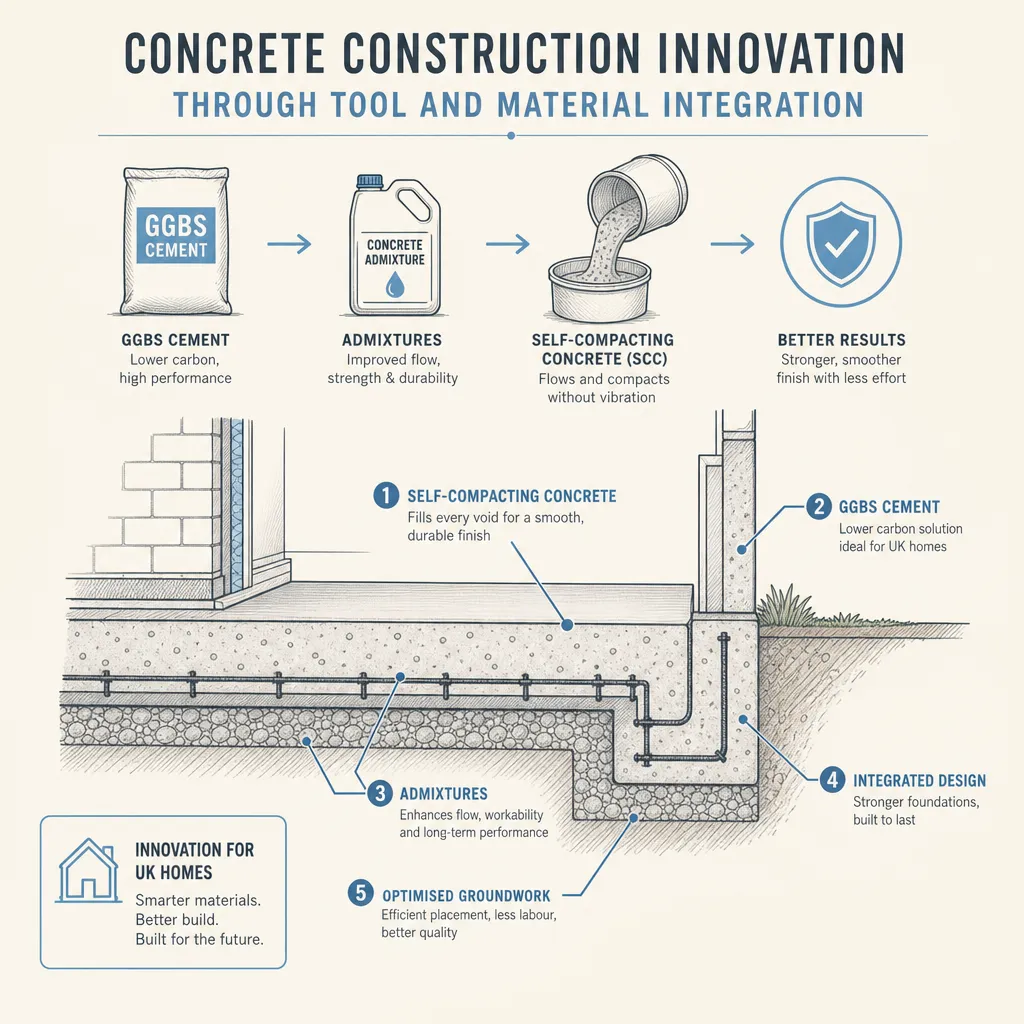
Concrete Construction Innovation Through Tool and Material Integration
Modern concrete mixes — self-compacting, fibre-reinforced, and low-carbon GGBS blends — require specific placement equipment and admixtures to perform correctly.