Concrete Construction Innovation Through Tool and Material Integration
By Housey · Last reviewed 30th of May 2026
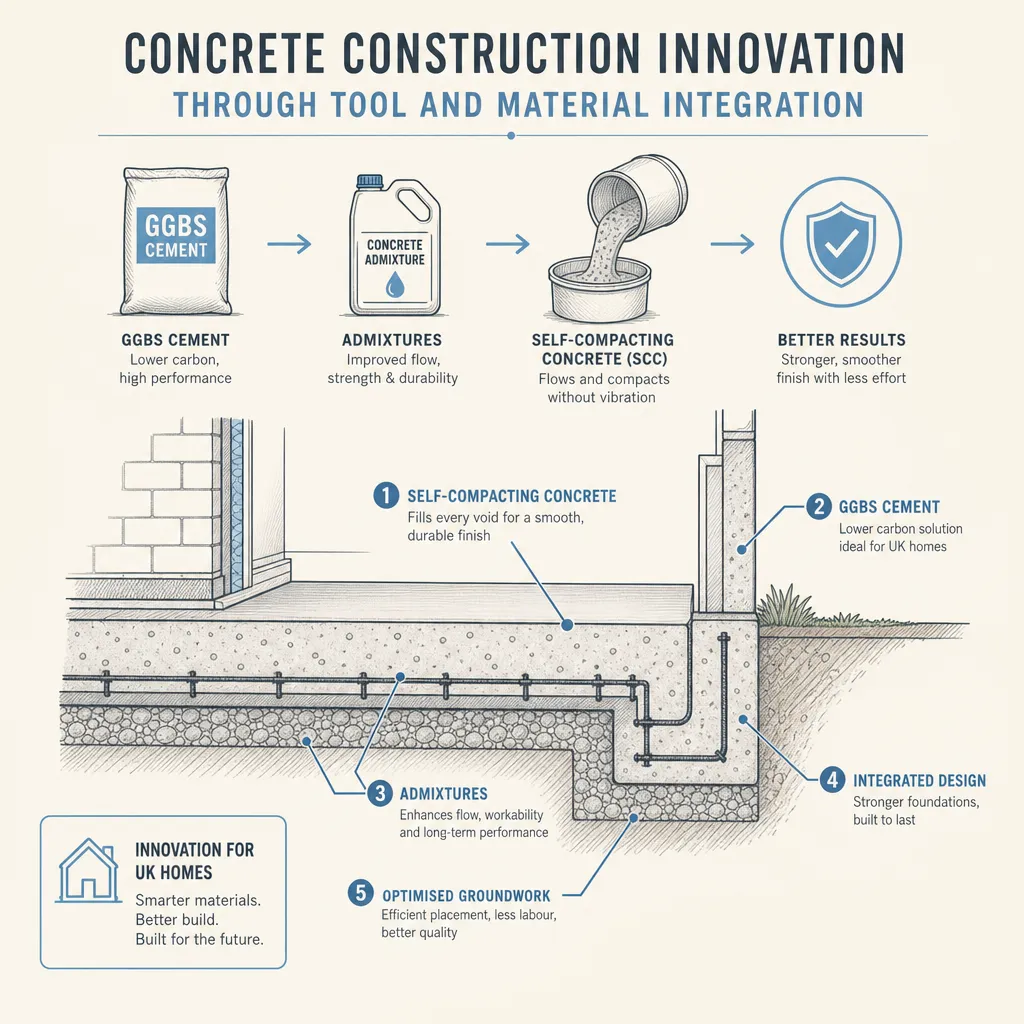
Concrete Construction Innovation Through Tool and Material Integration
When a groundwork contractor arrives on site with the wrong pump for a high-performance concrete mix, the result can be blockages, costly delays, and a pour that falls short of specification. For UK homeowners commissioning groundwork, extensions, retaining walls, or basement structures, understanding how concrete materials and construction equipment must work together is increasingly important — particularly as low-carbon concrete specifications become more common in planning submissions and Building Regulations sign-off.
Key points
- Self-compacting concrete (SCC) achieves full compaction under its own weight; using a poker vibrator with SCC disrupts its flow characteristics and compromises structural performance.
- Concrete mix workability is classified S1–S5 under BS EN 206; pump lines generally require at least S3 (slump 100–150 mm) to prevent blockages.
- Admixtures used on UK construction sites must comply with BS EN 934-2; plasticisers, retarders, and accelerators each change how the mix behaves and what equipment is needed to place it.
- Ground granulated blast-furnace slag (GGBS) can replace up to 70% of Portland cement, reducing embodied carbon by approximately 40–50%, but requires extended curing management — particularly in cold weather.
- Reinforced concrete structures in domestic work must comply with Approved Document A (Structure) and typically require structural engineering input before building control approval.
How concrete mix design affects equipment choice
Not all concrete behaves the same way once it leaves the batching plant. A standard C25/30 mix used for a domestic slab is very different from the self-compacting or fibre-reinforced mixes increasingly specified for retaining walls, raft foundations, or basement tanking systems.
The critical relationship is between slump class — a measure of workability — and the placement method available on site:
Mix type | Classification (BS EN 206) | Typical placement method | Key site consideration |
|---|---|---|---|
Standard structural | Slump class S2–S3 | Skip, pump, or chute | Requires mechanical vibration |
Self-compacting (SCC) | Flow class F5–F6 | Pump or tremie only | No vibration — disrupts mix structure |
Fibre-reinforced (FRC) | Slump class S3–S4 | Pump or direct | Steel or poly fibres can block narrow pump hoses |
GGBS or PFA blend | Slump class S2–S4 | As standard mixes | Slower strength gain; curing period must be extended |
Ultra-high performance (UHPC) | Flow class F6+ | Specialist pump only | Requires specialist contractor and formwork |
Getting this wrong — trying to pump SCC through a line sized for standard concrete, or vibrating a self-compacting mix — wastes material, risks structural defects, and may result in a failed building control inspection.
The role of admixtures in modern concrete
Admixtures are chemical additions that change how concrete behaves during mixing, placing, and curing. They are not additives to rescue a substandard mix — they are engineering tools that allow concrete to be tailored to specific site conditions, pour geometry, and programme requirements.
Common admixture types and their purposes:
- Plasticisers and superplasticisers: Improve workability without adding water, preserving the water/cement ratio that governs compressive strength. Widely used in pump mixes to prevent line blockages without compromising performance.
- Retarders: Slow the setting time — valuable for long pours, hot summer conditions, or when pump lines are extended and transit times increase.
- Accelerators: Speed up early strength gain — particularly useful in cold UK winters when frost protection of fresh concrete is critical to achieving specification.
- Air-entraining agents: Introduce microscopic air bubbles, improving freeze-thaw resistance for exposed horizontal surfaces such as driveways, paths, and external slabs.
- Waterproofing admixtures: Used in basement and retaining wall construction; must be integrated into the mix design from the outset, not applied as a surface treatment retrospectively.
Under the Control of Substances Hazardous to Health (COSHH) Regulations 2002, contractors are required to assess the risks of admixtures in the workplace. Some products carry specific handling requirements — a competent contractor should provide a method statement covering any specialist admixture used on your project.
Low-carbon concrete in UK projects
Concrete is one of the largest contributors to a building's embodied carbon footprint. UK homeowners and their contractors now have access to practical low-carbon alternatives that are widely available from ready-mix plants without significant cost premium.
GGBS (Ground Granulated Blast-furnace Slag) is a by-product of iron production used to replace a proportion of Portland cement. A 50% GGBS blend can reduce embodied carbon by approximately 40–50% compared with a standard CEM I mix. Strength gain is slower, so curing management is important, particularly during autumn and winter months.
PFA (Pulverised Fuel Ash) is a by-product of coal combustion that can replace approximately 35% of cement in most domestic mixes. PFA improves workability and long-term durability, particularly in sulphate-aggressive ground conditions common in certain UK regions.
Both materials are covered by BS 8500 (Complementary British Standard to BS EN 206-1), which is the reference document for specifying concrete in the UK. Where embodied carbon is a planning requirement or a condition of your design and access statement, your structural engineer or civil engineer should confirm the appropriate blend and document it in the specification.
Which professional do you need?
For straightforward domestic groundwork, a contractor typically specifies concrete in line with structural drawings. For basements, retaining walls, or any load-bearing element where ground conditions are uncertain, independent professional input adds significant protection against defects and building control delays.
Project type | Professional typically needed |
|---|---|
Garden shed base or standard domestic slab | Groundworker with relevant experience |
Extension foundations on known ground | Groundworker following structural engineer's specification |
Retaining wall over approximately 1 m | Structural engineer's specification plus building control notification |
Basement or underground structure | Structural engineer plus specialist waterproofing contractor |
Waterlogged, made-up, or ground close to large trees | Civil or geotechnical engineer before any groundwork commences |
When to get professional help
Most domestic groundwork is straightforward in experienced hands. Seek professional input before work starts if:
- Ground conditions are unknown, waterlogged, made-up, or close to trees with large root systems that may affect bearing capacity.
- The project includes a retaining wall taller than approximately 1 metre.
- A basement, underpinning, or any structure that alters existing drainage patterns is proposed.
- The specification includes high-performance or specialist concrete types the contractor has limited prior experience with.
- Your architect or structural engineer has flagged any site-specific concern in writing.
How Housey can help
Housey connects UK homeowners with vetted civil engineers who can specify the right concrete mix and structural solution for your project, as well as experienced groundworkers who understand how to place and finish modern concrete correctly and to specification.
Frequently asked questions
What is the difference between C25/30 and C30/37 concrete?
The notation refers to characteristic compressive strength: the first figure is the cylinder strength in MPa, the second the cube strength. C25/30 is common for domestic slabs and foundations; C30/37 suits retaining walls or ground-bearing slabs with vehicle loading. Your structural engineer or building control inspector should confirm the minimum class required for your specific project.
Can self-compacting concrete be used on a domestic project?
Yes. SCC is increasingly available from UK ready-mix plants and suits complex or heavily reinforced pours where vibration is impractical. It requires formwork capable of containing a more fluid mix and a pump line of the correct diameter. Always discuss suitability with your contractor and ready-mix supplier before specifying SCC, as it behaves very differently to standard mixes on site.
How long should concrete cure before loading?
For standard CEM I mixes, indicative curing periods are 24–48 hours before light foot traffic and seven days before significant loading, per BS EN 13670 guidance. GGBS and PFA blends need longer curing, especially in cold weather. Your contractor should specify a curing regime in their method statement and building control may ask to see it.
Does low-carbon concrete cost more?
GGBS blends are often cost-neutral or marginally cheaper per cubic metre than equivalent Portland cement mixes, depending on ready-mix plant location and local supply. PFA blends are similarly priced. Specialist mixes such as ultra-high performance concrete (UHPC) carry a significant premium and are rarely warranted in domestic groundwork. Ask your supplier for a like-for-like comparison.
Sources and further reading
- BS EN 206 Concrete — Specification, performance, production and conformity — BSI Group
- Approved Document A: Structure — GOV.UK
- Concrete Centre — low-carbon concrete guidance — The Concrete Centre / MPA
- COSHH guidance for construction — Health and Safety Executive
Useful next reads
 Planning & Pre-Build
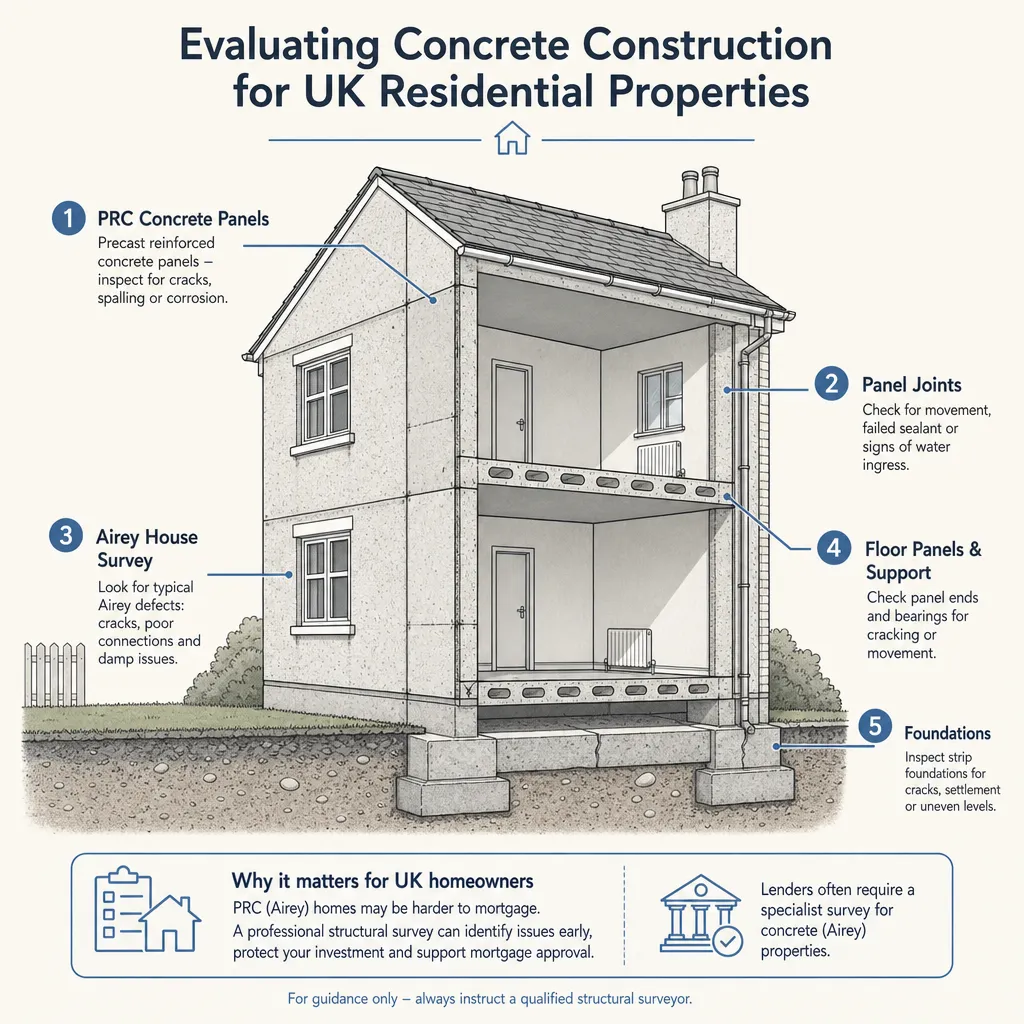
Evaluating Concrete Construction for UK Residential Properties
Concrete construction in UK homes covers post-war non-traditional housing — such as Airey and Wimpey No-Fines properties — typically classified as non-standard by mortgage lenders, and modern systems including ICF and block cavity wall, which are generally standard.
 Planning & Pre-Build
Building a Custom Home: Essential Questions Before Breaking Ground
Building a custom home in the UK requires planning permission, separate Building Regulations approval, and a professional team typically including an architect or architectural technologist, structural engineer, and building control body.
 Planning & Pre-Build
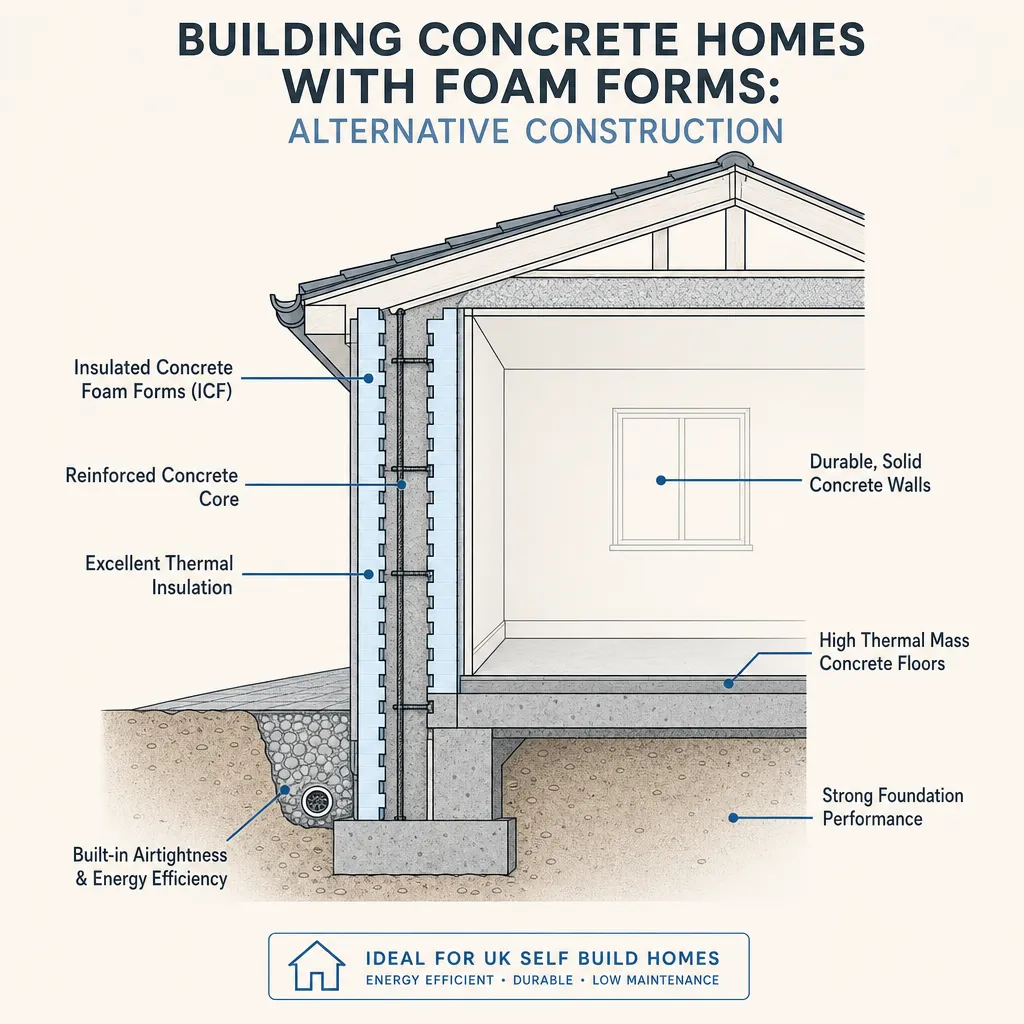
Building Concrete Homes with Foam Forms: Alternative Construction
Insulated concrete formwork (ICF) uses lightweight EPS foam blocks as permanent shuttering filled with reinforced concrete to form walls.
 Planning & Pre-Build
Construction Plant and Equipment: What Homeowners Should Know
Construction plant covers scaffolding, skips, excavators, cranes, and other site machinery.
 Planning & Pre-Build
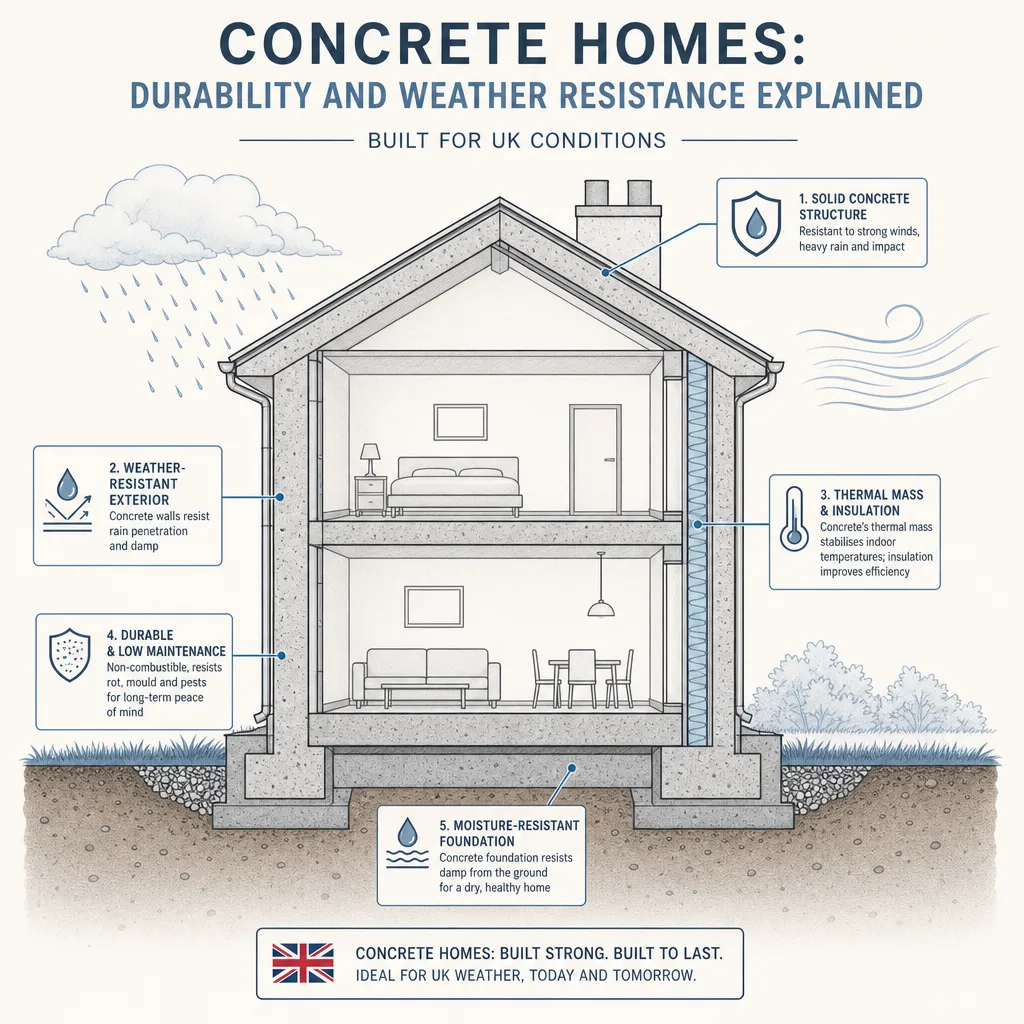
Concrete Homes: Durability and Weather Resistance Explained
Concrete homes can be highly durable and weather-resistant when correctly specified and built.