Building a Fireplace: Installation, Building Regulations, and Project Costs
By Housey · Last reviewed 5th of May 2026
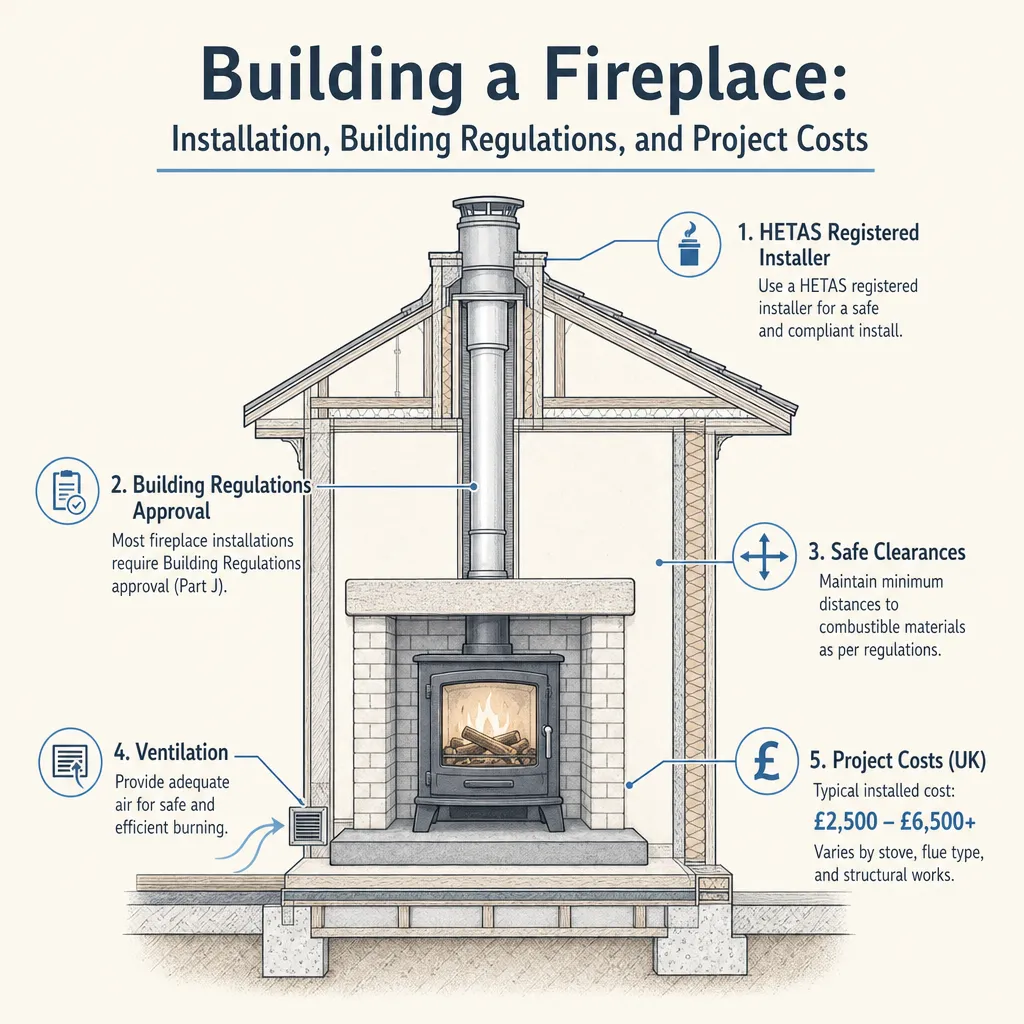
Building a Fireplace: Installation, Building Regulations, and Project Costs
Fireplaces and wood-burning stoves are among the most sought-after features in UK homes, yet the installation process is more tightly regulated than many homeowners expect. Whether you're opening up an existing chimney breast or installing a completely new flue system, the work falls under several sections of the Building Regulations — making professional installation and formal certification essential before the job is considered complete.
Key points
- Fireplace and solid-fuel appliance installation is notifiable work under Building Regulations Approved Document J (combustion appliances and fuel storage systems).
- A HETAS-registered installer can self-certify under the Competent Person Scheme, issuing a compliance certificate to your local authority and avoiding a separate building control application.
- Solid-fuel and biomass appliances require a carbon monoxide (CO) alarm positioned within 1–3 metres of the appliance at ceiling height — a legal requirement under Part J (2010 edition).
- Hearths for solid-fuel appliances must be at least 840mm × 840mm, constructed from non-combustible material at least 125mm thick beneath the appliance (Approved Document J, Table 1).
- Where no existing chimney is present, a new twin-wall flue system may require structural assessment and, in some cases, planning permission if it alters the property's external appearance.
What types of fireplace can you install?
The right appliance depends on your home's existing structure, fuel preference, budget, and local air quality rules.
Appliance type | Best for | Fuel | Regulatory notes |
|---|---|---|---|
Open fireplace | Period homes with existing chimney | Wood, coal | Requires swept chimney; Part J air supply rules apply |
Inset wood-burning stove | Most UK homes with existing chimney breast | Seasoned wood, smokeless fuel | Notifiable under Part J; HETAS registration recommended |
Freestanding log burner with twin-wall flue | Homes without an existing chimney | Dry wood logs | New flue may affect external appearance; structural checks advised |
Gas fire (decorative or live fuel effect) | Homes without solid-fuel chimney | Gas | Gas Safe registered engineer required |
Electric fire | Any home | Electricity | Not notifiable; no chimney or flue required |
Smoke Control Areas: if your property is in a designated smoke control area — which covers most of urban England and Wales — you must use only DEFRA-approved appliances burning authorised fuels. Check your postcode at the DEFRA Smoke Control Area checker before choosing an appliance.
Building Regulations and compliance routes
Installing a combustion appliance is notifiable under multiple parts of the Building Regulations for England and Wales:
- Approved Document J (Combustion Appliances and Fuel Storage Systems): covers flue sizing, hearth dimensions, air supply, CO alarm positioning, and clearances from combustible materials.
- Approved Document B (Fire Safety): governs fire separation between the chimney breast and adjacent floors, ceilings, and walls.
- Approved Document L (Conservation of Fuel and Power): in newer, more airtight homes, installing a stove may require additional make-up air supply or trickle ventilation to maintain adequate combustion air.
You have two compliance routes:
- HETAS-registered installer: self-certifies under the Competent Person Scheme, notifying the local authority on your behalf and issuing a compliance certificate on completion.
- Building control application: submit a building notice or full plans application to your LABC or an approved inspector before work starts.
An uncertified installation can cause significant problems at the point of sale and may invalidate your buildings insurance. Keep the compliance certificate with your property documents.
Chimney and flue requirements
- Flue diameter must match the manufacturer's specification — typically 150mm or 175mm internal diameter for wood-burning stoves.
- The flue must meet the minimum height requirements in Approved Document J (commonly at least 4.5m above the grate) to ensure adequate draw.
- Existing chimneys must be smoke-tested and swept before a new liner is installed.
- Twin-wall flue systems used where no chimney exists must maintain specified clearances from combustible materials at every penetration through floors, walls, and roof structures.
If your home has no existing chimney and you want a solid-fuel appliance, a structural engineer should assess proposed penetrations through the building fabric before installation begins.
What does fireplace installation cost?
Indicative UK costs, last reviewed 2026-05-05.
Scenario | Indicative cost range |
|---|---|
Stove into existing builder's opening with flue liner | £1,500 – £3,000 |
Opening up a blocked fireplace + new liner + stove | £2,500 – £5,000 |
New twin-wall flue through roof + stove | £3,000 – £7,000+ |
Gas fire installation (Gas Safe registered) | £800 – £2,500 |
Structural chimney breast repair or rebuild | £3,000 – £15,000+ |
Costs rise sharply if asbestos is present in older chimney linings, if significant structural work is required, or if the property is listed or in a conservation area. Always obtain at least three itemised quotes and ask each installer to confirm their HETAS or Gas Safe registration number before accepting.
Homeowner checklist before installation
Red flags to watch for
- Installer cannot provide a HETAS or Gas Safe registration number on request.
- No compliance certificate mentioned in the written quotation.
- Flue sizing in the quote does not match the manufacturer's appliance specification.
- No smoke or pressure test of the existing chimney proposed before lining work.
- CO alarm omitted from the scope of works.
- Any suggestion that Building Regulations notification is not required for solid-fuel appliance installation.
Important limitations
This article provides general information about fireplace installation in England and Wales. Building Regulations requirements, local air quality rules, structural considerations, and listed building or conservation area consents vary significantly by property and location. This article is not a substitute for advice from a HETAS-registered installer, Gas Safe engineer, structural engineer, or local authority building control department. Rules in Scotland and Northern Ireland differ — refer to the relevant national technical standards if your property is outside England and Wales.
What to ask a qualified professional
- Are you HETAS-registered (solid fuel) or Gas Safe registered (gas), and can I verify your registration number before work starts?
- Will you self-certify under the Competent Person Scheme, or must I apply for building control approval separately?
- Does the existing chimney need relining, repointing, or a structural assessment before a new appliance can be fitted?
- Is my property in a Smoke Control Area, and is this appliance DEFRA-approved for that use?
- What flue diameter and minimum height are required for this appliance, and does my chimney meet those requirements?
- Where will the CO alarm be positioned, and to what standard does it comply?
- When will the compliance certificate be issued, and to whom will it be sent?
When to get professional help
The combustion system, flue liner, and hearth must be installed by a competent registered professional — these are not areas for DIY. Seek immediate professional advice if:
- You notice cracks in the chimney breast, bulging plaster above the fireplace, or visible movement in the chimney stack — these may indicate structural issues requiring engineer assessment.
- A chimney sweep reports a collapsed or badly damaged flue liner on inspection.
- There is any history of chimney fires or carbon monoxide incidents at the property.
- The property is listed or in a conservation area, where additional consents are likely required before any alteration.
- Asbestos may be present in or around the chimney breast — a real possibility in properties built or altered before 2000.
How Housey can help
If your fireplace project requires structural assessment of the chimney breast, or you need guidance on building control certification, Housey connects you with qualified professionals. Request quotes from structural engineering specialists or building control consultants through the Housey marketplace.
Frequently asked questions
Do I need planning permission to install a fireplace?
Installing a fireplace or stove inside your home typically does not require planning permission. If you are adding a new external flue or chimney that alters the property's appearance — particularly on a listed building or in a conservation area — you may need prior approval or listed building consent. Check with your local planning authority before starting any external works.
What is HETAS registration, and is it legally required?
HETAS is the UK's official body for solid fuel and biomass heating. A HETAS-registered installer self-certifies their installation under the Competent Person Scheme, notifying the local authority on your behalf. It is not a legal requirement, but without one you must apply for separate building control approval and have the work inspected before it is covered up. Failing to certify a notifiable installation is a common compliance failure.
Can I install a wood-burning stove in a smoke control area?
Yes, but only using a DEFRA-approved appliance burning authorised fuels — certified smokeless fuel or kiln-dried wood. Burning unauthorised fuel in a smoke control area is an offence under the Clean Air Act 1993. Check your postcode status with the DEFRA Smoke Control Area checker before choosing an appliance or fuel type.
How long does a fireplace installation take?
A straightforward stove installation into an existing builder's opening with a new flue liner typically takes one to two days. Complex projects involving a new twin-wall flue, structural work, or chimney rebuilding can take several days to several weeks. Building control inspections may extend the overall programme.
What maintenance does a fireplace or stove require?
Chimneys serving solid-fuel appliances should be swept at least once a year — twice if used heavily. Firebricks, rope seals, and door glass should be checked annually. CO alarms should be tested monthly and replaced per the manufacturer's guidance, typically every seven to ten years.
Sources and further reading
- Approved Document J: Combustion Appliances and Fuel Storage Systems — GOV.UK / MHCLG
- HETAS: the official body for solid fuel and biomass heating — HETAS Ltd
- DEFRA Smoke Control Area checker — DEFRA
- Gas Safe Register: find a registered engineer — Gas Safe Register
- Clean Air Act 1993 — legislation.gov.uk
Useful next reads
 Improvement & Build
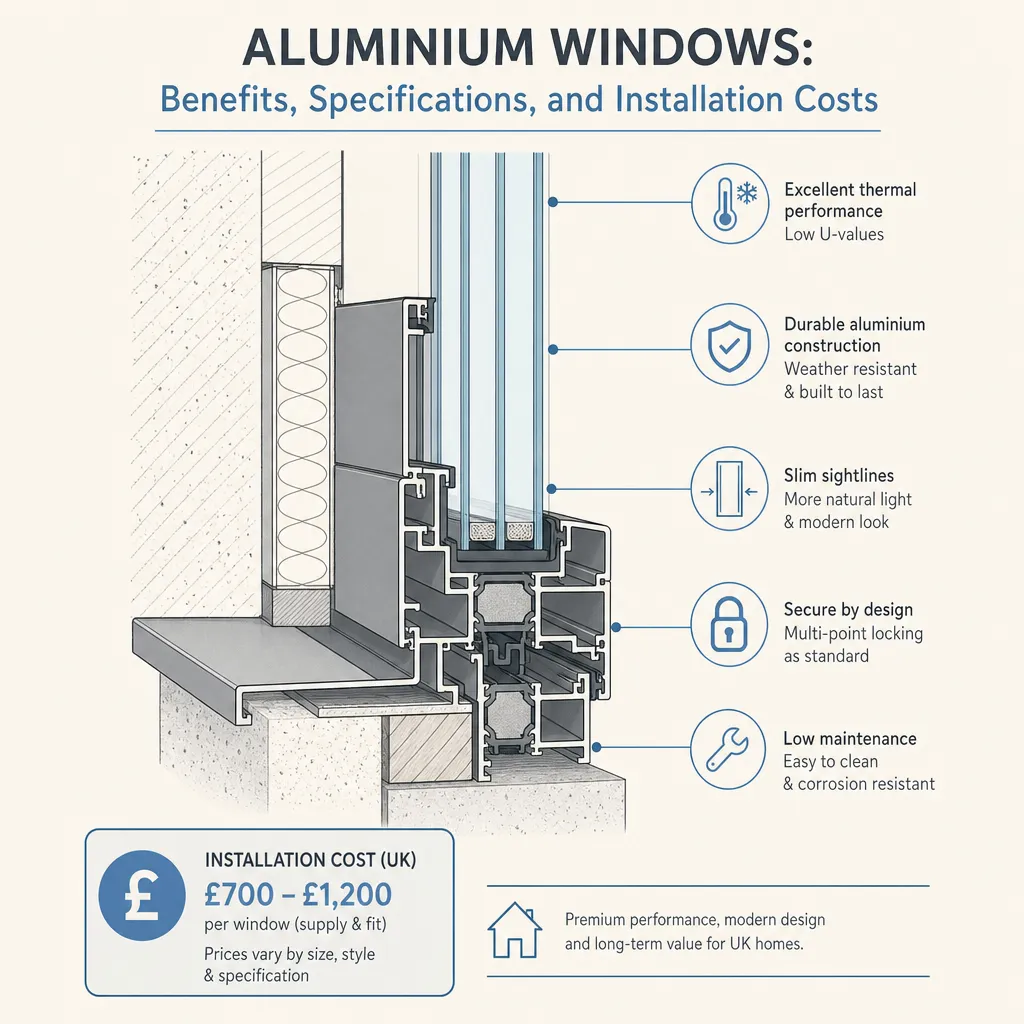
Aluminium Windows: Benefits, Specifications, and Installation Costs
Aluminium windows typically cost £600–£1,800 per window installed in the UK, depending on size and specification.
 Improvement & Build
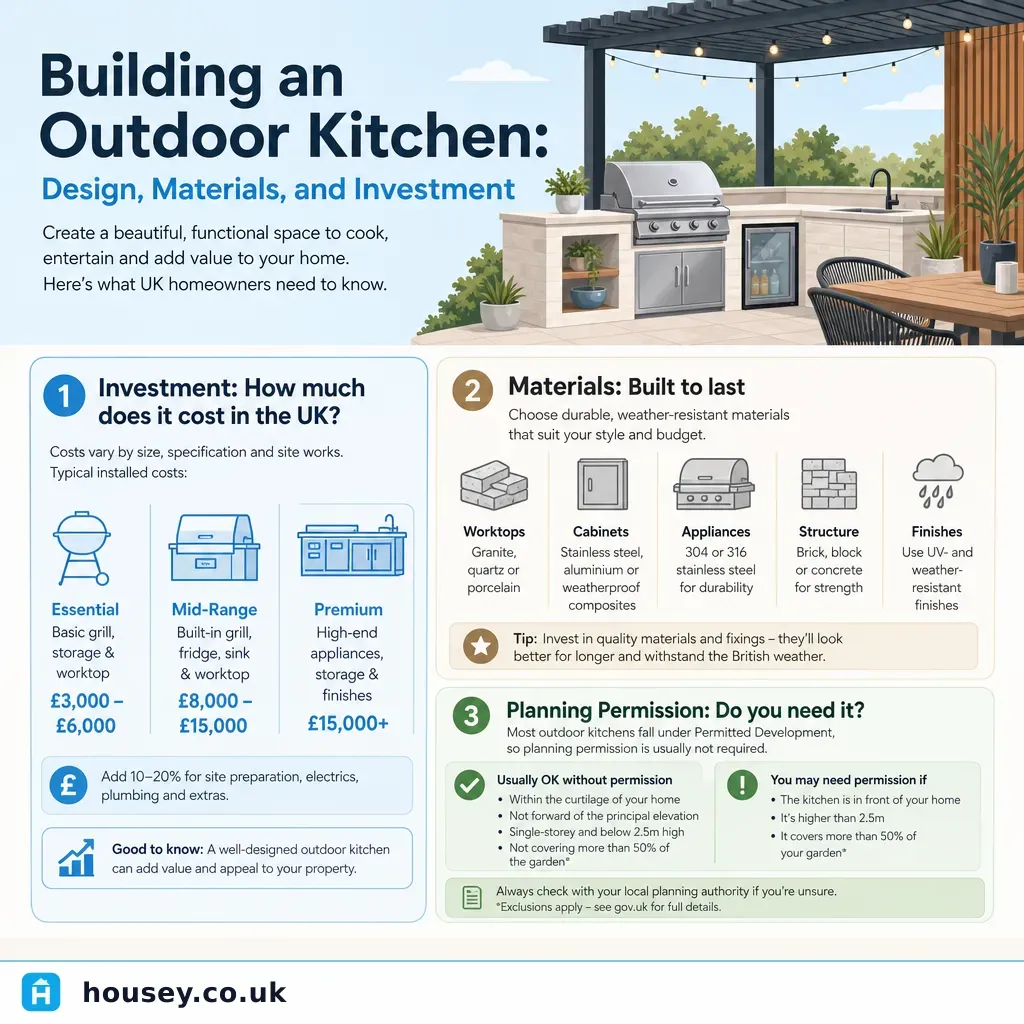
Building an Outdoor Kitchen: Design, Materials, and Investment
Building an outdoor kitchen in the UK costs roughly £3,000–£25,000 depending on size and materials.
 Improvement & Build
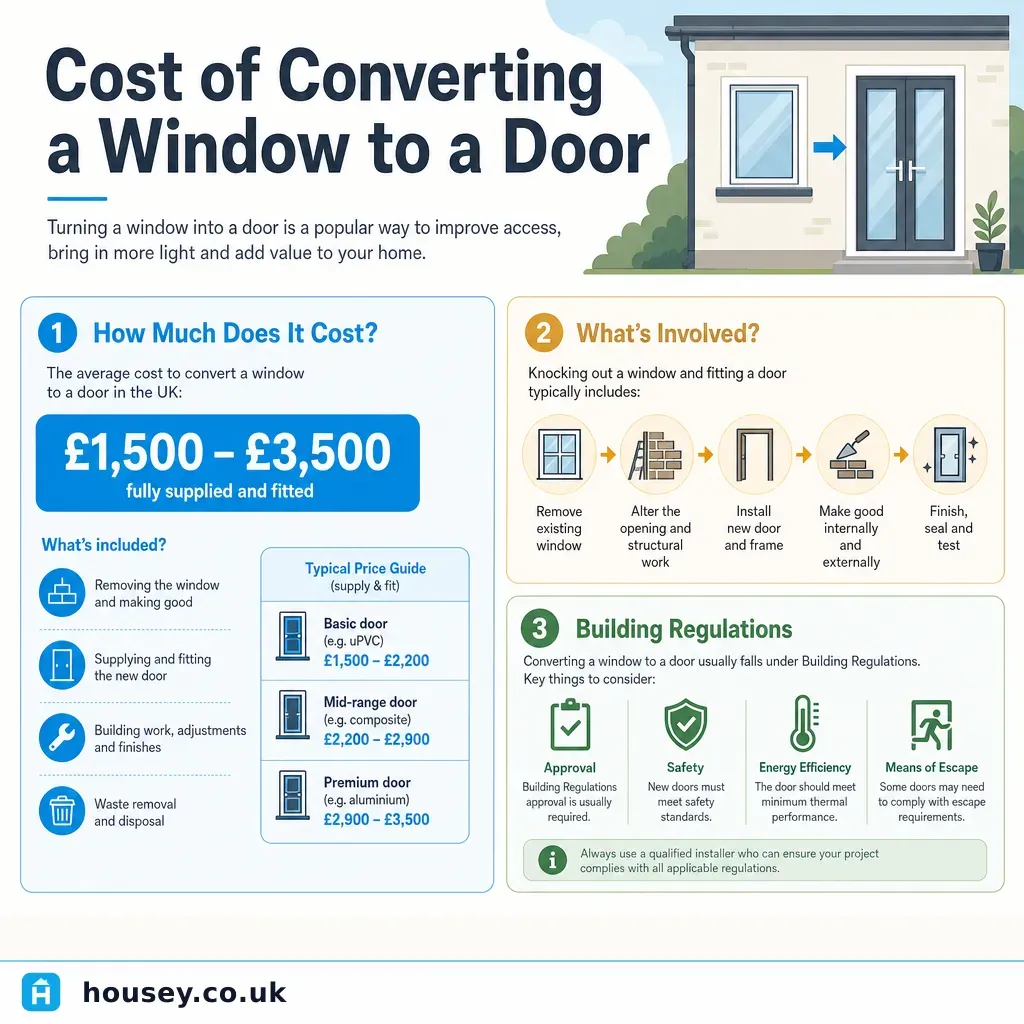
Cost of converting a window to a door
Converting a window to a door in the UK typically costs £1,500–£5,000 or more, depending on wall construction (cavity, solid, or timber frame), the type of door fitted, and whether a new or enlarged lintel is required.
 Improvement & Build
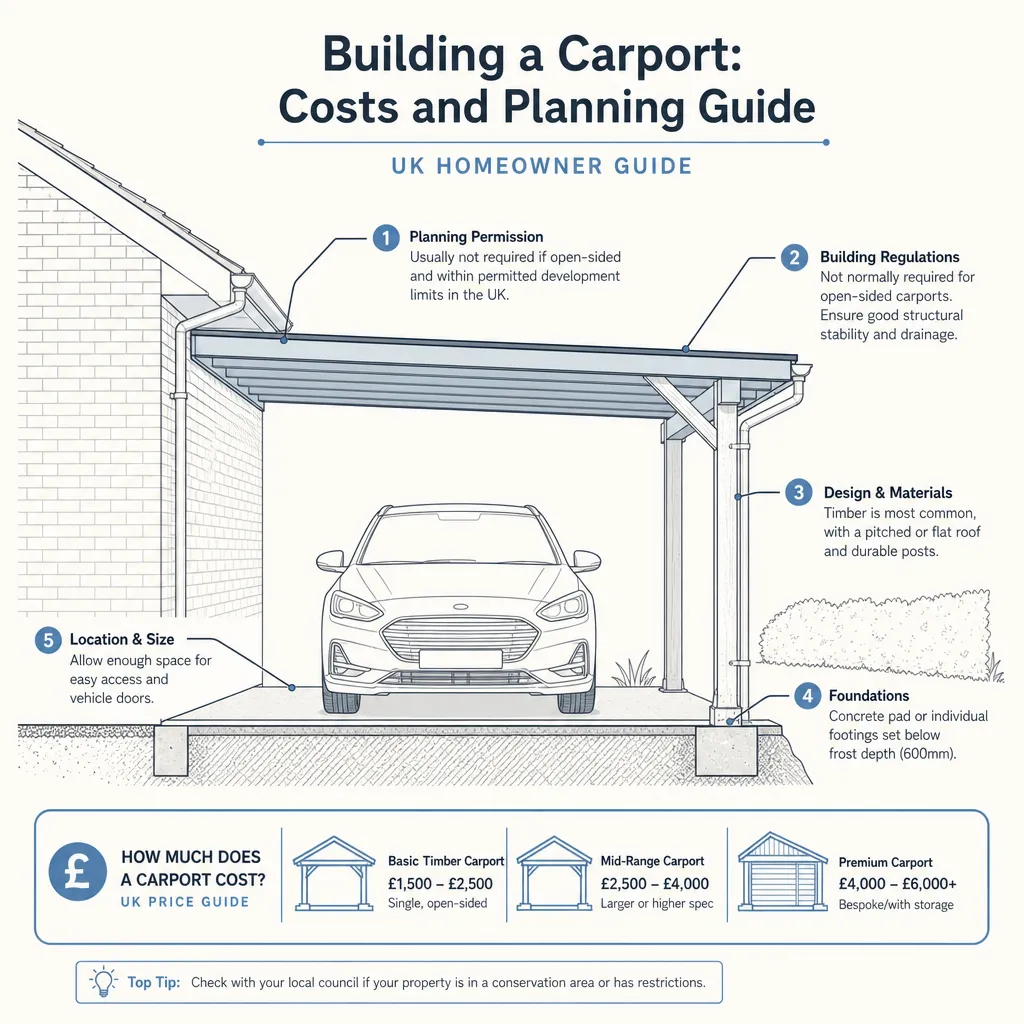
Building a Carport: Costs and Planning Guide
A single-bay carport in the UK typically costs £3,000–£12,000 installed, depending on material and groundworks.
 Improvement & Build
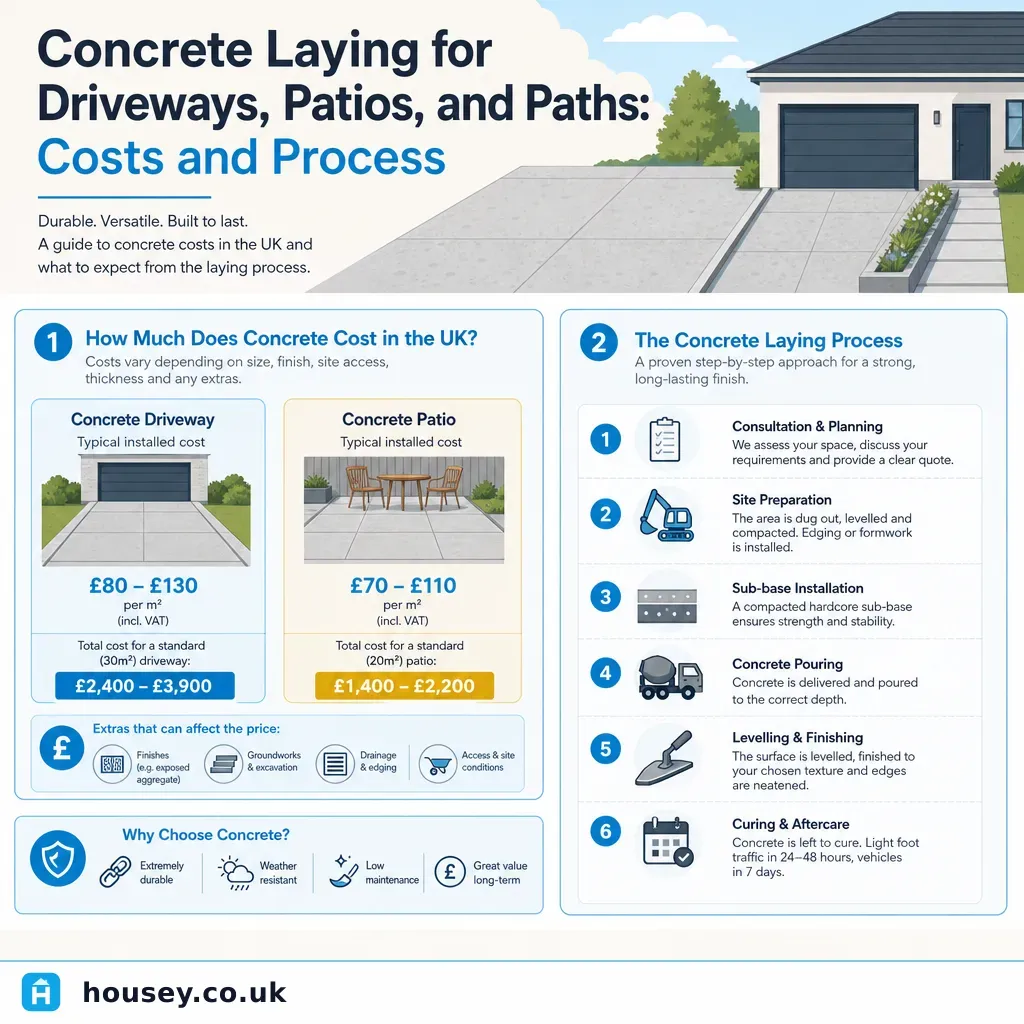
Concrete Laying for Driveways, Patios, and Paths: Costs and Process
Concrete laying for a UK driveway typically costs £65–£110 per square metre, including sub-base, reinforcement, formwork, and finishing.