Building a Log Cabin: Construction Methods, Materials, and Costs
By Housey · Last reviewed 5th of May 2026
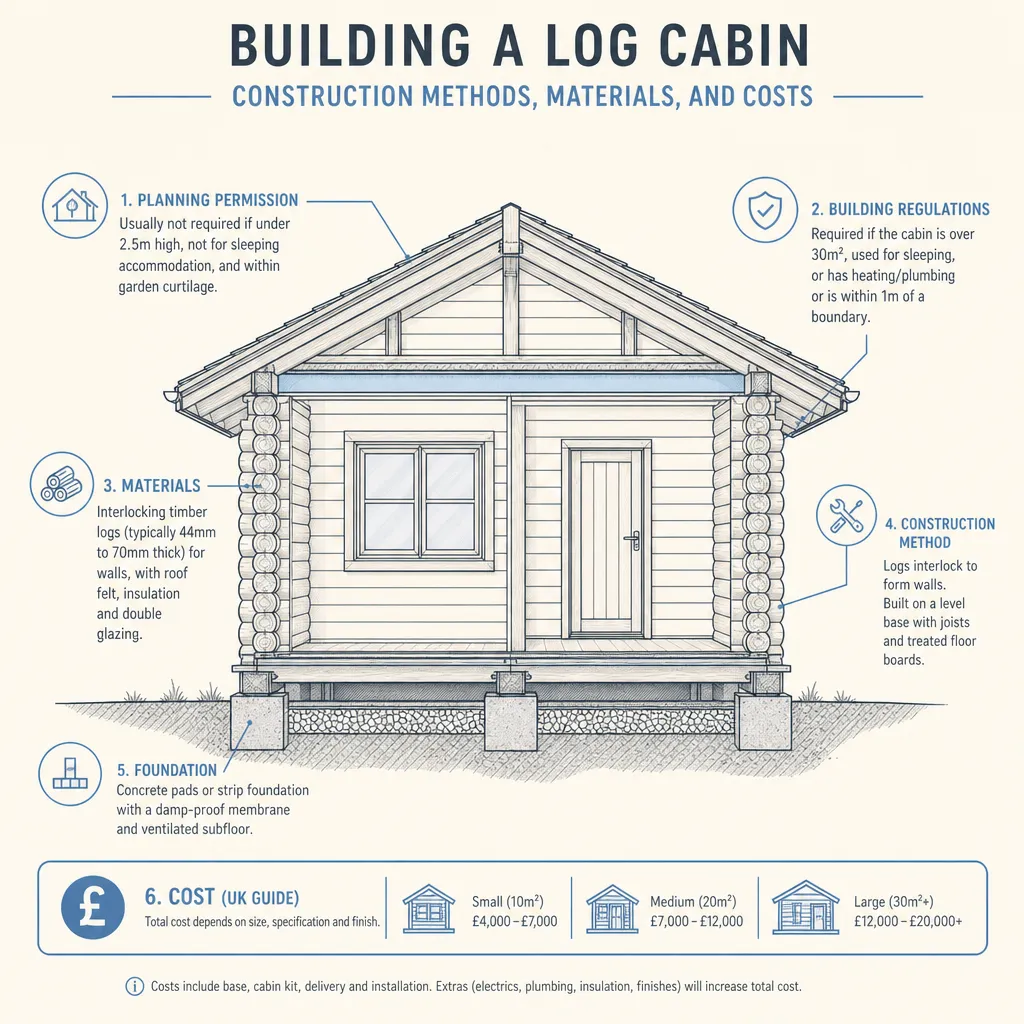
Building a Log Cabin: Construction Methods, Materials, and Costs
Log cabins are increasingly popular in the UK for use as garden offices, annexes, holiday lets, and primary dwellings, yet the rules governing their construction vary considerably depending on how and where they will be used. Whether you are planning a simple garden outbuilding or a full habitable home, the choice of construction method, materials, and planning route will shape both the project's cost and its long-term performance in the UK's damp, temperate climate.
Key points
- Log cabins intended as habitable dwellings require full planning permission and Building Regulations approval under the same rules that apply to any new house.
- Garden outbuildings may qualify as permitted development under Schedule 2, Part 1, Class E of the Town and Country Planning (General Permitted Development) (England) Order 2015, subject to conditions on height, footprint, and location.
- Solid-log construction (stacked interlocking logs) and post-and-beam or timber-frame construction with log-effect cladding behave very differently for thermal performance, moisture management, and structural settling.
- Solid log walls require a settling allowance of 1–2 years as the timber dries and shrinks; door frames, window frames, and internal partitions must be designed to accommodate this movement.
- Indicative costs for a kit-built habitable log cabin (supply and erection only) range from approximately £800–£2,000 per sq m, with groundworks, utilities connections, and internal fit-out additional — indicative UK costs, last reviewed 2026-05-05.
Do you need planning permission for a log cabin?
The answer depends primarily on how the cabin will be used and where it is located. Use this decision tree as a starting point — it does not replace formal advice from your Local Planning Authority (LPA).
Decision tree: planning permission for a log cabin
- Choose permitted development (no application needed) if: the cabin is a single-storey garden outbuilding with no overnight sleeping use, the eaves height does not exceed 2.5m, the maximum height does not exceed 4m (3m if within 2m of a boundary), it does not cover more than 50% of the garden, and it is not located forward of the principal elevation.
- Apply for full planning permission if: the cabin includes sleeping accommodation, a kitchen, a bathroom, or could be used as an independent dwelling; or if the footprint or height exceeds the permitted development thresholds above.
- Check with the LPA first if: the property is in a conservation area, National Park, or Area of Outstanding Natural Beauty — permitted development rights are often restricted or removed in these locations.
- Always apply for a Certificate of Lawful Development if: you are uncertain whether the proposal qualifies as permitted development, or if you intend to sell the property in future and want documented confirmation of lawfulness.
- For a primary dwelling: full planning permission is always required, regardless of construction method.
Construction methods compared
Method | How it works | Thermal performance | Settling | Best suited to |
|---|---|---|---|---|
Solid log (stacked) | Horizontal logs interlocked at corners; the log wall is the structure | Moderate — log mass helps, but solid logs rarely meet Part L U-values alone | Yes — 1–2 years | Traditional aesthetic; holiday cabins; mild-climate use |
Post-and-beam with log cladding | Structural timber frame; log-effect boards fixed externally | Good — insulated cavity achievable; more control over U-value | Minimal | Year-round habitable use; Part L compliance |
SIP panel with log cladding | Structural Insulated Panels as shell; log aesthetic externally | Excellent — high insulation values; airtight construction possible | None | Energy-efficient habitable cabins; straightforward Building Regs compliance |
Prefabricated kit (flat-pack) | Factory-built wall panels shipped and erected on site | Varies considerably by supplier and specification | Varies by method | Fast erection; budget certainty; garden studios |
For a habitable log cabin that must comply with Building Regulations Part L (energy efficiency), a solid-log wall alone will rarely achieve the required U-value of 0.18 W/m²K for external walls in England. You will typically need additional insulation — either as an internal lining or by choosing a post-and-beam or SIP construction method from the outset.
What does a log cabin cost to build in the UK?
Costs vary significantly depending on whether the cabin is a simple garden structure or a fully habitable dwelling.
Indicative UK costs, last reviewed 2026-05-05:
Type | Indicative cost range |
|---|---|
Basic garden cabin (kit, self-erect, no insulation) | £5,000–£25,000 total |
Insulated garden office or studio (kit plus erection) | £15,000–£60,000 total |
Habitable log cabin (kit supply and erection only) | £800–£2,000 per sq m |
Habitable log cabin (full turnkey including groundworks and fit-out) | £1,500–£3,500 per sq m |
Source: figures derived from UK timber-frame and log-cabin supplier data and self-build cost guides; costs are indicative and will vary by supplier, specification, region, and groundworks complexity.
Additional costs to budget for:
- Groundworks and foundations (strip, raft, or screw pile): £8,000–£30,000 or more depending on ground conditions
- Utilities connections (electricity, water, drainage): £5,000–£30,000+
- Planning application fees: £578 for a new dwelling in England (April 2026)
- Building Regulations fees: varies by local authority or registered building inspector
- Architect or architectural technologist fees where design input is required
- Building control consultant fees for statutory sign-off — building control consultants
Materials: what log cabins are made from
Most UK log cabin kits use Nordic spruce, pine, or larch. Key considerations when choosing materials:
- Timber species: Larch and Douglas fir offer better natural durability for external use than spruce. Hardwoods are occasionally used but are significantly more expensive and heavier to handle.
- Log thickness: For habitable use, solid logs of 70mm are generally insufficient for thermal performance without additional insulation. Logs of 120–200mm offer better thermal mass but still rarely achieve Part L compliance on their own without lining.
- Treatment: Factory pre-treated logs (pressure-impregnated or dip-treated) are preferable to on-site treatment for structural and external use. Check that any treatment is suitable for the intended use and complies with UK REACH regulations.
- UK vs. imported timber: Most kit cabins are sourced from Scandinavia, Finland, or Eastern Europe. UK-grown timber (British larch, Scots pine) is available but check structural grading and certification.
- Certification: Ensure any structural timber is UKCA-marked and supplied with a declaration of performance. For sustainability, look for FSC or PEFC certification.
Building Regulations for habitable log cabins
If the log cabin is to be used as a habitable space — as a home, annexe, or regular sleeping accommodation — it must comply with Building Regulations. Key Approved Documents include:
- Part A (Structure): Foundations and frame must be structurally assessed, particularly where log settling is a factor in the design.
- Part B (Fire safety): Escape routes, fire detection, and separation distances from adjacent buildings must be considered.
- Part F (Ventilation): Adequate fresh air and humidity control are particularly important in log buildings where timber moisture content can fluctuate seasonally.
- Part L (Energy efficiency): Wall, roof, and floor U-values must meet the 2021 uplifted standards. Most solid-log constructions will require supplementary insulation.
- Part P (Electrical safety): Any fixed electrical installation must be notified to building control.
Appoint a building control body — either your local authority or a Registered Building Inspector — before work starts. Check whether your proposed log construction method has been assessed under a UK Technical Assessment or European Technical Assessment (ETA) process, as this can simplify the building control approval route.
Important limitations
This article provides general information about log cabin construction in the UK. Planning rules, Building Regulations, and permitted development conditions vary by local authority, property type, and proposed use. Nothing in this article constitutes planning or legal advice. Always consult your Local Planning Authority and appoint a qualified building control body before committing to a project or starting any work.
What to ask a qualified professional
When speaking to building control:
- Does this construction method require a specific structural assessment or ETA documentation?
- How will the settling of solid logs be accounted for during the inspection process?
- What insulation specification will satisfy Part L for this proposed design?
When speaking to a planning officer or consultant:
- Does the proposed cabin fall within permitted development, or will a full application be needed?
- Are there any Article 4 Directions, conservation area restrictions, or local conditions that affect permitted development rights on this plot?
- Would a Certificate of Lawful Development be advisable given the intended use?
When to get professional help
Seek professional advice before committing to a log cabin project if:
- The cabin will be used for overnight accommodation, as a residential annexe, or as a primary dwelling
- The site is in a conservation area, National Park, Area of Outstanding Natural Beauty, or within the curtilage of a listed building
- The proposed footprint or height is close to or exceeds permitted development thresholds
- Unusual ground conditions (sloping site, high water table, shrinkable clay) are present
- You intend to connect to mains utilities or install fixed electrical or gas appliances
How Housey can help
If your log cabin project requires Building Regulations approval — whether for a garden annexe or a full habitable home — Housey can help you request quotes from building control consultants who can advise on compliance requirements and manage the statutory sign-off process from commencement to completion certificate.
Frequently asked questions
Does a log cabin in the garden need planning permission?
A small garden outbuilding may qualify as permitted development if it meets strict conditions on height, footprint, and location. Cabins with sleeping accommodation, kitchens, or bathrooms — or those that could function as an independent dwelling — are much more likely to need full planning permission. Always check with your Local Planning Authority or apply for a Certificate of Lawful Development if you are unsure.
How long does a log cabin last?
A well-maintained log cabin built from durable species such as larch, Douglas fir, or pressure-treated pine can last 50–80 years or more. Regular maintenance — re-treating external surfaces every 2–5 years, ensuring good drainage away from the base, and checking for moisture ingress at joints — is essential for long-term performance.
Can a log cabin be a permanent home in the UK?
Yes, but it must obtain full planning permission and comply with all relevant Building Regulations, including energy efficiency (Part L), structural requirements (Part A), and fire safety (Part B). Some mortgage lenders impose restrictions on timber or log construction — check with a specialist mortgage broker before committing to the project.
What foundations does a log cabin need?
A simple garden cabin can often sit on concrete pad foundations or adjustable screw piles. A habitable log cabin will typically need strip or raft foundations designed by a structural engineer, taking account of ground bearing capacity, frost depth, and any settlement characteristics associated with the log construction method.
Is solid log or timber frame better for the UK climate?
Timber frame with an insulated cavity generally performs better in the UK's damp, temperate climate than solid-log construction. It offers more predictable thermal performance, is less susceptible to moisture-related movement, and makes compliance with Building Regulations Part L more straightforward. Solid log gives a more authentic aesthetic and good thermal mass, but requires careful detailing to manage moisture and settling movement.
Sources and further reading
- Planning Portal: Permitted development for outbuildings — Planning Portal / MHCLG
- Building Regulations Approved Documents — GOV.UK / MHCLG
- TRADA: Timber in construction — Timber Research and Development Association
- Energy Saving Trust: Insulation guidance — Energy Saving Trust
- PEFC UK: Sustainable timber certification — PEFC UK
Useful next reads
 Planning & Pre-Build
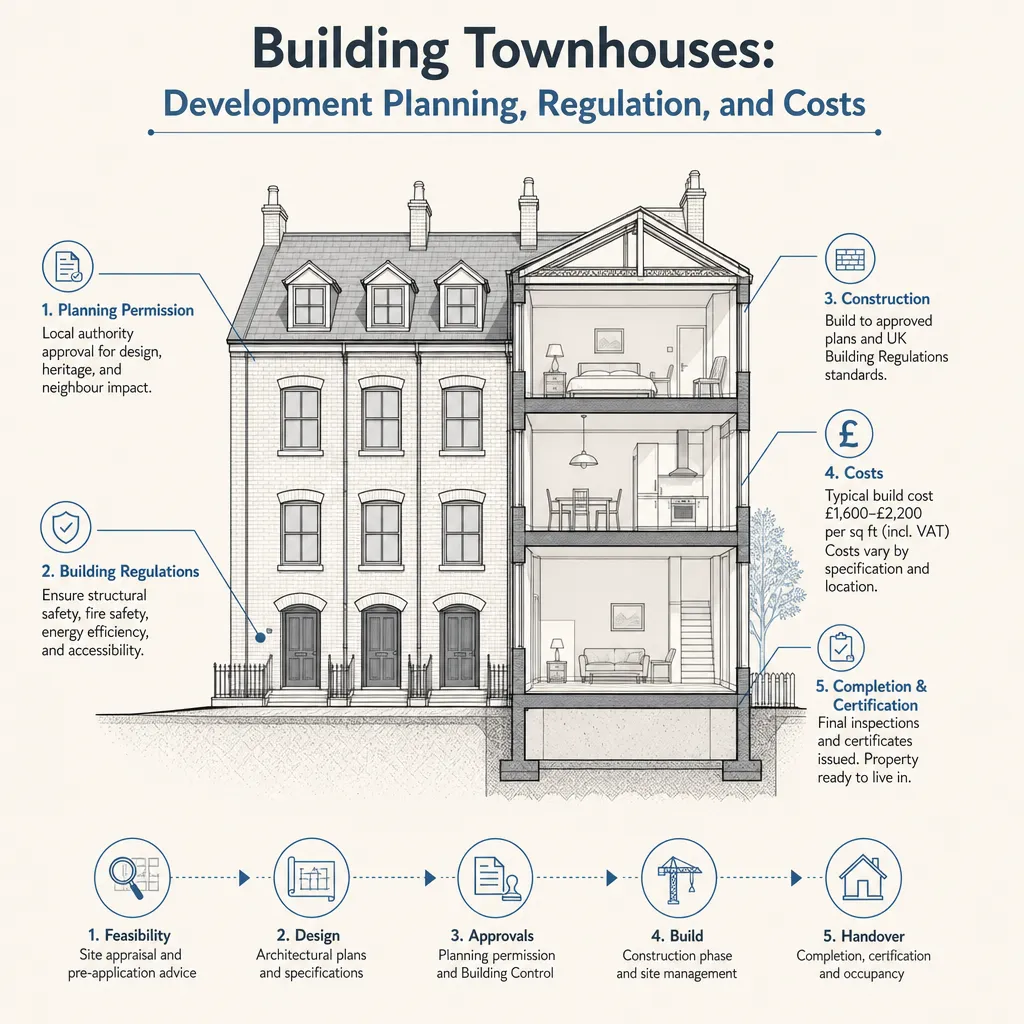
Building Townhouses: Development Planning, Regulation, and Costs
Building townhouses in the UK requires full planning permission for all new dwellings — permitted development rights do not apply to new residential construction.
 Planning & Pre-Build
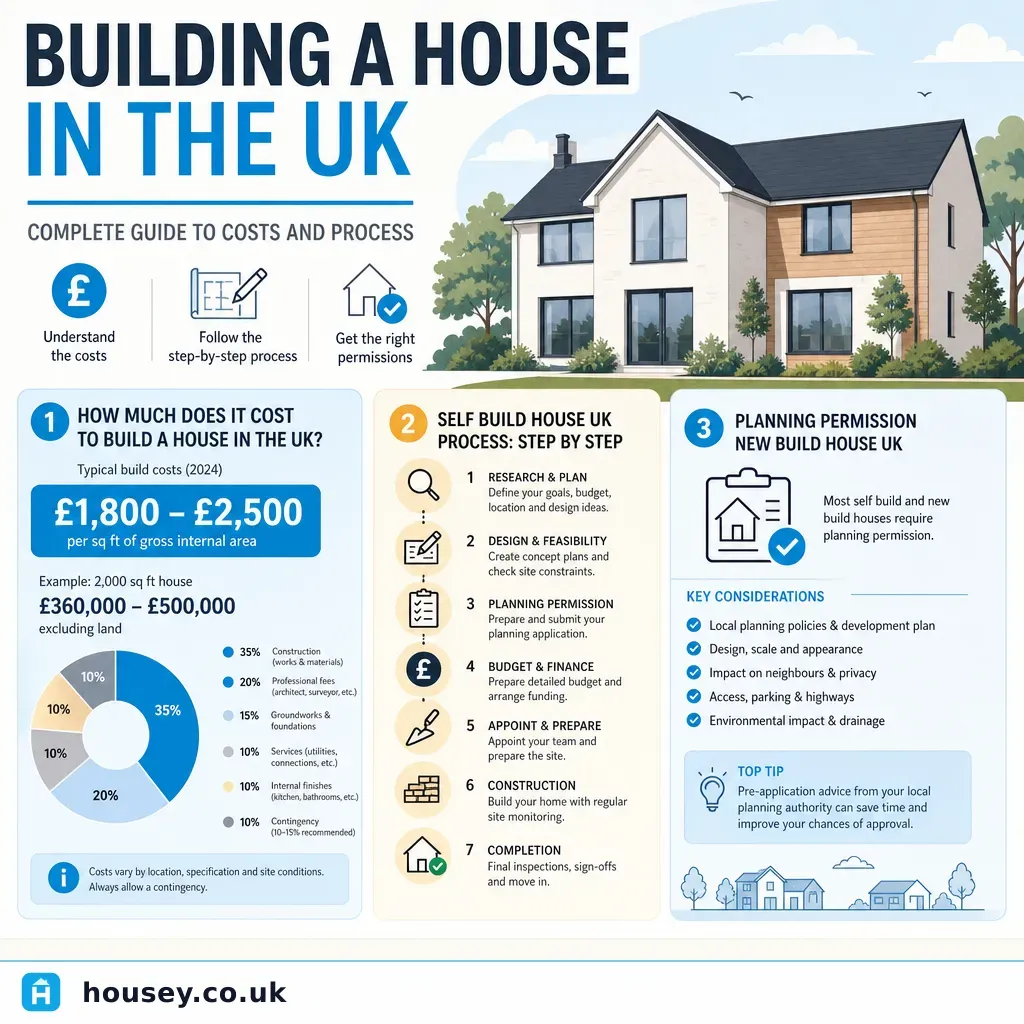
Building a House in the UK: Complete Guide to Costs and Process
Building a house in the UK typically costs £1,500–£3,000 per sq m for construction (excluding land) and takes two to four years from land search to completion.
 Planning & Pre-Build
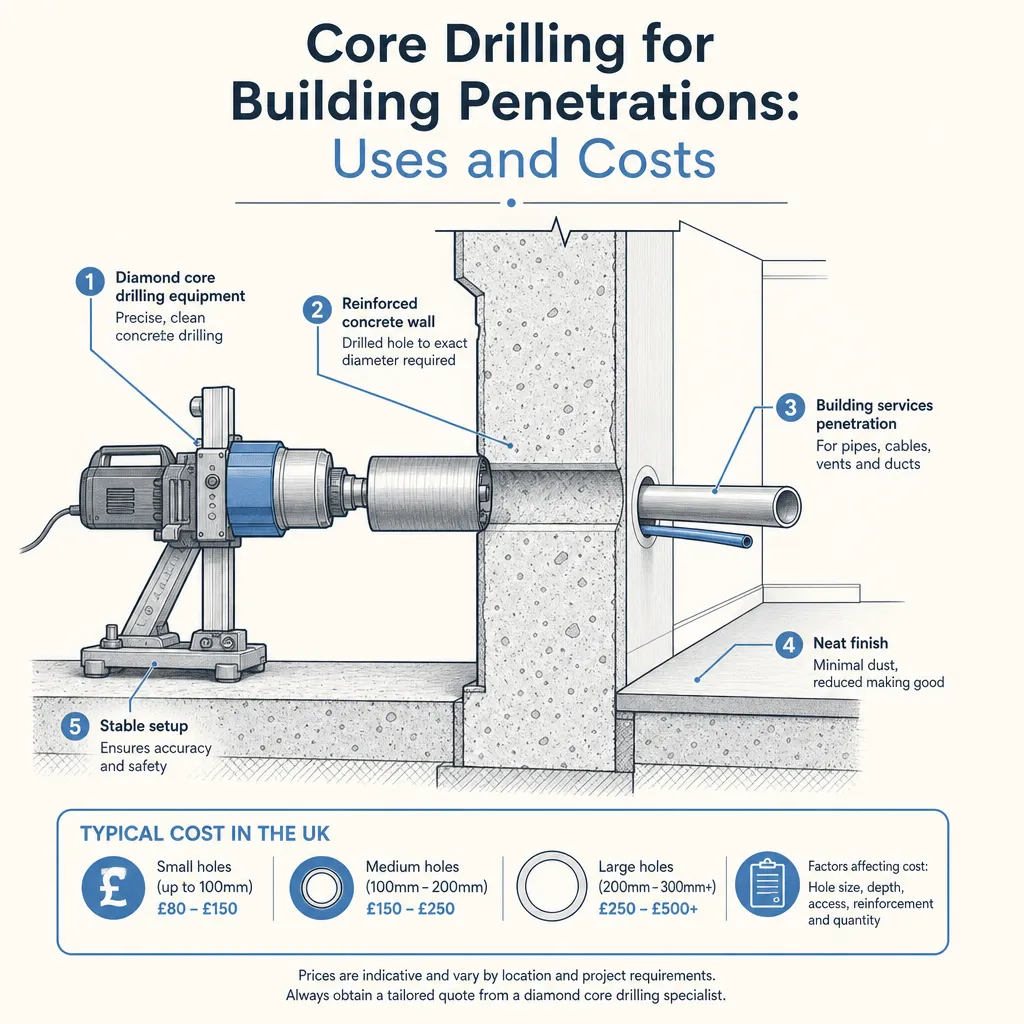
Core Drilling for Building Penetrations: Uses and Costs
Core drilling uses diamond-tipped equipment to cut clean holes through concrete, masonry, or block for pipes, ducts, cables, and building services.
 Planning & Pre-Build
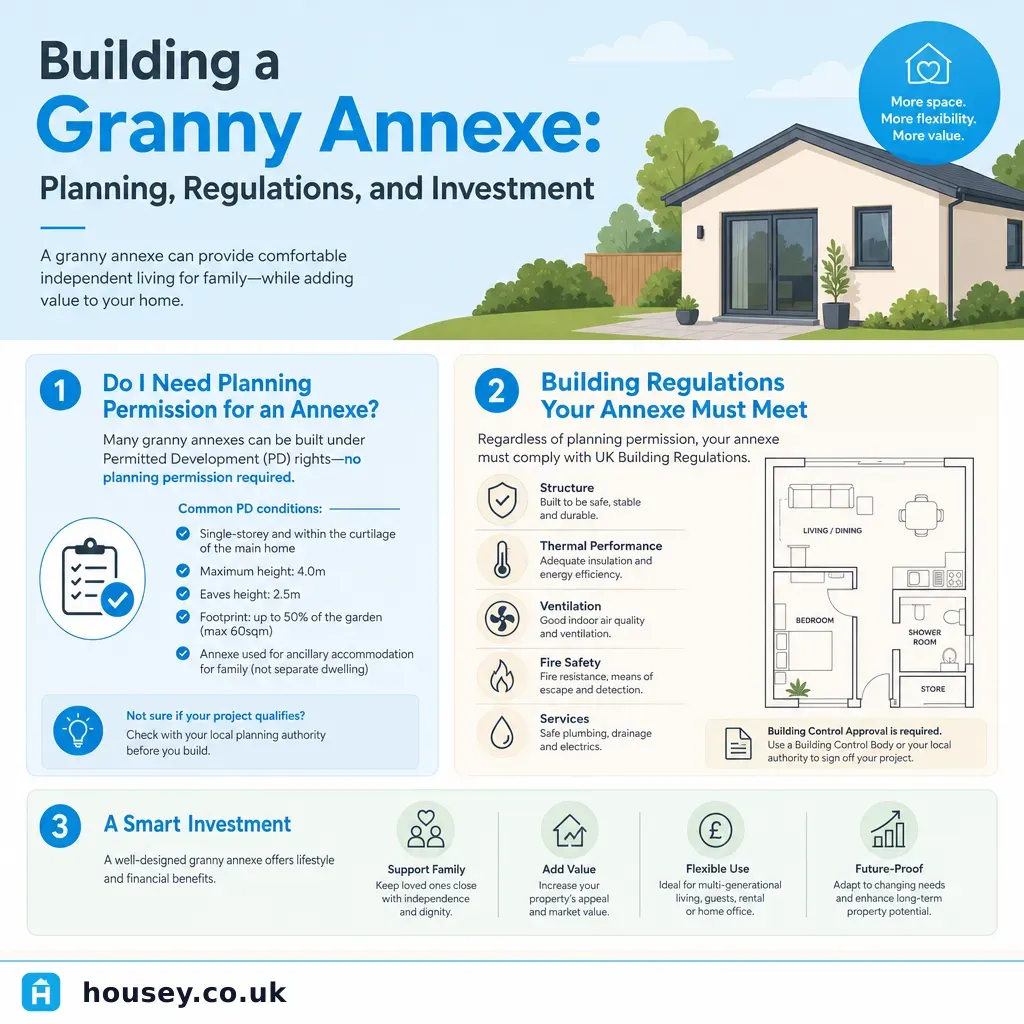
Building a Granny Annexe: Planning, Regulations, and Investment
A granny annexe in the UK may or may not need planning permission depending on whether it is classed as incidental to the main house or as a separate dwelling.
 Planning & Pre-Build
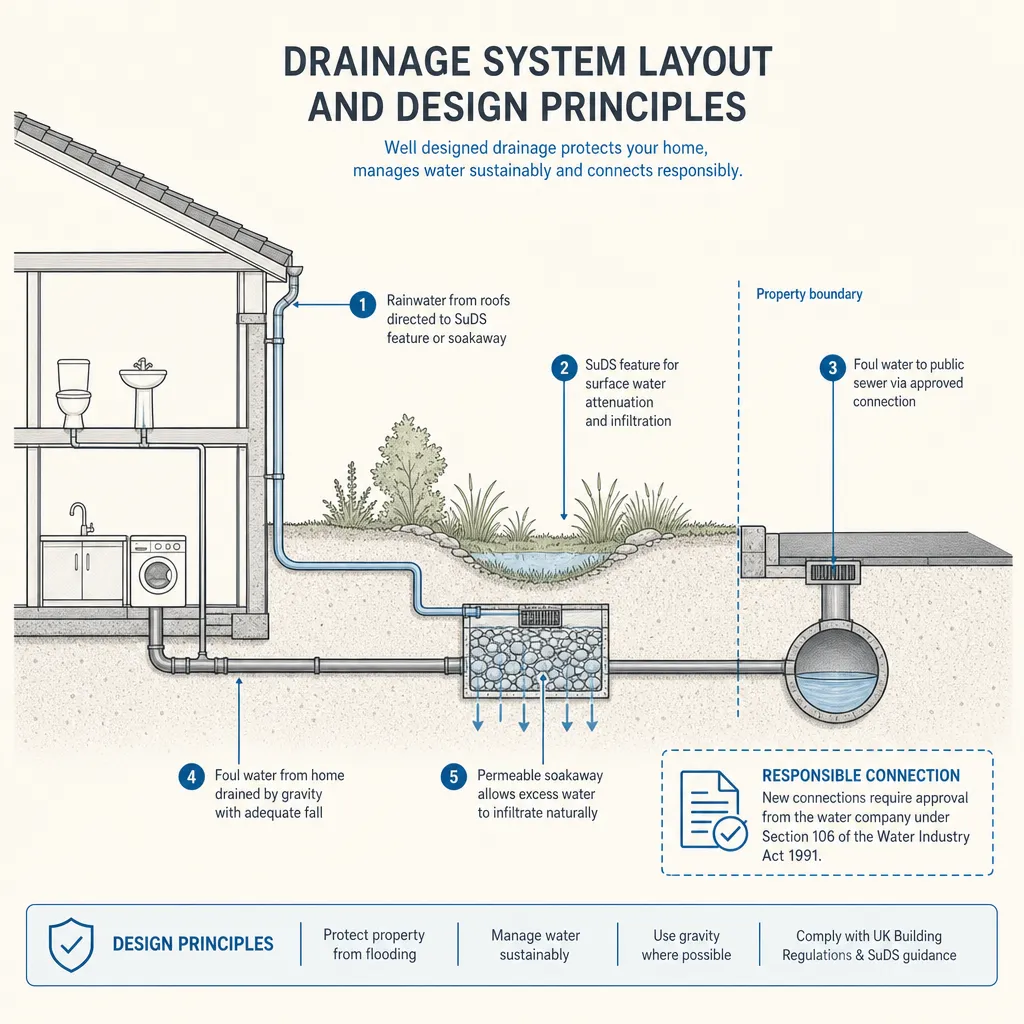
Drainage System Layout and Design Principles
A UK drainage layout separates foul water from surface water, routes both via correctly graded pipes to the public sewer, a soakaway, or a treatment plant, and incorporates Sustainable Drainage Systems where required.