Building a Pool House: Cost Estimation and Design Considerations
By Housey · Last reviewed 11th of May 2026
Building a Pool House: Cost Estimation and Design Considerations
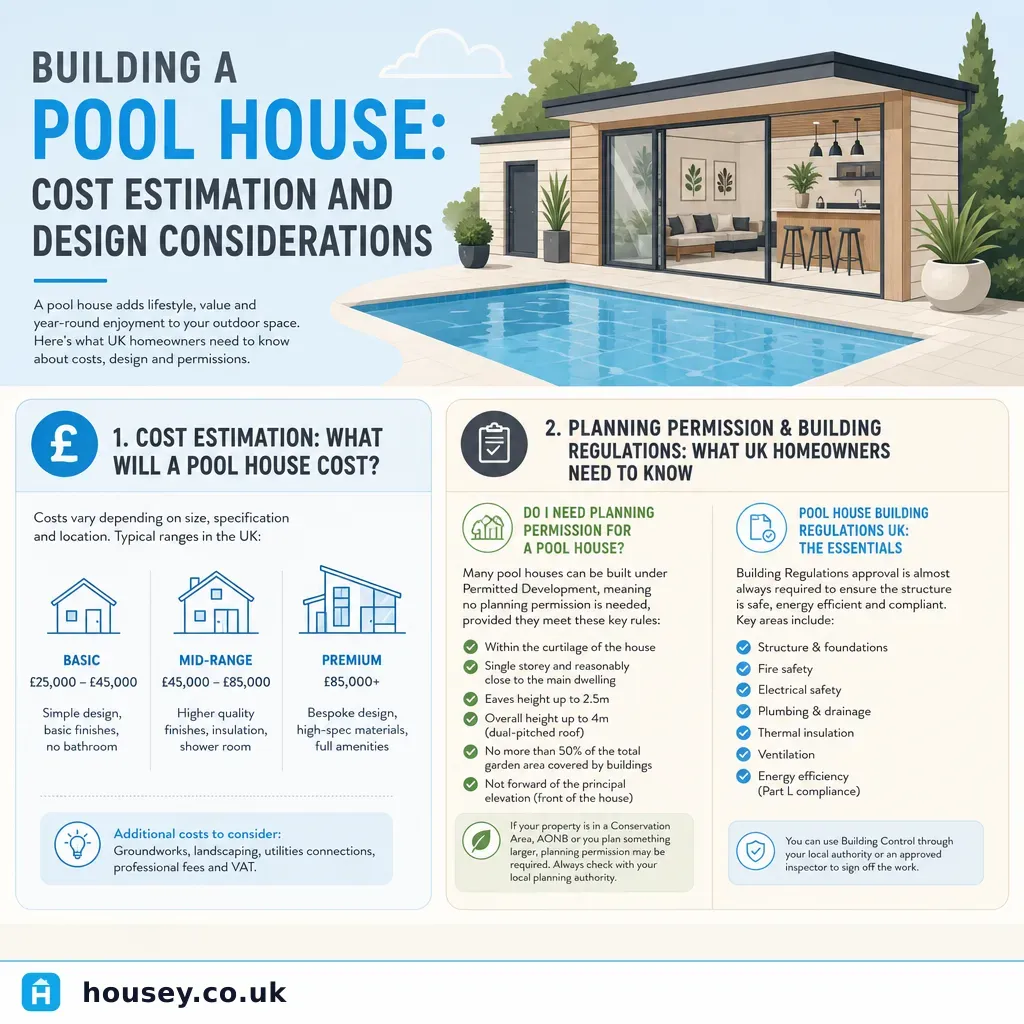
A pool house is rarely a straightforward outbuilding commission — it sits at the intersection of planning rules, building regulations, groundworks, and utilities in ways that can surprise homeowners who have managed simpler garden structures. Whether you are adding a modest changing room beside an existing pool or commissioning a fully fitted annex with a kitchen, bathroom, and plant room, getting the cost and design framework right before appointing contractors will save significant expense and delay. The range of design choices and cost variables is wide, and so are the implications for planning permission and building control.
Key points
- Under Schedule 2, Part 1, Class E of the Town and Country Planning (General Permitted Development) (England) Order 2015, outbuildings including pool houses may be built without planning permission if eaves height does not exceed 2.5 m, ridge height does not exceed 4 m (dual-pitched roof) or 3 m (any other roof), and the structure does not cover more than 50% of the garden surrounding the original house.
- If the pool house is within 2 m of a property boundary, the maximum overall height under permitted development drops to 2.5 m.
- Building regulations approval is required for any pool house containing electrical installations, plumbing, drainage, or sleeping accommodation — Part P (electrical safety) and Part H (drainage) are most commonly triggered.
- Outbuildings greater than 15 m² of internal floor area require building regulations if positioned closer than 1 m to a boundary, due to fire spread risk under Approved Document B.
- Costs vary widely: a basic timber-frame changing room with WC typically costs £20,000–£40,000; a fully fitted pool house with plant room, kitchen, and glazed bifold doors may reach £100,000–£180,000 or more.
What affects the cost of a pool house?
The cost is driven by five main variables: size, construction method, specification, site conditions, and utilities connections. A single-room timber-frame structure on a flat garden close to existing services costs far less than a masonry-built, insulated annex requiring new drainage runs and a dedicated electrical supply.
Construction method is one of the largest cost levers. Timber-frame pool houses are typically quicker and cheaper than masonry builds; off-the-shelf timber-frame kits are available from specialist suppliers. Brick-and-block construction costs more but may blend better with period homes and often satisfies planning officers more readily in conservation areas.
Specification drives interior fit-out cost. A pool house intended as a changing room and equipment store has very different requirements from one used as a bar, gym, or occasional guest space. Key cost items include: underfloor heating (£80–£120/m² indicative), bifold or sliding glazed doors (£1,500–£4,000 per opening), a plant room for pool filtration equipment, and a mechanical ventilation system sized to manage humidity.
Site conditions include access for plant machinery, ground stability, drainage gradients, and whether the garden is sloped. Groundworks on a sloping site can add £5,000–£20,000 depending on the extent of cut-and-fill required.
Utilities include a dedicated electrical feed from the property's consumer unit, water connection, and foul drainage. The further the pool house sits from existing services, the greater the cost of extending them.
Indicative UK costs, last reviewed 2026-05-11. Quotes vary significantly by region, contractor, and specification. Always obtain at least three itemised quotes.
Pool house design options compared
Design type | Typical size | Approximate cost range | Best for | Likely planning route |
|---|---|---|---|---|
Timber-frame changing room | 10–20 m² | £20,000–£45,000 | Basic poolside changing and WC | Permitted development (if criteria met) |
Masonry or brick pool house | 20–40 m² | £50,000–£100,000 | Permanent structure, period properties | May need full planning permission |
Contemporary glazed pavilion | 25–50 m² | £70,000–£150,000 | Maximising garden views, entertaining | Likely requires full planning permission |
Full annex with accommodation | 40–80 m² | £120,000–£200,000+ | Guest accommodation, home gym | Full planning permission; CIL may apply |
Cost ranges are indicative for England. London and south-east costs are typically 15–25% higher.
Planning permission and building regulations
Under permitted development in England, outbuildings used for a purpose incidental to the enjoyment of the dwelling do not require planning permission, provided they remain within the size and height limits in the Town and Country Planning (General Permitted Development) (England) Order 2015.
However, permitted development rights are commonly removed or restricted in:
- Conservation areas
- Areas of Outstanding Natural Beauty (AONB)
- National Parks
- Listed building curtilages
- Properties where prior extensions have already used the permitted development allowance
Applying for a Lawful Development Certificate (LDC) from your local planning authority before building is strongly advisable, even where you believe permitted development applies. This provides a legal document confirming compliance and avoids complications when selling the property.
Building regulations are entirely separate from planning permission. A pool house will typically need building regulations approval if it contains electrics, plumbing, drainage, or sleeping accommodation. Confirm in writing with your contractor who will make the building control application before works begin.
Homeowner checklist: before you appoint a contractor
What to ask before accepting a quote
- What is the quoted build specification — materials, insulation standard (Part L), and glazing specification?
- Does the price include foundations, drainage connections, electrical supply, and ventilation?
- Who acts as principal contractor for building regulations purposes?
- What are the programme milestones and what triggers stage payments?
- Is VAT at 20% included, and are any elements zero- or reduced-rated?
- What are the payment-trigger events if groundworks reveal unexpected conditions?
- What warranty or defects liability period applies to the completed structure?
When to get professional help
A pool house project benefits from professional input early — not just at the build stage. An architect or RIBA-chartered designer can help you maximise permitted development rights, design within budget, and avoid specification choices that are costly to correct. A project manager adds particular value when coordinating a main contractor, groundworks sub-contractor, and separate utilities contractors.
Seek professional advice if:
- Your property is listed, in a conservation area, or within an AONB
- The pool house footprint exceeds 50 m²
- The structure is intended for sleeping accommodation or as an independent dwelling
- Site drainage or groundwork conditions are unclear before excavation
- You are uncertain whether prior works have used up your permitted development allowance
How Housey can help
Housey connects homeowners with vetted extension builders and design-and-build firms who can manage pool house projects from initial design through to building control sign-off. If you prefer to appoint separate specialists, you can also find experienced project managers to oversee the build. Submit a brief to receive quotes from contractors with relevant outbuilding experience in your area.
Frequently asked questions
Do I need planning permission for a pool house in the UK?
Not always. In England, pool houses used for purposes incidental to the dwelling can be built under permitted development if they meet size and height limits — maximum 4 m ridge height on a dual-pitched roof, 2.5 m eaves height, and covering no more than 50% of garden area. Restrictions apply in conservation areas, listed building curtilages, and designated areas. Always check with your local planning authority or apply for a Lawful Development Certificate before starting work.
How long does it take to build a pool house?
A timber-frame pool house of 20–30 m² typically takes 8–16 weeks from groundworks to completion. A larger masonry or bespoke glazed structure may take 16–24 weeks or longer, depending on lead times for glazing, materials, and utilities connections. Pre-application planning or a Lawful Development Certificate application typically adds 6–8 weeks before construction begins.
Can a pool house be used as guest accommodation?
A pool house can include sleeping accommodation, but this significantly changes planning and building control requirements. If the building becomes capable of independent habitation, your local planning authority may require full planning permission and assess whether it constitutes a new separate dwelling — which carries different implications for council tax and permitted development rights. Always seek pre-application planning advice before designing for accommodation use.
Is VAT charged on pool house construction?
Standard-rate VAT at 20% applies to most pool house construction work. Some alterations to listed buildings may attract the reduced 5% rate, and certain conversions of non-residential buildings to residential use can be zero-rated. Discuss VAT treatment with your contractor before signing. For significant projects, a tax adviser can confirm whether any reduced or zero-rate reliefs apply to your specific situation.
Sources and further reading
Useful next reads
 Improvement & Build
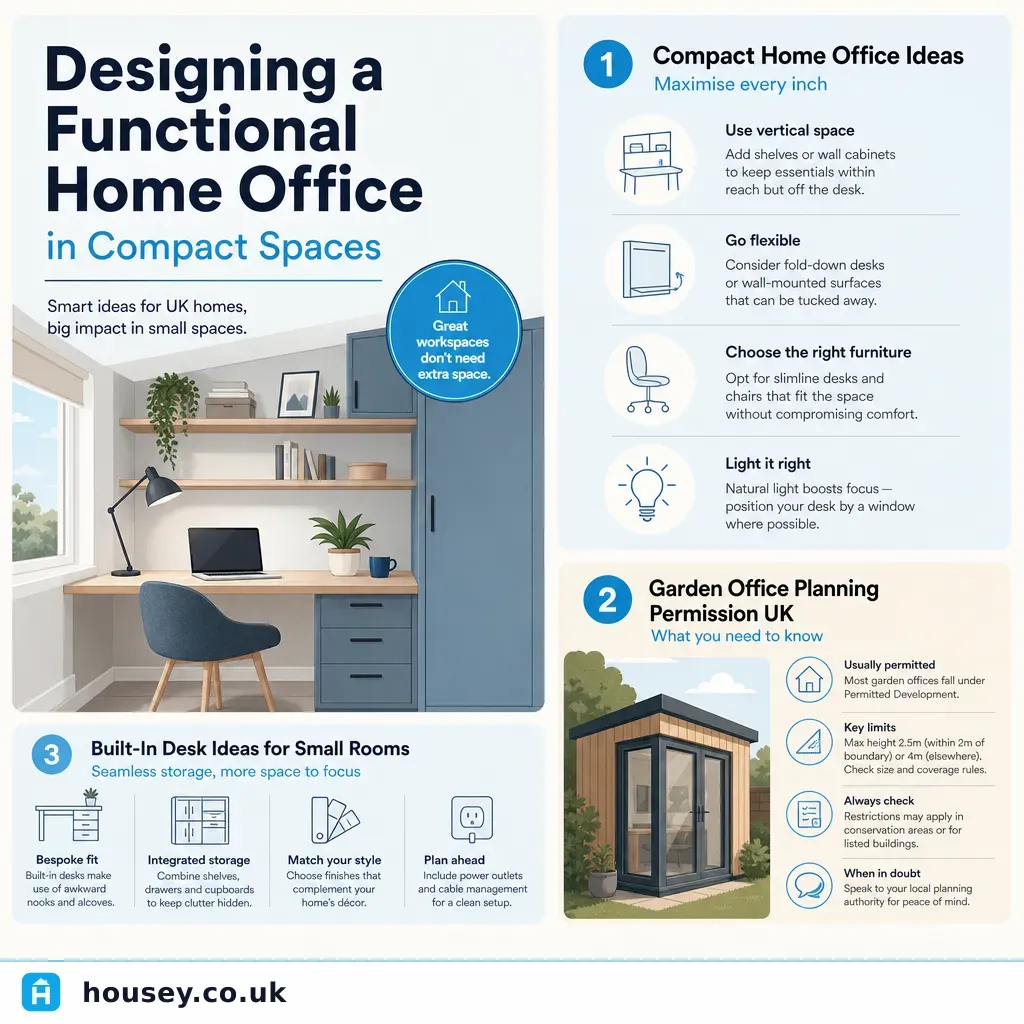
Designing a Functional Home Office in Compact Spaces
A functional compact home office needs a clearly defined workspace, ergonomic seating, and good lighting — even in a small footprint.
 Improvement & Build
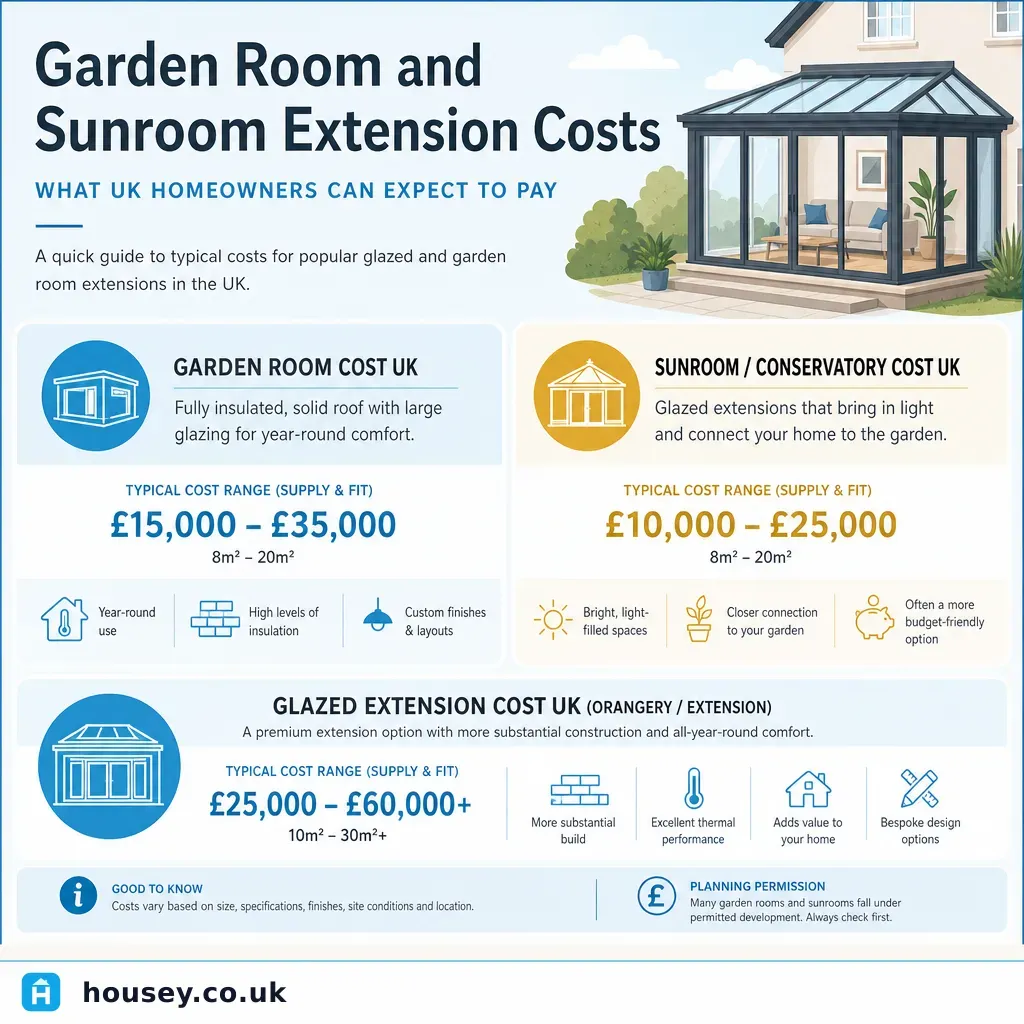
Garden Room and Sunroom Extension Costs
Garden rooms and sunroom extensions cost roughly £10,000–£80,000 installed in the UK depending on type, size, and glazing specification.
 Improvement & Build
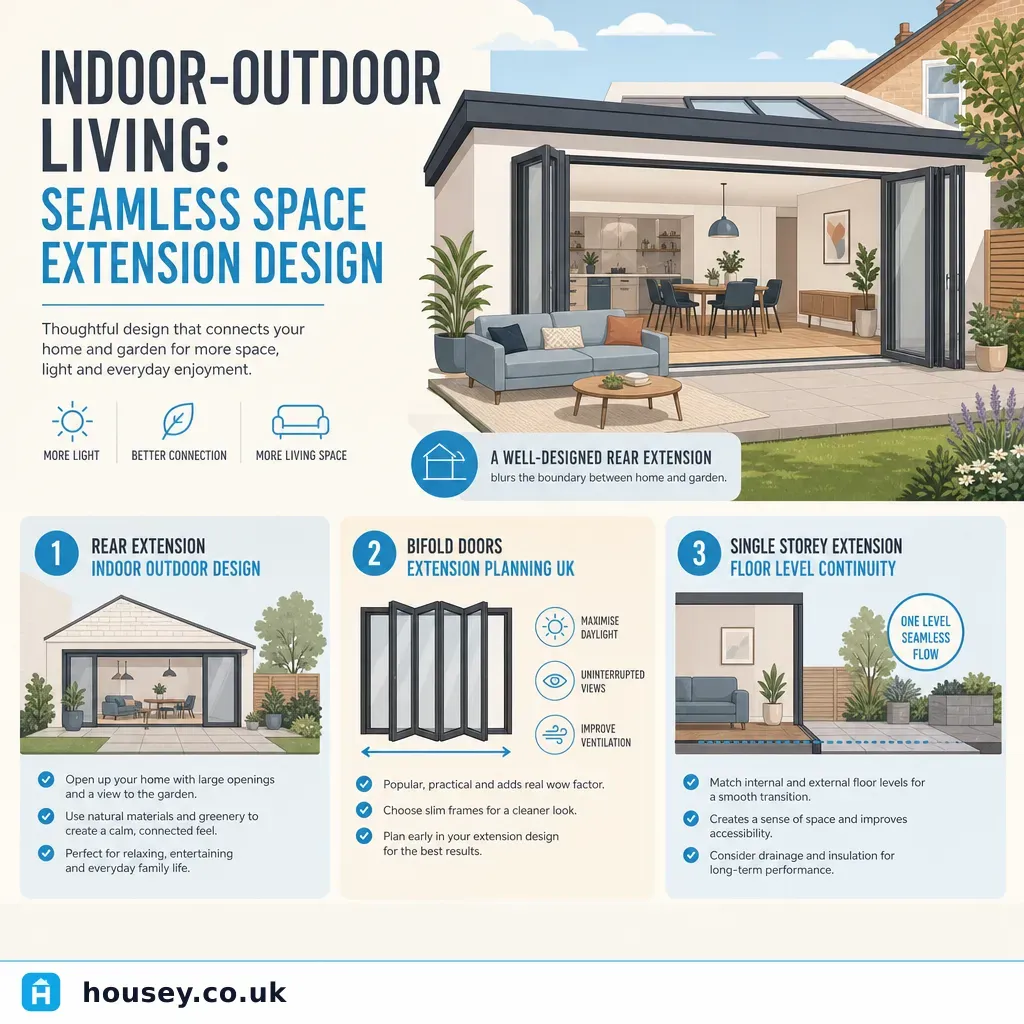
Indoor-Outdoor Living: Seamless Space Extension Design
Creating a seamless indoor-outdoor extension requires coordinating floor levels, glazing performance, structural openings, and garden design as one package.
 Improvement & Build
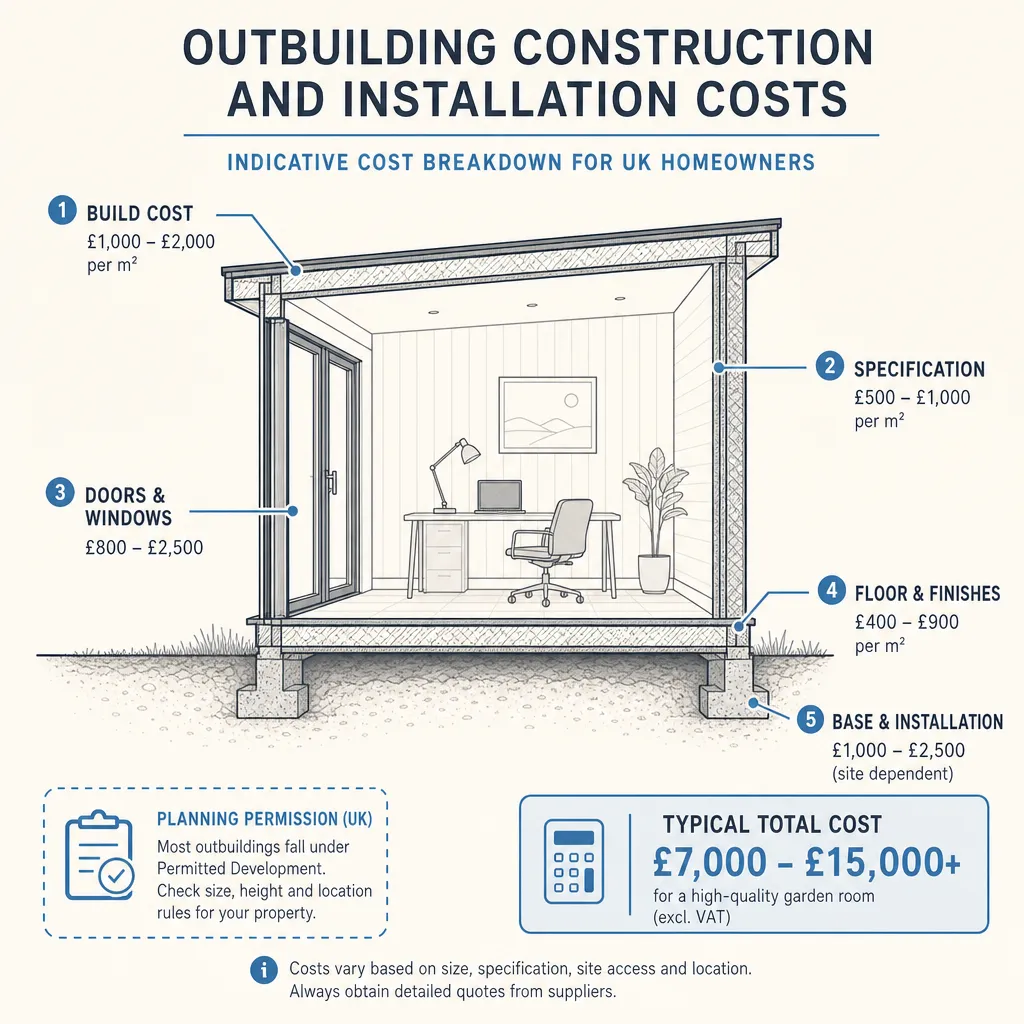
Outbuilding Construction and Installation Costs
Building an outbuilding in the UK typically costs between £5,000 and £60,000+, depending on size, materials, and specification.
 Improvement & Build
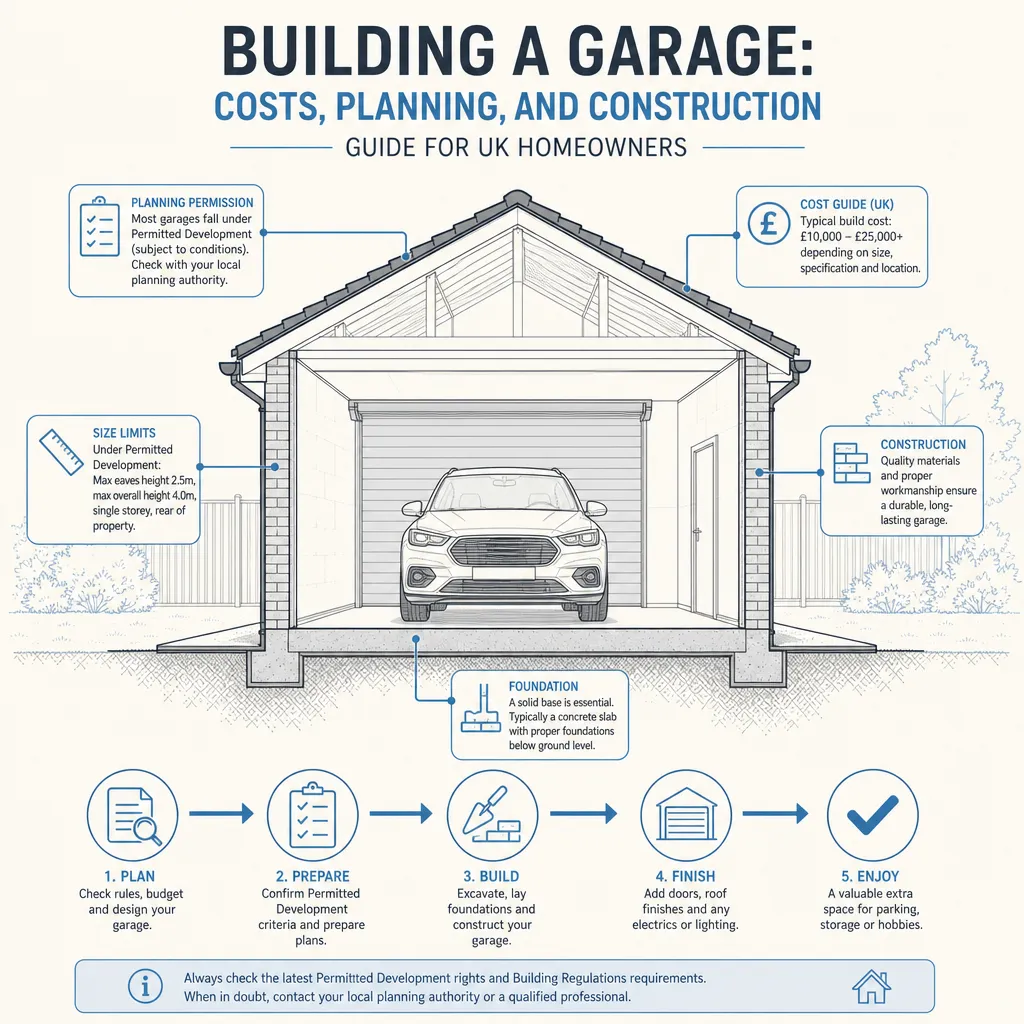
Building a Garage: Costs, Planning, and Construction
Building a new garage in the UK typically costs between £15,000 and £45,000 depending on size, materials, and whether it is attached or detached.