Indoor-Outdoor Living: Seamless Space Extension Design
By Housey · Last reviewed 11th of May 2026
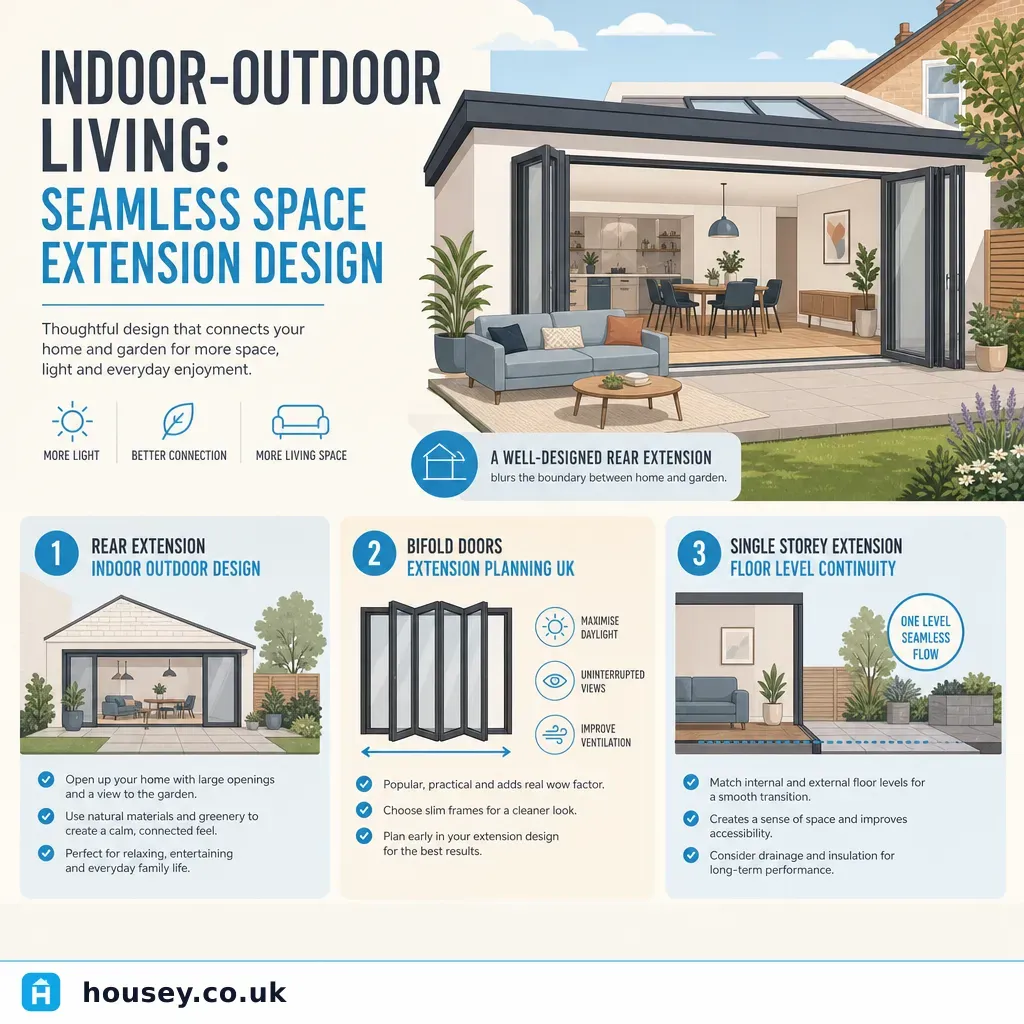
Indoor-Outdoor Living: Seamless Space Extension Design
The boundary between inside and outside has become one of the most valued features in UK residential design. Whether driven by a growing family, a need for a dedicated home workspace, or simply the desire to connect a dark kitchen to a south-facing garden, rear extensions that blur this divide are consistently popular. The planning context, thermal performance standards, and the structural and drainage detail at the threshold all require careful coordination — and getting them right makes a meaningful difference to how the space actually feels and performs day to day.
Key points
- Single-storey rear extensions are permitted development up to 4 m deep for detached houses and 3 m for semi-detached and terraced homes, subject to height and boundary conditions under the GPDO 2015.
- The Neighbour Consultation Scheme (Prior Approval — Larger Home Extension) can extend these limits to 8 m for detached and 6 m for other houses, subject to no valid objections from adjoining owners within 42 days.
- Building Regulations Part L 2021 requires glazed units in new extensions to achieve a maximum whole-unit U-value of 1.6 W/m²K for windows and doors, and 1.8 W/m²K for roof glazing.
- Approved Document C requires the damp-proof course (DPC) to sit at least 150 mm above finished external ground level — this is the central constraint on achieving a flush indoor-outdoor threshold.
- Approved Document M recommends level or ramped thresholds for new extensions; minimising any step is both a compliance aspiration and a practical design priority for daily usability.
What makes an indoor-outdoor extension work?
A seamless connection between interior and exterior is not simply a matter of adding wide doors. It depends on the alignment of floor levels, the depth of the roof overhang, glazing thermal performance, and how the garden space is designed to receive the new structure. Poor execution — a prominent step at the threshold, cold draughts through the door frame, or a terrace that drains back towards the building — undermines the concept regardless of how the architecture looks in a brochure.
Floor levels: the starting point
Getting internal and external finished floor levels as close to flush as possible is the most technically demanding aspect of this extension type. The DPC must typically sit at least 150 mm above external ground level under Approved Document C. In practice, this means either raising the external terrace to within that tolerance — using a suitable proprietary threshold system rated for its weather exposure class — or accepting a small step and specifying a low-profile threshold bar. A structural engineer or experienced contractor should advise on the right approach for your specific subfloor construction and ground conditions.
Glazing and thermal performance
Large sliding, bifold, or pivot door systems create the visual and physical connection to the garden, but they introduce thermal and acoustic challenges that the design must address. Under Building Regulations Part L 2021, new glazed doors in extensions must meet a maximum whole-unit U-value of 1.6 W/m²K. Very large glass walls may push the whole-building heat loss calculation (assessed via an SAP or simplified building energy model) beyond what compensating insulation elsewhere in the extension can offset. A building regulations officer or approved inspector can advise at design stage before glazing areas are fixed.
Roof overhangs and covered transitions
A covered outdoor area — a canopy, pergola, or extended roof overhang — creates a shaded transition zone that extends usable space through most British weather conditions and deepens the sense of connection between the two spaces. Any permanent structural canopy attached to the main building needs building regulations sign-off. Its depth also affects natural light penetration into the interior, particularly in north- or north-east-facing extensions during winter months.
Comparison: door and glazing systems for indoor-outdoor extensions
System | Best for | Limitations | Approximate clear opening | Thermal performance |
|---|---|---|---|---|
Bifold doors | Wide openings, full fold-back to one side | More frame members; draught risk if poorly fitted or specified | Up to 6 m+ | Varies; specify low-emissivity glazing |
Lift-and-slide doors | Minimal aesthetic, large unbroken panes | Panels stack rather than disappear; limits total opening width | 3–5 m typical | Often better than bifolds when well specified |
Pivot door | Statement single large panel | High cost; impractical for a full-width opening | One panel, up to 3 m wide | Good if triple-glazed |
Frameless glass wall | Maximum transparency and light | Very high cost; thermal losses without triple glazing | Custom | Lower performance without triple glazing |
French doors | Simpler specification, lower cost | Limited total opening width | Up to 2.4 m | Standard double-glazing rules apply |
Homeowner checklist: before you instruct a builder
What to ask your designer or architect
- How will the internal and external floor levels be resolved, and is a step genuinely avoidable given the DPC constraints?
- How does the proposed glazing area comply with Part L without exceeding permissible heat loss thresholds?
- What roof overhang depth is planned, and has shadow-path modelling been considered for winter months?
- What threshold product is specified, and what is its weather exposure rating under BS 6375?
- Will a structural engineer produce calculations and a specification for the beam and padstone at the new opening into the existing house?
When to get professional help
This type of project almost always benefits from an architect or experienced architectural designer — not just for the appearance, but for coordinating structural, thermal, planning, and drainage requirements within a single coherent drawing set submitted to building control. Seek professional input when:
- You are unsure whether the proposed extension exceeds permitted development limits or requires prior approval.
- The site is on shrinkable clay or in an area known for subsidence or heave risk.
- You want to maximise glazing — a Part L calculation is needed at design stage to confirm feasibility.
- The existing house wall is solid brick and a new structural opening is required.
- The property is in a conservation area or is listed, where additional consents and materials restrictions apply.
How Housey can help
Extension builders with experience of glass-heavy rear extensions can advise on threshold details, structural openings, and buildability from the outset. Pairing them with a garden designer who understands the inside-out relationship — terrace levels, drainage falls, planting proximity to the new wall — helps ensure the finished result works as a coherent whole, not just from the inside looking out.
Frequently asked questions
Do I need planning permission for a bifold door extension?
Not necessarily. If the extension meets permitted development criteria — typically up to 3 m deep for a semi-detached or terraced house and 4 m for a detached — no planning application is required. Building regulations approval is required for all extensions regardless of size. Conservation area status or a listed building designation introduces additional consent requirements before any work begins.
How close to flush can internal and external floor levels be?
Many homeowners achieve a difference of 10–15 mm using a proprietary threshold product and carefully set external terrace levels. The Approved Document C requirement for the damp-proof course to sit 150 mm above external ground level can often be met by raising the terrace rather than stepping down inside. Your builder should confirm the right approach for your specific subfloor conditions.
What U-value should I specify for bifold or sliding doors?
Under Building Regulations Part L 2021, the maximum whole-unit U-value for new glazed doors is 1.6 W/m²K. Well-specified bifold and lift-and-slide systems routinely achieve 1.2–1.4 W/m²K in practice. Always request the manufacturer's certified whole-unit U-value — not just the centre-pane glass specification, which will appear lower and does not reflect real-world thermal performance.
Sources and further reading
Useful next reads
 Improvement & Build
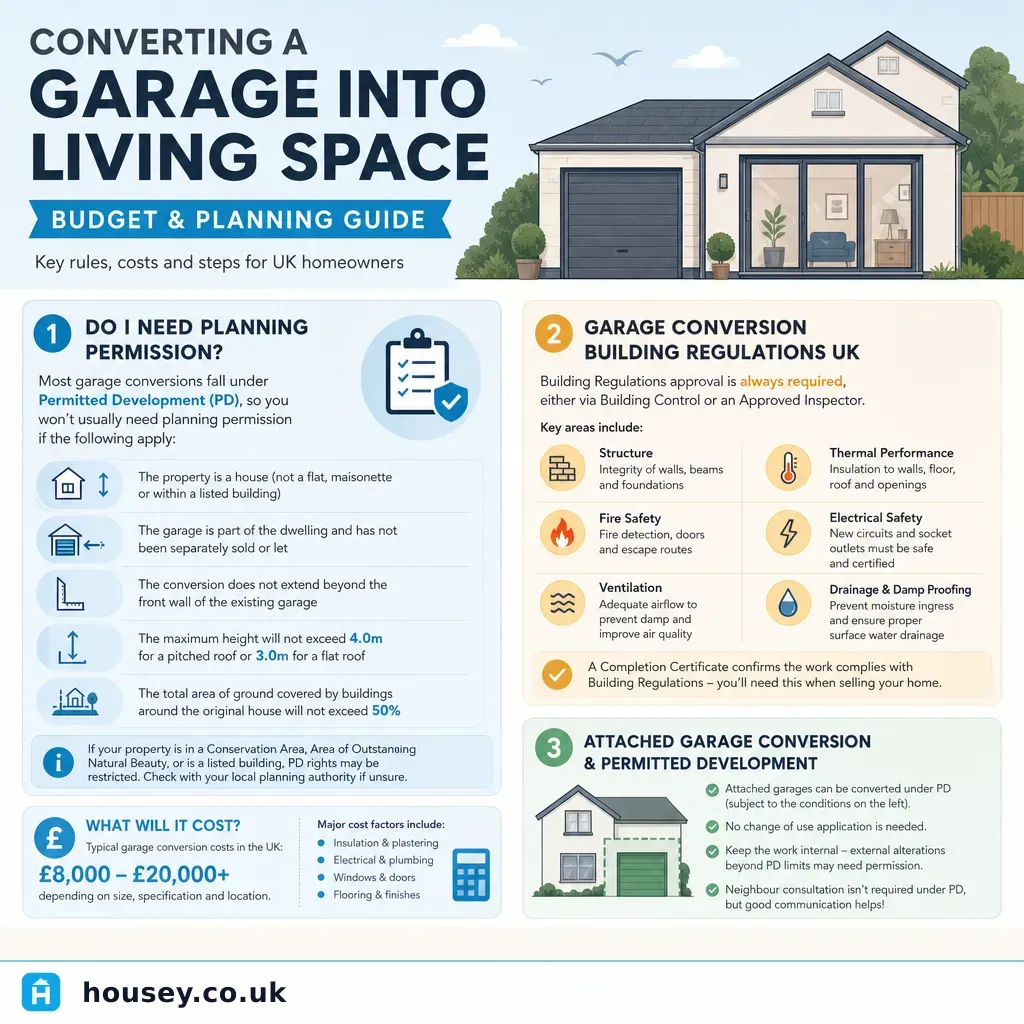
Converting a Garage into Living Space: Budget and Planning Guide
A single-garage conversion typically costs £8,000–£20,000 in the UK.
 Improvement & Build
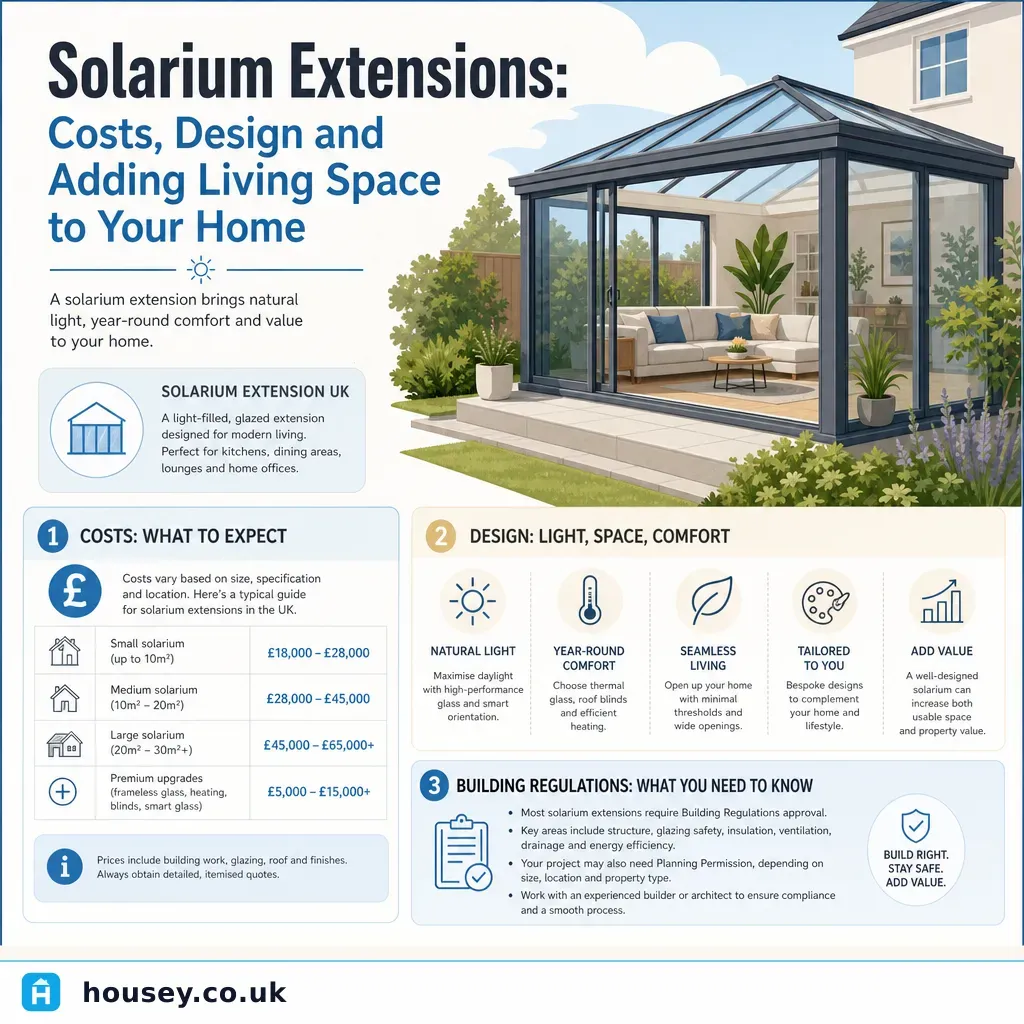
Solarium extensions: costs, design and adding living space to your home
A solarium extension is a predominantly glazed room addition with a structural glass roof, typically costing £28,000–£130,000 in the UK depending on size and specification.
 Improvement & Build
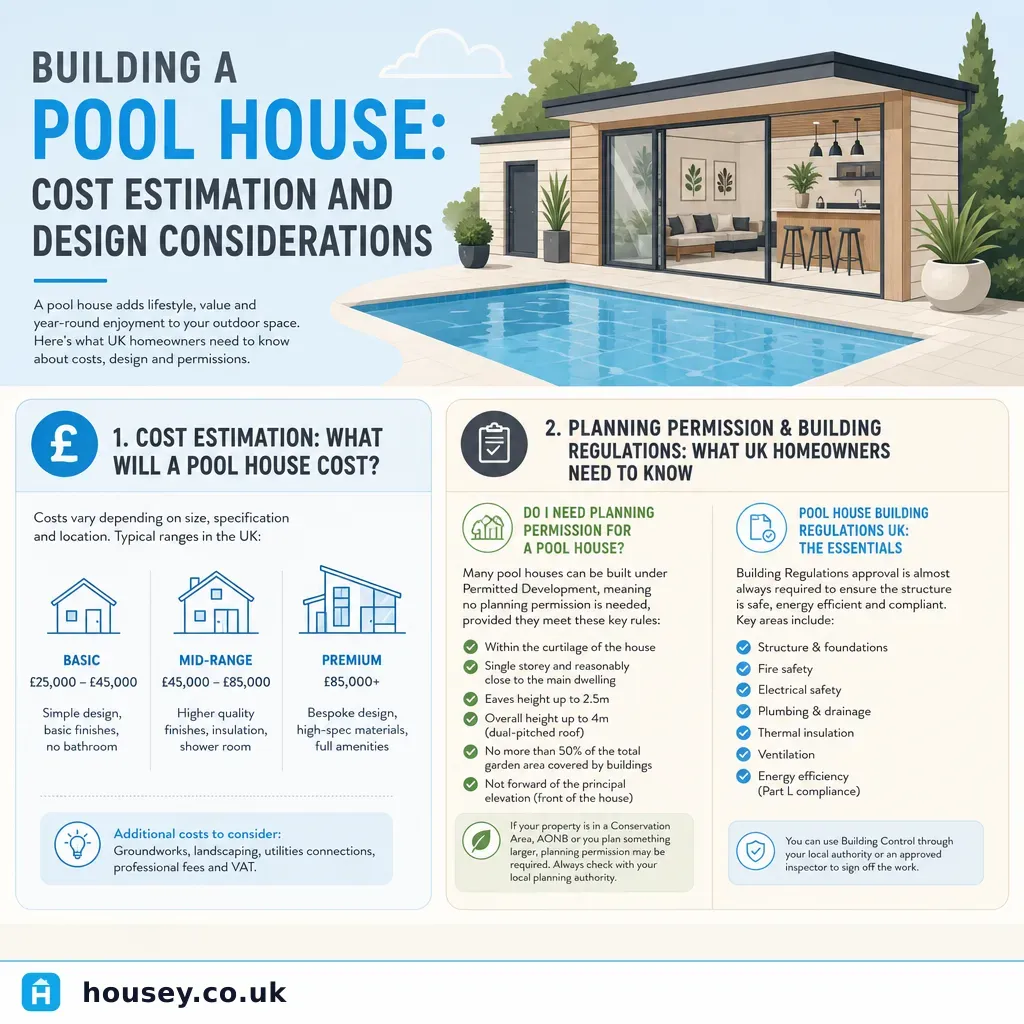
Building a Pool House: Cost Estimation and Design Considerations
A pool house in the UK typically costs between £20,000 and £180,000 depending on size, construction method, and specification.
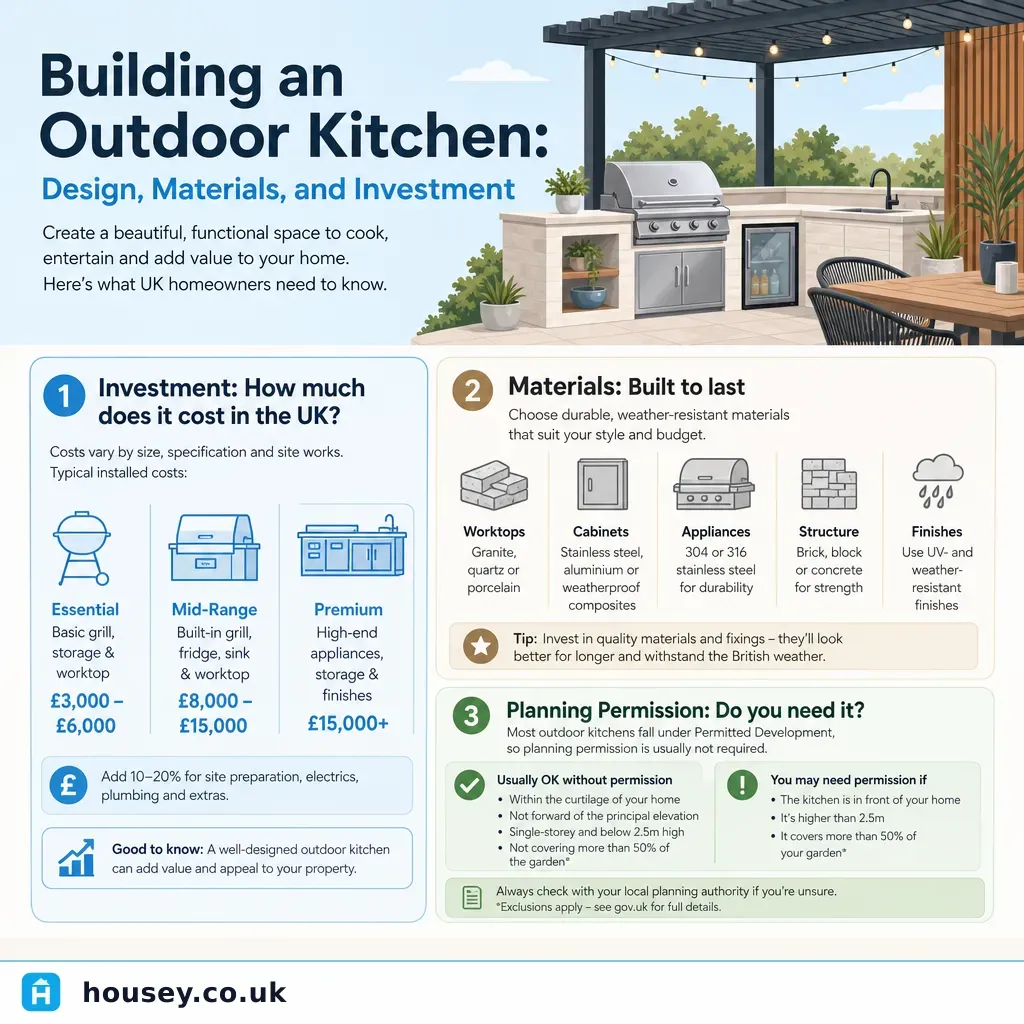 Improvement & Build
Building an Outdoor Kitchen: Design, Materials, and Investment
Building an outdoor kitchen in the UK costs roughly £3,000–£25,000 depending on size and materials.
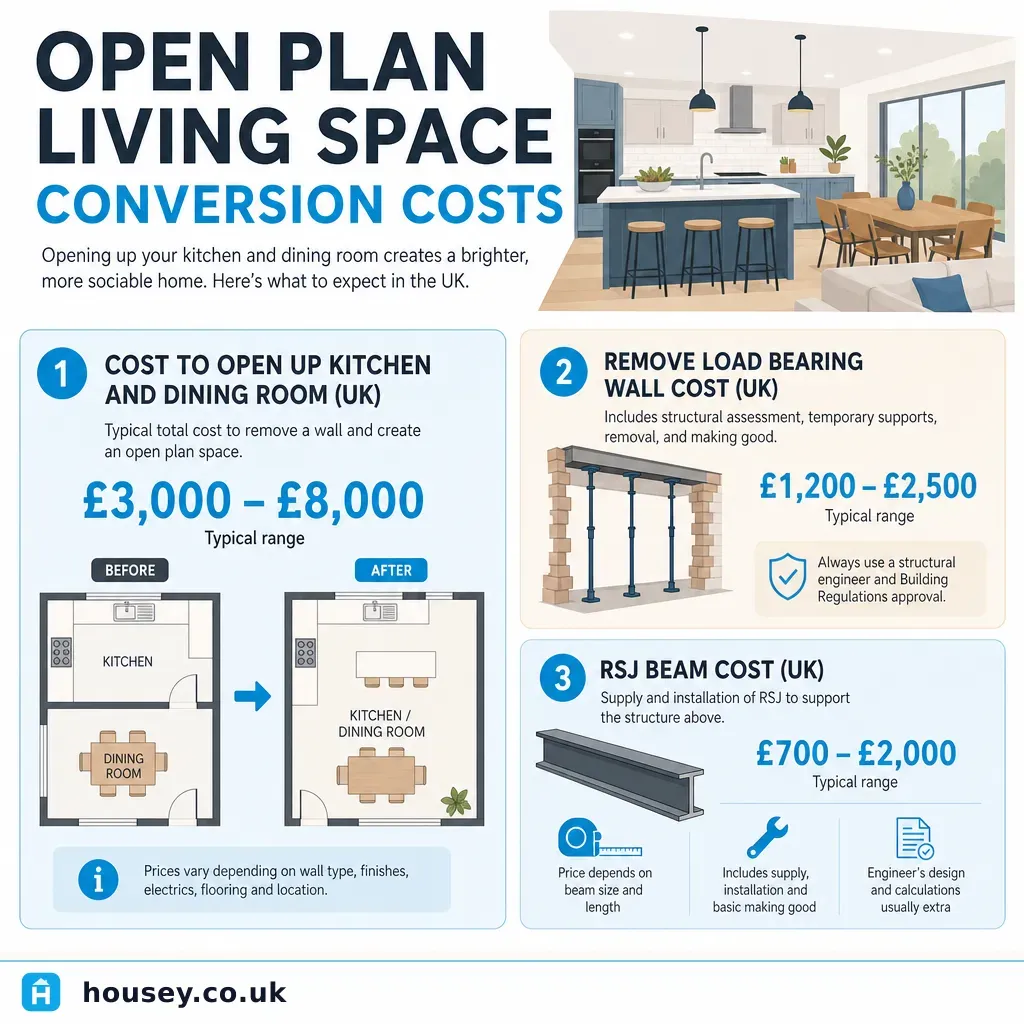 Improvement & Build
Open Plan Living Space Conversion Costs
Opening up a living space in the UK typically costs £3,000–£15,000+ depending on whether walls are load-bearing, the beam specification required, and the extent of remodelling.