Designing a Functional Home Office in Compact Spaces
By Housey · Last reviewed 11th of May 2026
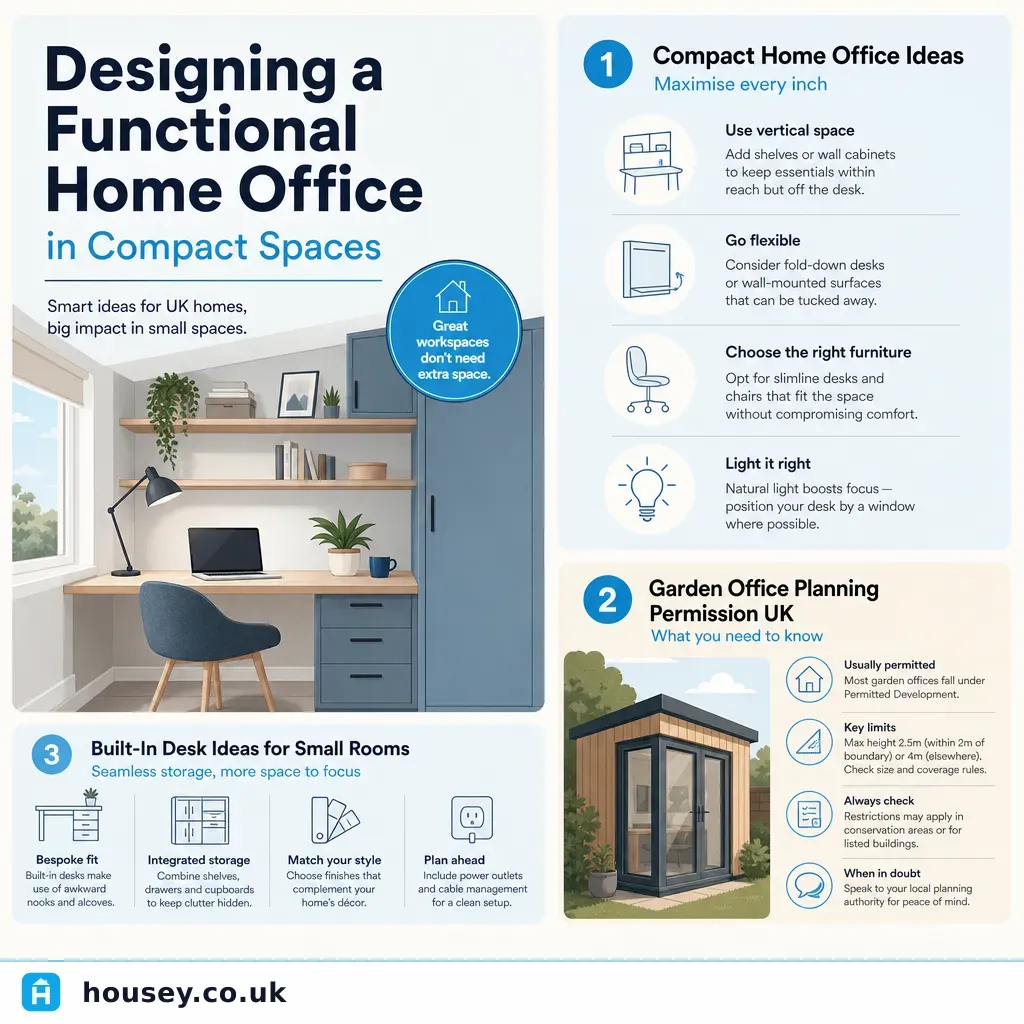
Designing a Functional Home Office in Compact Spaces
Remote and hybrid working has changed how a significant proportion of UK households use their homes, and for properties without a dedicated spare room — common in a country where many homes have two bedrooms or fewer — the challenge is creating a workspace that genuinely functions without consuming the whole of the living space. Getting the design right involves considerably more than choosing a desk: acoustic separation from household activity, the regulatory position for any structural changes, appropriate lighting, and long-term storage all determine whether a compact home office serves its purpose across years rather than weeks.
Key points
- A detached garden office generally qualifies as permitted development in England provided it is single-storey, behind the front wall of the property, and does not cover more than 50% of the garden curtilage — no planning permission is typically required.
- Building Regulations approval is not usually needed for an internal home office fit-out using furniture and shelving; however, adding new electrical circuits requires a Part P-compliant installation by a registered electrician (NICEIC or NAPIT accredited).
- Converting a loft, integral garage, or outbuilding to a habitable room almost always requires Building Regulations approval regardless of planning permission status.
- The Health and Safety (Display Screen Equipment) Regulations 1992 set minimum workstation requirements for employees — self-employed workers and remote employees can use the HSE DSE guidance as a practical ergonomics benchmark.
- A desk of at least 80 cm × 60 cm is the generally accepted minimum footprint for a computer workstation; a monitor arm can recover 20–30 cm of desk depth by replacing a bulky fixed stand.
Choosing the right location for your home office
Not all compact spaces suit a home office equally. The right choice depends on how much acoustic separation you need, the quality of natural light available, heating provision, and whether the workspace can be meaningfully separated from the rest of the home at the end of the working day.
Location option | Best for | Key drawbacks | Planning or Building Regs needed? |
|---|---|---|---|
Dedicated spare bedroom | Full separation, privacy, good natural light | Requires a room to spare — not available to every household | No (furniture fit-out only) |
Built-in alcove desk | Minimal footprint, integrates into existing décor | Poor acoustic separation from household activity | No |
Under-stair or cupboard conversion | Self-contained nook with a door to close | Often poor ventilation and no natural light | No (minor fit-out works) |
Loft conversion | Maximum separation, significant usable area | Cost, Building Regulations, structural works required | Almost always yes |
Garden office or outbuilding | Best work-life separation; no impact on main living space | Upfront cost, connectivity, heating in winter | Often no (within PD thresholds) |
Alcove and built-in desks
An alcove beside a chimney breast — very common in Victorian and Edwardian terraces — or a recessed section of a hallway can yield a surprisingly functional workspace in a small footprint. Purpose-built joinery allows shelving, filing, and printer storage to sit above and around the desk, using vertical space rather than floor area. Set the desk surface at the correct ergonomic height for your chair and monitor (typically 72–75 cm for most adults). Off-the-shelf fitted units that fix this dimension at an unsuitable height are a common and avoidable mistake.
Converting a cupboard or under-stair space
In many UK homes — particularly 1930s semis and Victorian terraces — a large hall cupboard or under-stair void can be converted into a small but serviceable office. The key constraints are ventilation (a sealed space must allow air movement during use — a louvred door or small passive vent helps), power (a socket installed by a registered electrician under Part P of the Building Regulations), and lighting (natural light is usually absent, so layered artificial lighting is essential). A solid-core door makes a notable difference to acoustic separation from the hallway.
Garden offices
For homeowners with usable outdoor space, a purpose-built garden office provides the clearest work-life separation available without structural changes to the main house. In England, garden offices generally fall within permitted development rules — no planning permission is needed — provided the structure is single-storey, behind the principal elevation, and does not breach the curtilage coverage or height limits set out in the Town and Country Planning (General Permitted Development) (England) Order 2015.
Building Regulations approval is not normally required for a detached garden office that does not contain sleeping accommodation and meets the applicable exemption conditions under Schedule 2 of the Building Regulations 2010. Any electrical installation within it must still be Part P-compliant.
Budget typically starts from £8,000–£12,000 for a basic insulated garden room with mains electrical connection, rising to £20,000–£35,000 or more for a high-specification bespoke structure. Indicative UK costs, last reviewed 2026-05-11; prices vary significantly by size, specification, and installer.
Ergonomics in a small home office
In a compact space, ergonomic setup matters more, not less — poor workstation posture causes cumulative musculoskeletal strain regardless of how informal or temporary the space feels. The HSE Display Screen Equipment guidance offers a practical framework:
- Chair: adjustable seat height, lumbar support, feet flat on the floor or on a footrest.
- Monitor: top of the screen at or slightly below eye level; approximately one arm's length from the face.
- Desk depth: at least 50–60 cm to allow the monitor to sit at the correct viewing distance.
- Keyboard and mouse: elbows at approximately 90° when typing, wrists roughly straight.
- Lighting: no direct glare on the screen; combine ambient and task lighting.
A monitor arm is particularly useful in compact spaces — it saves 20–30 cm of desk depth compared with a fixed stand and allows quick repositioning when the desk is used for other tasks.
Lighting for a compact workspace
Natural light is the first priority. Position the desk to benefit from a window, ideally at 90° to it rather than directly facing — this reduces glare on the screen while maximising ambient daylight. In north-facing rooms or converted spaces without natural light, invest in good artificial lighting: a combination of an overhead ambient source and a focussed task light on the work surface significantly reduces eye strain during long working sessions.
For colour temperature, 4000–5000K (cool white to daylight) supports alertness during working hours. Warm yellow light at 2700–3000K is better reserved for non-screen tasks.
Storage in a small office
Clutter is one of the most consistent obstacles to focus in a compact workspace. Practical approaches:
- Vertical shelving above the desk rather than additional floor-standing units.
- Cable management using cable clips, a cable tray under the desk surface, or a cable box.
- One closed storage unit for anything that should be out of sight when the working day ends — critical for work-life separation when the office shares a room with other household functions.
- A single in-tray rather than a growing pile of papers on the desk.
Homeowner checklist: setting up a compact home office
Before you start:
During the fit-out:
After completion:
When to get professional help
Most internal home office fit-outs can be handled by a competent handyperson or DIYer for furniture and shelving. Seek professional input when:
- New electrical circuits are required — use a NICEIC or NAPIT registered electrician to ensure Part P compliance.
- You are converting a loft, integral garage, or outbuilding to a habitable room (structural assessment and Building Regulations application required).
- You are planning a garden office — confirm the planning and Building Regulations position before commissioning any structure.
- The proposed works are within a listed building, where even internal fit-outs may require Listed Building Consent.
How Housey can help
If you are planning a more substantial workspace — a garden office, loft conversion, or home extension — Housey can connect you with experienced extension builders for a garden office or home extension and garden designers who can help integrate a functional workspace into your wider project.
Frequently asked questions
Do I need planning permission for a garden office?
In most cases, no. In England, garden offices are generally permitted development provided they are single-storey, behind the front wall of the house, and do not cover more than 50% of the garden curtilage. Height limits apply, particularly within 2 m of a boundary. Exceptions apply to listed buildings, conservation areas, and designated land such as national parks. Always check with your local planning authority before building.
What is the minimum desk size for a home office?
For a computer-based workstation, a desk of at least 80 cm × 60 cm is generally considered the minimum usable footprint. A width of 120 cm is more comfortable for dual-monitor setups or document-heavy work. Where space is very limited, a wall-mounted fold-down desk provides a full working surface that can be stowed away when not in use.
How do I reduce noise in a compact home office?
Practical improvements include fitting a solid-core door with a perimeter draught seal, adding soft furnishings to absorb echo, and using acoustic panels on the most reflective wall surfaces. For calls and video meetings, a quality headset with a noise-cancelling microphone is often more effective than room treatment alone. Structural soundproofing requires specialist assessment and dedicated building work.
Sources and further reading
- Planning Portal: Outbuildings — Planning Portal
- HSE: Display Screen Equipment (DSE) — Health and Safety Executive
- Permitted development rights for householders: technical guidance — GOV.UK
- NICEIC: Find a registered electrician — NICEIC
Useful next reads
 Improvement & Build
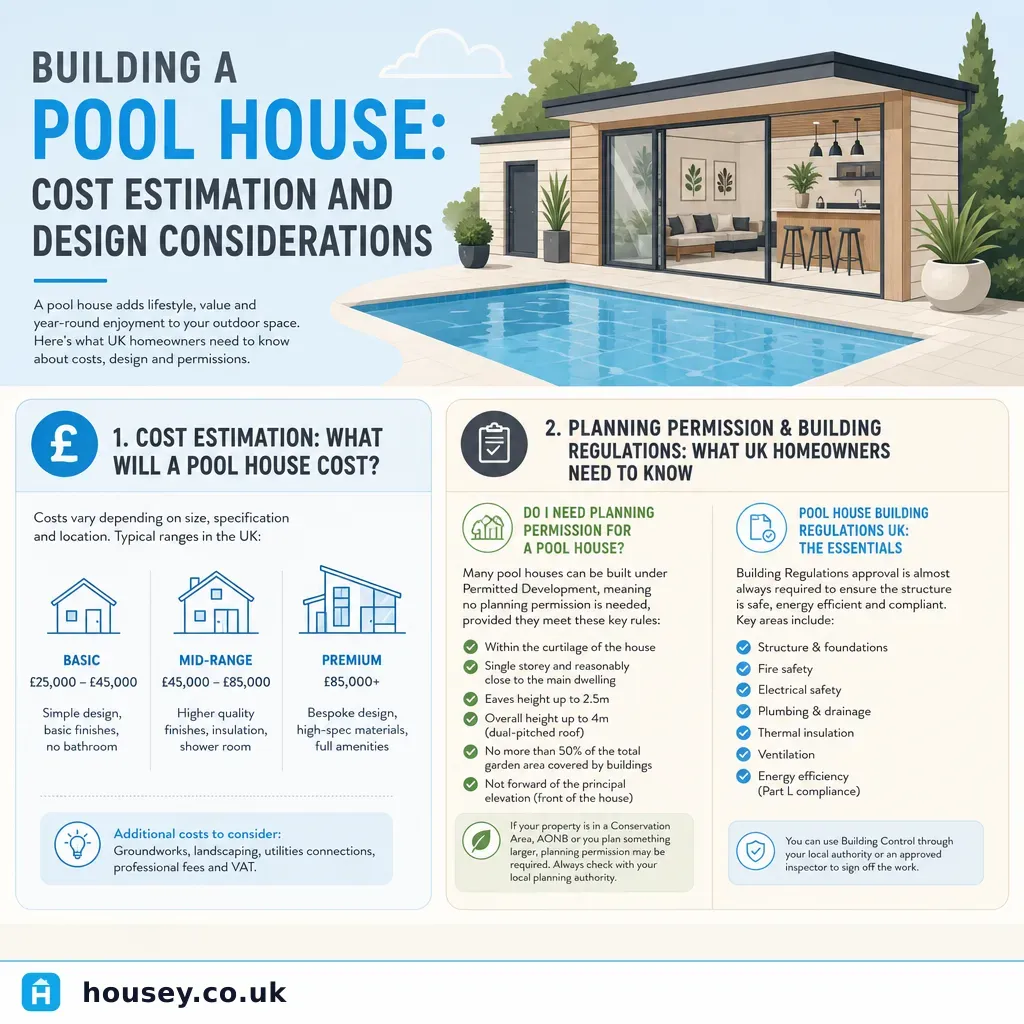
Building a Pool House: Cost Estimation and Design Considerations
A pool house in the UK typically costs between £20,000 and £180,000 depending on size, construction method, and specification.
 Improvement & Build
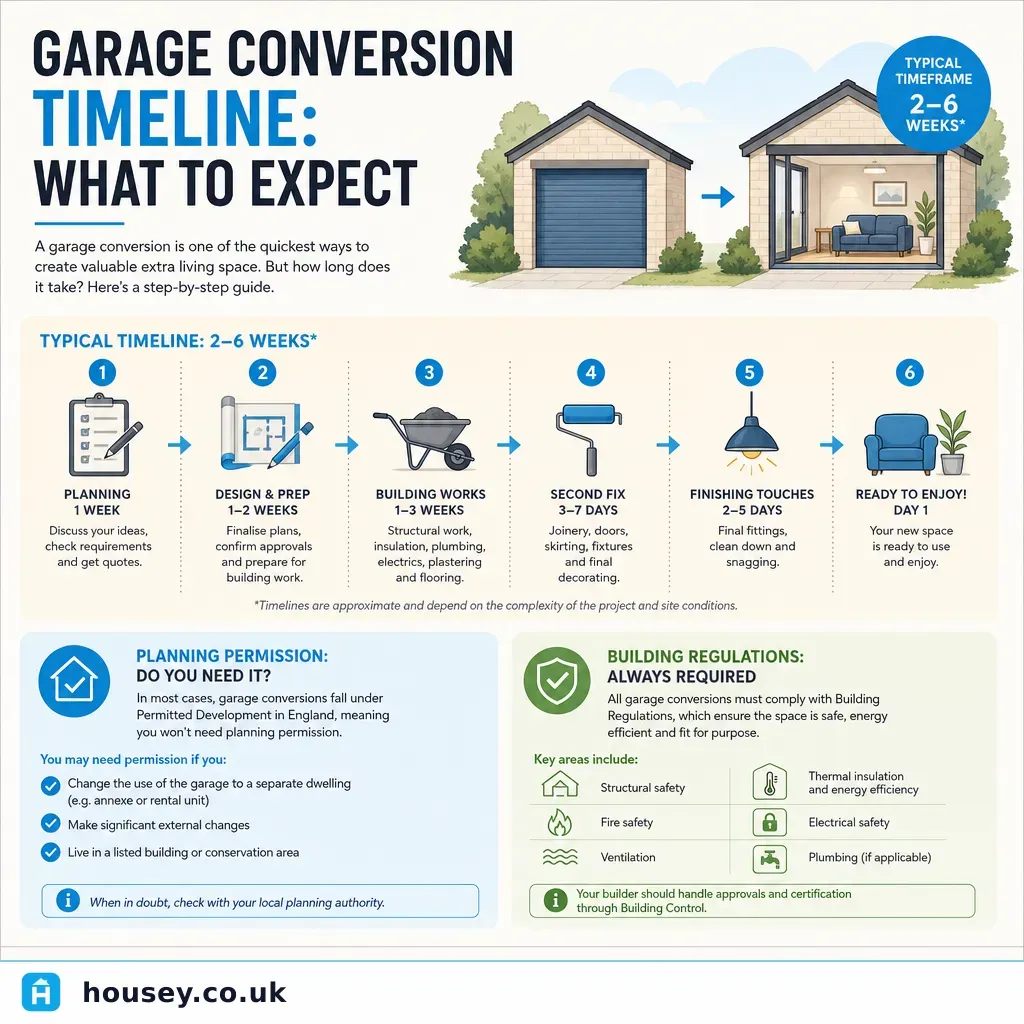
Garage Conversion Timeline: What to Expect
A straightforward attached garage conversion in England usually takes 4–8 weeks of construction, plus pre-start time for building control approval (5 working days for Full Plans).
 Improvement & Build
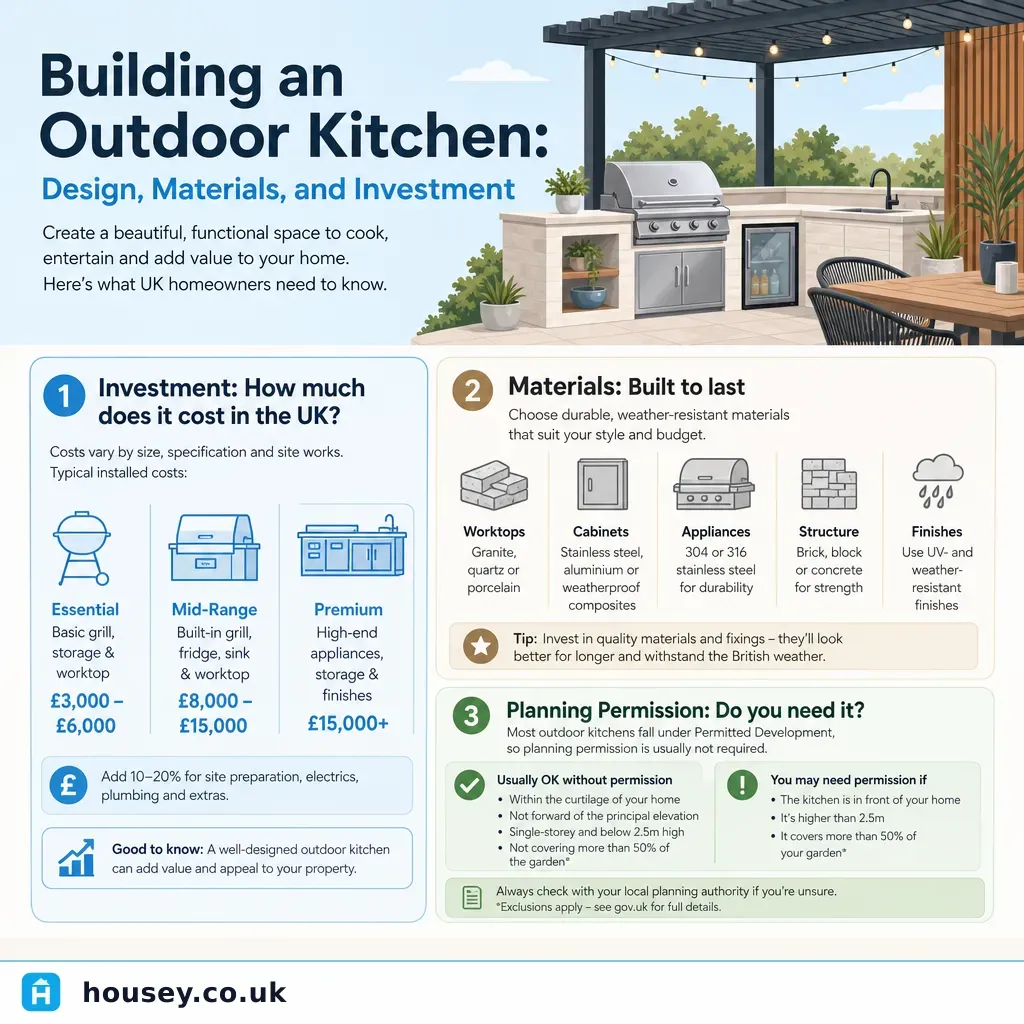
Building an Outdoor Kitchen: Design, Materials, and Investment
Building an outdoor kitchen in the UK costs roughly £3,000–£25,000 depending on size and materials.
 Improvement & Build
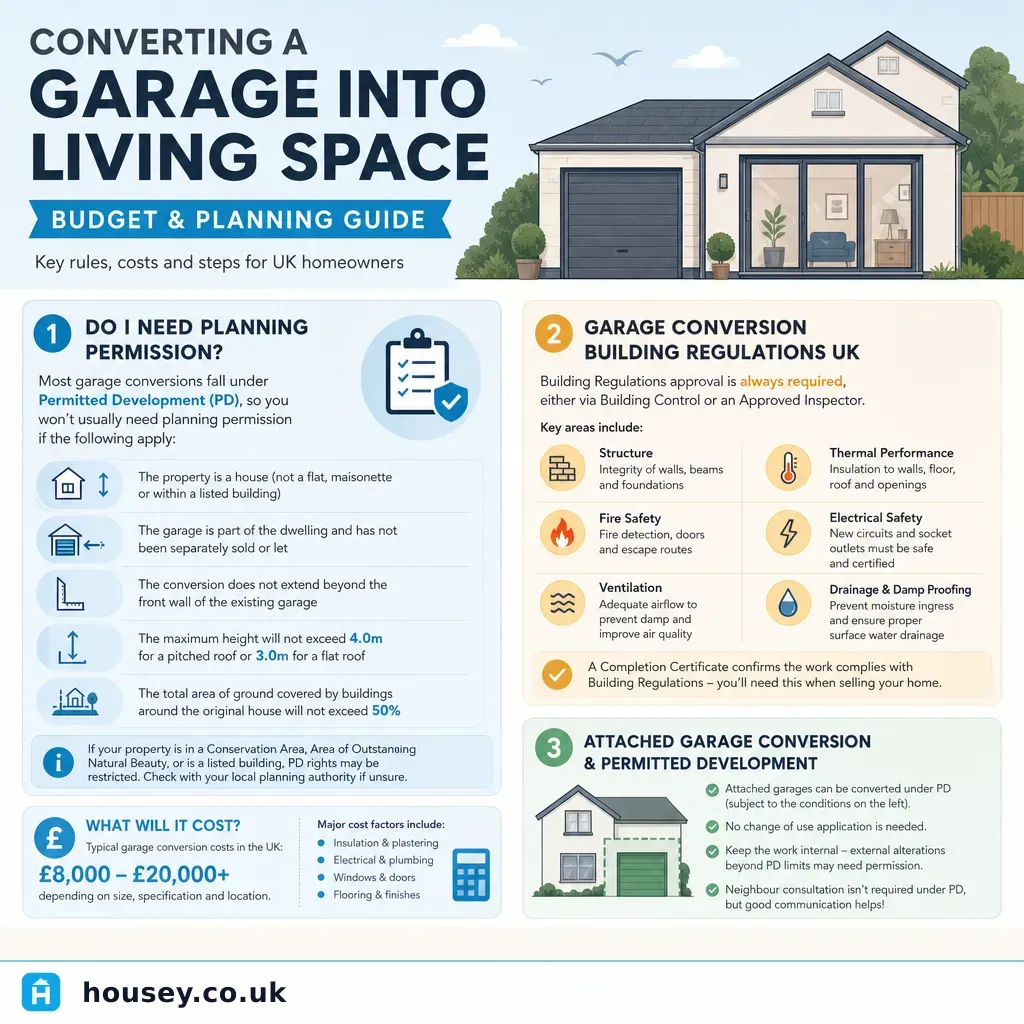
Converting a Garage into Living Space: Budget and Planning Guide
A single-garage conversion typically costs £8,000–£20,000 in the UK.
 Improvement & Build
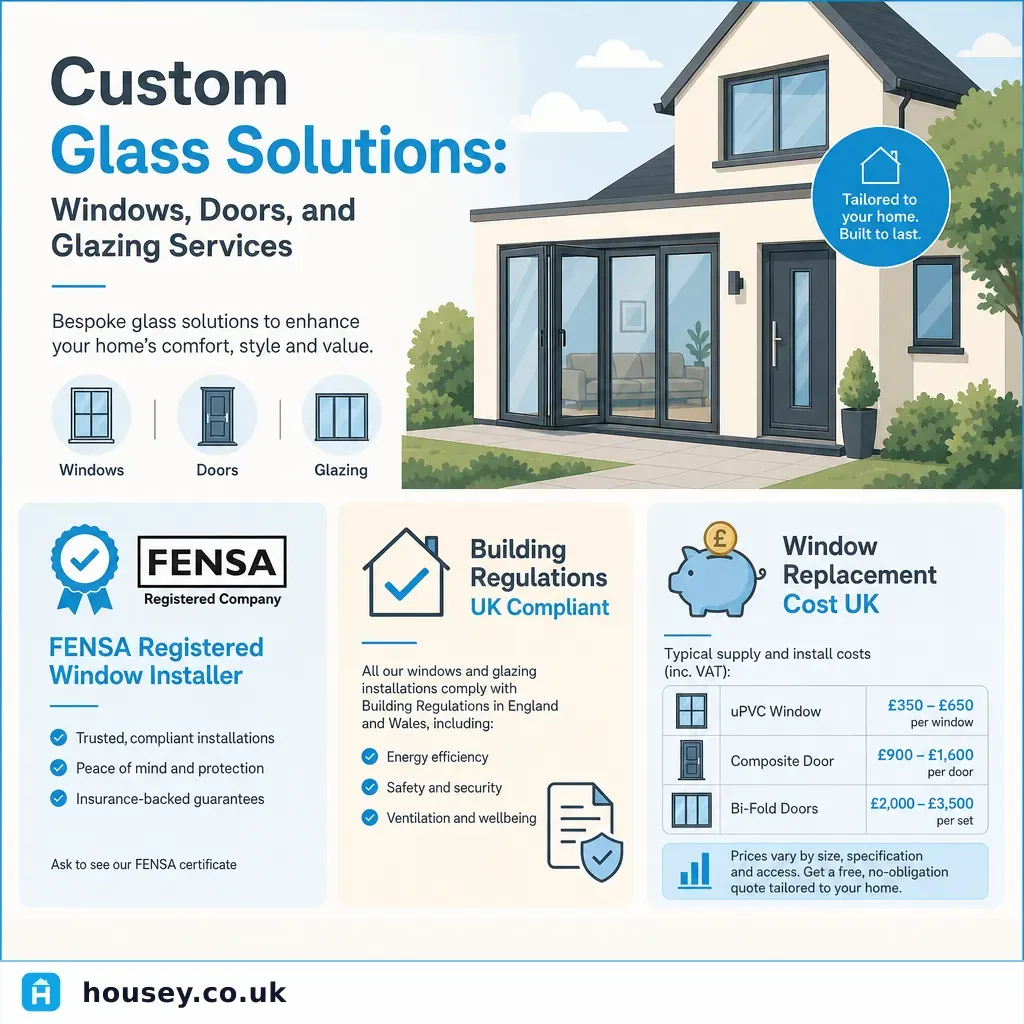
Custom Glass Solutions: Windows, Doors, and Glazing Services
Replacement windows and doors in England and Wales must comply with Building Regulations Approved Document L (2022), requiring a whole-window U-value of 1.