Cost of installing a wood burning stove
By Housey · Last reviewed 19th of May 2026
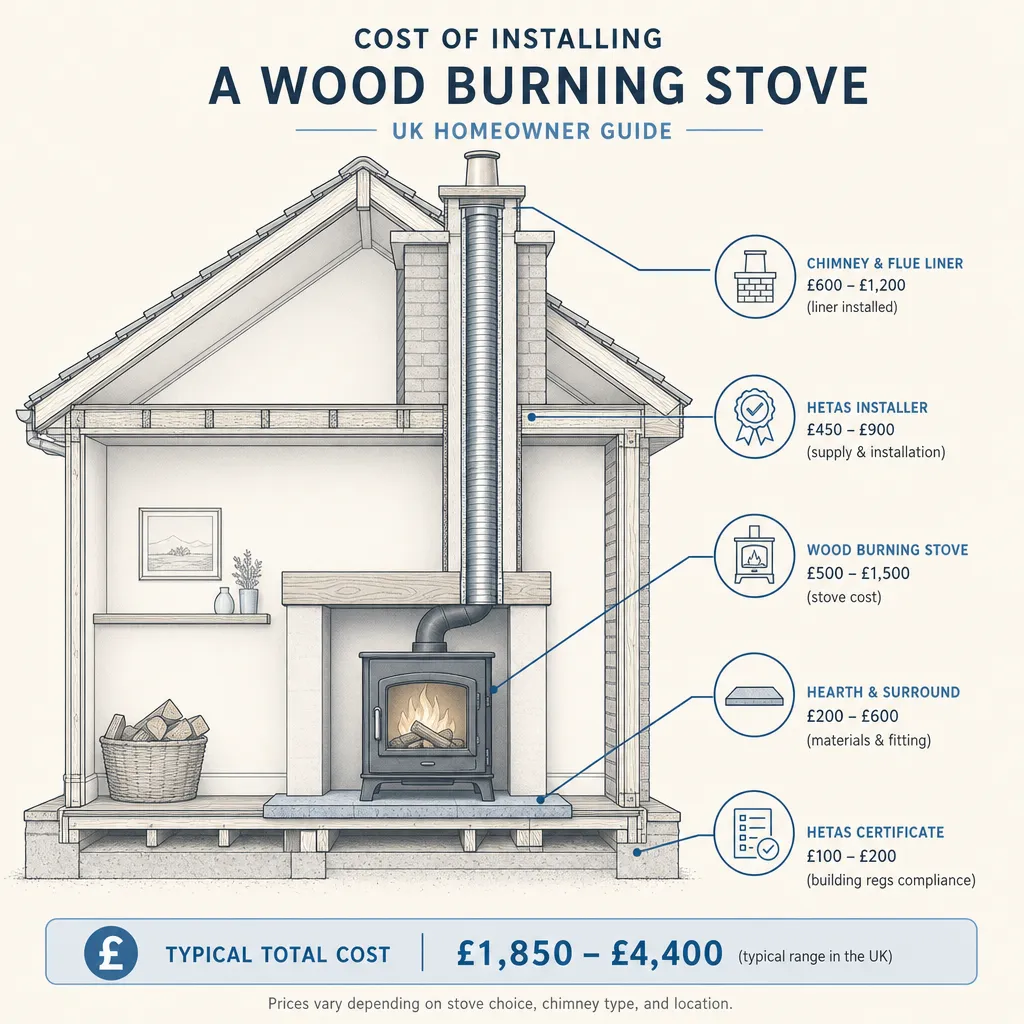
Cost of installing a wood burning stove
The appeal of a wood burning stove — radiant heat, a visible flame, and reduced reliance on gas central heating — draws many UK homeowners to consider installation each year. Whether you are fitting a stove into an existing chimney breast in a Victorian terrace or creating a new flue run in a 1990s new-build, the costs and regulatory obligations differ substantially. Getting accurate quotes requires understanding what is included, what is not, and which professionals must be involved.
Key points
- A HETAS-registered installer must carry out or supervise the installation and can self-certify compliance with Building Regulations Approved Document J, notifying building control on your behalf.
- Indicative total costs in the UK range from approximately £2,000 to £5,500+ depending on stove specification, flue route, and existing chimney condition (Indicative UK costs, last reviewed 2026-05-19).
- If no chimney exists, a twin-wall insulated flue system adds significantly to cost and may require a roofer to penetrate the roof covering safely.
- All new wood burning stoves installed after 1 January 2022 in England must be Defra-approved (Ecodesign-compliant) and meet Clean Air Zone requirements if your property is in a Smoke Control Area.
- Have your chimney swept and camera-inspected before installation; a blocked flue or structural defect found after the stove is fitted will add unplanned cost.
What drives the cost?
The stove itself
Stove prices vary considerably. A basic Defra-exempt cast-iron unit starts at roughly £400–£600 at trade; a mid-range model with wide glass, airwash, and a slimline profile costs £800–£1,500; high-specification Scandinavian or British-made stoves can reach £2,500 or more.
Heat output (measured in kW) should match your room volume. A 5 kW stove suits most UK living rooms up to approximately 50 m³; a larger or open-plan space may need 8–12 kW. An oversized stove run at low output will smoulder, reducing efficiency and increasing particulate emissions.
Flue liner installation
If your chimney has not been previously lined, or the existing liner is damaged, a new flexible stainless steel liner is needed. Typical indicative costs:
Chimney scenario | Indicative liner cost |
|---|---|
Single-storey chimney, straight run (~4 m) | £400–£800 |
Two-storey chimney (~6–8 m) | £700–£1,200 |
Long or awkward run with offsets | £1,000–£1,800 |
No chimney — twin-wall insulated external flue | £1,500–£3,000+ |
Indicative UK costs, last reviewed 2026-05-19. Costs vary by region and installer.
Hearth and register plate
A non-combustible hearth is required under Approved Document J if one is not already present. The minimum forward projection from the stove opening is 300 mm, with a minimum width of 840 mm. Fabricated slate or stone hearths typically cost £150–£500 supplied and fitted. A register plate to seal the throat above the stove and direct gases into the liner costs approximately £80–£200.
HETAS notification and building control
When a HETAS-registered installer carries out the work, they self-certify compliance and notify building control on your behalf. This typically adds £200–£400 to the installer's invoice. If you use a non-HETAS installer, you must submit a building regulations application directly — local authority building control application fees vary but are commonly £200–£350. Always obtain the HETAS certificate: mortgage lenders and conveyancers will ask for it on resale.
Chimney sweeping before and after
A pre-installation sweep and inspection costs approximately £60–£100. Some HETAS installers include a post-installation sweep in their quote; confirm this in writing before instructing.
Installation cost comparison by scenario
Scenario | Approximate total cost (supply and install) | Notes |
|---|---|---|
Existing working lined chimney, basic stove | £1,200–£2,200 | Less common; most older chimneys benefit from a new liner |
Existing chimney with new stainless liner, mid-range stove | £2,500–£4,000 | Most typical UK scenario |
No chimney, twin-wall flue, mid-range stove | £3,500–£6,000+ | Roofer involvement likely; structural assessment may be needed |
Inglenook or large opening with custom surround | £3,000–£7,000+ | Brickwork, lintel work, and remodelling add cost |
Indicative UK costs, last reviewed 2026-05-19. Obtain at least three written quotes from HETAS-registered installers.
What to ask before accepting a quote
- Is the stove Defra-approved and Ecodesign-compliant? If my property is in a Smoke Control Area, is it listed as an exempt appliance?
- Are you HETAS-registered, and does this quote include self-certification and building control notification?
- Does the price include the flue liner, register plate, and hearth fabrication?
- Have you allowed for a chimney sweep and camera inspection before starting?
- What happens if the chimney is found to be blocked or structurally unsound once work begins?
- Does the quoted figure include the HETAS completion certificate?
- Is VAT included?
- What warranty do you offer on the stove and on your installation workmanship?
Smoke Control Areas
If your property is in a Smoke Control Area — most London boroughs and many city-centre postcodes across England — only Defra-exempt appliances may be used, and only approved fuels may be burned. Burning wood logs on an open fire or in a non-exempt stove in a Smoke Control Area is an offence under the Clean Air Act 1993. Check your local council's records or the Defra Smoke Control Area exemptions database before specifying a stove.
Important limitations
This article provides general guidance on typical UK wood burning stove installation costs and regulatory requirements as of May 2026. Costs vary significantly by region, property type, chimney condition, and stove specification. Building regulations compliance, Smoke Control Area restrictions, listed building obligations, and planning requirements depend on your specific property and local authority. This article does not constitute planning, legal, or fire safety advice — consult a HETAS-registered installer and your local building control authority before committing to any works.
What to ask a qualified professional
Before instructing a HETAS-registered installer, consider asking:
- Can you confirm whether my property falls within a designated Smoke Control Area?
- Does my chimney breast require a structural engineer's assessment — particularly if it has been partially removed at an upper floor?
- Is the existing chimney pot and cap suitable, or does it require replacement as part of this installation?
- What ventilation provisions does Approved Document J require for my room volume and stove output?
- Will any planning permission or listed building consent be needed given my property's designation?
- If a roofer is needed for a twin-wall flue penetration, will you coordinate that work or should I instruct them separately?
When to get professional help
Consult a qualified professional before starting any work if:
- The chimney breast has been fully or partially removed at an upper floor level — this is a structural concern requiring expert assessment.
- There are signs of smoke penetration through the chimney breast wall, persistent damp patches on the breast, or a history of chimney fires.
- You live in a listed building or conservation area, where a heritage officer or experienced HETAS installer should review the proposal before you proceed.
- A roofer is needed to penetrate or modify the roof covering for a twin-wall flue — this work should be coordinated carefully with your stove installer.
How Housey can help
If your stove installation requires roof work for a twin-wall flue, Housey can connect you with experienced roofers who can handle the penetration and weathering safely. For projects involving structural building work around a new chimney breast or fireplace opening, our network of qualified extension builders can assist with the masonry and construction element.
Frequently asked questions
Do I need building regulations approval for a wood burning stove?
Yes. Installing a fixed solid-fuel appliance is notifiable under Building Regulations Approved Document J. A HETAS-registered installer can self-certify and notify building control on your behalf. If you use an unregistered installer, you must submit a separate building notice to your local authority building control and pay the applicable fee.
How long does a wood burning stove installation take?
A straightforward installation into an existing lined chimney typically takes one to two days. A more complex project involving a new flue run, significant brickwork, or a new hearth may take three to five days. Factor in lead times for materials and installer availability — popular HETAS installers in autumn and winter often have waiting lists of several weeks.
Can I install a wood burning stove myself?
You can supply the stove and prepare the hearth, but the flue connection and appliance installation must be carried out by a competent person. Self-certification by a HETAS-registered installer is the standard route for building regulations compliance. Installing without certification creates problems when you sell your home and may invalidate your buildings insurance policy.
What fuel should I use in a wood burning stove?
Use only Ready to Burn certified kiln-dried wood (moisture content 20% or below) or Defra-approved smokeless solid fuel. Wet or unseasoned wood produces excessive smoke, creosote deposits, and particulate emissions. Burning household waste, treated timber, or coal in an Ecodesign appliance will damage the stove and is an offence in Smoke Control Areas.
Sources and further reading
- Building Regulations Approved Document J: Combustion Appliances and Fuel Storage Systems — GOV.UK
- HETAS: Registered installers and approved appliances — HETAS
- Defra: Smoke Control Area exemptions checker — Department for Environment, Food and Rural Affairs
- Clean Air Act 1993 — legislation.gov.uk
- Wood-fuelled heating systems — Energy Saving Trust
Useful next reads
 Improvement & Build
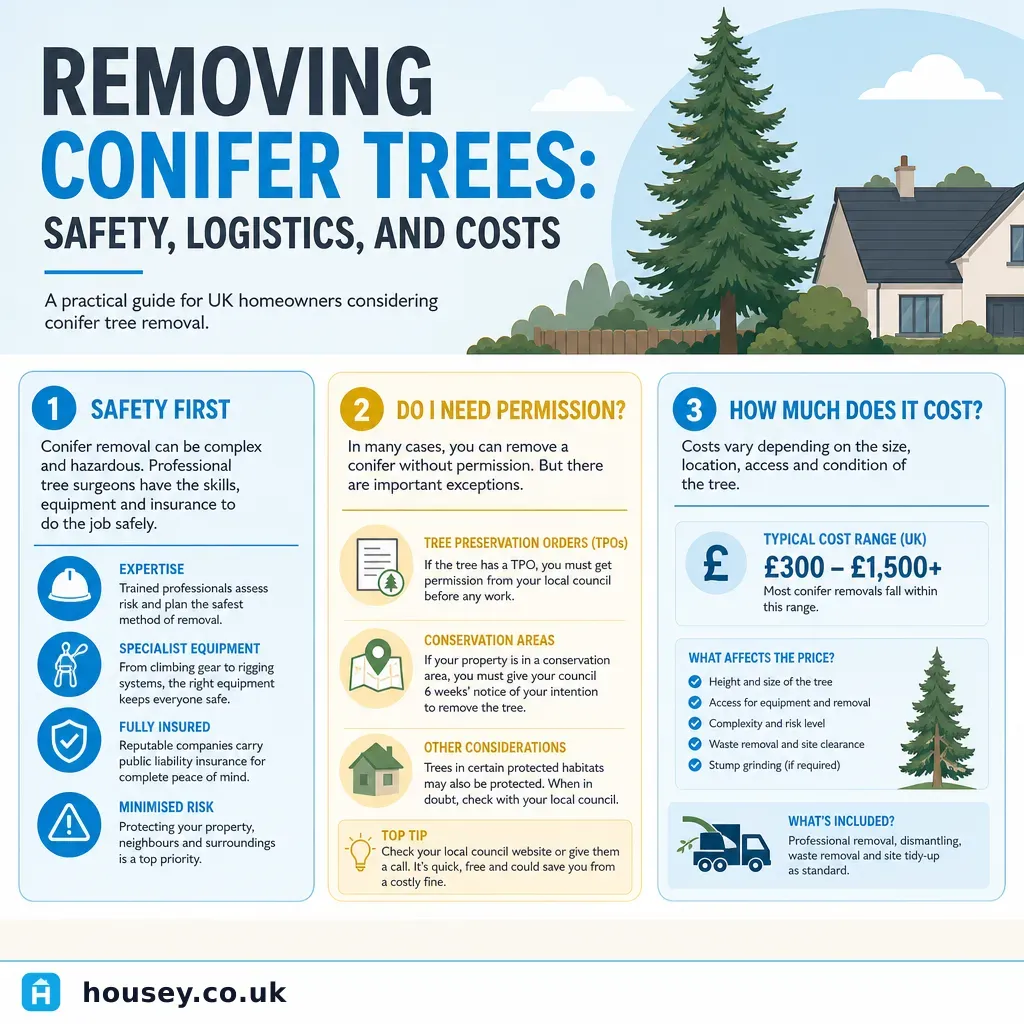
Removing Conifer Trees: Safety, Logistics, and Costs
Removing a conifer tree in the UK usually requires a qualified tree surgeon.
 Improvement & Build
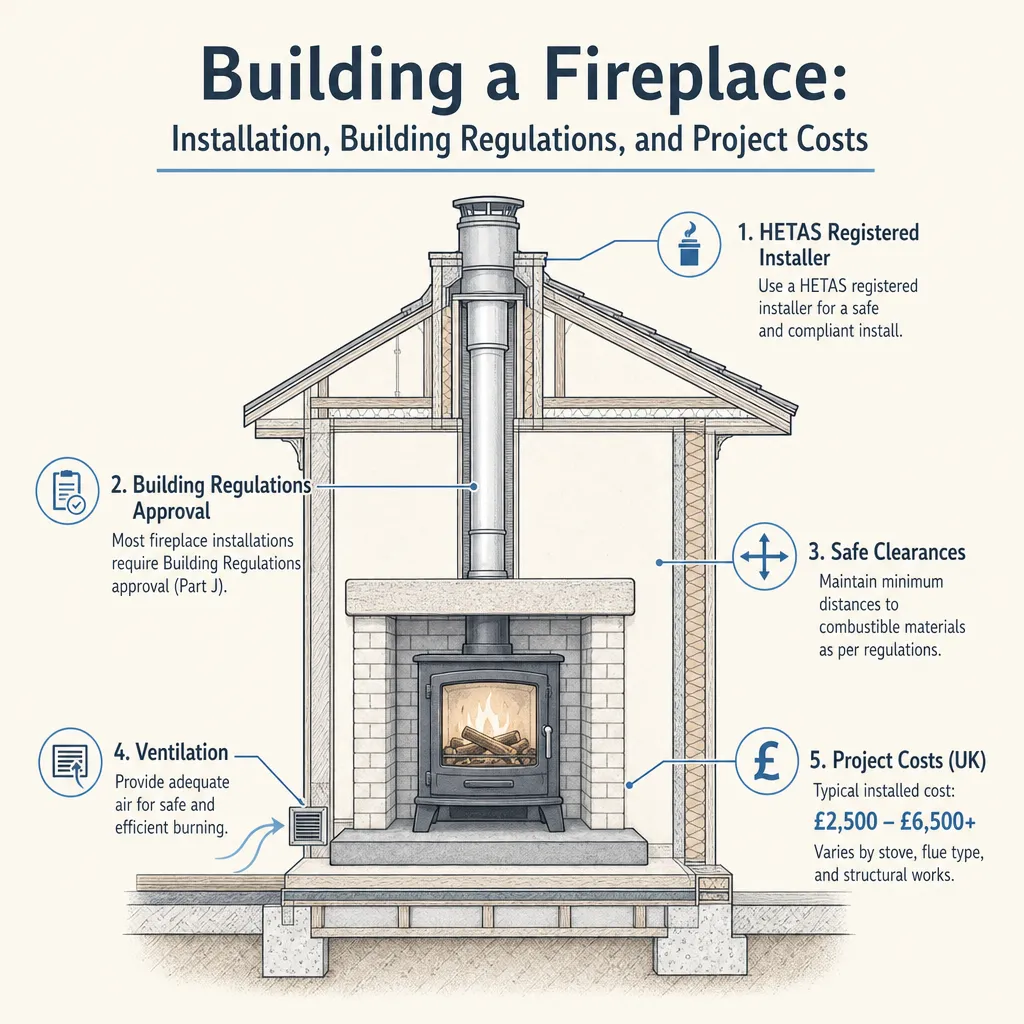
Building a Fireplace: Installation, Building Regulations, and Project Costs
Installing a fireplace or wood-burning stove in a UK home is notifiable work under Building Regulations Part J.
 Improvement & Build
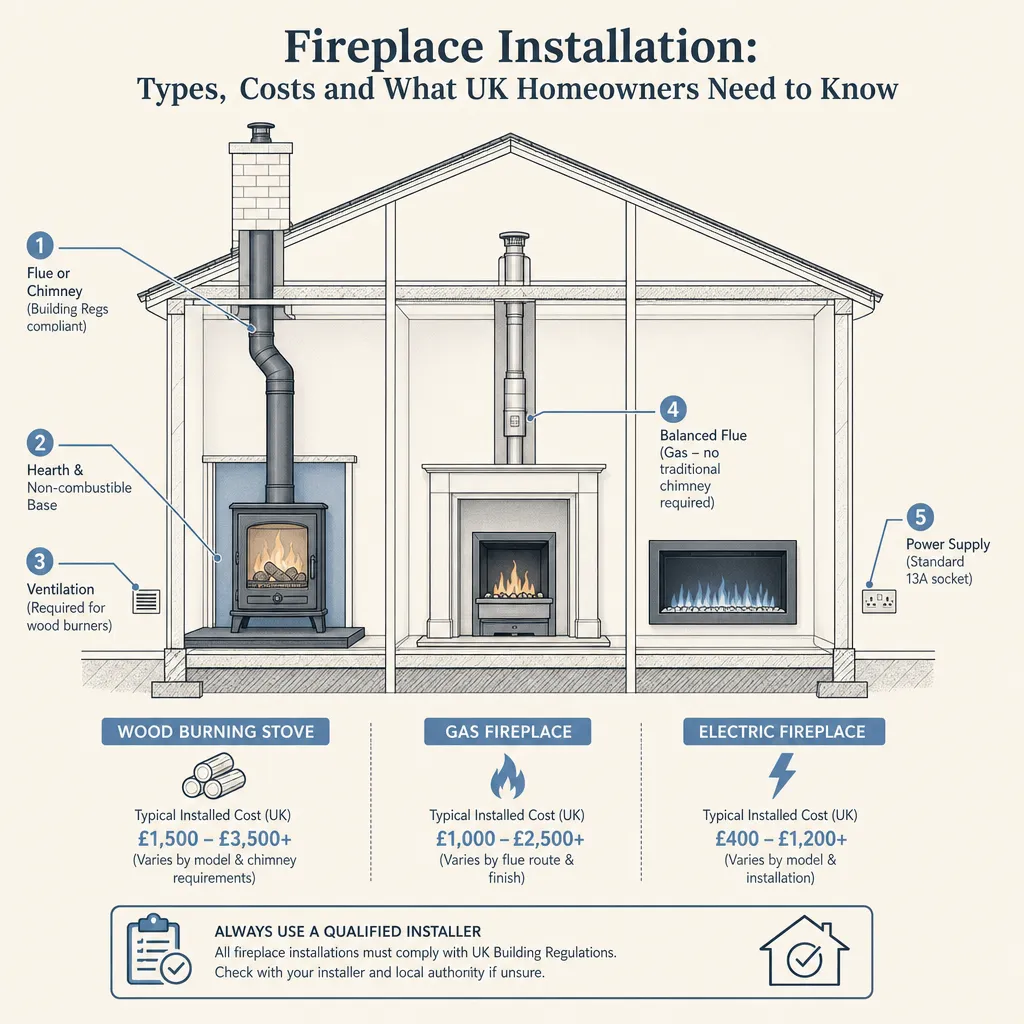
Fireplace Installation: Types, Costs and What UK Homeowners Need to Know
Fireplace installation in the UK is governed by Building Regulations Part J.
 Improvement & Build
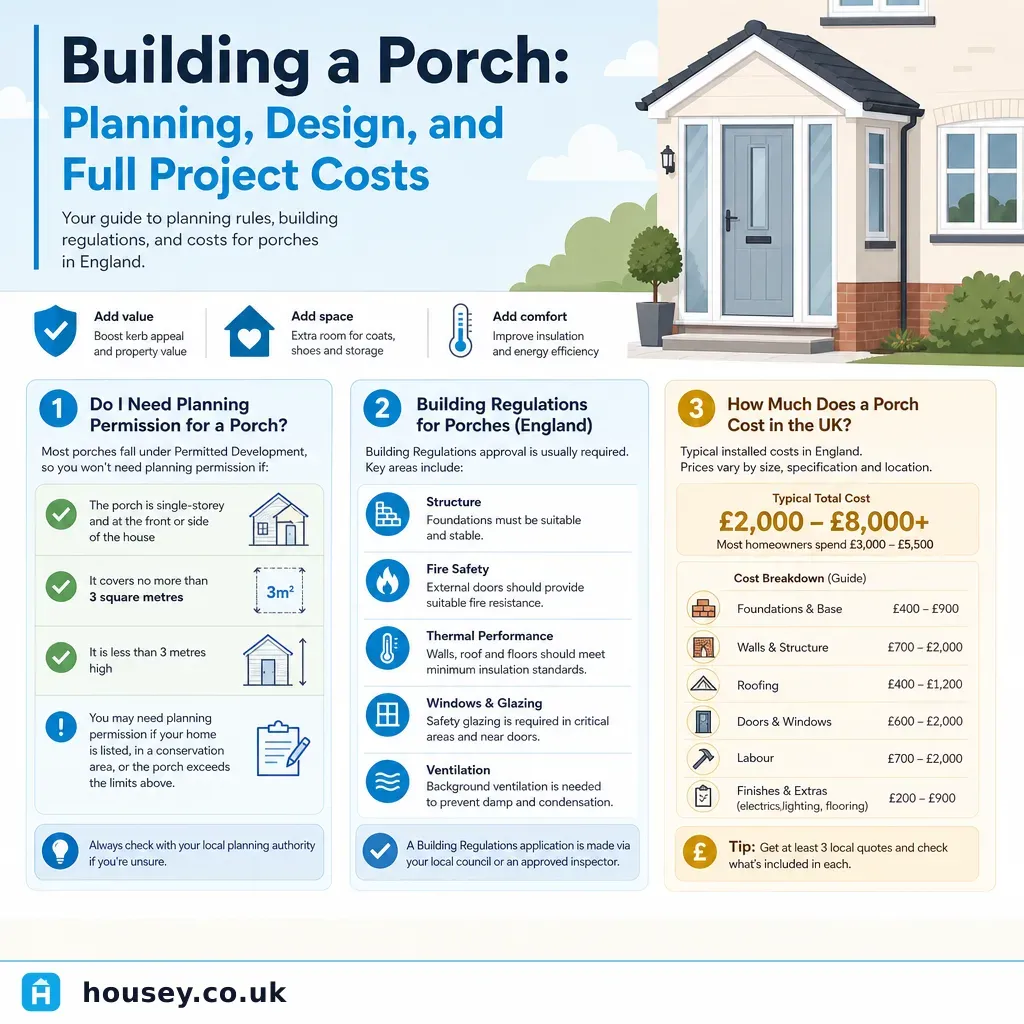
Building a Porch: Planning, Design, and Full Project Costs
Most porches with an external floor area of 3m² or less can be built without planning permission in England under permitted development rights, but building regulations approval is almost always required.
 Improvement & Build
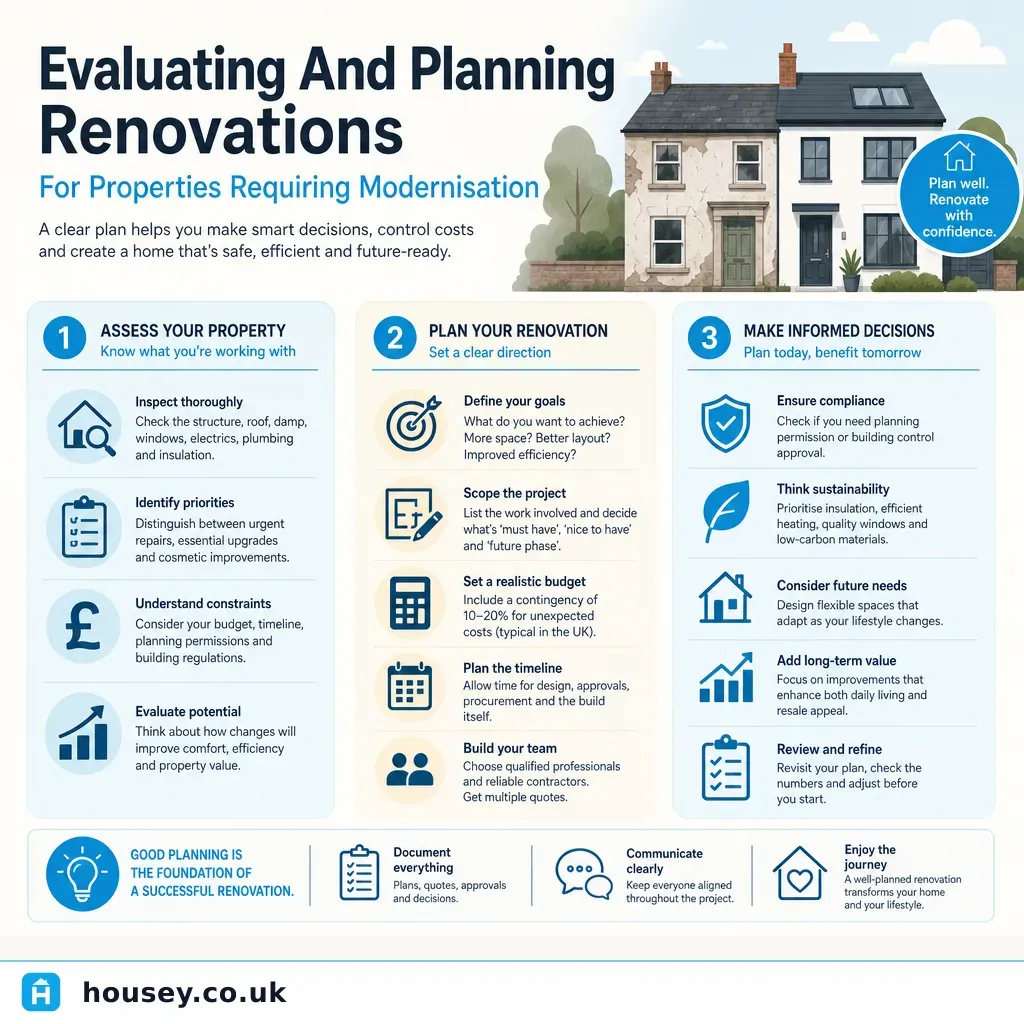
Evaluating And Planning Renovations For Properties Requiring Modernisation
Start by commissioning a condition survey — RICS Level 3 for pre-1919 properties — to identify structural defects, damp, and services issues before finalising a budget.