Building an Accessory Dwelling Unit: Planning Permission and Regulations
By Housey · Last reviewed 1st of June 2026
Building an Accessory Dwelling Unit: Planning Permission and Regulations
Whether you are creating space for an elderly relative, generating supplementary income, or future-proofing your home, adding a self-contained annexe — commonly called a granny flat, in-law suite, or accessory dwelling unit — is one of the most consequential residential projects a UK homeowner can undertake. The planning and building regulations framework for secondary dwellings is materially more complex than for a standard extension, and the consequences of an incorrect approach range from enforcement notices to complications at the point of sale. Understanding the regulatory landscape before commissioning design drawings is time well spent.
Key points
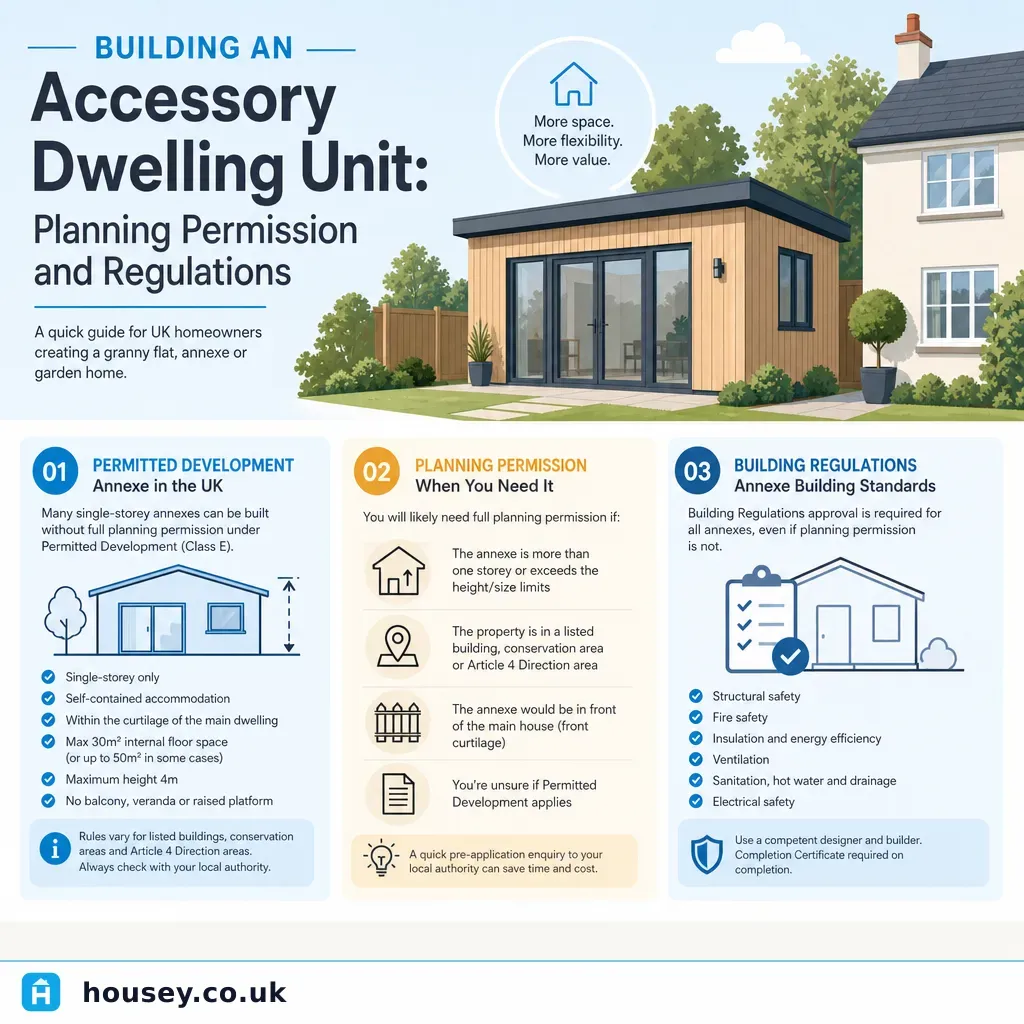
- A fully self-contained annexe with its own kitchen, bathroom, and independent entrance will almost always require full planning permission in England, as it constitutes a new dwelling (Use Class C3) in planning terms.
- Permitted development rights under Schedule 2, Part 1, Class E of the Town and Country Planning (General Permitted Development) (England) Order 2015 (GPDO 2015) allow certain outbuildings without planning permission but expressly prohibit their use as a separate dwelling unit.
- Building regulations approval is required by law for any new habitable structure, covering structure (Part A), fire safety (Part B), energy efficiency (Part L), ventilation (Part F), and drainage (Part H), among other Approved Documents.
- An annexe classed as ancillary to the main dwelling — occupied by a dependent family member and not let independently — may in some councils be treated as part of the main residential use, but local plan policies vary significantly and a pre-application enquiry is usually advisable.
- A separately assessed annexe may attract its own council tax band; a 50% mandatory discount typically applies where a close relative is the occupant.
Do you need planning permission for an annexe?
There is no single national rule that applies to every situation. Whether planning permission is required depends on what you build, how you intend to use it, and your local planning authority's (LPA) adopted policies.
The key planning distinction: dwelling or ancillary use?
English planning law draws a clear line between two categories:
- A new dwelling — a self-contained unit capable of independent occupation, with its own kitchen, bathroom, and entrance. Creating one almost always requires full planning permission as either a new residential unit or a material change of use of an existing structure.
- An ancillary structure — a building that serves the main house: a garage, garden room, or workshop. Class E permitted development allows certain outbuildings without planning permission, subject to size and height conditions. However, this PD class explicitly states that the outbuilding cannot be used as a dwelling.
Adding a kitchen and bathroom to any outbuilding converts it, in most LPAs' view, into a separate dwelling — triggering a planning application requirement.
When might an annexe avoid full planning permission?
Some LPAs take a more flexible approach to family annexes, particularly where the structure is attached to or immediately adjacent to the main house, occupied by a dependent relative, and not marketed or let commercially. In such cases, the LPA may accept that the annexe forms part of the main C3 residential use, sometimes subject to a planning condition restricting occupancy to a family member.
This position is not universal. Whether the ancillary argument holds depends on your council's local plan policies, the physical integration of the annexe with the main house, and whether shared utilities and garden access support that argument. A pre-application enquiry — charged by most English councils at between £50 and £300 for householder matters — provides a written planning steer before design fees are committed.
Permitted development outbuilding limits (England)
Even where no kitchen or bathroom is planned, PD Class E outbuildings must satisfy the following conditions:
- Must not cover more than 50% of the curtilage, excluding the original house footprint.
- Must not project forward of the principal elevation facing the highway.
- Maximum eaves height 2.5 m; maximum overall height 4 m (dual pitched roof) or 3 m.
- Must be at least 2 m from a property boundary if the structure exceeds 2.5 m in height.
- PD rights are removed for properties in Conservation Areas, National Parks, Areas of Outstanding Natural Beauty (AONB), and World Heritage Sites — verify your postcode before proceeding.
- PD rights do not apply to listed buildings or their curtilages.
Which planning route do I need? — decision guide
- Carry out a pre-application enquiry if you are uncertain whether your design will be classed as a separate dwelling or an ancillary annexe by your specific LPA.
- Apply for full planning permission if you intend to create a unit with its own entrance, kitchen, and bathroom; let it commercially; or build a detached unit in most council areas.
- Verify permitted development conditions if the structure will be used incidentally — garden room, gym, home office — without a kitchen or bathroom, and keep a written record confirming those conditions are met.
- Instruct a planning consultant if your property is listed, in a Conservation Area, or subject to an Article 4 Direction removing standard PD rights.
- Check local plan rural policies if your site is in open countryside — some LPAs actively support rural family annexes; others restrict new residential units outside defined settlement boundaries.
Building regulations: what is always required
Regardless of the planning outcome, building regulations approval is a statutory requirement for any new habitable structure. An annexe typically triggers the following Approved Documents:
Approved Document | What it covers | Typical requirement |
|---|---|---|
Part A — Structure | Foundations, walls, roof | New foundations; structural engineer's calculations |
Part B — Fire safety | Escape routes, fire separation | 30-minute fire separation from main house; interlinked smoke alarms |
Part C — Moisture | Damp-proofing, waterproofing | Damp-proof course; floor slab moisture barrier |
Part E — Sound | Resistance to passage of sound | 45 dB DnT,w between attached units |
Part F — Ventilation | Fresh air supply, extraction | Whole-building ventilation strategy |
Part G — Sanitation | Water supply, drainage, bathrooms | Separate drainage connections to sewer or soakaway |
Part L — Energy efficiency | U-values, air tightness | Current new-build energy performance standards |
Part M — Accessibility | Step-free access, door widths | Level thresholds; minimum 775 mm clear door opening |
Part P — Electrical safety | Fixed electrical installations | Certified by a registered competent person or building control |
Approval can be obtained through your LPA's building control team or a Registered Building Control Approver (reclassified from Approved Inspector under the Building Safety Act 2022). A building notice or full plans application must be submitted before work begins. A completion certificate is issued once all inspection stages pass — retain this document for any future sale or remortgage.
Community Infrastructure Levy and other financial considerations
If your annexe is granted planning permission as a new dwelling, your LPA may apply the Community Infrastructure Levy (CIL). CIL rates are set locally and range from zero to over £300 per square metre of new floorspace in some areas — check your council's published charging schedule before budgeting. Some authorities offer a self-build relief or exemption; this must be applied for before work commences, as retrospective claims are not accepted.
Council tax and annexe dwellings
A separately valued annexe will receive its own council tax assessment. Under the Local Government Finance Act 1992 (as amended), a 50% mandatory discount applies where the annexe is occupied by a relative of the main dwelling's occupant or is used by a qualifying disabled person. Confirm the applicable policy with your local billing authority — it does not apply automatically in all cases.
Important limitations
This article provides general information about the planning and building regulations framework in England as at June 2026. Rules in Scotland, Wales, and Northern Ireland differ materially — consult the relevant planning authority and qualified professionals in your jurisdiction. Planning policy changes frequently and council attitudes vary. Nothing here constitutes planning advice, legal advice, or a definitive statement of your permitted development rights. Your property history, site constraints, and LPA policies will determine the correct approach.
What to ask a qualified professional
Before instructing planning consultancy specialists or building control consultants, prepare these questions:
Planning consultant:
- Is a pre-application enquiry advisable for my site, and will the LPA provide a written response I can rely on?
- Does my property carry Article 4 Directions, Conservation Area designation, or existing planning conditions restricting outbuildings or extensions?
- What is the most likely policy position of my LPA on an annexe of this size, type, and relationship to the main house?
- If an ancillary occupancy condition is attached, what are the long-term implications for the property's value and marketability?
- Will CIL apply, and are any exemptions available for my project?
Building control:
- Which Approved Documents are most relevant to my design, and are any specialist reports — structural, acoustic, or energy — required at submission?
- Will a structural engineer's calculations be needed for foundations and any new wall openings?
- What are the inspection stages during construction, and who is responsible for booking them?
- How long does the completion certificate process typically take from practical completion?
When to get professional help
Speak to a planning consultant before commissioning a full design if:
- Your property is listed or in a Conservation Area.
- You have received any previous enforcement notices or have existing planning conditions on the site.
- You intend to let the annexe on the open market rather than to a family member.
- Your site is in a rural location where residential development in open countryside is restricted.
- You are uncertain whether your council will treat the proposed annexe as ancillary or as a separate dwelling.
Instructing a building control approver before breaking ground is a legal requirement — it cannot be deferred or addressed retrospectively without significant risk to the project.
How Housey can help
Housey connects homeowners with vetted planning consultancy specialists who can handle pre-application enquiries, advise on your LPA's local plan policies, and manage a full planning application where required. Our network of building control consultants can guide your project from initial notice through to completion certificate.
Frequently asked questions
Can I build a granny flat in my garden without planning permission?
In most cases, no. If the structure is fully self-contained with its own kitchen, bathroom, and independent entrance, most local planning authorities treat it as a new dwelling requiring full planning permission. An unserviced outbuilding may be permitted development subject to size limits, but you cannot legally use it as a separate living unit without planning consent.
Will my annexe need to meet the same energy standards as a new house?
Building regulations Part L applies to any new habitable structure. An annexe built in 2026 must meet current energy efficiency standards including insulation U-values and potentially a whole-building ventilation strategy. A building control approver or qualified energy assessor can advise on the most appropriate compliance route for your specific design.
Can I sell my house if the annexe was built without building regulations approval?
This creates a material risk at the point of sale. Buyers' solicitors will request building regulations completion certificates. If absent, the seller may need to obtain indemnity insurance, which may not fully protect the buyer. Retrospective regularisation is possible in some cases but is not guaranteed. Always obtain approval before building.
What happens if my annexe breaches planning rules?
Local planning authorities can issue an enforcement notice requiring the breach to be remedied, potentially including demolition or cessation of use. Enforcement action can be taken for up to four years for operational development or ten years for a material change of use. Always confirm your planning position before starting work.
Sources and further reading
- Town and Country Planning (General Permitted Development) (England) Order 2015 — legislation.gov.uk
- Planning Practice Guidance: When is permission required? — GOV.UK
- Building Regulations 2010 — Approved Documents — GOV.UK
- Community Infrastructure Levy guidance — GOV.UK
- Council Tax — annexe discounts and exemptions — GOV.UK
Useful next reads
 Planning & Pre-Build
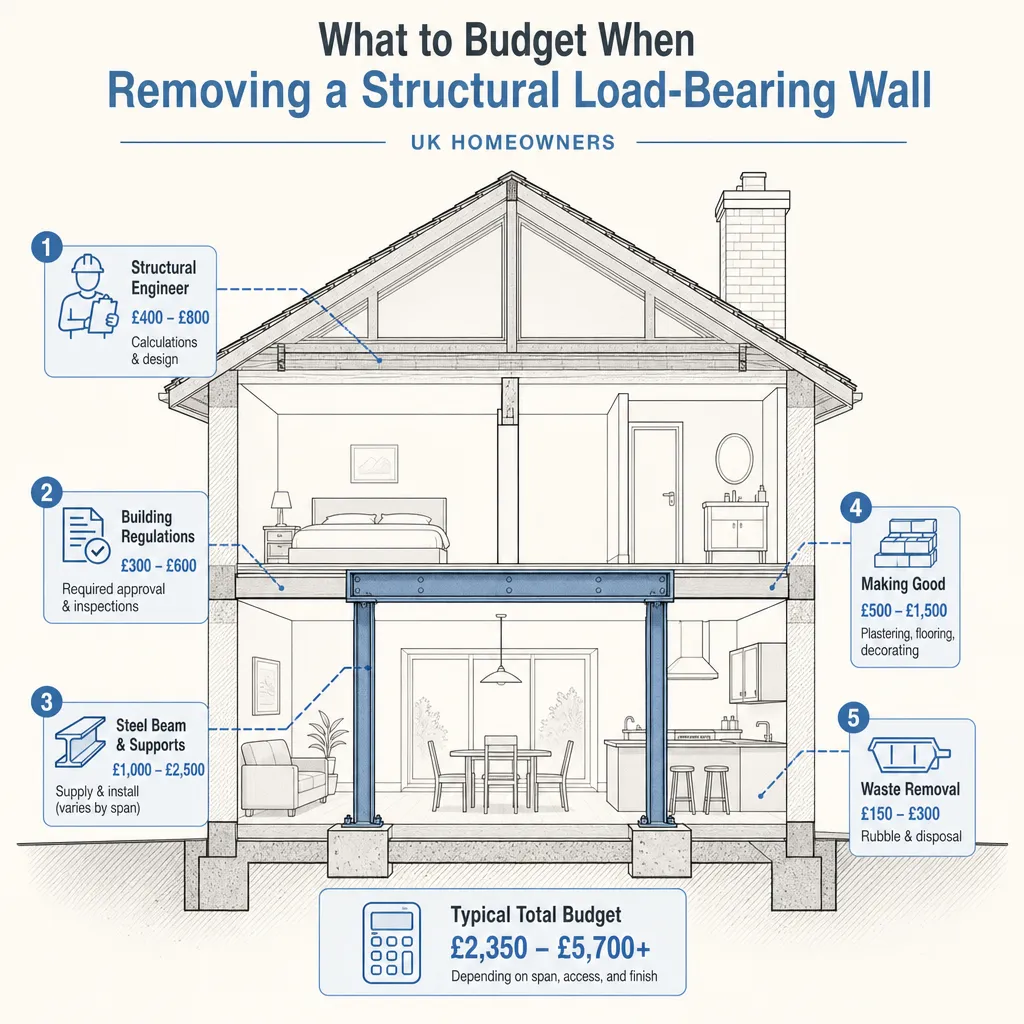
What to Budget When Removing a Structural Load-Bearing Wall
Removing a load-bearing wall in a typical UK home costs £2,500–£8,000 or more in total, covering a structural engineer's calculations, Building Regulations approval, the steel beam, builder's labour, and replastering.
 Planning & Pre-Build
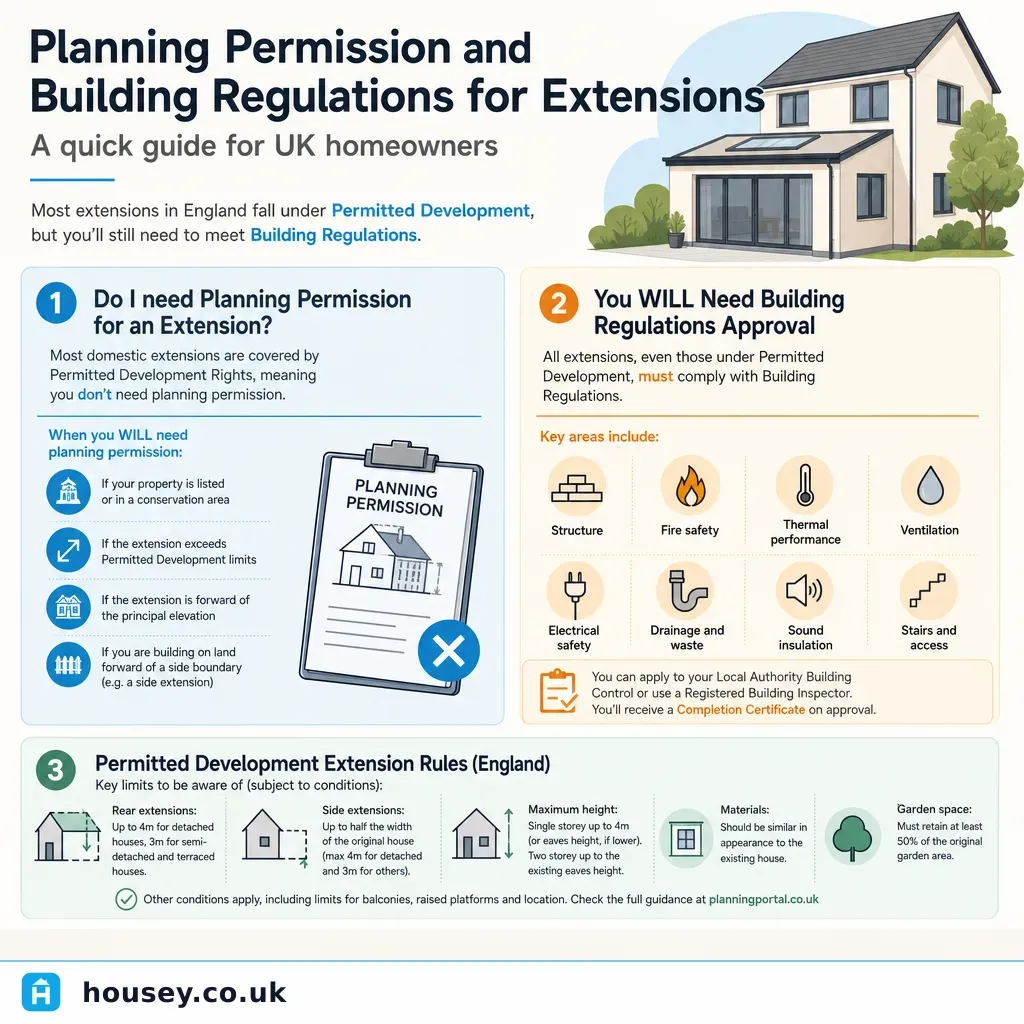
Planning Permission and Building Regulations for Extensions
UK home extensions usually require both planning permission and Building Regulations approval, though most smaller rear extensions qualify as Permitted Development under the GPDO 2015 and need no planning application.
 Planning & Pre-Build
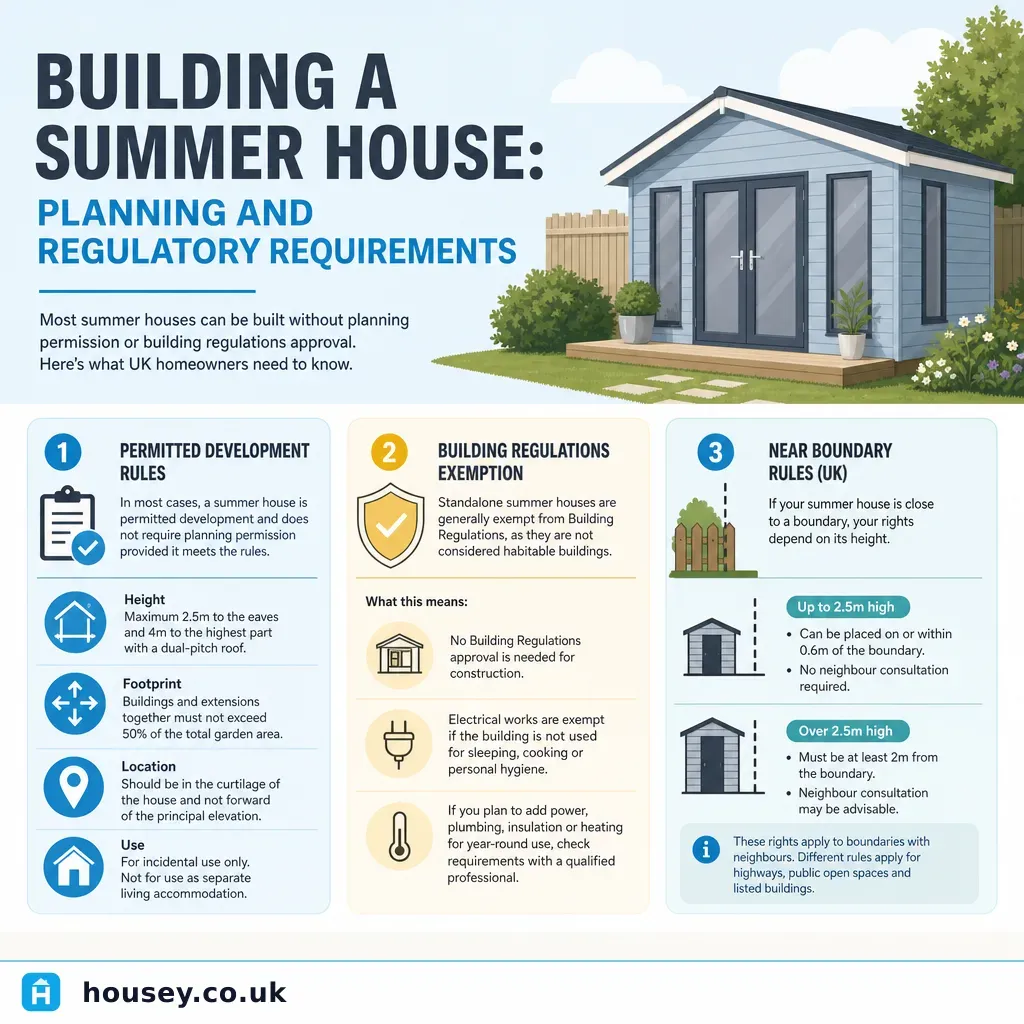
Building a Summer House: Planning and Regulatory Requirements
Most garden summer houses in England fall under Class E permitted development and need no planning permission, provided they are single-storey, within height limits, and not used for sleeping.
 Planning & Pre-Build
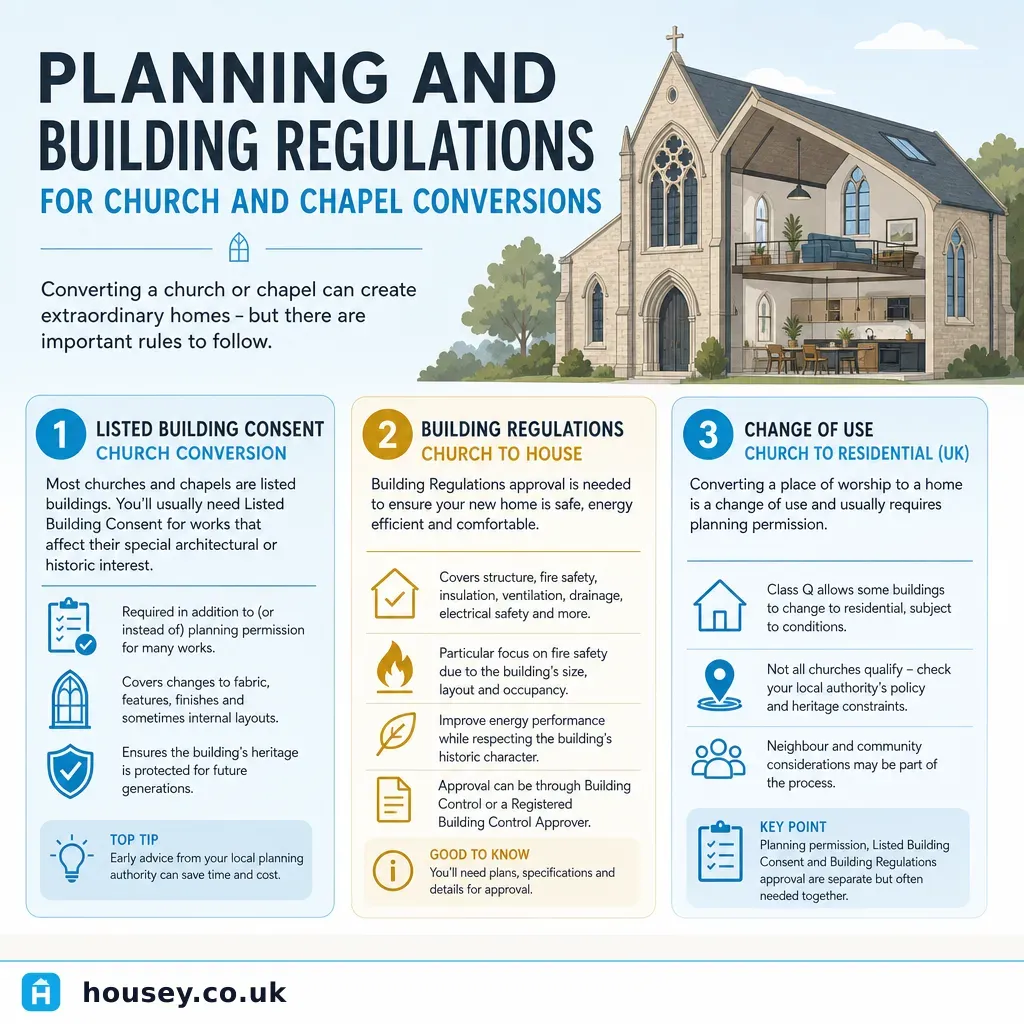
Planning and Building Regulations for Church and Chapel Conversions
Converting a church or chapel to residential use requires planning permission for change of use from Class F1 to Class C3, and listed building consent if the building is listed.
 Planning & Pre-Build
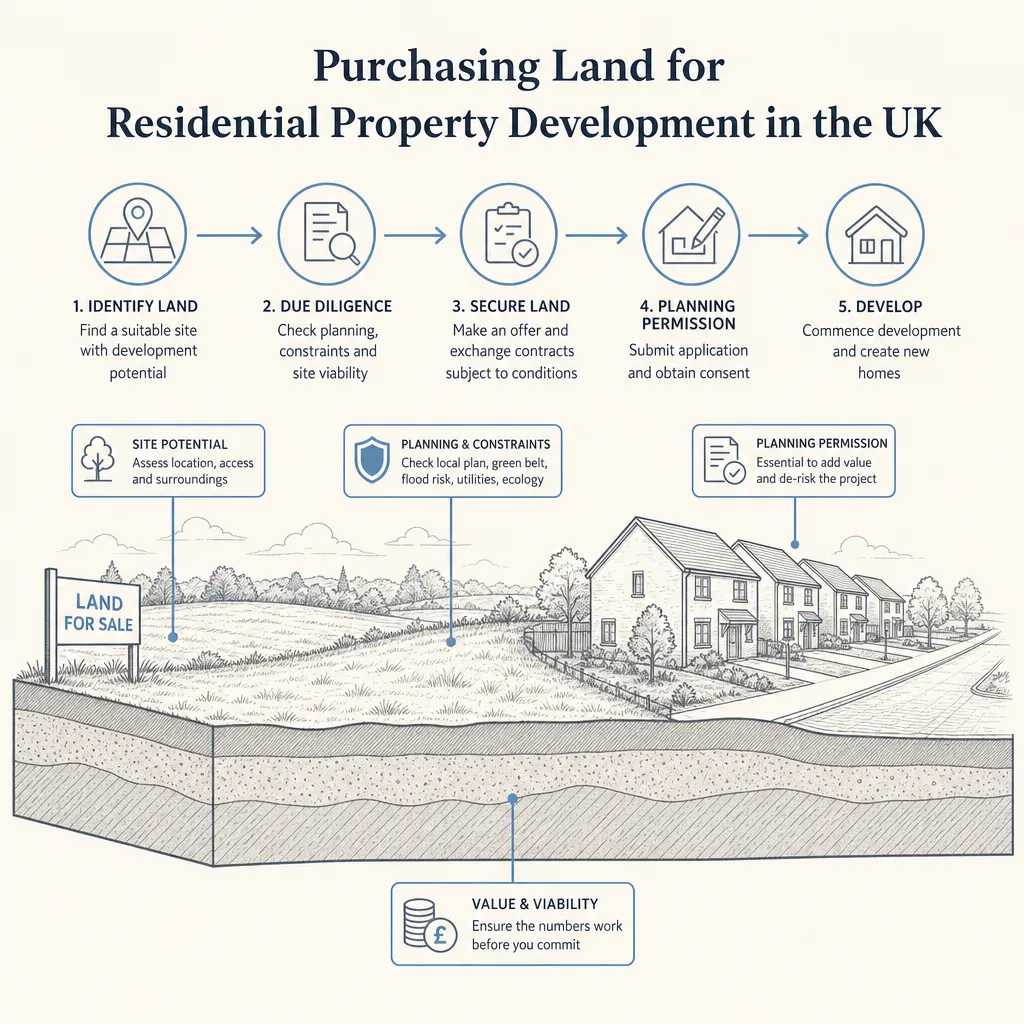
Purchasing Land for Residential Property Development in the UK
Buying development land in the UK involves due diligence on planning status, ground conditions, legal title, and utilities access before exchange.