Purchasing Land for Residential Property Development in the UK
By Housey · Last reviewed 31st of May 2026
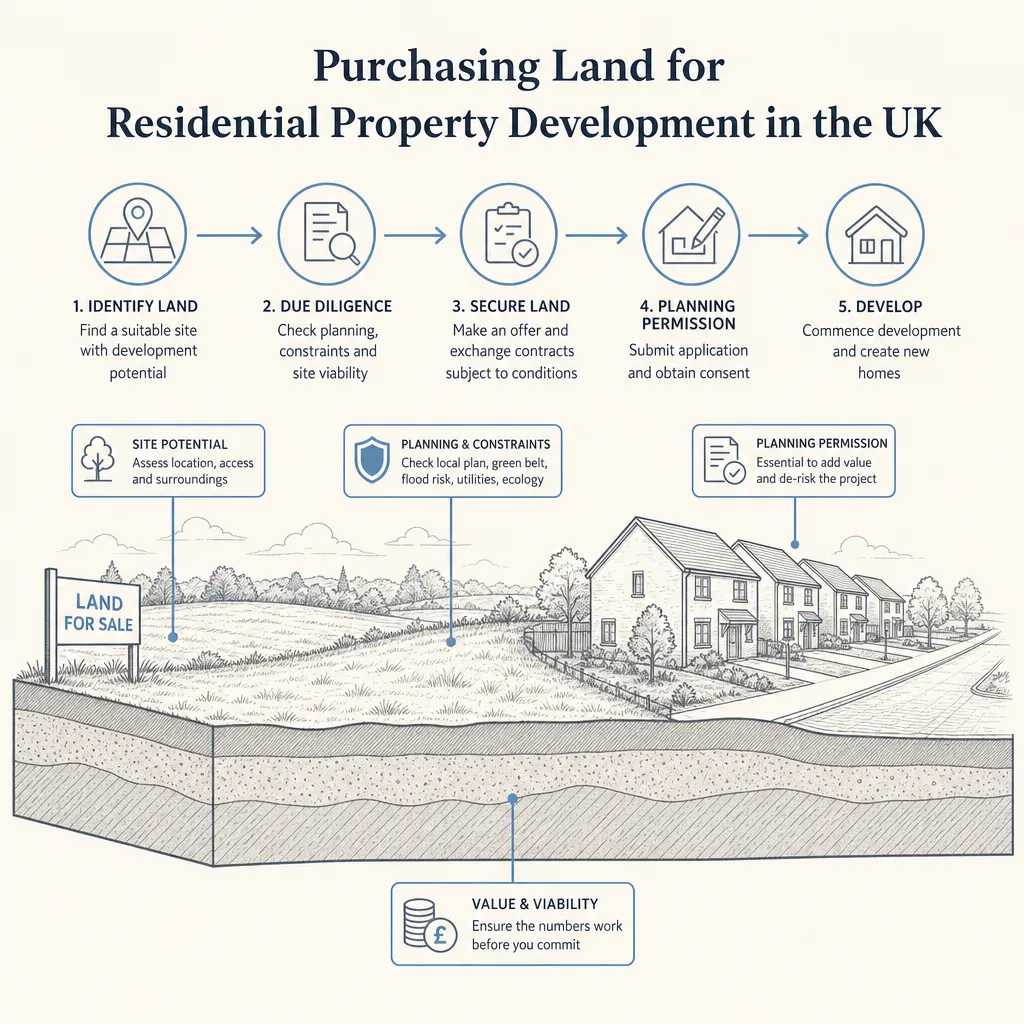
Purchasing Land for Residential Property Development in the UK
Land acquisition is one of the highest-stakes decisions in residential development, and mistakes made before exchange of contracts can be expensive or impossible to reverse. The question arises at a range of scales — from a single self-builder buying a plot with outline planning permission to a developer assembling a larger brownfield site — but the due diligence checklist is broadly the same across both. Planning status, ground conditions, legal title, utilities access, and infrastructure obligations all need to be understood before price negotiations are finalised.
Key points
- Development land in the UK is typically sold in one of three planning states: with full planning permission, with outline planning permission, or without any permission at all — and the price reflects each category significantly.
- Under the Community Infrastructure Levy (CIL) Regulations 2010, local planning authorities may charge a levy on new residential development; section 106 agreements under the Town and Country Planning Act 1990 are a separate mechanism for site-specific obligations including affordable housing contributions.
- Ground investigation reports — a Phase 1 environmental desk study and, where warranted, a Phase 2 geotechnical investigation — should be obtained before exchange where contamination, made ground, or poor bearing capacity is possible.
- Utility connections (gas, water, electricity, telecoms, drainage) are not automatically included in a land sale; each supply authority must be contacted to confirm capacity and indicative connection costs.
- Stamp Duty Land Tax (SDLT) applies to land purchases in England; Land Transaction Tax (LTT) applies in Wales; Land and Buildings Transaction Tax (LBTT) applies in Scotland — rates and thresholds differ between nations.
Understanding the planning status of development land
Planning status is the single most important factor in both the price and risk profile of a site:
Planning status | What it means | Typical price premium | Key risk |
|---|---|---|---|
Full planning permission | Detailed permission granted for a specific scheme | Highest — scheme is ready to build | Permission may have lapsed or carry onerous conditions |
Outline planning permission | Principle of development agreed; reserved matters (design, access) still to be approved | Medium-high | Reserved matters approval not guaranteed; conditions may be costly |
Allocated in local plan | Site identified for development but no permission yet | Medium | Allocation does not guarantee permission; process may be lengthy |
No permission (hope value) | No consent; buyer hopes to obtain planning | Lowest purchase price but highest risk | Planning refusal leaves land worth significantly less than paid |
Agricultural or greenbelt | Very strong presumption against development | Very low unless exceptional circumstances apply | Rarely suitable for residential; specialist planning advice essential |
Permission conditions — pre-commencement conditions, highways obligations, ecological mitigation — can add substantial cost to an apparently attractive site. A planning consultant should review all decision notices and condition schedules before exchange is considered.
Due diligence: key checks before exchange of contracts
Legal and title due diligence
A solicitor experienced in development land conveyancing should:
- Search HM Land Registry for title and any charges, covenants, or easements registered against the land.
- Check for restrictive covenants that may limit use, design, or density.
- Verify access rights — many plots have no direct highway frontage and rely on private rights of way.
- Examine any overage clauses the seller may seek to include, giving them a right to share in future planning uplift.
- Confirm environmental searches: Local Authority, Drainage, Coal Mining, and Environment Agency flood risk.
Technical and site due diligence
Assessment | Why it matters | Typical professional |
|---|---|---|
Phase 1 environmental desk study | Identifies historic uses and potential contamination risk | Environmental consultant |
Phase 2 ground investigation | Physical soil and groundwater testing where contamination or poor ground is possible | Geotechnical engineer |
Topographic and measured survey | Defines levels, boundaries, and constraints for design | Land surveyor |
Ecology preliminary appraisal | Required for planning; identifies protected species and habitats | Ecologist |
Utilities search and capacity check | Establishes connection routes and whether network capacity exists | Civil or utilities engineer |
Highways and access assessment | Confirms adoptable access can be achieved; may require a Transport Assessment | Civil or highways engineer |
Structural assessment (brownfield sites) | Checks existing structures for demolition implications and asbestos presence | Structural or building surveyor |
Document-preparation list: what to assemble before instructing a solicitor
Assembling these documents early will speed the conveyancing process and reduce the risk of late surprises:
Valuation and development finance
Development land valuation is a specialist discipline and differs fundamentally from residential property valuation. A RICS Registered Valuer with development experience will assess:
- Residual land value — gross development value less build costs, finance, professional fees, and developer's profit.
- Risk-adjusted value based on the certainty (or uncertainty) of the planning position.
- Comparable evidence from recent land transactions in the area.
Lenders providing development finance will typically commission their own appraisal. An independent valuation survey commissioned by the buyer provides a useful cross-check before a purchase price is agreed.
Important limitations
This article provides general information about the land acquisition process in the UK. Planning law, taxation, conveyancing, ground conditions, and environmental regulation all vary significantly by site, local authority, and timing. Nothing here constitutes legal, planning, financial, or structural advice. Always instruct qualified professionals before exchanging contracts on development land — the consequences of proceeding without specialist advice can be financially severe and, in some cases, irreversible.
What to ask a qualified professional
Questions for a planning consultant (before exchange)
- Does the existing planning permission carry any pre-commencement conditions that are costly or difficult to discharge?
- Is the local planning authority likely to require a section 106 agreement, and what obligations might that include?
- What is the Community Infrastructure Levy (CIL) rate applicable to this site, and is the proposed development liable?
- Are there any upcoming local plan reviews that could affect the site's allocation or wider policy context?
Questions for a civil or geotechnical engineer
- Are there known ground conditions issues, and has a Phase 1 desk study already been prepared?
- Can the proposed drainage, access, and utilities infrastructure be delivered within the site boundaries?
- Are there any flood risk or surface water drainage constraints that will affect design or planning?
Questions for a solicitor specialising in development land
- Are there any restrictive covenants on title that would prevent or limit the proposed development?
- What overage provisions, if any, is the seller proposing, and for how long would they run?
- Which environmental searches are recommended for this site type, location, and proposed use?
When to get professional help
Development land acquisition is not a process that safely allows for deferred professional advice. Instruct specialists before you agree a price, not after:
- A planning consultant should review the planning history and local plan context before price negotiations begin.
- A solicitor experienced in development conveyancing should review heads of terms before you agree them.
- A civil engineer or environmental consultant should advise on ground conditions and utilities before the purchase price is fixed.
- If the site has existing structures, arrange an asbestos refurbishment and demolition (R&D) survey in line with HSE guidance before demolition costs are priced.
Red flags that should prompt immediate professional advice:
- A site being marketed with planning potential but no pre-application engagement recorded with the local planning authority.
- Unusual access arrangements, suspected ransom strips, or disputed boundary positions.
- Any history of industrial, commercial, or waste use on or adjacent to the site.
- A vendor who is unwilling to share existing ground investigation or ecology reports.
- A price that appears anomalously low relative to comparable sites — this usually means a professional has already identified a problem.
How Housey can help
Housey connects you with experienced planning consultants, civil engineers, and building control consultants working with developers and self-builders across the UK. You can also request an independent valuation survey to cross-check a proposed purchase price before you commit. Compare quotes and credentials from qualified professionals in your area before instructing.
Frequently asked questions
What is hope value land and is it worth buying?
Hope value refers to the price premium a seller seeks to reflect the possibility of obtaining planning permission that does not yet exist. It can be legitimate — some sites have a genuine prospect of consent — but buyers should obtain independent planning advice before paying a premium that assumes permission will be granted. If planning is refused, the land may be worth substantially less than the purchase price.
Do I need planning permission before buying land?
No. You can buy land in any planning status. However, you should understand the planning position clearly before exchange so you can price the risk accordingly. Many buyers use a conditional contract — purchasing subject to planning being granted — but such contracts are complex and require specialist legal advice from a solicitor experienced in development conveyancing.
What is a section 106 agreement and how does it affect land value?
A section 106 agreement is a legal obligation under the Town and Country Planning Act 1990, requiring the developer to provide affordable housing, financial contributions, or infrastructure. The obligation runs with the land, not the person — so the buyer inherits any existing s106 conditions. A planning consultant should quantify these obligations and factor them into any residual land value calculation before a price is agreed.
How long does it take to buy development land?
Timescales vary considerably. A straightforward sale of land with full planning permission and clear title might complete in 10–14 weeks. Complex sites with overage negotiations, conditional contracts, or contamination remediation discussions can take 6–12 months or longer before exchange. Environmental searches and ground investigations add time that should be budgeted from the outset.
Sources and further reading
- Planning Practice Guidance — GOV.UK
- Community Infrastructure Levy guidance — GOV.UK
- HM Land Registry — searches, fees and forms — HM Land Registry
- RICS — UK Residential Development Land guidance note — RICS
- Environment Agency flood map for planning — Environment Agency
- HSE — asbestos: the basics — Health and Safety Executive
Useful next reads
 Planning & Pre-Build
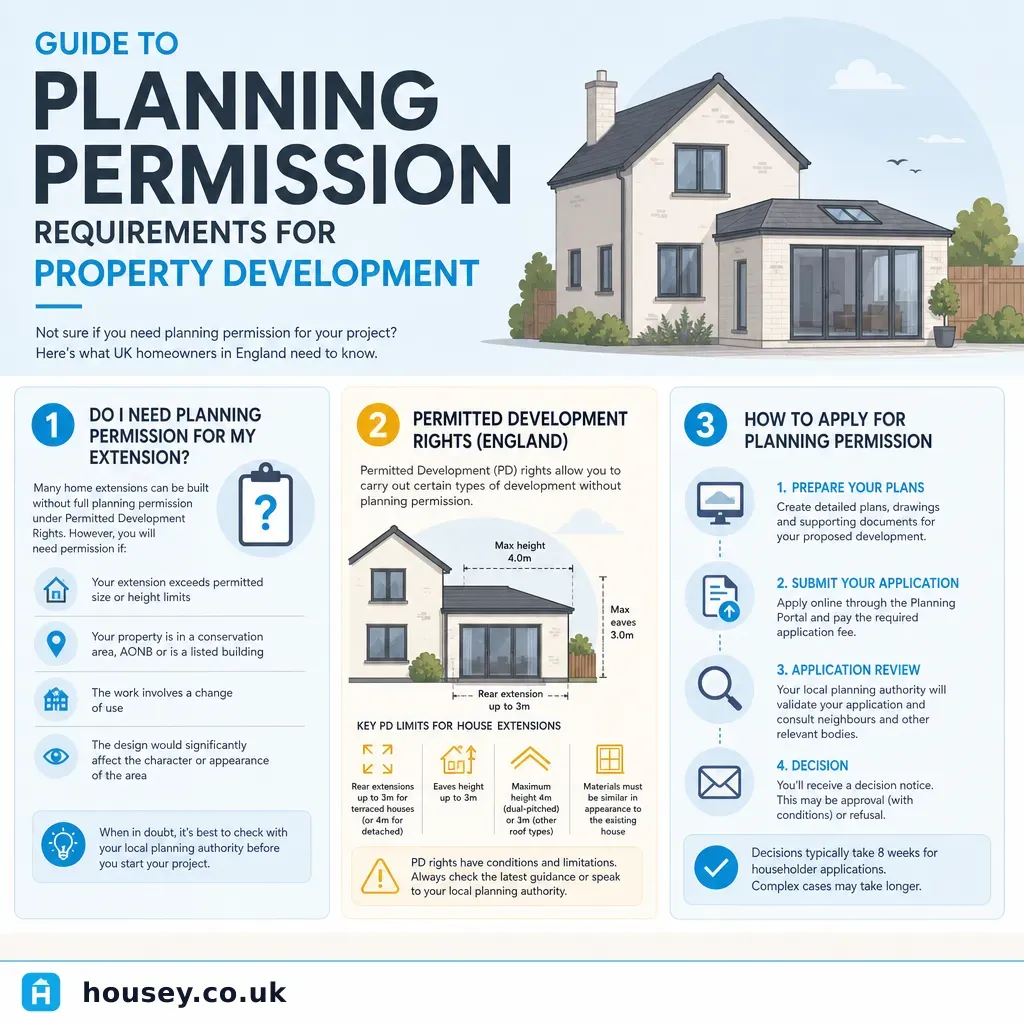
Guide to Planning Permission Requirements for Property Development
Most home improvements in England fall within permitted development rights and do not need a planning application.
 Planning & Pre-Build
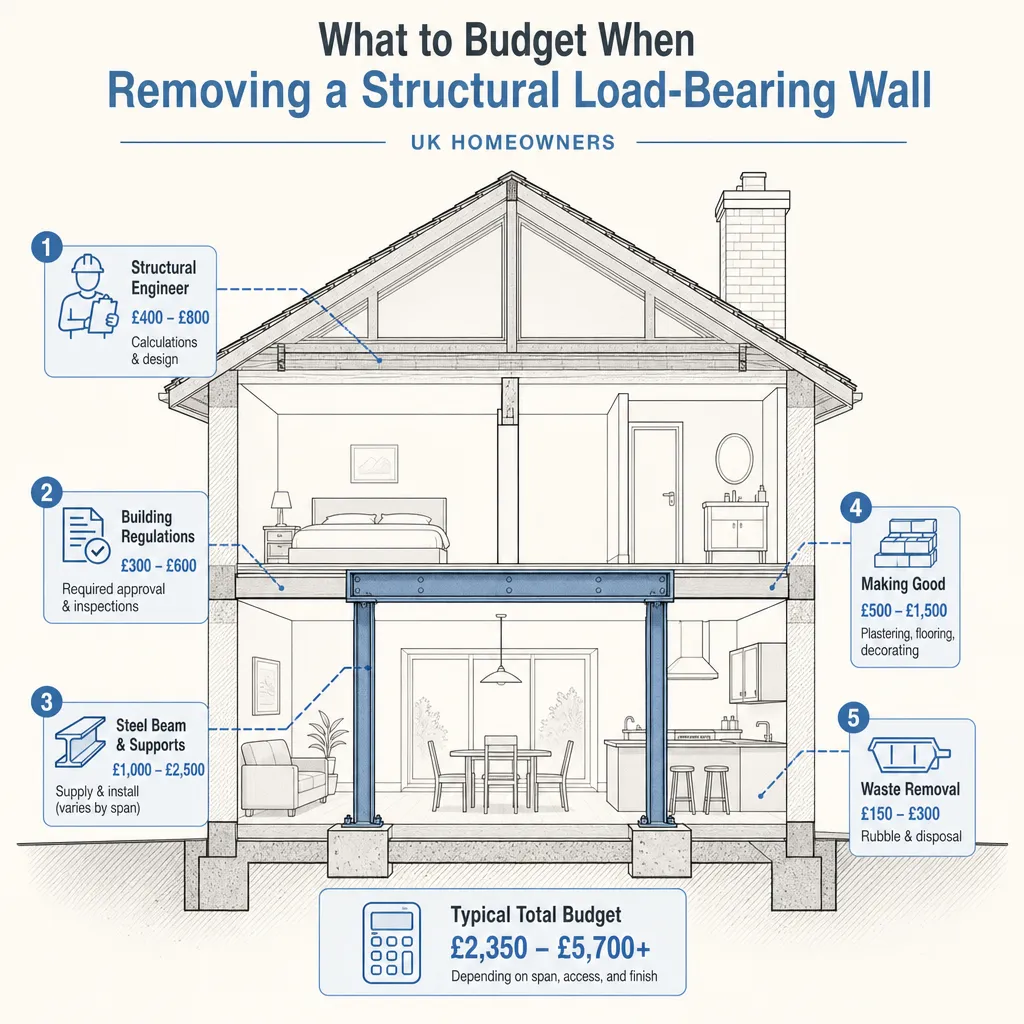
What to Budget When Removing a Structural Load-Bearing Wall
Removing a load-bearing wall in a typical UK home costs £2,500–£8,000 or more in total, covering a structural engineer's calculations, Building Regulations approval, the steel beam, builder's labour, and replastering.
 Planning & Pre-Build
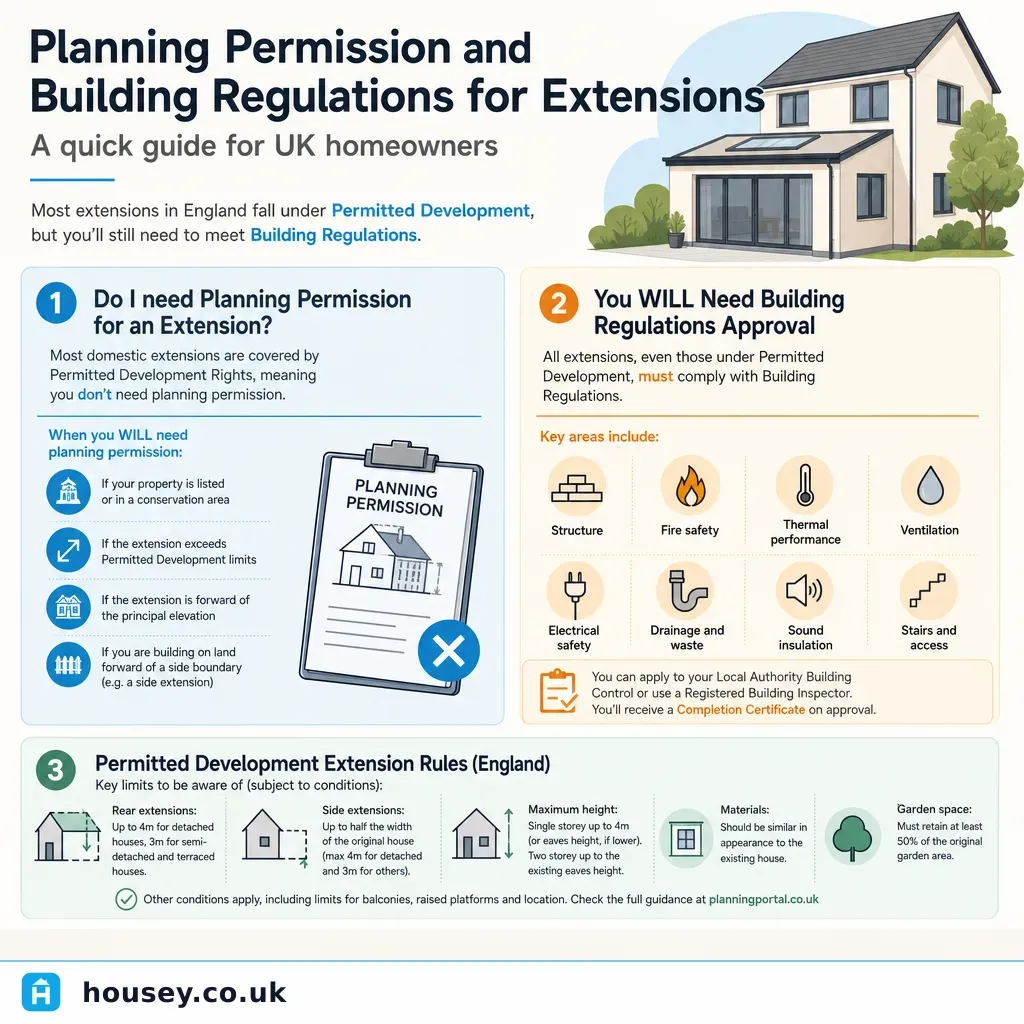
Planning Permission and Building Regulations for Extensions
UK home extensions usually require both planning permission and Building Regulations approval, though most smaller rear extensions qualify as Permitted Development under the GPDO 2015 and need no planning application.
 Planning & Pre-Build
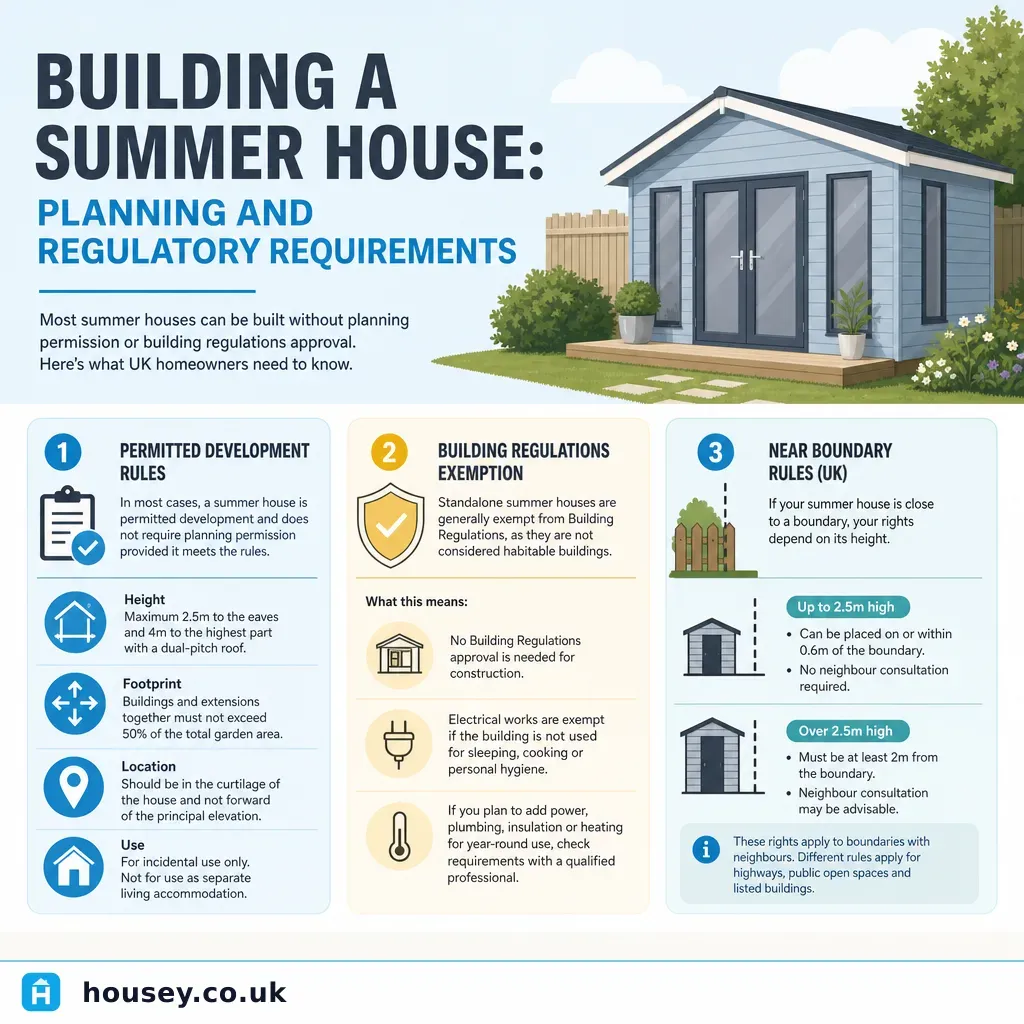
Building a Summer House: Planning and Regulatory Requirements
Most garden summer houses in England fall under Class E permitted development and need no planning permission, provided they are single-storey, within height limits, and not used for sleeping.
 Planning & Pre-Build
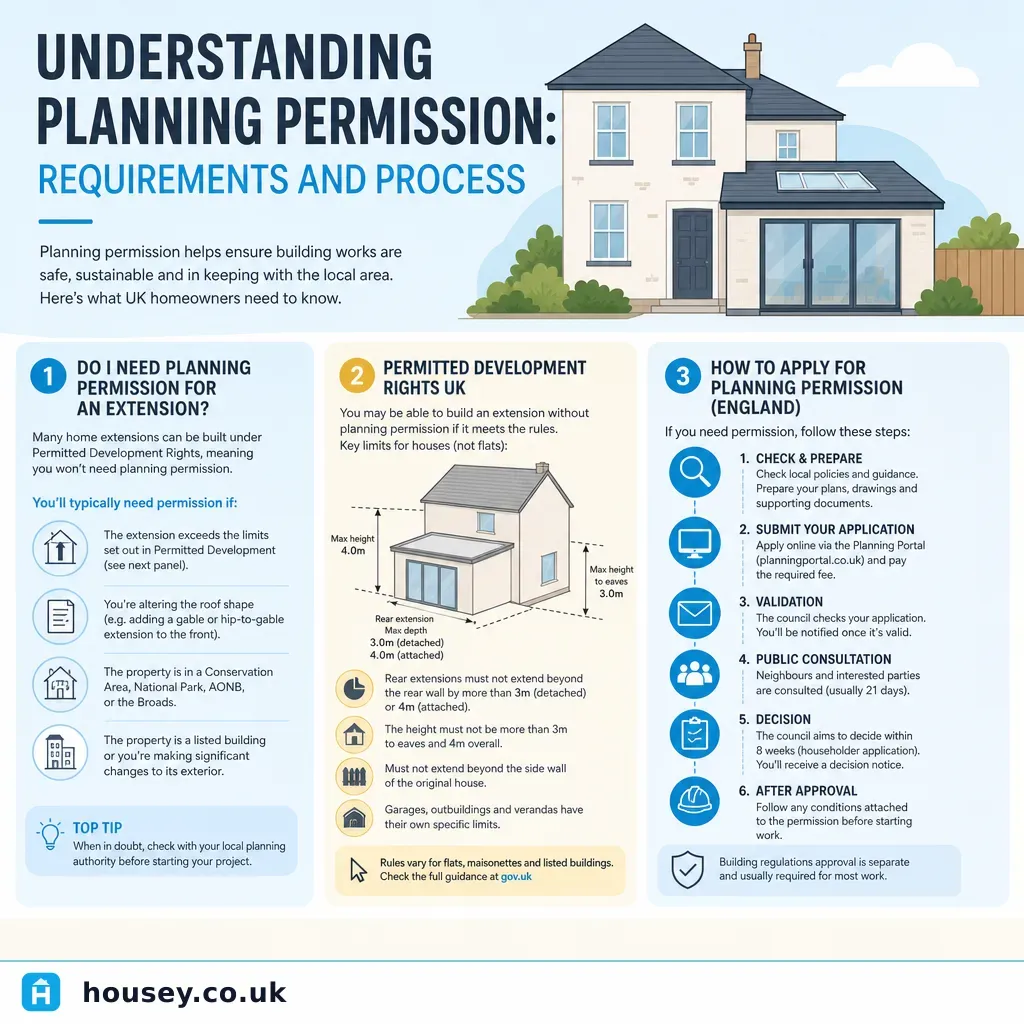
Understanding Planning Permission: Requirements and Process
Planning permission is required for most new buildings, significant extensions, and material changes of use in England and Wales.