Building an Environmentally Conscious Home: A Practical Guide
By Housey · Last reviewed 11th of May 2026

Building an Environmentally Conscious Home: A Practical Guide
For most UK homeowners, making their home more environmentally conscious is not a single project but an ongoing process — spanning insulation upgrades, heating system changes, smarter energy use, and considered material choices. Whether you live in a 1930s semi, a 1960s concrete-frame flat, or a post-war detached house, understanding which improvements will have the greatest impact on your home's carbon footprint and running costs is the practical starting point for meaningful action.
Key points
- Residential buildings account for approximately 20% of UK greenhouse gas emissions according to the Department for Energy Security and Net Zero (DESNZ), making home improvements a meaningful contribution to the UK's net-zero 2050 target under the Climate Change Act 2008.
- The PAS 2035:2023 whole-house retrofit standard requires an assessment by a Retrofit Assessor and a coordinated improvement plan by a Retrofit Coordinator before publicly funded works begin; this applies to ECO4 and most government-backed schemes.
- The Energy Saving Trust estimates that loft insulation to 270mm depth can save £150–£390 per year for a typical UK home depending on property size and heating fuel, though savings vary with energy prices.
- Solar photovoltaic (PV) panels require no planning permission for most domestic installations under permitted development, provided the installer is MCS-certified and the installation meets the conditions set out in the GPDO 2015.
- The Boiler Upgrade Scheme (BUS), administered by Ofgem, offers grants of £7,500 for air source heat pumps and £7,500 for ground source heat pumps in England and Wales as of May 2026; eligibility requires a valid EPC and no outstanding cavity wall or loft insulation recommendations.
Why the order of improvements matters
One of the most common mistakes in home environmental improvement is fitting a low-carbon heat source before improving the building fabric. A heat pump sized for a poorly insulated house will be less efficient, more expensive to run, and potentially unable to maintain comfort on cold days. The established hierarchy — used in PAS 2035 and recommended by the Energy Saving Trust — is:
- Reduce demand — insulate the fabric (loft, walls, floor), draught-proof, upgrade windows and doors.
- Improve heating efficiency — controls upgrades, radiator balancing, hot water cylinder insulation.
- Switch the heat source — replace the gas or oil boiler with a heat pump or district heating connection.
- Generate your own energy — solar PV, solar thermal, battery storage.
This sequence maximises the impact of each investment and avoids the expense of oversizing or replacing equipment later.
Improvements by property type
Property type | Priority 1 | Priority 2 | Priority 3 | Common barriers |
|---|---|---|---|---|
Victorian or Edwardian terrace (solid walls) | Draught-proofing, loft insulation | Solid wall insulation (internal or external) | Heat pump after fabric upgrade | Solid walls costly to insulate; party wall considerations |
1930s–1970s semi (cavity walls) | Cavity wall insulation, loft insulation | Heating controls, hot water cylinder insulation | Solar PV, heat pump | Cavity suitability depends on exposure rating and cavity width |
1980s–2000s detached | Loft top-up, draught-proofing | Solar PV | Battery storage, EV charger | Often already part-insulated — check existing depth first |
Post-war flat (concrete frame) | Window upgrades, draught-proofing | Heating controls | Communal renewables if permitted | Works may require freeholder or management company consent |
New build (2022 onwards) | Very limited fabric improvements needed | Battery storage, smart controls | EV charger | Already Part L 2021 compliant; focus on behaviour and energy generation |
Insulation: where to start
Loft and cavity wall insulation remain the most cost-effective starting points for UK homes built before 2000. Grants under the Great British Insulation Scheme (GBIS) and ECO4 are available for eligible households — in some cases covering the full cost of loft and cavity wall insulation.
Before installing insulation in an older home, check for:
- Cavity suitability: not all cavities are suitable for fill. Properties in high-exposure zones, those with a narrow cavity, or those with damaged brickwork may need a specialist cavity survey before installation.
- Loft hatch access and cold-water tanks: insulate around tanks, not beneath them, to prevent freezing.
- Ventilation adequacy: adding insulation without addressing ventilation can increase condensation risk. PAS 2035 considers ventilation as part of the improvement plan, which is one reason a coordinated whole-house approach is recommended for older properties.
Solar PV and battery storage
Solar PV has become one of the most common energy improvements for UK homeowners. Key practical points:
- MCS certification of the installer is required for any grid-connected system and is essential for Smart Export Guarantee (SEG) payments from your energy supplier.
- A south-facing, unshaded roof pitch of 30–45° is optimal; east- or west-facing installations are viable at reduced output.
- Battery storage (typically 5–15 kWh for domestic use) increases self-consumption but adds upfront cost; payback depends on your electricity tariff, SEG export rate, and usage patterns.
- For properties with an electric vehicle, a smart charger can shift charging to periods of solar surplus, improving overall system economics.
Before committing to an installation, a solar survey can assess your roof's suitability and model likely annual output.
Heat pumps: is your home ready?
Heat pumps are most efficient in well-insulated homes with low-temperature heat distribution (underfloor heating or suitably sized radiators). Before commissioning a survey:
- Ensure loft and wall insulation is already in place or planned.
- Check your radiators — heat pumps typically run at 45–55°C flow temperature, lower than a gas boiler's 70–80°C; some radiators may need upsizing in cooler rooms.
- Obtain a valid EPC and confirm there are no outstanding insulation recommendations (required for BUS grant eligibility).
- Confirm adequate outdoor space for an ASHP unit and that permitted development rights apply — most domestic ASHPs qualify, subject to conditions in the GPDO 2015.
A heat pump survey carried out by a qualified engineer can assess feasibility and provide indicative sizing before you commit to any expenditure.
Red flags: when not to proceed without professional advice
- You suspect asbestos in any material you plan to disturb — textured ceilings, floor tiles, or pipe lagging in pre-1990 homes. Do not proceed; arrange a survey with a competent asbestos professional.
- Your property has active damp or mould — adding insulation before resolving moisture sources can worsen the problem significantly and may void any warranties.
- Your home is listed or in a conservation area — many energy improvements (external insulation, replacement windows, solar panels) require listed building consent or planning permission before works begin.
- Your loft or flat roof shows signs of condensation or water staining — a specialist assessment is needed before insulating to avoid trapping moisture.
- You intend to fund works through ECO4, GBIS, or BUS — a qualifying assessment is mandatory before works begin and self-commissioning is not permitted under these schemes.
When to get professional help
Environmental home improvements span several professional disciplines. A Retrofit Assessor (TrustMark-registered, PAS 2035-compliant) is the right starting point for a coordinated improvement programme. Individual improvements such as solar PV, heat pumps, and new electrical work require MCS-certified or NICEIC/NAPIT-registered installers. Always request evidence of certification before agreeing to any work.
How Housey can help
Housey connects UK homeowners with qualified specialists offering retrofit assessments who can audit your home and produce a prioritised improvement plan. Our vetted energy-efficiency consultants can help you model the impact and costs of different improvement packages, while solar surveys and heat pump surveys specialists can assess feasibility before you commit to installation.
Frequently asked questions
What is a retrofit assessment and do I need one?
A retrofit assessment is a professional inspection of your home covering energy performance, fabric condition, ventilation, and moisture risk. Under PAS 2035:2023, a retrofit assessment is mandatory before any coordinated improvement programme funded by ECO4, GBIS, or other public schemes. For private works it is not legally required, but is strongly recommended for older or solid-wall properties where insulation choices carry moisture risk.
How much does it cost to make a home more environmentally conscious?
Costs vary enormously by property size, age, and starting point. Indicative UK costs, last reviewed 2026-05-11: loft insulation (professional, 270mm) typically £300–£900 for a mid-terrace; cavity wall insulation £500–£1,800; solar PV (4 kWp system) £5,000–£9,000 including installation; air source heat pump (supply and install) £8,000–£15,000 before grants. Many households qualify for subsidised or free insulation under ECO4 or GBIS — check eligibility via the Energy Saving Trust or GOV.UK.
Will energy improvements affect my EPC rating?
Most fabric and system improvements will raise your Energy Performance Certificate (EPC) rating, which can affect mortgage eligibility (some lenders offer green mortgage rates for EPC A or B properties), rental compliance (the Minimum Energy Efficiency Standards currently require EPC E for most private rented properties, with proposals to raise this to C), and resale value. An updated EPC from an accredited assessor reflects completed works.
Do I need planning permission for solar panels or a heat pump?
Most domestic solar PV installations and air source heat pumps in England and Wales are permitted development under the Town and Country Planning (General Permitted Development) (England) Order 2015, subject to conditions. Key exceptions include listed buildings, some flats, panels on front roofs facing a highway, and properties in some designated areas. Check with your local planning authority if you are in any doubt before proceeding.
Sources and further reading
Useful next reads
 Energy & Retrofit
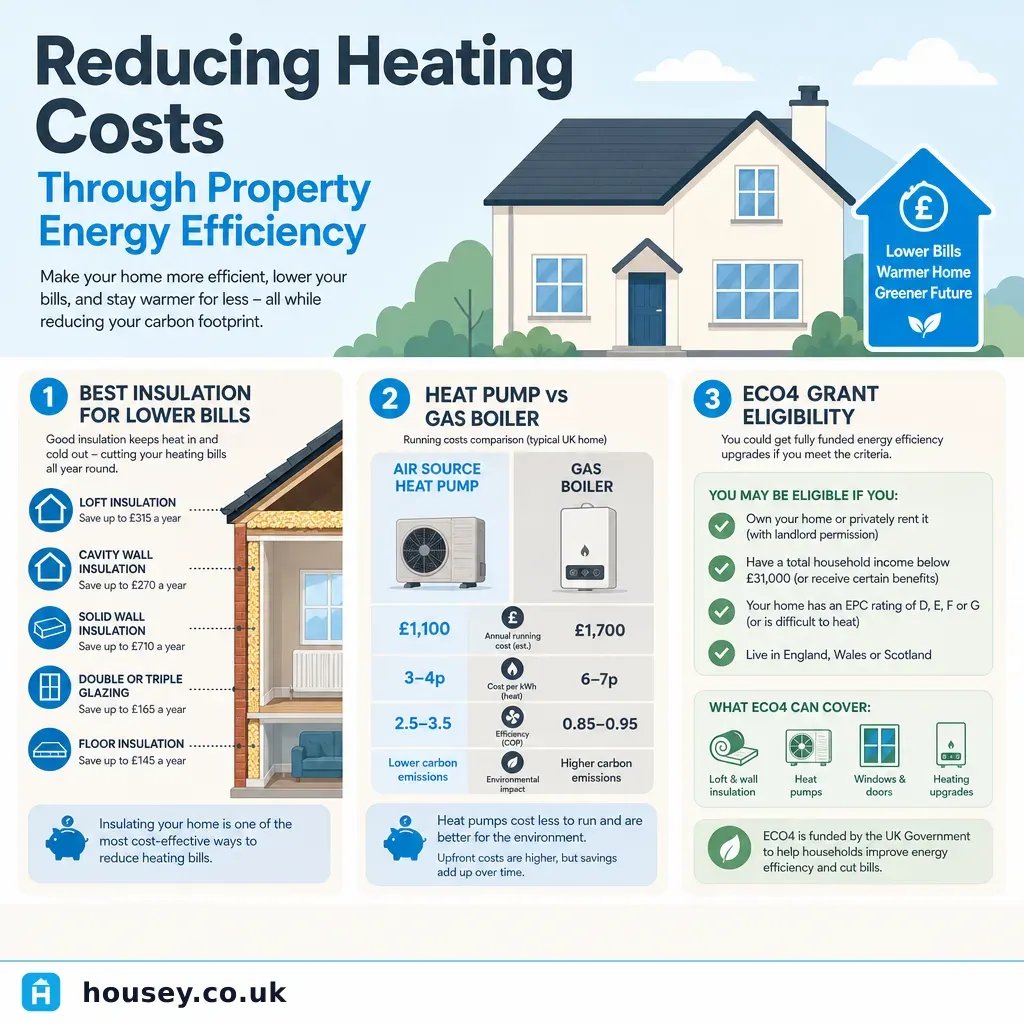
Reducing Heating Costs Through Property Energy Efficiency
Reducing heating costs starts with identifying where heat is lost — typically walls (30–35%), roof (20–25%), and windows.
 Energy & Retrofit
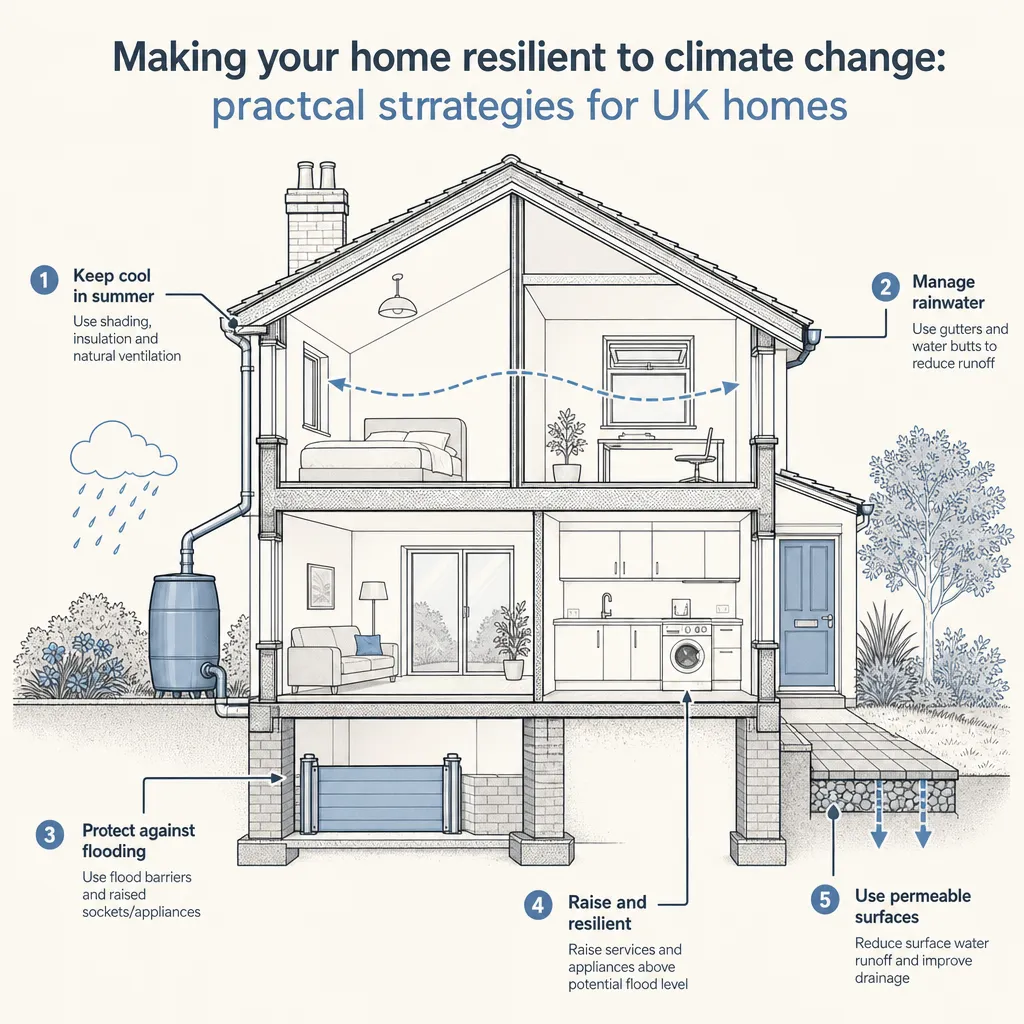
Making your home resilient to climate change: practical strategies
UK homeowners can improve climate resilience by addressing flood risk, overheating, and energy efficiency together.
 Energy & Retrofit
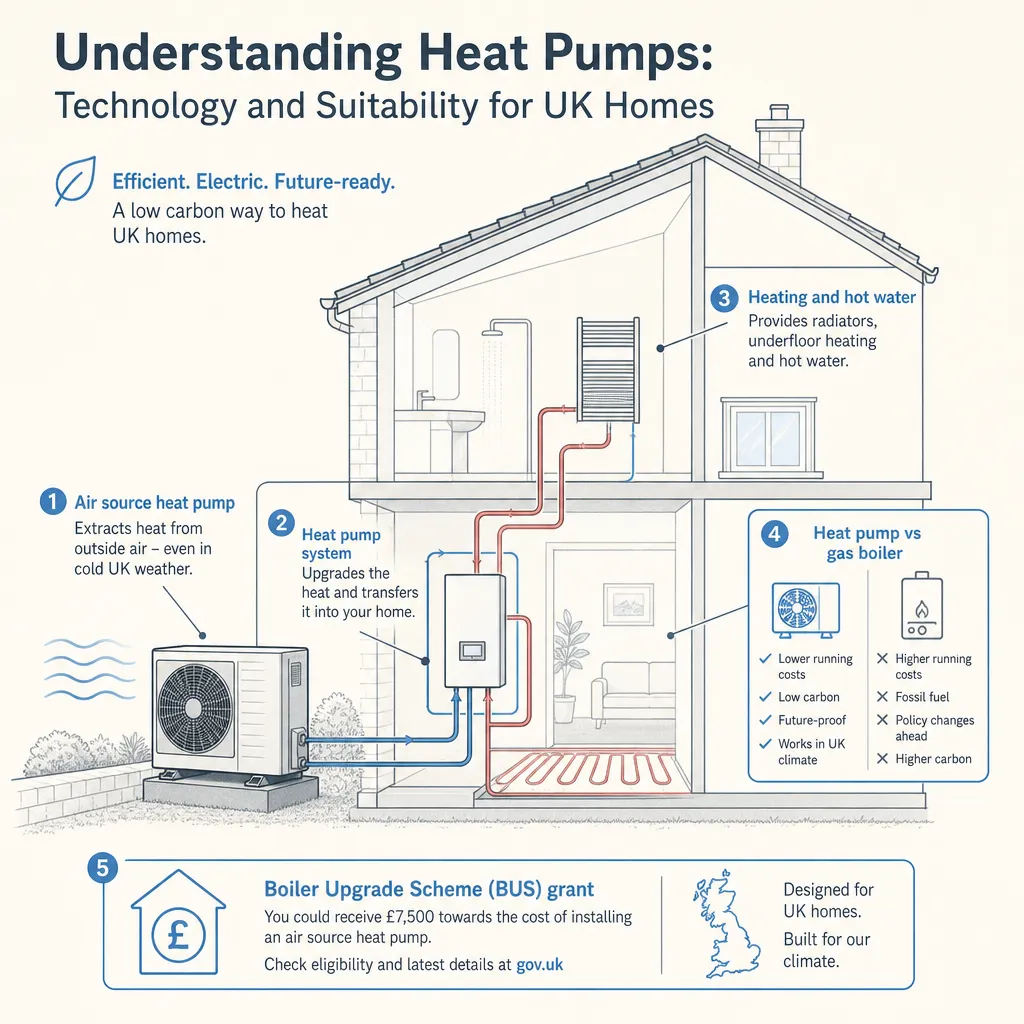
Understanding Heat Pumps: Technology and Suitability for UK Homes
Heat pumps extract heat from the air or ground and transfer it indoors, typically achieving efficiencies of 250–400% compared to a conventional boiler's near 100%.
 Energy & Retrofit
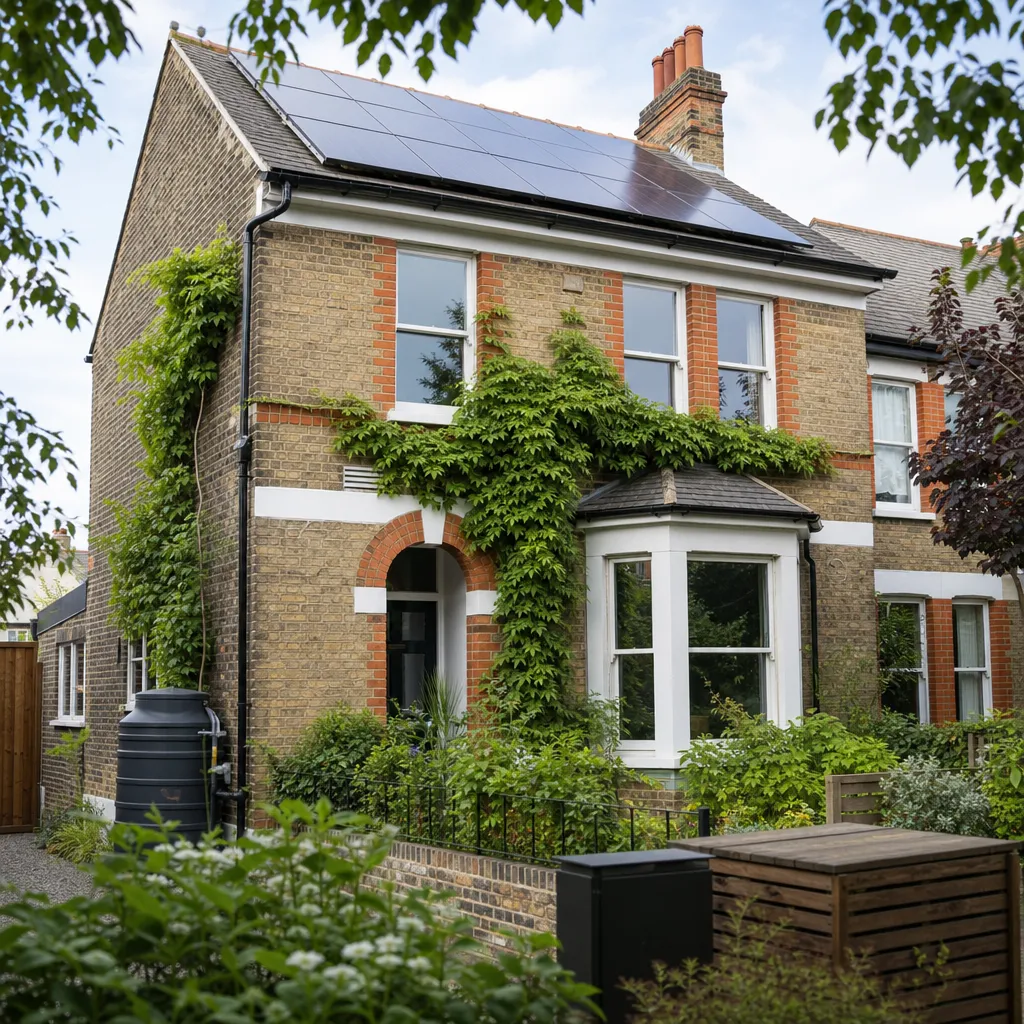
Sustainable Homes: Features That Reduce Environmental Impact
Sustainable homes reduce environmental impact through high levels of insulation, airtight construction, low-carbon heating such as heat pumps, solar energy generation, efficient water use, and responsibly sourced materials.
 Energy & Retrofit
Making your home more sustainable
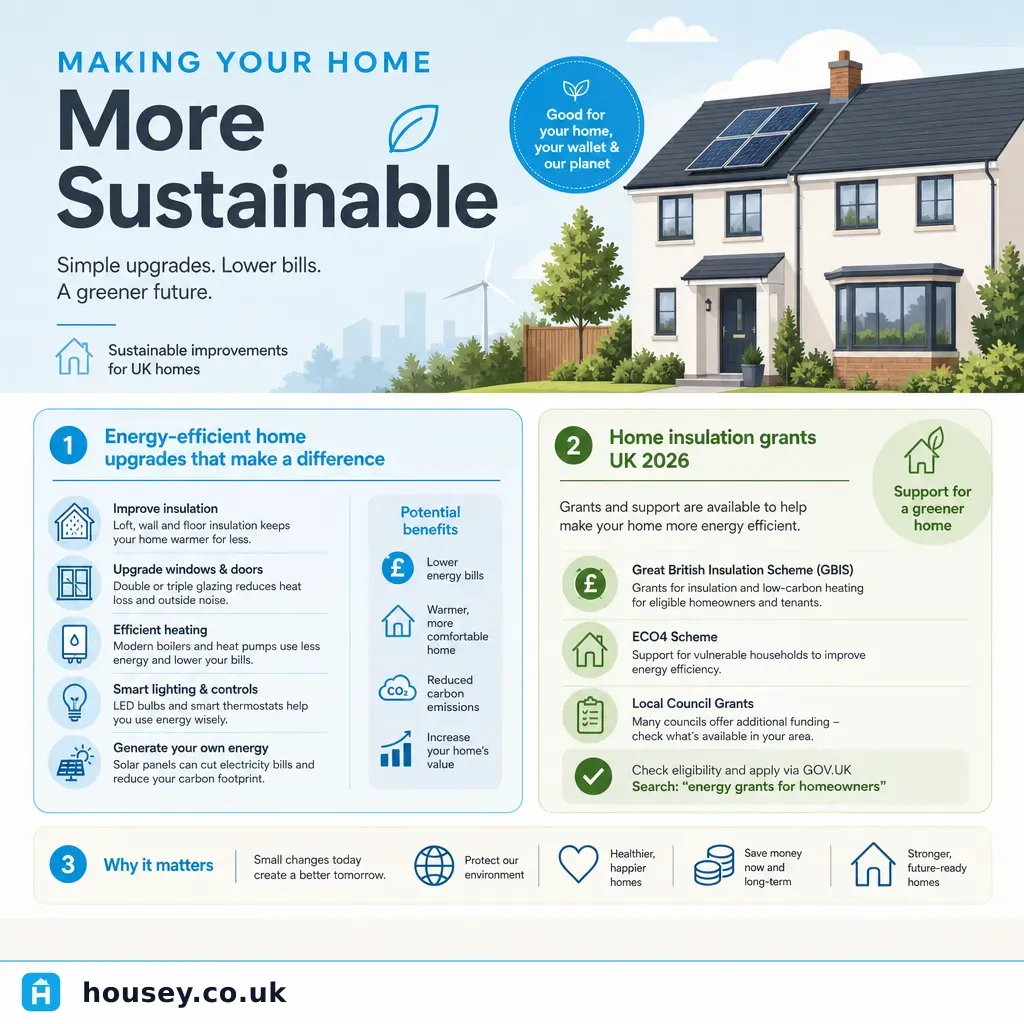
Making a UK home more sustainable usually starts with fabric-first improvements such as insulation, draught-proofing, and efficient glazing before adding renewable energy systems like solar panels or a heat pump.