Sustainable Homes: Features That Reduce Environmental Impact
By Housey · Last reviewed 18th of May 2026
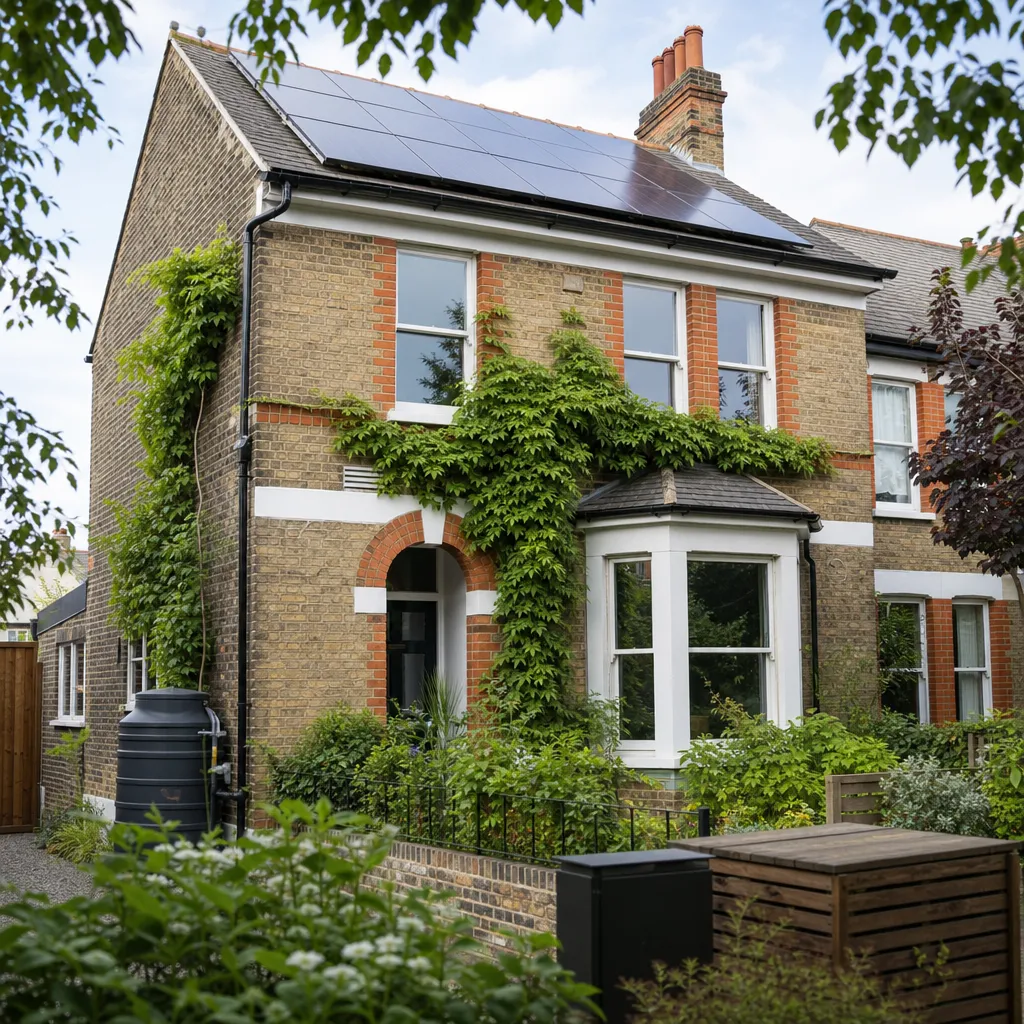
Sustainable Homes: Features That Reduce Environmental Impact
Concerns about energy bills, carbon emissions, and long-term property value have made sustainable home design increasingly important for UK homeowners. Whether you are renovating a Victorian terrace, improving a 1960s semi, or buying a new-build, the most effective upgrades depend on your property's age, construction, and current condition — and on the order in which those upgrades are made.
Key points
- Buildings account for approximately 17% of UK greenhouse gas emissions, according to the Department for Energy Security and Net Zero (DESNZ).
- PAS 2035, the UK standard for domestic retrofit, recommends a fabric-first approach: improving insulation and airtightness before installing low-carbon heating systems.
- Heat pumps typically achieve a Coefficient of Performance (COP) of 2.5–4.0, delivering 2.5–4 units of heat per unit of electricity consumed.
- Solar photovoltaic (PV) panels on a typical UK home can generate 3,000–4,500 kWh per year depending on roof aspect and location.
- The UK Government's ECO4 scheme and Great British Insulation Scheme (GBIS) offer grant funding for insulation and heating measures to eligible households.
What makes a home genuinely sustainable?
Sustainability in a home means reducing energy demand, switching to low-carbon energy sources, minimising water use, and selecting materials with a lower environmental footprint over their lifetime. These goals are interconnected: a poorly insulated home fitted with a heat pump, for instance, may perform inefficiently and cost more to run than expected.
Insulation and airtightness
Insulation reduces heat loss through walls, roofs, floors, windows, and doors. UK Building Regulations Approved Document L sets minimum U-value requirements for new builds and major renovations, but much of the existing housing stock sits well below these standards.
Common measures include:
- Loft insulation: typically the most cost-effective first step, with a recommended depth of 270mm of mineral wool.
- Cavity wall insulation: suitable for homes with unfilled cavities, generally post-1920 construction.
- External wall insulation (EWI) or internal wall insulation (IWI): required for solid-wall homes such as Victorian and Edwardian terraces. EWI is generally preferred for moisture management but may need planning consideration.
- Floor insulation: often overlooked; suspended timber floors can account for significant heat loss.
- Draught-proofing: low-cost and high-impact at windows, doors, letterboxes, and loft hatches.
Improving airtightness in older homes should always be paired with adequate controlled ventilation — such as mechanical ventilation with heat recovery (MVHR) — to maintain air quality and manage moisture risk.
Important: Retrofit insulation in solid-wall and traditionally built homes can introduce moisture risk if not designed correctly. A retrofit assessor working under PAS 2035 should specify the approach.
Which sustainable measure should you prioritise?
- Prioritise loft insulation if you have less than 100mm currently — it is usually the lowest-cost measure with the fastest payback.
- Address cavity wall insulation next if your home was built between 1920 and 1995 and has unfilled cavities.
- Seek a PAS 2035 retrofit assessor before specifying solid-wall insulation — the moisture and ventilation implications need professional design.
- Install a heat pump only after addressing significant heat loss — confirm that insulation and heat emitters are adequate first.
- Add solar PV to reduce electricity costs, particularly effective once your heating system is low-carbon.
- Commission a whole-house retrofit assessment if planning multiple measures, to avoid moisture and ventilation problems caused by poorly sequenced works.
Low-carbon heating
Replacing a gas boiler with a low-carbon heating system is one of the highest-impact changes available to UK homeowners. The main options are:
Heating system | Best for | Not ideal for | Typical COP or efficiency | Key requirement |
|---|---|---|---|---|
Air source heat pump (ASHP) | Well-insulated homes, post-1990 properties | Poorly insulated homes, very small plots | 2.5–4.0 COP | Adequate insulation; larger radiators or underfloor heating |
Ground source heat pump (GSHP) | Rural properties with outdoor land | Urban homes with small gardens | 3.5–5.0 COP | Land for ground loops or a borehole |
Biomass boiler | Rural, off-gas-grid homes | Urban areas with air quality restrictions | ~90% efficiency | Fuel storage and delivery access |
Heat networks | Urban flats and developments | Remote or rural properties | Varies by scheme | Connection to a district scheme |
Heat pump sizing is a specialist task. An undersized or oversized unit performs poorly and increases running costs. A heat loss calculation to BS EN 12831 is required to size a heat pump correctly; Microgeneration Certification Scheme (MCS)-accredited installers must carry this out before installation.
The Boiler Upgrade Scheme (BUS) currently offers a £7,500 grant towards an air source or ground source heat pump for eligible homeowners in England and Wales. Check current amounts and eligibility at GOV.UK.
Solar energy and on-site generation
Solar photovoltaic (PV) panels convert sunlight into electricity. South-facing roofs at 30–40° pitch typically generate the most, though east or west orientations can be viable. Most domestic systems are 3.5–6.5 kWp in capacity.
Battery storage allows surplus solar generation to be stored and used in the evening, increasing self-consumption and reducing grid reliance. This can also complement a heat pump by shifting electricity use to off-peak tariff periods.
Installed solar PV may qualify for the Smart Export Guarantee (SEG), which requires licensed electricity suppliers to pay for surplus generation exported to the grid — administered by Ofgem.
Water efficiency and sustainable materials
Water heating accounts for approximately 17% of domestic energy use. Practical measures include fitting WRAS-approved low-flow taps and shower heads, dual-flush WCs (maximum 6/4-litre), and — for larger properties — rainwater harvesting for garden irrigation or toilet flushing.
Responsible material selection reduces embodied carbon: FSC- or PEFC-certified timber, recycled insulation products, and reclaimed materials all lower the environmental footprint of renovation and new construction work.
Important limitations
This article provides general information only. The performance of any sustainable home measure depends on the specific property — its age, construction type, existing condition, local climate, and quality of installation. Rules for planning permission, building regulations approval, and grant eligibility vary by location, property type, and tenure. A qualified professional should assess your home before specifying or installing measures.
What to ask a qualified professional
- Has a whole-house energy assessment been carried out before any measures are specified?
- Is a PAS 2035-accredited retrofit assessor or coordinator involved?
- For heat pumps: has a heat loss calculation been done to BS EN 12831?
- For solid-wall insulation: how will moisture and vapour movement be managed?
- For solar PV: has a shading analysis and orientation assessment been completed?
- Is the proposed work eligible for current grant schemes (ECO4, GBIS, Boiler Upgrade Scheme)?
- What MCS or TrustMark accreditations does the installer hold?
When to get professional help
Most sustainable home improvements benefit from professional input at the design stage. Seek advice when:
- You are planning multiple retrofit measures in an older property — sequence and interaction between measures matter.
- Your home has solid walls, traditional construction, or is listed or in a conservation area.
- You are considering a heat pump and are unsure whether your insulation and heat emitters are adequate.
- You have experienced damp, condensation, or mould — retrofit can worsen these if not professionally managed.
- You want to access grant funding, which typically requires a qualified assessor and specific documentation.
How Housey can help
Housey connects UK homeowners with qualified professionals at every stage of making a home more sustainable. Whether you need a retrofit assessment to understand where to start, a heat pump survey to assess heating options, a solar survey to check your roof's generation potential, or advice from an energy-efficiency consultant on the right strategy for your property, you can compare quotes from vetted local professionals.
Frequently asked questions
Do I need planning permission for solar panels?
Most solar PV installations on dwellings fall under permitted development rights, requiring no planning application — provided panels do not protrude more than 200mm beyond the roof plane and other conditions are met. Listed buildings and some conservation areas have additional restrictions. Always check with your local planning authority if there is any doubt about eligibility.
What is a fabric-first approach to retrofit?
A fabric-first approach means improving the thermal performance of the building envelope — walls, roof, floor, and windows — before upgrading the heating system or adding renewable generation. PAS 2035 and the Energy Saving Trust both recommend this sequence because it reduces the size and cost of heating systems needed and typically delivers better long-term value.
Can I get a grant to make my home more sustainable?
Several UK Government-backed schemes are available, including ECO4 for low-income and low-EPC homes, the Great British Insulation Scheme for a wider group, and the Boiler Upgrade Scheme offering £7,500 towards a heat pump. Eligibility rules change regularly — check GOV.UK for current details before commissioning any work.
Should I improve insulation before fitting a heat pump?
In most cases, yes. Heat pumps operate most efficiently in well-insulated homes. Installing a heat pump without first addressing significant heat loss typically results in higher running costs, a larger and more expensive unit, and poorer comfort levels. A heat loss survey will confirm whether your insulation is adequate before you proceed.
Sources and further reading
- Improve your home's energy efficiency — GOV.UK
- PAS 2035: retrofitting dwellings for improved energy efficiency — BSI Group
- Boiler Upgrade Scheme — GOV.UK
- Insulation advice for homeowners — Energy Saving Trust
- Smart Export Guarantee — Ofgem
- MCS — Microgeneration Certification Scheme — MCS
Useful next reads
 Energy & Retrofit
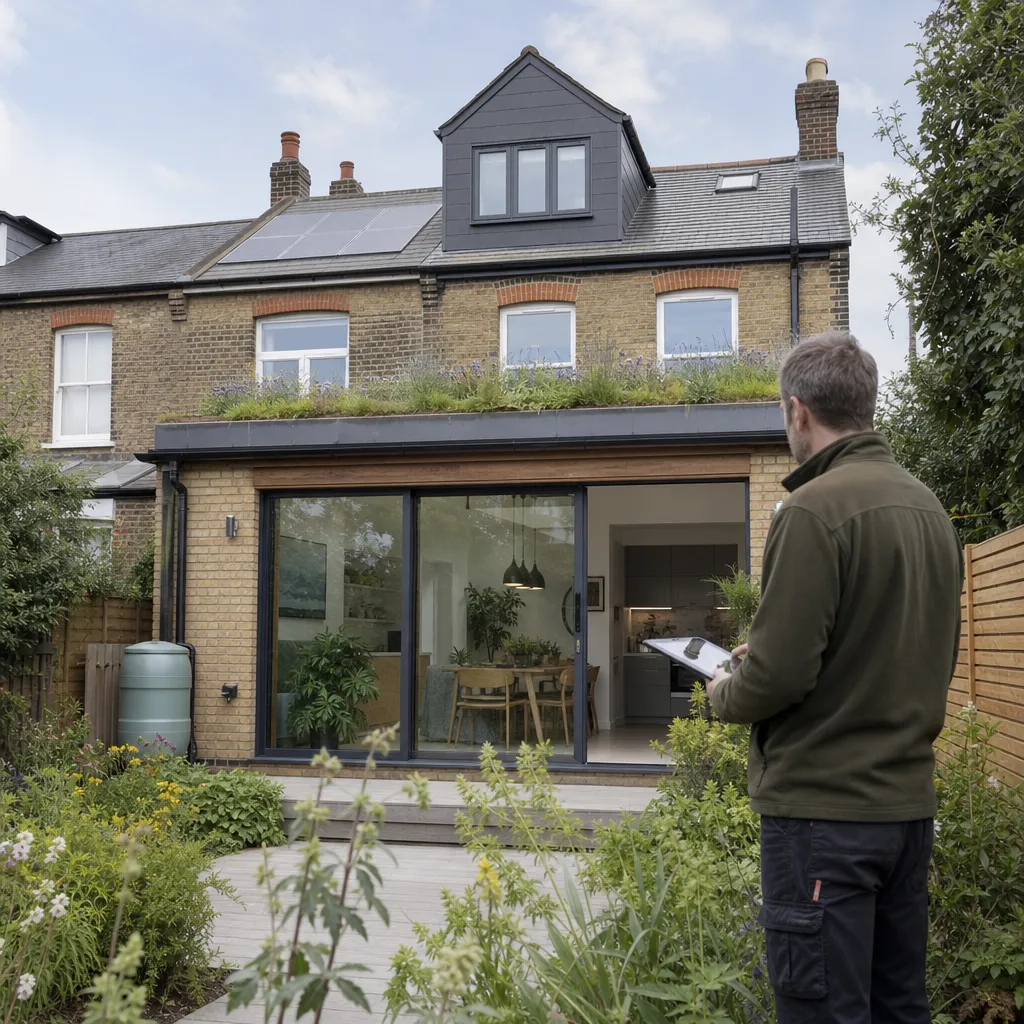
Designing and Building High-Performance Sustainable Homes with Eco-Friendly Systems
High-performance sustainable homes in the UK follow a fabric-first approach: maximise insulation and airtightness before adding low-carbon heating such as heat pumps, then layer in renewables like solar PV.
 Energy & Retrofit
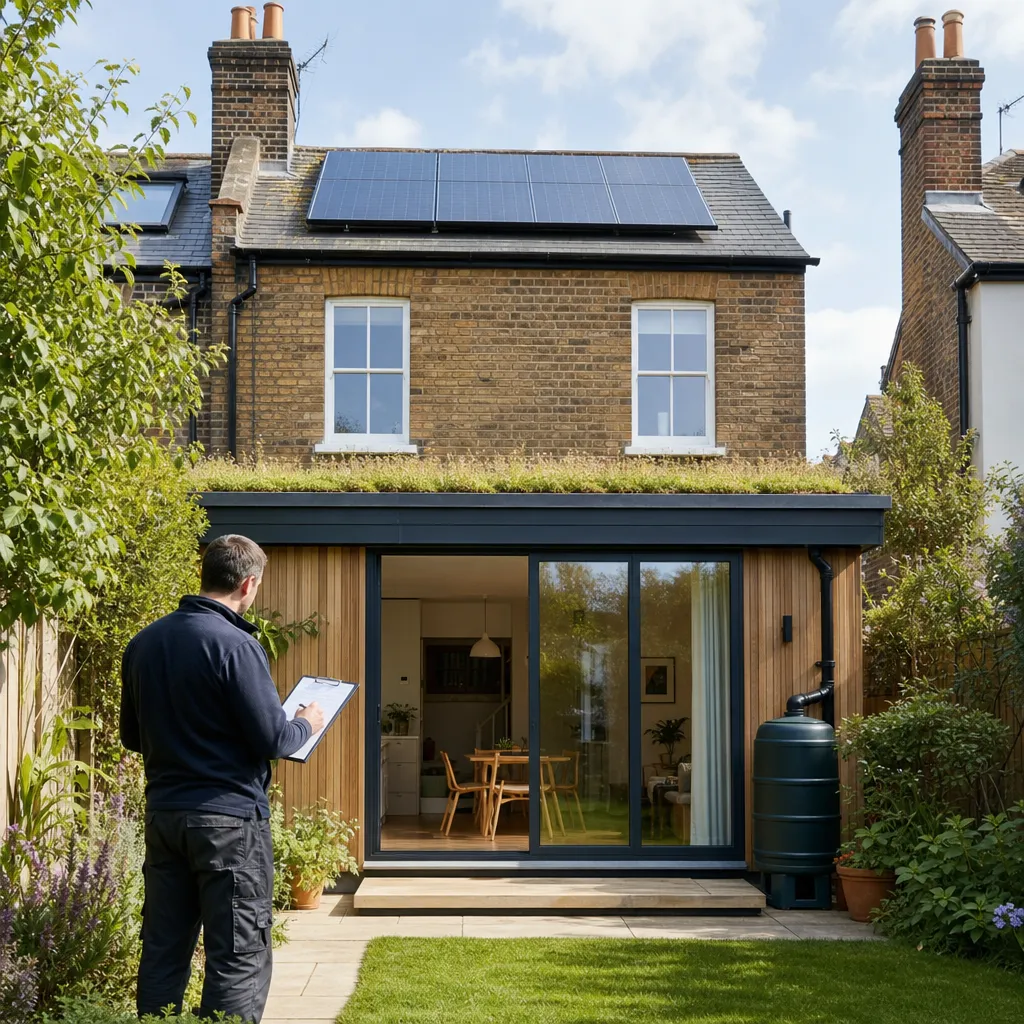
Eco-Conscious Home Features for Sustainable Living
The highest-impact eco home features for UK homeowners are insulation, solar PV panels, air source heat pumps, and smart controls.
 Energy & Retrofit
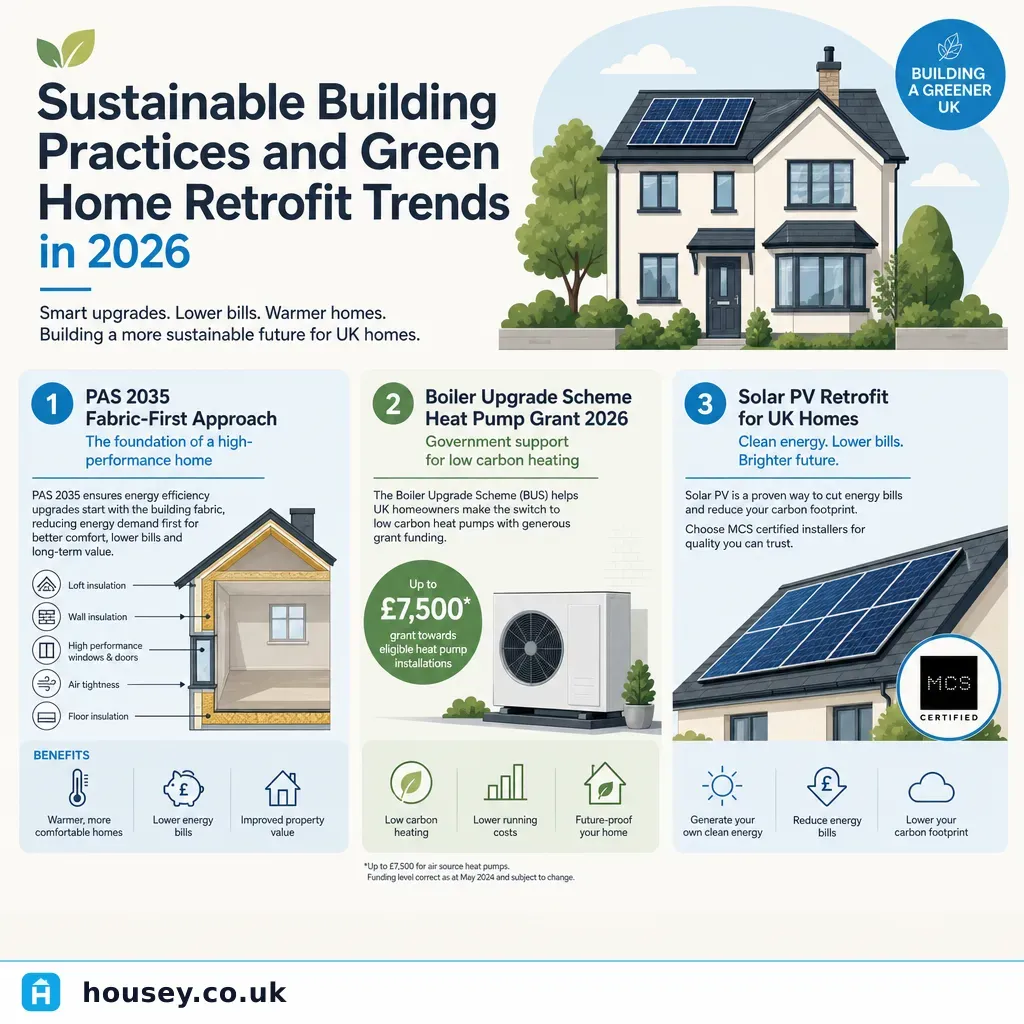
Sustainable Building Practices and Green Home Retrofit Trends in 2026
Green home retrofit in 2026 is shaped by PAS 2035's fabric-first principle, Boiler Upgrade Scheme grants of £7,500 for air source heat pumps, and growing solar PV adoption backed by the Smart Export Guarantee.
 Energy & Retrofit
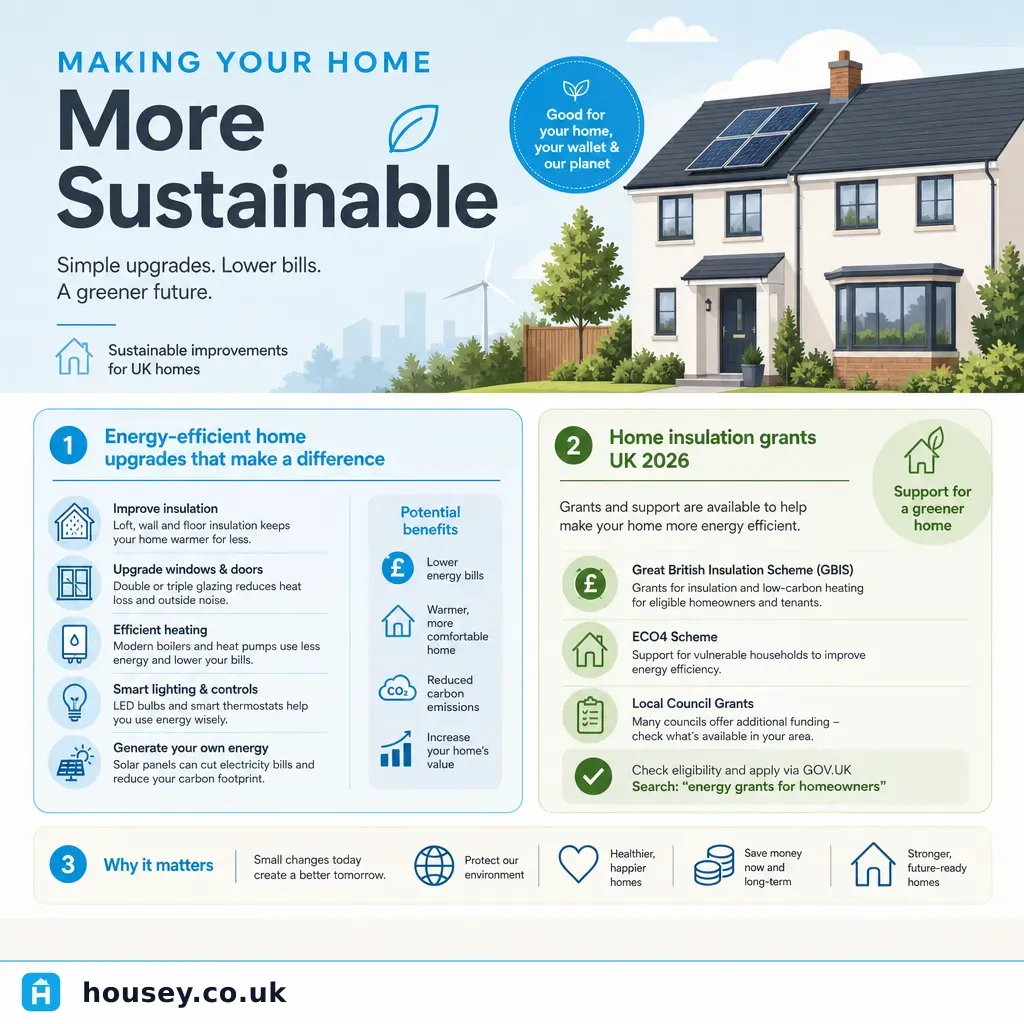
Making your home more sustainable
Making a UK home more sustainable usually starts with fabric-first improvements such as insulation, draught-proofing, and efficient glazing before adding renewable energy systems like solar panels or a heat pump.
 Energy & Retrofit
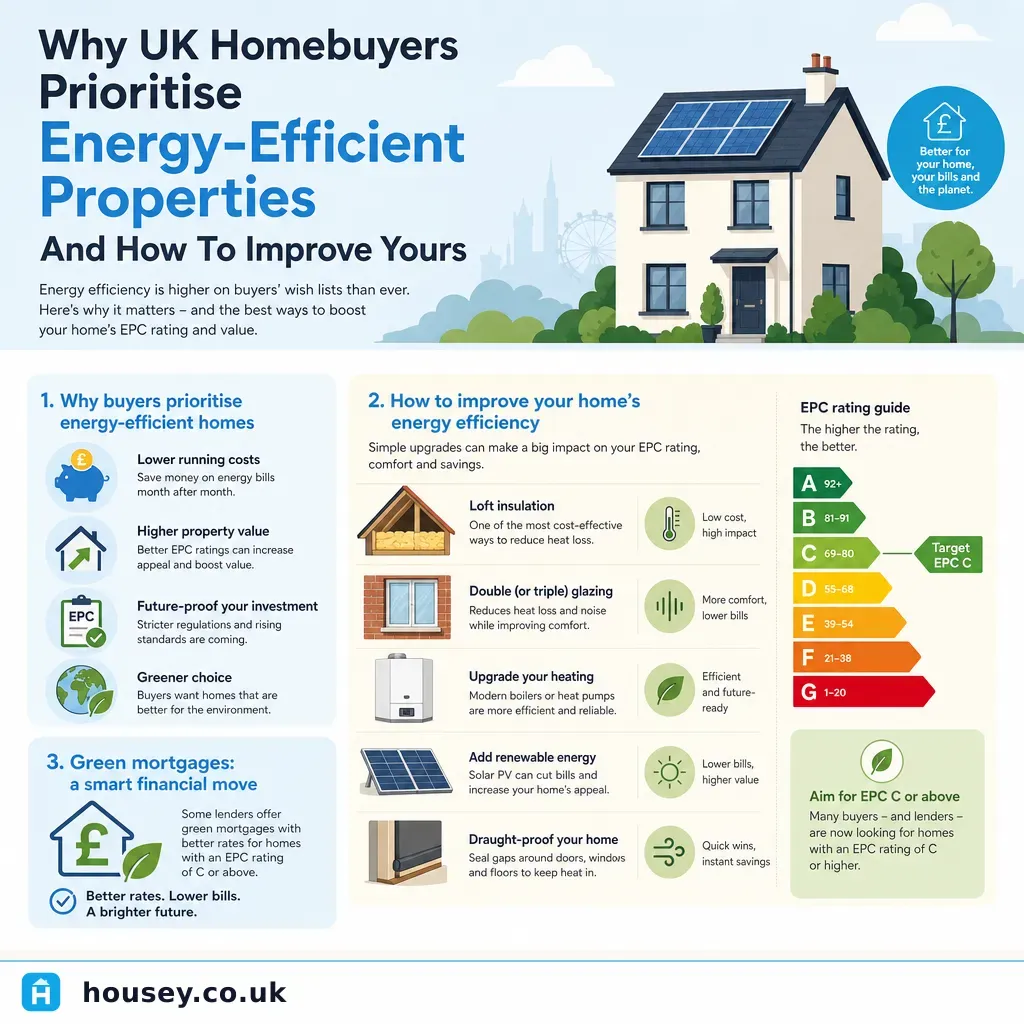
Why UK Homebuyers Prioritise Energy-Efficient Properties And How To Improve Yours
UK homebuyers increasingly favour energy-efficient properties because lower EPC ratings translate directly to higher heating bills — a significant concern after the 2021–23 energy crisis.