Building and Construction Services: Planning, Design, and Project Delivery
By Housey · Last reviewed 19th of May 2026
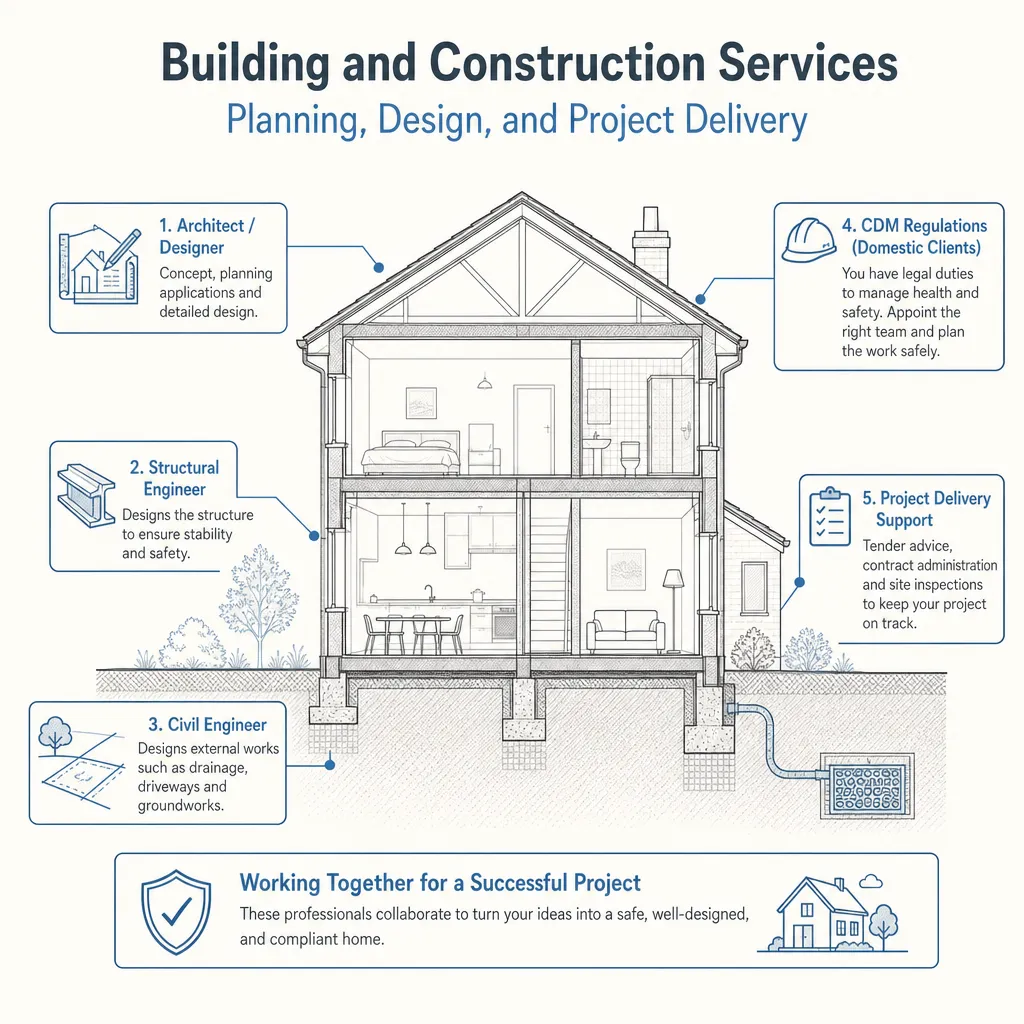
Building and Construction Services: Planning, Design, and Project Delivery
Commissioning a construction project — whether an extension to an existing home, a ground-up new build, or a complex multi-phase renovation — involves a range of professional disciplines that each play a distinct role at different stages. The order in which you engage professionals, the procurement route you choose, and how you manage contracts all have a direct bearing on programme, cost, and whether the finished building meets regulatory requirements.
Key points
- Most UK construction projects are structured around the RIBA Plan of Work (2020 edition), a staged framework running from strategic briefing and design through to construction, handover, and use.
- A structural engineer's input is required for any project involving foundations, load-bearing elements, or structural alterations — their calculations form part of the building regulations submission.
- The Construction (Design and Management) Regulations 2015 (CDM 2015) impose health and safety duties on all construction projects in Great Britain; homeowners who appoint more than one contractor must appoint a Principal Designer and a Principal Contractor in writing before construction begins.
- Traditional procurement (designer and contractor appointed separately) gives the client greater design control; design-and-build contracts transfer design responsibility to the contractor, which can reduce the client's oversight of detailed design decisions.
- Civil engineers address site infrastructure — drainage, retaining walls, roads, and groundworks — and are distinct from structural engineers, who design load-bearing building elements.
Which professionals are involved at each stage?
Construction projects involve a range of disciplines, each with a defined scope of service and professional qualification. Appointing the right professional at the right time — rather than too late — avoids abortive design work, programme delays, and cost overruns.
Which professional do I need?
Professional | What they do | When to appoint | Typical qualification |
|---|---|---|---|
Architect | Design, planning applications, specification, contract administration | Early — before planning | ARB registered; RIBA member |
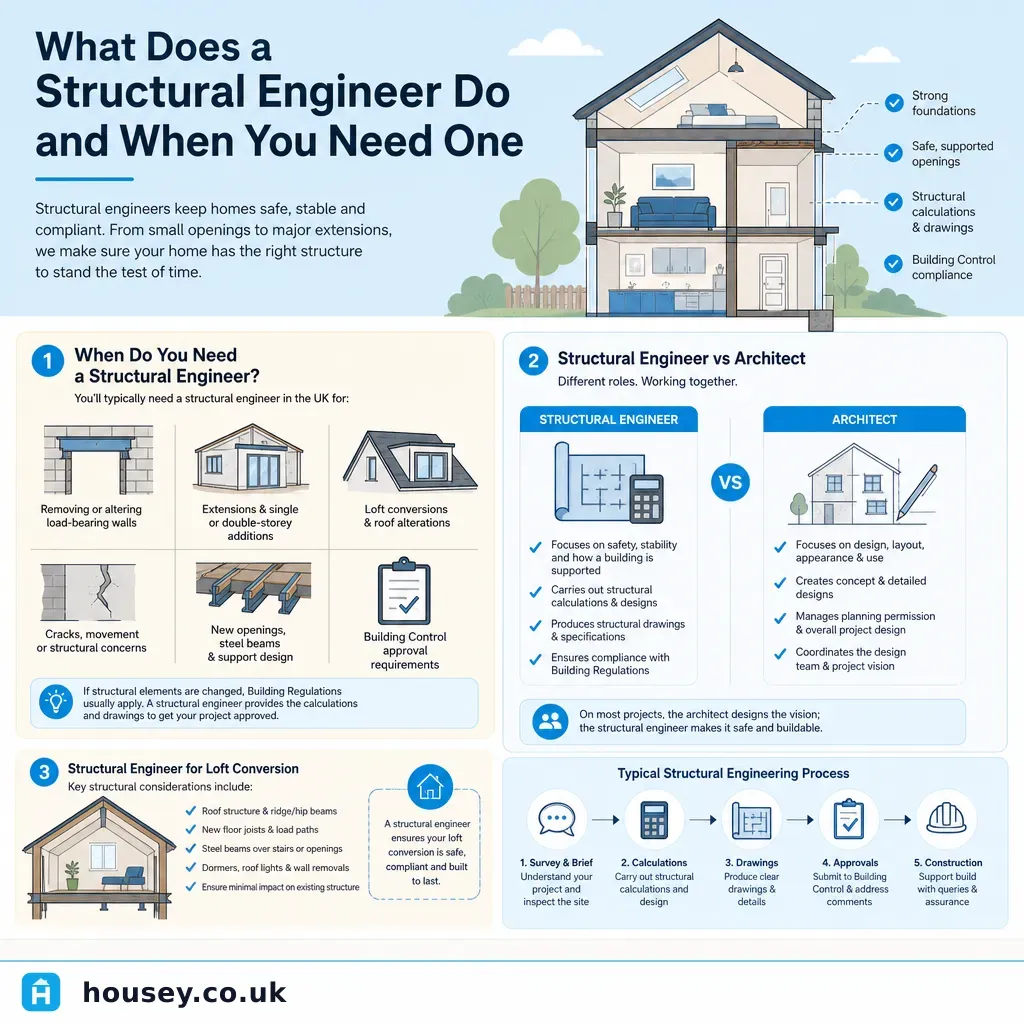
Structural engineer | Foundation design, beam calculations, structural appraisals, building regulations calculations | Design stage, before building regulations submission | MIStructE or CEng |
Civil engineer | Site drainage, roads, retaining walls, earthworks, utilities | Complex or larger sites; typically at design stage | ICE or CEng |
Project manager | Programme, budget, procurement, contractor coordination | Pre-construction; continues through site works | RICS, APM, or CIOB |
Quantity surveyor | Cost planning, tendering, contract valuation, final account | Design stage through construction | RICS |
Planning consultant | Permitted development advice, planning applications, pre-application meetings, appeals | Early, before design is fixed | RTPI |
Building control consultant | Compliance advice, building regulations applications, inspection coordination | Once design is sufficiently developed | RICS or LABC-registered |
The typical project sequence
The RIBA Plan of Work (2020 edition) provides the standard framework for organising construction projects in the UK. For domestic projects, some stages are compressed or combined, but the underlying sequence applies to most schemes:
- Strategic Definition — define the brief, establish the budget, and identify key site constraints
- Preparation and Briefing — site surveys, feasibility study, initial cost plan; appoint key designers
- Concept Design — outline design proposals; pre-application planning advice if needed
- Spatial Coordination — developed design; structural and civil engineer input; planning application submitted
- Technical Design — building regulations drawings; structural calculations; full specification; contractor procurement
- Manufacturing and Construction — contractor on site; building control inspections; progress valuations
- Handover — Completion Certificate; as-built drawings; defects liability period begins
- Use — end-of-defects inspection; maintenance planning; post-occupancy evaluation
Structural engineers and civil engineers are typically needed by Stage 4 at the latest. Involving them earlier avoids costly redesigns driven by structural or drainage constraints discovered late in the process.
Procurement routes: traditional vs design-and-build
The choice of procurement route determines how design responsibility is allocated between client and contractor, and influences programme certainty, cost control, and design quality.
Route | How it works | Client design control | Typical use |
|---|---|---|---|
Traditional (separated) | Client appoints designer; contractor builds to that design | High — client owns the design | Extensions, bespoke renovations, individually designed new builds |
Design and build | Contractor takes on both design development and construction | Lower — contractor controls detailed design | Volume housing, repetitive commercial builds |
Construction management | Client appoints trades directly; construction manager coordinates | High, but complex to manage | Large, phased, or complex projects |
Architect-led with novation | Architect appointed by client, then novated to contractor post-planning | Medium | D&B schemes where design quality is a priority |
For most homeowners undertaking extensions or loft conversions, a traditional route is most appropriate: a designer prepares drawings, a main contractor prices and builds from those drawings, and the client approves variations through the designer's contract administration service.
CDM regulations and your legal duties
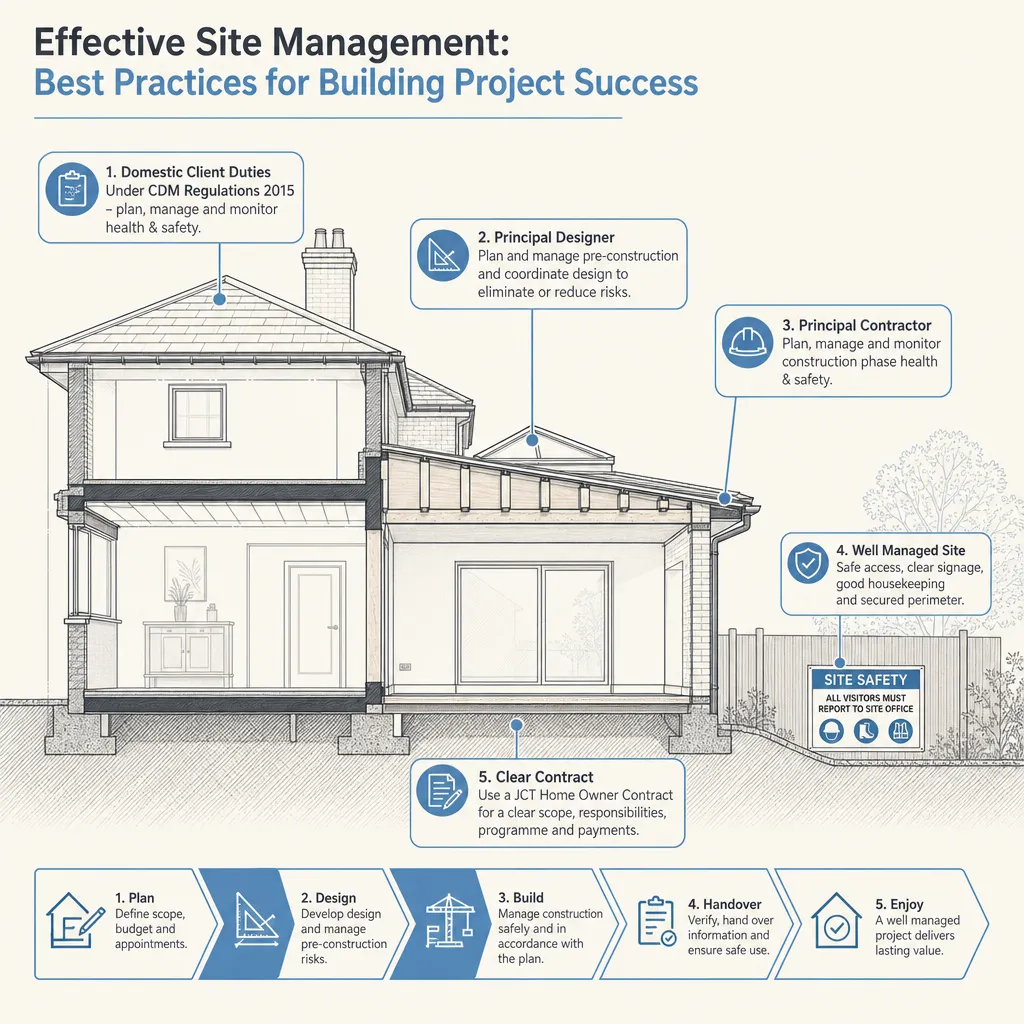
The Construction (Design and Management) Regulations 2015 (CDM 2015) apply to all construction projects in Great Britain and impose duties at three levels:
- Domestic clients (homeowners): CDM duties are normally transferred to the contractor or principal contractor by operation of the regulations. However, if you appoint more than one contractor, you must appoint a Principal Designer and a Principal Contractor in writing before construction begins.
- Principal Designer: coordinates health and safety during the design phase and must hold the relevant skills and experience. This role is often fulfilled by the architect or project manager.
- Principal Contractor: manages health and safety on site during construction and must produce a construction phase plan before work starts.
A project becomes notifiable to the Health and Safety Executive (HSE) if construction is expected to last more than 30 working days with more than 20 workers simultaneously on site, or to exceed 500 person-days in total.
Homeowner checklist: before appointing your project team
When to get professional help
No construction project of meaningful scale should proceed without professional input on design, structure, and contract. The most urgent points at which professional advice is needed:
- Before breaking ground — confirm the structural implications of the design and check for ground conditions or drainage constraints that could affect the scheme
- Before signing a building contract — ensure scope, programme, and price are fixed and the contract is in writing
- If unexpected structural issues arise on site — pause work immediately and engage a structural or civil engineer
How Housey can help
Housey makes it straightforward to find and compare qualified construction professionals for your project. Whether you need a civil engineer for complex drainage, groundworks, or site infrastructure, a structural engineer to design your foundations and specify beams, or an experienced project manager to coordinate contractors and keep your programme on track, Housey can connect you with vetted local professionals and help you compare quotes.
Frequently asked questions
Do I need a project manager for a home extension?
For a small single-storey extension where one main contractor is employed, many homeowners manage the process themselves, with an architect providing contract administration. For larger or more complex projects — two-storey extensions, loft conversions, basement conversions, or schemes involving multiple trades — a project manager typically reduces risk, controls cost more effectively, and often recovers their fee through better procurement and fewer variations.
What is the difference between a structural engineer and a civil engineer?
A structural engineer designs the load-bearing elements of a building: foundations, beams, columns, floor slabs, and lateral stability systems. A civil engineer addresses site infrastructure: drainage (surface water and foul), roads, retaining walls, earthworks, and utility connections. For a typical domestic extension, a structural engineer is usually sufficient; civil engineers become essential where site drainage, retaining structures, or access roads are involved.
How long does a typical home extension take from design to completion?
As a general guide: design and planning typically takes three to six months, including the eight-week statutory determination period for a householder planning application. Building regulations approval via Full Plans adds four to eight weeks. On-site construction for a single-storey rear extension usually takes eight to fourteen weeks. More complex projects — two-storey extensions, listed building consent, party wall agreements — will take considerably longer. Timescales are indicative and vary by project and location.
What is a Principal Contractor under CDM 2015?
Under CDM 2015, the Principal Contractor is the organisation responsible for coordinating and managing health and safety during the construction phase. On domestic projects involving more than one contractor, the client must appoint a Principal Contractor in writing before work begins on site. The Principal Contractor must produce a construction phase plan before construction starts. On single-contractor domestic projects, the main building contractor fulfils this role by operation of the regulations.
Sources and further reading
- RIBA Plan of Work 2020 — RIBA
- Construction (Design and Management) Regulations 2015 — legislation.gov.uk
- CDM 2015 guidance for domestic clients — HSE
- Institution of Civil Engineers — ICE
- Institution of Structural Engineers — IStructE
Useful next reads
 Planning & Pre-Build
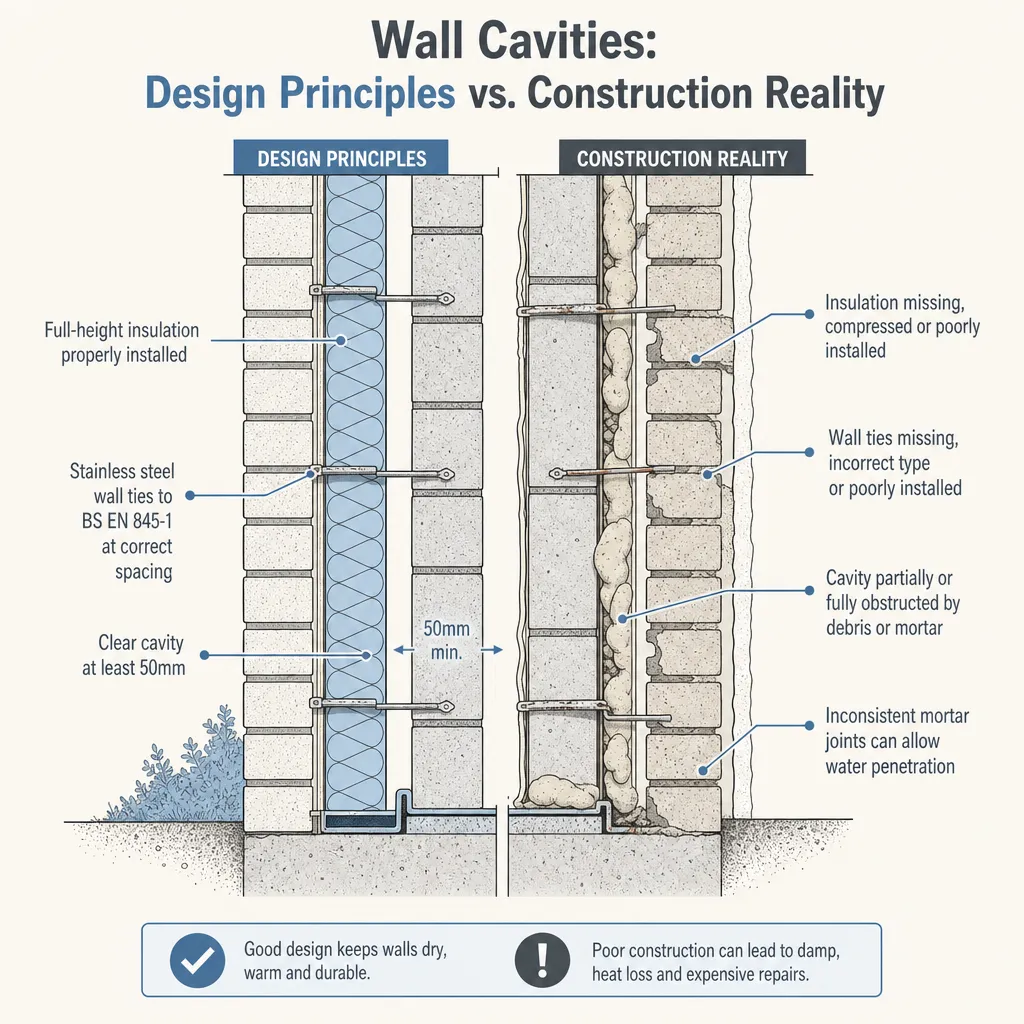
Wall Cavities: Design Principles vs. Construction Reality
A UK cavity wall is designed to resist weather, control heat loss, and structurally link two masonry leaves.
 Planning & Pre-Build
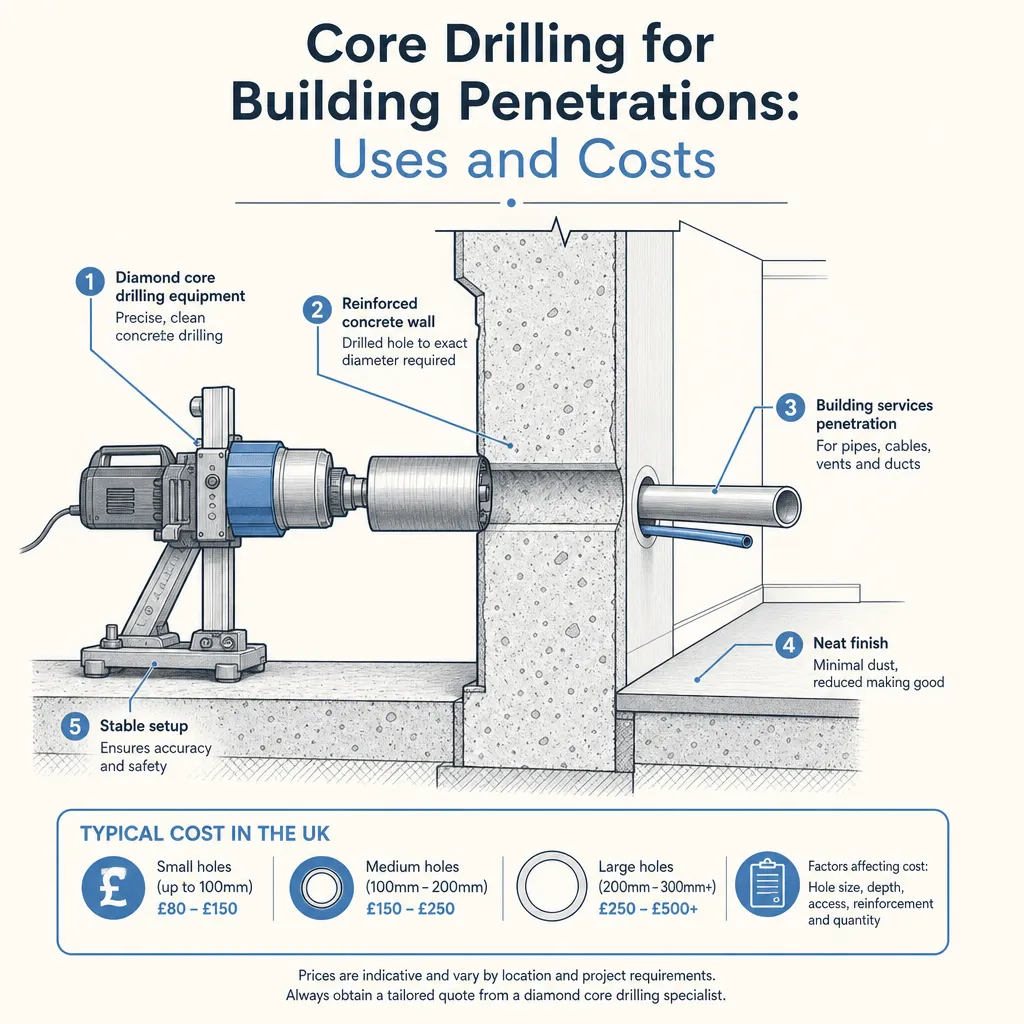
Core Drilling for Building Penetrations: Uses and Costs
Core drilling uses diamond-tipped equipment to cut clean holes through concrete, masonry, or block for pipes, ducts, cables, and building services.
 Planning & Pre-Build
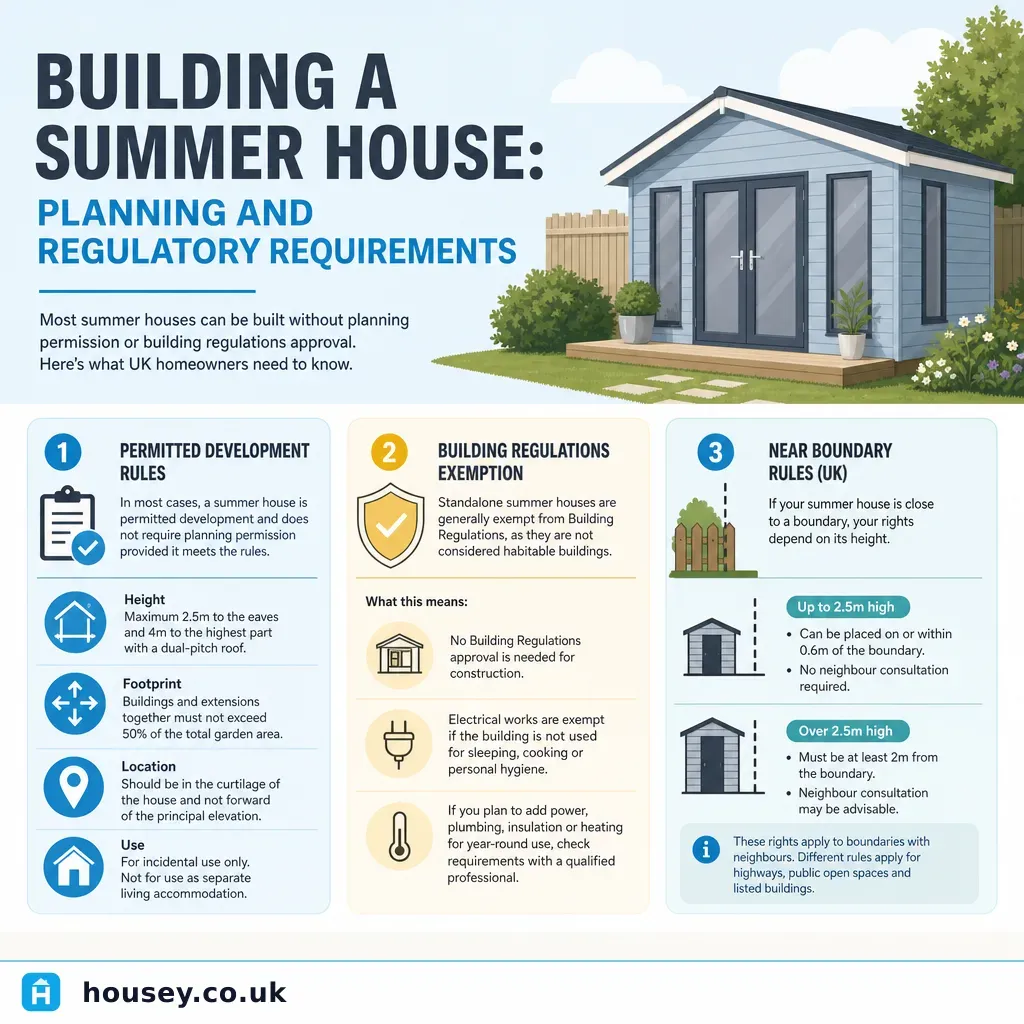
Building a Summer House: Planning and Regulatory Requirements
Most garden summer houses in England fall under Class E permitted development and need no planning permission, provided they are single-storey, within height limits, and not used for sleeping.
 Planning & Pre-Build
What Does a Structural Engineer Do and When You Need One
A structural engineer analyses and designs the load-bearing elements of a building — foundations, beams, columns, walls, and floors.
 Planning & Pre-Build
Effective Site Management: Best Practices for Building Project Success
Effective site management on a UK building project requires a clear programme, written contracts, CDM Regulations compliance, and proactive coordination between the principal contractor and all trades.