Building and Designing Winter Gardens for Year-Round Outdoor Use
By Housey · Last reviewed 9th of May 2026
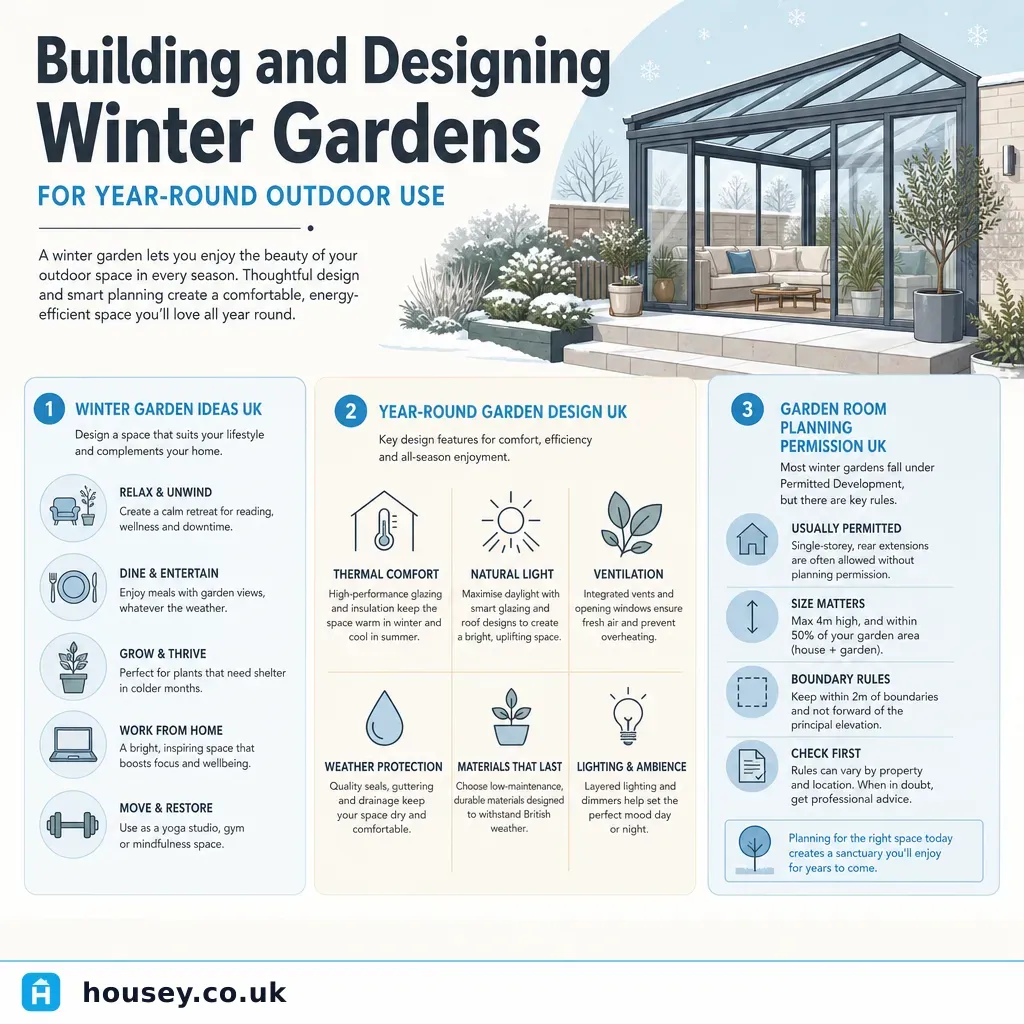
Building and Designing Winter Gardens for Year-Round Outdoor Use
Most UK gardens lie largely unused from October through to March — not because outdoor space has no value in winter, but because it has not been designed with the colder months in mind. A thoughtfully planned winter garden addresses the UK's characteristic combination of mild temperatures, persistent dampness, and low winter light to create an outdoor space that rewards visits in every season and, with the right structural elements, remains genuinely usable well into the colder months.
Key points
- Most detached garden structures fall within permitted development rights under the Town and Country Planning (General Permitted Development) (England) Order 2015, but listed buildings, conservation areas, and Article 4 direction areas have tighter restrictions.
- All outdoor electrical installations — including infrared heaters, lighting circuits, and underfloor heating — must comply with Part P of the Building Regulations (Electrical Safety in Dwellings) and BS 7671; use an NICEIC- or NAPIT-registered electrician.
- A south or south-west facing seating aspect can add several degrees of perceived warmth in winter due to the UK's low solar angle between November and February.
- RHS Award of Garden Merit (AGM) plants with documented winter-interest ratings provide a reliable starting point for four-season planting schemes in UK conditions.
- Permeable windbreaks — such as yew or hornbeam hedging — reduce wind chill on the leeward side more effectively than solid fencing, which can cause turbulence.
What is a winter garden?
The term covers two distinct but often overlapping approaches:
- A planted outdoor scheme designed to offer visual interest, structure, and sensory experience through the colder months — using evergreens, bark, berries, seedheads, and early-spring bulbs that emerge from January onward.
- A built outdoor room or shelter — such as a glazed garden room, an insulated and heated pergola, an open-sided pavilion with retractable glazing, or a large lean-to structure — that allows physical occupation of the garden in cold or wet weather.
Many homeowners pursue both: a planted scheme that provides year-round visual reward, combined with a sheltered structure that makes the garden genuinely comfortable to occupy.
Planning permission and building regulations
Before committing to any construction, establish whether your project requires planning permission or Building Regulations approval.
Garden structure types and planning status (England):
Structure type | Typically permitted development? | Key conditions |
|---|---|---|
Detached garden room or summerhouse | Usually yes | Under 2.5m to eaves; total outbuildings under 50% of curtilage; not forward of principal elevation |
Heated / habitable garden room | PD may apply to structure; Building Regs may apply to use | Consult LPA if insulated, heated, or used as habitable accommodation |
Lean-to or attached structure | Follows extension PD rules, not outbuilding rules | Size, height, and boundary proximity constraints apply |
Open pergola | Usually yes | Trellis over 1m on a boundary may require consent |
Structure on listed building or in conservation area | Unlikely to be PD | Apply for planning permission before any work |
Rules differ in Wales, Scotland, and Northern Ireland. Always check with your Local Planning Authority (LPA) if in any doubt — enforcement notices can be costly to resolve retrospectively.
Designing for four-season use
Shelter and microclimate
The UK's primary challenge for outdoor use in winter is wind and rain rather than extreme cold. A well-designed winter garden creates a sheltered microclimate through:
- Windbreaks: Hedging species such as yew (Taxus baccata), hornbeam (Carpinus betulus), or hawthorn (Crataegus monogyna) provide effective permeable barriers that reduce wind chill without creating turbulence. Allow 2–3 years for establishment.
- Covered seating: A weatherproof pergola with a polycarbonate or glass roof panel, a retractable awning with side panels, or a purpose-built garden room significantly extends the season for outdoor dining and relaxation.
- Aspect: Positioning the primary seating area to face south or south-west captures the maximum available winter sun, which sits at a low angle (around 15–20° altitude at midday in December in central England).
Heating and lighting
Outdoor infrared electric heaters extend evening and off-season use comfortably. All outdoor electrical work — including sockets, lighting circuits, and heater supplies — must be installed by a qualified electrician registered with NICEIC or NAPIT, and must comply with Part P of Building Regulations and the IET Wiring Regulations (BS 7671).
Good outdoor lighting transforms the visual impact of a winter garden after dark. Uplighters for structural planting, ground-level pathway lights, and warm-white festoon or bistro lighting all contribute to a welcoming outdoor environment in the evenings.
Planting for winter interest
Plant category | UK examples | Winter contribution |
|---|---|---|
Structural evergreens | Sarcococca confusa, Viburnum tinus, Pittosporum tenuifolium | Form, foliage, often fragrance |
Bark and stem colour | Betula utilis var. jacquemontii, Cornus alba, Salix alba 'Britzensis' | Colour and texture after leaf fall |
Winter flowers | Helleborus x hybridus, Hamamelis x intermedia, Mahonia x media | Colour and scent from November onward |
Seedhead and structure | Miscanthus sinensis, Echinacea seedheads, Pennisetum | Movement and architectural form |
Early spring bulbs (plant in autumn) | Snowdrops, Crocus tommasinianus, Iris reticulata, Narcissus 'February Gold' | Flower from January in most UK regions |
Evergreen climbers | Clematis cirrhosa, Trachelospermum jasminoides | Year-round structure on walls and pergolas |
All plants listed above hold or are strong candidates for RHS Award of Garden Merit status; check the RHS Plant Finder for current AGM listings and hardiness ratings relevant to your region.
What to ask before hiring a garden designer
Before instructing a professional, prepare the following questions:
- Do you have specific experience designing four-season or winter-use gardens, and can you provide examples?
- Will you confirm permitted development status or manage a planning enquiry as part of your service?
- What does your design service include — planting plans, materials specifications, drainage strategy, contractor coordination?
- Are you a member of the Society of Garden Designers (SGD) or hold RHS qualifications?
- Do you work with specific landscaping contractors, or are you independent and able to tender the build?
- How do you handle site drainage — especially important in UK conditions where winter waterlogging can affect both planting success and the usability of hard surfaces?
- What maintenance programme would you recommend to keep the scheme looking its best through winter?
Winter garden homeowner checklist
Before briefing a designer or contractor, work through this checklist:
When to get professional help
A garden designer adds particular value when a project combines structural elements, planting design, drainage improvements, and planning considerations. DIY planting for winter interest is achievable for experienced gardeners, but bespoke garden rooms and complex planting plans benefit from professional design and contractor coordination.
Seek professional advice if:
- The project involves any structure attached to the house or close to a boundary
- The property is in a conservation area or is listed
- The garden has significant drainage problems that affect both planting and hard-surface usability
- You want a cohesive four-season planting scheme rather than ad hoc purchases
- You are installing outdoor electrical heating or lighting as part of the design
How Housey can help
If you would like professional input on your winter garden project, Housey can connect you with qualified garden designers who can advise on design, planting, structural elements, drainage, and planning considerations in your local area.
Frequently asked questions
Do I need planning permission for a garden room in the UK?
Most detached garden rooms fall within permitted development rights in England, provided they are under 2.5m to the eaves, do not cover more than 50% of the garden curtilage, and are not forward of the principal elevation. Listed buildings, conservation areas, and properties subject to Article 4 directions may face tighter restrictions. Always check with your Local Planning Authority before committing to a build.
What plants look good in a UK garden in winter?
Structural evergreens such as Sarcococca confusa, Viburnum tinus, and Hellebores provide reliable winter interest. Cornus alba (dogwood) stems and birch bark add colour and drama. Ornamental grasses such as Miscanthus sinensis retain structure through winter. Early spring bulbs — snowdrops, Iris reticulata, Crocus — begin flowering from January in many UK regions and are planted in autumn.
Can I use my garden in winter without a heated structure?
Yes. A windbreak (hedging or fencing), a south-facing aspect, a waterproof pergola or canopy, and suitable outdoor furniture and lighting can make an unheated space usable on all but the coldest days. Adding infrared electric heaters under a covered area significantly extends the season. All outdoor electrical installations must comply with Part P of Building Regulations and BS 7671.
How much does a garden room cost in the UK?
Indicative UK costs, last reviewed 2026-05-09. A simple insulated timber garden room typically ranges from around £10,000 to £30,000 depending on size and specification. Bespoke glazed structures and high-specification heated garden rooms can cost considerably more. Planting and landscaping costs vary widely by garden size and specification. Always obtain at least three written, itemised quotes before committing.
Sources and further reading
- Planning Permission: Outbuildings — Planning Portal
- Approved Document P: Electrical Safety in Dwellings — GOV.UK
- RHS Award of Garden Merit Plants — Royal Horticultural Society
- NICEIC: Find a Registered Contractor — NICEIC
- Society of Garden Designers — SGD
Useful next reads
 Improvement & Build
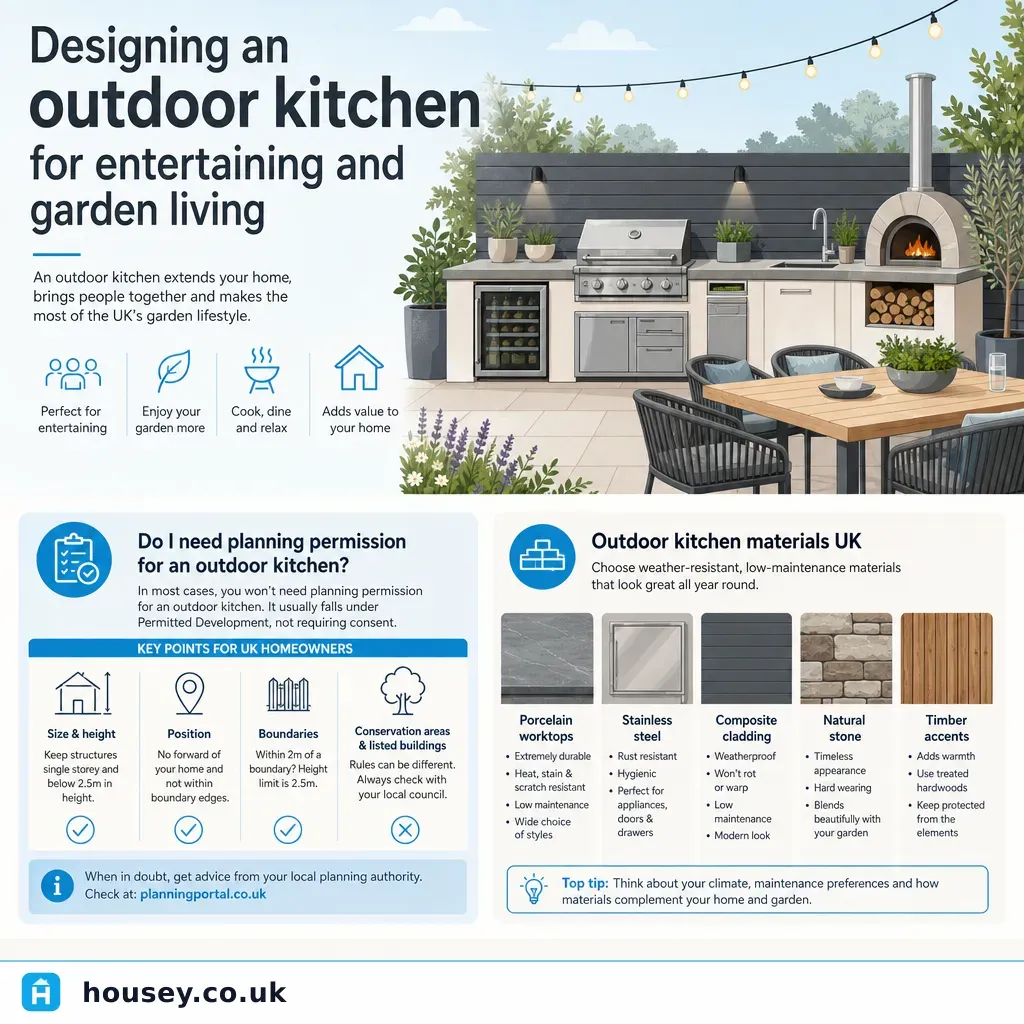
Designing an outdoor kitchen for entertaining and garden living
An outdoor kitchen in a UK garden needs a stable, level base — typically a concrete slab or quality paving — with weather-rated materials such as stainless steel grade 316 or frost-rated porcelain.
 Improvement & Build
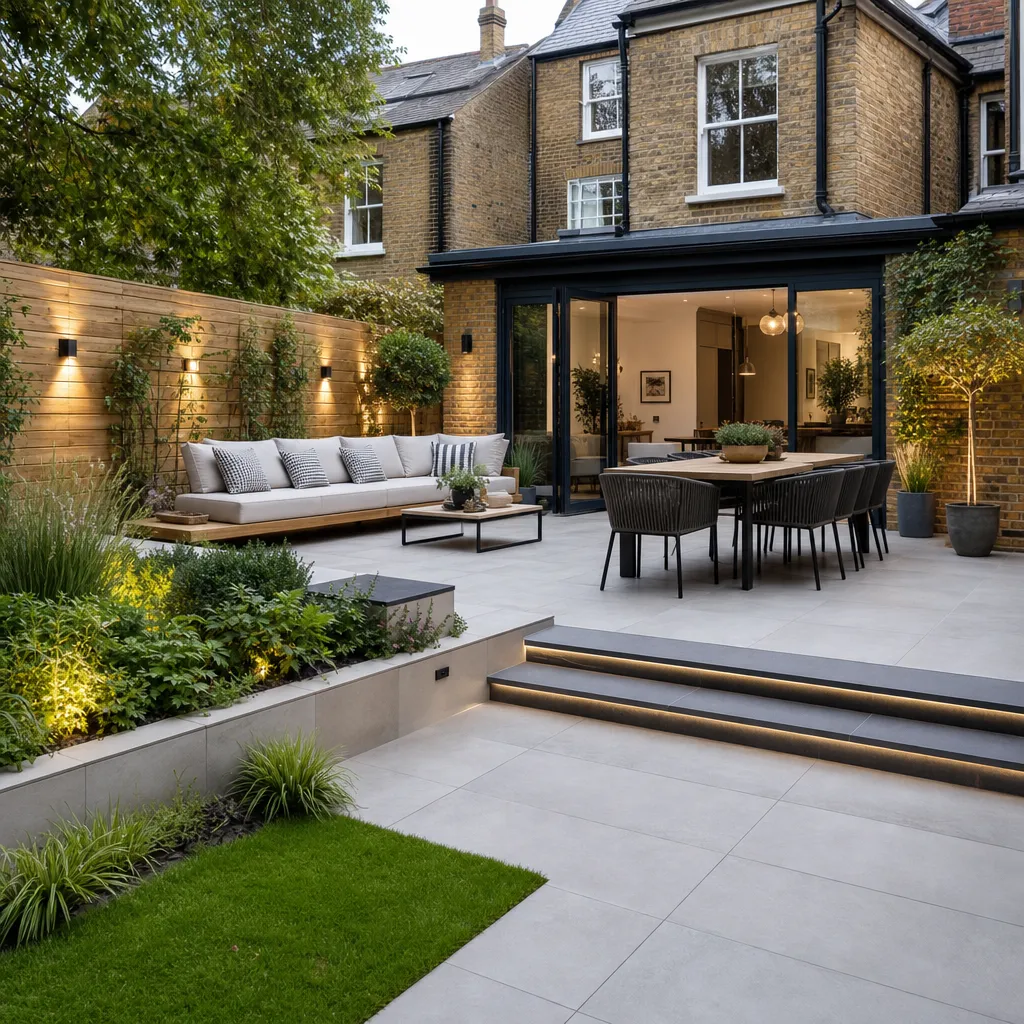
Creating Functional and Attractive Outdoor Entertainment Areas
A well-planned outdoor entertainment area combines a level surface — patio, decking, or gravel — shelter or shade, appropriate lighting, and power access if needed.
 Improvement & Build
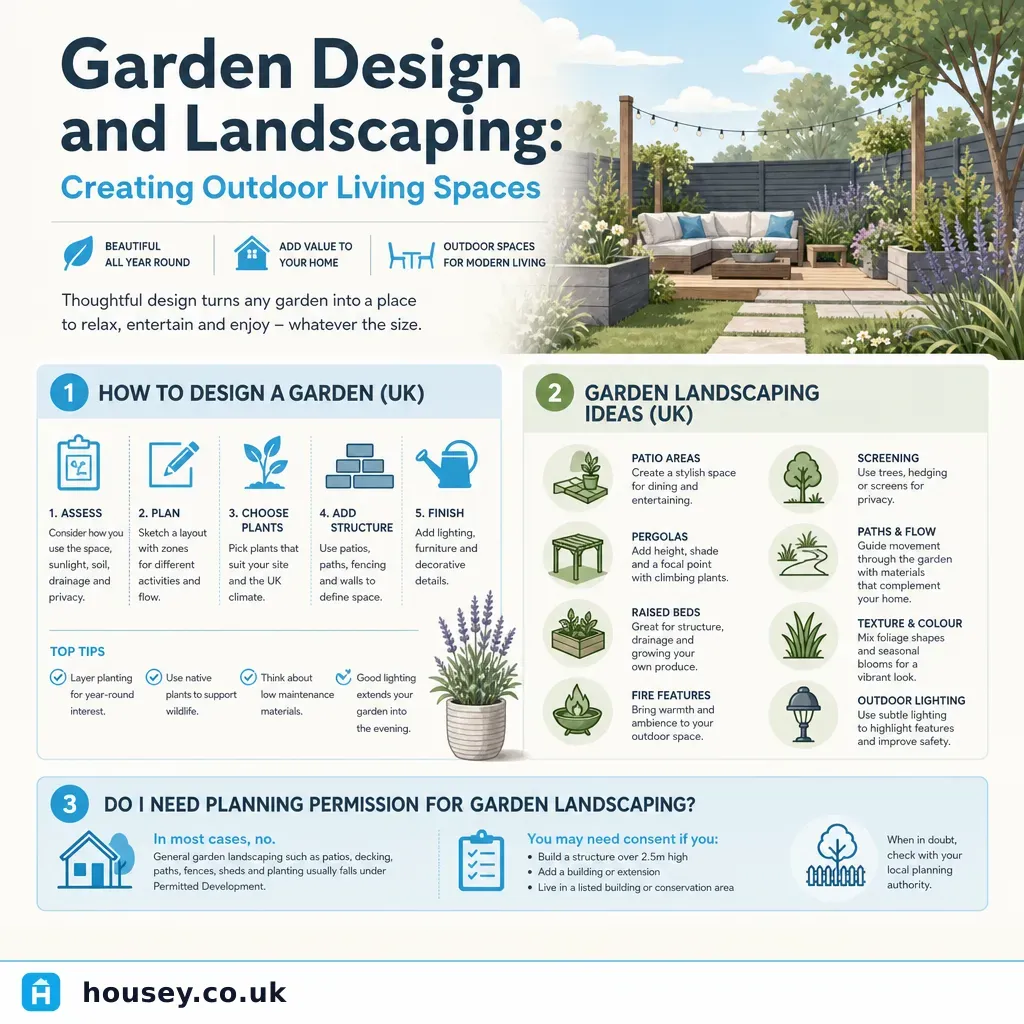
Garden Design and Landscaping: Creating Outdoor Living Spaces
Garden design creates functional outdoor living spaces through a combination of hard landscaping such as paving and decking, soft landscaping including planting and lawns, and structures such as pergolas or raised beds.
 Improvement & Build
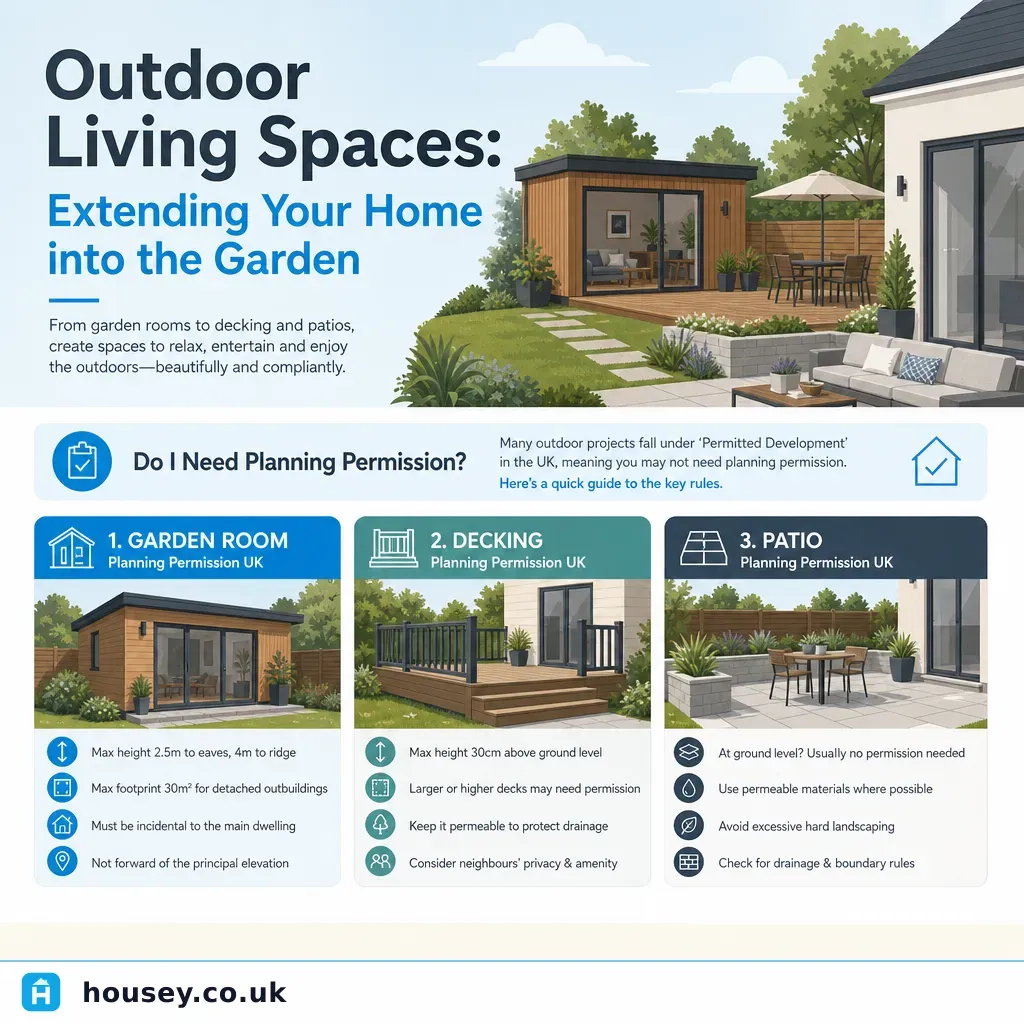
Outdoor Living Spaces: Extending Your Home into the Garden
Outdoor living projects in the UK range from simple patios requiring no permissions to garden rooms and raised decking that may trigger planning or Building Regulations requirements.
 Improvement & Build
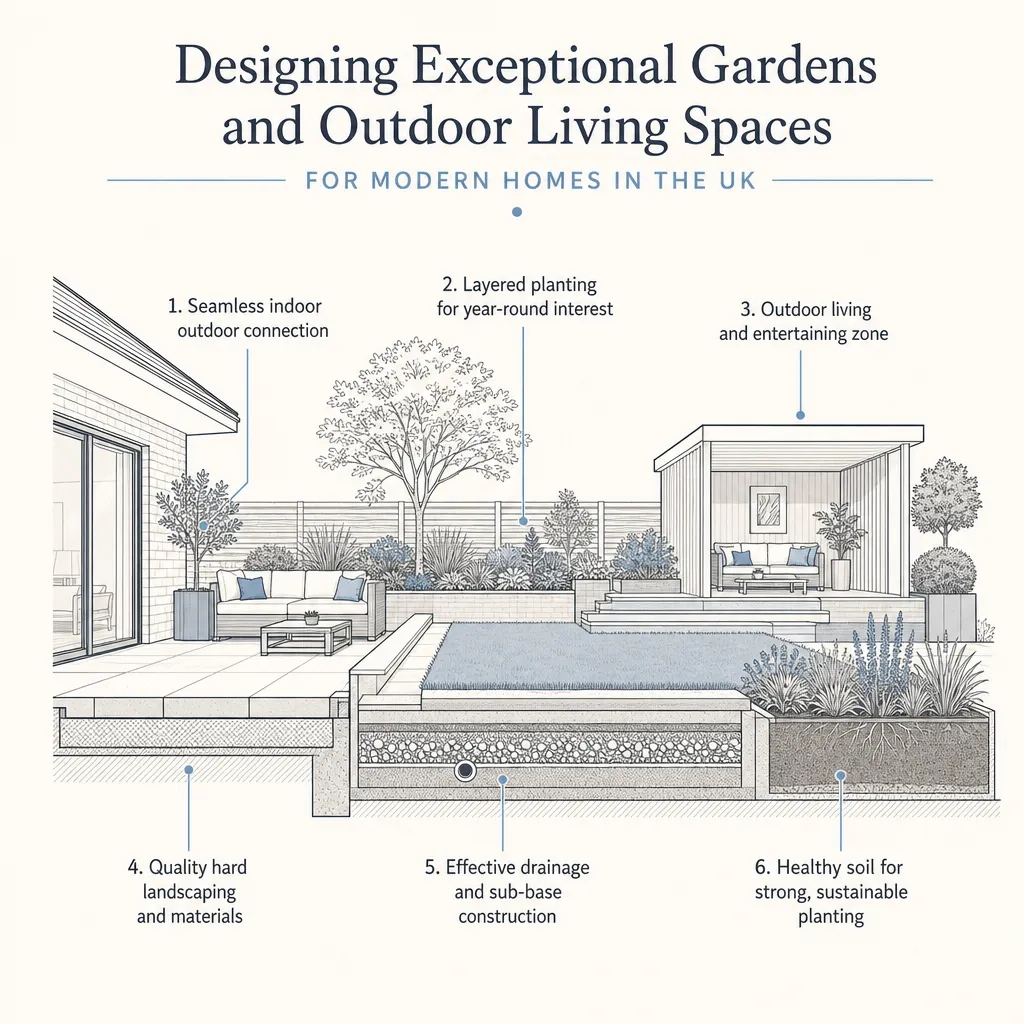
Designing Exceptional Gardens and Outdoor Living Spaces for Modern Homes
A well-designed garden blends practical zones — seating, lawn, planting, and hard landscaping — with your household's needs.