Designing Exceptional Gardens and Outdoor Living Spaces for Modern Homes
By Housey · Last reviewed 17th of May 2026
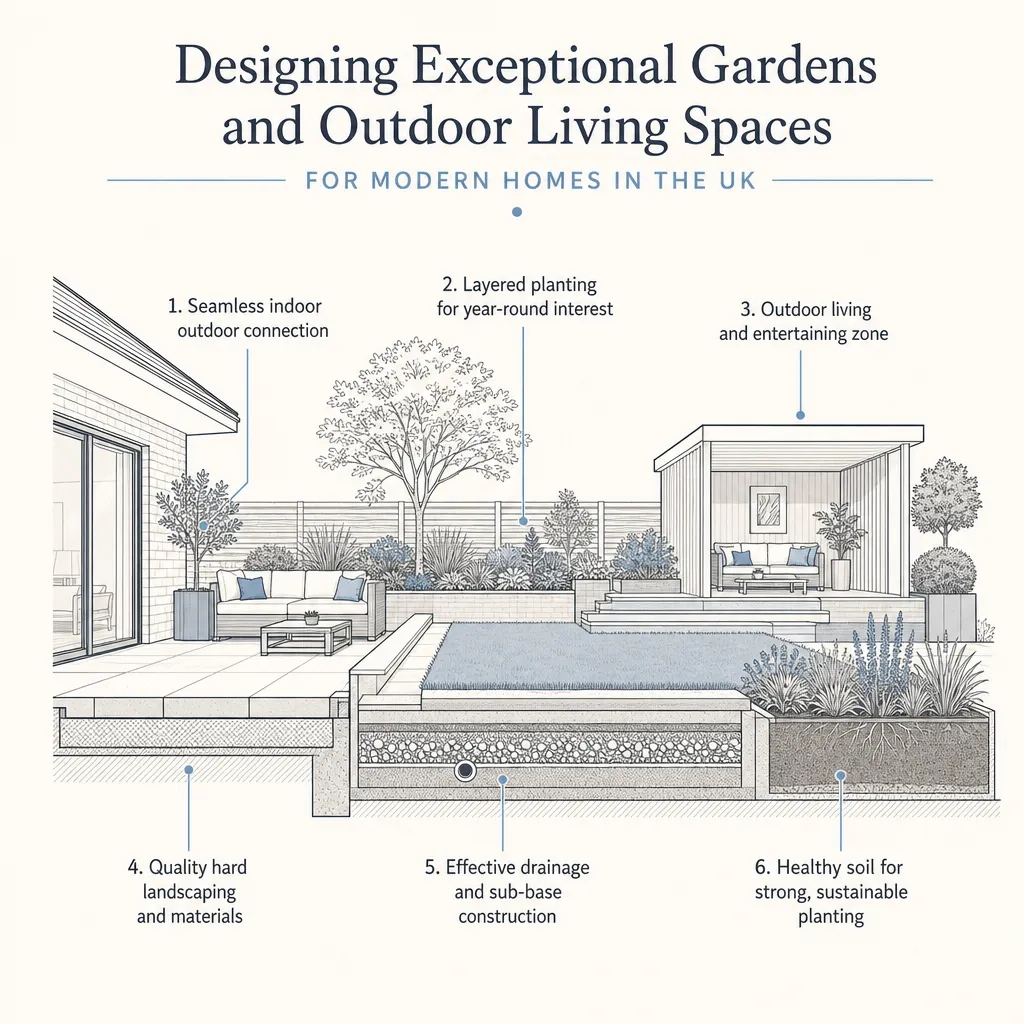
Designing Exceptional Gardens and Outdoor Living Spaces for Modern Homes
Gardens have become central to UK homeowners' decisions since the early 2020s, whether assessing a property to buy, planning works after moving in, or improving a home ahead of sale. The right garden design can extend the usable area of a property, support wellbeing, and — in the right market — add meaningful value. Getting it right means thinking through layout, materials, planning rules, and the right professionals before a single spade goes in.
Key points
- Front garden paving over 5 m² using impermeable materials requires planning permission under the Town and Country Planning Act; using permeable materials or directing run-off to a lawn or border does not.
- Outbuildings and garden structures are permitted development provided they cover no more than 50% of the curtilage (excluding the original house footprint) and sit within height limits — 2.5 m if within 2 m of a boundary, or up to 4 m for a dual-pitched roof building set further away.
- Garden walls and fences are permitted development up to 1 m adjacent to a highway, or up to 2 m elsewhere; exceeding these limits requires planning permission.
- A BALI-registered (British Association of Landscape Industries) landscaper or RHS-accredited garden designer brings recognised professional standards to design and construction work.
- Listed buildings and conservation areas carry additional restrictions — check with your local planning authority before altering boundaries, removing trees subject to a Tree Preservation Order, or installing structures.
How to define what you want from your garden
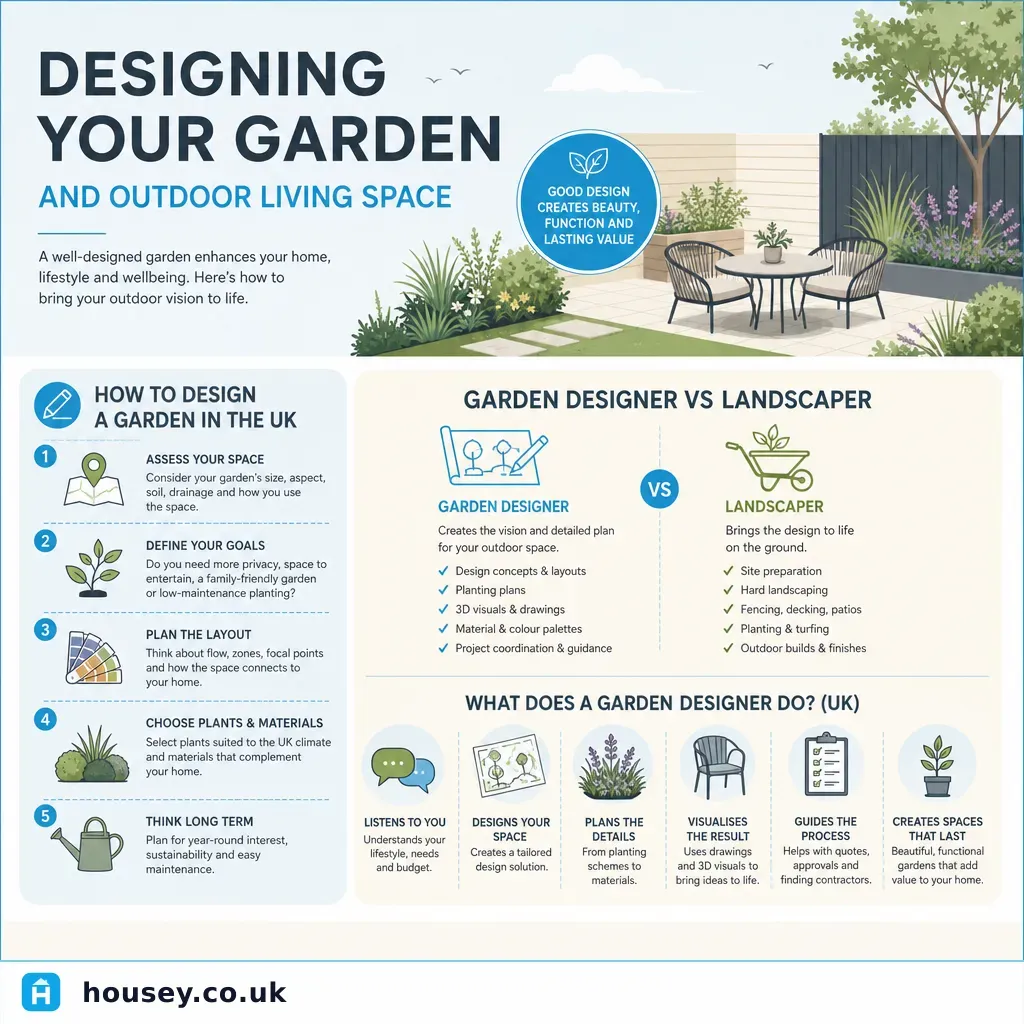
Before contacting a professional, it is worth establishing the practical purpose your garden needs to serve. A family with young children prioritises very different features than a couple seeking a low-maintenance entertaining space or a homeowner preparing a property for sale.
Which option should you choose?
- Choose a garden designer if you want a full concept plan, planting scheme, and material palette — particularly for larger plots (over 100 m²), sloping ground, or where you want a cohesive design before approaching landscapers for quotes.
- Choose a landscaper directly if the scope is primarily construction — decking, patios, boundary walls, drainage, or turfing — and you have a clear idea of what you want.
- Use both professionals if you are starting from scratch with a blank plot or carrying out a whole-garden redesign: a designer's drawings give the landscaper a precise brief and help you compare quotes fairly.
- Check with your local planning authority if the property is listed, in a conservation area, or if you intend to work near trees subject to a Tree Preservation Order.
Garden designer vs landscaper: what each professional does
Professional | What they provide | Best for | Not ideal for |
|---|---|---|---|
Garden designer | Concept drawings, planting plans, material specifications, planting schedules | New gardens, complex slopes, large plots, design-led briefs | Pure construction work — they do not usually carry out groundworks |
Landscaper | Hard landscaping, drainage, fencing, decking, turfing, groundworks | Defined-scope construction projects | Design-heavy briefs without a plan |
Landscape architect (CMLI) | Full design, planning applications, technical drawings, large-scale schemes | Commercial-scale or technically complex residential projects | Small domestic gardens where cost may not be justified |
RHS-trained designer | Planting-led design with horticultural depth | Cottage, naturalistic, or sustainable planting schemes | Heavy civil engineering or groundworks |
Key features of an effective outdoor living space
Hard landscaping forms the structural backbone of the garden: patios, paths, raised beds, retaining walls, and decking. Material choice affects maintenance, drainage, and planning considerations. Permeable materials such as gravel, permeable block paving, and open jointing satisfy Sustainable Drainage System (SuDS) requirements for new front-garden paving.
Planting zones soften hard surfaces and provide seasonal interest, privacy screening, and wildlife habitat. The RHS recommends integrating at least one-fifth of the garden as planted area for biodiversity benefit.
Lighting extends the usable hours of the space and adds security. Low-voltage LED systems and solar-powered options avoid the need for significant electrical works; mains-wired outdoor lighting must be installed by a Part P-registered electrician under Building Regulations.
Water features and drainage are worth considering early in the design process. Poor drainage is a common problem in UK gardens, particularly on heavy clay soils. A garden designer or landscaper can assess whether French drains, soakaways, or raised planting beds are the right solution.
A worked UK property scenario
A homeowner with a 1970s semi-detached in Surrey has a 12 m × 8 m rear garden on a gentle slope. They want a level patio for entertaining, a small lawn, raised vegetable beds, and screening from neighbours.
The 400 mm level change across the plot calls for a low retaining wall (below 1 m, so permitted development) and some spoil removal. A landscaper is quoted to lay a 4 m × 5 m porcelain patio with a permeable-jointed base. A garden designer prepares a planting plan with evergreen screening shrubs, a low ornamental fence on the boundary, and a drip irrigation line for the raised beds. Both professionals work from the same drawing set, making the project coherent and the quotes comparable.
Indicative costs (Surrey, 2026): landscaping works approximately £8,000–£14,000; garden design fee approximately £800–£2,500 depending on level of detail. Costs vary significantly by location, scope, and materials. Obtain at least three quotes. Indicative UK costs, last reviewed 2026-05-17.
Homeowner checklist before work begins
When to get professional help
Most garden projects benefit from at least an initial conversation with an experienced designer or landscaper before work starts. Seek professional advice specifically if:
- The plot slopes significantly (over 500 mm change in level), as retaining structures may need engineering input.
- You plan to build a wall or fence near a boundary that could exceed permitted development limits.
- There are mature trees in or near the garden where a Tree Preservation Order may apply.
- You want to connect outdoor lighting or power sockets to the mains — this is notifiable electrical work under Part P of the Building Regulations.
- The property is listed or in a conservation area — almost any external alteration may require listed building consent or conservation area consent.
How Housey can help
Housey connects UK homeowners with qualified garden designers and experienced landscapers who can provide detailed quotes for your project. Use Housey to compare professionals in your area, review credentials, and move your outdoor space from plan to reality.
Frequently asked questions
Do I need planning permission to lay a patio or decking in my garden?
Rear garden patios at ground level are generally permitted development and do not need planning permission. Decking or raised platforms require planning permission if they exceed 300 mm above ground level or, together with outbuildings, cover more than 50% of the garden. Front garden paving over 5 m² requires planning permission when impermeable materials are used; permeable materials or run-off directed to a border do not.
How much does garden design cost in the UK?
A garden designer typically charges £500–£3,000+ depending on the size of the plot and level of detail required, or £50–£120 per hour. Landscaping construction costs vary widely by scope and region. Always obtain at least three quotes and confirm whether VAT is included. Indicative UK costs, last reviewed 2026-05-17.
What is the difference between a garden designer and a landscape architect?
A garden designer focuses on domestic residential gardens, producing planting plans, layout drawings, and material specifications. A Chartered Member of the Landscape Institute (CMLI) has a broader professional qualification covering larger-scale or technically complex projects, including planning applications and public realm. For most UK residential gardens, a garden designer is the appropriate professional.
Can I remove a tree in my garden?
You can remove most trees in your own garden without permission, subject to any Tree Preservation Order (TPO) or conservation area restrictions. If a TPO applies, you must apply to your local planning authority before carrying out any works. In a conservation area, six weeks' notice is required before removing a tree with a trunk diameter of 75 mm or more. Check with your local planning authority before proceeding.
Sources and further reading
- Planning Portal: outbuildings and garden structures — Planning Portal
- GOV.UK: when is permission required — GOV.UK
- Tree Preservation Orders and trees in conservation areas — GOV.UK
- RHS: create a wildlife garden — Royal Horticultural Society
- BALI: find a landscaper — British Association of Landscape Industries
Useful next reads
 Improvement & Build
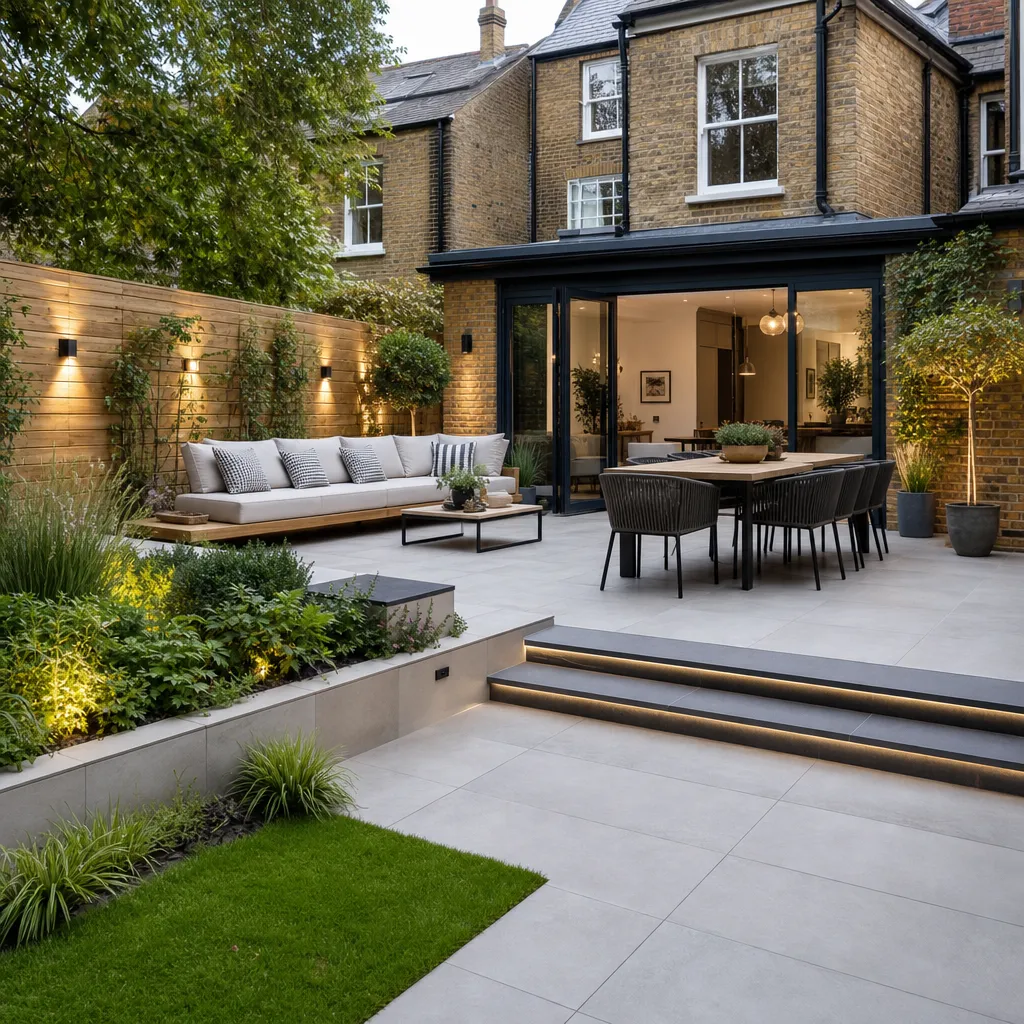
Creating Functional and Attractive Outdoor Entertainment Areas
A well-planned outdoor entertainment area combines a level surface — patio, decking, or gravel — shelter or shade, appropriate lighting, and power access if needed.
 Improvement & Build
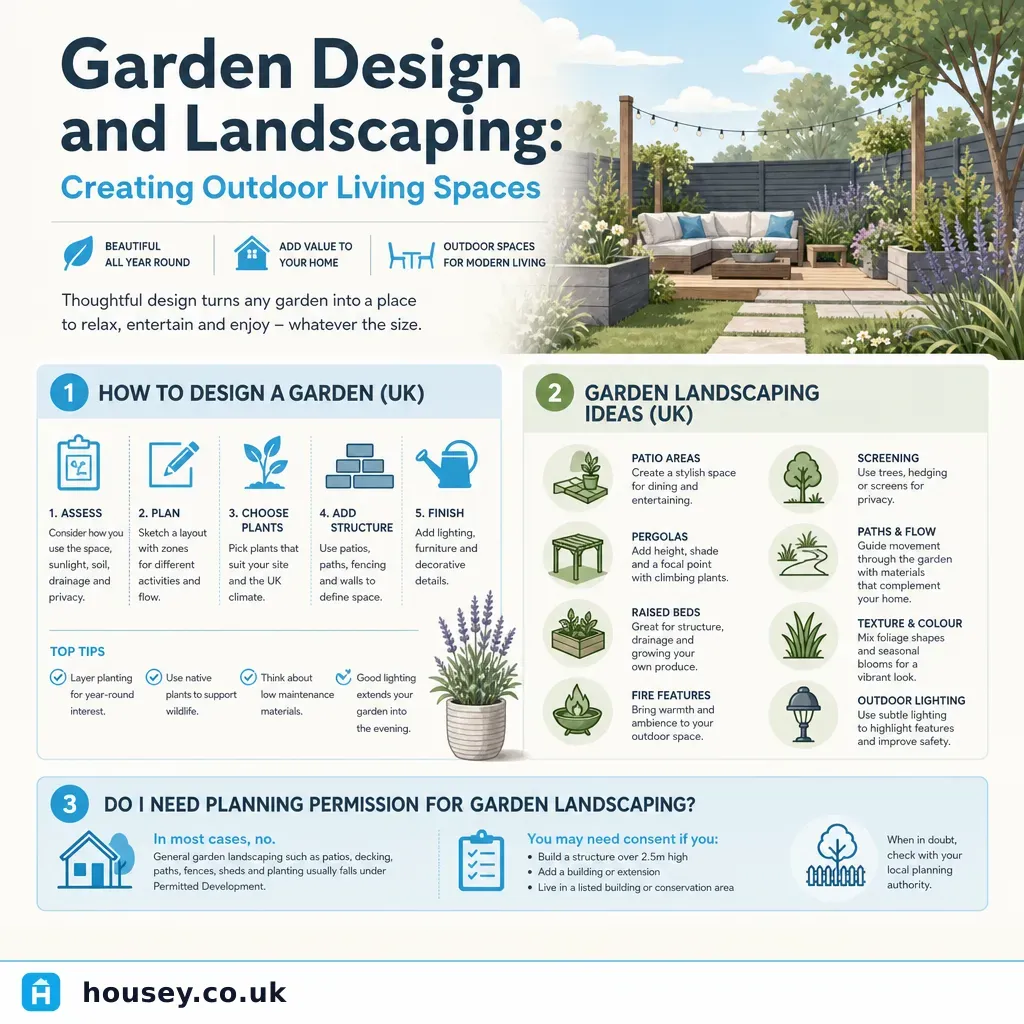
Garden Design and Landscaping: Creating Outdoor Living Spaces
Garden design creates functional outdoor living spaces through a combination of hard landscaping such as paving and decking, soft landscaping including planting and lawns, and structures such as pergolas or raised beds.
 Improvement & Build
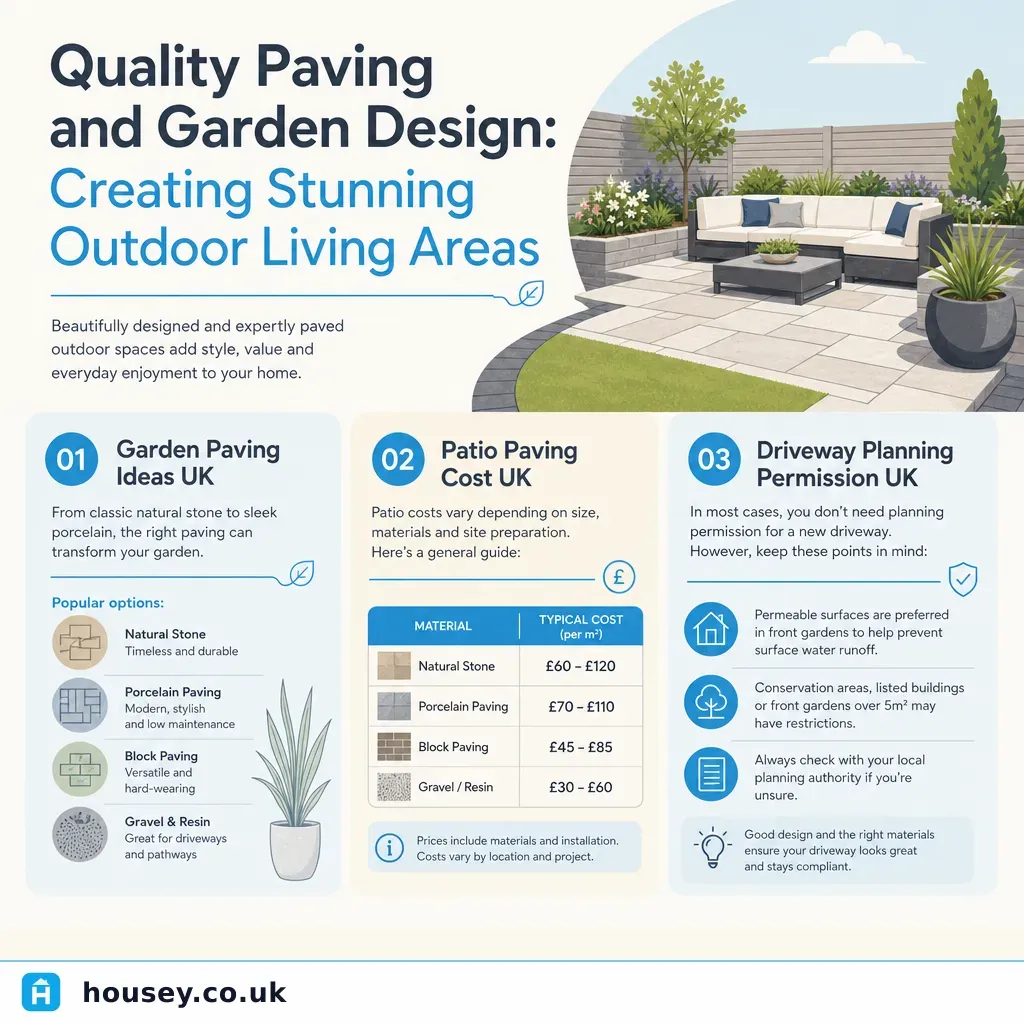
Quality Paving and Garden Design: Creating Stunning Outdoor Living Areas
Paving a front garden driveway over 5 square metres in England requires planning permission unless a permeable material is used and drainage is managed on site.
 Improvement & Build
Designing Your Garden and Outdoor Living Space
Designing a garden or outdoor living space involves planning layout, planting, drainage, surfaces, and structures to suit how you live.
 Improvement & Build
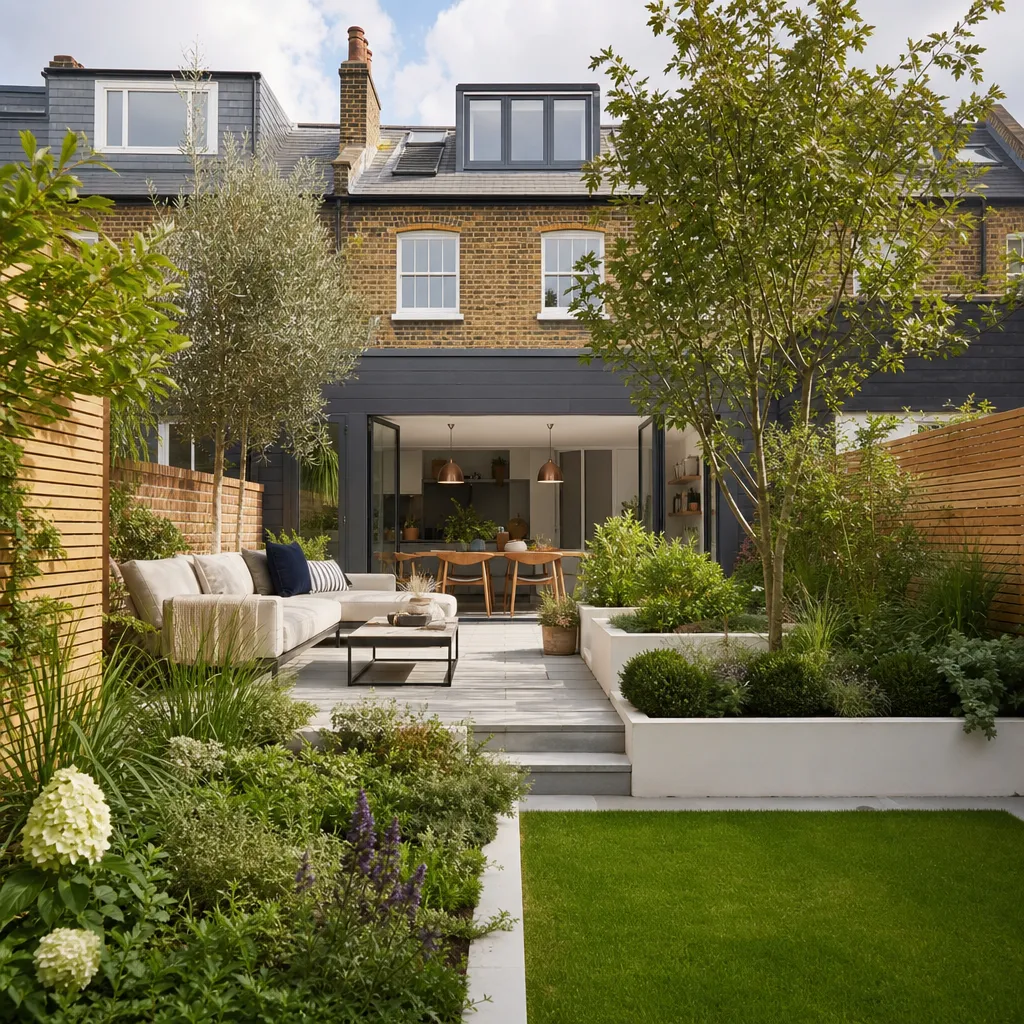
Seasonal Garden Transformations and Outdoor Design Ideas
A successful garden transformation in the UK works with the seasons rather than against them — establishing structure and hard landscaping in autumn or winter, planting in spring, and enjoying the results through summer.