Outdoor Living Spaces: Extending Your Home into the Garden
By Housey · Last reviewed 25th of May 2026
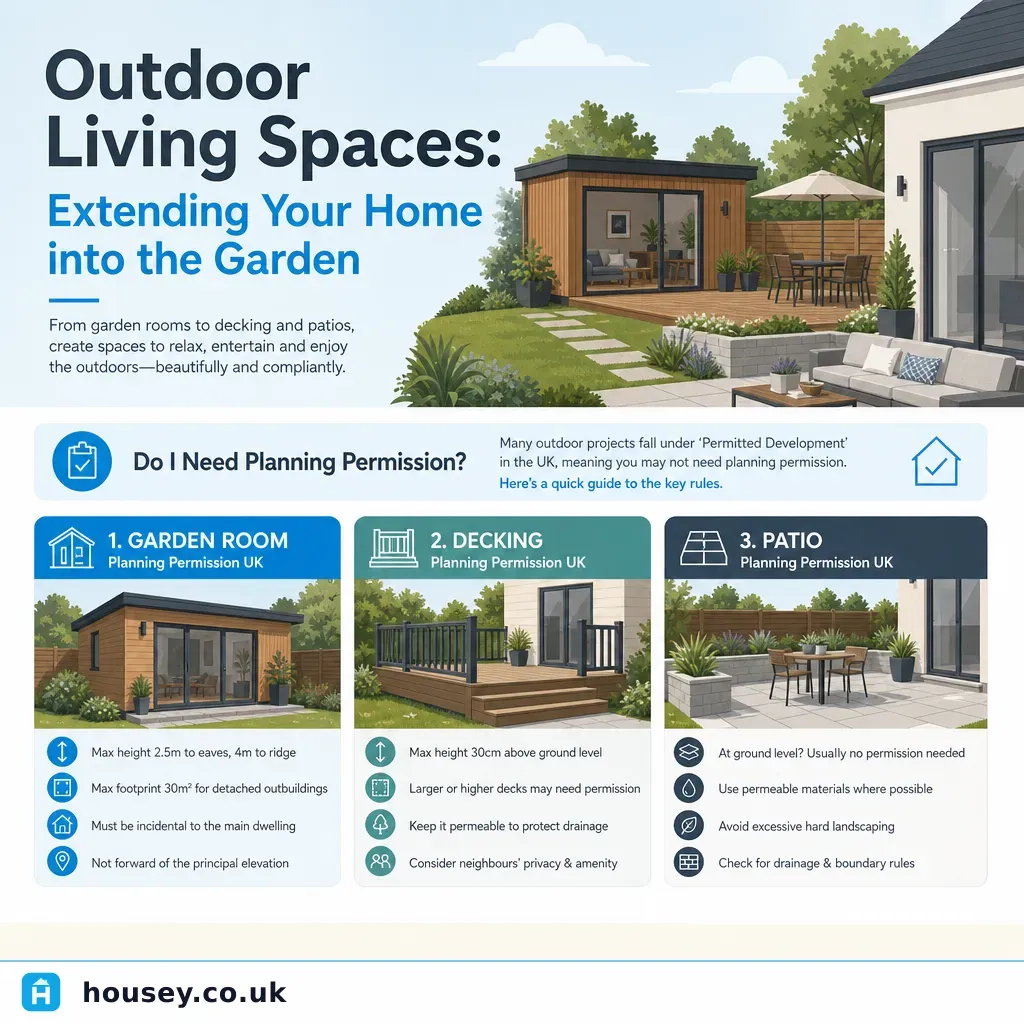
Outdoor Living Spaces: Extending Your Home into the Garden
The boundary between indoor and outdoor living has shifted considerably in recent years, with homeowners across the UK investing in patios, decking, pergolas, garden rooms, and landscaped terraces that function as genuine extensions of daily life rather than seasonal afterthoughts. This kind of project spans a wide range — from a simple paved seating area requiring no formal permissions to a substantial garden structure that triggers planning or Building Regulations — and understanding which category your plans fall into can prevent costly surprises. Whether you are redesigning a modest courtyard behind a Victorian terrace or planning a large outdoor entertaining space alongside a 1990s detached house, the planning, structural, and drainage implications vary considerably by project type and property location.
Key points
- Decking or paving that raises the garden level by more than 300 mm, or covers more than 50% of the garden area with impermeable materials, may require planning permission under the Town and Country Planning (General Permitted Development) Order 2015 (as amended).
- Garden rooms and outbuildings used for habitable purposes may require both planning permission and Building Regulations approval depending on floor area, proximity to boundaries, and intended use.
- Permitted development rights for outbuildings are restricted in conservation areas, national parks, Areas of Outstanding Natural Beauty (AONBs), and for all listed buildings — always verify before starting work.
- Under the Highways Act 1980 and common law, surface drainage from hard landscaping must not be directed onto neighbouring land or the public highway.
- Mains-voltage outdoor lighting and gas patio heaters require installation by a Part P compliant electrician and a Gas Safe registered installer respectively.
Which outdoor projects need planning permission?
A common area of confusion is which garden works require a planning application and which fall under permitted development rights. The answer depends on the type of structure, its size, its position within the plot, and the nature and location of your property.
Decision tree: planning permission or not?
- No application usually needed if: paving or decking is at or near garden level (below 300 mm raised), covers less than 50% of the total garden area, and uses permeable materials — typically permitted development with no application required.
- Check with your LPA if: you plan to raise decking more than 300 mm above natural ground level, or cover more than half the garden with impermeable paving.
- Permitted development likely applies if: a single-storey outbuilding is in the rear garden, has eaves height under 2.5 m, maximum height under 4 m (3 m for a flat or pent roof), is more than 2 m from any boundary if over 2.5 m tall, and is not used for sleeping accommodation.
- Planning permission required if: the outbuilding is within 2 m of a boundary and exceeds 2.5 m in height, or the structure is forward of the principal elevation of the dwelling.
- Always check with your LPA if: the property is in a conservation area, national park, or AONB — permitted development rights for many garden structures are restricted or removed in these designations.
- Listed building consent required if: your property is listed — virtually any external alteration, including new garden structures, requires listed building consent in addition to any planning permission.
Rules can be affected by conditions attached to your original planning consent, Article 4 directions, or the specific planning history of your property. A pre-application enquiry to your local planning authority is usually free or low-cost and can clarify the position before you commit to any design.
What makes a great outdoor living space in UK conditions?
UK outdoor spaces face specific demands: variable weather, limited reliable sunshine across much of the year, and often modest garden dimensions in urban and suburban settings. Effective design accounts for these realities from the outset.
Design element | UK-specific consideration |
|---|---|
Orientation | South or southwest-facing spaces maximise usable hours; north-facing aspects require overhead cover and planted windbreaks |
Shelter | Pergolas, sail shades, or solid canopies extend the season; note that a solid roof can affect permitted development classification |
Drainage | UK rainfall makes drainage critical; specify a minimum 1:80 fall away from the house for any adjacent hard surface |
Outdoor heating | Infrared overhead heaters extend the season effectively; gas patio heaters require a Gas Safe registered installer |
Planting | Structural planting — hedges, pleached trees, raised beds — defines zones and provides natural screening more durably than fencing in many garden settings |
Lighting | Low-voltage LED garden lighting is often manageable for a competent DIYer; any mains-voltage circuit requires a Part P compliant electrician |
Hard surfaces | Natural stone, large-format porcelain, composite decking, resin-bound aggregate, and permeable block paving each carry different cost, maintenance, and drainage profiles |
Patios and hard landscaping: what to know
A patio or hard-standing area is typically the foundation of an outdoor living project. Several practical and regulatory considerations apply.
Permeable vs impermeable surfaces: Householders must not lay more than 5 m² of impermeable hard surfacing to the front of a dwelling without planning permission, per permitted development rules. No equivalent rule applies to rear gardens, but drainage impact remains both a practical and legal consideration. Permeable options — gravel, permeable block paving, resin-bound aggregate — avoid creating additional surface run-off and are generally encouraged by local planning authorities and drainage engineers.
Sub-base and foundations: A patio that settles, cracks, or becomes uneven within a few years typically reflects inadequate sub-base preparation rather than surface material failure. For most residential patios, a minimum 100 mm layer of compacted MOT Type 1 (crushed limestone) is standard practice; unstable or waterlogged ground may require deeper preparation or a geotextile membrane below the sub-base.
Proximity to house foundations: Hard landscaping must not bridge or bury damp-proof courses (DPCs) or air bricks. A minimum 150 mm clearance between finished patio level and the DPC is standard, and air bricks must remain unobstructed to maintain subfloor ventilation — particularly important in properties with timber suspended ground floors.
Garden rooms and outdoor structures
Freestanding garden rooms — used as home offices, studios, gyms, or hobby spaces — have become one of the most popular home improvement projects in the UK. The regulatory position is often misrepresented in product marketing, so it is worth understanding the thresholds precisely.
For Building Regulations, a garden room below 15 m² internal floor area is generally exempt (Class VI, Schedule 2, Building Regulations 2010) if it is more than 1 m from a boundary and does not contain sleeping accommodation. Between 15 m² and 30 m², the exemption may still apply if the structure is more than 1 m from a boundary and is not used for habitable purposes. Above 30 m², Building Regulations approval is required regardless of position.
These thresholds govern Building Regulations only. Planning (permitted development) rules operate independently, with their own size and position criteria as outlined in the decision tree above. A structure can be Building Regulations exempt but still require a planning application, or vice versa.
Always confirm both positions before purchasing a prefabricated garden room, as advertised "no permissions needed" claims are typically based on assumed permitted development rights that may not apply to your specific property.
When to get professional help
For straightforward paving and planting projects, a skilled landscape contractor and careful product research may be sufficient. Professional input is important when:
- You are uncertain whether planning permission or Building Regulations approval is required — a pre-application enquiry or a planning consultant can prevent enforcement problems later.
- The project involves significant changes to ground levels or groundworks near house foundations.
- Any gas or mains electrical installation is involved — these must be carried out by qualified, registered tradespeople.
- You are in a conservation area or have a listed building — the regulatory requirements are more complex and the consequences of non-compliance more serious.
- The project involves a substantial structure or raised decking more than 600 mm above ground, where structural assessment may be appropriate.
How Housey can help
Planning and delivering a successful outdoor living project often involves more than one professional discipline. Housey connects you with garden designers who can create a tailored scheme that works within your planning context and climate, and with extension builders experienced in outdoor structures and hard landscaping — so you get the right expertise for every element of your project.
Frequently asked questions
Do I need planning permission for a pergola?
An open pergola without a solid roof is generally not considered a structure requiring planning permission if it is in the rear garden, meets standard permitted development height limits, and does not encroach within 2 m of a boundary at a height exceeding 2.5 m. A pergola with a solid or near-solid roof may be treated differently. If in doubt — particularly in a conservation area — submit a pre-application enquiry to your local planning authority before building.
Can I install a garden office without planning permission?
In most cases, yes — provided the structure meets permitted development criteria: single storey, rear garden only, eaves height under 2.5 m, total height under 4 m (3 m for a flat or pent roof), more than 2 m from any boundary if over 2.5 m tall, and not used for sleeping accommodation. However, permitted development rights are removed or restricted for listed buildings, conservation areas, and some estates subject to Article 4 directions. Always verify with your local planning authority.
Does hard landscaping in the garden require Building Regulations approval?
Standard domestic patios and ground-level decking do not generally require Building Regulations approval. However, a raised deck more than 600 mm above ground level may bring Part K (protection from falling, collision, and impact) into scope, requiring appropriate guarding. Any structure forming part of a habitable building always requires Building Regulations approval. Check with your local building control body if you are uncertain about your specific project.
How much does an outdoor living space cost in the UK?
Costs vary considerably by material, area, complexity, and region. As a general guide (indicative UK costs, last reviewed 2026-05-25), a simple paved seating area starts at a few hundred pounds for a small plot; a professionally landscaped scheme with patio, raised beds, planting, lighting, and pergola could range from £5,000 to £25,000 or more depending on scope. Always obtain at least three itemised quotes from qualified contractors.
Sources and further reading
- Town and Country Planning (General Permitted Development) Order 2015 — legislation.gov.uk
- Planning Portal: Outbuildings permitted development — Planning Portal
- When is permission required? — GOV.UK
- Historic England: Home improvements and listed buildings — Historic England
- Sustainable drainage systems (SuDS) guidance — GOV.UK
Useful next reads
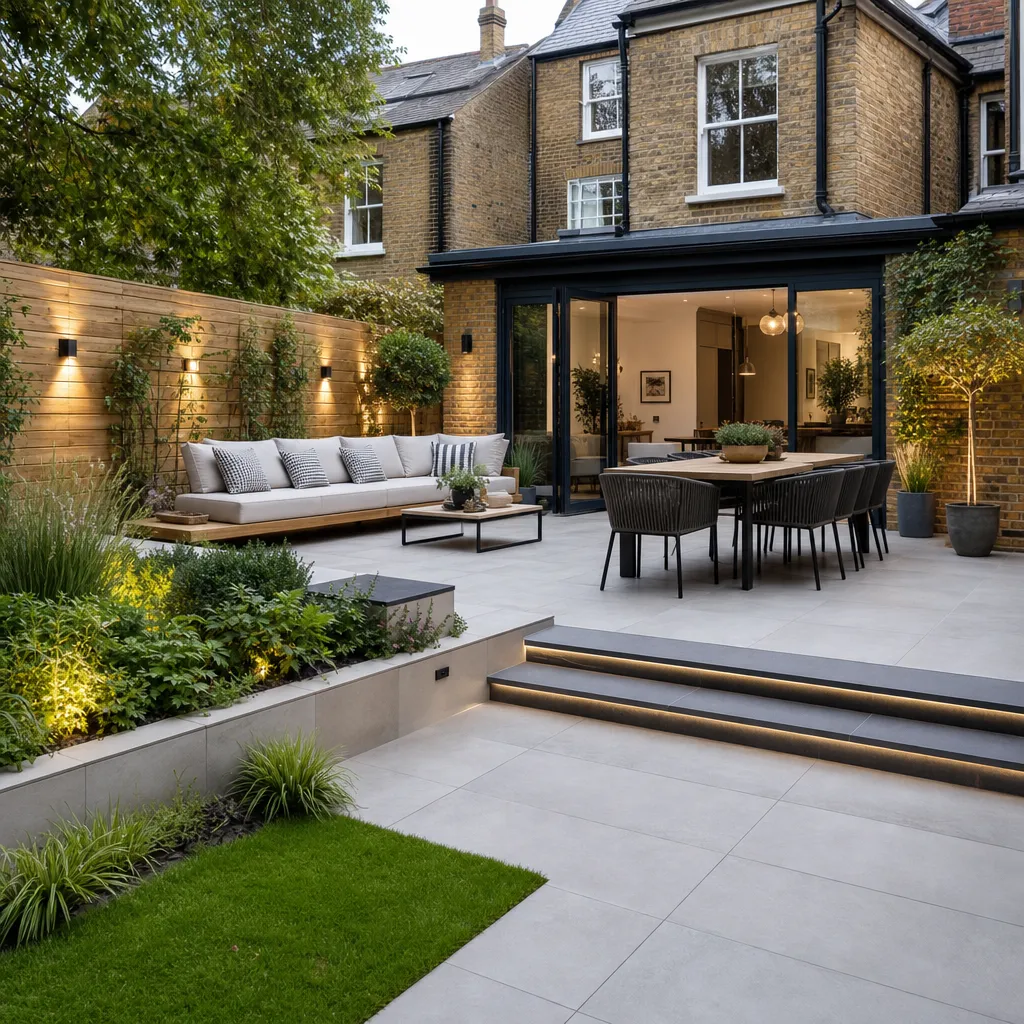 Improvement & Build
Creating Functional and Attractive Outdoor Entertainment Areas
A well-planned outdoor entertainment area combines a level surface — patio, decking, or gravel — shelter or shade, appropriate lighting, and power access if needed.
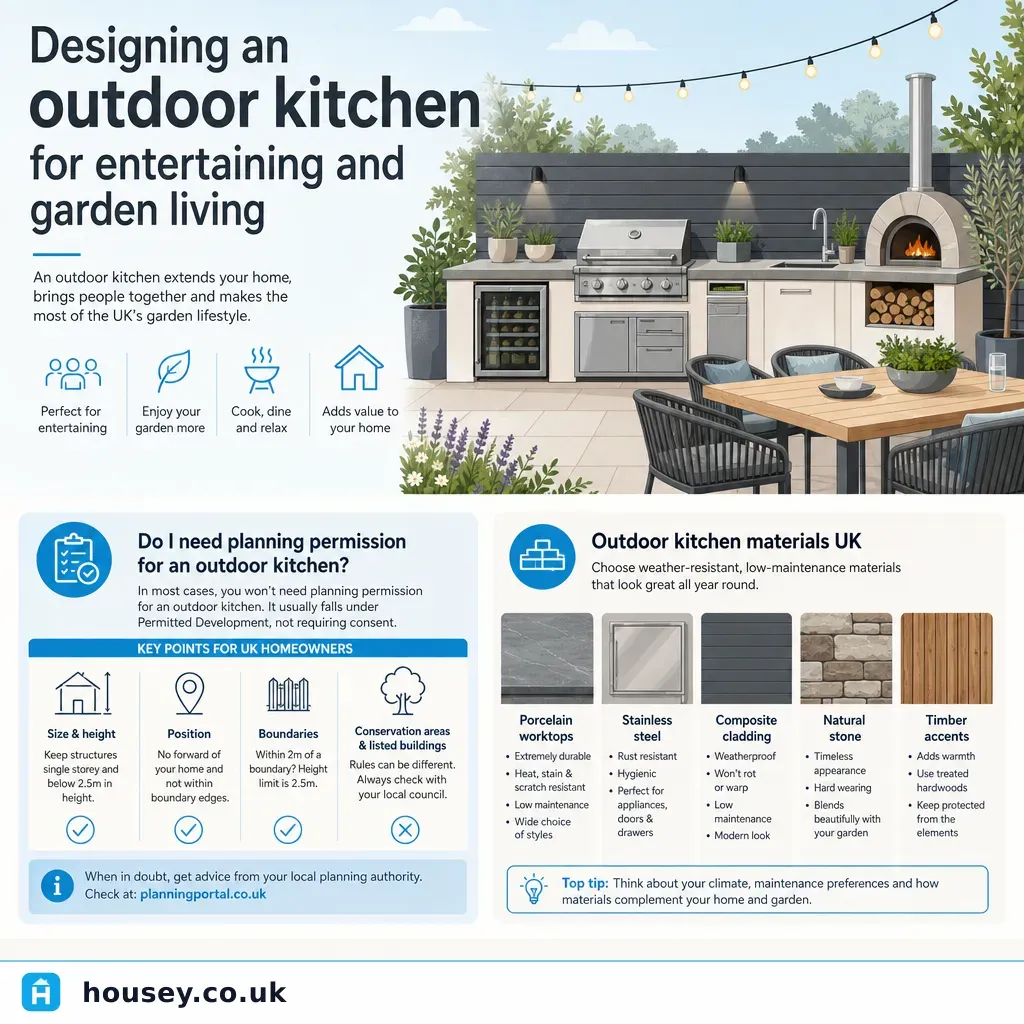 Improvement & Build
Designing an outdoor kitchen for entertaining and garden living
An outdoor kitchen in a UK garden needs a stable, level base — typically a concrete slab or quality paving — with weather-rated materials such as stainless steel grade 316 or frost-rated porcelain.
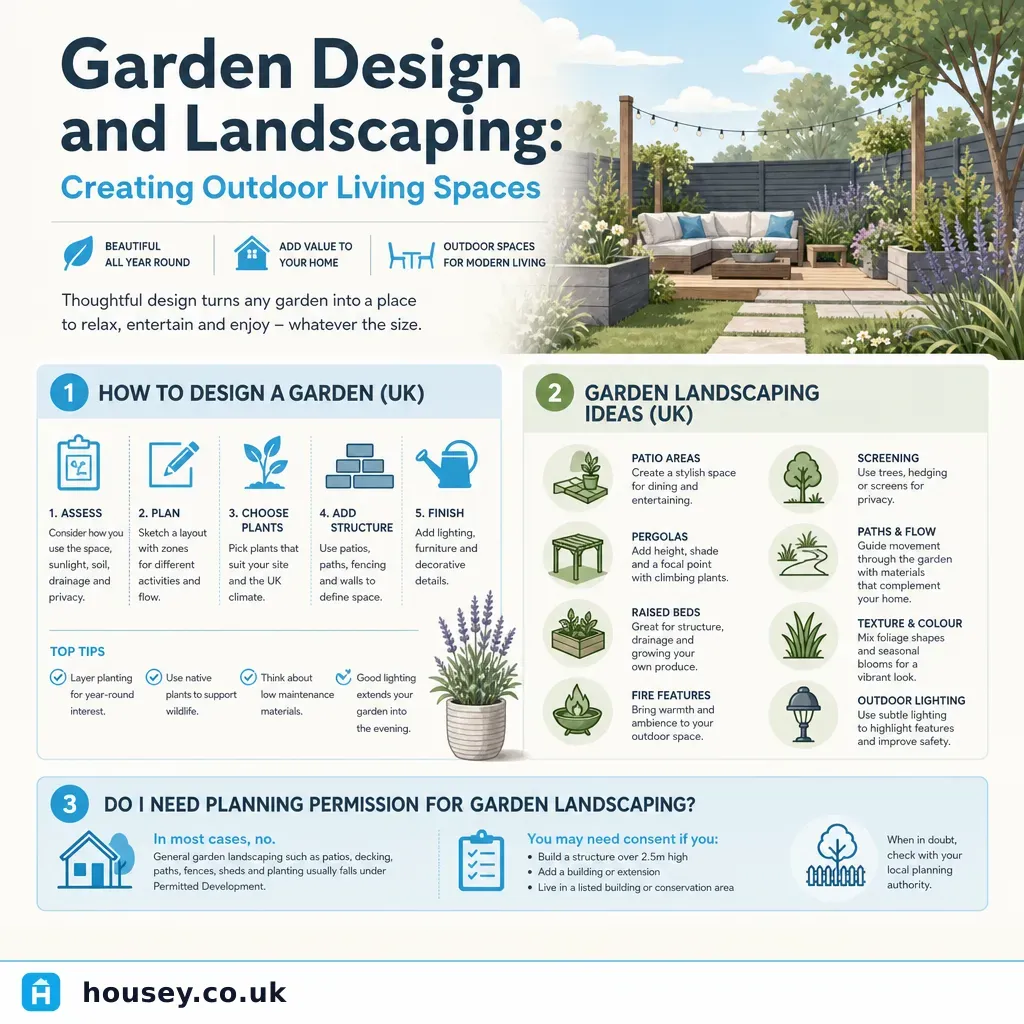 Improvement & Build
Garden Design and Landscaping: Creating Outdoor Living Spaces
Garden design creates functional outdoor living spaces through a combination of hard landscaping such as paving and decking, soft landscaping including planting and lawns, and structures such as pergolas or raised beds.
 Improvement & Build
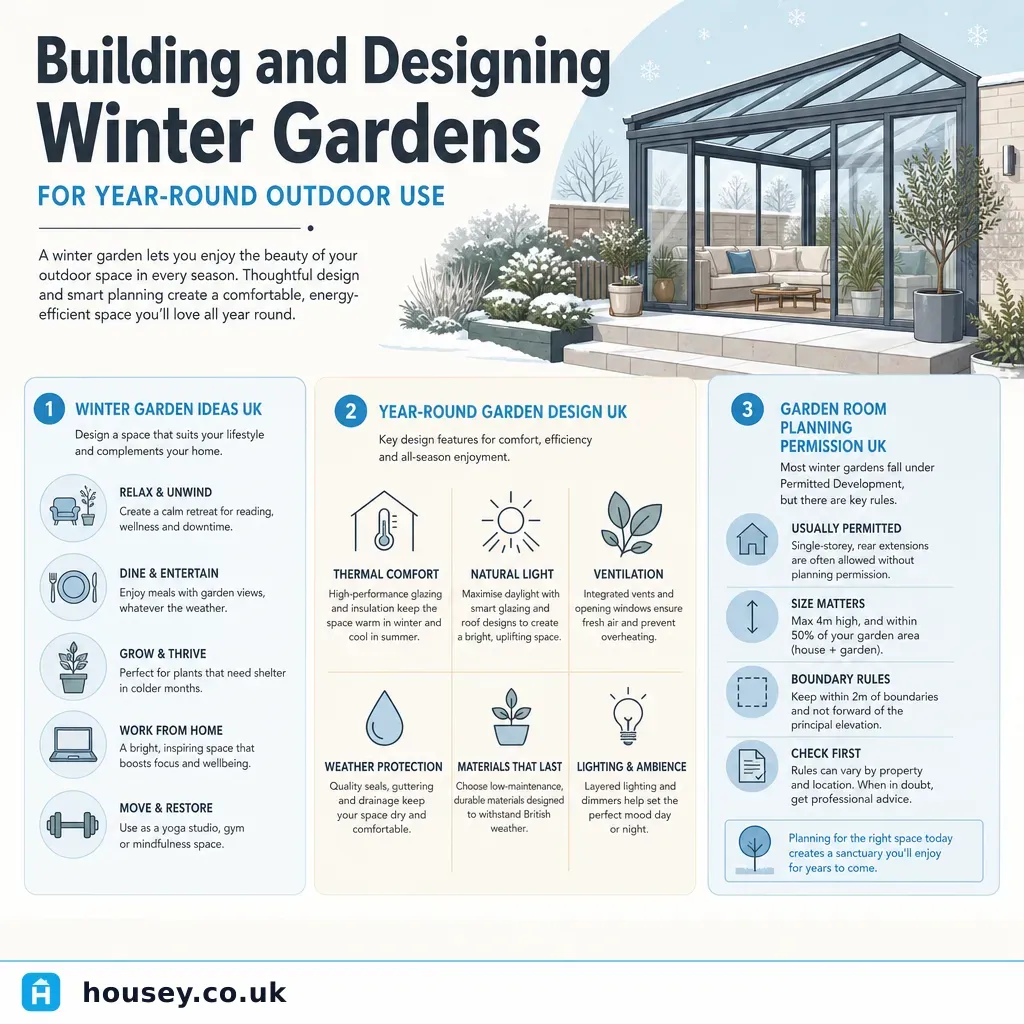
Building and Designing Winter Gardens for Year-Round Outdoor Use
A UK winter garden combines a sheltered microclimate, frost-hardy structural planting, and often a covered or glazed structure to make outdoor space usable across all seasons.
 Improvement & Build
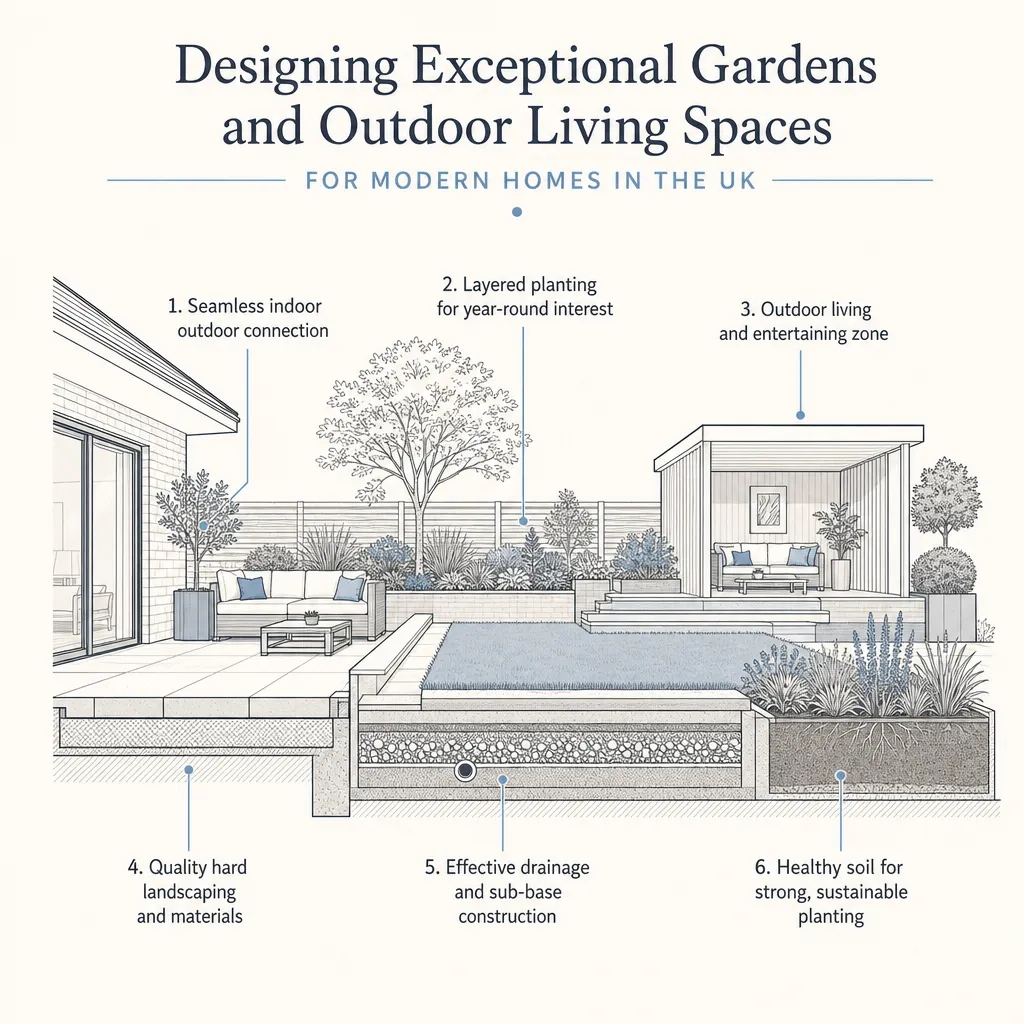
Designing Exceptional Gardens and Outdoor Living Spaces for Modern Homes
A well-designed garden blends practical zones — seating, lawn, planting, and hard landscaping — with your household's needs.