Creating Functional and Attractive Outdoor Entertainment Areas
By Housey · Last reviewed 30th of May 2026
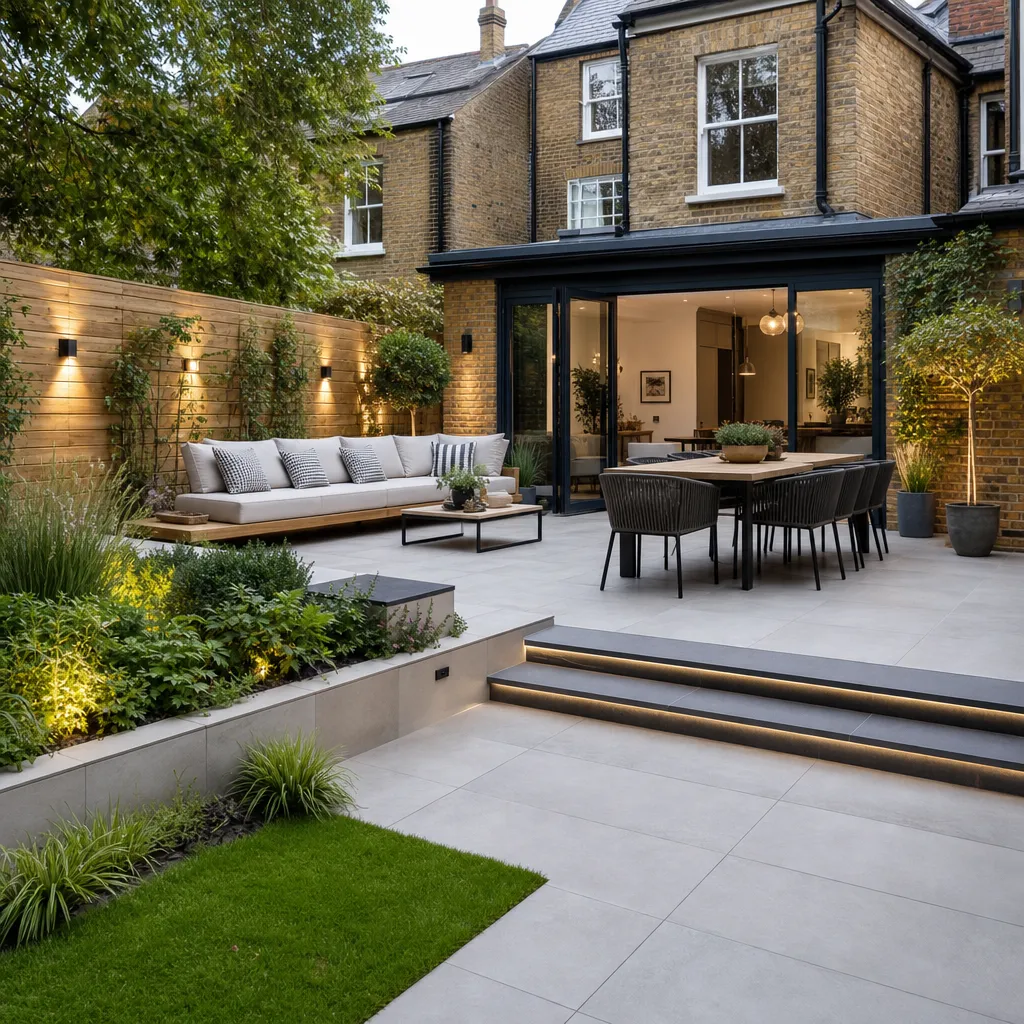
Creating Functional and Attractive Outdoor Entertainment Areas
When a garden redesign is on the cards — whether you've just moved into a 1930s semi with an overgrown plot or you're upgrading a Victorian terrace's rear yard — the outdoor entertaining space is often the centrepiece. It's where usability and aesthetics collide: the wrong surface, inadequate lighting, or a lack of shelter can make a beautiful-looking design genuinely unusable for much of the UK year. The difference between a space that gets used throughout spring, summer, and autumn and one that sits empty on a damp July evening often comes down to a handful of early planning decisions.
Key points
- Most ground-level patios and decking under 30 cm high do not require planning permission under permitted development rights, but restrictions apply in conservation areas, listed buildings, and on designated land.
- A typical domestic patio installation costs £1,500–£5,000 depending on material and size; composite decking ranges from £2,500–£8,000 (Indicative UK costs, last reviewed 2026-05-30).
- Electrical work outdoors — including garden lighting circuits and outdoor sockets — must comply with BS 7671 and be carried out by a Part P-registered electrician.
- Drainage must be considered for any new hard surfacing; impermeable front garden surfaces over 5 m² require planning permission or a permeable alternative under the Town and Country Planning (General Permitted Development) (England) Order 2015.
- Structural garden features such as large pergolas or raised platforms may need building regulations approval if they exceed specified dimensions or form part of an extension.
Choosing Your Surface: Patio, Decking, or Gravel?
The surface is the foundation of any outdoor entertainment space. Each option has different costs, maintenance requirements, and suitability for different properties and garden styles.
Surface | Best for | Not ideal for | Typical cost per m² | Key consideration |
|---|---|---|---|---|
Natural stone patio | Period properties, longevity | Tight budgets, uneven ground | £80–£150 | Needs professional laying on a proper sub-base |
Porcelain paving | Low-maintenance modern look | Very informal or cottage gardens | £60–£120 | Slippery when wet unless a textured finish is chosen |
Composite decking | Sloped gardens, multi-level spaces | Very exposed coastal sites | £150–£250 | Less maintenance than timber; check fire ratings |
Timber decking | Warm look, budget flexibility | High-moisture or shaded areas | £80–£180 | Requires annual treatment; can become slippery |
Gravel/aggregate | Informal spaces, drainage | Families with young children | £20–£50 | Excellent drainage; may scatter onto the lawn |
Indicative UK costs per m², last reviewed 2026-05-30. Quotes will vary by region and contractor.
Planning for All-Year Use
The UK climate means an outdoor space that only functions in high summer is a missed opportunity. Consider these elements when designing for year-round usability:
- Shade and shelter: A pergola, sail shade, or retractable awning extends usability into spring and autumn. Freestanding pergolas generally do not need planning permission if they are not attached to the house and stay within permitted development limits.
- Heating: Outdoor gas or electric patio heaters are common, but any fixed gas line must be installed by a Gas Safe registered engineer. Chimeneas and fire pits are portable and lower-risk but require safe placement away from fences and overhanging branches.
- Lighting: Landscape lighting changes how a space is used after dark. Any new fixed outdoor lighting circuit requires a Part P-registered electrician. Solar-powered stake lights need no installation but have limited output.
- Underfoot drainage: Standing water after rain makes a space unusable. Ensure a slight fall away from the house (typically 1:60 gradient) and include drainage channels in larger patios.
Layout and Zoning
Effective outdoor entertainment areas tend to be zoned — a dining area, a lounging zone, and often a cooking or barbecue station. For a typical UK rear garden of 8–12 m depth, a three-zone approach often works well.
Worked example: A 1970s detached house in the South East had a neglected 10 × 8 m rear garden. The owners wanted to entertain up to 12 people. A garden designer created three zones: a 4 × 5 m porcelain patio adjacent to the kitchen bifold doors (dining and cooking zone), a 3 × 4 m composite decking platform at the garden's lower end (lounging zone), and a planted buffer between the two. Integrated LED lighting, an external socket, and a wall-mounted outdoor speaker connection were installed by a Part P electrician. Total project cost was approximately £12,000–£15,000 including design, landscaping, and electrical work (Indicative UK cost, last reviewed 2026-05-30).
Key zoning principles:
- Place the dining and cooking zone closest to the kitchen for ease of service.
- Orient seating toward south or south-west to maximise afternoon and evening sun.
- Use planting, screens, or trellis to create enclosure without completely blocking light.
- Allow at least 90 cm clearance around dining furniture for comfortable movement.
Planning Permission and Building Regulations
Most domestic patio and decking work falls within permitted development rights. However, check with your local planning authority before starting if:
- The property is in a conservation area or is a listed building — restrictions are tighter.
- The garden is at the front of the house — different rules apply to front garden hard surfacing.
- Any structure (pergola, garden room) exceeds 2.5 m in height within 2 m of a boundary.
- The decking raises ground level by more than 30 cm.
- The structure covers more than 50% of the garden area.
The Planning Portal's permitted development guidance is a useful starting point. For listed buildings, contact your local planning authority before any works begin.
Homeowner Checklist: Before You Start
When to Get Professional Help
Most domestic patio and decking work can be carried out by a reputable landscaping contractor. However, seek specialist input if:
- The garden has significant level changes requiring retaining structures — a structural engineer may need to design or assess any retaining wall.
- You want integrated electrical systems beyond simple solar lights — always use a Part P-registered electrician.
- You are considering a large garden room, covered structure, or outdoor kitchen that may trigger building regulations approval.
- The property is listed or in a conservation area — a planning consultant may be needed before any works begin.
- Drainage is complex due to clay soils, a high water table, or existing drainage runs in the garden.
How Housey Can Help
Housey connects you with vetted garden designers and landscapers who can help you plan, design, and build your outdoor entertainment area. Submit your project details through Housey to receive multiple quotes and compare specifications, costs, and timelines before committing to a contractor.
Frequently Asked Questions
Does a patio need planning permission in the UK?
In most cases, no. Ground-level patios are generally covered by permitted development rights. However, if your property is in a conservation area, is a listed building, or the patio is at the front of the house, restrictions may apply. Always check with your local planning authority before starting work.
How much does it cost to lay a patio in the UK?
Indicative UK costs range from around £1,500 for a small basic patio to £8,000 or more for a large natural stone installation (last reviewed 2026-05-30). Costs vary by material, size, region, and contractor. Get at least three quotes and confirm what is included, particularly sub-base preparation and waste removal.
Do I need an electrician for garden lighting?
Any new fixed outdoor electrical circuit — including garden lighting, outdoor sockets, or hot tub supplies — must comply with BS 7671 and be carried out or certified by a Part P-registered electrician. Simple plug-in or battery-powered lights do not have this requirement and can be installed by a homeowner.
Can I put decking in my garden without planning permission?
Usually yes, provided the decking is no more than 30 cm above the existing ground level and does not cover more than 50% of the garden area. Different rules apply to listed buildings and conservation areas. Check the Planning Portal or your local planning authority to confirm your specific situation before starting work.
Sources and Further Reading
- Permitted development rights for householders: technical guidance — GOV.UK
- Planning Portal: Patios and paths — Planning Portal
- Building Regulations Approved Document P: Electrical safety in dwellings — GOV.UK
- Gas Safe Register: Find a registered engineer — Gas Safe Register
Useful next reads
 Improvement & Build
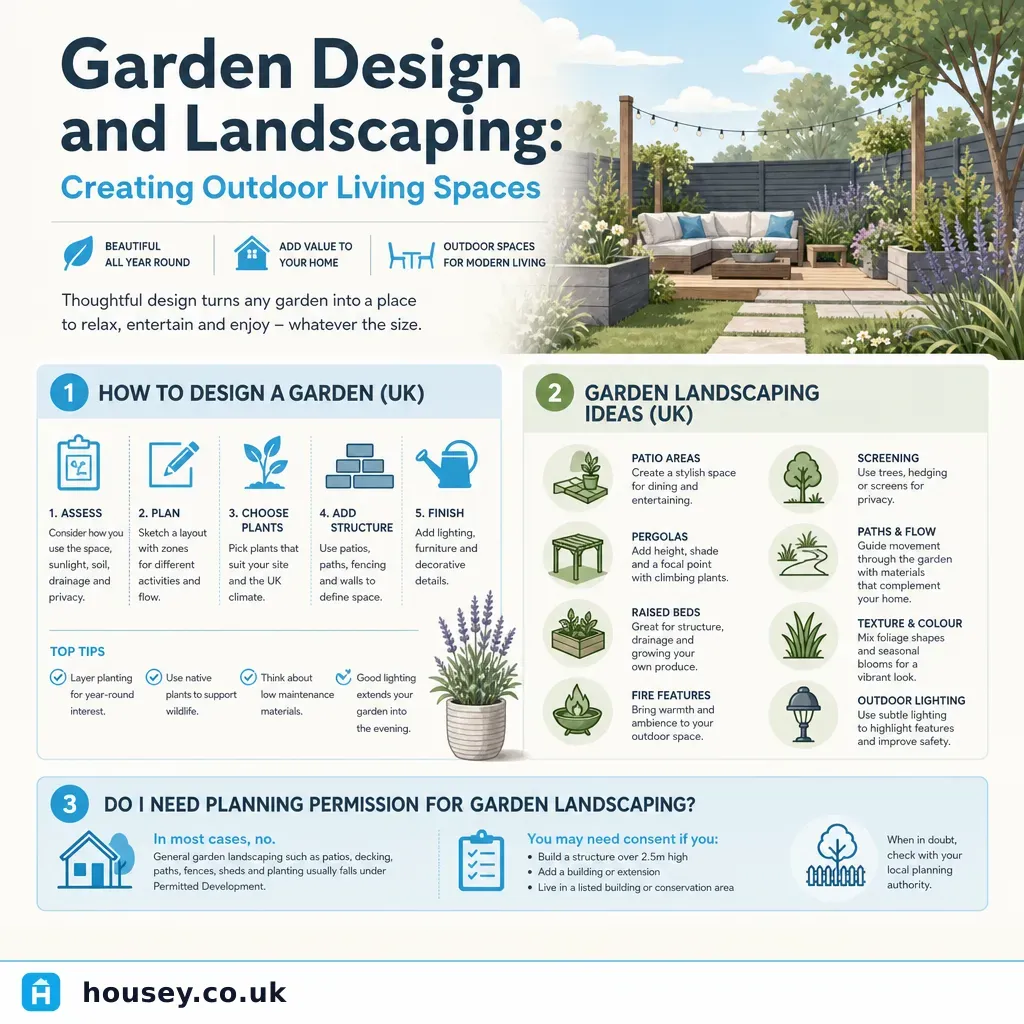
Garden Design and Landscaping: Creating Outdoor Living Spaces
Garden design creates functional outdoor living spaces through a combination of hard landscaping such as paving and decking, soft landscaping including planting and lawns, and structures such as pergolas or raised beds.
 Improvement & Build
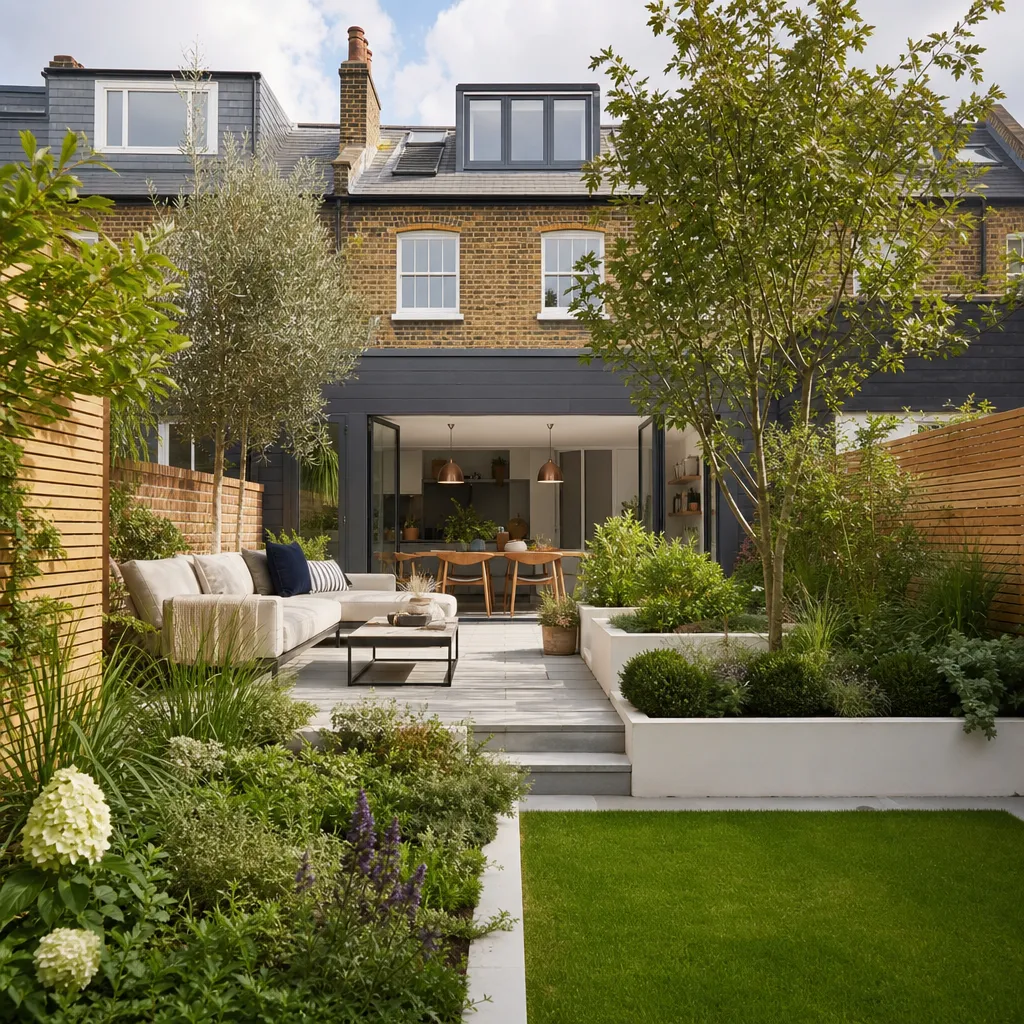
Seasonal Garden Transformations and Outdoor Design Ideas
A successful garden transformation in the UK works with the seasons rather than against them — establishing structure and hard landscaping in autumn or winter, planting in spring, and enjoying the results through summer.
 Improvement & Build
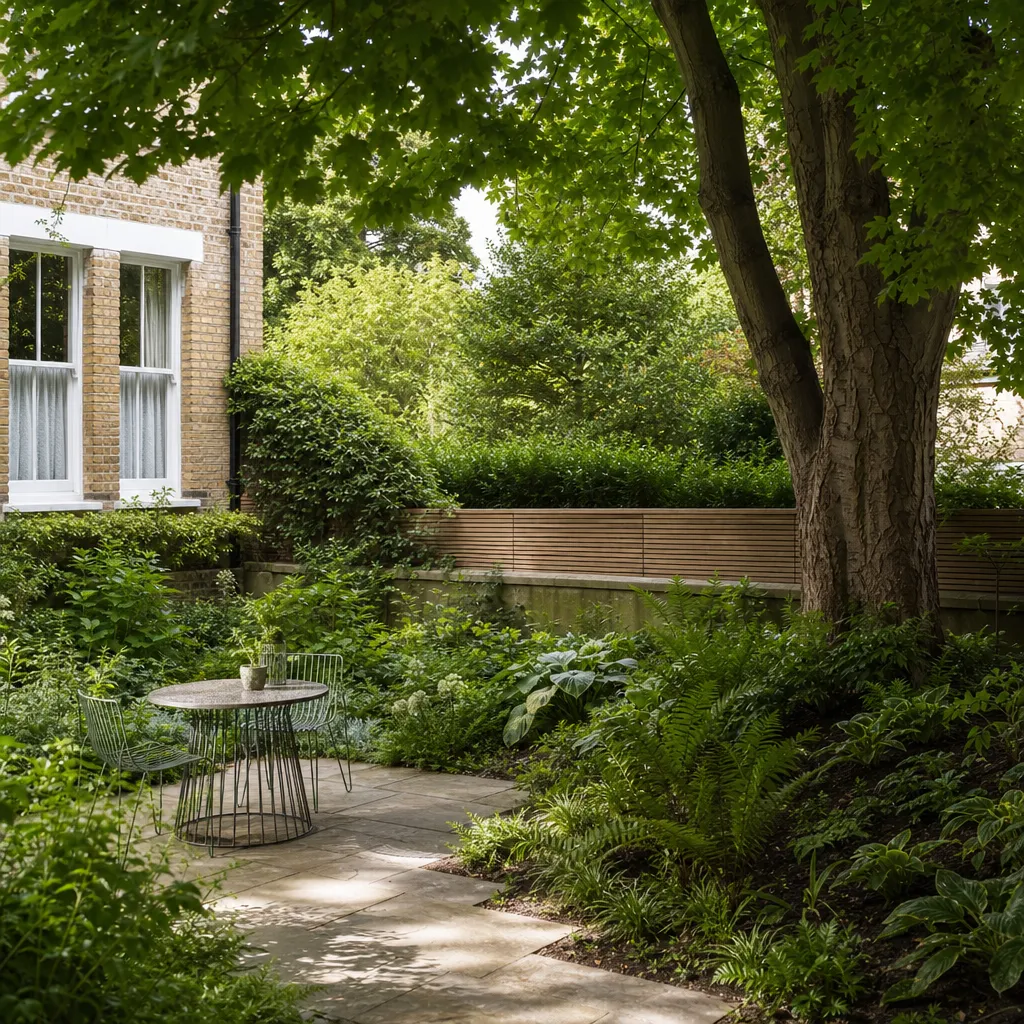
Creating and Maintaining Shaded Garden Spaces: Design and Planting
In UK shaded gardens, success depends on identifying your shade type — deep, partial, dappled, or dry — then matching plants and soil preparation to those conditions.
 Improvement & Build
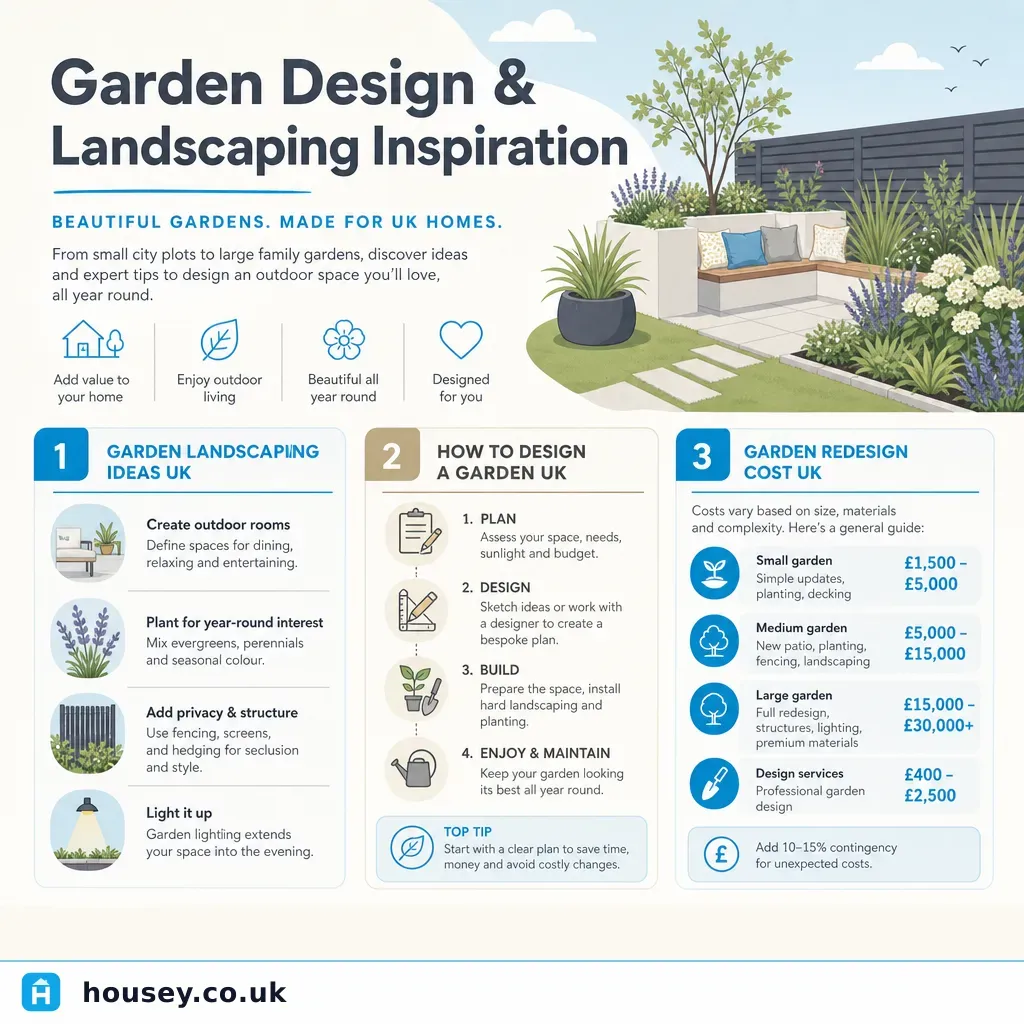
Garden Design and Landscaping Inspiration
Effective garden design starts with assessing your aspect, soil type, and existing features before commissioning any planting or hard landscaping.
 Improvement & Build
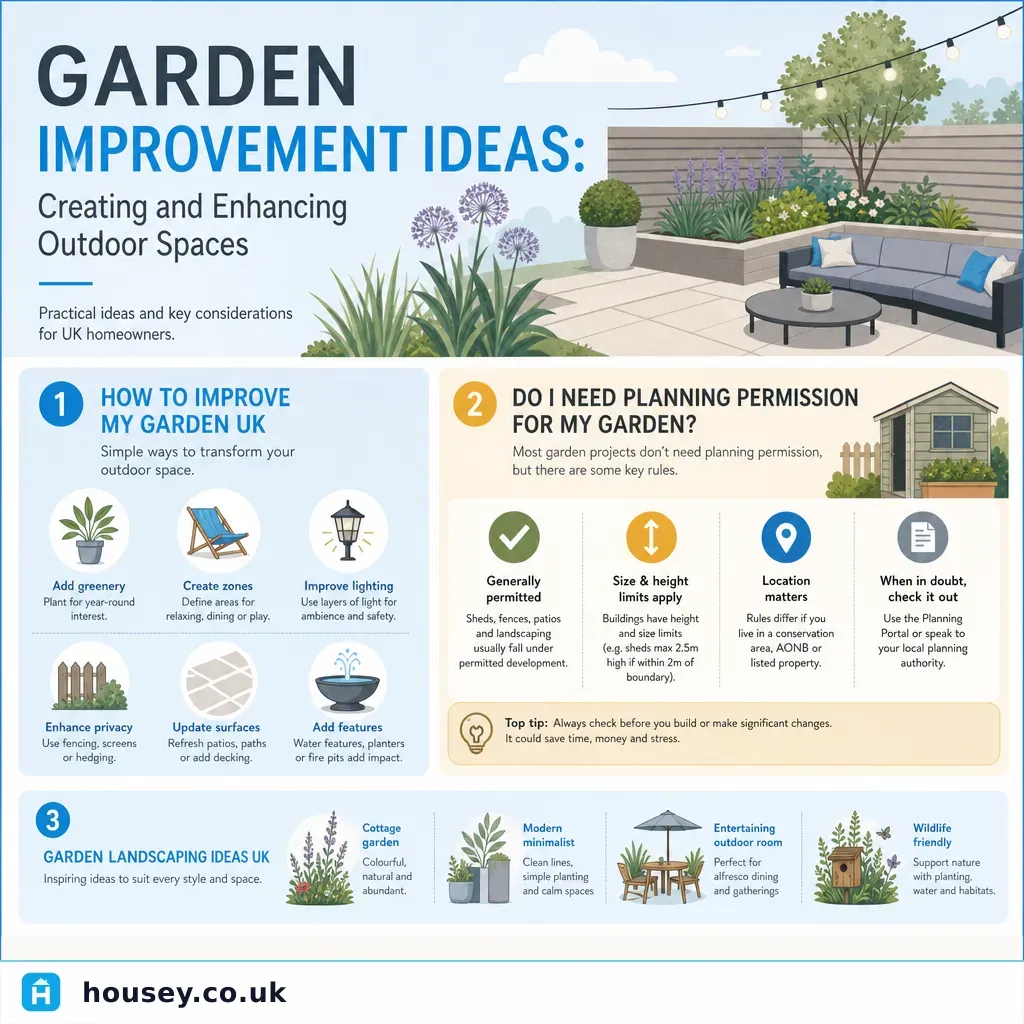
Garden Improvement Ideas: Creating and Enhancing Outdoor Spaces
Improving your garden in the UK usually starts with a clear plan covering hard landscaping, soft planting, and any structural elements.