Understanding Building Material Price Stability: Economic Factors and Supply Dynamics
By Housey · Last reviewed 24th of May 2026
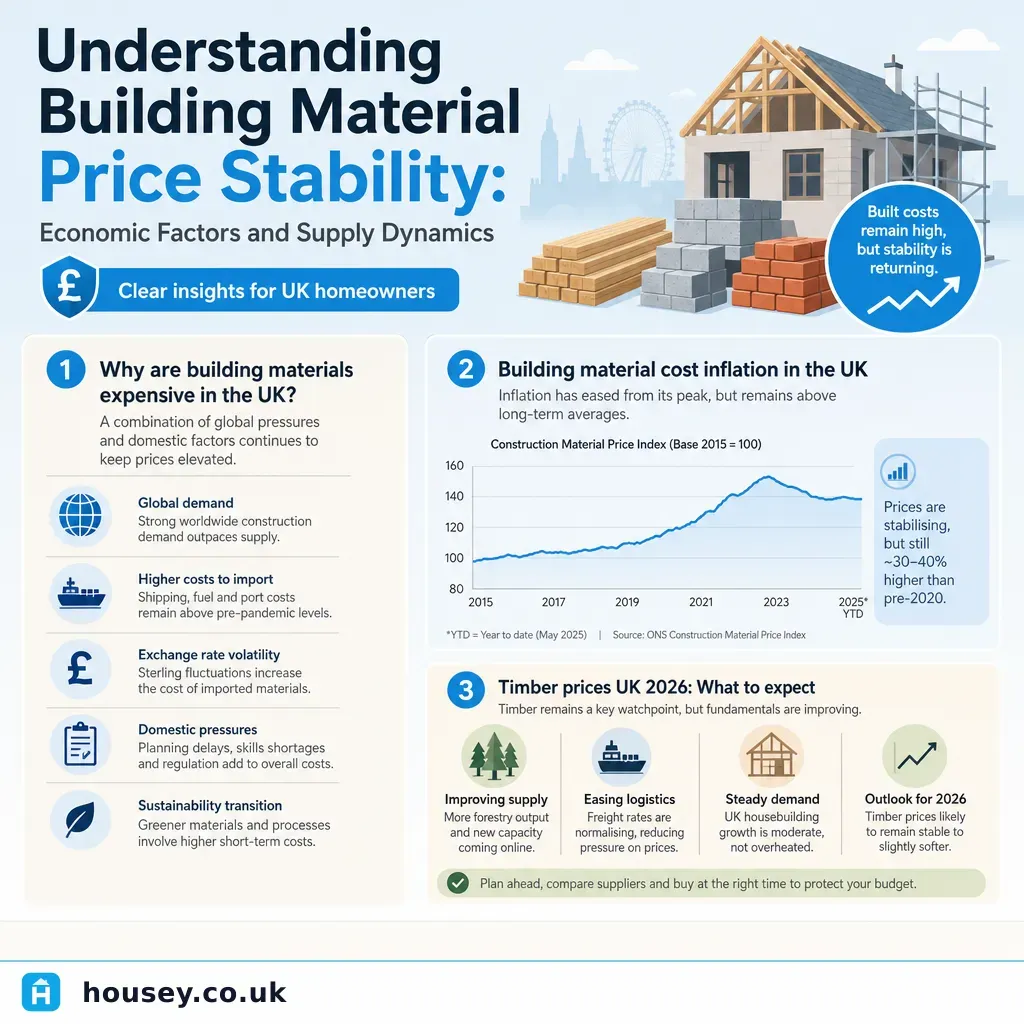
Understanding Building Material Price Stability: Economic Factors and Supply Dynamics
Anyone planning a UK building project — whether a single-storey extension, a loft conversion, or a full self-build — will have noticed that the cost of materials has been volatile in recent years. Understanding why prices move, and how supply dynamics interact with broader economic forces, helps homeowners and project managers budget more realistically, ask better questions of contractors, and choose contract structures that reflect the actual level of price risk.
Key points
- The BCIS (Building Cost Information Service) Materials Cost Index, operated by RICS, is the UK industry standard reference for tracking changes in building material prices and is widely referenced in contract fluctuation clauses.
- Structural timber prices rose by more than 80% at their 2021 peak compared with pre-pandemic levels, driven by surging global demand and disrupted supply chains — a reminder of how quickly commodity-linked costs can move.
- Energy accounts for a significant share of the production cost of energy-intensive materials including cement, brick, glass, and steel; the 2021–2022 European gas price spike fed directly into the sterling cost of these products.
- The UK imports a substantial share of its structural softwood timber, primarily from Scandinavia and the Baltic states; exchange-rate movements therefore directly affect domestic timber prices.
- Fixed-price lump-sum contracts transfer material price risk to the contractor; cost-plus or prime-cost contracts leave that risk with the client — a distinction that becomes significant during periods of price volatility.
Why do building material prices fluctuate?
Building material prices are determined by a combination of global commodity markets, energy costs, transport costs, exchange rates, and domestic demand. No single factor explains price movements — they interact in ways that can amplify or dampen the effect of any one driver.
Commodity markets set base prices for raw materials. Timber, steel, copper, and aggregates all trade in global markets. A surge in US housing demand, for example, can reduce the supply of softwood available for European markets and push up UK prices. Steel prices are heavily influenced by Chinese production levels and global scrap-metal flows.
Energy costs affect the production cost of energy-intensive materials directly. Brick and cement kilns, glass furnaces, and steel mills are large energy consumers. The 2021–2022 European gas price spike significantly raised the production cost of these materials, with effects that persisted well into 2023–2024 for some product lines.
Exchange rates matter because the UK imports a significant proportion of its building materials. A weaker pound raises the sterling cost of imported goods — including Scandinavian timber, European insulation products, and ceramic tiles manufactured outside the UK.
Supply chain capacity — the throughput of producers, ports, hauliers, and distributors — creates bottlenecks that amplify price spikes when demand rises faster than supply can respond. The post-pandemic period saw multiple simultaneous constraints: port delays, HGV driver shortages, and factory closures.
Domestic construction demand is shaped by new-build housing starts, renovation activity, commercial construction, and infrastructure investment. High demand competes for a limited supply of materials and trades, tending to push prices up; a slowdown in housebuilding has the opposite effect.
Contract structures and material price risk
Contract type | Who bears price risk? | Best suited to | Main risk for the client |
|---|---|---|---|
Fixed-price lump sum | Contractor | Well-defined projects with detailed drawings and a complete specification | Contractor may build in a risk premium; disputes can arise if scope changes after signing |
Fixed-price with fluctuation clause | Shared (above an index threshold) | Longer projects, typically over 12 months | Price uplift triggered if a BCIS or other index rises above the agreed threshold |
Cost-plus (prime cost plus fee) | Client / homeowner | Uncertain or fast-track scope | Cost overruns if material prices or labour costs rise during the project |
Provisional sums | Client / homeowner | Items not yet fully specified at contract stage | Final cost is unknown until provisional items are confirmed and measured |
For most domestic homeowner projects — extensions, loft conversions, refurbishments — a fixed-price lump-sum contract is standard practice. Ensure the contract clearly specifies which materials are included, at what specification, and what happens if a specified material becomes unavailable or increases substantially in price after execution.
Worked UK scenario: budgeting an extension during a volatile materials period
A homeowner in the East Midlands sought three quotes for a 20 m² single-storey rear extension in early 2022. The quotes ranged from £38,000 to £51,000 — a wider spread than typical for equivalent work in previous years.
When asked, one contractor explained that structural timber joist prices had risen significantly since their last comparable project six months earlier and that they had priced in an uplift. A second contractor had used older timber costs and noted the figure might need revisiting if prices rose further before work began. A third had already ordered timber at a locked-in price and could offer a firmer number.
The homeowner asked all three contractors the following questions before accepting any quote:
- Whether the quote was fixed price or included a fluctuation or provisional-sum element.
- What specification of structural timber and external wall construction the price was based on.
- Whether any key materials were already on order or in stock, and at what price.
- What would happen to the contract price if a specified material increased in cost by more than 10% before work started.
- What the assumed start date was — a longer lead time carries more price exposure.
This kind of interrogation is particularly important during periods of price volatility. A quote that looks lower may simply reflect a contractor using outdated prices, a thinner contingency, or a cheaper specification.
Indicative UK costs, last reviewed 2026-05-24. Single-storey extension costs vary significantly by location, specification, and site conditions.
What to ask before accepting a quote
- Is this a fixed-price quote, or does it include fluctuation, prime-cost, or provisional-sum elements?
- What material specification is the price based on — timber grade, insulation type, brick type, window specification?
- Are any materials already on order or in stock, and if so, at what price?
- What happens if a specified material becomes unavailable or increases in cost by more than a set percentage before work begins?
- What is the assumed start date, and what is the expected duration? Longer projects carry greater price exposure.
- Is VAT included in the quote?
- Who will carry out the work — is any element subcontracted, and if so, are subcontractor prices fixed?
When to get professional help
Understanding the financial structure of a building contract — including how price risk is allocated — can significantly affect the outcome of a project. Consider engaging a RICS-qualified quantity surveyor (QS) when:
- Your project budget is above £50,000.
- The project spans more than six months, increasing exposure to price change.
- You want an independent cost estimate before inviting tenders, so you can judge whether quotes are competitive.
- You are unsure whether a specification change would materially affect cost.
- You are negotiating a bespoke contract rather than using a standard form such as the JCT Homeowner Contract.
A QS can also prepare a schedule of works that gives all contractors a consistent basis for quoting — making it far easier to compare prices on a like-for-like basis.
How Housey can help
Housey connects homeowners with verified building professionals across a range of project types. If you are planning an extension, renovation, or new build and want to test whether quoted prices are competitive, obtaining multiple quotes through Housey gives you a market comparison — and the opportunity to ask each professional the contract and pricing questions listed above before committing.
Frequently asked questions
Are building material prices still high in 2026?
Material price pressures have eased from the peaks of 2021–2022, but prices for many materials remain above pre-pandemic levels. The BCIS Materials Cost Index shows overall building material costs stabilised through 2024–2025, though individual product categories vary. Energy costs for energy-intensive materials — cement, glass, brick, and steel — remain a key variable. Check the BCIS or speak to a quantity surveyor for current benchmarks relevant to your project type.
Can I buy building materials directly to save money?
Some homeowners use a supply-and-fix arrangement, purchasing materials themselves while the contractor provides labour only. This can save on contractor mark-up but transfers procurement risk to you — including delivery scheduling, quality control, and dealing with defects or shortages. It may also affect material warranties. Discuss the implications with your contractor before agreeing to this arrangement.
Why do builder's quotes vary so widely?
Wide variation usually reflects differences in assumed specification, overhead and margin, subcontractor rates, and how much risk the contractor is pricing in. A low quote based on outdated material prices or inadequate contingency can lead to cost overruns later. Providing all contractors with a consistent scope-of-works document is the most effective way to compare quotes on a like-for-like basis.
What is the BCIS and why does it matter to homeowners?
The Building Cost Information Service (BCIS), operated by RICS, publishes cost indices and cost models that are the UK industry standard for construction pricing. The BCIS Materials Cost Index and All-in Tender Price Index are used by quantity surveyors and contractors to benchmark costs. Many fluctuation clauses in building contracts reference a BCIS index as the basis for any price adjustment.
Sources and further reading
- Building Cost Information Service (BCIS) — RICS
- Construction material price statistics — Office for National Statistics
- JCT Homeowner Contracts — Joint Contracts Tribunal
- RICS quantity surveying and construction guidance — RICS
Useful next reads
 Planning & Pre-Build
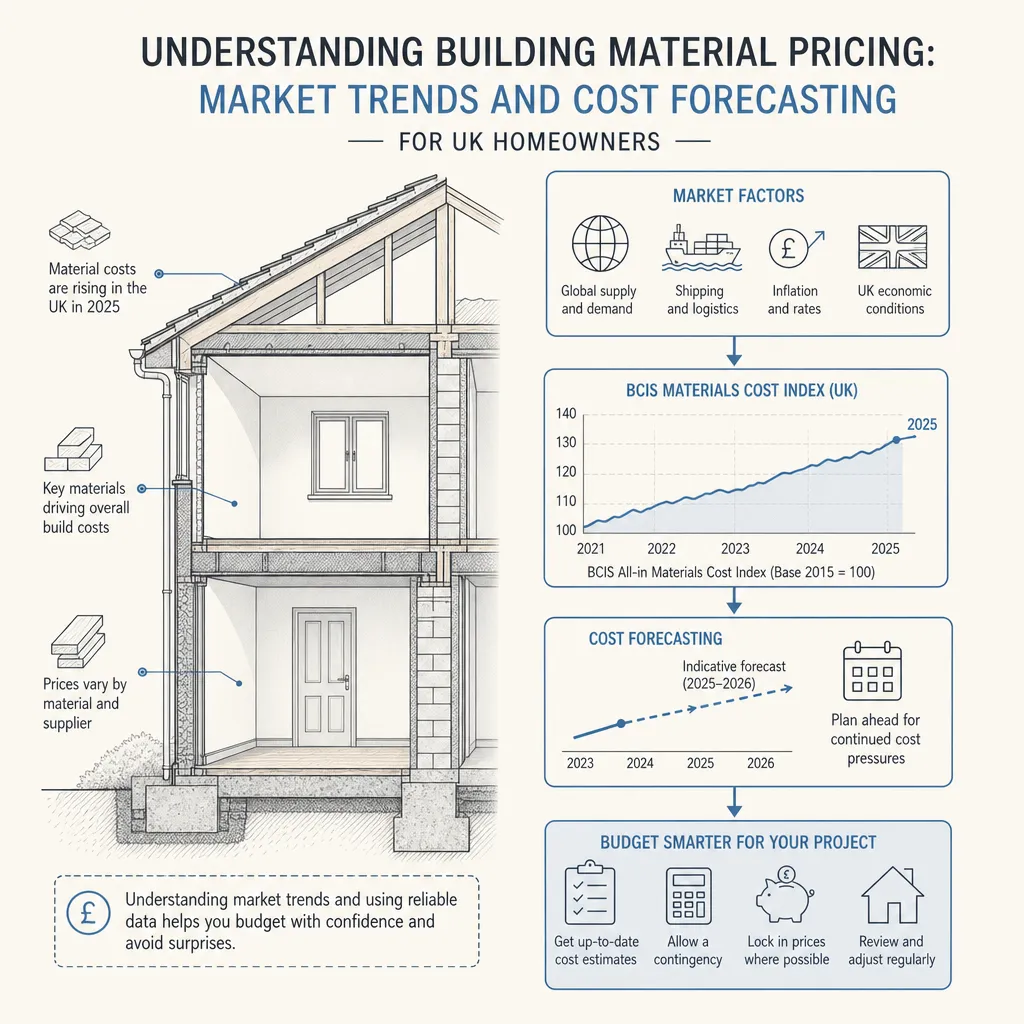
Understanding Building Material Pricing: Market Trends and Cost Forecasting
Building material prices in the UK are driven by global commodity markets, energy costs, and supply-chain conditions, and can shift substantially within a single project's timeline.
 Planning & Pre-Build
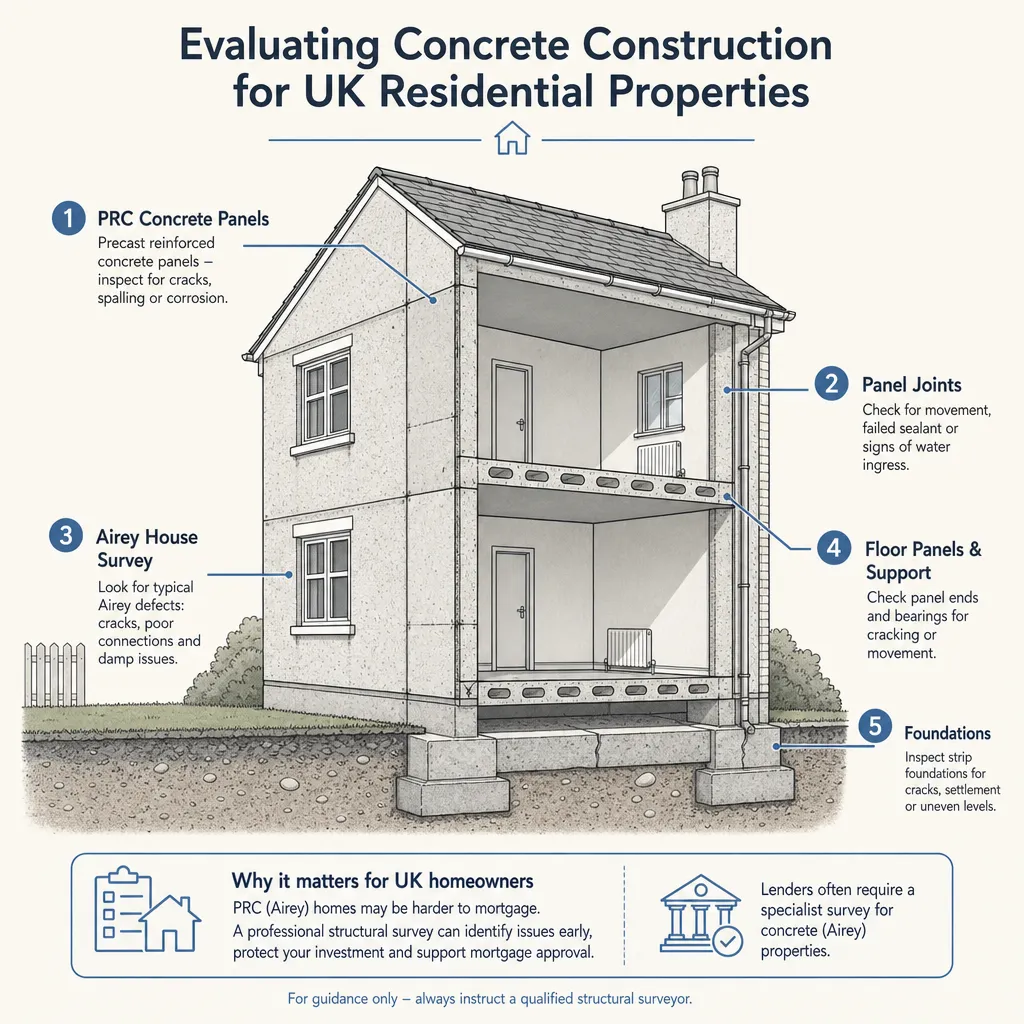
Evaluating Concrete Construction for UK Residential Properties
Concrete construction in UK homes covers post-war non-traditional housing — such as Airey and Wimpey No-Fines properties — typically classified as non-standard by mortgage lenders, and modern systems including ICF and block cavity wall, which are generally standard.
 Planning & Pre-Build
Sourcing Reclaimed and Salvaged Building Materials for Period Renovation
Reclaimed materials — including original bricks, flooring, roof tiles, lime mortar, and architectural salvage — are often the best match for period properties and may be required by conservation officers or planning conditions.
 Planning & Pre-Build
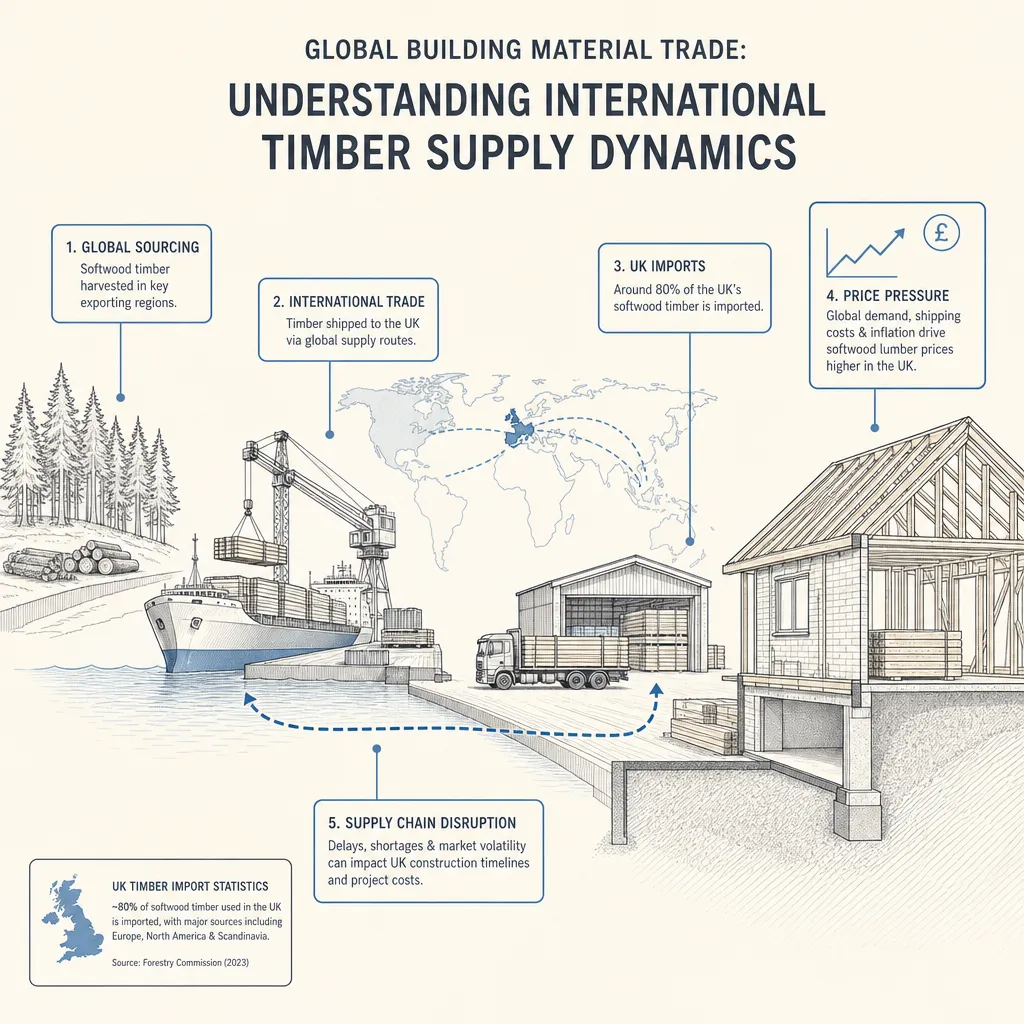
Global Building Material Trade: Understanding International Timber Supply Dynamics
The UK imports around 80% of its structural timber from Scandinavia and the Baltic states, making domestic project budgets sensitive to global events including geopolitical disruptions, currency movements, and extreme weather.
 Planning & Pre-Build
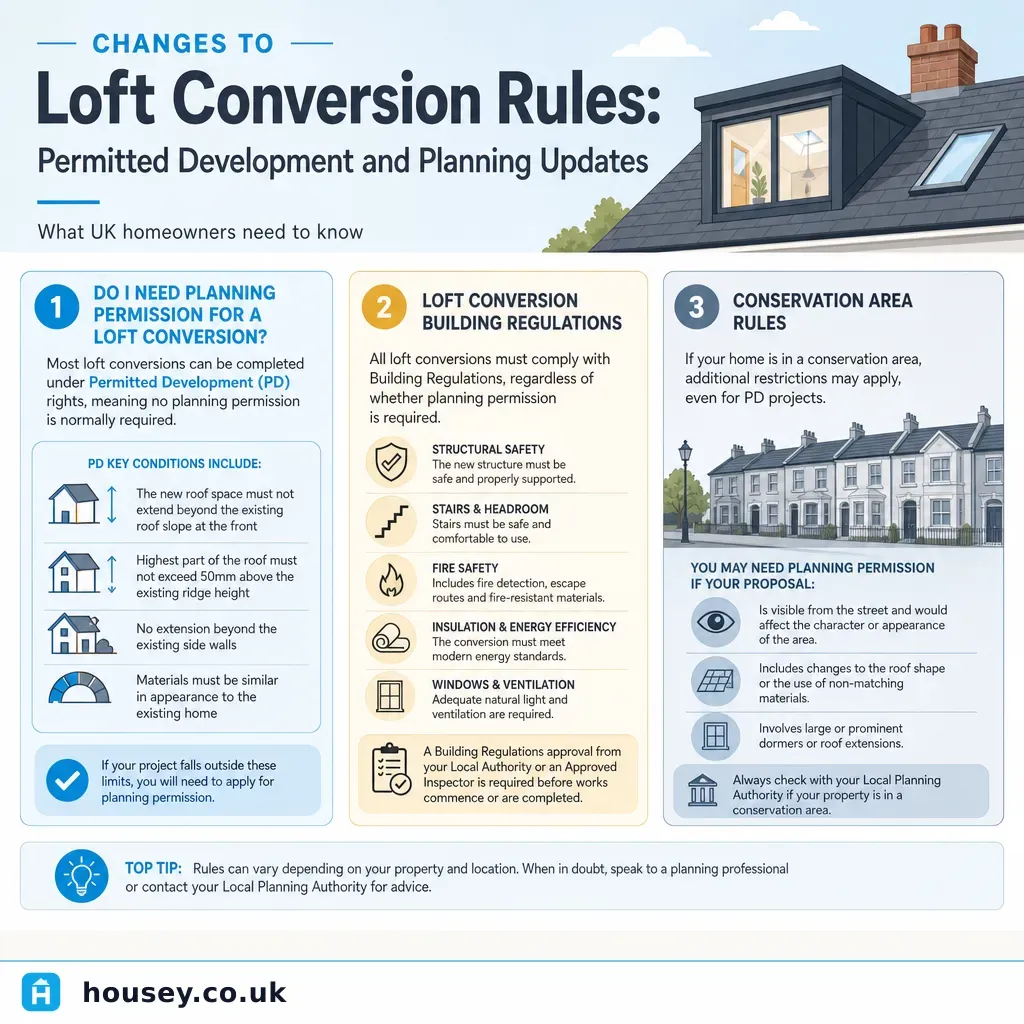
Changes to Loft Conversion Rules: Permitted Development and Planning Updates
In England, most loft conversions on standard houses qualify as Permitted Development under Class B of the GPDO 2015, allowing up to 40 cubic metres (terraced) or 50 cubic metres (detached or semi-detached) without a planning application — if conditions are met.