Evaluating Concrete Construction for UK Residential Properties
By Housey · Last reviewed 30th of May 2026
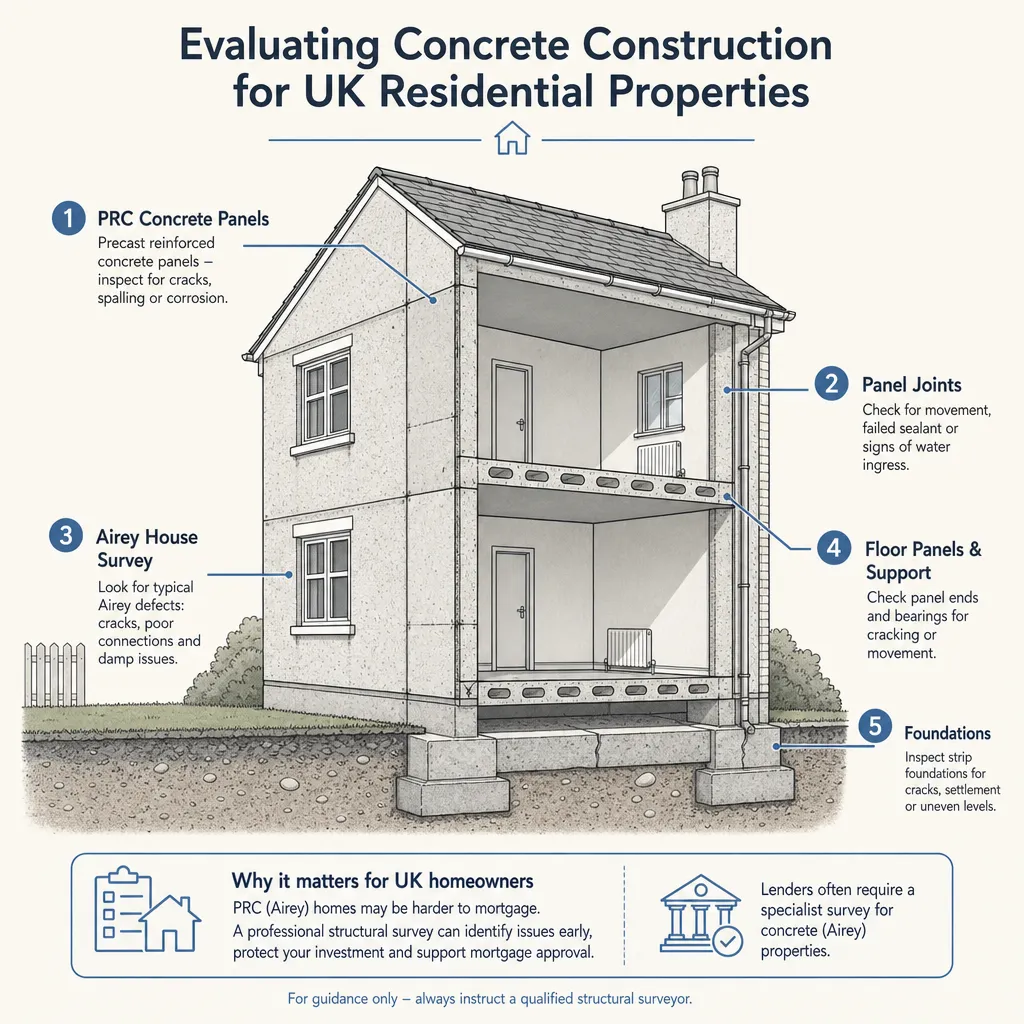
Evaluating Concrete Construction for UK Residential Properties
Concrete appears in UK homes in two very different contexts: as the primary structural system in post-war non-traditional housing, and as a deliberate modern choice in reinforced concrete frames and insulated concrete formwork (ICF) builds. Buyers encountering a 1950s Airey house face entirely different considerations from a self-builder choosing ICF for a new home in 2026 — yet both involve decisions that affect mortgageability, structural performance, and regulatory compliance in ways that can catch people unprepared.
Key points
- Precast Reinforced Concrete (PRC) houses built between the 1940s and 1960s are classified as non-standard construction by most high-street mortgage lenders; a specialist structural survey is typically required before a mortgage offer is made.
- Concrete carbonation — the process by which atmospheric CO₂ neutralises the alkalinity protecting steel reinforcement — is the primary long-term durability risk in older precast and in-situ concrete structures.
- PRC repair schemes approved by PRC Homes Ltd existed from the 1980s; a property repaired to scheme standard with a valid Structural Defects Insurance certificate is generally more mortgageable than an unrepaired example.
- New concrete construction must comply with Building Regulations Approved Document A (Structure) and concrete specification standards BS 8500 and BS EN 206.
- Insulated concrete formwork (ICF) can achieve external wall U-values well within the Part L 2021 target of 0.18 W/m²K for new dwellings, combining structural and thermal functions in a single system.
What is concrete construction in UK residential buildings?
Concrete residential construction in the UK falls into two broad categories with very different histories and implications.
Post-war non-traditional concrete housing refers to prefabricated and system-built homes constructed roughly between 1945 and 1970. Types include Airey houses (precast concrete columns and cladding panels), Wimpey No-Fines (in-situ poured concrete with no fine aggregate, giving a distinctive cellular texture), Cornish Unit, Unity, Reema Hollow Panel, and Woolaway. An estimated 300,000 to 500,000 of these homes remain in the UK housing stock. Most high-street lenders classify them as non-standard construction, and some lenders decline them entirely regardless of condition.
Modern concrete construction covers in-situ reinforced concrete frames, precast concrete panel systems, ICF, and standard concrete block cavity wall construction — the last being extremely common in houses built from the 1970s onwards. ICF involves rigid polystyrene forms filled with in-situ concrete; it is gaining popularity for self-builds because it offers high thermal mass, excellent insulation, and straightforward compliance with Part L.
Non-traditional concrete housing: risks and mortgage implications
The structural risks in post-war PRC housing are well documented and centre on carbonation. Over decades, CO₂ penetrates concrete, progressively reducing alkalinity until the passivating layer around the steel reinforcement is lost. Corroded steel expands as it rusts, causing cracking and then spalling — the gradual loss of the concrete surface.
Additional issues common to this era include:
- Poor thermal performance: solid concrete walls typically have U-values far above modern standards, making heating expensive without retrofit insulation.
- Documentation gaps: not all PRC repair work was carried out to scheme standard, and some repaired properties lack the documentation lenders require.
- PRC repair schemes: PRC Homes Ltd approved repair schemes were available from the 1980s. A property repaired under an approved scheme with a valid certificate is generally more acceptable to specialist lenders — but confirm the lender's position early in any purchase.
Concrete construction: a comparison of main types
Type | Typical era | Primary structural feature | Main durability risk | Typical mortgage position |
|---|---|---|---|---|
Airey house | 1945–1960s | Precast concrete columns and cladding panels | Carbonation, column corrosion | Non-standard; specialist lender often required |
Wimpey No-Fines | 1945–1970s | In-situ concrete (no fine aggregate) | Carbonation, poor thermal performance | Non-standard; specialist lender often required |
Concrete block cavity wall | 1970s–present | Dense concrete blocks, cavity insulation | Low if correctly maintained | Standard |
ICF (Insulated Concrete Formwork) | 2000s–present | EPS formwork filled with in-situ concrete | Few if correctly built | Standard with most lenders |
Precast concrete frame | 1990s–present | Factory-made columns, beams, panels | Connection detailing; engineering sign-off needed | Standard if built to current regulations |
What not to assume about concrete properties
Several misconceptions are common among buyers and owners of concrete properties.
Do not assume that a concrete house in good cosmetic condition has no structural defects. Carbonation and reinforcement corrosion can be well advanced before surface cracking appears. Only a specialist structural assessment can determine the carbonation depth relative to the reinforcement cover.
Do not assume that because a property has been cosmetically refurbished it has received a structural repair. Replastering, re-cladding, and new windows do not constitute a certified PRC repair scheme. Only a documented repair to an approved scheme counts for mortgage purposes.
Do not assume modern concrete frame or ICF construction is lower quality than traditional brick and block. When correctly specified to BS 8500 and detailed by a structural engineer, modern concrete construction routinely achieves structural lifespans of 60 years or more and can outperform masonry in thermal and acoustic performance.
Planning and building regulations for concrete construction
For any new concrete residential building or substantial concrete extension, Building Regulations approval is mandatory. Key Approved Documents include:
- Approved Document A (Structure): governs structural design; concrete mixes must meet BS 8500 specification for the relevant exposure class.
- Approved Document L (Conservation of fuel and power): sets U-value targets for new dwellings; external concrete walls usually require additional insulation to comply with the 0.18 W/m²K target under Part L 2021.
- Approved Document B (Fire safety): concrete contributes inherent fire resistance, but compartmentation and cavity barrier requirements still apply.
For extensions or alterations to existing concrete-framed buildings, a structural engineer should confirm that the existing structure can carry the proposed new loads before building control approval is sought.
Important limitations
This article provides general information only. The structural condition of any concrete building must be assessed by a qualified professional. Mortgageability depends on individual lender policies, which vary and change. Planning and Building Regulations requirements depend on the specific property, local authority, and proposed works. Do not rely on this guide alone when making a purchase decision, commissioning structural work, or applying for building control approval.
When this becomes urgent
Seek professional help without delay if:
- A concrete property shows surface cracking, rust-brown staining, or spalling (flaking of the concrete surface).
- A structural report has flagged carbonation depths approaching or exceeding the reinforcement cover.
- A mortgage lender has declined the property on grounds of construction type and you are already in the purchase process.
- Structural works to a concrete building are proposed without an engineer having reviewed the existing structure's capacity.
What to ask a qualified professional
Before instructing a structural engineer or specialist surveyor for a concrete property, ask:
- Do you have specific experience with this construction type — for example, Airey, Wimpey No-Fines, or ICF?
- Will your report address mortgageability and, where relevant, whether a PRC repair certificate exists and is valid?
- Can you confirm the carbonation depth relative to the reinforcement cover depth?
- For new-build work: is the proposed concrete specification compliant with BS 8500 for the intended exposure class, and will you confirm this in writing for building control?
When to get professional help
Concrete construction — whether you are buying an existing concrete home or commissioning new concrete work — always warrants specialist input. A standard RICS Level 2 survey is unlikely to be adequate for most post-war concrete homes; request a RICS Level 3 Building Survey and ask whether a separate structural engineer's report is appropriate given the construction type.
How Housey can help
Housey connects buyers and homeowners with qualified professionals for all stages of a concrete construction project. Whether you need a structural survey on an older concrete home, a structural engineer to design and specify new concrete work, or building regulations drawings prepared for a concrete extension, our marketplace helps you find vetted local specialists and compare quotes.
Frequently asked questions
Can I get a mortgage on a PRC house?
Some lenders will consider mortgages on PRC houses, but many high-street lenders decline or impose conditions. Properties repaired under an approved PRC Homes Ltd scheme with a valid Structural Defects Insurance certificate are generally more mortgageable. A specialist mortgage broker with experience in non-standard construction is usually the best starting point.
Is insulated concrete formwork a good choice for a UK self-build?
ICF is increasingly popular for UK self-builds because it combines structural and thermal functions, achieving high insulation values and airtightness in a single system. It is accepted as standard construction by most lenders when built to current Building Regulations. A structural engineer should still be involved to ensure the concrete specification and reinforcement are correctly designed.
Does planning permission work differently for concrete construction?
No. Concrete extensions and new builds are subject to the same permitted development rules and planning requirements as any other construction type. What matters to the planning authority is size, position, height, use class, and local designations — not the structural material.
How long does concrete last in a residential building?
Modern reinforced concrete correctly specified for its exposure class, with adequate cover to reinforcement, can achieve a design life of 50 to 100 years or more. Post-war system-built concrete housing was often built with less reinforcement cover and to lower mix standards, which is why deterioration has occurred earlier than intended in some of these properties.
Sources and further reading
- Building Regulations Approved Documents — GOV.UK
- RICS Home Survey Standard — RICS
- BS 8500: Concrete specification for the UK — BSI Group
- Non-Traditional Housing in England — Historic England
- Solid wall insulation guidance — Energy Saving Trust
Useful next reads
 Planning & Pre-Build
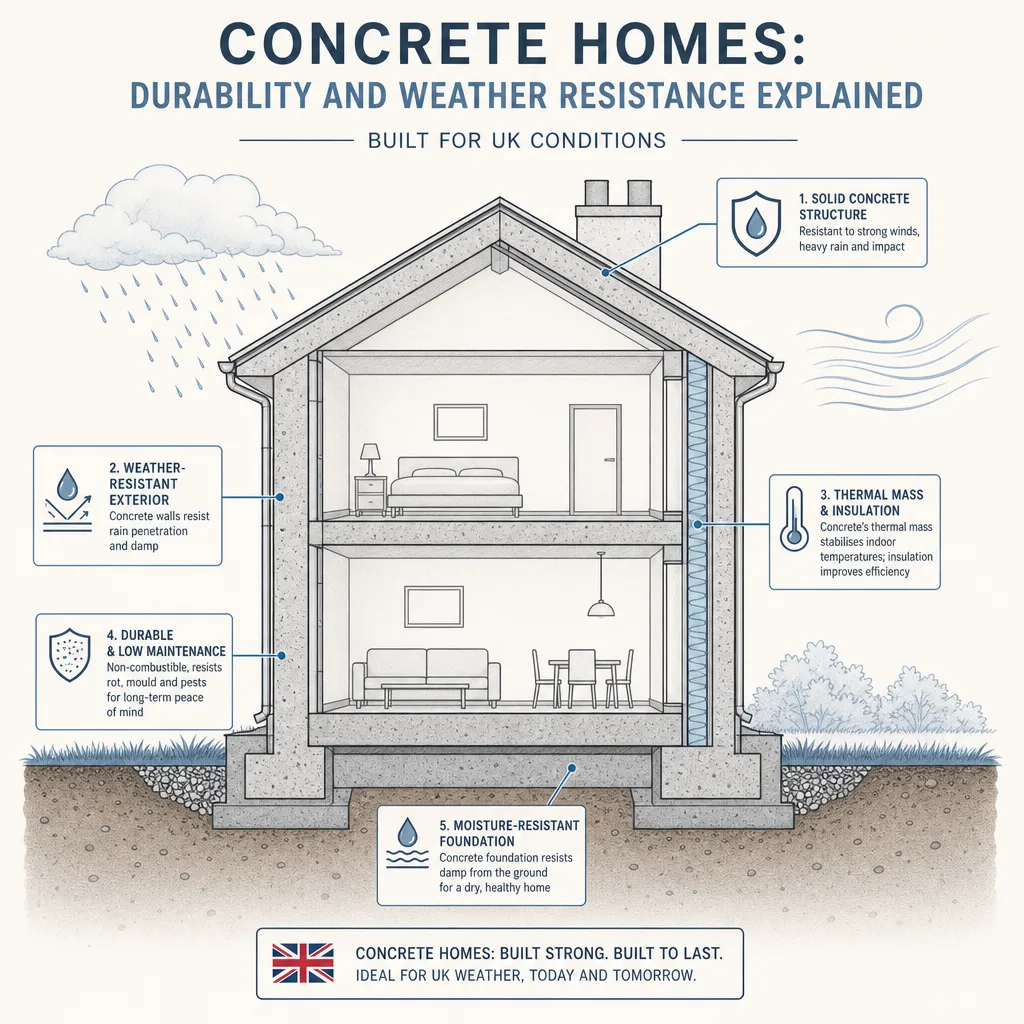
Concrete Homes: Durability and Weather Resistance Explained
Concrete homes can be highly durable and weather-resistant when correctly specified and built.
 Planning & Pre-Build
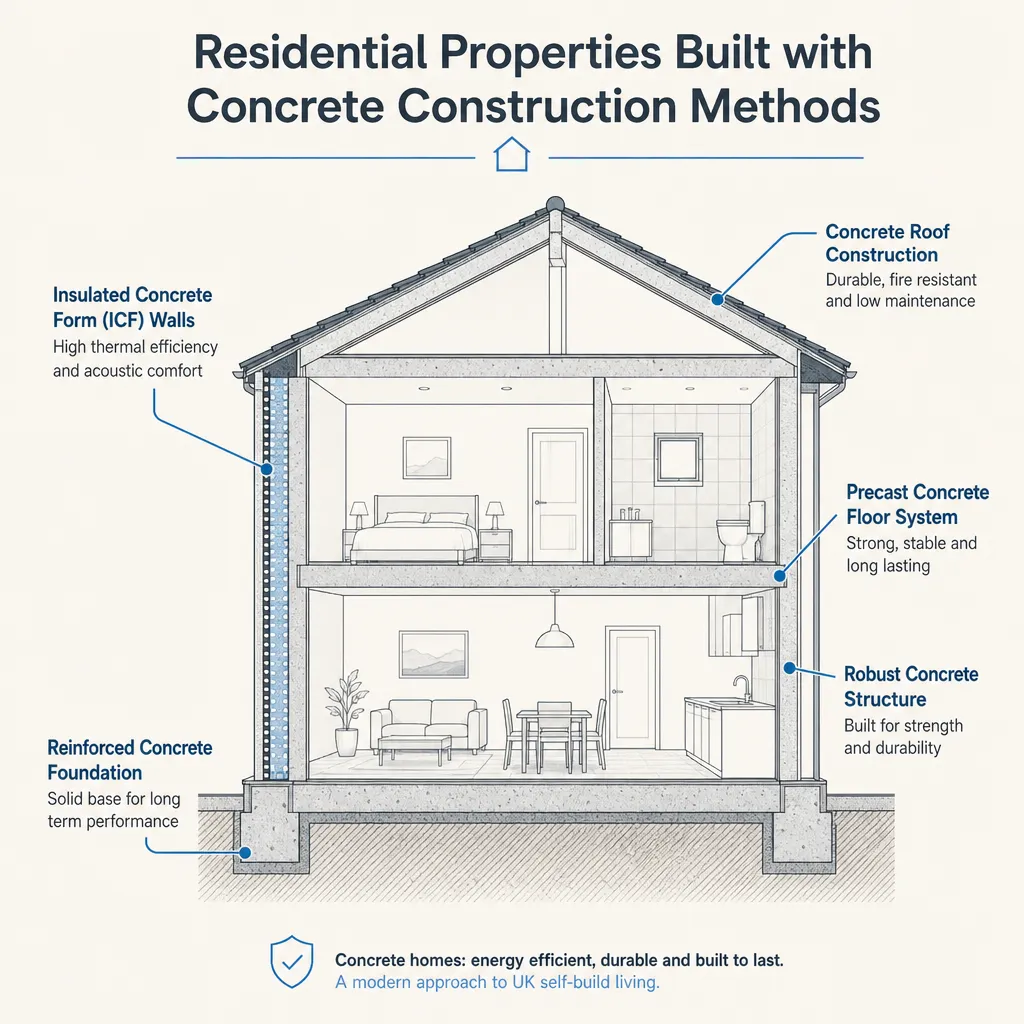
Residential Properties Built with Concrete Construction Methods
UK homes are built using several concrete methods: in-situ cast concrete, precast panel systems, insulating concrete formwork (ICF), and older non-traditional types such as Wimpey No-Fines and Laing Easiform.
 Planning & Pre-Build
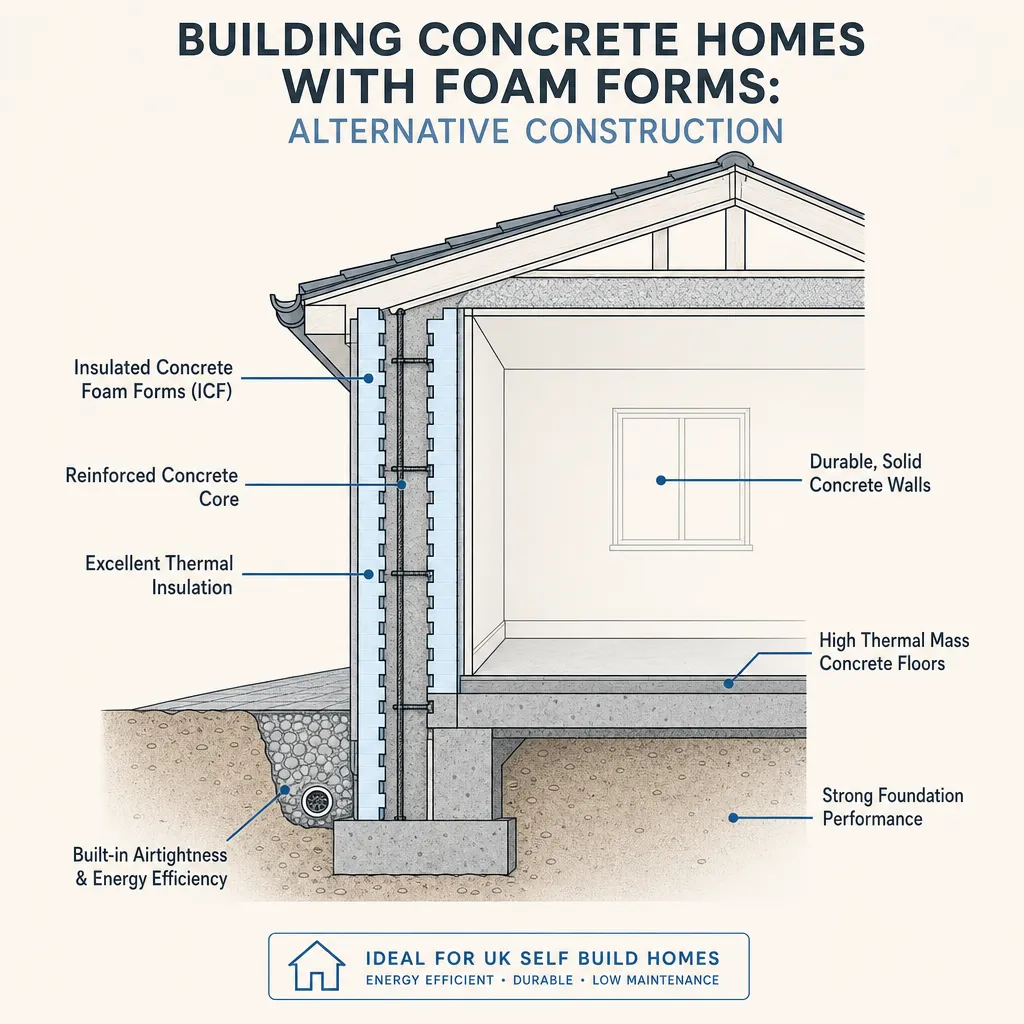
Building Concrete Homes with Foam Forms: Alternative Construction
Insulated concrete formwork (ICF) uses lightweight EPS foam blocks as permanent shuttering filled with reinforced concrete to form walls.
 Planning & Pre-Build
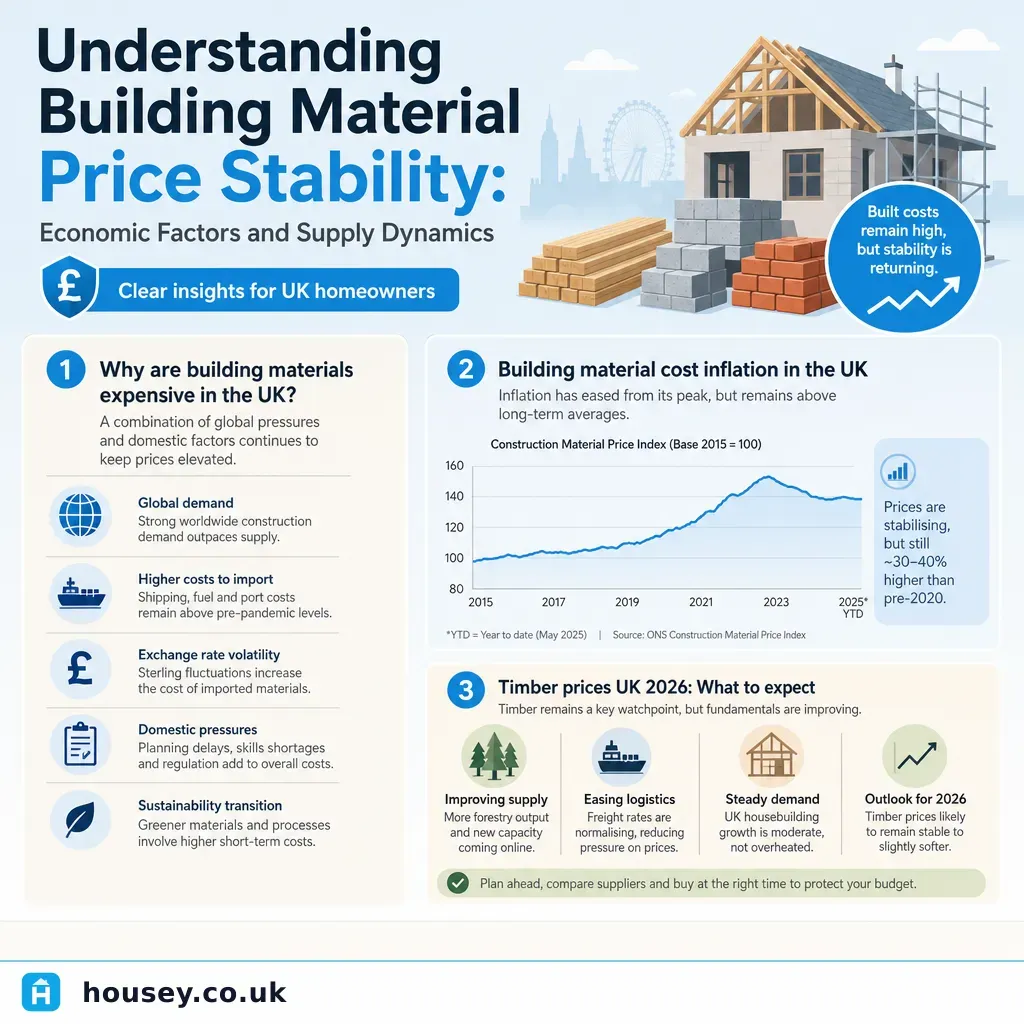
Understanding Building Material Price Stability: Economic Factors and Supply Dynamics
Building material prices in the UK are shaped by global commodity markets, energy costs, exchange rates, and domestic construction demand.
 Planning & Pre-Build
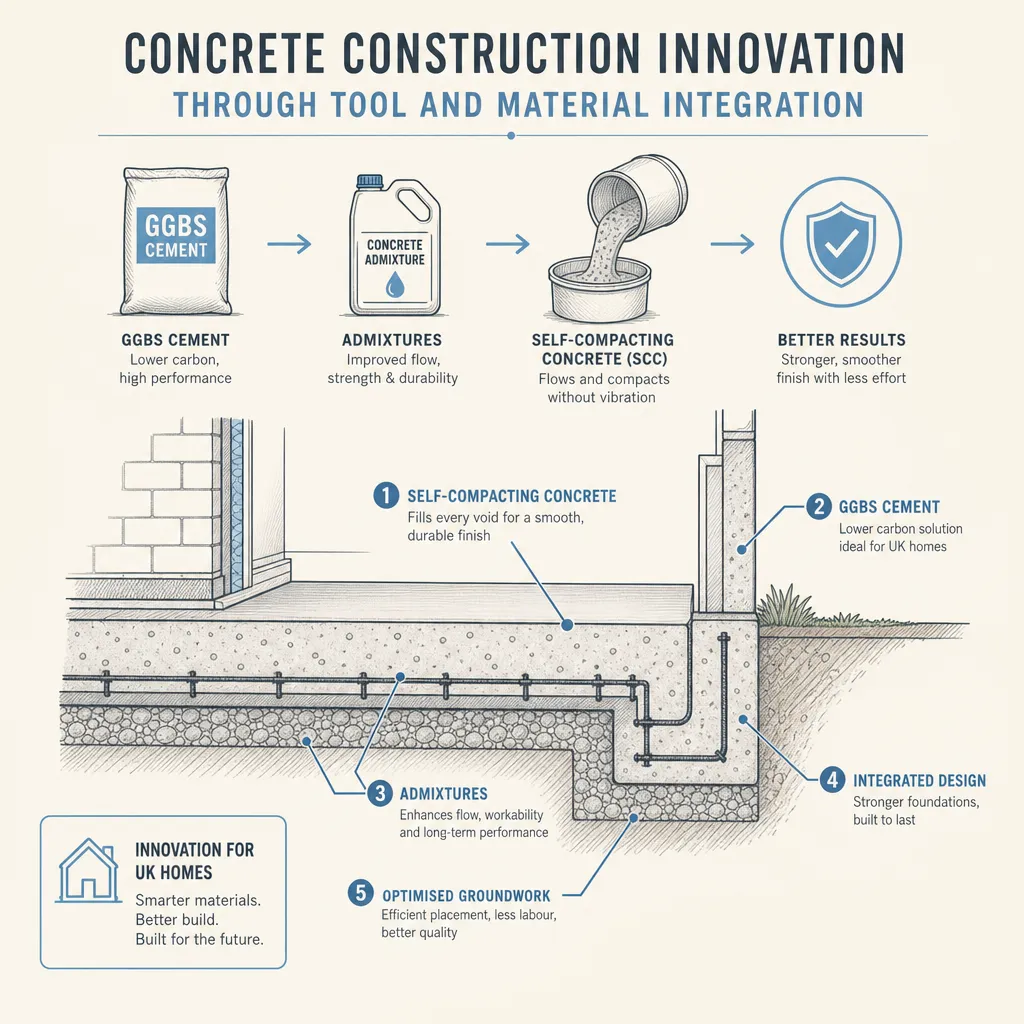
Concrete Construction Innovation Through Tool and Material Integration
Modern concrete mixes — self-compacting, fibre-reinforced, and low-carbon GGBS blends — require specific placement equipment and admixtures to perform correctly.