Understanding Building Material Pricing: Market Trends and Cost Forecasting
By Housey · Last reviewed 31st of May 2026
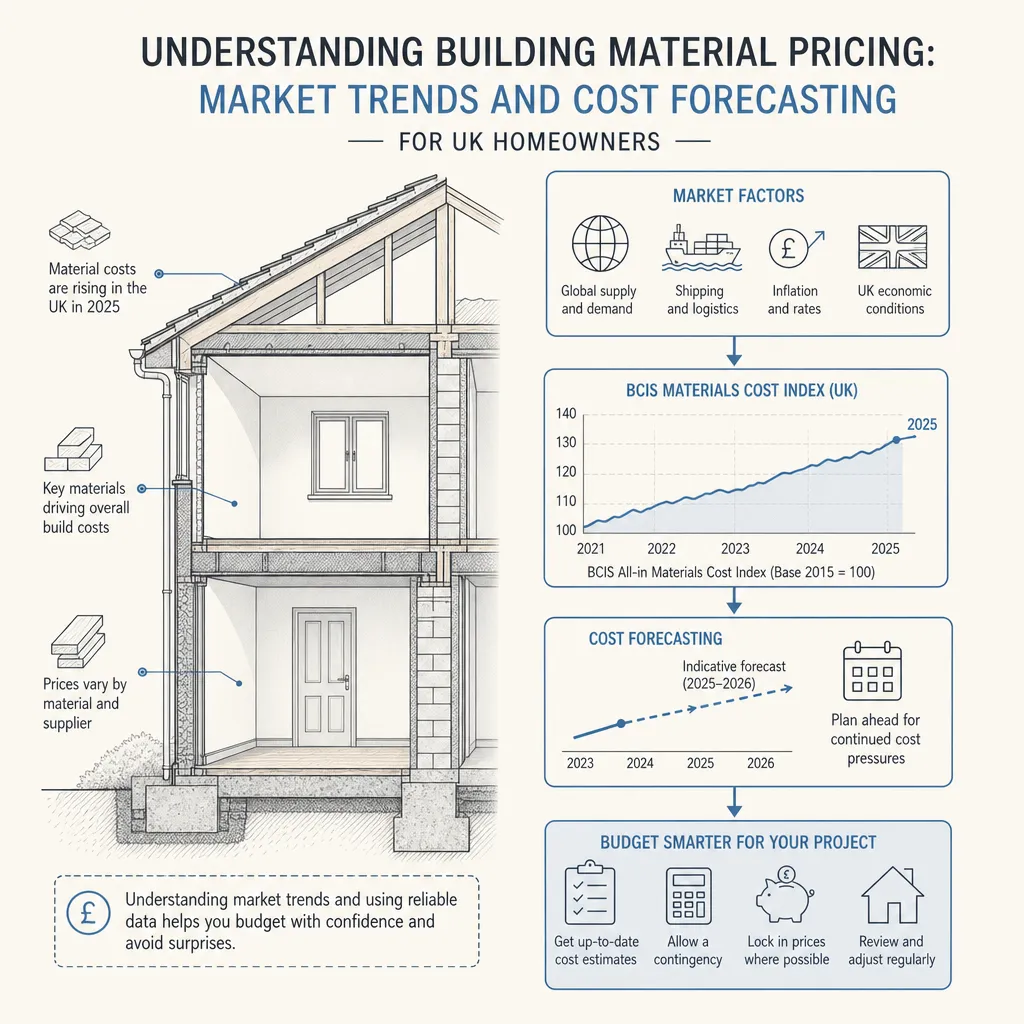
Understanding Building Material Pricing: Market Trends and Cost Forecasting
When planning an extension, conversion, or significant renovation, one of the hardest things to pin down is what the work will actually cost. Material prices are not fixed — they respond to global commodity markets, currency movements, energy costs, and supply-chain disruptions that can shift project economics within months. Knowing how construction pricing works and where reliable benchmarks are published helps you build a budget that holds up under scrutiny before a contractor sets foot on site.
Key points
- The BCIS (Building Cost Information Service), operated under the RICS umbrella, publishes quarterly materials cost indices used as the primary UK construction cost benchmark by quantity surveyors, architects, and contractors.
- Steel reinforcement bar prices rose over 70% and structural timber over 100% between 2020 and 2022 before correcting; many materials remain above pre-pandemic baselines according to BCIS data.
- Energy-intensive materials — cement, glass, bricks, and plasterboard — are directly sensitive to UK wholesale gas and electricity prices, with increases typically appearing in construction prices two to four months after energy market movements.
- The Construction Products Association (CPA) publishes a twice-yearly Construction Trade Survey with near-term price sentiment from manufacturers and distributors, providing forward-looking guidance for the next six to twelve months.
- VAT on new-build residential construction is zero-rated; VAT on most renovation and extension work is charged at the standard rate of 20%, which significantly affects overall project budgets.
How UK construction material prices are set
Construction materials span several very different supply chains, and the mechanisms by which prices are set differ by product type.
Global commodity materials
Structural timber, steel, copper, and aluminium trade on international commodity markets. UK prices for these materials track global trends, modified by sterling exchange rates and transport costs. When the US dollar strengthens against the pound, dollar-denominated commodities cost more in sterling terms even if global prices in dollar terms are unchanged.
Energy-intensive manufactured materials
Cement, concrete block, brick, glass, plasterboard, and insulation are manufactured in the UK or EU using energy-intensive processes. When wholesale gas and electricity prices rise, manufacturers face higher production costs and typically pass these through to construction product prices with a lag of several months.
Locally sourced materials
Aggregates, sand, and gravel are largely sourced domestically and respond more to domestic demand, haulage costs, and planning restrictions on extraction sites than to global commodity cycles.
Key material price drivers compared
Material | Main price drivers | How to monitor | Typical lag to site price |
|---|---|---|---|
Structural timber | Global softwood supply, GBP/EUR, Scandinavian harvest | Timber Trade Federation, BCIS | 4–8 weeks |
Steel (rebar, sections) | Global steel output, scrap price, energy costs | BCIS, LME steel prices | 4–8 weeks |
Cement and concrete | UK gas prices, kiln energy, domestic demand | BCIS, CPA survey | 2–4 months |
Brick and block | UK gas prices, clay availability, regional demand | BCIS, housebuilder supply reports | 3–6 months |
Insulation (PIR/EPS) | Petrochemical feedstock, energy, regulatory demand | BCIS | 4–8 weeks |
Copper (wiring, pipework) | LME copper price, GBP/USD | LME, merchant price lists | 2–4 weeks |
Plasterboard | Gypsum availability, energy costs | BCIS, manufacturer announcements | 2–4 months |
How to forecast costs for your project
Use professional cost benchmarks
The BCIS General Building Cost Index and sector-specific indices for housing and commercial works are the standard references used by quantity surveyors, architects, and contractors for UK cost planning. For self-builders and homeowners, RICS guidance notes and the Homebuilding & Renovating cost calculator provide accessible benchmarks. For any project above approximately £30,000–50,000, an independent quantity surveyor's early-stage estimate is the most reliable cost-planning tool available.
Material exposure by project type
Project type | High-exposure materials | Sensitivity to price moves |
|---|---|---|
Timber-frame new build | Structural timber, insulation, sheathing board | High |
Masonry extension | Bricks/blocks, cement, roof tiles, structural timber | Medium |
Loft conversion | Structural timber, insulation, plasterboard, structural steel | Medium |
Kitchen or bathroom fit-out | Fixtures, tiles, copper pipework | Lower — more fixed by supplier |
Electrical rewire | Copper cable, consumer unit | Medium — copper price sensitive |
Build in appropriate contingency
RICS guidance for residential renovation projects typically suggests a 10–15% contingency for known unknowns. For projects with a procurement timeline extending more than six months, a price-escalation allowance of 3–7% per annum is worth including in normal market conditions; volatile periods may warrant a higher figure.
What to ask before accepting a quote
- Is this quote fixed-price, or is it subject to material price fluctuation after a base date?
- What assumptions has the contractor made about materials — current merchant prices or estimated future costs?
- What happens if material prices rise substantially between quote and purchase date?
- Is VAT included in all figures, and have any zero-rated or reduced-rate items been correctly identified?
- What is the quote's validity period, and has the contractor already secured supply for any long-lead items?
- Are there long-lead items — structural steel, specialist windows, engineered timber — that need to be ordered early to hold current pricing?
- If a fluctuation clause applies, which published index will be used to calculate any adjustment?
What not to assume
- Don't assume last year's quote applies today. Material markets can move 10–30% in a year for specific commodities in volatile conditions.
- Don't assume like-for-like substitution is cost-neutral. Switching from timber joists to I-joists or from brick to blockwork affects structural calculations, insulation values, and Building Regulations compliance.
- Don't assume all quotes price the same specification. Comparing quotes meaningfully requires confirming that all bidders have used the same materials, standards, and included items.
- Don't assume VAT is always 20%. New-build residential construction, certain conversions, and some energy-efficiency measures attract reduced or zero VAT — check current HMRC guidance or consult your accountant.
When to get professional help
A quantity surveyor is the appropriate professional for cost forecasting on any residential project above approximately £30,000–50,000. For smaller projects, a detailed written quote with clear material specification and explicit VAT treatment is the minimum you should accept before committing.
Red flags suggesting cost planning may be unreliable:
- A single-page quote with no material specification
- Significant variation between quotes with no explanation offered
- A contractor unable to identify clearly what is included or excluded
- No explicit statement of VAT status
- A quote validity period under 14 days, which typically signals contractor uncertainty about current input prices
How Housey can help
Housey connects UK homeowners with local professionals across planning, design, and build projects. For independent cost benchmarking and material specification advice, finding a local quantity surveyor or project manager through Housey can give you confident, evidenced cost guidance before you commit to a contractor.
Frequently asked questions
How much should I allow for material price rises over a 12-month project?
In normal market conditions, industry practice typically suggests a 3–7% annual escalation allowance for construction materials. Volatile periods — such as 2021–2022 — saw far higher moves for specific commodities. Your quantity surveyor can advise on an appropriate escalation figure for current conditions at the time of cost planning.
Where can I check current building material prices in the UK?
The BCIS publishes quarterly cost indices accessible to professionals. For homeowners, the Homebuilding & Renovating cost calculator and RICS guidance notes provide accessible benchmarks. Merchant price lists from Travis Perkins, Jewson, and Buildbase give indicative current retail prices for common materials.
Does VAT apply to all building work?
No. New-build residential construction is zero-rated. Most renovations and extensions to existing homes are standard-rated at 20%. Some energy-efficiency measures — including insulation, heat pump installation, and solar panels — qualify for the reduced 5% rate or zero rate under rules revised in April 2022. Check current HMRC guidance or speak with your accountant before budgeting.
What is the BCIS?
The BCIS (Building Cost Information Service) is a data service operated under the RICS umbrella that collects and publishes construction cost and price data for the UK. It is the standard reference used by quantity surveyors, cost consultants, contractors, and developers to benchmark project budgets and forecast construction cost movements.
Sources and further reading
- BCIS materials cost indices — UK construction cost data — BCIS (Building Cost Information Service)
- Construction Trade Survey — near-term price sentiment — Construction Products Association
- VAT on construction and building services (Notice 708) — HM Revenue & Customs, GOV.UK
- ONS construction output price indices — Office for National Statistics
- RICS cost management professional guidance — RICS
Useful next reads
 Planning & Pre-Build
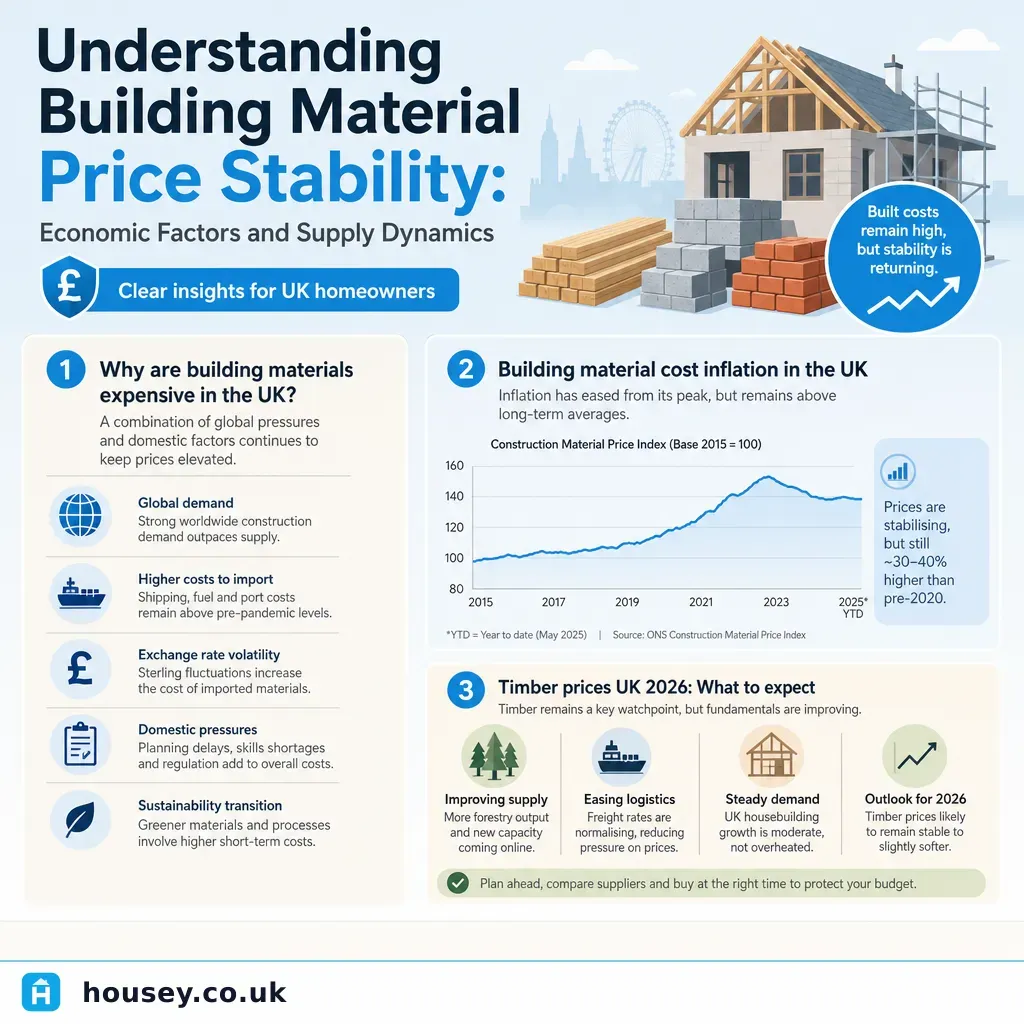
Understanding Building Material Price Stability: Economic Factors and Supply Dynamics
Building material prices in the UK are shaped by global commodity markets, energy costs, exchange rates, and domestic construction demand.
 Planning & Pre-Build
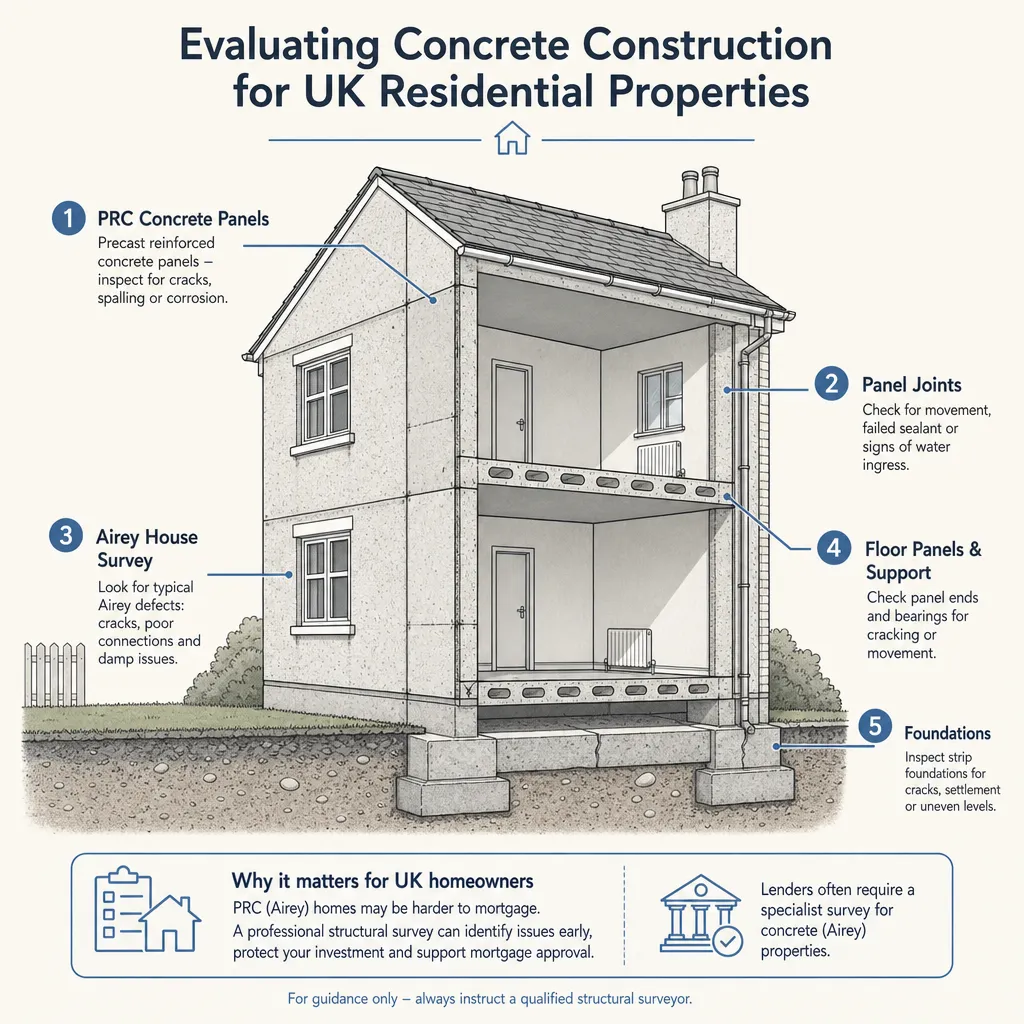
Evaluating Concrete Construction for UK Residential Properties
Concrete construction in UK homes covers post-war non-traditional housing — such as Airey and Wimpey No-Fines properties — typically classified as non-standard by mortgage lenders, and modern systems including ICF and block cavity wall, which are generally standard.
 Planning & Pre-Build
Sourcing Reclaimed and Salvaged Building Materials for Period Renovation
Reclaimed materials — including original bricks, flooring, roof tiles, lime mortar, and architectural salvage — are often the best match for period properties and may be required by conservation officers or planning conditions.
 Planning & Pre-Build
Global Building Material Trade: Understanding International Timber Supply Dynamics
The UK imports around 80% of its structural timber from Scandinavia and the Baltic states, making domestic project budgets sensitive to global events including geopolitical disruptions, currency movements, and extreme weather.
 Planning & Pre-Build
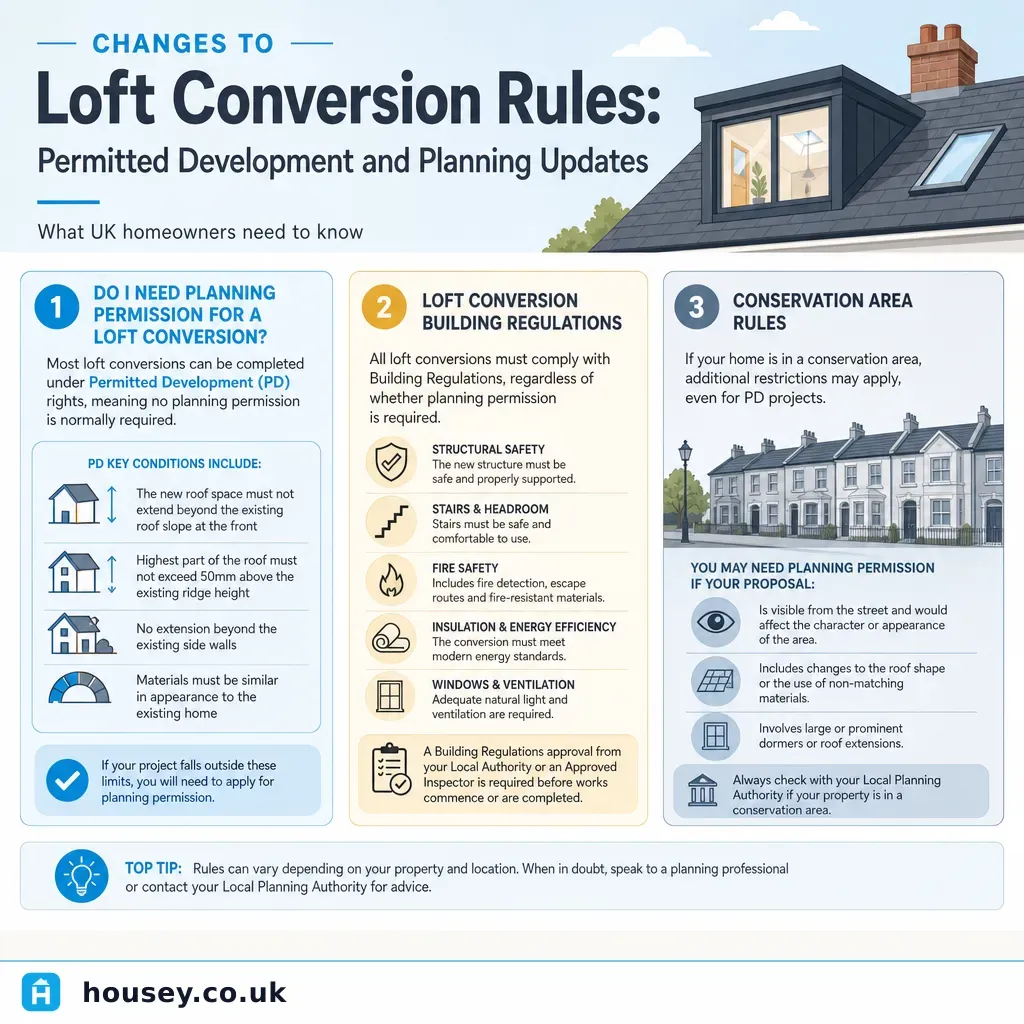
Changes to Loft Conversion Rules: Permitted Development and Planning Updates
In England, most loft conversions on standard houses qualify as Permitted Development under Class B of the GPDO 2015, allowing up to 40 cubic metres (terraced) or 50 cubic metres (detached or semi-detached) without a planning application — if conditions are met.