Sourcing Reclaimed and Salvaged Building Materials for Period Renovation
By Housey · Last reviewed 1st of June 2026
Sourcing Reclaimed and Salvaged Building Materials for Period Renovation
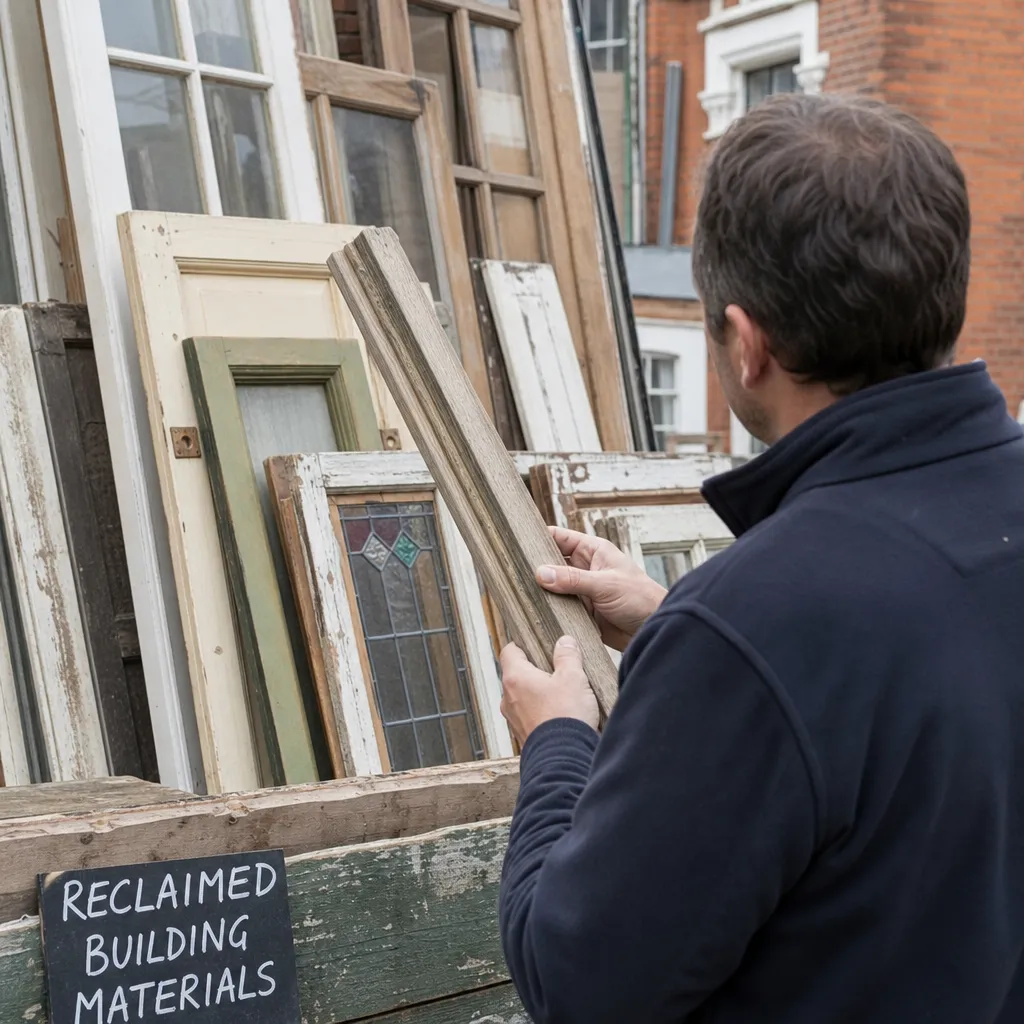
Renovating a Victorian terrace, Georgian townhouse, or Edwardian semi often raises the immediate practical question of where to find materials that genuinely match what is already there. New brick, tile, and timber rarely replicate the texture, colour variation, and natural weathering of original fabric — and in some cases, using reclaimed or period-matched materials is not merely an aesthetic choice but a requirement of listed building consent or a condition attached to planning approval. Understanding where to look, what to check, and how to avoid poor-quality or mislabelled salvage is central to managing both the budget and the programme of any period renovation.
Key points
- Listed building consent (LBC) may specify the use of reclaimed or original-specification materials; always review any existing consent conditions before purchasing at scale.
- Conservation area policies vary by local planning authority — some require prior approval for changes to external materials that would otherwise fall under permitted development rights.
- Specialist architectural salvage yards, reclamation dealers, and online platforms including the Salvo directory are the main UK routes for sourcing period materials.
- Reclaimed timber — particularly Victorian and Edwardian pine floorboards — should be checked for active or historic woodworm, rot, structural integrity, and complete nail removal before installation.
- Reclaimed clay roof tiles must be assessed for frost resistance before use externally; tiles that have delaminated or show spalling are not safe for roof applications regardless of visual similarity to originals.
Why reclaimed materials matter for period renovation
Period properties were built with materials no longer routinely manufactured: soft red stocks, handmade clay peg tiles, Welsh blue slate, wide-plank softwood flooring, and lime-based mortars. Modern equivalents are often fired at different temperatures, manufactured to different tolerances, or have a uniformity that reads as obviously contemporary alongside aged original fabric.
For properties in conservation areas or with listed building status, using inappropriate modern materials can trigger enforcement action or a requirement to reinstate original fabric at the owner's expense. Even where no formal planning requirement applies, well-matched reclaimed materials typically produce a more sympathetic result, satisfy conservation officers on future applications, and often hold their value better than mismatched modern substitutes.
Where to source reclaimed materials in the UK
Architectural salvage yards and reclamation dealers
Specialist salvage yards hold large stocks of period materials sorted by type, era, and often geographical origin. Well-stocked regional dealers carry thousands of reclaimed bricks sorted by manufacturer and period, Victorian encaustic tiles, period softwood floorboards, sash window ironmongery, cast-iron fireplaces, and lime mortars. The Salvo directory maintains a searchable list of UK salvage dealers, including those signed up to the SALVO Code — a voluntary standard requiring provenance checks and agreement not to deal in stolen architectural materials.
Demolition and soft-strip contractors
When period buildings are comprehensively stripped or demolished, significant quantities of original materials become available directly. Demolition contractors sometimes sell salvage on site or pass it to reclamation yards. Building a relationship with local demolition firms can give early access to materials before they reach retail pricing.
Online platforms and classified listings
- Salvo (salvo.co.uk): specialist architectural salvage directory and classified listings across the UK.
- Architectural Forum: online trading community for period materials and architectural antiques.
- eBay: large volume of reclaimed materials at variable quality and provenance — requires careful in-person inspection before committing.
- Facebook Marketplace and local community groups: useful for individual lots from house clearances, small renovations, and garden clearances; prices can be competitive.
Period brick manufacturers for repair and matching
Some UK brick manufacturers — including Michelmersh, Ibstock, and Charnwood Brick — produce period-style and regional-match bricks for repairs and extensions to historic buildings. These are new bricks but can be closely matched in colour, texture, and gauge to specific regional stocks. A conservation architect or heritage consultant can advise on whether new-production matching bricks are acceptable for your specific situation.
What to ask before buying reclaimed materials
Before committing to a significant quantity of salvaged material, ask the dealer or seller:
- What is the provenance of this material — which building did it come from and when was it removed?
- Has the material been checked against the SALVO stolen material alert system?
- Has timber been treated for pests, and are tiles tested or assessed for frost resistance?
- Are there sufficient units to complete the job, including a 10–15% allowance for cutting waste and breakage?
- Is the material free from contamination — lead paint coatings, asbestos-containing compounds, or tar-based treatments?
- Can the dealer hold stock for an agreed period while quantities are confirmed with your contractor?
- What is the returns or exchange policy if material proves unusable on site?
- Is the dealer a SALVO Code signatory or a member of a recognised trade body?
Red flags when buying salvaged materials
Watch for these warning signs when inspecting or negotiating reclaimed materials:
- Provenance cannot be established — material with no traceable origin may be stolen architectural salvage. The SALVO alert system lists reported stolen items.
- Prices significantly below market rate — often indicates uncertain provenance, undisclosed condition problems, or materials that have been stripped without proper authorisation.
- Visually similar but different specification — reclaimed clay tiles that match in colour but differ in gauge, camber, or fixing method will cause costly problems on site.
- Active woodworm in reclaimed timber — fresh frass (fine powder) and live flight holes indicate active infestation. Treatment adds cost and time; consult a specialist before purchasing.
- Spalled, delaminated, or soft bricks — not safe for external use in exposed positions; they will absorb water, fail in frost, and contaminate surrounding sound bricks with soluble salts.
- Unidentified sheet materials from before 1990 — seek asbestos testing before handling or cutting. Asbestos cement was used in various sheet, tile, and soffit products. If you suspect asbestos, do not disturb the material — arrange a survey by a licensed asbestos professional.
- No VAT invoice or documentation for significant purchases — relevant for VAT reclaim on listed building works, which qualify for zero-rating under specific HMRC conditions.
Quantities, waste allowances, and programme planning
Period materials require larger waste allowances than new stock: budget 10–15% for general cutting waste and 15–20% for complex patterns such as encaustic floors or decorative tilework. Sourcing can take significantly longer than ordering new materials — allow 4–12 weeks for specialist or unusual quantities, and confirm with your contractor that sourced materials meet their requirements for gauge, fixing method, and compatibility with surrounding original fabric before purchasing a full consignment. Buying a small sample lot first is good practice for anything above a modest quantity.
When to get professional help
- If your property is listed at any grade (I, II*, or II in England; A, B, or C in Scotland), consult a heritage consultant or conservation architect before specifying materials — listed building consent conditions may dictate specific requirements.
- If your property is in a conservation area and you are altering the external appearance, check with your local planning authority before starting work to confirm whether prior approval is required.
- If you encounter what appears to be asbestos-containing material during stripping or in salvage you have purchased, do not disturb it — arrange a survey by a licensed asbestos professional immediately.
- If you are uncertain whether a reclaimed structural element — timber beam, load-bearing stone lintel — is sound for its intended use, ask a structural engineer to assess it before installation.
How Housey can help
Housey can connect you with heritage and conservation consultants who can advise on material specifications appropriate for your property's listing grade or conservation area, interpret listed building consent conditions, and liaise with conservation officers on your behalf — ensuring reclaimed materials meet planning requirements as well as period authenticity standards.
Frequently asked questions
Are reclaimed building materials cheaper than new?
Not always. Common materials — standard reclaimed bricks, softwood floorboards, plain clay tiles — are often competitively priced or slightly cheaper than new equivalents. Rare or in-demand materials such as handmade clay peg tiles, original York stone flags, or encaustic floor tiles can command premium prices. Factor in potential treatment costs, higher cutting waste allowances, and sourcing lead times when budgeting.
Do I need planning permission to use reclaimed materials on a listed building?
You need listed building consent for most works that affect the character of a listed building, including material changes. Using reclaimed materials that closely match the original specification is generally viewed positively by conservation officers, but always check conditions on any existing consent and confirm requirements with your local planning authority before starting work.
Can I use reclaimed materials as part of a sustainable or low-carbon renovation?
Yes — reusing reclaimed materials is one of the most carbon-efficient choices in any renovation, avoiding the embodied carbon of new manufacture. Some projects incorporate reclaimed materials within BREEAM or retrofit assessments. Ensure materials are genuinely reused from original buildings and not surplus stock from modern manufacture mislabelled as reclaimed.
What is the SALVO Code?
The SALVO Code is a voluntary standard for UK architectural salvage dealers covering checks against the SALVO stolen material alert system, honest grading of material condition, and transparent provenance information. Buying from a SALVO Code signatory provides a degree of assurance against purchasing stolen architectural elements and gives clearer information on material grade and origin.
Sources and further reading
- Listed buildings guidance — Historic England
- Conserving and enhancing the historic environment — GOV.UK / Planning Practice Guidance
- SALVO architectural salvage directory — Salvo
- Asbestos advice for homeowners — Health and Safety Executive
- Buildings and construction: VAT notice 708 — HMRC
Useful next reads
 Planning & Pre-Build
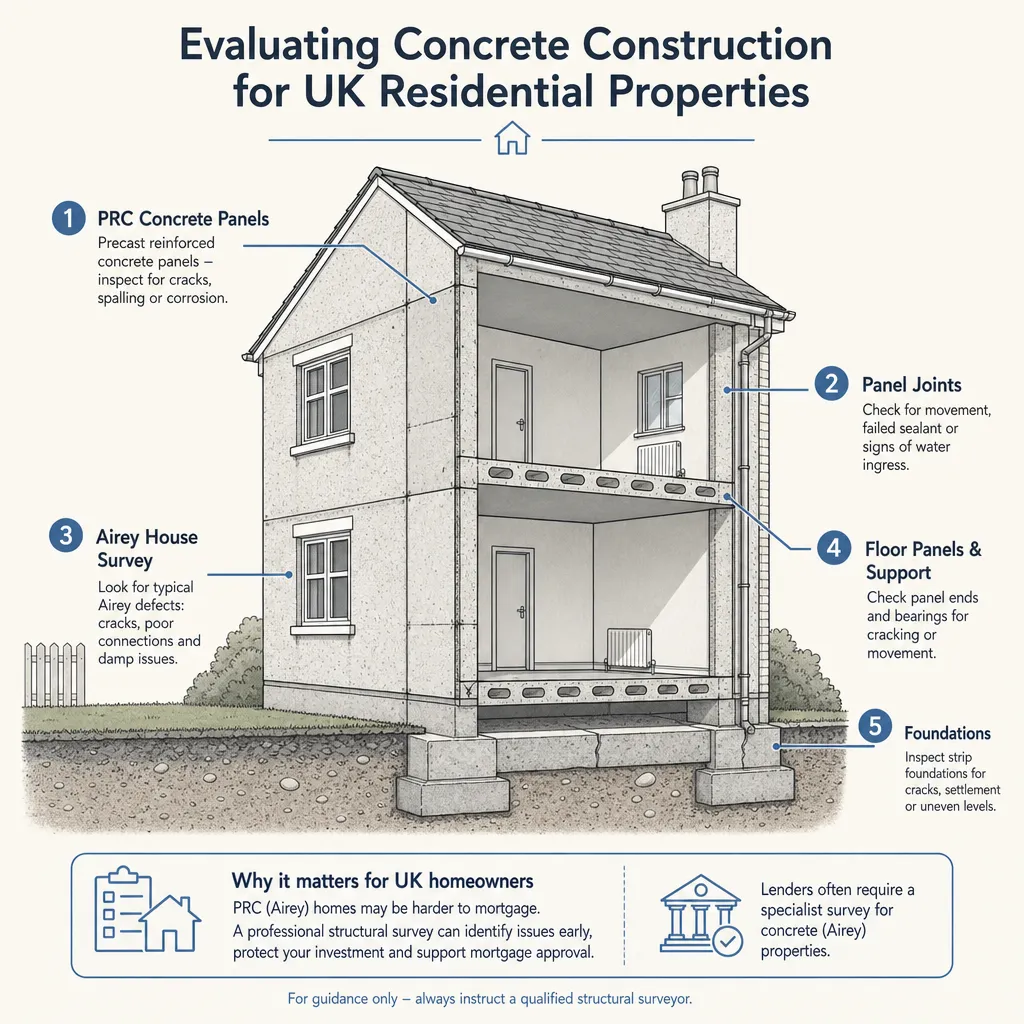
Evaluating Concrete Construction for UK Residential Properties
Concrete construction in UK homes covers post-war non-traditional housing — such as Airey and Wimpey No-Fines properties — typically classified as non-standard by mortgage lenders, and modern systems including ICF and block cavity wall, which are generally standard.
 Planning & Pre-Build
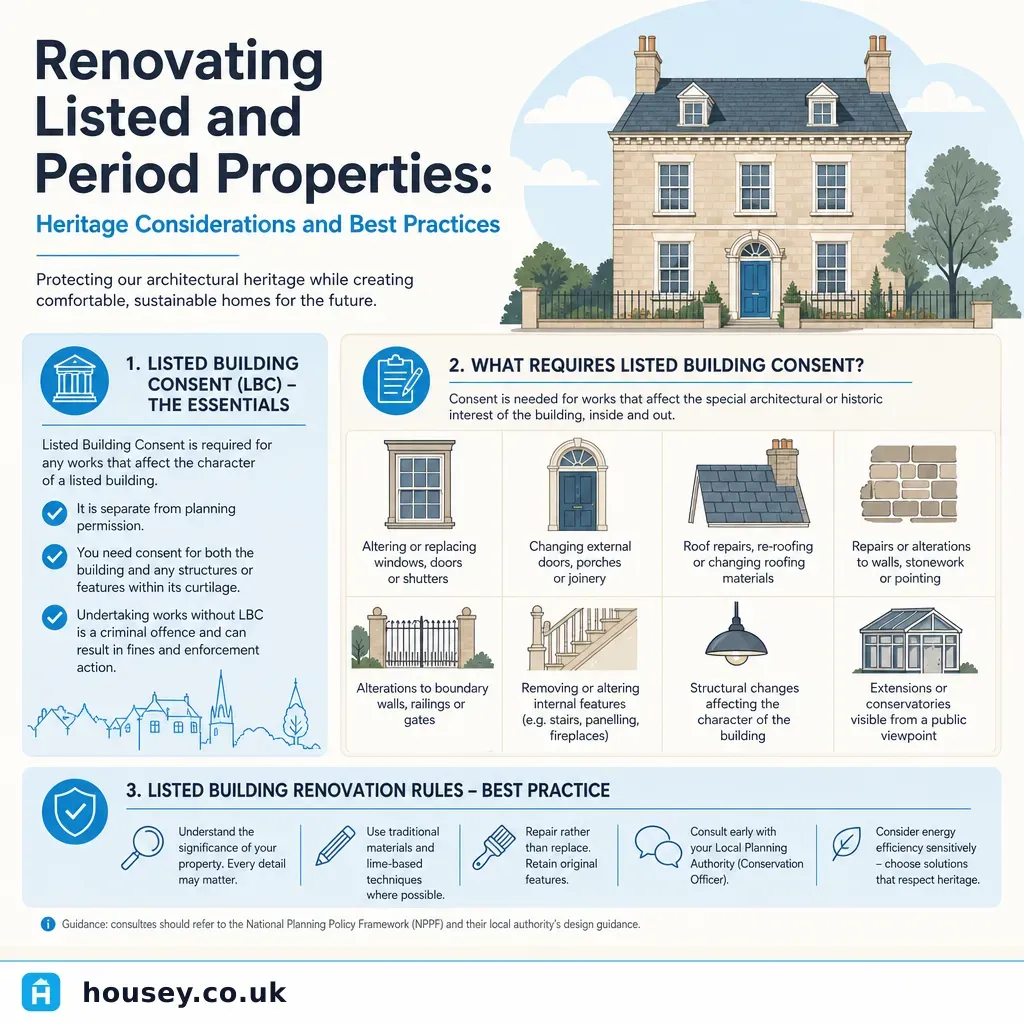
Renovating Listed and Period Properties: Heritage Considerations and Best Practices
Renovating a listed or period property in the UK requires Listed Building Consent for most alterations — internally and externally — separate from planning permission.
 Planning & Pre-Build
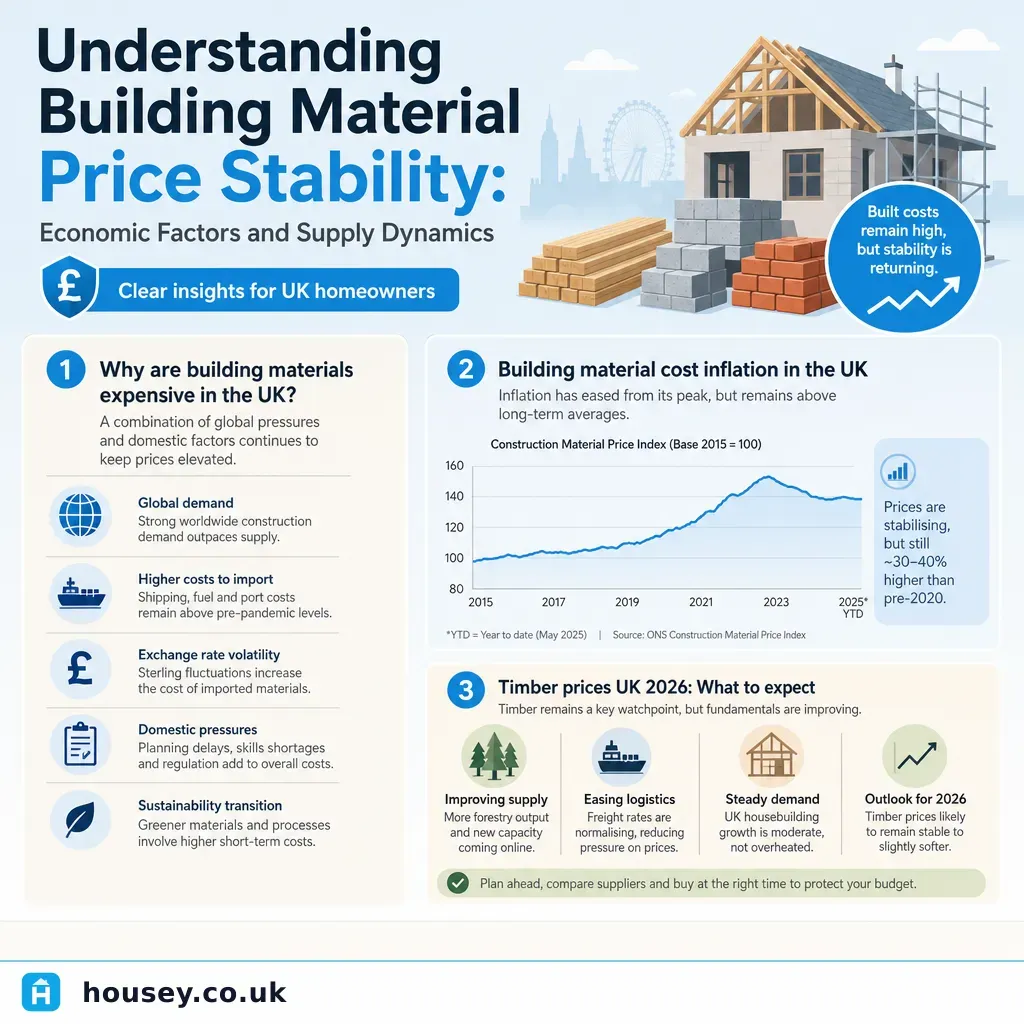
Understanding Building Material Price Stability: Economic Factors and Supply Dynamics
Building material prices in the UK are shaped by global commodity markets, energy costs, exchange rates, and domestic construction demand.
 Planning & Pre-Build
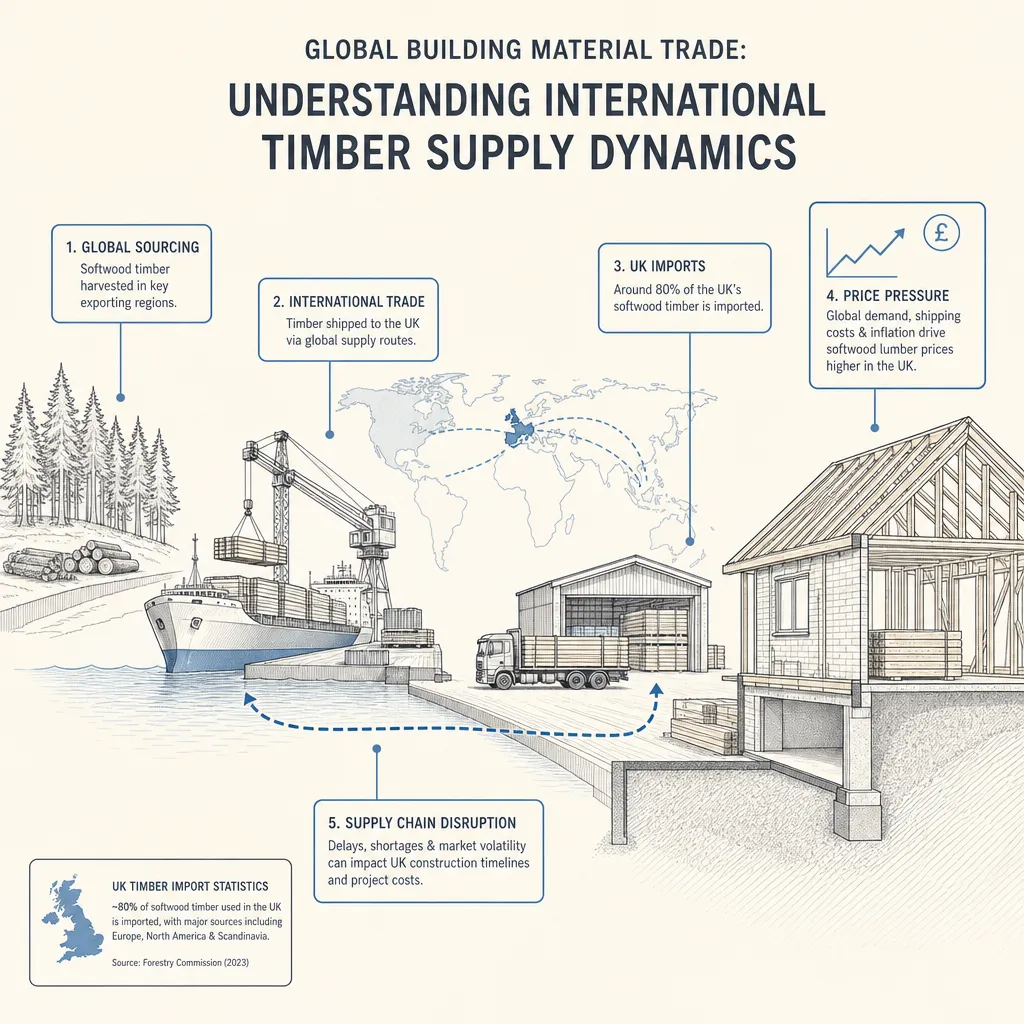
Global Building Material Trade: Understanding International Timber Supply Dynamics
The UK imports around 80% of its structural timber from Scandinavia and the Baltic states, making domestic project budgets sensitive to global events including geopolitical disruptions, currency movements, and extreme weather.
 Planning & Pre-Build
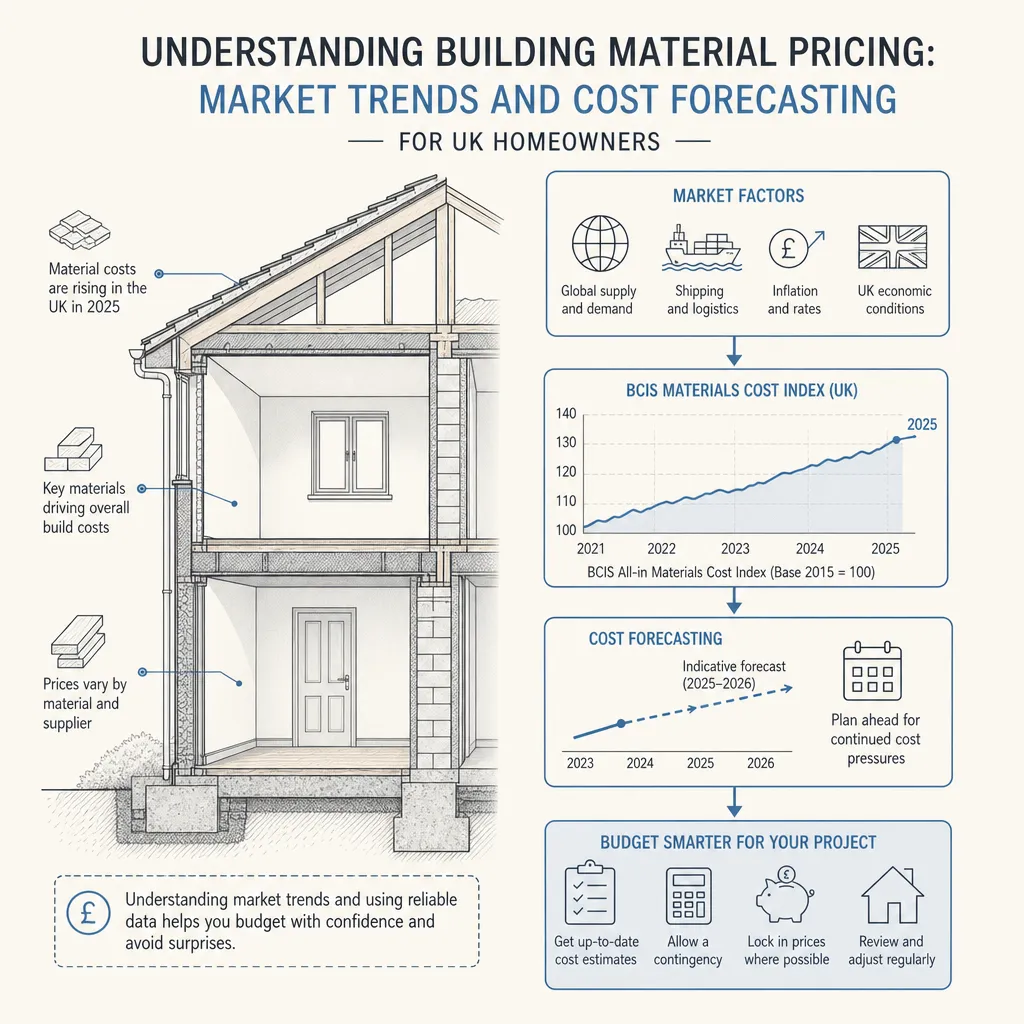
Understanding Building Material Pricing: Market Trends and Cost Forecasting
Building material prices in the UK are driven by global commodity markets, energy costs, and supply-chain conditions, and can shift substantially within a single project's timeline.