Building Plans in Property Searches: What Records Should Appear
By Housey · Last reviewed 30th of May 2026
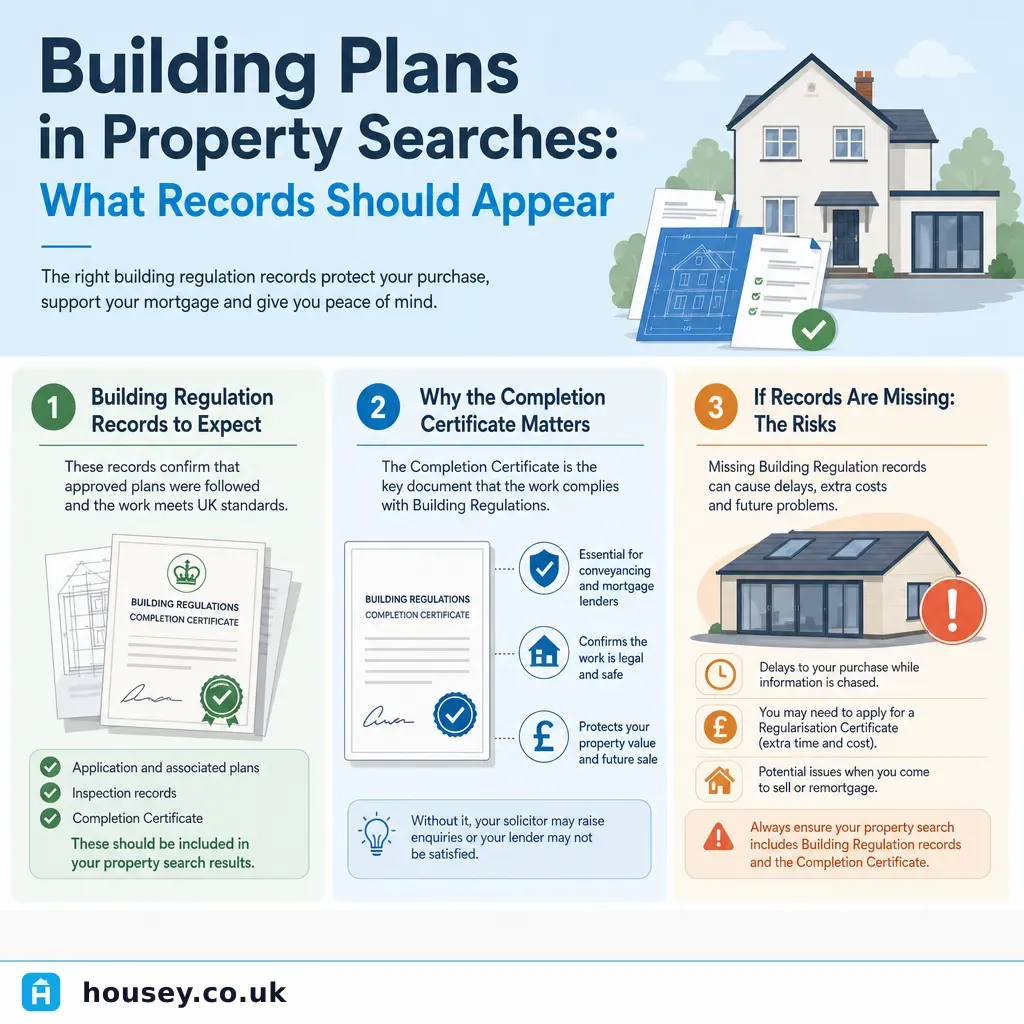
Building Plans in Property Searches: What Records Should Appear
When carrying out due diligence on a property purchase in England or Wales, one of the most commonly misunderstood areas is what building-related records the conveyancing process actually uncovers — and what it does not. Extensions, loft conversions, garage conversions, and structural alterations may all have required building regulations approval, and whether that approval was properly obtained and signed off can affect your mortgage offer, insurance, and future resale prospects.
Key points
- Building regulations approval records are held by the local authority building control department (LABC) or by a registered building inspector — they are not automatically included in the standard LLC1 or CON29 local authority search.
- A completion certificate (or final certificate from a registered building inspector) is the key document confirming that notifiable building work was inspected and signed off — its absence for major works is a material concern.
- FENSA or CERTASS certificates cover replacement windows and doors installed since April 2002 and are held on national databases that can be checked independently by anyone.
- Your conveyancer will raise pre-contract enquiries via the TA6 Property Information Form asking the seller to disclose all building works and provide relevant consents, completion certificates, and guarantees.
- If a completion certificate cannot be obtained, indemnity insurance may be offered as a workaround — but this covers the legal risk of enforcement action, not the cost of remedying defective workmanship.
What the standard conveyancing searches cover (and what they don't)
The standard local authority search (LLC1 and CON29) covers planning decisions, enforcement notices, and conservation area status. It does not provide a comprehensive record of all building regulations applications and approvals. Building regulations records are held separately by:
- Local authority building control (LABC): The council's building control department, which maintains records of applications submitted and inspections carried out.
- Registered building inspectors (formerly approved inspectors): Private sector inspectors who manage their own records under the Building Safety Act 2022 framework, which came into full effect in October 2023.
To find out whether building regulations were applied for and signed off, your conveyancer must raise enquiries with the seller or instruct a separate building regulations search from the local authority.
Types of building records and what they confirm
Record | What it confirms | Who holds it | How to obtain it |
|---|---|---|---|
Building regs full plans approval | Plans were submitted and approved before work began | Local authority building control (LABC) | Request from council building control or via conveyancer |
Building regs completion certificate | Work was inspected and met Building Regulations at completion | LABC or registered building inspector | Request from council; seller should provide a copy |
Registered building inspector final certificate | Private inspector signed off completed work | Approved inspector or LABC | Via seller or registered inspector |
FENSA or CERTASS certificate | Replacement windows/doors self-certified as compliant | National FENSA/CERTASS databases | Free check at fensa.org.uk or certass.co.uk |
Gas Safe certificate (Part J) | Gas installation or boiler work completed by a registered engineer | Gas Safe Register | Free check at gassaferegister.co.uk |
Part P electrical installation certificate | Electrical work in a dwelling self-certified as compliant | NICEIC, NAPIT, or local authority | Seller should provide; check via niceic.com |
Structural engineer's calculations | Structural alterations designed and checked by a chartered engineer | Held by the engineer or owner | Request from seller |
How the TA6 Property Information Form works
In England and Wales, the TA6 Property Information Form (4th edition) is completed by the seller and asks about building works, planning permissions, building regulations consents, completion certificates, and guarantees such as NHBC warranties or specialist timber and damp treatment guarantees. Your conveyancer reviews the replies and raises follow-up enquiries where documents are missing.
Common issues identified at this stage:
- The seller discloses a loft conversion but cannot produce a completion certificate.
- An extension appears on Ordnance Survey mapping but no planning or building regulations record exists.
- A seller replies "not applicable" to questions about works they have clearly carried out.
- Guarantees and warranties exist but lack documentation or were not formally assigned to subsequent owners.
What happens when completion certificates are missing
A missing completion certificate for notifiable building work is a risk that must be resolved before exchange. Options typically discussed between solicitors include:
Indemnity insurance: A one-off policy (often in the range of £100–£300 for straightforward cases — indicative UK costs, last reviewed 2026-05-30) covers the legal risk that a local authority might take enforcement action. It does not cover structural defects arising from non-compliant work. The policy is typically placed in the seller's name and assigned to the buyer at completion.
Retrospective regularisation: The owner can apply to the local authority for a regularisation certificate under Regulation 18 of the Building Regulations 2010 (as amended). This involves a council inspection and may require some opening up of work. It provides a genuine record of compliance rather than an insurance workaround, and is available only for work carried out after 11 November 1985.
Retention or price reduction: A buyer may negotiate a sum to be held in escrow or a reduction in the purchase price to reflect the risk and potential cost of obtaining retrospective approval or carrying out remedial works.
Homeowner checklist: documents to gather before selling
If you are selling a property where building works have been carried out, gather these documents before instructing your conveyancer:
Red flags that warrant further investigation
- An obvious extension, loft conversion, or outbuilding with no planning or building regulations documents.
- Indemnity insurance being offered immediately without any attempt to obtain retrospective regularisation or certification.
- Works carried out without using a Gas Safe-registered engineer, a Part P-certified electrician, or a FENSA-registered window installer.
- A surveyor's report noting concerns about the structural integrity of an extension or loft conversion that lacks building regulations sign-off.
- The property is a flat in a building above 18 metres or 7 storeys — higher-risk buildings under the Building Safety Act 2022 have additional compliance requirements that may surface during the sale process.
Important limitations
This article provides general guidance on how building regulations records relate to property searches and conveyancing in England and Wales. Building regulations, the Building Safety Act 2022 reforms, and local authority practices are subject to change. The appropriate course of action for any specific property — particularly where records are missing or works are recent — should be determined by a regulated conveyancer and, where structural concerns exist, a chartered building surveyor or structural engineer. Nothing in this article constitutes legal advice.
What to ask a qualified professional
When building records are incomplete or missing, ask your conveyancer or building control consultant:
- Does this work fall within the definition of notifiable work under the Building Regulations 2010 (as amended)?
- Is indemnity insurance an appropriate solution here, or should retrospective regularisation be pursued instead?
- If regularisation is required, what is likely to be involved — will any work need to be opened up for inspection?
- What is the local authority's typical approach to regularisation applications for this type of work?
- Does the absence of a completion certificate affect my mortgage lender's requirements for this property?
- If a structural engineer's report is needed, who should commission it — me or the seller?
- Are there any Building Safety Act 2022 implications for this property, particularly if it is in a building above 18 metres?
When to get professional help
Seek professional advice beyond your conveyancer if:
- The property has had significant structural works — removal of load-bearing walls, underpinning, a new roof structure — without any engineering sign-off.
- A surveyor has flagged concerns about an extension or structural alteration in their inspection report.
- The seller cannot produce any building regulations records for works that are clearly visible at the property.
- The property is a flat in a building over 18 metres or 7 storeys (a higher-risk building under the Building Safety Act 2022), which carries additional compliance requirements.
- Works involved changes to fire-stopping, party walls, or means of escape in a converted building.
How Housey can help
Housey connects buyers and homeowners with regulated conveyancing services who can raise the right enquiries and advise on missing documents, and with experienced building control consultants who can assess whether retrospective regularisation is appropriate and guide you through the application process.
Frequently asked questions
Can I search for building regulations records myself?
Yes, to a degree. You can contact the local authority building control department and request records, sometimes via the Freedom of Information Act 2000 or Environmental Information Regulations 2004. However, the completeness of records varies by council, and older records — particularly pre-1990s — may not be digitised. Your conveyancer is better placed to raise formal pre-contract enquiries.
Is indemnity insurance a reliable substitute for a completion certificate?
Indemnity insurance covers the legal risk of enforcement action — it does not confirm the work was done safely or to the required standard. If a surveyor identifies structural concerns about uninspected work, the insurance will not cover the cost of remedial works. It may be appropriate for minor or older work; it is generally less suitable for significant structural alterations.
Does building regulations approval expire?
A full plans approval is typically valid for three years from the date of deposit if no work has started. Once work begins, the approval does not expire, but a completion certificate should be obtained within a reasonable period after work finishes. An approval without a completion certificate means the work was started but was never signed off by building control.
What is a regularisation certificate?
A regularisation certificate is granted by the local authority when a homeowner applies retrospectively for building regulations approval for work carried out without consent or sign-off. It involves an inspection and may require some opening up of work. Available only for work carried out after 11 November 1985, it provides a genuine compliance record rather than an insurance workaround.
Are FENSA certificates transferable when I sell?
Yes. FENSA certificates and CERTASS certificates are registered to the property address, not the current owner. Any buyer or their conveyancer can verify a certificate by checking the national FENSA database at fensa.org.uk using the property postcode and address. You do not need to do anything to transfer them — they follow the property automatically.
Sources and further reading
- Building regulations: approved documents — GOV.UK
- Building regulations approval — GOV.UK
- Building Safety Act 2022 — legislation.gov.uk
- FENSA certificate checker — FENSA
- Check a Gas Safe registered engineer — Gas Safe Register
- Find a NICEIC-approved contractor — NICEIC
Useful next reads
 Planning & Pre-Build
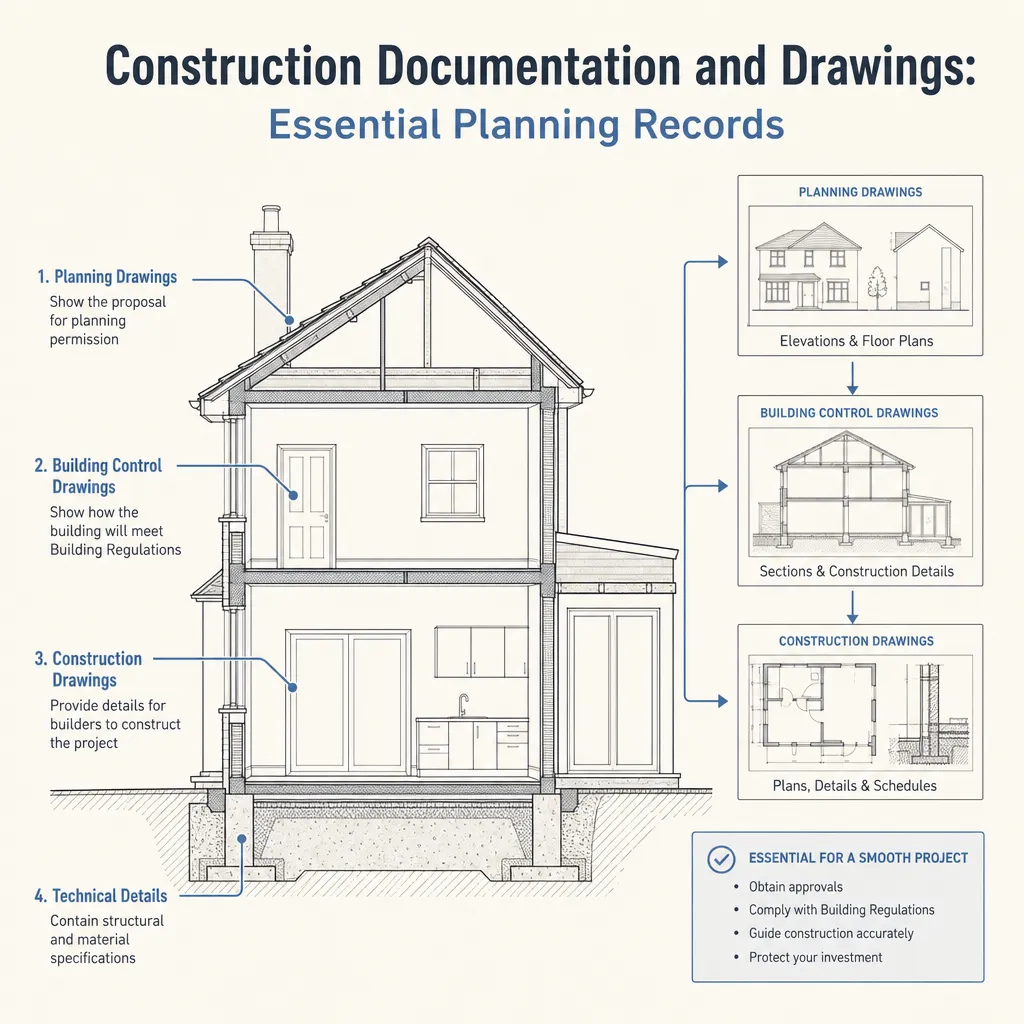
Construction Documentation and Drawings: Essential Planning Records
Construction documentation covers all drawings, specifications, and records needed to design, build, and inspect a project.
 Planning & Pre-Build
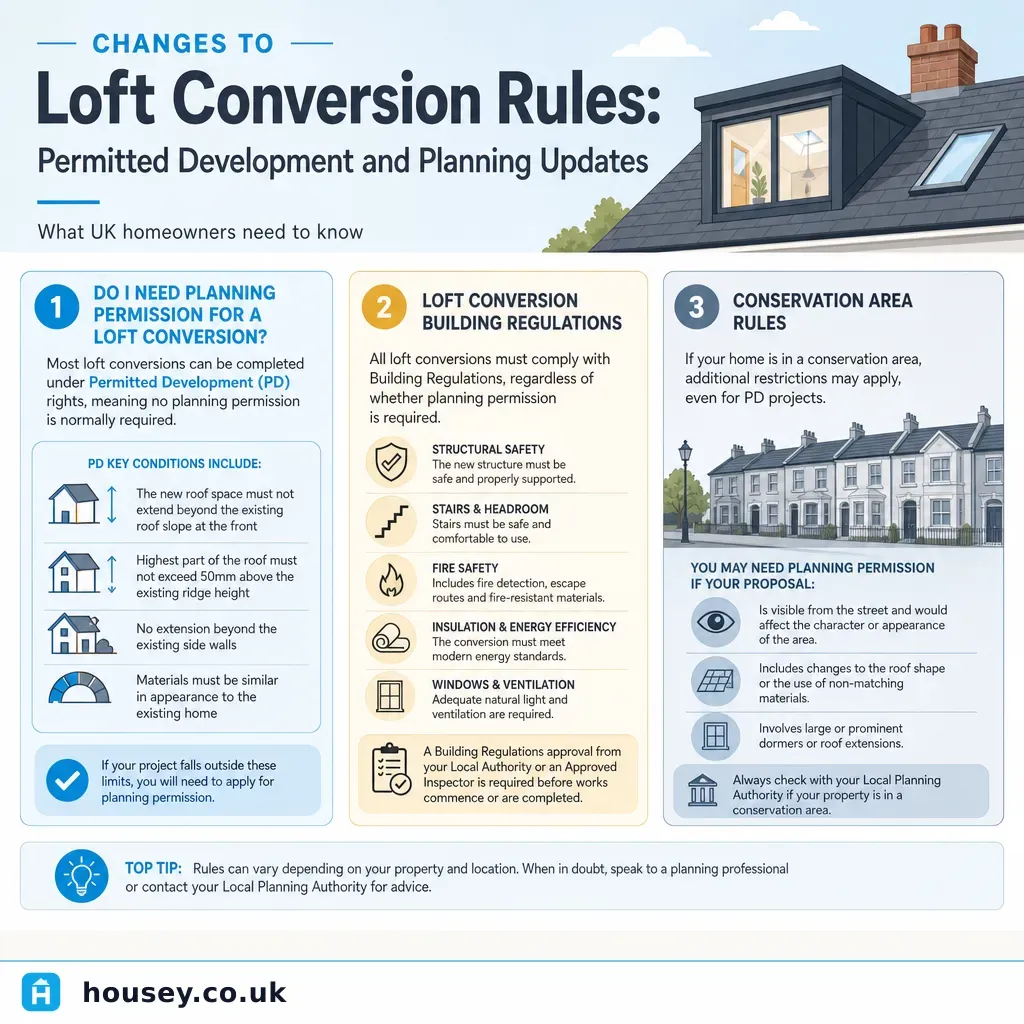
Changes to Loft Conversion Rules: Permitted Development and Planning Updates
In England, most loft conversions on standard houses qualify as Permitted Development under Class B of the GPDO 2015, allowing up to 40 cubic metres (terraced) or 50 cubic metres (detached or semi-detached) without a planning application — if conditions are met.
 Planning & Pre-Build
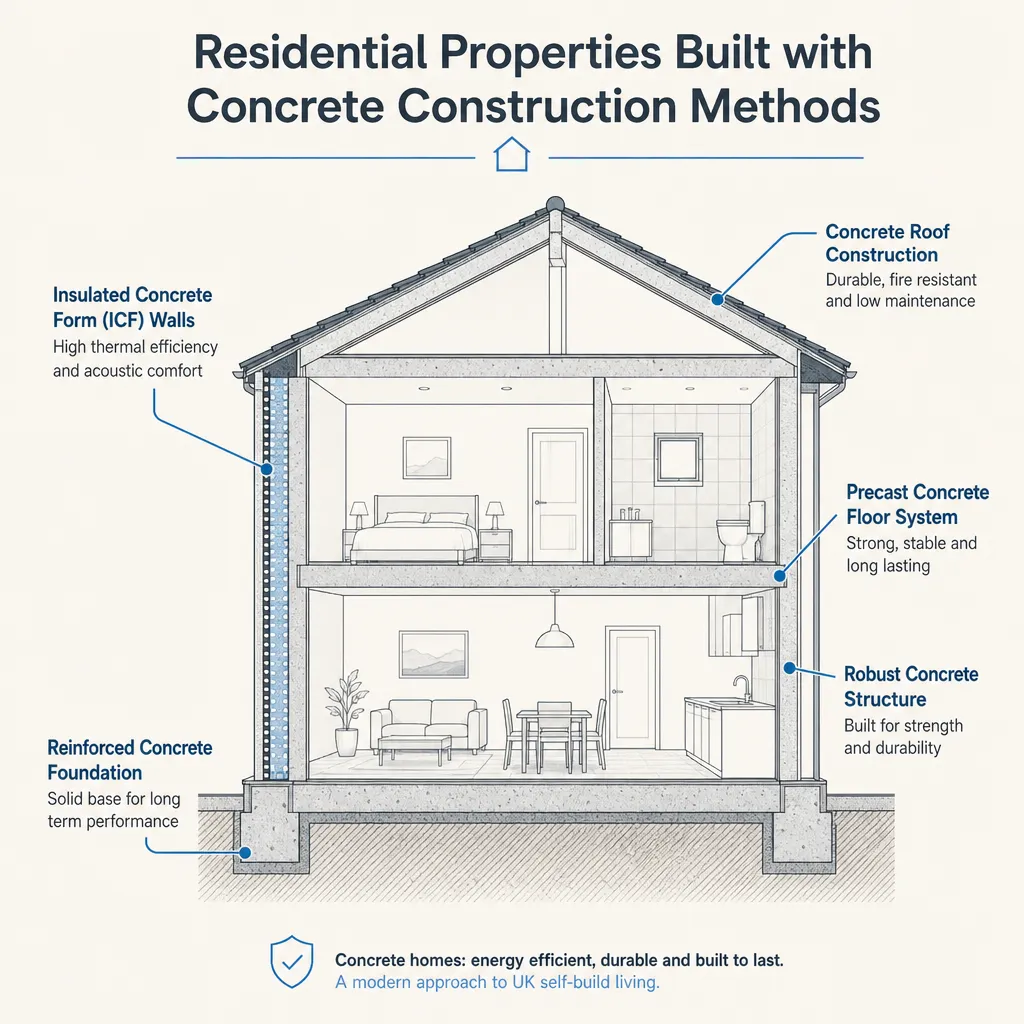
Residential Properties Built with Concrete Construction Methods
UK homes are built using several concrete methods: in-situ cast concrete, precast panel systems, insulating concrete formwork (ICF), and older non-traditional types such as Wimpey No-Fines and Laing Easiform.
 Planning & Pre-Build
Wall Cavities: Design Principles vs. Construction Reality
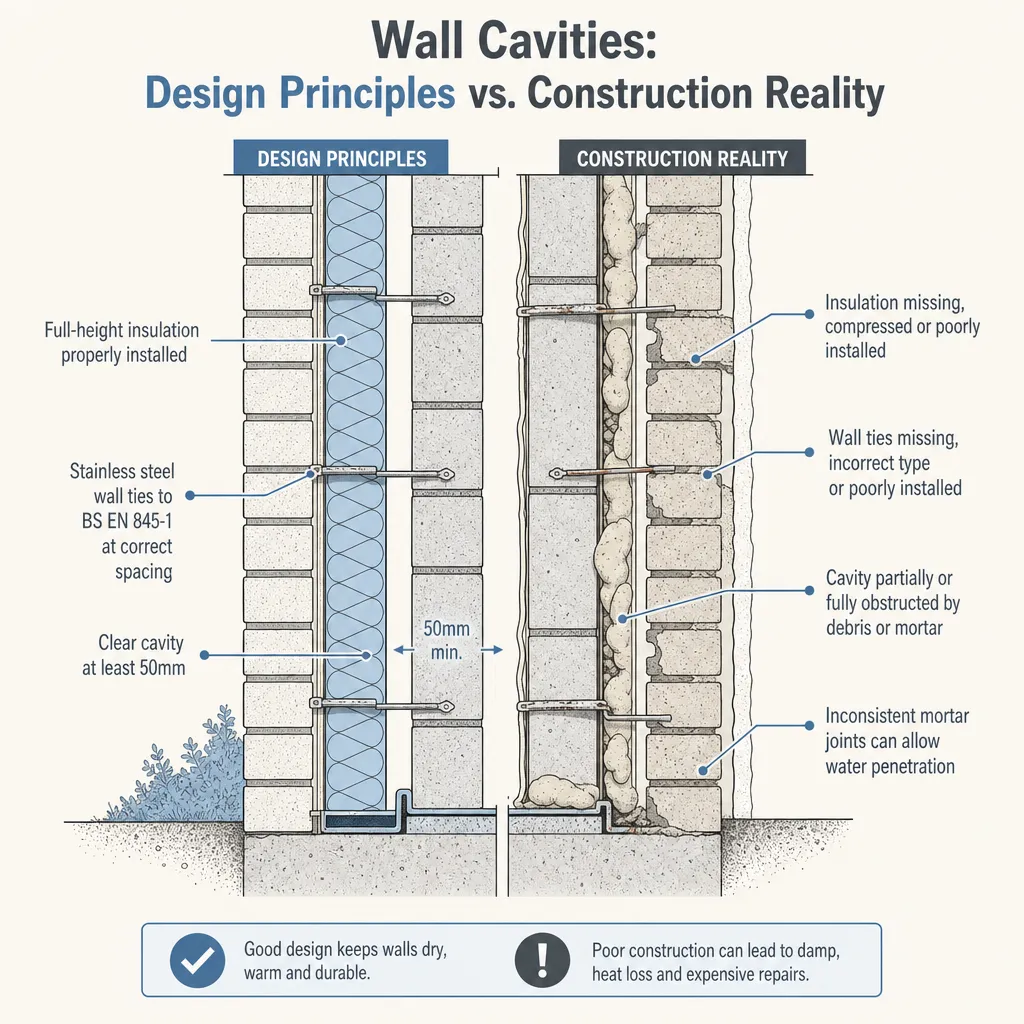
A UK cavity wall is designed to resist weather, control heat loss, and structurally link two masonry leaves.
 Planning & Pre-Build
Home Improvements Not Requiring Planning Permission
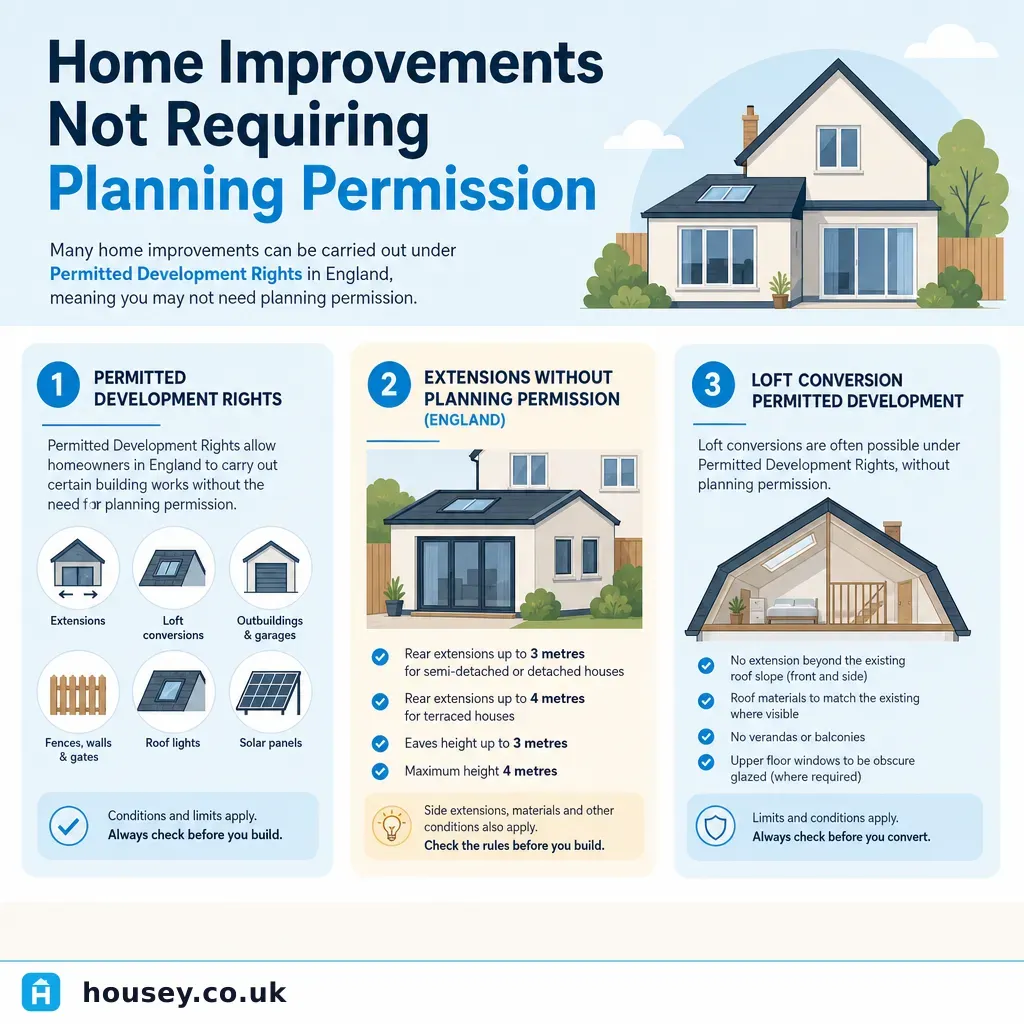
Many common home improvements in England fall under Permitted Development Rights and do not require a planning application.