Construction Documentation and Drawings: Essential Planning Records
By Housey · Last reviewed 26th of May 2026
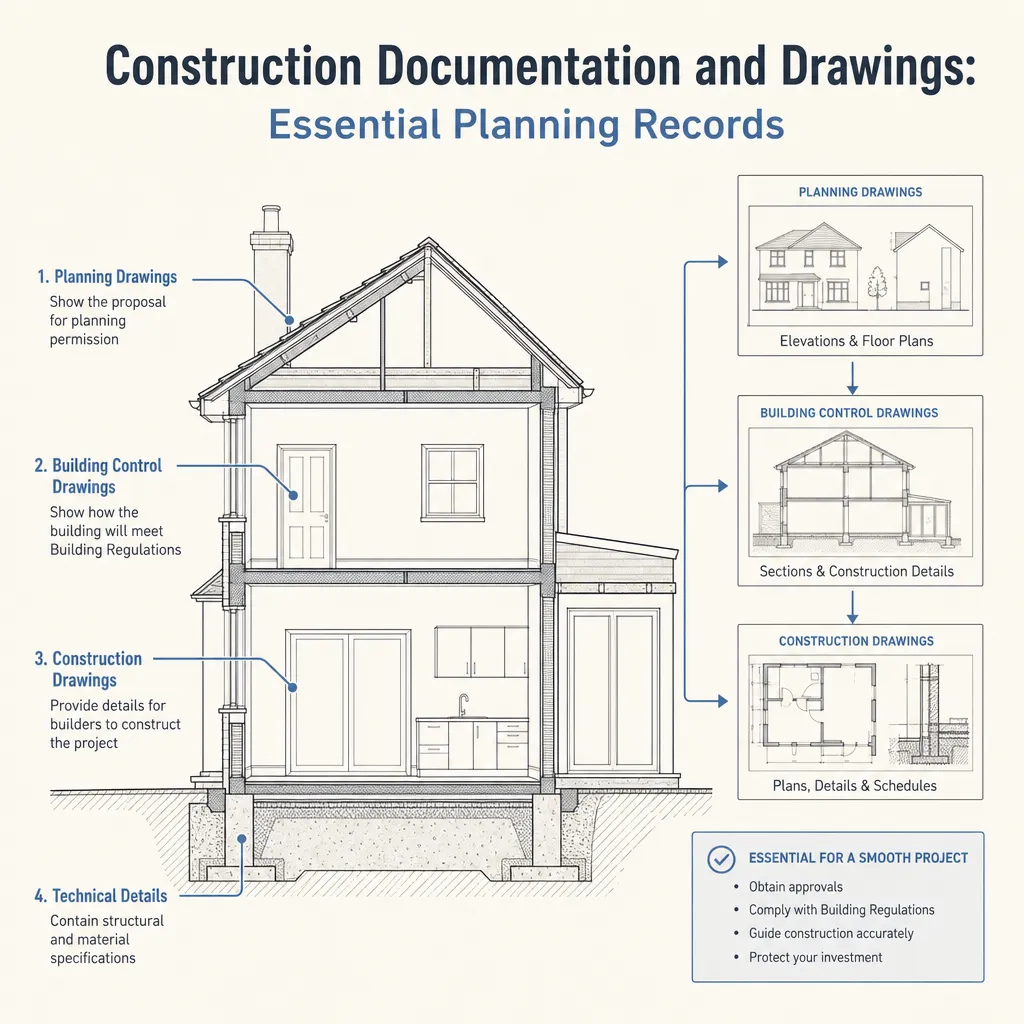
Construction Documentation and Drawings: Essential Planning Records
Construction documentation shapes every stage of a building project in the UK — from the first sketch submitted to the local planning authority through to the records handed over once work is complete. Whether you are extending a Victorian terrace, converting a loft, or carrying out a new build, the paperwork trail directly determines whether your project is approved, built correctly, and legally defensible in the future. Many homeowners discover too late that drawings prepared for planning permission are not the same as those required for building control, and that neither set captures what was actually built.
Key points
- Planning applications typically require a location plan at 1:1250 or 1:2500 and floor plans and elevations at 1:50 or 1:100 scale; exact requirements vary by local planning authority.
- Building Regulations drawings are legally separate from planning drawings and must demonstrate compliance with the relevant Approved Documents (A–S), not simply show what is proposed.
- Structural calculations for any load-bearing alteration must be prepared or reviewed by a chartered structural engineer and submitted to building control.
- RIBA Plan of Work 2020 defines eight project stages (0 Strategic Definition to 7 Use); documentation requirements from your designer change significantly at each stage.
- As-built drawings record what was actually constructed and are essential for future works, mortgage lending, and property sale; many homeowners never commission them and later face complications.
What construction drawings are — and why they matter
Construction drawings are scaled, dimensioned technical illustrations that describe a building or alteration well enough for it to be built, inspected, and assessed. For UK homeowners, they serve three distinct purposes: securing planning permission, satisfying building control, and recording what has been built.
These purposes are not interchangeable. A planning drawing shows the external appearance and massing of a proposal so the local planning authority can assess its impact on the street scene. A building control drawing shows structural, thermal, drainage, and fire safety details so an inspector can verify compliance with Building Regulations. An as-built drawing records any variations from the approved scheme that occurred during construction.
Confusing these purposes is one of the most common and costly mistakes on residential projects. A homeowner who commissions only planning drawings and then tries to use them for building control will typically find that significant additional design work is required.
Types of construction drawings and their uses
The table below summarises the main drawing types encountered on typical UK residential projects.
Drawing type | Typical scale | Submitted to | What it must show |
|---|---|---|---|
Location plan | 1:1250 or 1:2500 | Local planning authority | Site boundary in relation to surrounding streets (red line) |
Site plan | 1:500 | Local planning authority | Proposed works in context of the plot |
Floor plans and elevations | 1:50 or 1:100 | Local planning authority and building control | Layout, room sizes, openings, external finishes |
Section drawings | 1:50 or 1:20 | Building control | Internal construction, floor-to-ceiling heights, insulation layers |
Detail drawings | 1:10 or 1:5 | Building control | Junctions, fixings, thermal bridges, weathering details |
Structural drawings | 1:50 or 1:20 | Building control | Beam sizes, bearing lengths, padstones, foundations |
As-built drawings | Varies | Retained by homeowner | Final constructed dimensions and materials, any approved variations |
For larger or more complex projects, additional drawings such as drainage layouts, mechanical and electrical schematics, and landscape plans may be required by planning condition or by the building control officer.
Building Regulations drawings: what they must address
Building Regulations drawings go well beyond showing the shape of an extension. They must demonstrate that the design complies with the relevant Approved Documents. The most commonly referenced on domestic projects include:
- Approved Document A (Structure): foundations, walls, beams, lintels, and roof construction.
- Approved Document B (Fire safety): escape routes, fire doors, separation of dwellings, and smoke detection.
- Approved Document C (Site preparation and moisture): damp-proof courses, subfloor ventilation, and cavity trays.
- Approved Document L (Conservation of fuel and power): U-values for walls, floors, roofs, and windows; thermal bridging; air permeability.
- Approved Document M (Access): door widths, step heights, and sanitary fittings where required.
From June 2023, domestic extensions must meet the updated Part L energy standards, which set more demanding U-value targets than the 2013 edition. Building control drawings submitted after this date must reflect these values in their specification notes.
Document-preparation list for a typical domestic extension
Use this list to track what is needed before submitting to planning and building control.
For a planning application:
For a building regulations application (full plans route):
For handover and future records:
How documentation standards differ by project type
Not all projects follow the same documentary path. The table below gives a quick-reference guide for common residential scenarios.
Project type | Planning drawings needed? | Building Regulations drawings needed? | Structural calculations needed? |
|---|---|---|---|
Single-storey rear extension (permitted development) | Usually not, but may need a Lawful Development Certificate | Yes | Often yes, for new foundations and lintels |
Loft conversion (no structural change to roof) | Usually not | Yes | Yes, for new floor structure and trimming |
New build on garden plot | Yes | Yes | Yes, full structural package |
Garage conversion | Usually not | Yes | Yes, if a structural wall is removed |
Internal remodel (no structural works) | No | Limited — notifiable if removing walls | Only if walls are load-bearing |
"Usually not" reflects typical permitted development rights, but these can be removed by Article 4 Directions, prior conditions, or the property being in a conservation area. Check with your local planning authority before assuming permitted development applies.
When to get professional help
Construction documentation is technical work, and errors can lead to planning refusal, building control rejection, or — more seriously — structural problems discovered during or after construction.
Seek professional help when:
- You are unsure whether your project needs planning permission or building control approval.
- The project involves any structural alteration (removing walls, new openings, underpinning, roof changes).
- The property is listed or in a conservation area.
- Your building control officer has queried or rejected the drawings.
- You have completed works and cannot locate original drawings or the completion certificate.
- You are selling and a buyer's solicitor has raised a query about undocumented works.
How Housey can help
Housey connects UK homeowners with qualified professionals who can prepare the full documentation package for residential projects. Whether you need building regulations drawings prepared to building control standard, a building control consultant to manage the approvals process, or an experienced project manager to coordinate documentation across all trades and disciplines, Housey can help you find the right specialist.
Frequently asked questions
Do I need an architect to produce construction drawings in the UK?
Not necessarily. Architectural technicians (MCIAT) and chartered architectural technologists are qualified to produce planning and building control drawings for most domestic projects. Architects (ARB-registered) are required for complex or listed-building projects in some circumstances. What matters most is that whoever prepares the drawings holds appropriate professional indemnity insurance and has relevant experience with the approval body.
What is the difference between a full plans application and a building notice?
A full plans application involves submitting detailed drawings to building control before work starts, with approval granted in advance. A building notice allows work to start sooner without pre-approved drawings, but the risk of non-compliance rests with the owner. A full plans route is generally recommended for anything beyond minor works, as it provides greater certainty and a clearer paper trail.
How long do I need to keep construction drawings?
There is no statutory retention period for residential construction drawings, but retaining them indefinitely is strongly advisable. Lenders, solicitors, and future buyers routinely request them, and they are needed for any subsequent application or alteration affecting the same structure. Original planning and building control records can be difficult to reconstruct once lost.
Can I get retrospective building control approval for completed work?
Yes, in some circumstances. You can apply for a regularisation certificate for completed works that did not receive building control sign-off. A building control officer will inspect the works and may require opening up to verify compliance. Regularisation is not available in all cases, and some local authorities impose time limits on applications.
Sources and further reading
- Planning Portal — application forms and guidance — Planning Portal
- Building Regulations Approved Documents — GOV.UK
- RIBA Plan of Work 2020 — Royal Institute of British Architects
- CIAT — Chartered Institute of Architectural Technologists — CIAT
- HM Land Registry practice guides — HM Land Registry
Useful next reads
 Planning & Pre-Build
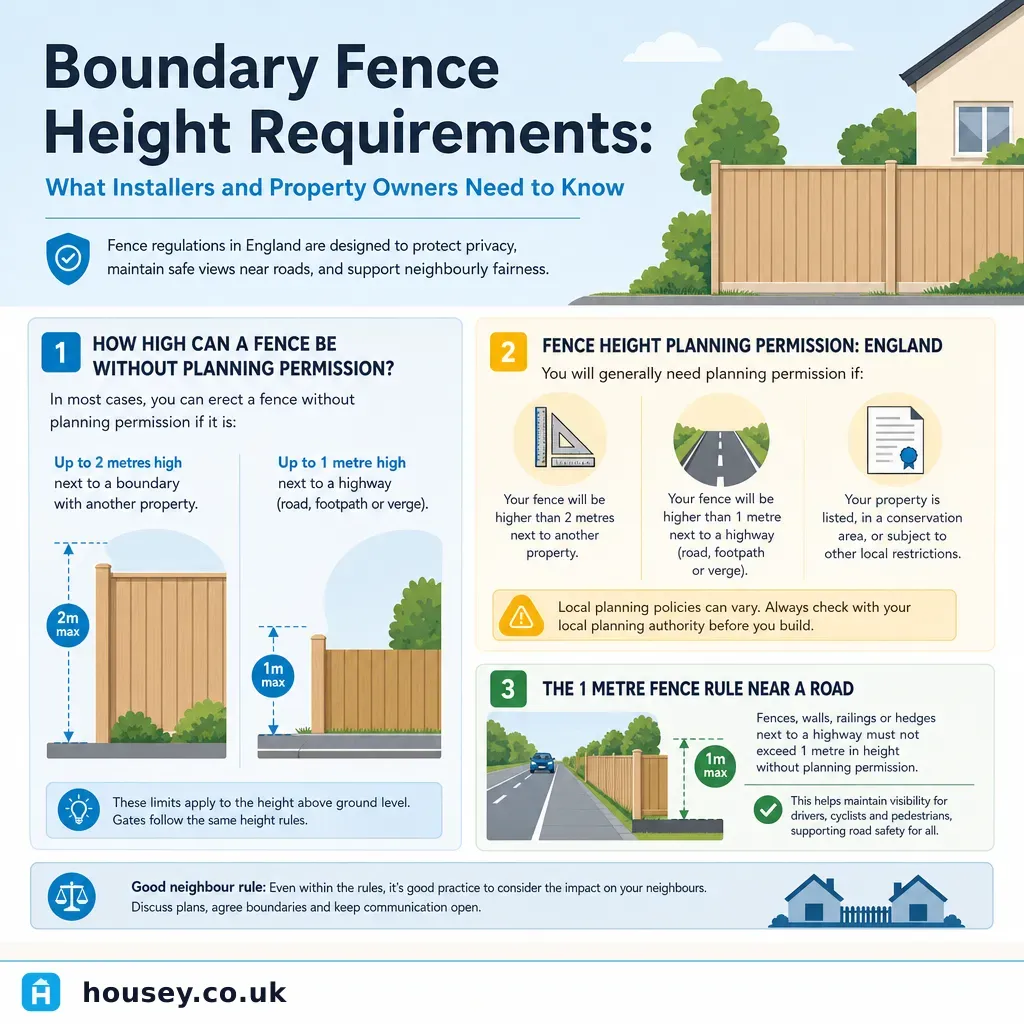
Boundary Fence Height Requirements: What Installers and Property Owners Need to Know
In England, a fence can be up to 2 metres high without planning permission, reducing to 1 metre when adjacent to a highway used by vehicles.
 Planning & Pre-Build
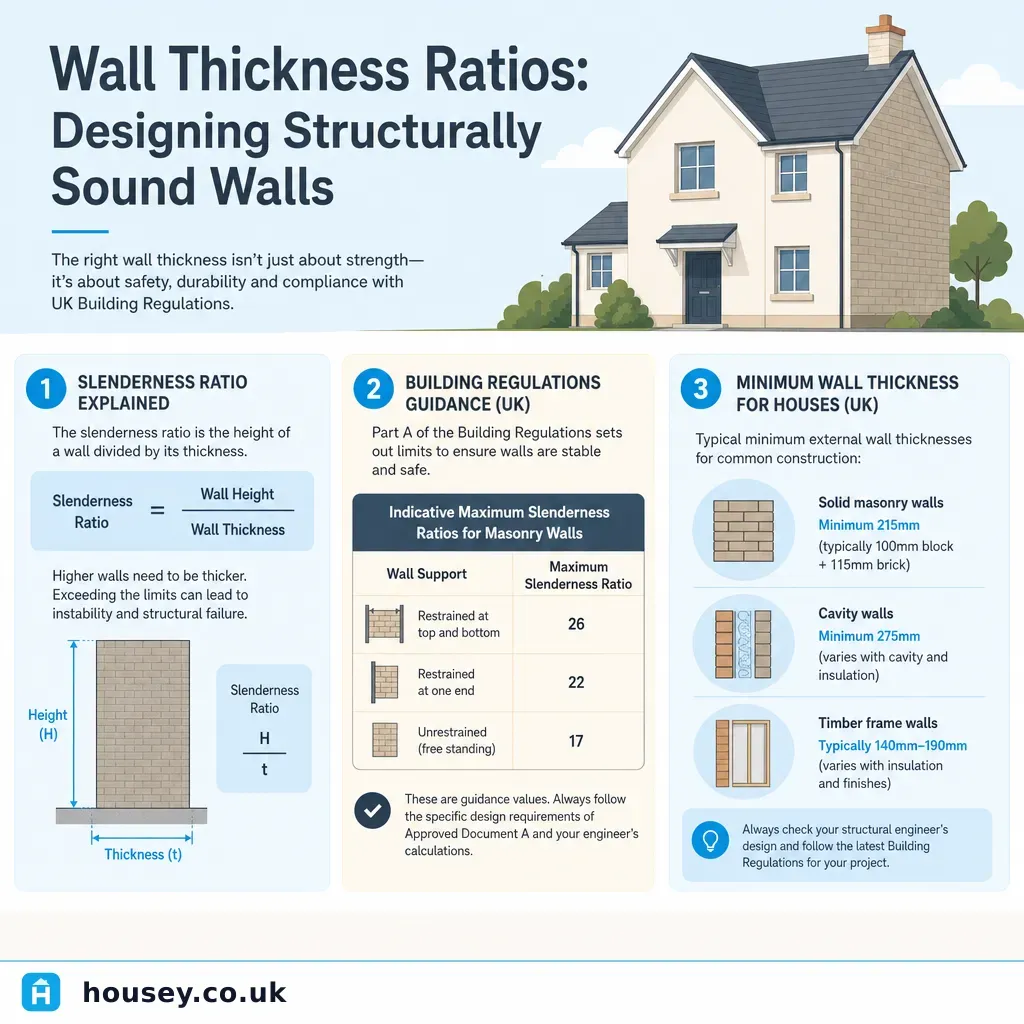
Wall Thickness Ratios: Designing Structurally Sound Walls
Wall thickness ratios — particularly the slenderness ratio (effective height divided by effective thickness) — determine whether a wall can safely carry load without buckling.
 Planning & Pre-Build
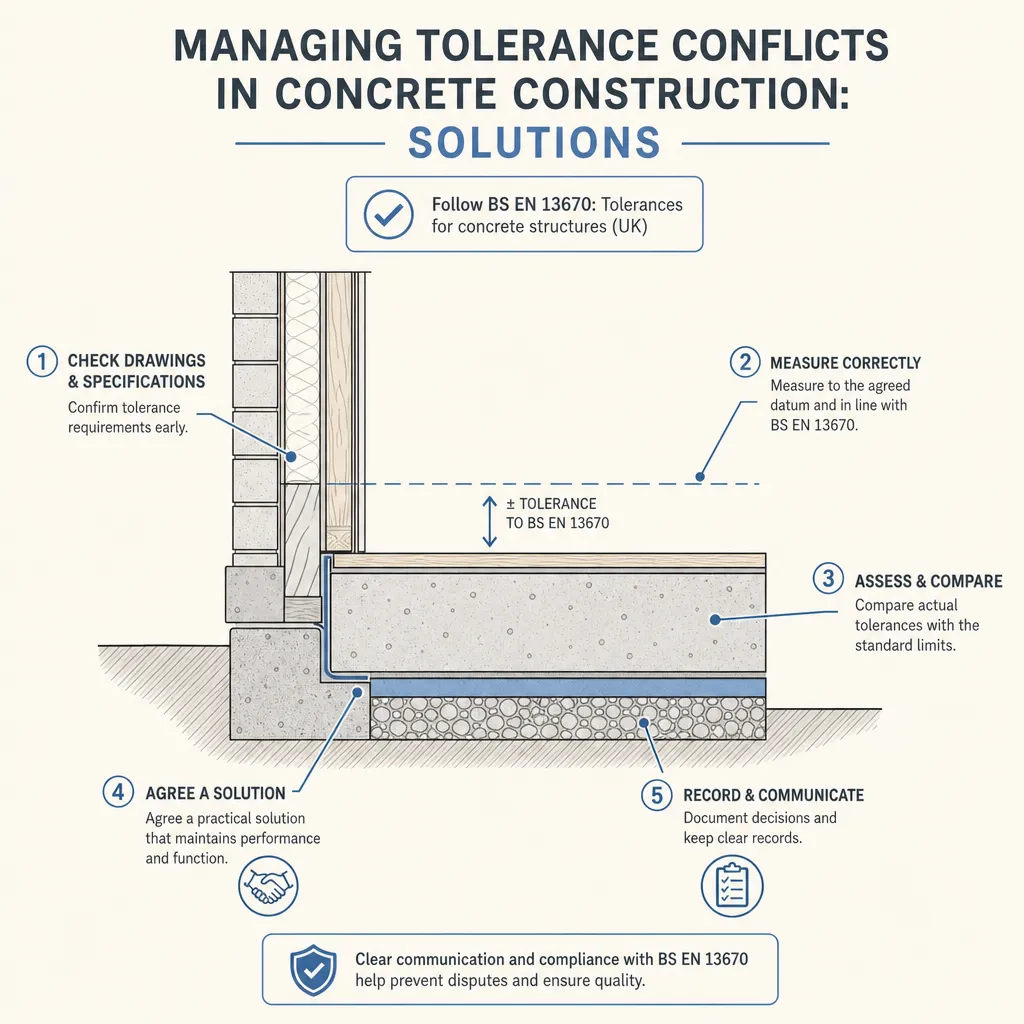
Managing Tolerance Conflicts in Concrete Construction: Solutions
Tolerance conflicts in concrete construction arise when poured elements fall outside the permitted deviations set in the project specification or in BS EN 13670:2009.
 Planning & Pre-Build
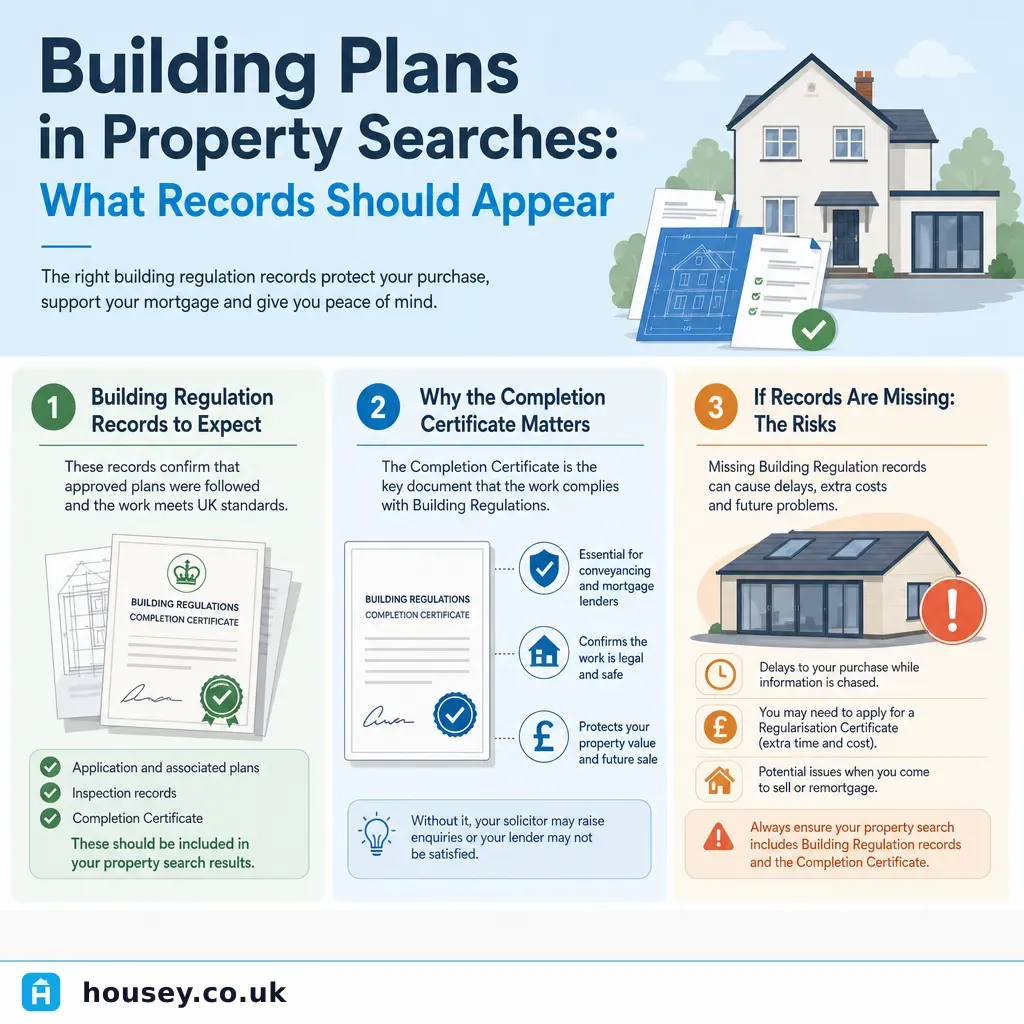
Building Plans in Property Searches: What Records Should Appear
UK property searches don't automatically include full building plans, but conveyancing searches and seller enquiries can reveal whether building regulations approval was granted and completion certificates issued.
 Planning & Pre-Build
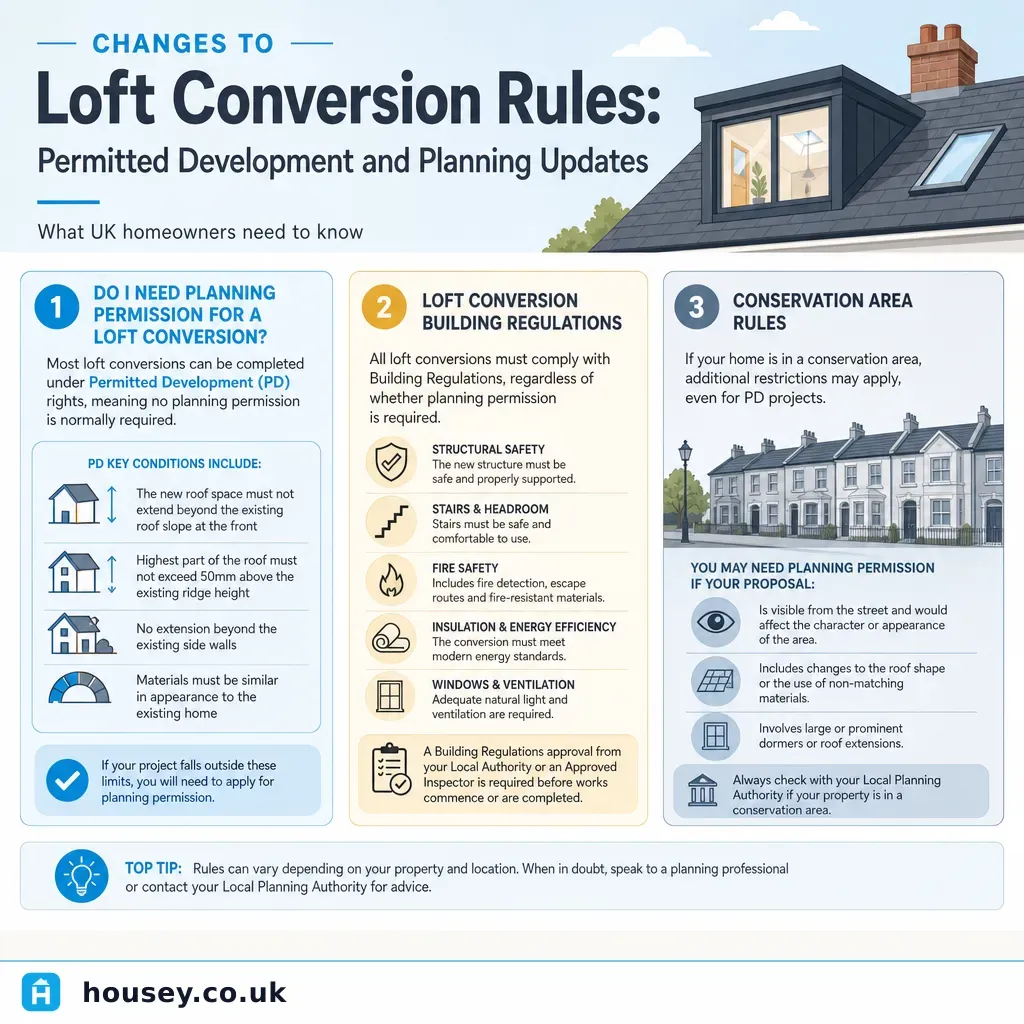
Changes to Loft Conversion Rules: Permitted Development and Planning Updates
In England, most loft conversions on standard houses qualify as Permitted Development under Class B of the GPDO 2015, allowing up to 40 cubic metres (terraced) or 50 cubic metres (detached or semi-detached) without a planning application — if conditions are met.