Understanding the Building Product Supply Chain and Distribution Landscape
By Housey · Last reviewed 30th of May 2026
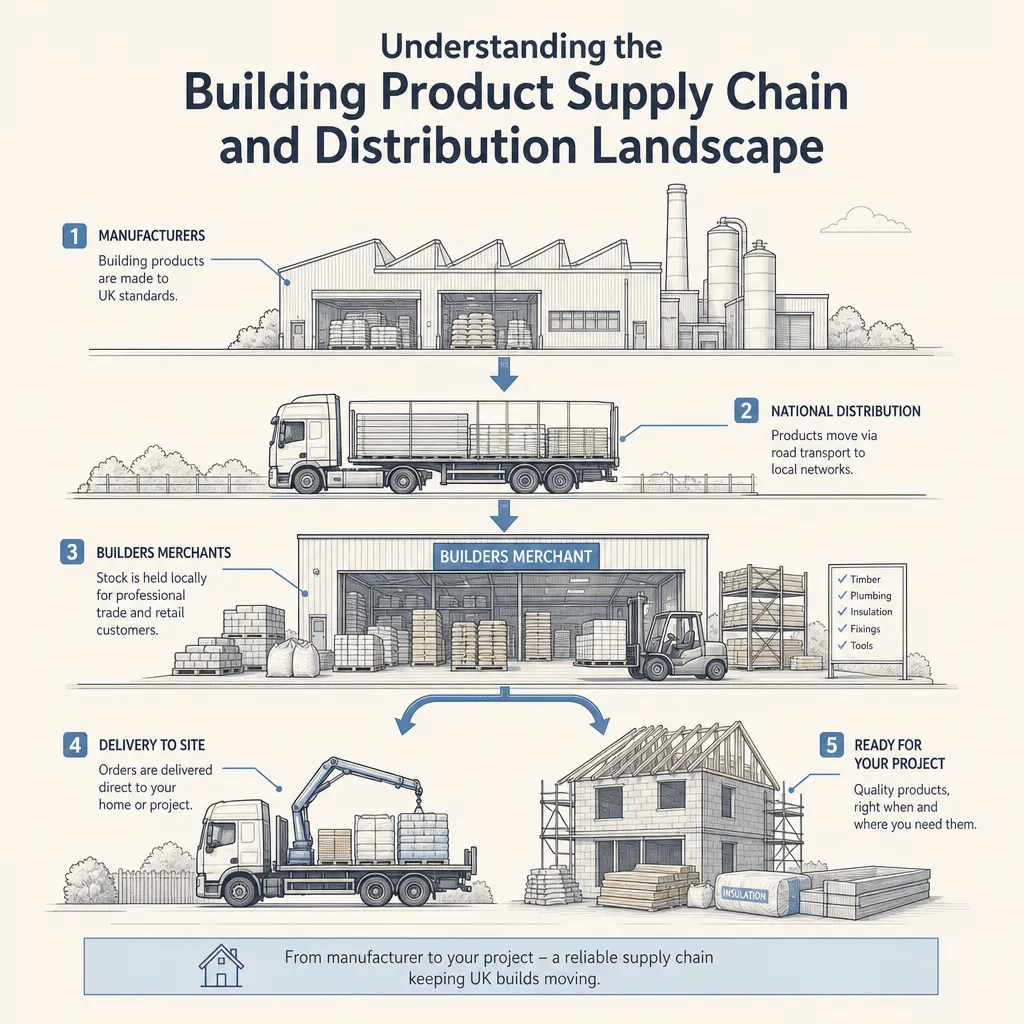
Understanding the Building Product Supply Chain and Distribution Landscape
The journey a building product takes from factory to your building site involves several distinct commercial layers — and understanding them matters when you are planning a significant home improvement project. Supply chain disruptions, discontinued product lines, and long lead times on specialist items can all affect project timelines and costs. Whether you are overseeing an extension or working with a design-and-build firm, knowing how the distribution system operates helps you anticipate problems before they affect your programme.
Key points
- The UK building materials distribution system has three main commercial tiers: manufacturer → distributor or wholesaler → builder's merchant → contractor or homeowner.
- The Builders Merchants Federation (BMF) represents the principal trade association for the UK's builders' merchant sector, which ranges from national chains such as Travis Perkins, Jewson, and Buildbase to independent specialist suppliers.
- Architects and designers sit at the specification stage: the product described in drawings may differ from what a contractor ultimately procures, particularly where substitutions are agreed during procurement.
- UK construction relies on both domestically manufactured and imported products; import dependency is highest for specialist materials such as aluminium window systems, some insulation products, and engineered timber.
- Direct supply agreements between large contractors and manufacturers bypass the merchant tier for high-volume or project-specific orders; this route is rarely available at residential project scale.
How building products move from factory to site
The UK supply chain for construction products generally operates across three commercial tiers:
Tier 1 — Manufacturers and producers: These include large UK-based manufacturers (British Gypsum for plasterboard, Ibstock for bricks, Pilkington for glass) alongside overseas producers supplying through UK distribution agreements. Some manufacturers sell directly to large contractors; most channel product through distributors or direct to merchants.
Tier 2 — Distributors and wholesalers: These businesses hold stock from multiple manufacturers and supply builders' merchants or specialist trade contractors. This tier is most visible in sectors such as plumbing and heating (where distributors including Wolseley operate), electrical materials, and insulation products.
Tier 3 — Builders' merchants: The principal access point for most UK contractors and self-builders. Merchants range from national trade chains to local independents and specialist suppliers (roofing merchants, timber merchants, glazing distributors). The Builders Merchants Federation member network covers thousands of merchant branches across the UK.
Homeowners rarely buy directly from Tier 1 or Tier 2, unless purchasing from a supplier's trade counter or using a large online building materials platform. Most residential project materials are procured by the contractor or builder on your behalf.
Which supply route suits which project type?
The channel a contractor uses affects price, lead time, and product availability.
Supply route | Typical use | Typical lead time | Homeowner access |
|---|---|---|---|
National merchant chain | Standard products: bricks, timber, plasterboard, cement | 24–48 hrs for stocked items | Trade discount requires account; public can usually buy |
Specialist distributor | Sector-specific: insulation, HVAC, glazing systems | 2–10 working days typically | Generally trade-only |
Direct from manufacturer | Large-volume or bespoke project orders | Weeks; depends on production schedule | Rarely available at residential scale |
Online building materials platforms | Standard materials delivered to site | 1–5 working days typically | Open to public and trade |
Architectural salvage and reclamation | Period properties, matching existing materials | Dependent on stock availability | Open to public |
How products are specified — and what can change
On projects designed by an architect or designer, materials are typically described in a schedule of materials or specification document, identifying a product by manufacturer, product code, and performance standard — for example, triple-glazed uPVC window units meeting the thermal requirements of Part L of the Building Regulations.
In practice, contractors sometimes propose substitutions — equivalent products from a different brand — often because the specified product is on long lead time, discontinued, or not stocked locally. How substitutions are handled should be set out in your building contract:
- Substitutions should be approved in writing by the designer or contract administrator before the contractor proceeds.
- Performance-equivalent substitutions are usually acceptable; visual or aesthetic substitutions — for example, a different brick colour or texture — may not be.
- Product discontinuation is an increasing risk for longer renovation programmes. Confirm with your contractor at tender stage whether specified items are current and available.
Lead times, imports, and what causes delays
Several factors can extend lead times beyond the standard 24–48 hours for stock items:
- Custom or bespoke fabrication: Made-to-measure items such as bespoke windows, architectural metalwork, and specialist joinery often carry 4–16 week lead times depending on manufacturers' order books.
- Import-dependent products: Products manufactured outside the UK may be subject to shipping delays and currency-driven price changes, particularly where sterling moves against supplier currencies.
- Supply chain events: Raw material shortages, port congestion, or production disruption can affect availability at short notice — as demonstrated by the UK plasterboard shortages of 2021–22.
- Seasonal demand peaks: Roofing and external products often see increased demand in spring, which can strain merchant stock levels.
Your contractor should be monitoring lead times from the procurement stage onward. If your project includes products with long lead times, early ordering — sometimes before groundworks are complete — may be advisable.
Homeowner checklist: before materials are ordered
Before your contractor places orders, confirm the following:
When to get professional help
The supply chain is managed by your contractor day to day, but you should seek professional guidance if:
- Your project involves heritage or listed building materials requiring like-for-like matching under planning conditions.
- Significant delays or product substitutions have arisen mid-project and you are uncertain about your contractual position.
- You are acting as your own project manager and need to procure materials independently — a quantity surveyor can advise on procurement strategy and risk.
- Material cost increases are significantly affecting your budget — a contract administrator can advise on how to manage and document variations.
How Housey can help
If you are planning a home extension or significant renovation, Housey connects you with vetted extension builders and design-and-build firms who manage material procurement as part of their service — including navigating supply chain lead times and handling specification substitutions on your behalf.
Frequently asked questions
Can I buy building materials directly from merchants as a homeowner?
Yes — most builders' merchants in the UK will sell to members of the public, though trade account holders typically receive better pricing. Some specialist distributors deal only with trade customers. Buying materials yourself while a contractor provides labour-only services can work, but it also means you take on procurement risk, including ordering errors and lead time management.
Who is responsible if specified materials become unavailable mid-project?
This depends on your building contract. Under most standard forms, if a specified product becomes genuinely unavailable, the contractor may propose a substitution, which should be agreed in writing with the contract administrator or architect. Costs arising from the substitution are a contract-specific matter. Always use a written contract for any project above a few thousand pounds.
What caused the UK plasterboard shortage?
The 2021–22 plasterboard shortage resulted from several concurrent factors: a fire at a UK gypsum mine supplying raw material to British Gypsum, pandemic-related surges in home renovation demand, and global supply chain disruption. It highlighted the concentration risk in UK plasterboard manufacturing, and contractors now more commonly pre-order critical materials earlier in the programme.
Sources and further reading
- Builders Merchants Federation (BMF) — BMF
- Construction Products Association — CPA
- VAT Notice 708: buildings and construction — GOV.UK / HMRC
- Construction: health and safety — Health and Safety Executive
Useful next reads
 Improvement & Build
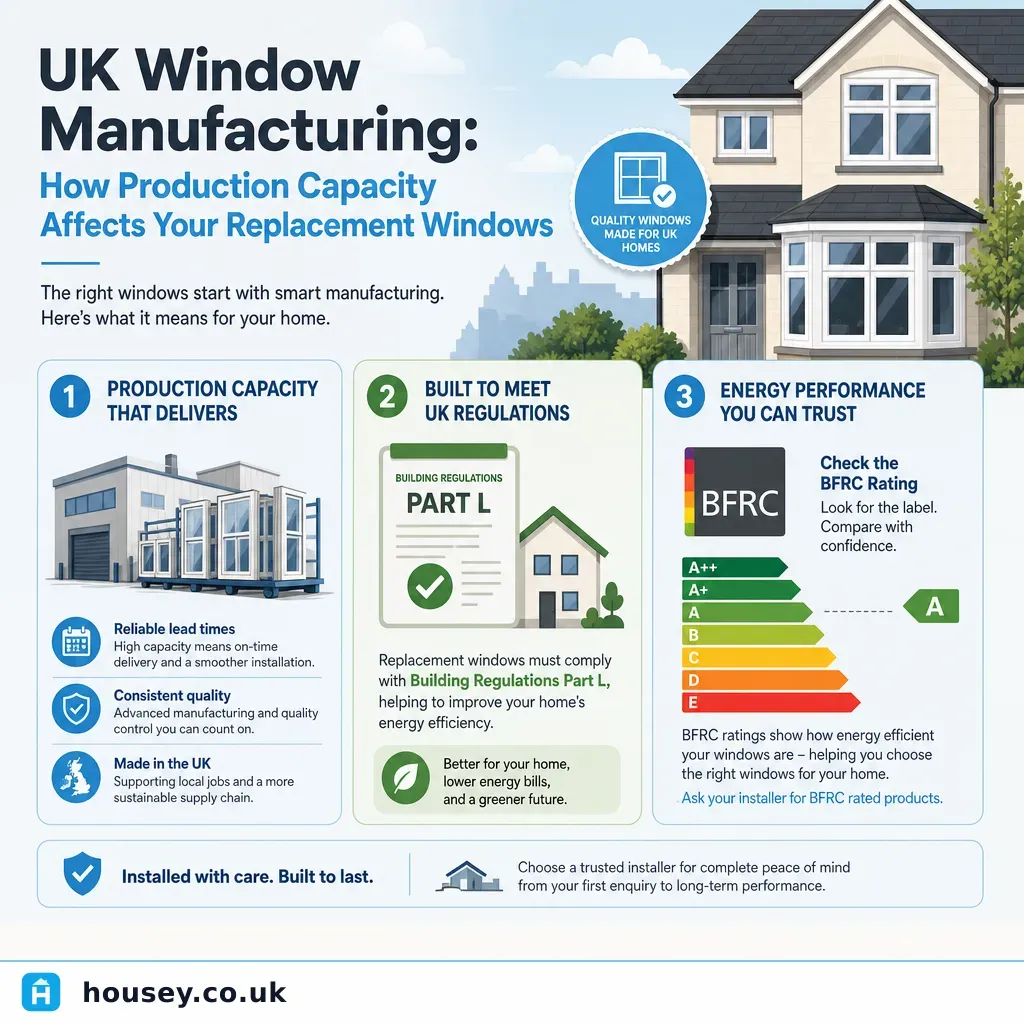
UK Window Manufacturing: How Production Capacity Affects Your Replacement Windows
UK replacement windows must meet Building Regulations Part L with a whole-window U-value of 1.
 Improvement & Build
Why UK Builders Are Specifying Engineered Building Products
UK builders increasingly specify engineered building products — I-joists, LVL beams, metal web joists, and aircrete blocks — because they offer consistent dimensions, predictable structural performance, and compliance documentation that supports Building Regulations sign-off.
 Improvement & Build
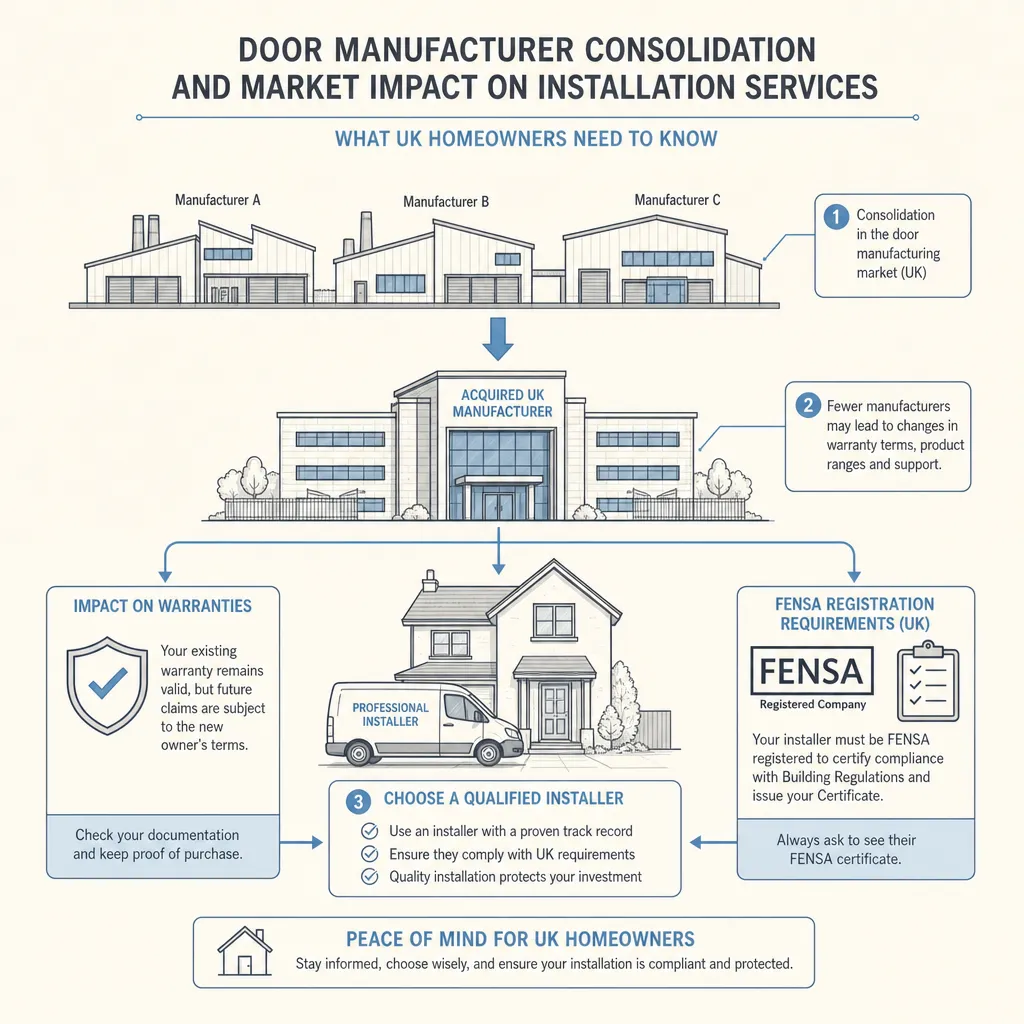
Door Manufacturer Consolidation and Market Impact on Installation Services
When door and window manufacturers merge or are acquired, the immediate impact for homeowners is often seen in product range changes, revised lead times, and updated installer training requirements.
 Improvement & Build
Window and Door Supply Chain Changes: What UK Homeowners Need to Know
Supply chain leadership changes in the window and door sector can affect lead times, spare parts availability, and warranty enforceability.
 Improvement & Build
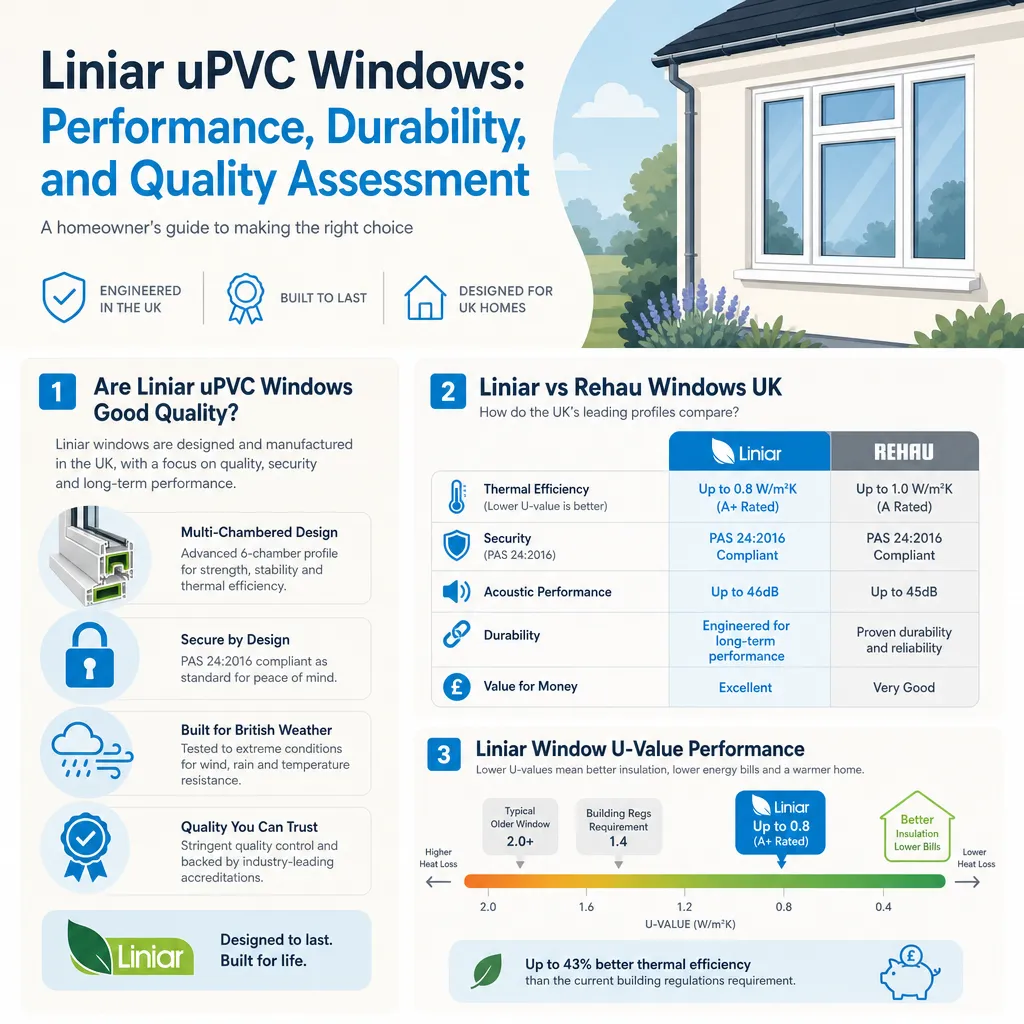
Liniar uPVC Windows: Performance, Durability, and Quality Assessment
Liniar uPVC window profiles are manufactured in the UK using multi-chambered, foamed frames.