Door Manufacturer Consolidation and Market Impact on Installation Services
By Housey · Last reviewed 30th of May 2026
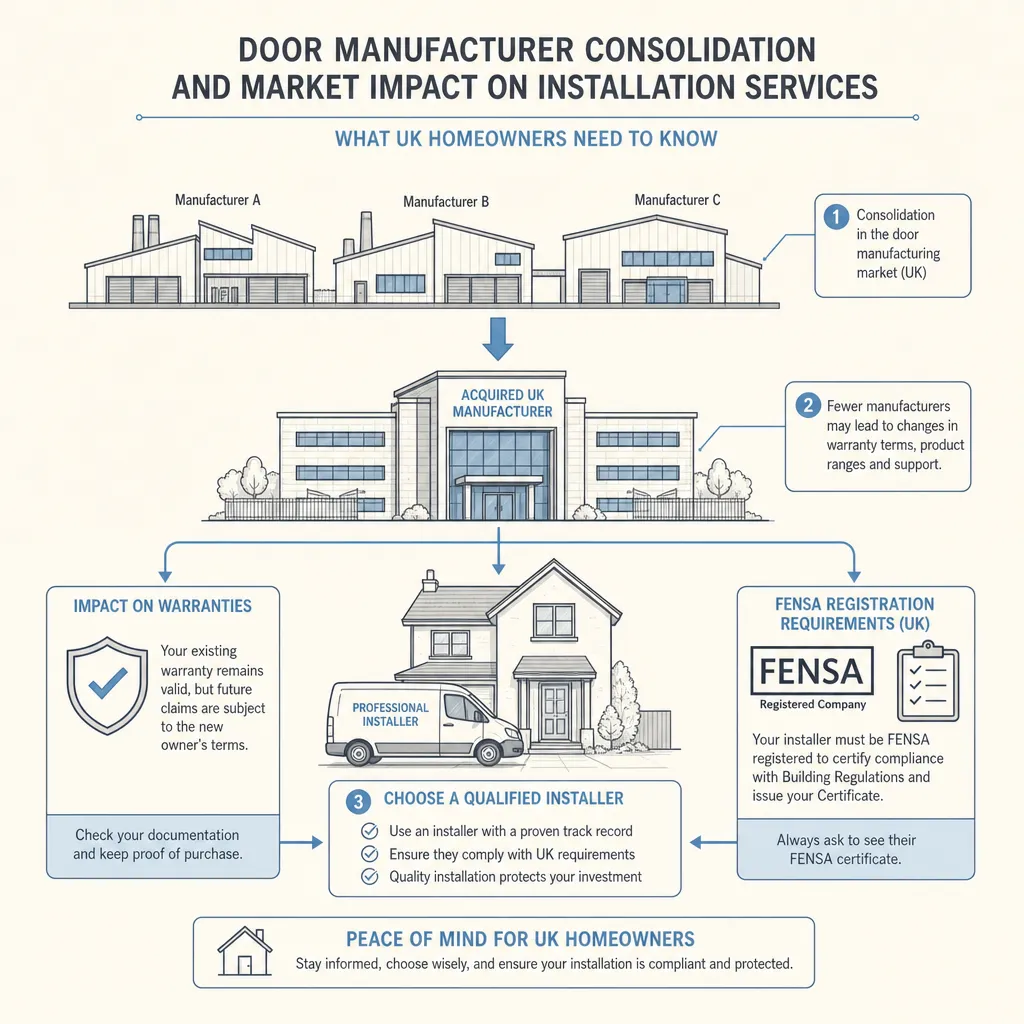
Door Manufacturer Consolidation and Market Impact on Installation Services
The UK window and door installation sector has seen ownership changes among profile manufacturers, hardware suppliers, fabricators, and installation networks in recent years. For homeowners, these changes rarely surface as an immediate concern — but they can affect product availability, lead times, and the continuity of manufacturer warranties when commissioning new windows or doors. Understanding what to check during the specification and quoting process helps you protect your investment regardless of what is happening upstream in the supply chain.
Key points
- FENSA (Fenestration Self-Assessment Scheme) is the primary competent person scheme for window and door installation in England and Wales; FENSA-registered installers can self-certify compliance with Building Regulations Part L without a separate building control application.
- Approved Document L1B sets minimum thermal performance thresholds for replacement windows and doors in England — check GOV.UK for current U-value requirements, as standards were updated following the 2021 revision.
- Manufacturer consolidation can trigger product rationalisation — some profiles, hardware lines, or colour options may be discontinued following an acquisition; confirm current availability before finalising a specification.
- Installer warranties are typically separate from manufacturer guarantees — the Glass and Glazing Federation (GGF) consumer deposit protection scheme covers financial failure of an installer, not product defects.
- CERTASS is an alternative competent person scheme to FENSA; both issue compliance certificates acceptable to building control in England and Wales.
What consolidation means in practice
The UK fenestration industry — the sector covering the manufacture and installation of windows and doors — is a large, fragmented market. At one end sit major PVC-U profile extrusion manufacturers supplying proprietary systems to thousands of independent fabricators and installers across the country. At the other sit vertically integrated groups that manufacture, fabricate, and install through owned or franchised networks.
Consolidation at the manufacturer or supplier level — when one profile or hardware group acquires another — typically flows through to the market in several ways.
Product rationalisation. After an acquisition, the acquiring group may discontinue overlapping product lines, alter colour options, or change hardware specifications. Homeowners with existing installations from the acquired brand may find it harder to source matching products for future extensions or partial replacements.
Supply chain changes for installers. Independent installers often source profiles and hardware from a small number of suppliers. A change of ownership at supplier level can trigger pricing reviews, altered credit terms, and retraining requirements — all of which may affect lead times and costs passed to homeowners, at least in the short term.
Warranty continuity. Warranties issued under an acquired brand should in principle transfer to the new owner, but in practice this depends on the terms of the acquisition and the purchasing company's policies. Always ask your installer to confirm the current warranty provider in writing before proceeding.
How consolidation affects your installation quote
Scenario | Likely homeowner impact | What to check |
|---|---|---|
Installer's primary supplier recently acquired | Possible price or lead time adjustment | Ask installer to confirm the profile system and current lead time |
Preferred product line discontinued | Need to specify a comparable alternative | Request a data sheet and sample; confirm U-values match your requirements |
Installer part of a national network post-acquisition | More standardised products; potentially less bespoke flexibility | Confirm hardware spec and colour options meet your requirements |
Independent local installer using multiple suppliers | Greater flexibility; possible variation in product quality | Check all products carry UKCA marking and meet Part L requirements |
Manufacturer warranty backed by GGF scheme | Consumer protection if installer fails financially | Ask for GGF deposit protection certificate at point of order |
All homeowner impacts are indicative; actual effects depend on the specific supply arrangement and installer relationship.
What not to assume
Several common misconceptions arise when homeowners encounter supply chain changes in the fenestration industry.
Do not assume FENSA registration means the product automatically meets current standards. FENSA registration means the installer is enrolled in the competent person scheme — it is still worth asking them to confirm that the specific products they are fitting meet current Part L U-value requirements, particularly if the specification has changed since your original quote.
Do not assume a warranty is non-transferable when you sell. Most installer and manufacturer warranties do transfer to subsequent owners, but the specific terms vary — some are linked to the original purchaser only. Check the warranty document before exchange.
Do not assume a discontinued product line means no replacement parts exist. Many profile manufacturers maintain tooling and supply spare parts for 10–15 years after a product line closes. Ask your installer to check parts availability before concluding that a full replacement unit is needed.
Do not assume a larger national group means better quality than an independent installer. Integrated groups can offer competitive products and pricing, but independent installers who are FENSA or CERTASS registered and who source from reputable manufacturers can match or exceed the quality of network installations.
Checklist: questions to ask before commissioning window or door installation
- Which profile system are you specifying, and who currently manufactures it?
- Can you confirm the product carries UKCA marking and meets current Part L U-value requirements?
- Are you FENSA or CERTASS registered, and will I receive a compliance certificate on completion?
- What warranty is provided — separately by the installer and by the manufacturer?
- Is the product backed by a GGF or equivalent consumer protection deposit scheme?
- What are the current lead times, and has supply been affected by any recent changes at the manufacturer?
- If I need additional units or repairs in the future, can you confirm this product line will remain available?
When to get professional help
Most window and door installation decisions are relatively low-risk, but some circumstances require additional input:
- Listed buildings and conservation areas: any window or door replacement may require planning permission or listed building consent. Consult your local planning authority before specifying any product — including UPVC in areas where planning conditions may restrict its use.
- New-build and extension projects: windows and doors form part of the thermal envelope and should be specified in conjunction with a building regulations application. Your architect or architectural technologist should review the thermal performance specification.
- Large or complex replacements involving non-standard sizes, structural openings, or bay windows: instruct a contractor with relevant experience and confirm whether a formal building control application is required alongside the FENSA self-certification route.
How Housey can help
Housey works with vetted window and door installers across the UK who are registered with FENSA or CERTASS. Submit your project details to compare quotes from qualified local installers without navigating supply chain uncertainties yourself.
Frequently asked questions
Does the profile manufacturer matter when choosing a window installer?
For most homeowners, the manufacturer matters less than the overall specification — the U-values, hardware quality, glazing type, and warranty terms are more relevant than brand ownership. The key checks are that products carry UKCA marking, meet current Building Regulations Part L requirements, and are supplied by a FENSA- or CERTASS-registered installer.
What happens to my window or door warranty if the manufacturer is acquired?
In most cases, warranties should transfer to the acquiring company. In practice, continuity depends on the terms of the acquisition and the new owner's policies. Ask your installer to confirm the current warranty provider in writing, and consider choosing a product backed by the GGF consumer deposit protection scheme for additional financial protection.
Is FENSA registration required by law?
FENSA registration is not a legal requirement, but using a FENSA-registered installer in England and Wales means they can self-certify compliance with Building Regulations Part L — avoiding the need for a separate building control application and fee. If you use a non-registered installer, you must submit a building regulations application yourself.
How do I verify that an installer is FENSA registered?
You can check FENSA registration directly on the FENSA website (fensa.org.uk) using the installer's name or registration number. CERTASS registration can be verified at certass.co.uk. Both directories are free and publicly accessible. Ask your installer for their registration number before accepting any quote — a legitimate registered installer will provide it without hesitation.
Sources and further reading
- FENSA — FENSA
- CERTASS — CERTASS
- Approved Document L1B: Conservation of Fuel and Power in Existing Dwellings — GOV.UK
- Glass and Glazing Federation consumer guidance — Glass and Glazing Federation
- UKCA marking guidance — GOV.UK
Useful next reads
 Improvement & Build
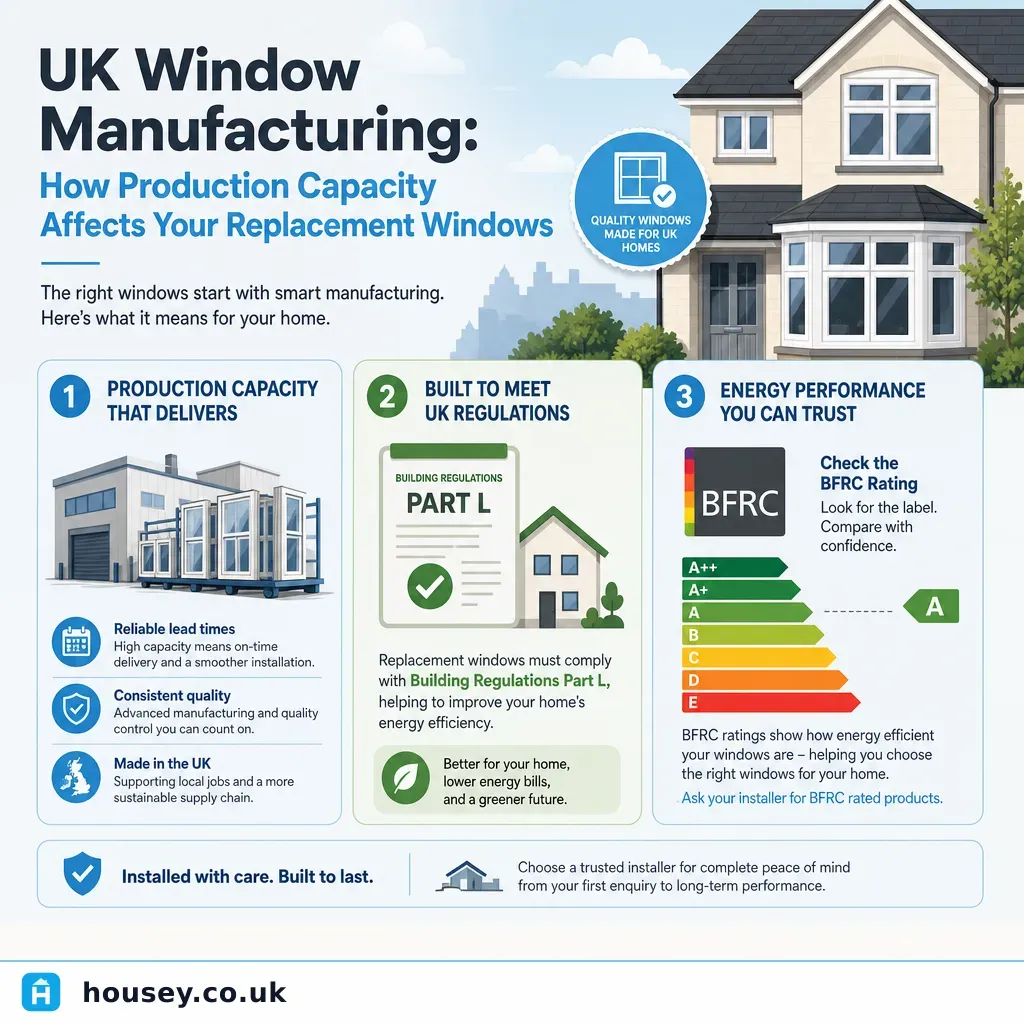
UK Window Manufacturing: How Production Capacity Affects Your Replacement Windows
UK replacement windows must meet Building Regulations Part L with a whole-window U-value of 1.
 Improvement & Build
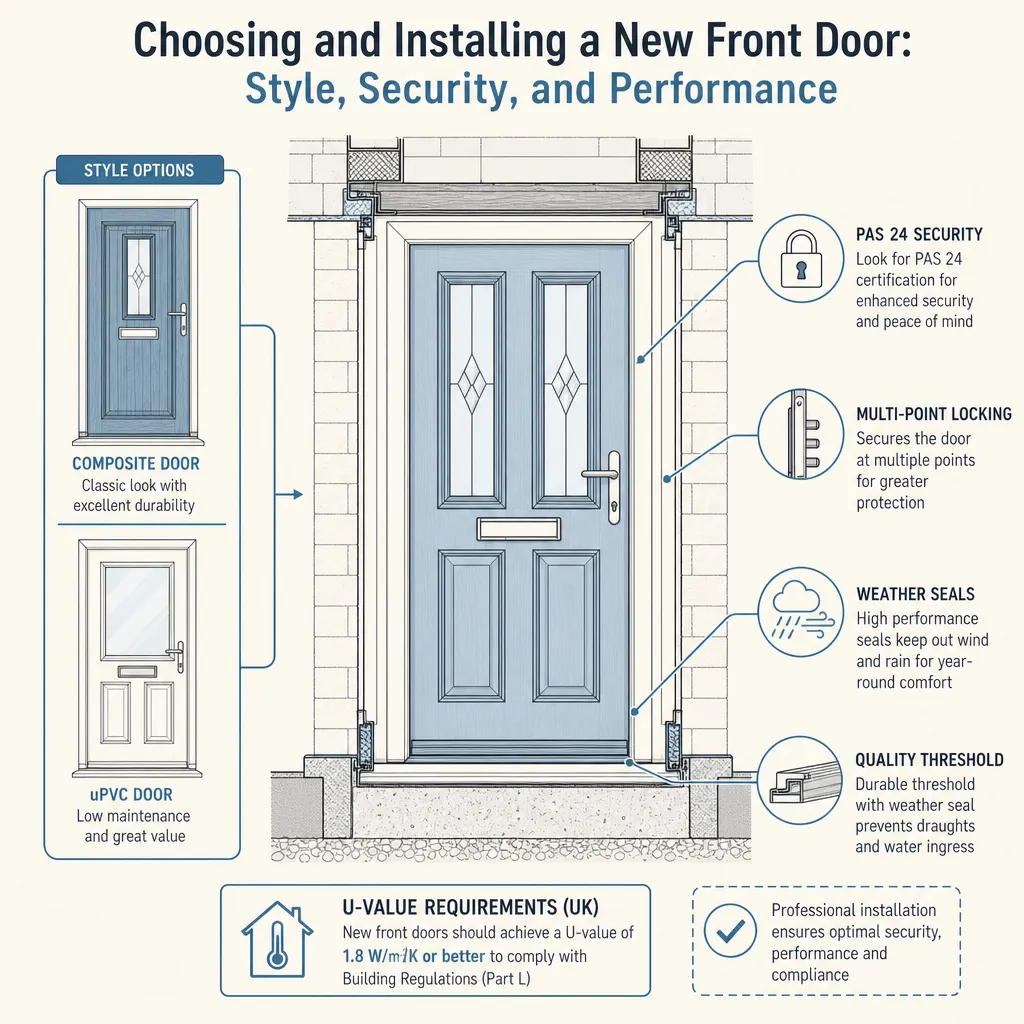
Choosing and Installing a New Front Door: Style, Security, and Performance
Composite doors offer the best combination of thermal performance and low maintenance for most UK homes, with U-values as low as 1.
 Improvement & Build
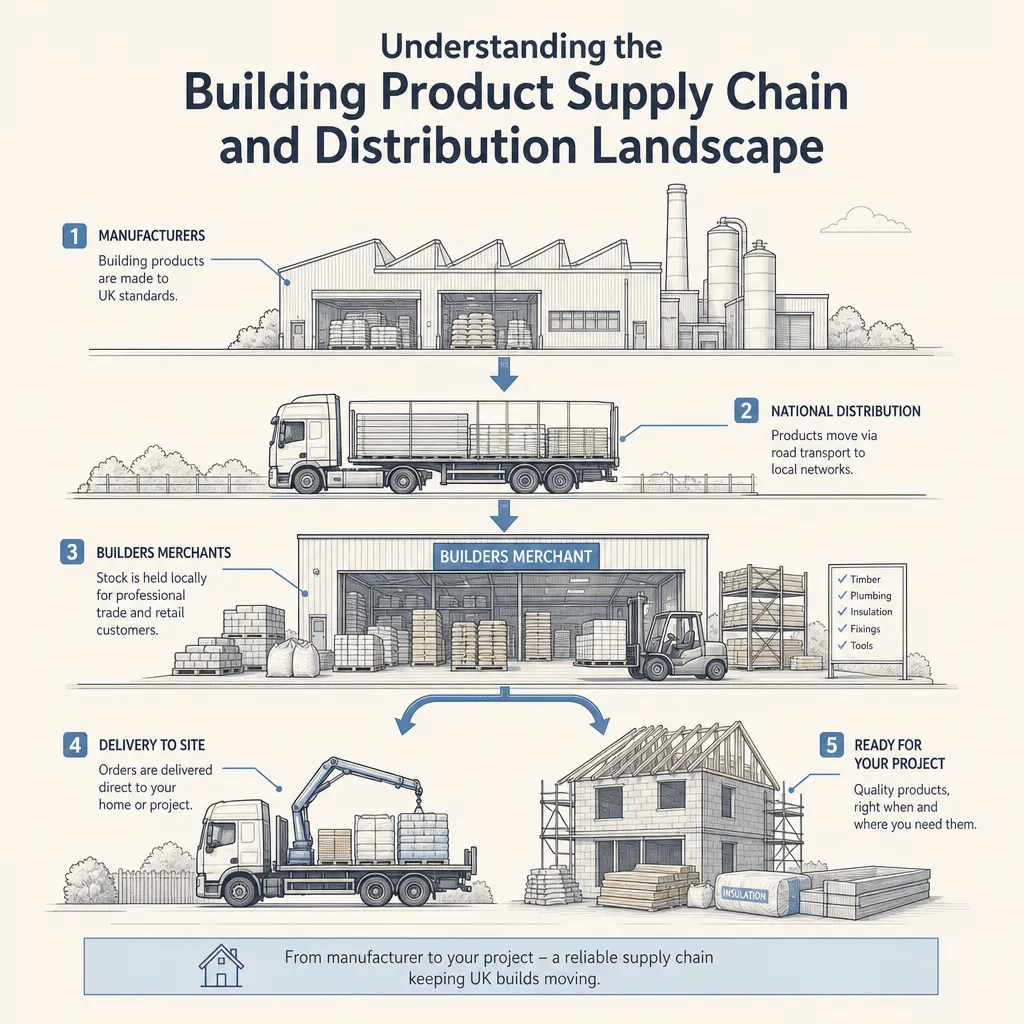
Understanding the Building Product Supply Chain and Distribution Landscape
Building products in the UK travel through a chain of manufacturers, distributors, and builders' merchants before reaching a building site.
 Improvement & Build
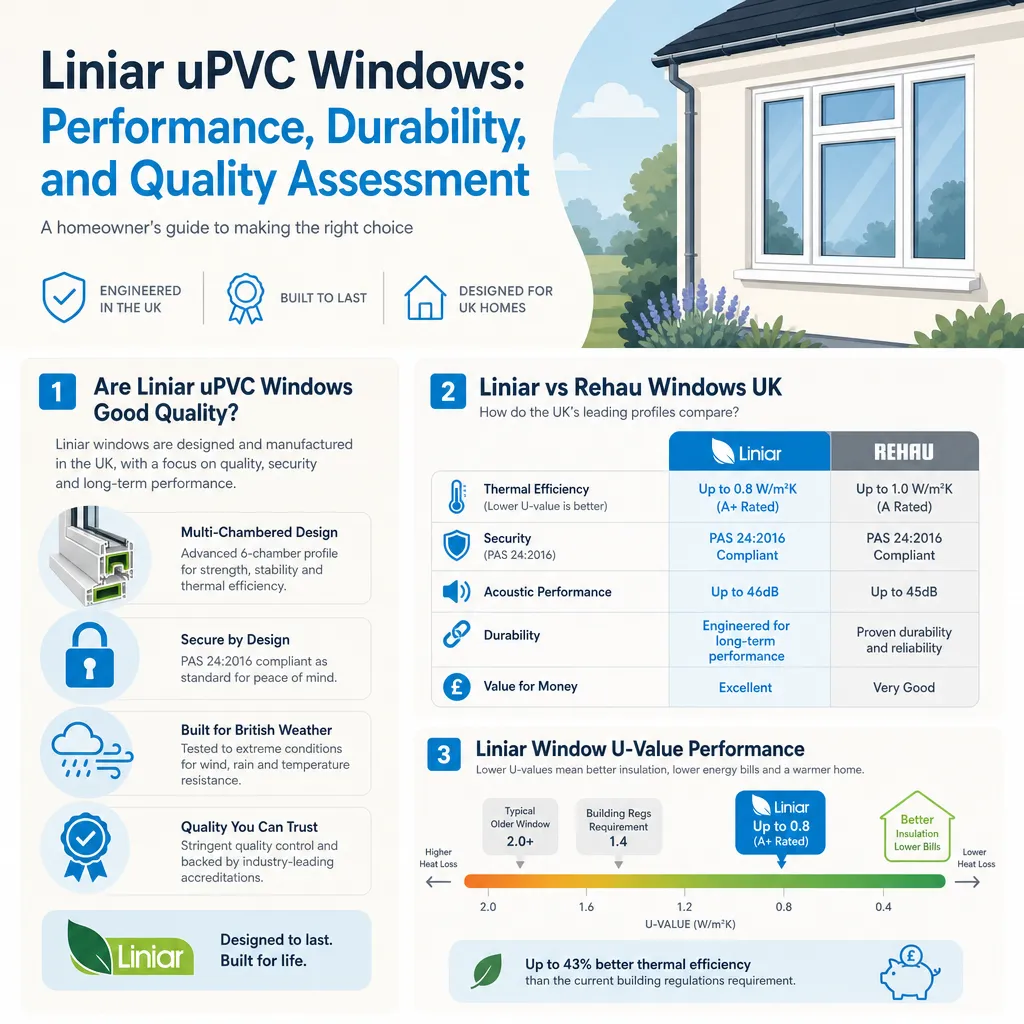
Liniar uPVC Windows: Performance, Durability, and Quality Assessment
Liniar uPVC window profiles are manufactured in the UK using multi-chambered, foamed frames.
 Improvement & Build
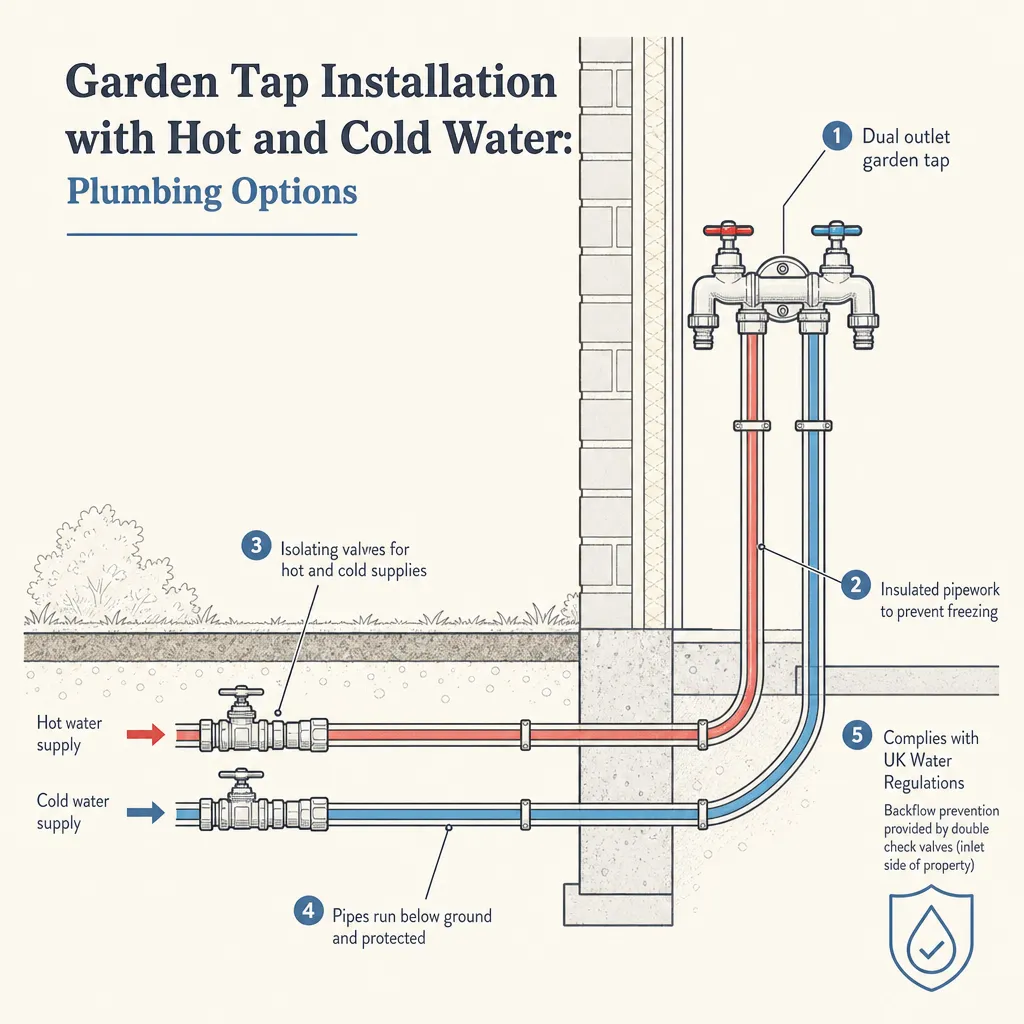
Garden Tap Installation with Hot and Cold Water: Plumbing Options
Adding a cold garden tap is a common DIY project, but routing hot water outdoors requires a plumber to connect to your domestic hot water system and comply with the Water Supply (Water Fittings) Regulations 1999.