Why UK Builders Are Specifying Engineered Building Products
By Housey · Last reviewed 30th of May 2026
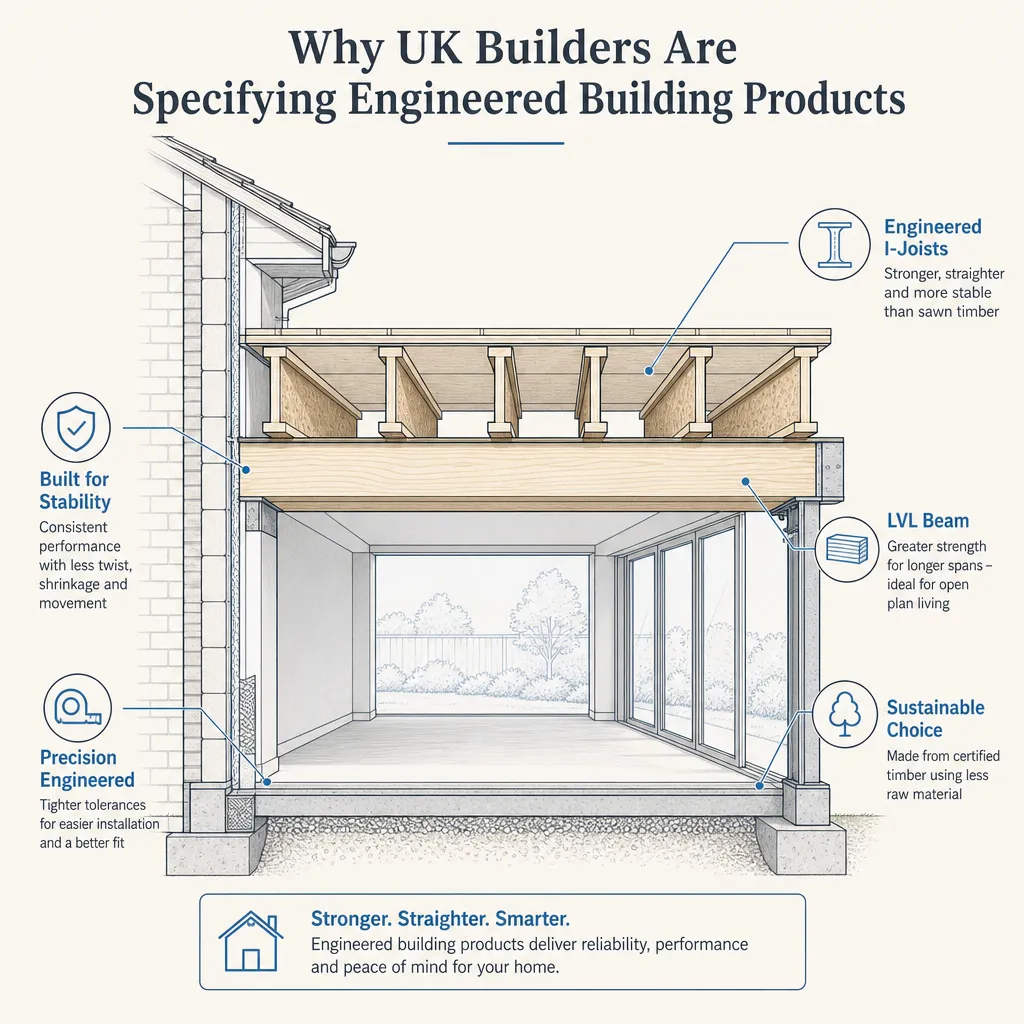
Why UK Builders Are Specifying Engineered Building Products
When briefing a builder or architect for an extension, loft conversion, or new-build project, homeowners often encounter product names — I-joists, LVL beams, aircrete blocks, SIPs panels — that sound technical and unfamiliar. Understanding why contractors specify these engineered products over traditional sawn timber or standard masonry helps homeowners engage meaningfully with the specification process, question proposed value-engineering changes with confidence, and understand the regulatory context that makes certain product choices near-standard on modern UK projects.
Key points
- Engineered timber products such as I-joists and metal web joists offer precise dimensional tolerances and enable long spans (commonly beyond 4.5 m) without the variability of sawn structural timber graded to BS EN 338.
- British Board of Agrément (BBA) certification provides independent third-party performance verification for engineered building products; building control officers and architects routinely accept BBA-certified products as having a documented, independently assessed performance basis.
- Building Regulations Approved Document A (Structure) requires structural elements to be designed or selected by a competent person; engineered products typically come with manufacturer span tables and technical data that simplify compliance documentation.
- Post-Brexit, most engineered building products placed on the UK market carry UKCA marking, confirming conformity with the relevant UK harmonised standard — the successor to CE marking.
- The Structural Timber Association (STA) and BM TRADA publish guidance on engineered timber design values and connection details for UK residential construction.
What are engineered building products?
Engineered building products are manufactured components produced to defined tolerances and tested to specific performance standards, as distinct from sawn or unprocessed natural materials. In UK residential construction, the category most commonly encountered includes the following.
Engineered timber:
- I-joists: Flanged floor and roof joists made from LVL or solid timber flanges bonded to a structural web. They offer long spans, consistent dimensions, and lighter weight than equivalent sawn timber. Services — pipes, ducts, cables — can run through pre-cut web openings without notching the structural member.
- Metal web joists (open web joists): Timber flanges connected by galvanised steel web members. Allow large service route openings and achieve long spans with minimal structural depth.
- LVL (Laminated Veneer Lumber): High-density engineered timber used as lintels, ridge beams, and structural floor beams. Dimensionally stable and available in sizes impractical with sawn timber.
- Glulam (Glued Laminated Timber): Structural beams made from laminated timber strips; used in visible structural applications, particularly in contemporary kitchen extensions and oak-framed projects.
- SIPs (Structural Insulated Panels): Rigid foam insulation core bonded between two structural board faces; used for walls, roofs, and floors in low-energy and timber-frame construction.
Engineered masonry:
- Aircrete blocks (AAC — Autoclaved Aerated Concrete): Thermal masonry blocks (such as Thermalite or H+H Celcon) widely used as the inner leaf of UK cavity walls for thermal resistance, light weight, and ease of cutting.
- Pre-cast concrete lintels: Factory-produced lintels with certified load ratings, replacing site-cast or natural stone alternatives.
Why contractors prefer engineered products
Dimensional consistency and waste reduction. Traditional sawn structural timber (typically graded C16 or C24 to BS EN 338) is subject to natural variation in dimension, moisture content, and grain. Engineered products are manufactured to tight tolerances, reducing on-site cutting waste, simplifying structural calculations, and enabling reliable prefabrication of floor or roof cassettes off-site.
Compliance documentation. Building control officers in England, Scotland, and Wales are familiar with BBA certificates, manufacturer span tables, and engineer sign-off for engineered products. For standard I-joist and LVL applications, the design process can often be reduced to selecting the correct span and load from a published table — removing the need for bespoke structural calculations on straightforward residential projects.
Thermal performance. Building Regulations Part L drives the selection of insulating products in walls, floors, and roofs. Engineered products such as SIPs panels and high-performance aircrete blocks offer predictable, tested thermal performance that helps contractors meet the U-value targets required for new-build and extension projects.
Fire safety and documentation. Following the Building Safety Act 2022 and revisions to Approved Document B (Fire Safety), fire performance documentation for building products receives greater scrutiny. Engineered products with tested and independently certified fire performance classifications are more straightforward to specify and defend during building control submission.
Comparison: engineered versus traditional products
Product category | Traditional option | Engineered alternative | Key advantage of engineered | Main consideration |
|---|---|---|---|---|
Floor joists | Sawn C16/C24 timber | I-joist or metal web joist | Longer spans, service integration, dimensional consistency | Higher unit cost; requires manufacturer-specific connection details |
Roof structure | Traditional cut roof (sawn timber) | Trussed rafters or engineered roof cassette | Factory accuracy, faster erection | Less loft conversion flexibility than a cut roof |
Beams and lintels | Solid timber or padstone | LVL or glulam beam | Larger spans, predictable deflection, no knots | Complex installations require structural engineer sign-off |
Wall structure | Traditional brick/block cavity | SIPs panel or ICF (Insulated Concrete Formwork) | High thermal performance, rapid build | Higher upfront cost; specialist installer required |
Thermal masonry | Dense aggregate block | Aircrete block (AAC) | Improved U-value contribution, lighter weight | Lower compressive strength — check structural adequacy |
When should you specify engineered products?
- Specify I-joists or metal web joists when your floor or roof span exceeds approximately 4.5 m, or when you need clear routes for underfloor heating pipework, duct runs, or electrical cables through the floor zone.
- Specify LVL or glulam when you need a structural beam or ridge exceeding available sawn timber sizes, or where dimensional stability and visual appearance matter in exposed beam situations.
- Specify SIPs when a low-energy build target requires a high-performance, well-sealed thermal envelope and your contractor has demonstrable SIPs installation experience.
- Specify aircrete blocks as the inner leaf of a standard cavity wall where a thermal and acoustic contribution is needed — this is the standard inner-leaf specification on most UK residential extensions.
- Ask a structural engineer if you are uncertain which product suits a specific application — span tables guide standard cases, but non-standard loadings, unusual geometries, or interfaces with existing structure need engineering input.
- Check with building control before substituting a specified engineered product with a cheaper alternative — the change may require a revised structural calculation or an amended building regulations submission.
Which professional manages product specification?
Project stage | Professional responsible | Engineered product role |
|---|---|---|
Design and specification | Architect or architectural technologist | Selects product types; references BBA certificates and manufacturer span tables |
Structural design | Structural engineer | Verifies or designs structural elements; approves beam, joist, and SIPs specifications |
Building regulations | Building control officer or Approved Inspector | Reviews compliance documentation; accepts BBA-certified products as evidence |
On-site installation | Main contractor or specialist sub-contractor | Follows manufacturer installation guide; must not modify engineered products without instruction |
Thermal compliance | SAP assessor or energy assessor (new build) | Confirms as-built thermal performance matches the specification |
When to get professional help
Most specification decisions for engineered building products on standard residential extensions should be managed by your architect and structural engineer. However, escalate in the following circumstances:
- If your contractor proposes substituting a specified engineered product with a cheaper alternative, request written confirmation from a structural engineer that the substitute is equivalent before consenting.
- If your project requires a building regulations application, ensure that compliance documentation — BBA certificates, manufacturer span tables, fire performance test reports — is assembled before submission. Do not rely on verbal reassurances.
- For higher-risk buildings within the scope of the Building Safety Act 2022, a Principal Designer and Principal Contractor must be appointed, and product documentation standards are significantly more demanding than for standard residential work.
How Housey can help
Whether you are planning an extension, a loft conversion, or a full new build, Housey connects you with vetted extension builders and design-and-build firms experienced in specifying and installing modern engineered building products. You can also find professionals to help with your building regulations drawings to ensure specification documentation meets building control requirements.
Frequently asked questions
Do I need a structural engineer to specify I-joists or LVL beams?
For standard residential applications falling within published span tables, many architects and architectural technologists can specify engineered timber without a separate structural engineer appointment. For non-standard spans, point loads, or where the member interfaces with complex existing structure, a structural engineer should be involved. Your building control officer will advise if they require an engineer-signed calculation.
What is a BBA certificate and why does it matter?
A BBA (British Board of Agrément) certificate is an independent, third-party assessment of a building product's fitness for purpose, issued by the BBA — a UKAS-accredited certification body. It sets out the product's performance characteristics, installation requirements, and expected service life. Building control officers treat BBA certification as strong evidence that a product is appropriate for its intended use, reducing the risk of queries during building regulations assessment.
Do engineered timber products cost more than traditional sawn timber?
Engineered timber products typically have a higher unit purchase cost than standard sawn timber. The full cost comparison should include reduced waste, faster erection, lower deflection risk, and the value of integrated service routes. On spans above approximately 4.5 m or where services integration matters, engineered products often prove cost-competitive when total installed cost is considered. Ask your contractor to provide a like-for-like comparison when a substitution is proposed.
What is UKCA marking on building products?
UKCA (UK Conformity Assessed) marking is the UK post-Brexit equivalent of CE marking for construction products. It confirms the product has been assessed against the relevant UK harmonised standard. Ask your contractor or supplier to provide the Declaration of Performance confirming UKCA compliance for any engineered product being specified. In some transitional cases, CE marking has been accepted alongside UKCA — check current GOV.UK guidance for your product type.
Sources and further reading
- British Board of Agrément — BBA
- Approved Document A: Structure — GOV.UK
- Approved Document L: Conservation of Fuel and Power — GOV.UK
- Structural Timber Association — Structural Timber Association
- BM TRADA timber design guidance — BM TRADA
- Building Safety Act 2022 — legislation.gov.uk
- UKCA marking guidance — GOV.UK
Useful next reads
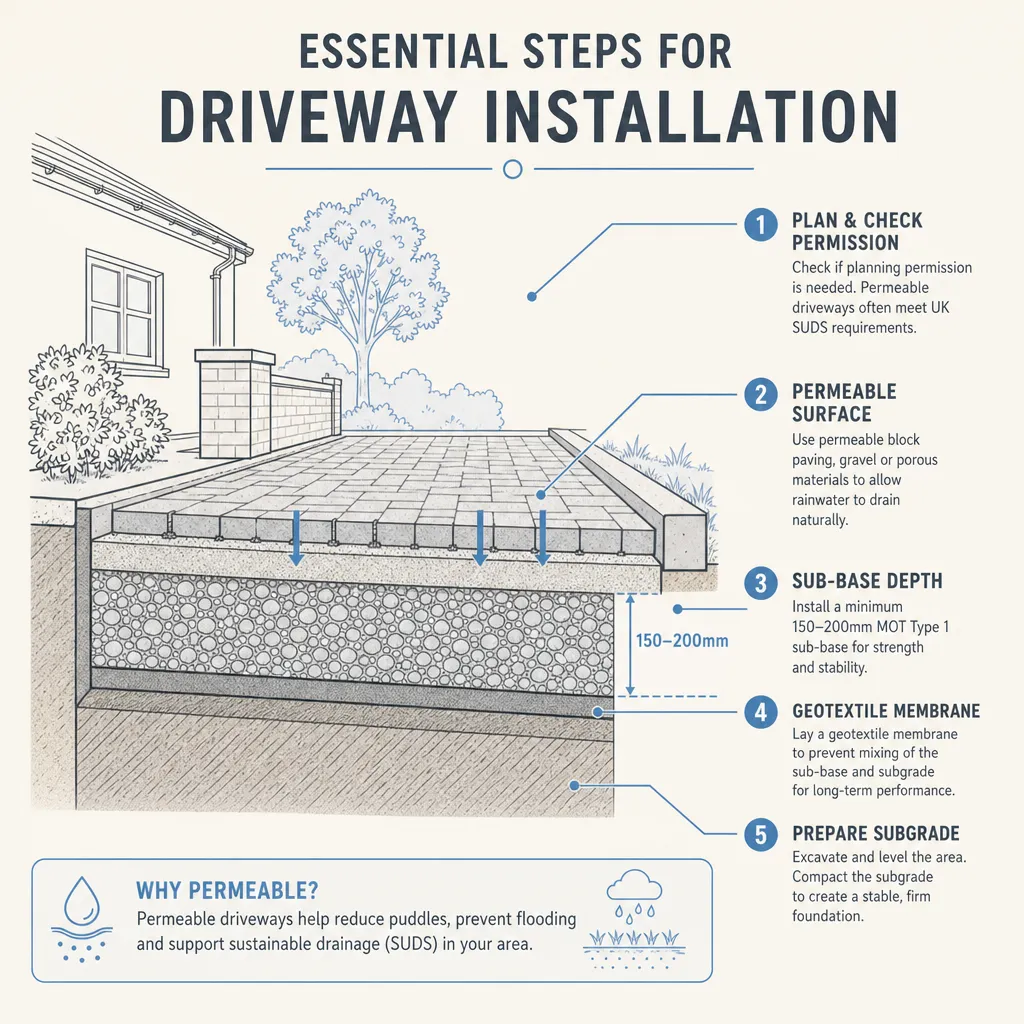 Improvement & Build
Essential Steps for Driveway Installation
Installing a driveway in England requires planning permission only when using an impermeable surface (standard tarmac, concrete, or block paving) on a front garden area over 5 m².
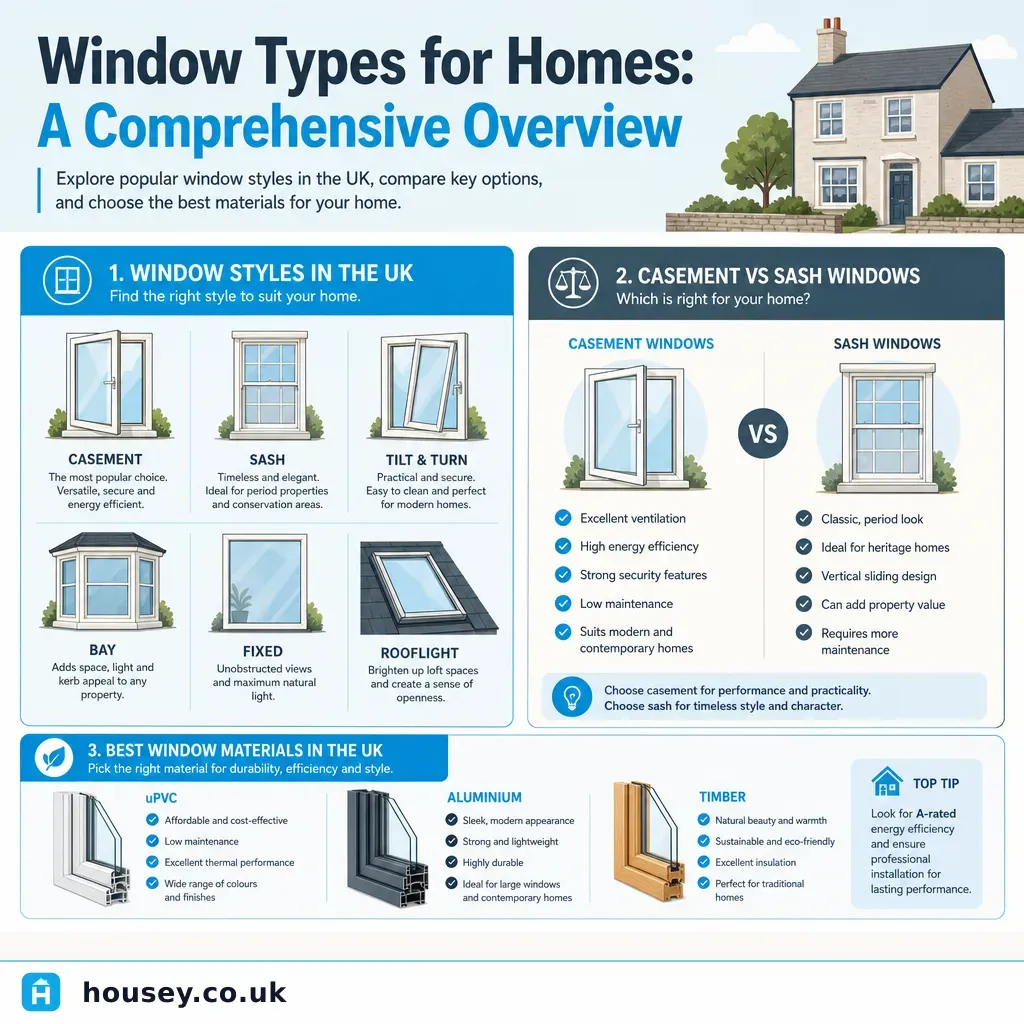 Improvement & Build
Window Types for Homes: A Comprehensive Overview
UK homes use several main window styles: casement (outward-swinging), sash (vertically sliding), tilt-and-turn, fixed light, and bay or bow.
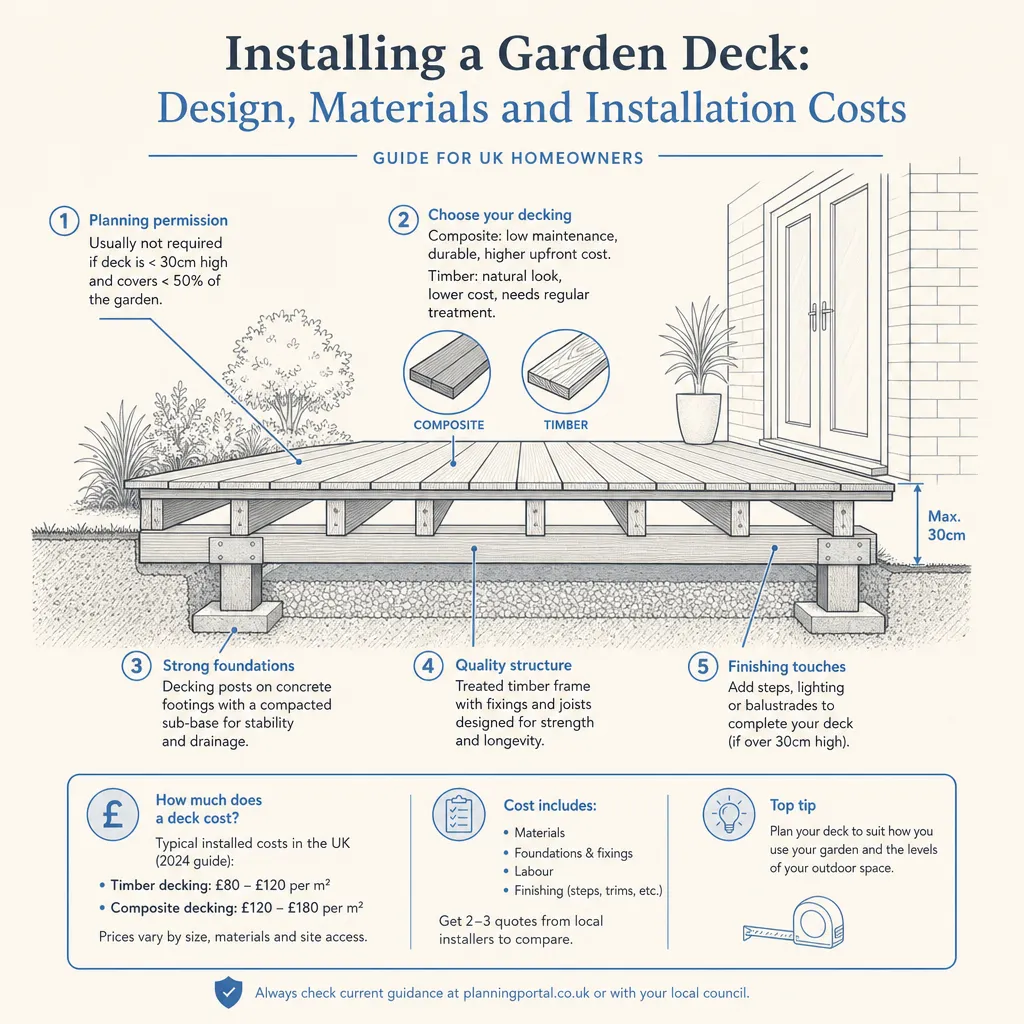 Improvement & Build
Installing a Garden Deck: Design, Materials and Installation Costs
Garden decking costs £80–250 per m² installed in the UK depending on material — softwood is cheapest, composite the most durable.
 Improvement & Build
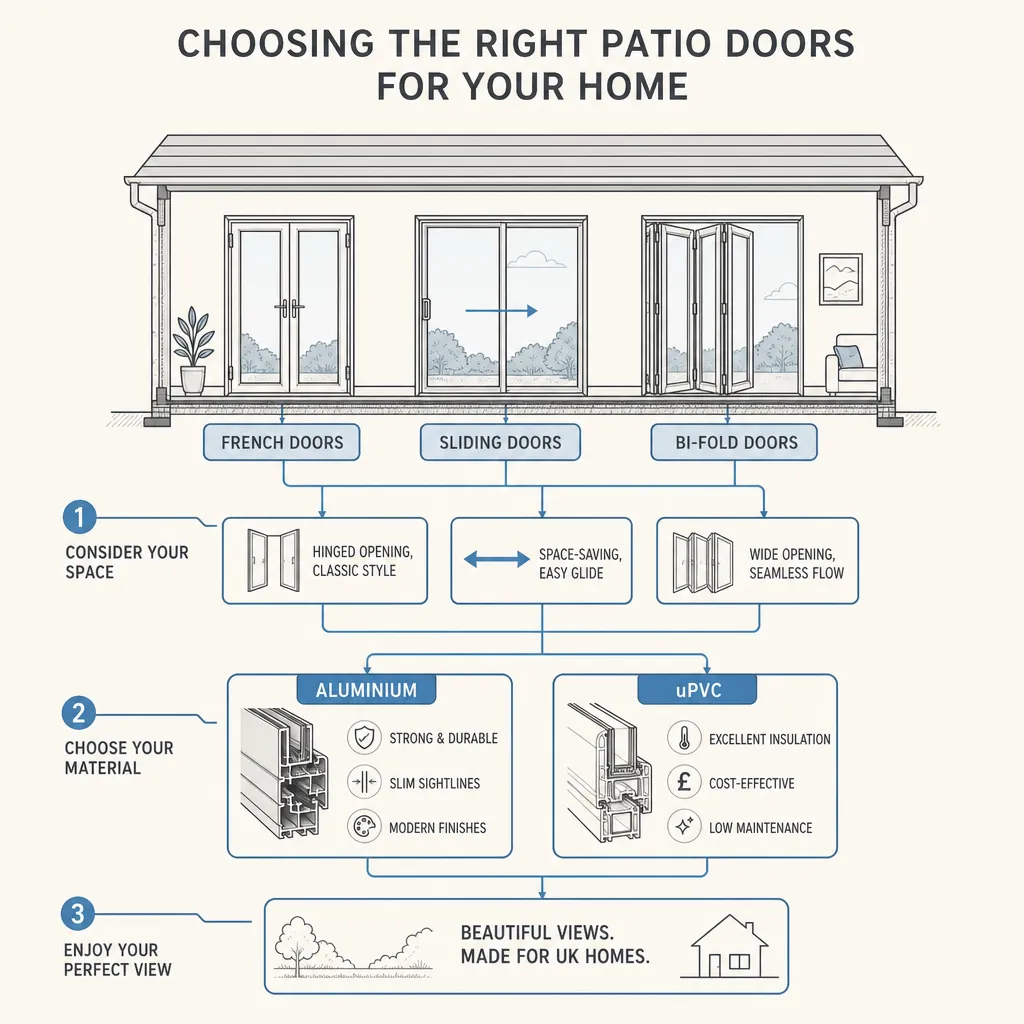
Choosing the Right Patio Doors for Your Home
The right patio doors depend on your opening width, available swing space, home style, and budget.
 Improvement & Build
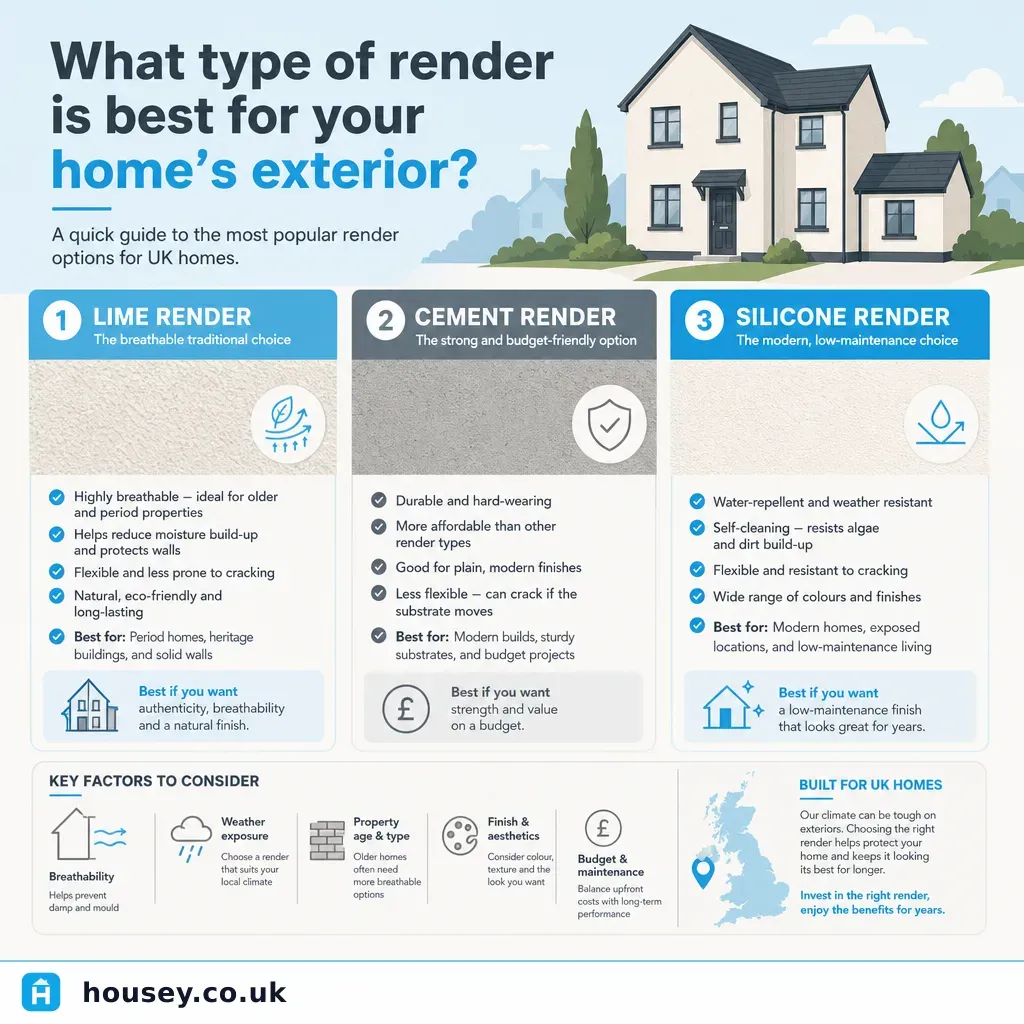
What type of render is best for your home's exterior?
The right render depends on your wall type and property age.