UK Window Manufacturing: How Production Capacity Affects Your Replacement Windows
By Housey · Last reviewed 30th of May 2026
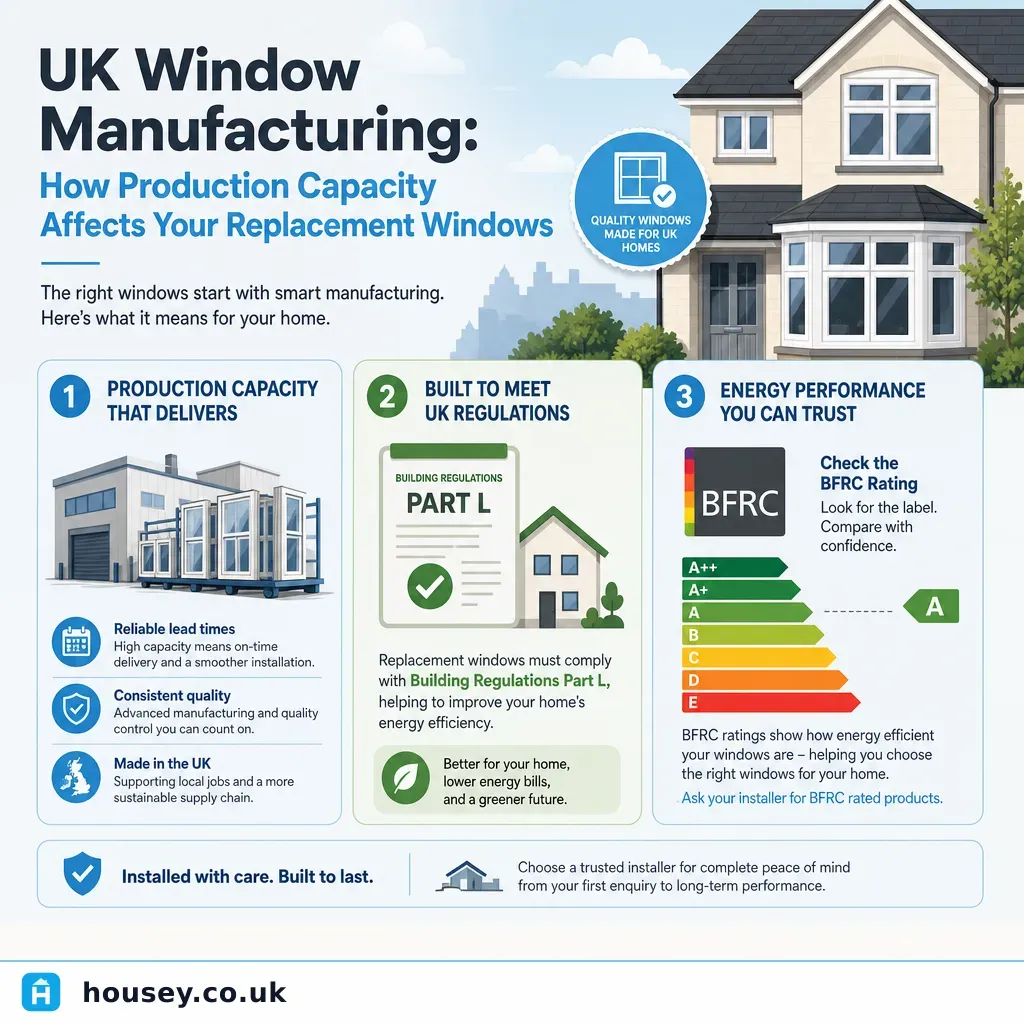
UK Window Manufacturing: How Production Capacity Affects Your Replacement Windows
Replacement windows are one of the most common home improvement projects in the UK, but the supply chain behind them — from profile extrusion and glass cutting to FENSA certification and installation — is less transparent than homeowners might expect. Lead times, product availability, and energy performance standards are all shaped by conditions in UK and European window manufacturing, and understanding this helps you plan more effectively, ask better questions, and avoid avoidable delays on your project.
Key points
- Replacement windows in existing dwellings must meet Building Regulations Approved Document L, which sets a whole-window U-value requirement of ≤1.4 W/m²K.
- FENSA (Fenestration Self-Assessment Scheme) registered installers can self-certify that installations comply with Building Regulations — you will need the FENSA completion certificate when you sell your home.
- The Window Energy Rating (WER) scheme, administered by the British Fenestration Rating Council (BFRC), provides an A+–G label covering thermal performance and solar gain, making it easier to compare different window products.
- Bespoke or heritage-specification windows — such as timber sash units or slim-profile aluminium for listed buildings — typically carry lead times of 8 to 16 weeks from order confirmation.
- UK window manufacturing is concentrated among a relatively small number of large PVCu profile extruders; disruption at this tier (energy cost spikes, resin price rises) can affect lead times across many installers simultaneously.
How UK windows are made and supplied
Most UK replacement windows follow a supply chain running from raw material through to installation in several distinct tiers:
Supply tier | What happens | Key standards or bodies |
|---|---|---|
Raw material | PVCu resin, aluminium billet, glass float | International commodity markets |
Profile extrusion / frame manufacturing | PVCu profiles extruded or aluminium sections cut and fabricated | UK and European fabricators |
Glass unit production | Double or triple glazing insulating glass units (IGUs) produced to specification | UK-based IGU producers |
Fabrication | Frames, glass, and hardware assembled into finished window units | Regional fabricators |
Installation | Fitting, sealing, and regulatory certification | FENSA or CERTASS registered installers |
Understanding this chain matters because a shortage or delay at any tier ripples downstream. An energy price spike affecting glass production, or resin price inflation affecting PVCu profiles, may not be visible to the homeowner until an installer quotes a longer delivery time.
UK-manufactured versus imported windows
Both UK-manufactured and imported window products are available to UK homeowners. The choice has practical implications beyond price.
Factor | UK-manufactured | Imported (primarily European) |
|---|---|---|
Lead times | Often shorter for standard products; local stock more common | Longer for bespoke orders; transit adds time |
Building Regulations compliance | Tested and certified against UK Part L standards | Must carry UKCA marking and meet U-value requirements |
Warranty and consumer recourse | UK consumer law applies directly; recourse is clearer | Consumer rights apply but can be harder to pursue cross-border |
Heritage products | UK specialist manufacturers exist for timber sash and steel windows | Fewer European equivalents to UK heritage profiles |
Price | Not necessarily more expensive for standard products | May be lower for standard PVCu at volume |
For most standard replacement projects in conventional UK homes, both routes are viable. For listed buildings, conservation areas, or properties requiring specific heritage profiles, UK specialist manufacturers are often the only practical source.
What to check before ordering replacement windows
Use this checklist before confirming your order with an installer:
When lead times become a planning issue
Standard stock-profile PVCu windows are often available within two to four weeks for typical residential projects. However, lead times can extend significantly in specific circumstances:
- Bespoke sizes or non-stock colours: non-standard RAL colours for aluminium windows can add two to four weeks to standard production times.
- Timber sash windows: joinery-made timber sash units for Victorian or Edwardian properties typically run 8–16 weeks from order.
- Slim-profile aluminium: architectural aluminium systems with narrow sightlines often carry 6–12 week fabrication times.
- High-demand periods: during construction peaks or post-disruption recovery, fabricator backlogs can extend across all product types simultaneously.
Planning your window project with realistic lead times — and factoring in potential delays — reduces the risk of a project stalling once other works have begun.
When to get professional help
Most replacement window projects are straightforward, but seek professional guidance when:
- Your property is listed or within a conservation area — contact your local planning authority before ordering, as permitted development rights may be restricted or removed entirely.
- You need structural changes to openings (widening or adding new openings) — a structural engineer should specify the lintel design.
- You have persistent condensation, mould, or ventilation concerns after installation — these may indicate issues extending beyond the window unit itself, including inadequate background ventilation under Part F of Building Regulations.
How Housey can help
Housey can connect you with vetted FENSA-registered window and door installers who can advise on product suitability, lead times, and Building Regulations compliance for your specific property type.
Frequently asked questions
Do I need planning permission to replace my windows in the UK?
In most cases, replacing like-for-like windows is permitted development and does not require a planning application. However, if your home is listed, in a conservation area, or subject to an Article 4 Direction removing permitted development rights, you may need consent. Always check with your local planning authority before ordering replacement windows.
What is the difference between FENSA and CERTASS?
Both are government-approved competent person schemes for window and door installations in England and Wales. FENSA was established first and is more widely recognised; CERTASS is an equivalent alternative. Installers registered with either scheme can self-certify Building Regulations compliance and issue the completion certificate you will need when selling your home.
How long should replacement windows last?
PVCu windows from reputable manufacturers typically last 20 to 35 years in UK conditions before profile degradation or glass unit seal failure becomes an issue. Aluminium windows often have a longer lifespan. Timber windows, if properly maintained with periodic painting or staining, can last considerably longer but require more active upkeep.
Sources and further reading
Useful next reads
 Improvement & Build
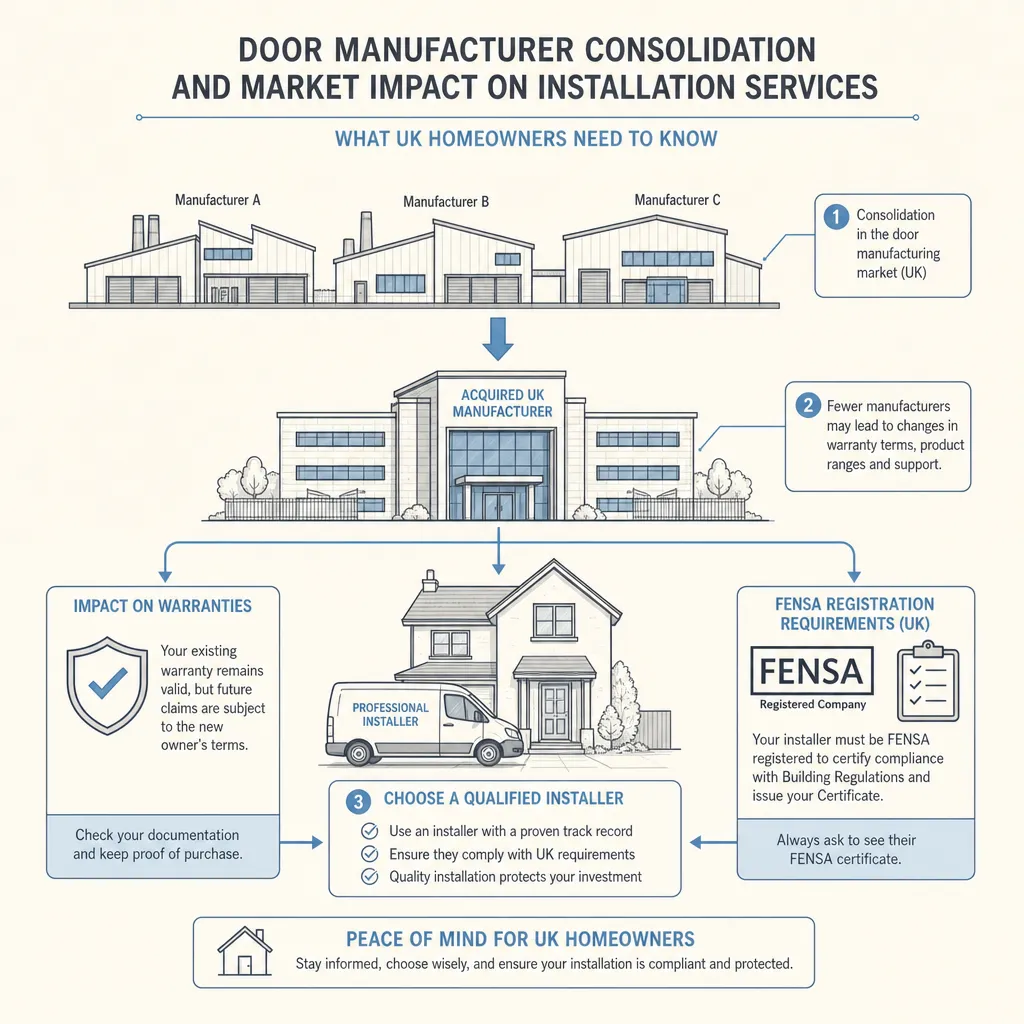
Door Manufacturer Consolidation and Market Impact on Installation Services
When door and window manufacturers merge or are acquired, the immediate impact for homeowners is often seen in product range changes, revised lead times, and updated installer training requirements.
 Improvement & Build
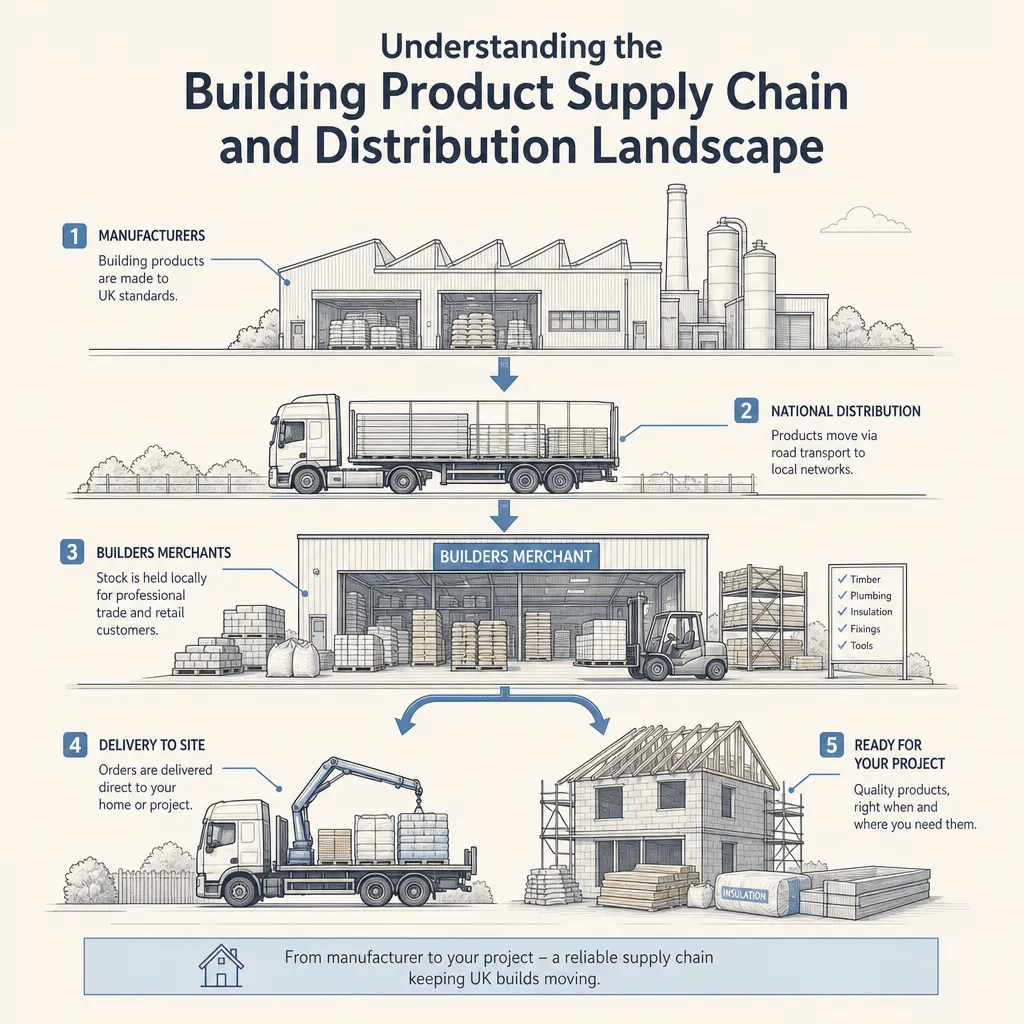
Understanding the Building Product Supply Chain and Distribution Landscape
Building products in the UK travel through a chain of manufacturers, distributors, and builders' merchants before reaching a building site.
 Improvement & Build
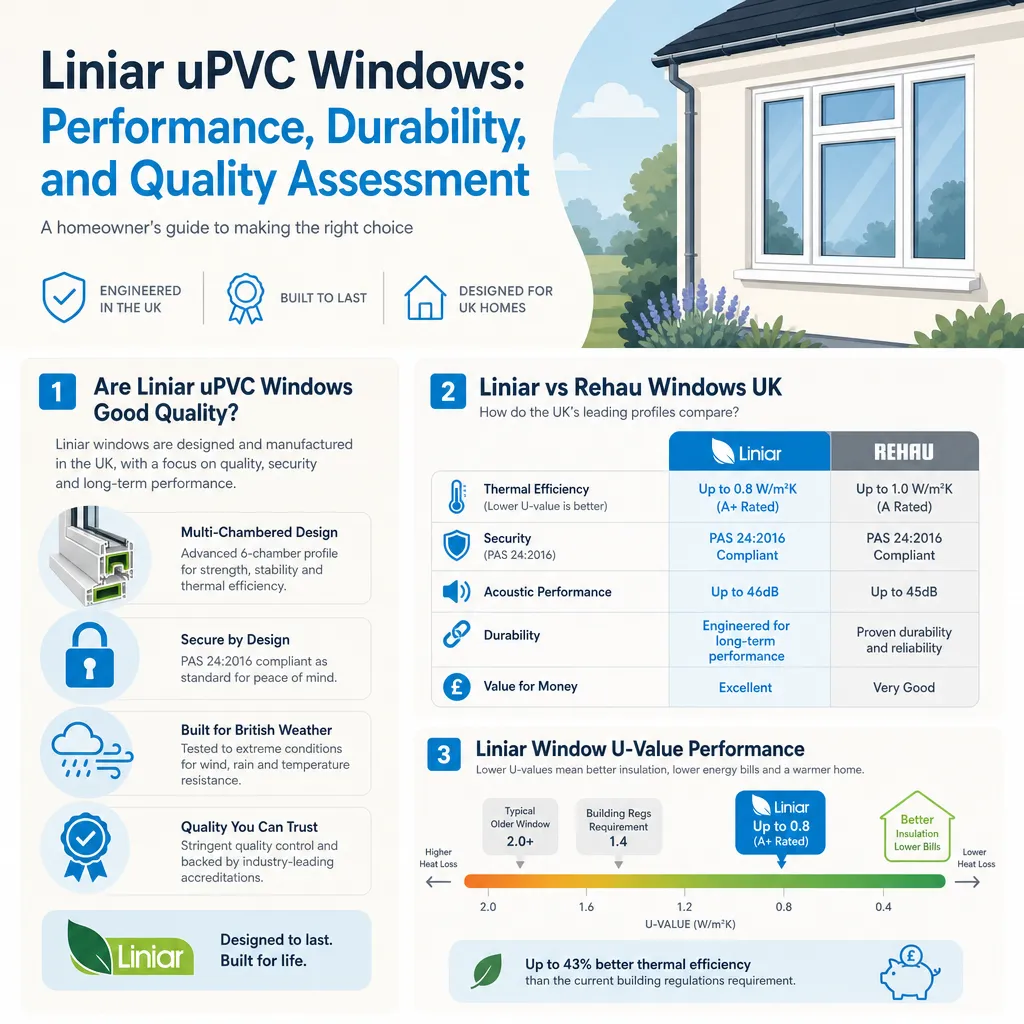
Liniar uPVC Windows: Performance, Durability, and Quality Assessment
Liniar uPVC window profiles are manufactured in the UK using multi-chambered, foamed frames.
 Improvement & Build
Garden Tap Installation with Hot and Cold Water: Plumbing Options
Adding a cold garden tap is a common DIY project, but routing hot water outdoors requires a plumber to connect to your domestic hot water system and comply with the Water Supply (Water Fittings) Regulations 1999.
 Improvement & Build
Sealing and Maintaining Historic Leaded Glass Windows: Preservation and Performance
Leaded glass windows are maintained using traditional linseed oil cement — not silicone or modern sealants, which prevent natural movement in the lead came.