Butcher Block Worktops: Material Costs and Installation
By Housey · Last reviewed 9th of May 2026
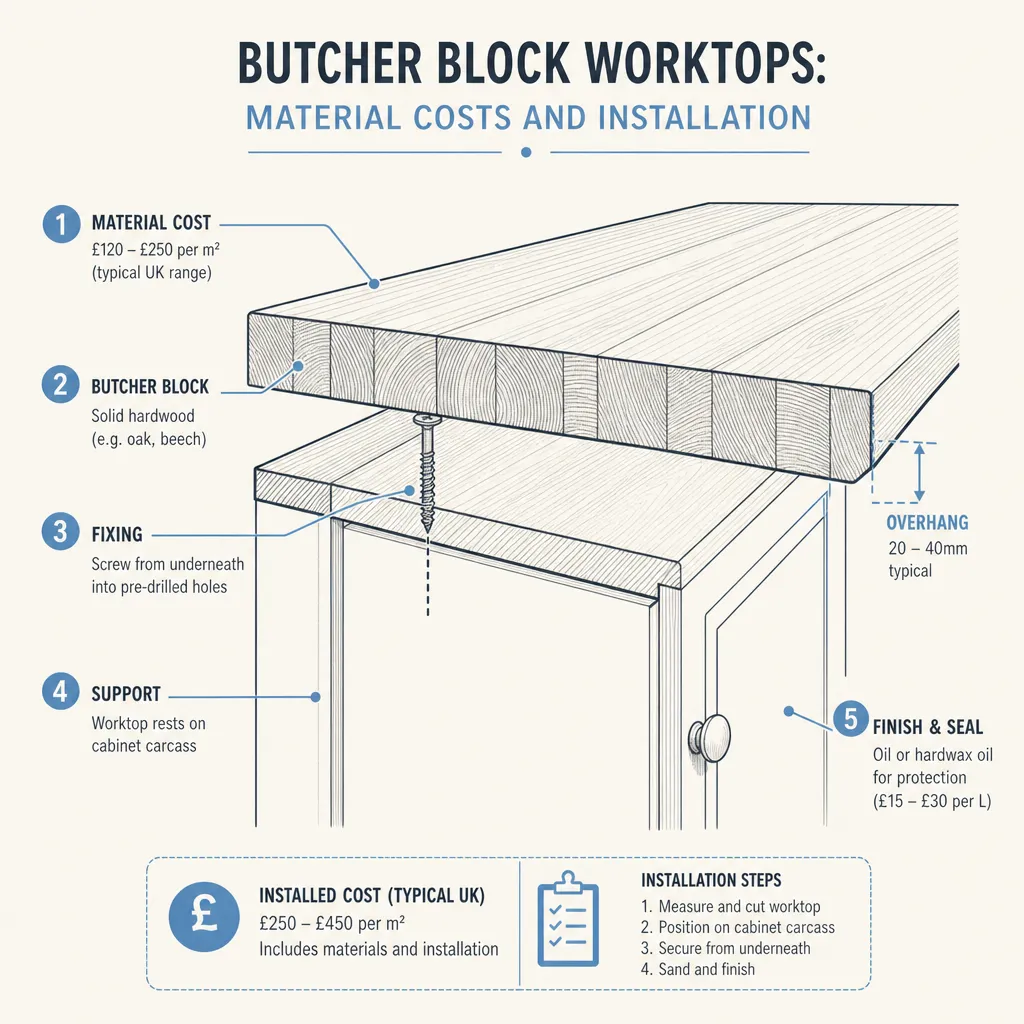
Butcher Block Worktops: Material Costs and Installation
Solid timber worktops — sold as butcher block, hardwood, or wood worktops — remain a popular choice in UK kitchens for their warmth, character, and repairability. Unlike stone or quartz, a scratched or stained timber surface can be sanded back and re-oiled rather than replaced, which makes the material unusually forgiving over a long lifespan. Understanding the maintenance commitment and the moisture risks at cut edges before you purchase helps avoid costly problems in the first year.
Key points
- Edge-grain butcher block typically costs £80–£300 per linear metre for materials; end-grain costs £200–£500+. Indicative UK costs, last reviewed 2026-05-09.
- Professional worktop fitting costs roughly £150–£400 per day; most standard kitchen runs take one to two days depending on complexity.
- Food-safe oiling with Danish oil, mineral oil, or raw linseed oil is required every 2–4 times per year, more frequently in the first six months.
- All cut edges — particularly around sink cutouts — must be sealed immediately after cutting; sustained moisture causes warping and splitting.
- FSC-certified timber should be specified where possible; popular UK species include oak, beech, walnut, and iroko.
Edge-grain vs end-grain: which should you choose?
Edge-grain presents the long grain on the worktop face. It is dimensionally stable, takes oiling evenly, and suits standard continuous kitchen runs. It is the practical default for most UK kitchens and is available from most worktop suppliers in widths suited to standard carcasses.
End-grain presents the cut ends of the timber fibres, creating the checkerboard pattern associated with traditional butchers' blocks. It is self-healing to a degree — knife marks tend to close slightly over time — denser, and more characterful. However, it is heavier, more expensive, and more demanding to maintain because it absorbs oil and moisture more readily. End-grain works well as a feature surface on a kitchen island but is rarely cost-effective across an entire kitchen run.
Timber species and material costs
Timber species | Grain available | Approx. cost per linear metre (materials) | Character notes |
|---|---|---|---|
Beech | Edge-grain | £80–£160 | Pale and close-grained; affordable; widely available in UK kitchens |
Oak | Edge and end-grain | £120–£280 | Warm golden-brown; pronounced grain; popular across interior styles |
Walnut | Edge and end-grain | £200–£450 | Rich dark brown; premium option; high visual impact |
Iroko | Edge-grain | £130–£250 | Dark and naturally oily; good moisture resistance; popular near sinks |
Maple | Edge-grain | £120–£220 | Very pale and hard; close-grained; suits contemporary kitchens |
Bamboo | Edge-grain | £90–£180 | Technically a grass; very hard-wearing; strong sustainability credentials |
Indicative UK costs, last reviewed 2026-05-09. Prices vary by thickness (typically 27mm, 38mm, or 40mm), width, supplier, and timber market conditions. Specify FSC-certified timber where possible.
Installation: the key steps
- Measure and template the full kitchen layout, including all cutouts for sink and hob
- Cut to length on site; seal all end cuts immediately with oil or waterproof sealant to prevent moisture ingress
- Route sink and hob cutouts; seal all cut surfaces thoroughly — especially critical for undermount sink installations
- Join corner or return runs using biscuit or domino joints for alignment; apply food-safe silicone at the joint line
- Fix from below to cabinet carcasses using worktop connector bolts; do not screw through the top surface
- Apply 3–5 coats of food-safe oil in the first week, beginning with the underside before installation
Worked UK property scenario
A homeowner refitting a 1930s semi-detached property in Leeds chooses 40mm oak edge-grain worktops at £180 per linear metre for a 4-metre run with an L-shaped return and a separate island — approximately 7 linear metres in total.
Item | Approximate cost |
|---|---|
7 linear metres of 40mm oak edge-grain worktop | £1,260 |
Fitting (1.5 days at £280/day) | £420 |
Sink cutout (additional charge) | £80 |
Danish oil, professional-grade, 2 litres | £35 |
Total (approximate) | £1,795 |
Indicative costs, last reviewed 2026-05-09. Actual quotes vary by location, trade rates, and the complexity of the installation.
What to ask before buying and installing butcher block worktops
- Is the timber FSC-certified or from a verified sustainable source?
- What thickness do you recommend for my cabinet type and the unsupported spans in my layout?
- Are cut edges factory-sealed, or must they be sealed on site immediately after cutting?
- Is this species suitable adjacent to a sink, or should I specify iroko or teak for better moisture resistance?
- What oiling schedule do you recommend for the first year?
- Is an undermount sink achievable with this species and thickness, and what sealing does it require?
- Will worktops arrive pre-cut to length, or will cutting be done on site?
- What warranty do you offer against warping, splitting, or delamination?
When to get professional help
Timber worktop installation is within scope for an experienced joiner or kitchen fitter, but professional input adds value for complex layouts with multiple joins, undermount sink installations, or where worktops form part of a wider kitchen extension. For full kitchen redesigns or structural alterations, design-and-build firms can specify, source, and install worktops as part of a coordinated fit-out. If planning drawings or structural calculations are needed as part of a larger project, architecture services can manage design and regulatory compliance before work begins.
How Housey can help
If new worktops are part of a wider kitchen project — a redesign, layout change, or extension — Housey can connect you with experienced design-and-build firms and extension builders who manage kitchen fit-outs from structure to finish. Submit your project brief to receive quotes from local firms.
Frequently asked questions
How long do butcher block worktops last in a UK kitchen?
With consistent oiling, prompt removal of standing water, and trivets under hot pans, a well-fitted butcher block worktop typically lasts 20–30 years. The first year is critical — oil frequently and keep water away from cut edges and joints. Neglected worktops dry out, crack, and warp, often within 2–5 years of installation.
Can butcher block worktops be used next to a sink?
Yes, but all cut edges around the sink cutout must be sealed immediately with waterproof sealant or marine-grade Danish oil after cutting. Naturally oily timbers such as iroko give better inherent moisture resistance. Undermount sinks are possible but significantly increase waterproofing demands — discuss sealing requirements with your fitter before specifying the installation.
What oil should I use on a butcher block worktop?
Use a food-safe oil: Danish oil, pure mineral oil, or raw linseed oil. Danish oil is popular in UK kitchens because it dries to a harder finish than mineral oil alone. Avoid vegetable and nut oils — olive, sunflower, coconut — which go rancid over time. Apply with a lint-free cloth, leave 20–30 minutes, then wipe off any excess.
Are butcher block worktops hygienic for food preparation?
Research suggests well-maintained hardwood surfaces can be as hygienic as plastic for food preparation. Regular cleaning with mild soap and warm water, combined with oiling, keeps the surface in good condition. Avoid bleach and harsh chemical cleaners, which strip the oil finish. With proper maintenance, direct food preparation including chopping is generally considered acceptable on a solid timber surface.
How does butcher block compare to quartz for a UK kitchen?
Butcher block typically costs less than quartz for materials (£80–£450 vs £200–£600+ per linear metre) and can be sanded and re-oiled to repair scratches and stains — something quartz does not allow. Quartz is virtually maintenance-free and more heat-resistant. Choose butcher block for warmth and repairability; choose quartz for a low-maintenance surface that handles heavy daily use.
Sources and further reading
- Kitchen worktops buying guide — Which?
- FSC-certified timber in the UK — Forest Stewardship Council UK
- Buying sustainably sourced timber — GOV.UK
Useful next reads
 Improvement & Build
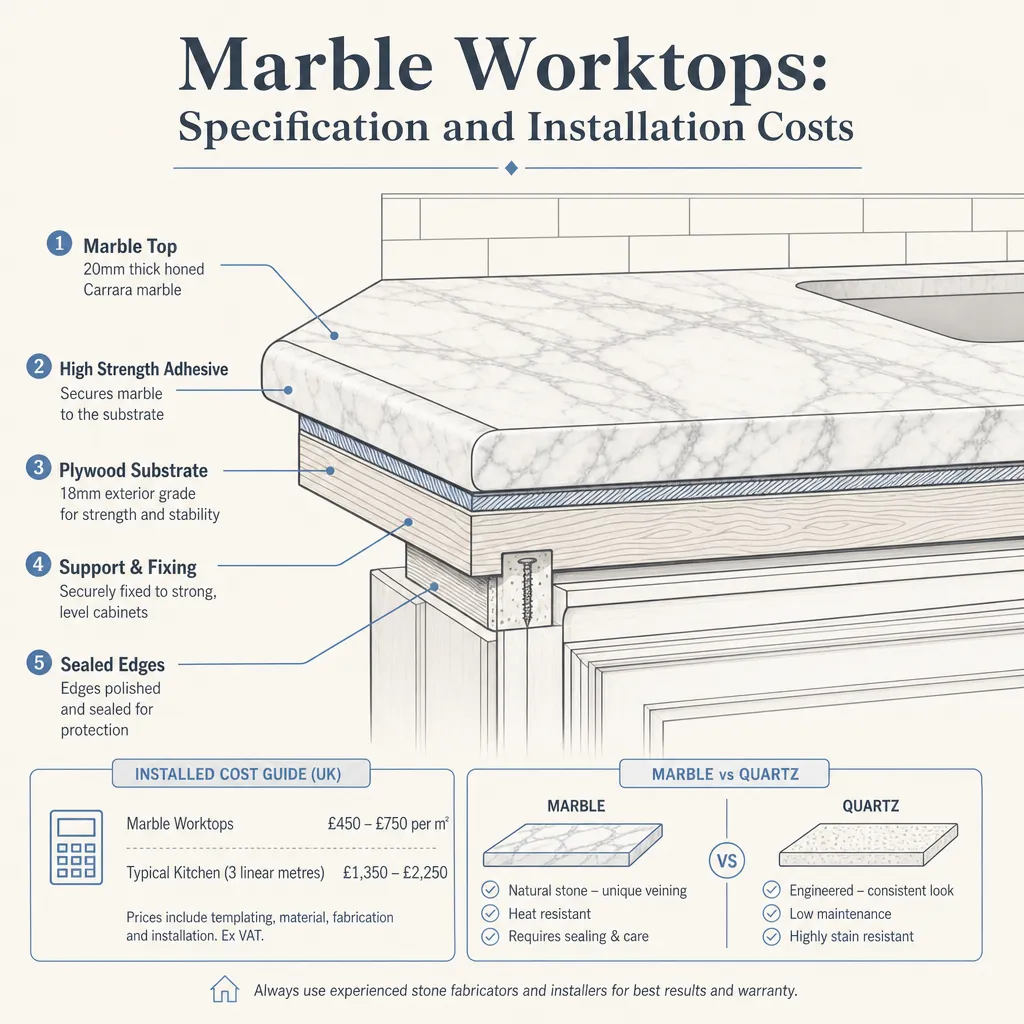
Marble Worktops: Specification and Installation Costs
Marble worktops in the UK typically cost £300–£800 per linear metre installed, depending on marble grade, slab thickness, finish, and edge profile.
 Improvement & Build
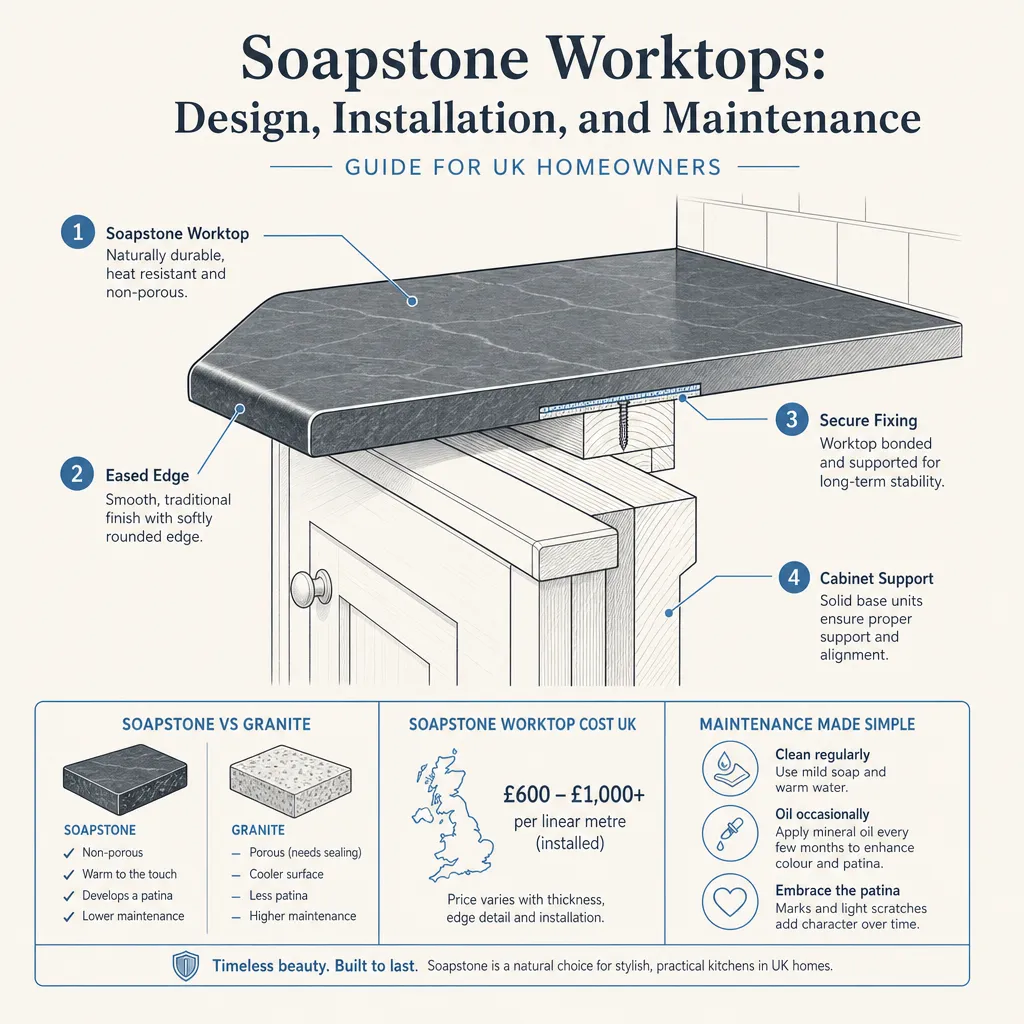
Soapstone Worktops: Design, Installation, and Maintenance
Soapstone is a dense, non-porous natural stone used for kitchen worktops.
 Improvement & Build
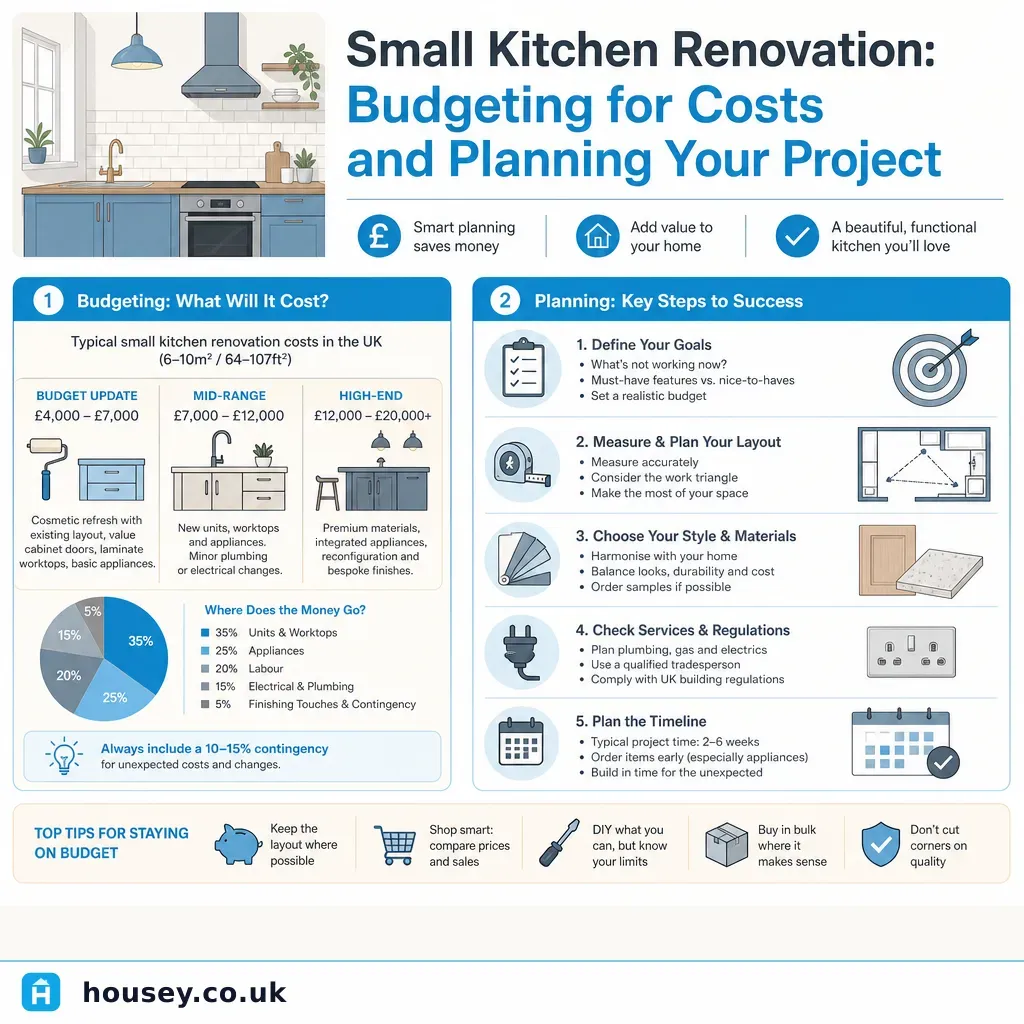
Small kitchen renovation: budgeting for costs and planning your project
A small kitchen renovation in the UK typically costs £5,000–£15,000 for a full refresh including new units, worktops, tiling, and appliances, though costs vary widely by specification, region, and whether structural changes or rewiring are involved.
 Improvement & Build
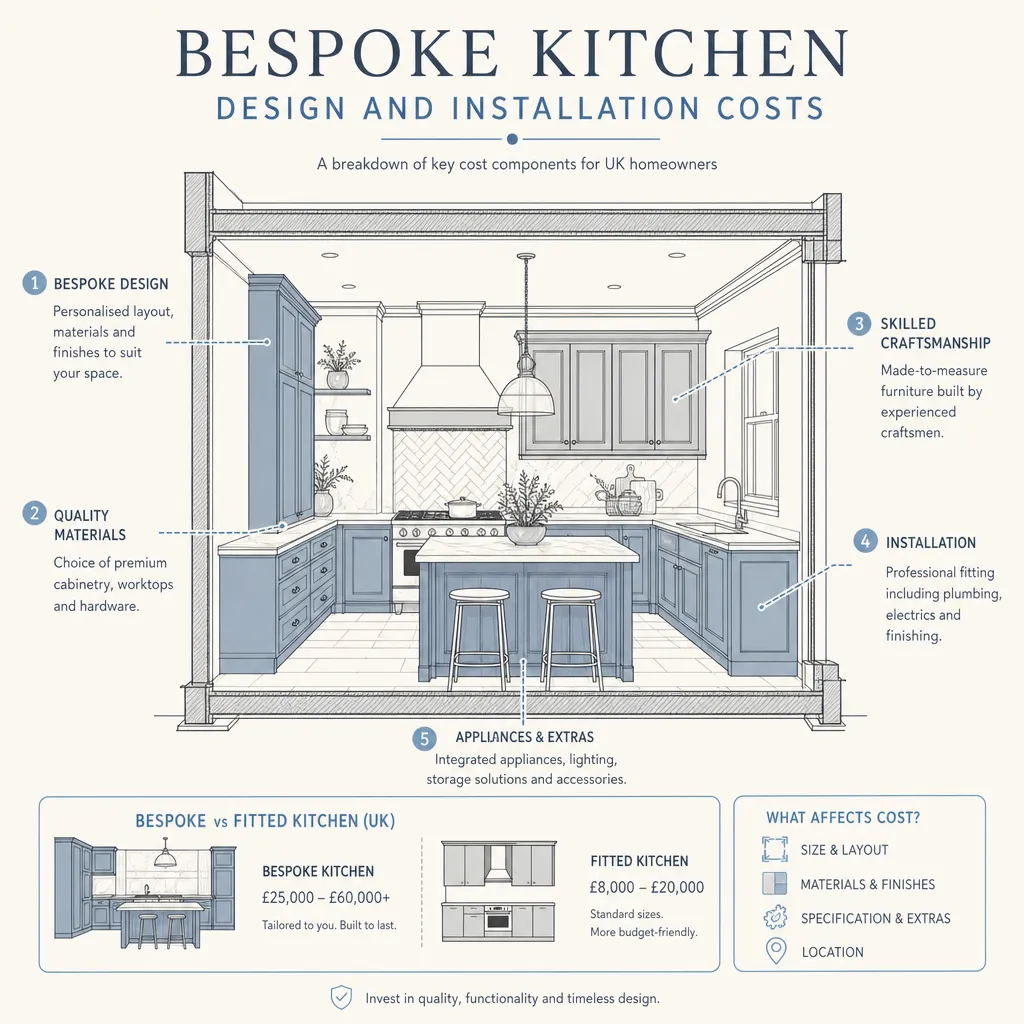
Bespoke Kitchen Design and Installation Costs
Bespoke kitchens in the UK typically cost £15,000–£60,000+ for design, cabinetry, worktops, and installation combined, with high-end commissions reaching £100,000 or more.
 Improvement & Build
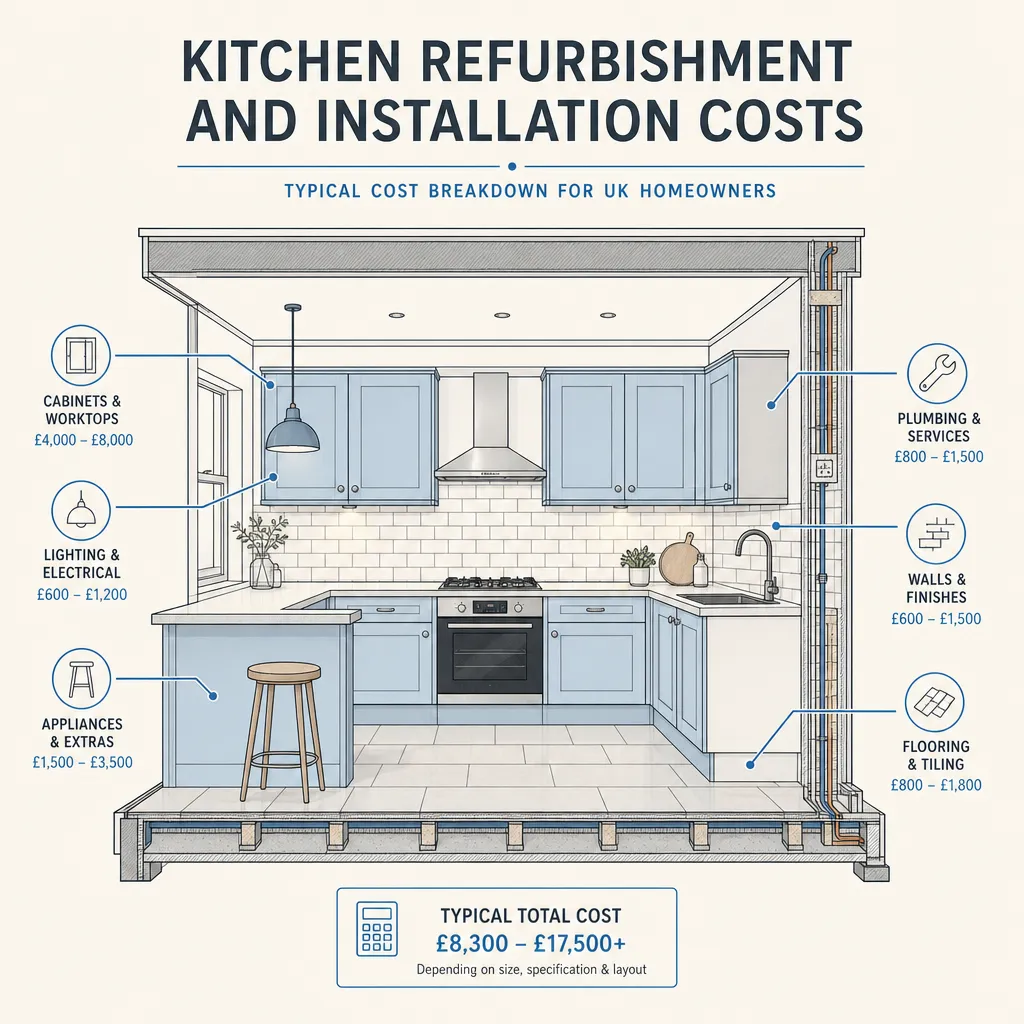
Kitchen Refurbishment and Installation Costs
A kitchen refurbishment in the UK typically costs between £3,000 and £40,000 or more, depending on whether you are replacing units only or carrying out a full design-and-build project.