Soapstone Worktops: Design, Installation, and Maintenance
By Housey · Last reviewed 10th of May 2026
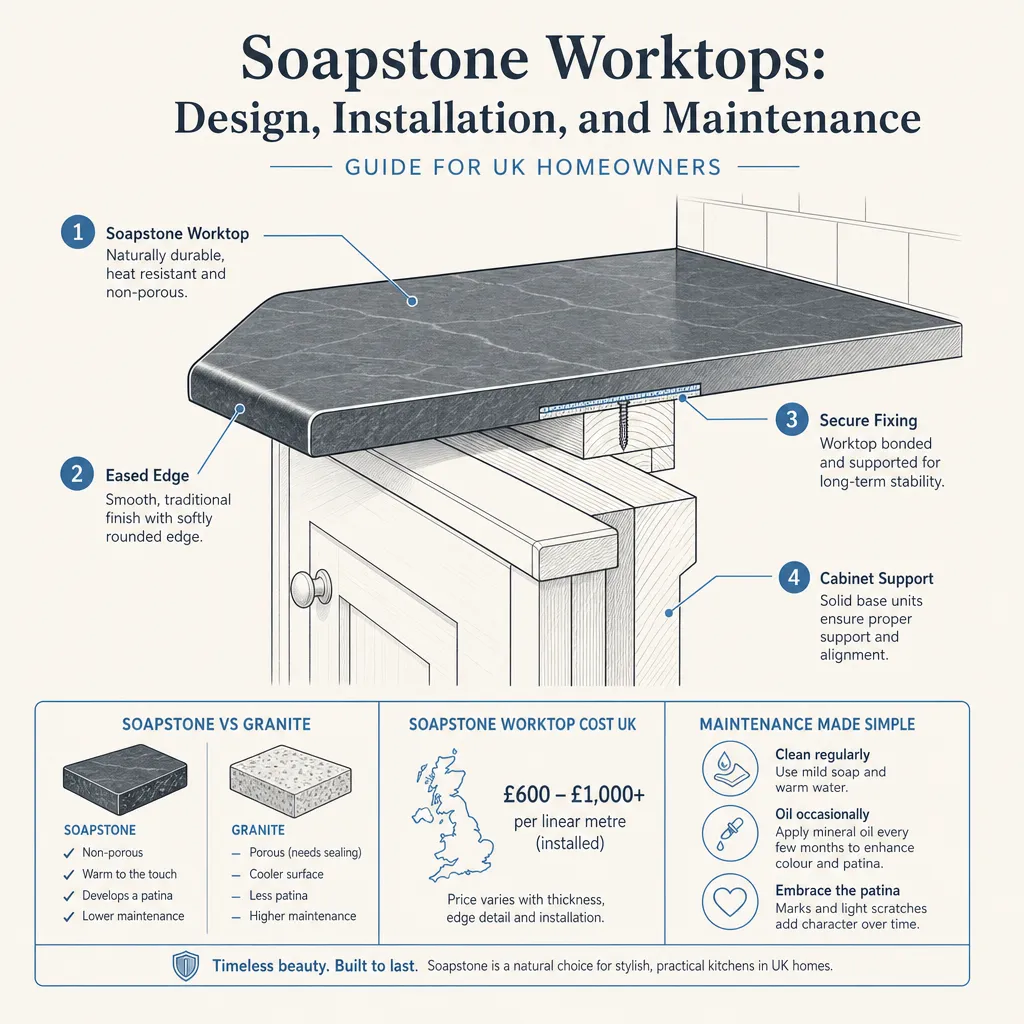
Soapstone Worktops: Design, Installation, and Maintenance
Soapstone worktops sit at the intersection of practicality and character, which is why they appear in period kitchens, contemporary extensions, and scientific laboratories alike. UK homeowners typically encounter soapstone when researching natural stone alternatives to granite or quartz — often after finding that polished marble etches and that quartz cannot tolerate direct heat. Understanding soapstone's properties before ordering matters because, unlike most engineered surfaces, it changes in appearance over years of use.
Key points
- Soapstone is composed primarily of talc and chlorite, making it naturally non-porous — no sealer is required at any point during ownership.
- It is highly heat-resistant: placing hot pans directly on the surface will not cause scorching, cracking, or resin damage.
- Acid resistance makes soapstone superior to marble for kitchen use — lemon juice, vinegar, and wine cause no etching.
- UK installed costs are approximately £400–£900 per square metre, depending on slab thickness (typically 30mm), edging profile, and supplier location.
- The surface darkens naturally over time; applying food-grade mineral oil accelerates and evens the patina development.
What is soapstone and why do homeowners choose it?
Soapstone (steatite) is a metamorphic rock high in talc content — typically 50–80%. The talc makes it soft relative to granite (it scores 1–2 on the Mohs scale versus granite's 6–7) but extremely dense and non-porous. It has been used in Britain for sinks, draining boards, and hearth surrounds since the Victorian era, and its practical properties remain as relevant for contemporary kitchen design as they were then.
UK homeowners choose soapstone for three main reasons:
- No sealing required. Unlike granite, which usually needs sealing every one to three years, soapstone's natural density prevents liquid absorption. This matters for hygiene in kitchens with children or with frequent cooking.
- Genuine heat resistance. Quartz worktops contain resin binders that can discolour or crack under sustained heat above approximately 150°C. Soapstone contains no resin and copes with direct pan contact, though trivets remain good practice.
- Character and patina. Soapstone starts as grey-green or dark grey and darkens towards a deep charcoal or near-black with use. Some homeowners embrace an uneven patina as evidence of a well-used kitchen; others oil regularly to keep the darkening consistent across the surface.
The principal trade-off is softness. Soapstone scratches more easily than granite or quartz. Shallow scratches can be sanded out at home with fine-grit paper and re-oiled — an advantage over chips in quartz — but homeowners who prefer a pristine, unchanging surface may find the maintenance philosophy unfamiliar.
How soapstone compares to other kitchen worktop materials
Material | Sealing needed | Heat resistance | Acid resistance | Scratch resistance | Typical installed cost/m² | Repairability |
|---|---|---|---|---|---|---|
Soapstone | No | Excellent | Excellent | Moderate (soft stone) | £400–£900 | High (sand and oil) |
Granite | Yes (every 1–3 yrs) | Good | Good | High | £300–£800 | Low (chips difficult) |
Quartz (engineered) | No | Poor (resin damage >150°C) | Good | High | £350–£900 | Low (resin chips) |
Marble | Yes (frequent) | Moderate | Poor (etches easily) | Moderate | £500–£1,200 | Moderate (professional polish) |
Porcelain slab | No | Excellent | Excellent | Very high | £400–£1,000 | Low (cracks at edges) |
Indicative UK costs, last reviewed 2026-05-10. Costs vary by region, slab thickness, edging profile, and supplier.
Which material suits your kitchen?
- Choose soapstone if you cook frequently, want a zero-maintenance sealing routine, prefer a dark natural look that develops character, and are comfortable sanding out scratches occasionally.
- Choose granite if you want a harder surface, prefer polished natural stone available in a wide range of colours, and are happy to reseal every year or two.
- Choose quartz if you want consistent patterning and strong scratch resistance, and your kitchen does not involve placing very hot pans directly on the surface.
- Choose marble if aesthetics take precedence and you are prepared for more intensive upkeep — particularly if you cook regularly with acidic ingredients such as citrus or vinegar.
- Ask a stone supplier or kitchen designer if you are unsure; many will provide sample offcuts for testing in your own space before you commit.
Installation: what UK homeowners should expect
Soapstone arrives as slabs, typically sourced from Brazil, India, or Scandinavia. UK specialist stone suppliers stock slabs in thicknesses of 20mm, 30mm, and 40mm; 30mm is the most common choice for domestic kitchen worktops.
Typical installation process:
- A template is made of the worktop area using a digital templating system or rigid board — usually carried out one to two weeks after cabinet installation is complete.
- The slab is cut and profiled at the fabricator's workshop; cutouts for sinks and hobs are made at this stage.
- Two or three fitters install the worktops; soapstone is heavy (a 30mm slab weighs approximately 80–100 kg per square metre), so solo installation is not safe.
- Joints between slabs are filled with colour-matched epoxy adhesive; joints should be kept below 1mm where possible.
- Undersink areas are reinforced with timber or metal supports to bear the weight of undermount sinks.
Lead time: Template to installation typically takes two to four weeks, depending on the supplier's schedule and whether slab stock is held in the UK.
Questions to ask your fabricator before commissioning work:
- What slab thickness do they recommend for your span between cabinet supports?
- What edging profile is included — eased, bevelled, or bullnose — and what does a more complex profile cost?
- Will joints be epoxy-filled, and what is their joint-width tolerance?
- What warranty do they offer on fabrication workmanship and any cutouts?
- Is VAT included in the quoted price?
Maintenance: managing patina and minor damage
Oiling routine:
- Apply food-grade mineral oil (available from kitchen suppliers and pharmacies) every four to six weeks during the first year, allowing each application to penetrate for 20–30 minutes before wiping off the excess with a clean cloth.
- After the surface reaches a stable dark patina — usually after six months to a year — monthly or quarterly oiling is sufficient.
- Do not use olive oil, vegetable oil, or cooking oils; these can become rancid and cause persistent odour.
Sanding out scratches:
- Clean and dry the surface thoroughly before starting.
- Sand lightly with 150-grit wet-and-dry paper, then 220-grit, working in a circular motion or with the grain.
- Wipe clean and apply mineral oil immediately.
- The repaired area will darken to match the surrounding surface within a few oiling cycles.
Homeowner maintenance checklist:
Costs: what affects the price of soapstone worktops in the UK?
Several factors influence the final installed cost:
- Slab thickness: 30mm costs more than 20mm; 40mm is a premium option used where a substantial look is desired.
- Origin of stone: Brazilian and Indian soapstone are generally less expensive than Scandinavian grades.
- Edge profile: A simple eased edge is cheapest; ogee or waterfall edges add to fabrication time and cost.
- Cutouts: Each sink or hob cutout adds to fabrication cost; undermount sinks require additional support fitting.
- Number of seams: Minimising seams requires larger slab sections, which are more expensive to source and transport.
- Location: London and the South East typically see a 15–25% premium over national average costs.
Indicative UK installed costs (30mm slab, eased edge, including templating, fabrication, and fitting): £400–£900/m², last reviewed 2026-05-10. Always request itemised quotes to compare like-for-like.
When to get professional help
Soapstone worktop installation is not a realistic DIY project for most homeowners. The slabs are heavy, the cuts need precision, and a misaligned cutout for a hob or sink is expensive to rectify.
Seek professional help if:
- Any span between cabinet supports exceeds 600mm without intermediate support — unsupported spans can crack even dense stone over time.
- You are fitting an undermount sink — the cut, support structure, and silicone seal all require fabricator expertise.
- A slab arrives cracked or with visible inclusions near a cutout — do not attempt to install it; contact the supplier before proceeding.
- Joints open or lift within the first year — contact the fabricator rather than attempting DIY re-adhesion with a general-purpose adhesive.
- You notice persistent dark staining in one area that does not respond to oiling — this may indicate a localised porosity issue worth raising with the supplier.
How Housey can help
If your soapstone worktop installation forms part of a larger kitchen extension or home renovation project, Housey can help you find qualified extension builders who can manage the full project scope — from structural work and cabinet installation through to coordinating specialist stone fitters. Start your request on Housey to compare quotes from vetted local builders.
Frequently asked questions
Does soapstone need to be sealed?
No. Soapstone is naturally non-porous, so it does not absorb liquids and does not require sealing at any point. This is one of its principal advantages over granite, marble, and some other natural stones. Periodic oiling is recommended not to protect the surface but to manage the natural darkening patina evenly across the worktop.
Will soapstone scratch easily?
Soapstone is softer than granite or quartz, scoring 1–2 on the Mohs hardness scale. Day-to-day kitchen use will cause light scratches over time, particularly from ceramic or cast-iron cookware. The advantage is that scratches can be removed at home with fine-grit sandpaper and a coat of mineral oil — not an option with engineered quartz.
How long do soapstone worktops last?
When properly maintained, soapstone worktops last for decades. The material has been used in scientific laboratories, sinks, and kitchen surfaces for well over a century. There is no degradation mechanism that limits its lifespan — provided it is not cracked by an unsupported span or a very hard impact, it should outlast the kitchen itself.
Can I use soapstone for a bathroom vanity top as well as a kitchen worktop?
Yes. Soapstone's non-porous nature and resistance to soap and toothpaste makes it well suited to bathroom vanity tops. The same oiling and care routine applies. Ensure the fabricator accounts for any tap or basin cutouts in the same way they would for a kitchen sink, and that adequate support is provided beneath the stone.
Is soapstone available from UK suppliers?
Yes, though the range of suppliers is smaller than for granite or quartz. Specialist stone suppliers in London, Bristol, Manchester, and Edinburgh typically stock soapstone slabs or can order them. Lead times of three to six weeks from order to installation are common; confirm whether your supplier holds UK stock or imports to order, as this affects the project timeline significantly.
Sources and further reading
- Stone Federation Great Britain — Stone Federation Great Britain
- Planning Portal: Home improvement projects — Planning Portal
- Energy Saving Trust: Home improvements — Energy Saving Trust
Useful next reads
 Improvement & Build
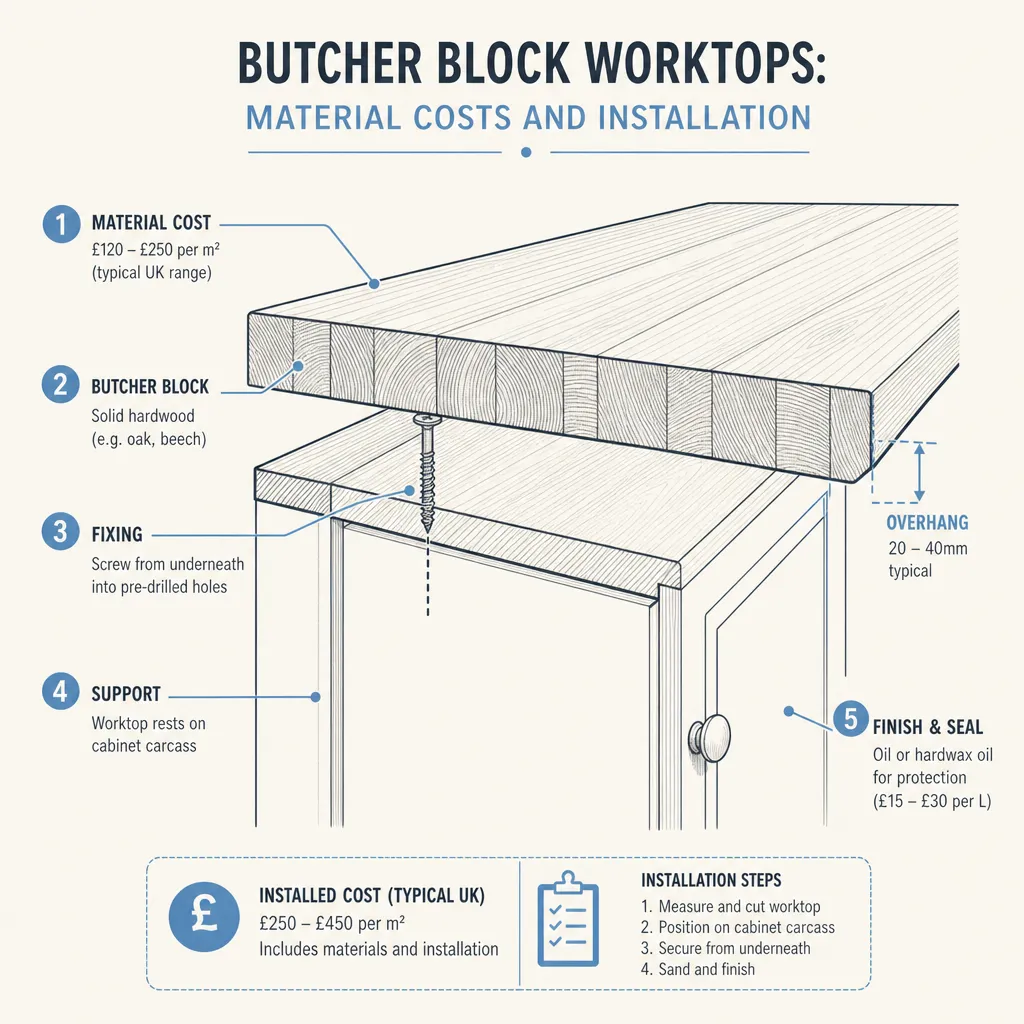
Butcher Block Worktops: Material Costs and Installation
Butcher block worktops typically cost £80–£450 per linear metre for materials in the UK, depending on timber species and construction type.
 Improvement & Build
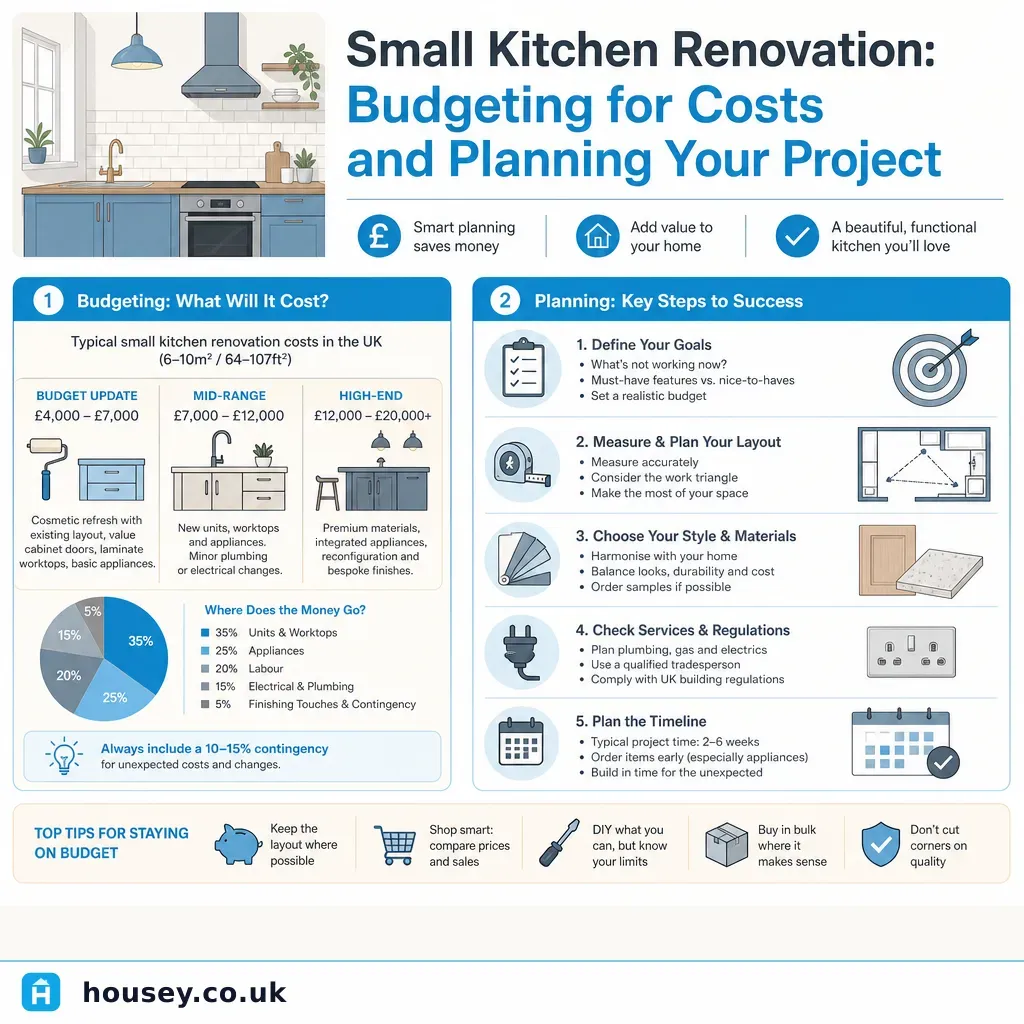
Small kitchen renovation: budgeting for costs and planning your project
A small kitchen renovation in the UK typically costs £5,000–£15,000 for a full refresh including new units, worktops, tiling, and appliances, though costs vary widely by specification, region, and whether structural changes or rewiring are involved.
 Improvement & Build
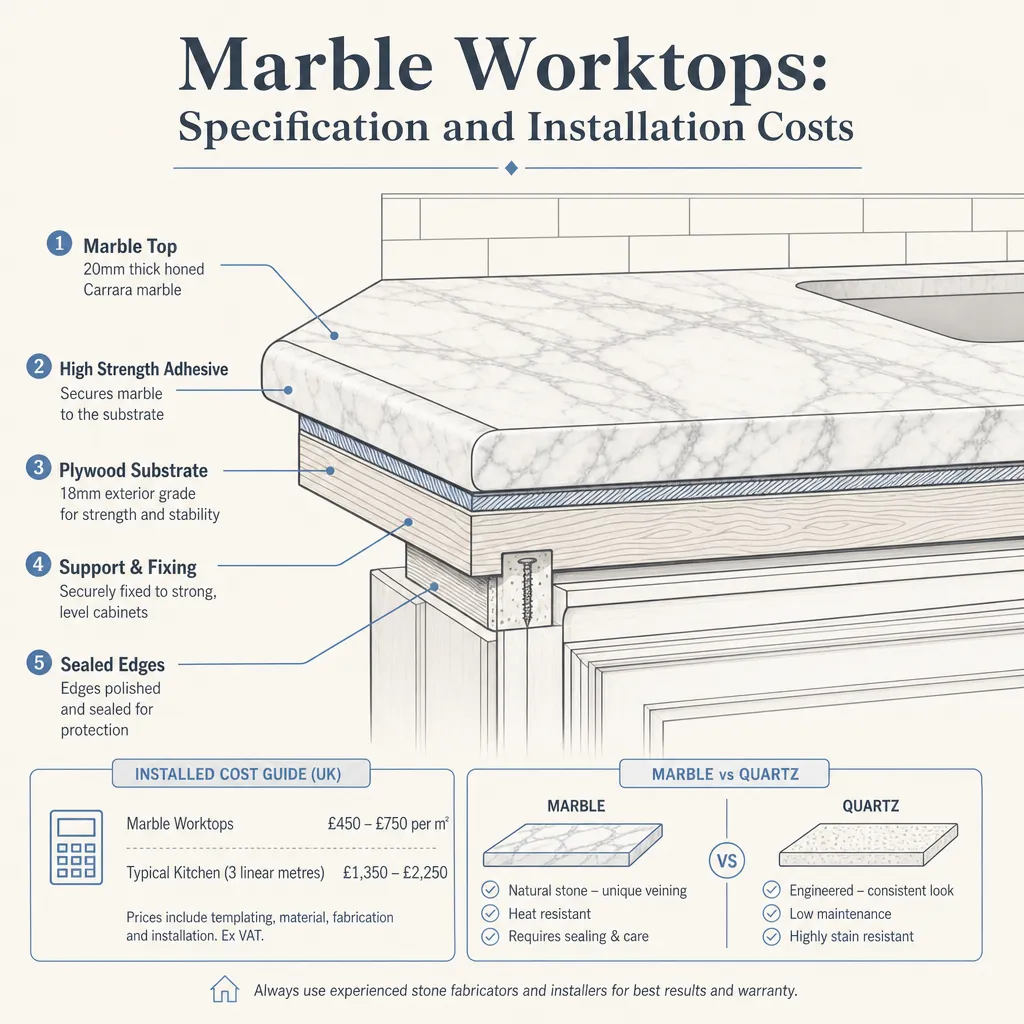
Marble Worktops: Specification and Installation Costs
Marble worktops in the UK typically cost £300–£800 per linear metre installed, depending on marble grade, slab thickness, finish, and edge profile.
 Improvement & Build
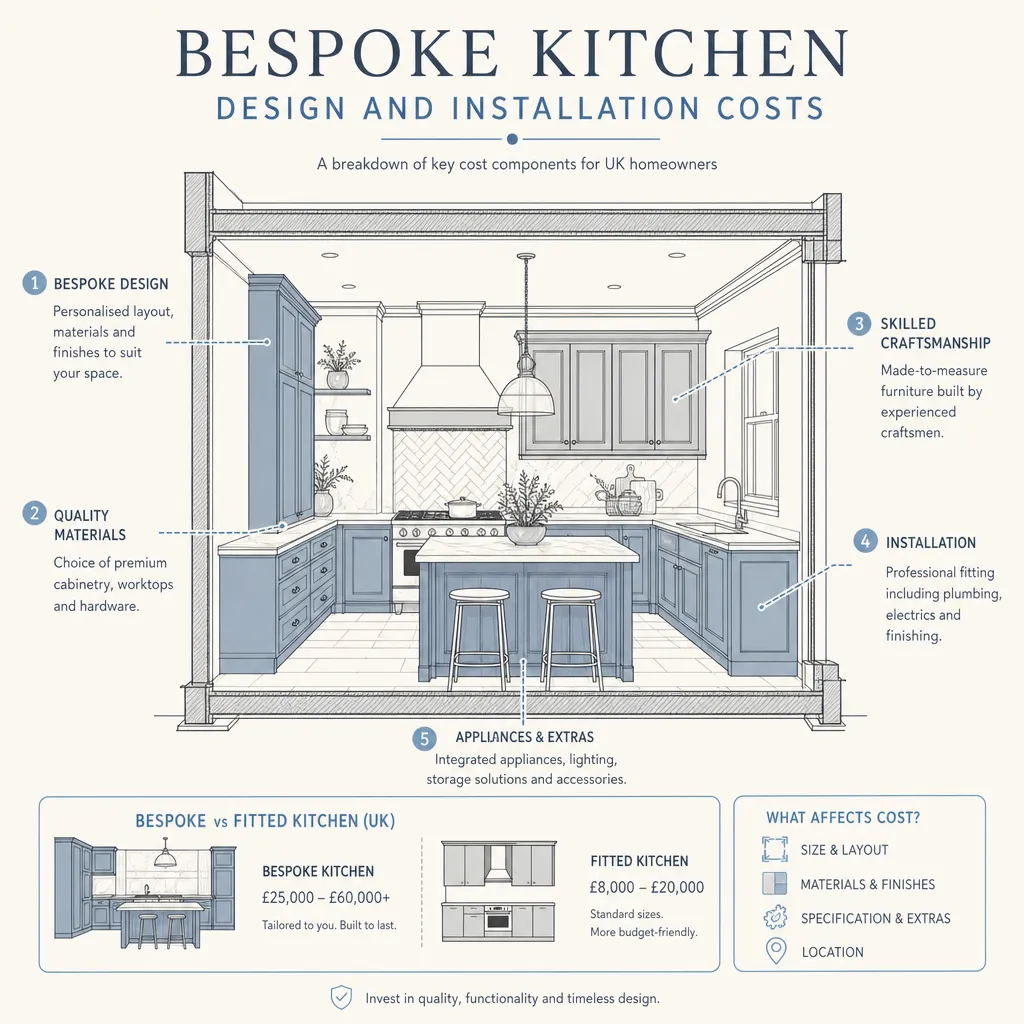
Bespoke Kitchen Design and Installation Costs
Bespoke kitchens in the UK typically cost £15,000–£60,000+ for design, cabinetry, worktops, and installation combined, with high-end commissions reaching £100,000 or more.
 Improvement & Build
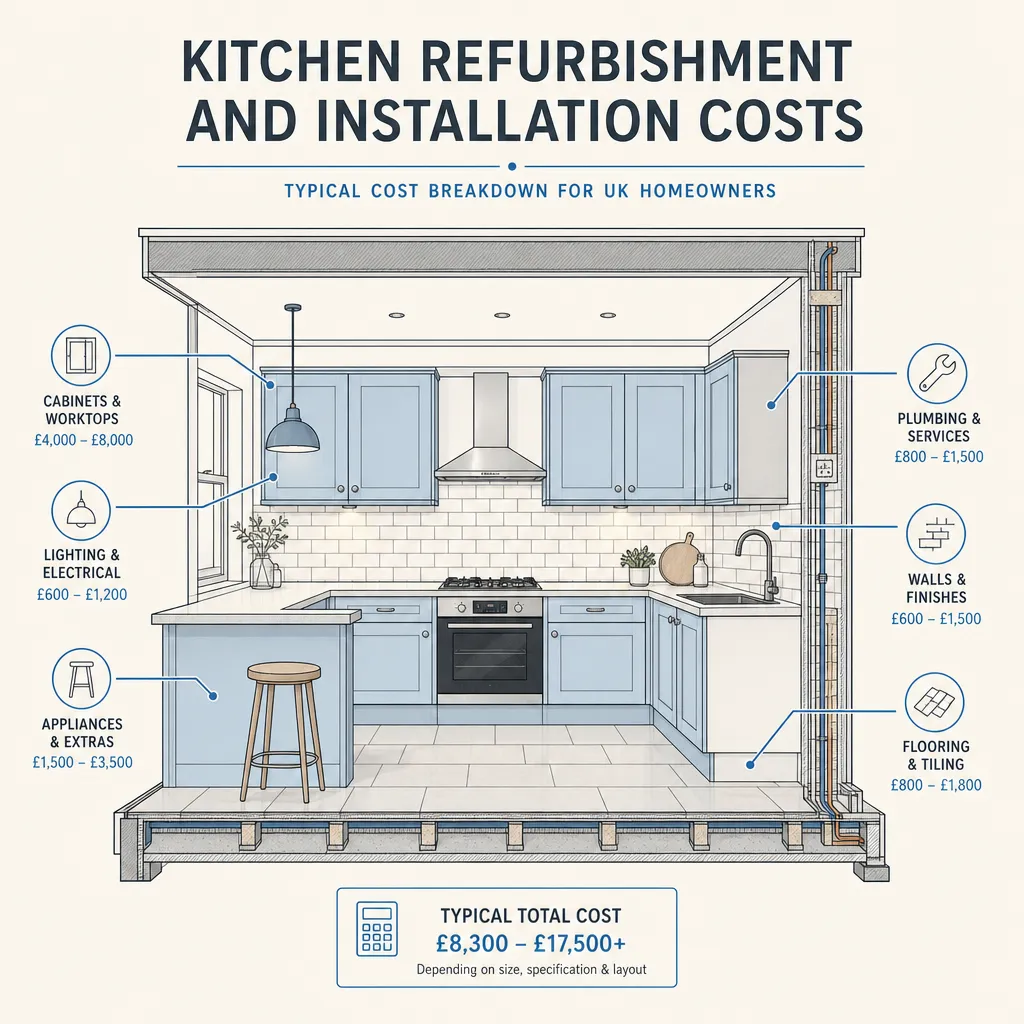
Kitchen Refurbishment and Installation Costs
A kitchen refurbishment in the UK typically costs between £3,000 and £40,000 or more, depending on whether you are replacing units only or carrying out a full design-and-build project.