Buyer's Conveyancing Checklist: Steps and Documents You'll Need
By Housey · Last reviewed 25th of May 2026
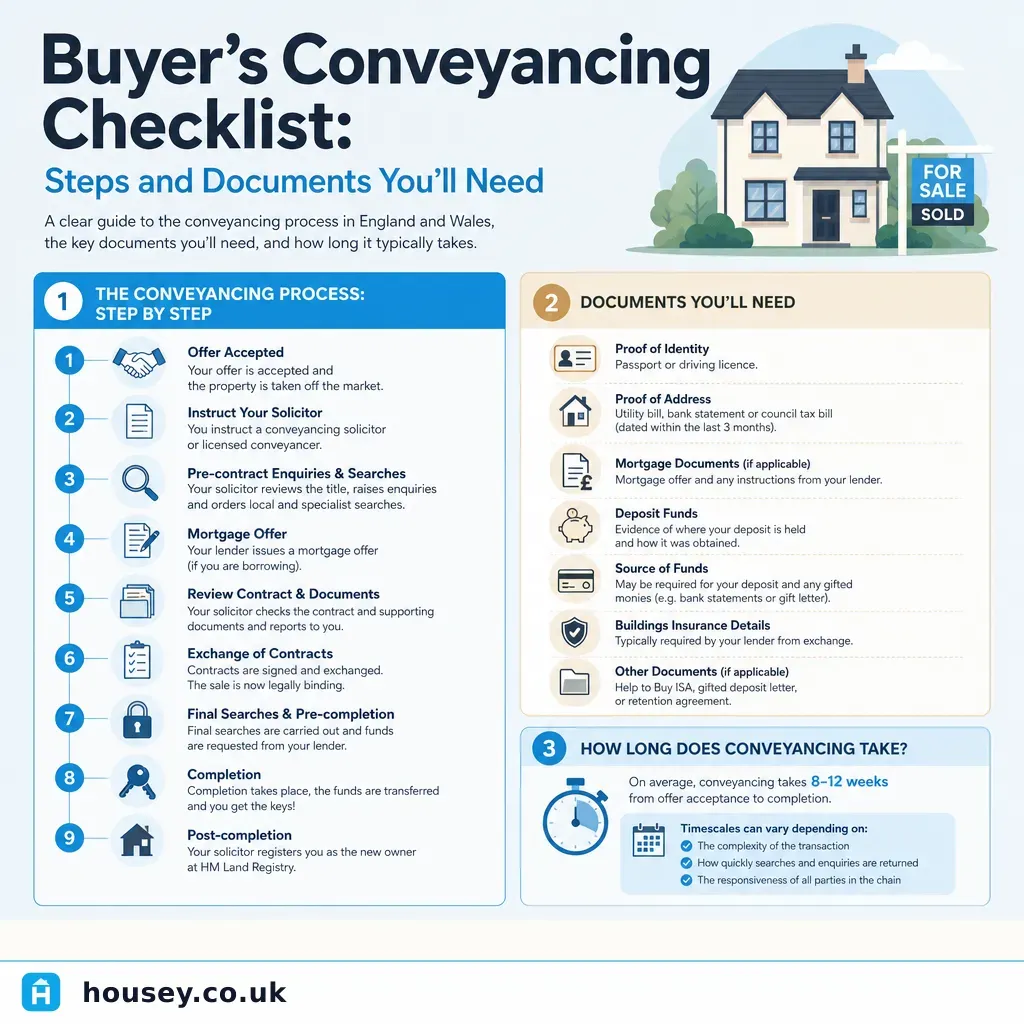
Buyer's Conveyancing Checklist: Steps and Documents You'll Need
When an offer is accepted on a property in England and Wales, the legal transfer of ownership begins a process involving multiple simultaneous workstreams between the buyer, the seller, their respective conveyancers, mortgage lenders, and local authorities. Many buyers are caught off guard by the volume of documents required and the number of decisions that arise before exchange. Knowing what to prepare, what to expect at each stage, and where common delays occur can make a significant difference to how smoothly — and quickly — a transaction proceeds.
Key points
- Conveyancing in England and Wales typically takes 8–16 weeks from instruction to completion, though leasehold or chain transactions often take longer.
- Your conveyancer will order at least four standard searches: local authority, drainage and water, environmental, and chancel repair liability.
- Stamp Duty Land Tax (SDLT) in England is due within 14 days of completion; your conveyancer files and pays this on your behalf using the HMRC SDLT return.
- The Transfer Deed (TR1 form) and Mortgage Deed are the two key legal documents you sign before completion.
- Joint buyers must decide between joint tenancy and tenancy in common before exchange — this determines how ownership passes on death and cannot easily be changed without a formal deed of trust.
What is conveyancing and when does it start?
Conveyancing is the legal process of transferring property ownership from seller to buyer. It begins as soon as both parties instruct solicitors or licensed conveyancers — typically within a few days of an offer being accepted. In England and Wales, neither party is legally committed until contracts are exchanged. Either side can withdraw without penalty up to that point, which is why preparation and speed in the early stages matter.
Scotland operates under a separate legal system using missives rather than contracts, and Northern Ireland follows its own conveyancing framework. This article applies to England and Wales only.
The conveyancing process: stage by stage
Stage 1: Instruction and identity checks (Days 1–5)
- Instruct a conveyancer and return their client care letter and terms of engagement.
- Complete Anti-Money Laundering (AML) identity checks — usually a valid passport or driving licence plus proof of address dated within three months.
- Provide proof of funds: a mortgage agreement in principle, or bank statements showing the source of your deposit if paying in cash.
- Sign and return any initial authority forms your conveyancer requires.
Stage 2: Draft contract and searches (Weeks 1–4)
- Your conveyancer receives the draft contract and supporting documents from the seller's solicitor.
- Searches are ordered (see the searches section below).
- Preliminary enquiries are raised with the seller's solicitor about the title, boundaries, planning history, and any known disputes or alterations.
Stage 3: Mortgage offer and enquiries (Weeks 3–8)
- Your mortgage lender issues a formal mortgage offer; your conveyancer reviews its terms and conditions.
- Replies to enquiries are received from the seller's solicitor; your conveyancer reports any concerns to you.
- Completed search results are reported to you.
- If the property is leasehold, a Leasehold Information Pack is requested from the freeholder or managing agent.
Stage 4: Exchange of contracts (Weeks 6–16)
- Both parties sign identical copies of the contract.
- You pay your deposit — usually 5–10% of the purchase price — to your conveyancer's client account.
- Exchange happens simultaneously between both sets of solicitors by telephone: this is the moment both parties become legally bound.
- A completion date is agreed and inserted into the contracts at exchange.
Stage 5: Completion and post-completion
- Your lender releases the mortgage funds to your conveyancer.
- Your conveyancer sends the full purchase price to the seller's solicitor.
- Keys are released — usually collected from the estate agent.
- Your conveyancer files the SDLT return with HMRC and submits the application to register your ownership at HM Land Registry.
Document preparation list
Gather these documents before instructing your conveyancer to avoid delays at the outset:
Document | Why it is needed | When to provide |
|---|---|---|
Valid passport or driving licence | Anti-Money Laundering identity check | At instruction |
Recent utility bill or bank statement (within 3 months) | Proof of address for AML check | At instruction |
Mortgage agreement in principle | Confirms borrowing capacity to your conveyancer | At instruction |
Source of funds evidence | Bank statements showing deposit origin; signed gift letter if deposit is gifted | At instruction |
Proof of deposit funds | Bank statement confirming funds are available | Before exchange |
Buildings insurance schedule | Required by most mortgage lenders from exchange date | Before exchange |
Signed Mortgage Deed | Creates the legal charge over the property in favour of the lender | Before completion |
If your deposit is a gift, most lenders require a signed gift letter from the donor confirming the money is not a loan and that the donor has no interest in the property.
Conveyancing searches explained
Your conveyancer orders searches on your behalf. In England, the four standard searches are:
- Local authority search: reveals planning permissions, enforcement notices, road adoption status, and whether the property falls in a conservation area, Article 4 direction area, or near a proposed development.
- Drainage and water search: confirms mains water and sewer connections and identifies responsibility for drains running beneath or near the property.
- Environmental search: checks historical land use, contamination records, landfill proximity, and flood risk data.
- Chancel repair liability search: identifies whether the property sits in an area where owners may historically owe a contribution to local parish church repairs.
Depending on location, additional searches may be required — coal mining searches in former mining areas, tin mining searches in parts of Cornwall, or commons registration searches in some rural areas. Your conveyancer will advise which apply.
Worked example: a 1960s semi-detached purchase in the Midlands
Aisha is buying a 1960s semi-detached house for £230,000 with a 10% deposit and a repayment mortgage. Her conveyancer is instructed on the day her offer is accepted.
- Week 1: AML checks completed. Draft contract and title register received. Searches ordered.
- Week 2: Environmental search flags proximity to a former industrial site. Conveyancer instructs a specialist review; result comes back as low risk.
- Week 4: Formal mortgage offer received. Enquiries reveal a rear extension built without building regulations approval. Conveyancer arranges indemnity insurance, which the lender accepts.
- Week 8: All searches returned satisfactorily. Mortgage Deed signed. Deposit transferred to client account.
- Week 10: Exchange of contracts. Completion agreed for two weeks later.
- Day 84: Completion. SDLT return filed within 14 days. Land Registry application submitted.
The undocumented extension was resolved efficiently through indemnity insurance — a well-established route for older building works where original paperwork is missing.
What to ask before accepting a conveyancing quote
- Is the quoted fee fixed, or are search fees and disbursements charged separately?
- Does the quoted figure include VAT?
- Who in the firm will handle my matter day-to-day, and what is their qualification?
- Are you on my mortgage lender's approved panel?
- What is your process for keeping me updated throughout the transaction?
- What happens to fees if the transaction falls through before exchange?
- What could cause the price or timeline to change after you have started work?
Important limitations
This guide provides general information about the conveyancing process in England and Wales. Actual timelines, costs, and requirements vary depending on property tenure (freehold or leasehold), chain length, mortgage lender requirements, search results, and individual property circumstances. Nothing in this article constitutes legal advice. A qualified and regulated conveyancer or solicitor should advise on your specific transaction.
What to ask a qualified professional
- What does the title register show, and are there any restrictions, charges, or covenants I should know about?
- Are there any gaps in the planning permission or building regulations history for extensions or alterations?
- Is there anything in the search results that causes you concern?
- If the lease has fewer than 80 years remaining, what are my options for extending before or after purchase?
- What are the service charge and ground rent obligations if this is a leasehold property?
When to get professional help
Always instruct a regulated conveyancer or solicitor for a property purchase. Raise concerns with your conveyancer promptly if:
- The seller discloses disputes with neighbours or unresolved boundary issues.
- Searches reveal contamination, a nearby proposed road or development scheme, or a flood zone designation.
- There are alterations or extensions without planning permission or building regulations approval.
- The leasehold lease has fewer than 80 years remaining at the time of purchase.
- Multiple charges, restrictions, or third-party rights appear on the title register.
How Housey can help
Housey connects buyers with regulated conveyancers and solicitors handling residential purchases across England and Wales. Find and compare conveyancing services for buyers to request quotes, check credentials, and instruct with confidence.
Frequently asked questions
How long does conveyancing take for a buyer in England?
Most residential purchases take 8–16 weeks from instruction to completion. Leasehold purchases, chain transactions, or properties with complex title issues typically take longer. New-build purchases can extend beyond 16 weeks if the development is not yet complete at the time of instruction.
What searches does a buyer's conveyancer order?
The four standard searches are local authority, drainage and water, environmental, and chancel repair liability. Additional searches — such as coal mining, tin mining, or commons registration — may be required depending on the property's location and history. Your conveyancer will advise on which apply to your purchase.
Do I need a solicitor, or can I use a licensed conveyancer?
Both are regulated to handle residential conveyancing in England and Wales. Solicitors are regulated by the Solicitors Regulation Authority (SRA); licensed conveyancers by the Council for Licensed Conveyancers (CLC). For a standard purchase, either is generally suitable. If your transaction involves connected legal matters — divorce, probate, or a boundary dispute — a solicitor may be the better choice.
Can my conveyancer act for both me and the seller?
In most cases, no. SRA and CLC rules generally prevent a conveyancer from acting for both buyer and seller in the same transaction because of the conflict of interest involved. Each party should instruct their own independent legal representative.
What is a Mortgage Deed?
The Mortgage Deed is the legal document you sign to create a charge over the property in favour of your lender. It is one of the final documents executed before completion and is registered at HM Land Registry alongside the Transfer Deed (TR1 form), which transfers legal ownership from seller to buyer.
Sources and further reading
- Buying or owning a home — GOV.UK
- Stamp Duty Land Tax — HMRC / GOV.UK
- What is conveyancing? — Council for Licensed Conveyancers
- Conveyancing guidance for home buyers — The Law Society
Useful next reads
 Buying & Moving
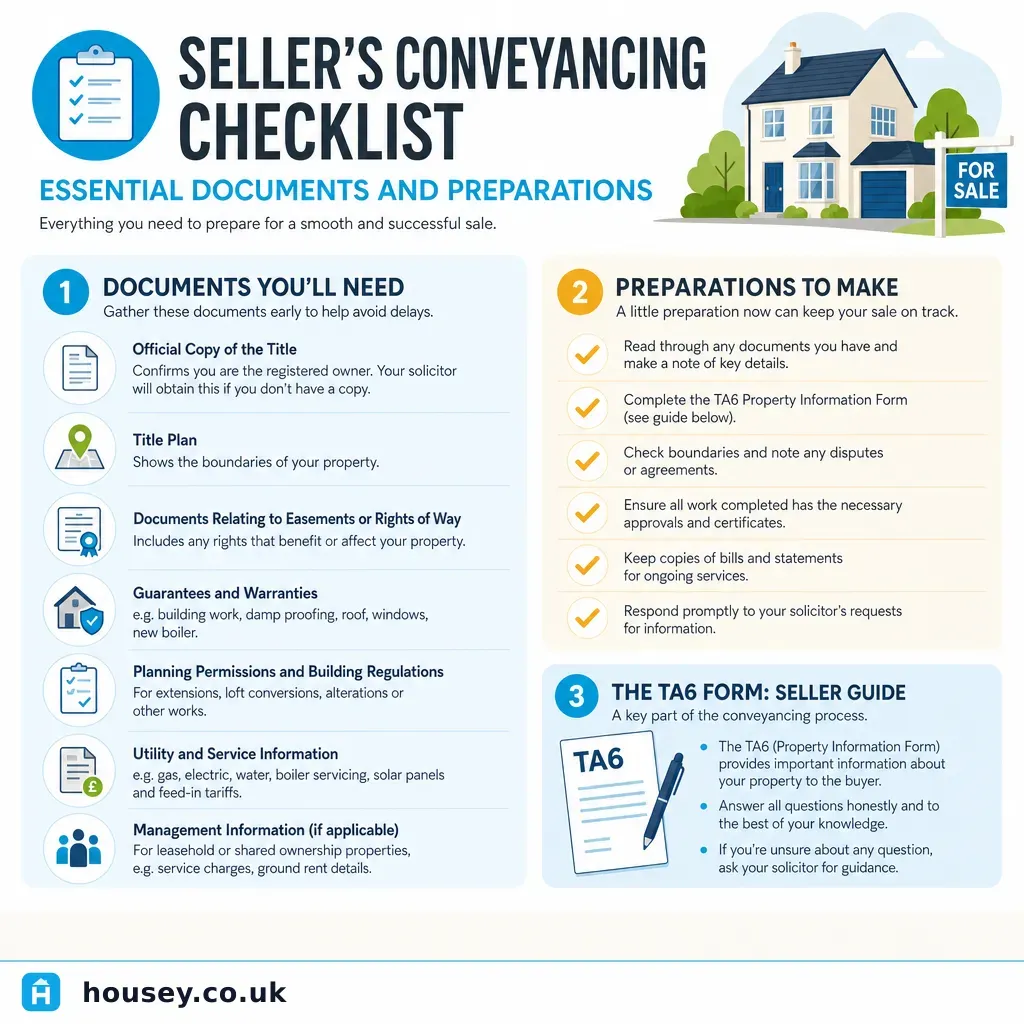
Seller's Conveyancing Checklist: Essential Documents and Preparations
Sellers need to gather title documents, completed Law Society forms (TA6 and TA10), building regulations certificates, planning permissions, and — for leasehold properties — a management information pack before or shortly after accepting an offer.
 Buying & Moving
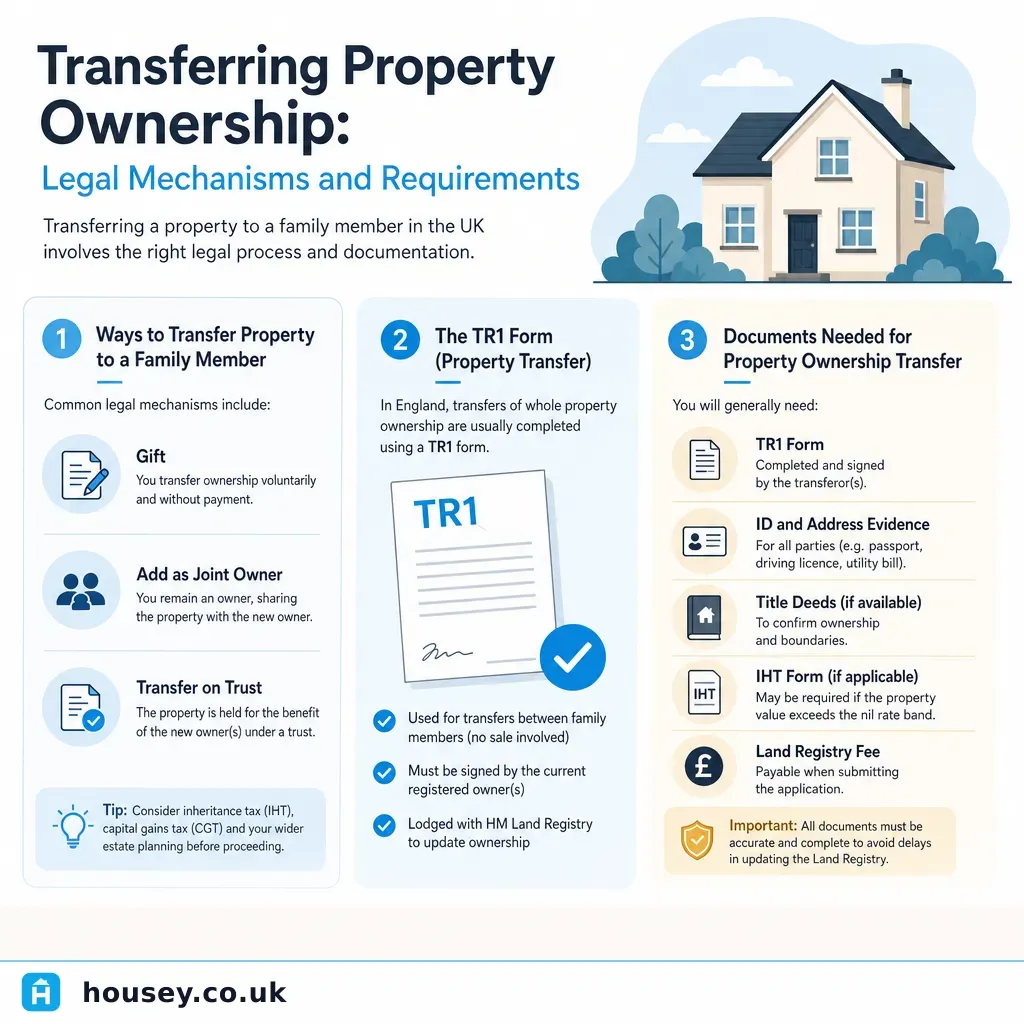
Transferring Property Ownership: Legal Mechanisms and Requirements
In England and Wales, property ownership transfers when HM Land Registry records a change of proprietor, triggered by a completed TR1 deed for full transfers or a TP1 for partial ones.
 Buying & Moving
Property Information Questionnaires: What You Need to Complete for Sale
When selling a home in England and Wales, you must complete the TA6 Property Information Form and TA10 Fixtures, Fittings and Contents form before contracts can be exchanged.
 Buying & Moving
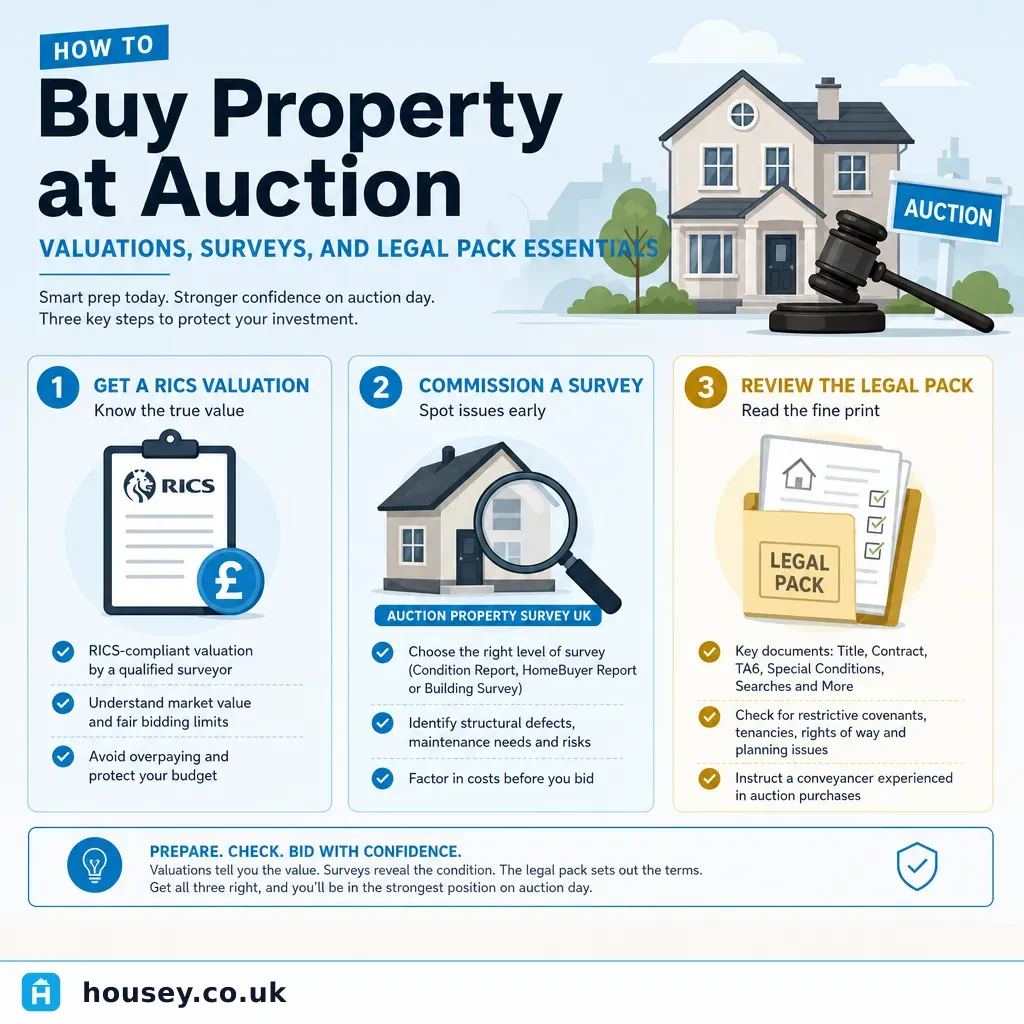
How to Buy Property at Auction: Valuations, Surveys, and Legal Pack Essentials
Buying at auction means contracts exchange the moment the hammer falls — there is no cooling-off period.
 Buying & Moving
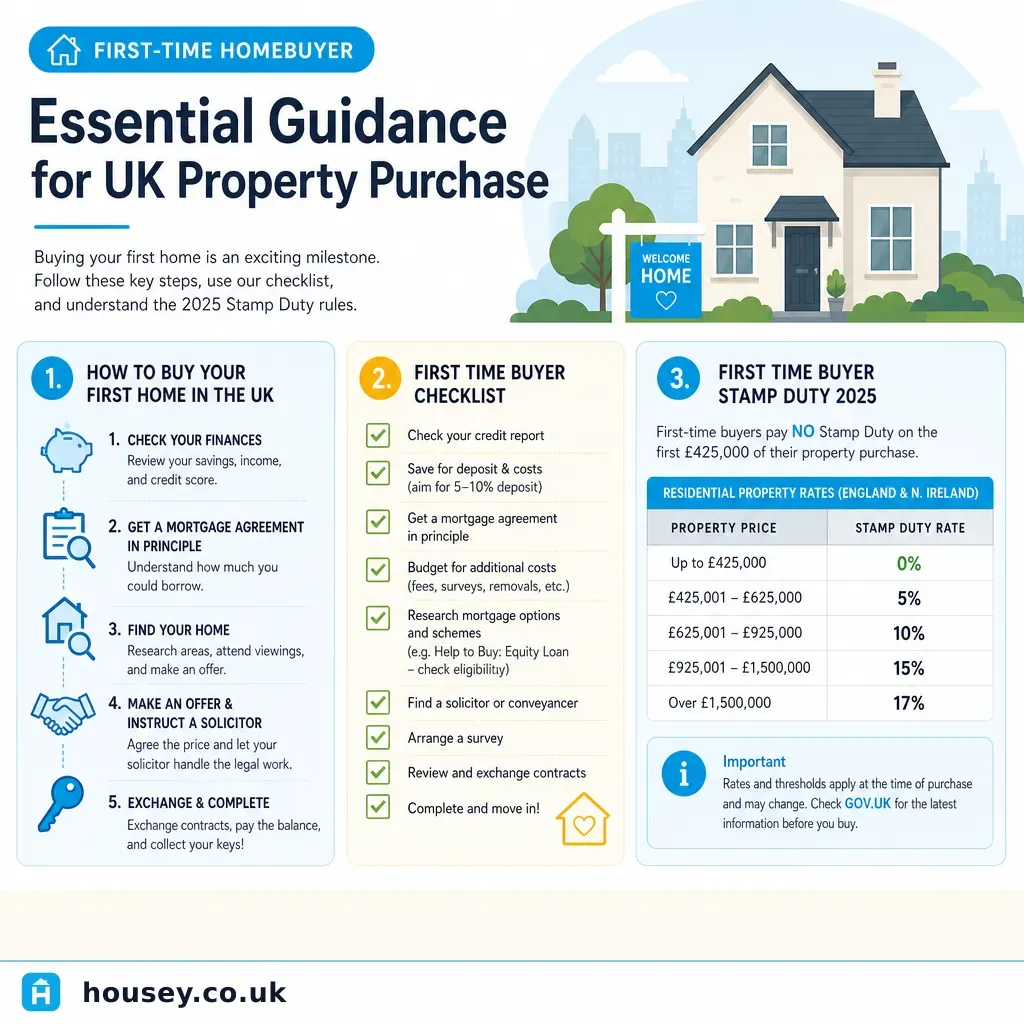
First-Time Homebuyer: Essential Guidance for UK Property Purchase
Buying your first home in the UK involves securing a mortgage in principle, making an offer, instructing a solicitor for conveyancing, commissioning a RICS Home Survey, then exchanging and completing contracts.