Property Information Questionnaires: What You Need to Complete for Sale
By Housey · Last reviewed 25th of May 2026

Property Information Questionnaires: What You Need to Complete for Sale
When you accept an offer on your home in England and Wales, your conveyancing solicitor will ask you to complete a set of standard property information forms before contracts can be exchanged. For most sellers, these forms require careful attention — the answers you give carry legal weight under the Misrepresentation Act 1967, and inaccurate responses can give a buyer grounds for a claim after completion. Understanding what each form covers and gathering supporting documents before you start will help avoid the delays that frequently stall transactions at the enquiries stage.
Key points
- The TA6 Property Information Form (version 5, updated 2024) and TA10 Fixtures, Fittings and Contents form are required in almost all residential sales in England and Wales.
- TA6 version 5 introduced expanded questions on Japanese knotweed, flood risk history, and building safety — including EWS1 cladding form status for flats subject to the Building Safety Act 2022.
- The Misrepresentation Act 1967 means a seller can be liable even for an innocent misrepresentation that induced the buyer to contract — inaccurate TA6 answers carry legal risk beyond the ethical.
- Leasehold sellers must also complete the TA7 Leasehold Information Form, covering the lease, service charges, managing agent, and any section 20 major works notices.
- Missing completion certificates or planning permissions for past building works is one of the most common causes of transaction delays — gathering these before completing the forms saves significant time.
What forms will you need to complete?
Most freehold residential sales in England and Wales require two core forms from the Law Society's Transaction forms suite. Leasehold and specialist property types require additional forms.
Form | Purpose | Required for |
|---|---|---|
TA6 Property Information Form (v5) | Boundaries, disputes, planning, building works, services, environmental matters, Japanese knotweed, flood risk, building safety | All residential sales |
TA10 Fixtures, Fittings and Contents | Records what is included in the sale price and what the seller is taking | All residential sales |
TA7 Leasehold Information Form | Lease details, ground rent, service charges, managing agent, section 20 major works notices | Leasehold properties |
TA8 New Build Information Form | Developer warranties, NHBC Buildmark cover, infrastructure adoption | New-build properties |
TA9 Commonhold Information Form | Commonhold association details and unit information | Commonhold properties |
Your solicitor supplies the forms and may complete sections from HM Land Registry title data, but the substantive answers about the property's history, condition, and any issues must come from you.
Document preparation list: what to gather before completing the TA6
Locate the following documents before sitting down with your forms. Identifying gaps early avoids mid-transaction delays.
- Planning permissions and building regulations completion certificates for any extensions, loft conversions, garage conversions, or significant structural alterations
- FENSA or CERTASS certificates for replacement windows and doors installed after April 2002, when energy performance requirements for glazing came into force
- Gas Safety certificate and recent boiler service records from a Gas Safe registered engineer
- Electrical Installation Condition Report (EICR) or completion certificate for rewiring or significant electrical works
- Party Wall Awards if any building works were carried out adjacent to or affecting a shared boundary
- Guarantees and warranties for damp-proof course, timber treatment, roofing, or structural warranties such as NHBC Buildmark
- Lease documents if leasehold: the lease itself, recent service charge accounts, ground rent statements, correspondence with the managing agent, and any section 20 major works notices
- Japanese knotweed management plan if the property has been affected
- Any correspondence on boundary disputes, rights of way, or shared access arrangements
- Indemnity insurance policies obtained for any previous conveyancing issue
The TA6 in detail: questions that commonly trip sellers up
Boundaries and disputes: The TA6 asks about boundary responsibility and any disputes or complaints — even informal ones — with neighbours. A disagreement about a fence line that was never formally resolved still needs to be disclosed if it occurred during your ownership.
Planning and building works: If you carried out works without planning permission or a building regulations completion certificate, discuss this with your solicitor before answering. Retrospective building control regularisation or indemnity insurance may be options, but this requires professional assessment.
Building safety for flats: TA6 version 5 asks whether the building is a higher-risk residential building under the Building Safety Act 2022 — broadly, over 18 metres or seven storeys — whether an EWS1 (External Wall System) form exists, and whether any remediation is ongoing. Check with your managing agent before completing this section.
What not to assume: common seller misunderstandings
- "The dispute was years ago — I don't need to mention it." The TA6 asks about disputes during your ownership, not only current ones. Disclose it and let your solicitor advise on how to present it.
- "The extension predates my ownership — it's not my problem." Buyers' solicitors will request documentation regardless. If none exists, indemnity insurance may be required. Your solicitor needs to know in advance.
- "Kitchen appliances are obviously included." They are only included if listed in the TA10. Assumptions about what comes with the property are among the most common sources of last-minute friction before completion.
- "I can answer 'not known' to anything I'm unsure about." Genuine uncertainty warrants that response, but overusing it prompts additional enquiries and may undermine buyer confidence. Answer what you know; reserve 'not known' for genuine gaps.
- "The forms are just a formality." Inaccurate answers can expose you to a misrepresentation claim under the Misrepresentation Act 1967 after completion, potentially for years.
Important limitations
This article describes the standard Law Society Transaction forms used in residential conveyancing in England and Wales. Scotland uses a Home Report system. Northern Ireland has its own conveyancing process. The correct approach to historic building works without documentation, Japanese knotweed, and building safety issues depends on your specific property and circumstances. A qualified conveyancing solicitor should review your completed forms before they are submitted to the buyer's solicitor.
When this becomes urgent
Contact your solicitor before completing the forms if: past works lack planning permission or a completion certificate; there is a boundary dispute or unresolved neighbour complaint; the property has flooded or had insurance restricted; you have received any enforcement notice or building safety notice affecting the property; or you are selling a leasehold flat with known EWS1 or cladding remediation issues.
What to ask a qualified professional
- Are there planning or building regulations issues with works at this property that I need to address before completing the TA6?
- Should I pursue retrospective regularisation or indemnity insurance for works without a completion certificate?
- What documents do I need from the freeholder or managing agent before completing the TA7?
- If I genuinely do not know the answer to a TA6 question, how should I respond and what are the legal consequences?
- Are there any answers in these forms that could expose me to a misrepresentation claim, and how should we address them?
When to get professional help
Your solicitor should guide you through the forms — do not complete and return them without reviewing together first. Seek specific advice if any works were carried out without permission; the property has Japanese knotweed or flood history; there are legal proceedings or enforcement notices; or you are unsure how to answer any question about boundaries, disputes, or past alterations.
How Housey can help
Housey connects sellers with regulated conveyancing solicitors who guide you through the property information forms from the moment your sale is agreed. Use our conveyancing service to find a regulated firm and get the transaction moving with the right support.
Frequently asked questions
What happens if I give a wrong answer on the TA6?
If an answer is inaccurate and the buyer suffers loss, they may have a claim under the Misrepresentation Act 1967. This can apply even if the inaccuracy was not deliberate — innocent misrepresentation can entitle the buyer to rescission of the contract or damages. Tell your solicitor immediately if you realise an answer you have given is incorrect.
Do I have to disclose all defects in my property to the buyer?
UK conveyancing broadly retains buyer beware (caveat emptor) for physical condition — you are not generally required to volunteer every defect proactively. However, you must answer the TA6 questions accurately and must not make statements you know to be false or misleading. Your solicitor can advise on the distinction in your specific situation.
What is the difference between a fixture and a fitting?
Fixtures are items attached to the structure of the building — fitted wardrobes, built-in ovens, bathroom suites, and radiators. Fittings are typically freestanding items you would take with you. The TA10 exists precisely because this distinction is often disputed: list every item specifically rather than relying on assumptions.
When should I complete the TA6 and TA10?
Your solicitor will send the forms after the sale is agreed. Return them as promptly as possible — delays in completing property information forms are one of the most common causes of slow transaction progression. If waiting for documents such as a completion certificate, tell your solicitor so they can manage the timeline.
Sources and further reading
- Law Society Transaction Forms including TA6 version 5 — Law Society
- Misrepresentation Act 1967 — legislation.gov.uk
- Selling a home — GOV.UK
- Building Safety Act 2022 — legislation.gov.uk
- Problems when selling a home — Citizens Advice
Useful next reads
 Buying & Moving
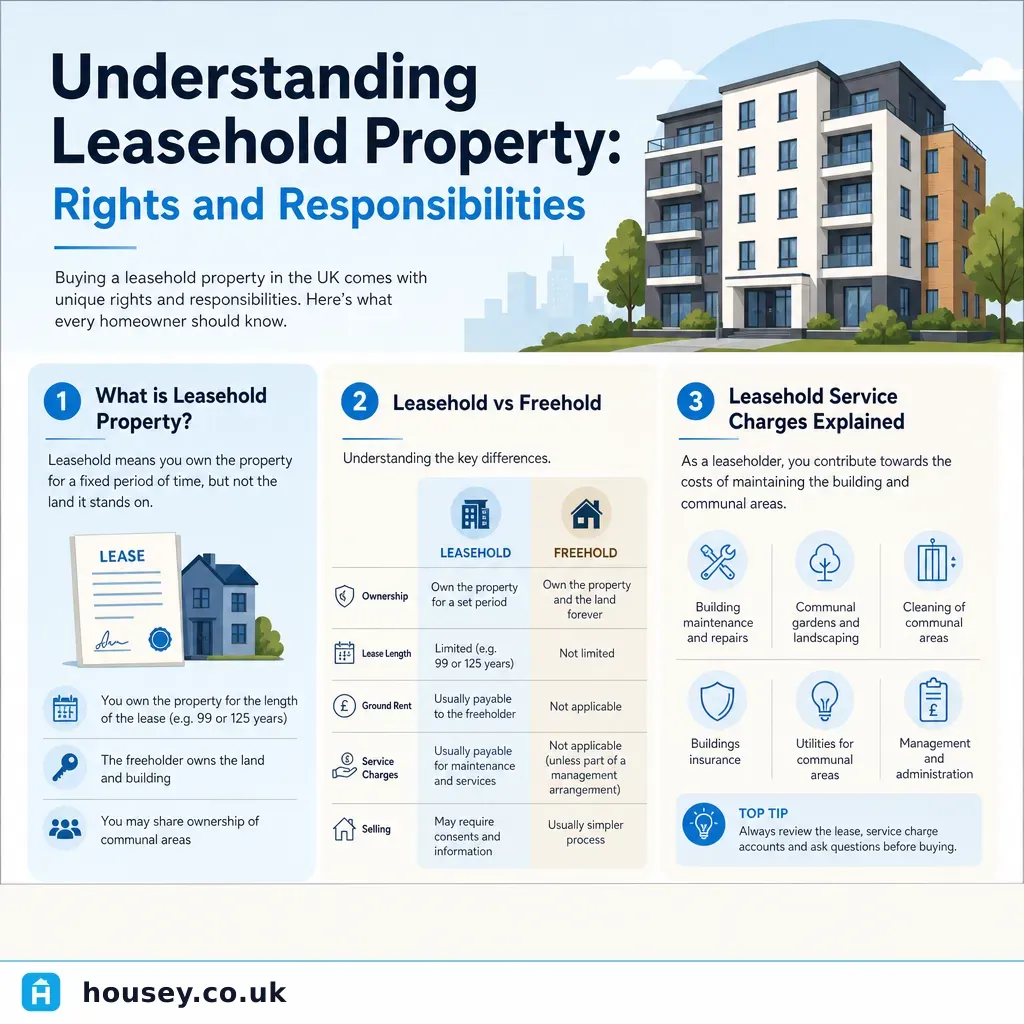
Understanding Leasehold Property: Rights and Responsibilities
Leasehold means you own a time-limited interest in a property while the freeholder owns the land and building.
 Buying & Moving
Navigating Simultaneous Purchase and Sale of Property
When buying and selling simultaneously in England and Wales, both sets of contracts are exchanged on the same day — this is called simultaneous exchange.
 Buying & Moving
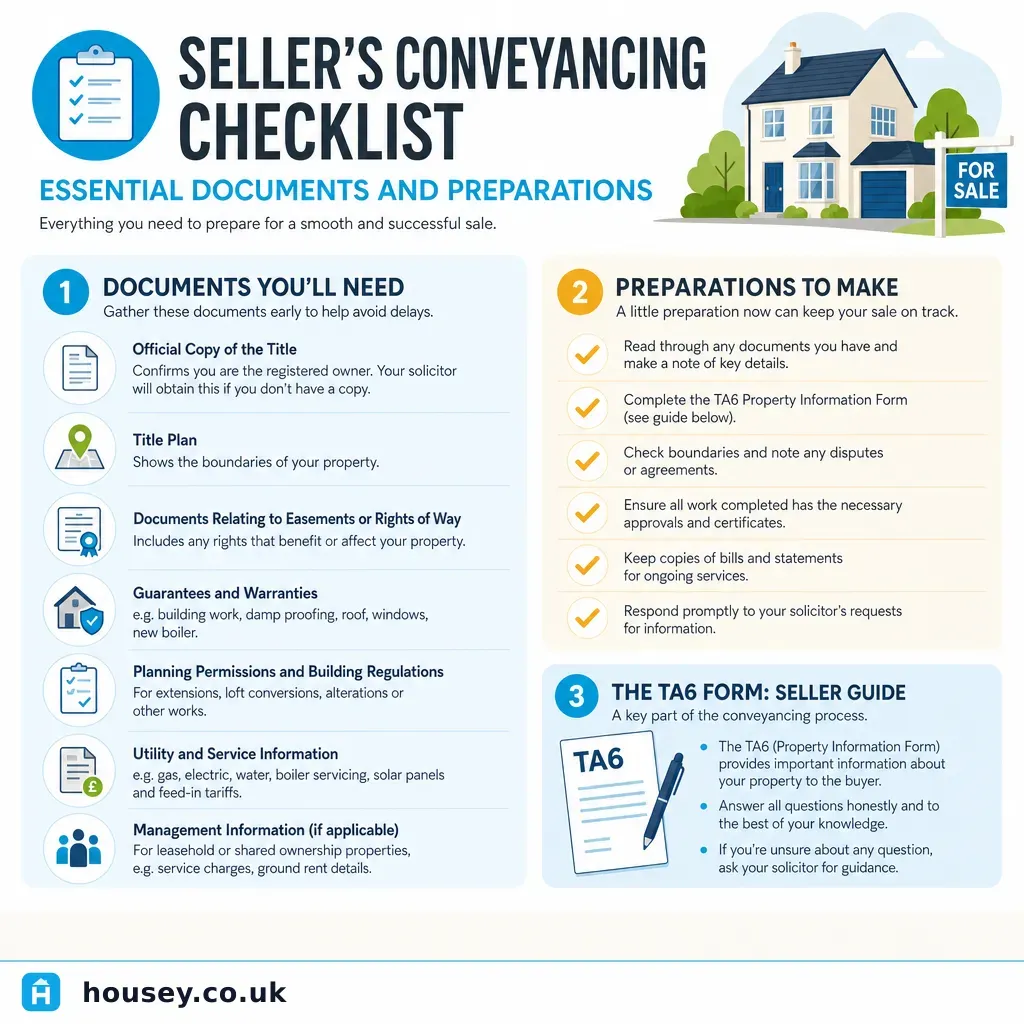
Seller's Conveyancing Checklist: Essential Documents and Preparations
Sellers need to gather title documents, completed Law Society forms (TA6 and TA10), building regulations certificates, planning permissions, and — for leasehold properties — a management information pack before or shortly after accepting an offer.
 Buying & Moving
Right to Buy: Costs, Discounts, and the Path to Home Ownership
Right to Buy lets eligible council tenants in England buy their home at a government-funded discount — between 35% and 70% of its value, depending on tenancy length and property type.
 Buying & Moving
Essential Steps to Selling Your Home Successfully
Selling your home successfully in the UK involves obtaining a valid EPC, choosing an estate agent or alternative method, instructing a solicitor or conveyancer early, and completing the Seller's Property Information Form accurately.