Buying guide: choosing the best air source heat pump for your home
By Housey · Last reviewed 11th of May 2026
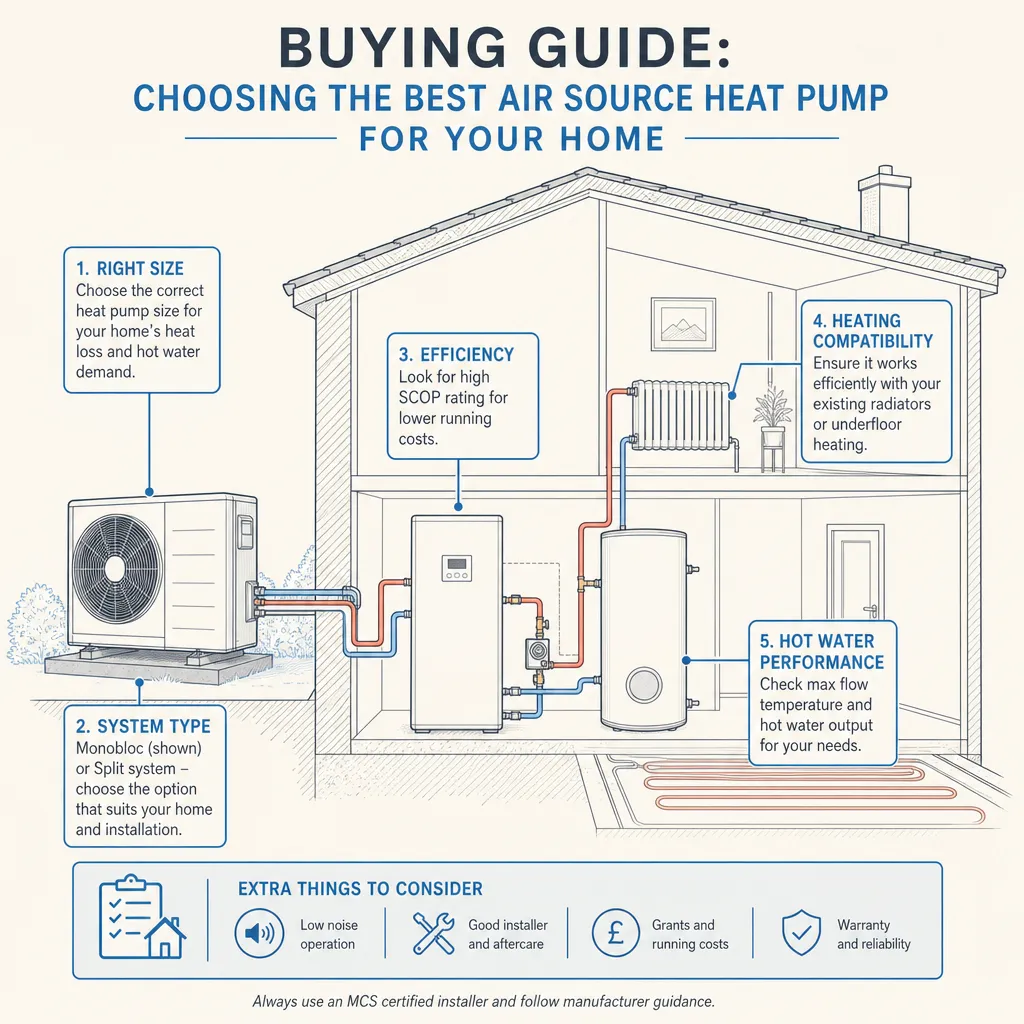
Buying guide: choosing the best air source heat pump for your home
Air source heat pumps (ASHPs) have moved from niche technology to a mainstream retrofit option as the UK pushes to decarbonise home heating, with Boiler Upgrade Scheme (BUS) grants of £7,500 available as of May 2026. Choosing the wrong system — or having it sized incorrectly — can leave you with high running costs, inadequate heat, or a unit that never approaches its rated efficiency. Understanding what drives the right choice before you invite quotes will save money and help you avoid costly corrections later.
Key points
- An ASHP must be sized using a BS EN 12831 heat loss calculation — not a rule of thumb based on floor area — for MCS certification and Boiler Upgrade Scheme eligibility.
- The Boiler Upgrade Scheme (BUS) grant of £7,500 (as of May 2026) requires installation by an MCS-accredited contractor; non-MCS installations are ineligible for the grant.
- Seasonal Coefficient of Performance (SCOP) is the relevant efficiency metric for UK conditions; a higher SCOP means lower running costs per unit of heat delivered.
- Flow temperature compatibility is critical: if existing radiators require flow temperatures above 55°C, upgrades to larger radiators or underfloor heating may be needed before or alongside installation.
- Permitted development rights under Schedule 2, Part 14 of the GPDO 2015 allow most domestic ASHP installations in England without planning permission, subject to conditions.
What is an air source heat pump and how does it work?
An ASHP extracts heat from outdoor air and transfers it indoors via a refrigerant cycle — similar to a refrigerator working in reverse. Most models operate down to around −20°C ambient temperature, though efficiency (expressed as Coefficient of Performance, or COP) falls as outdoor temperatures drop.
There are two main types relevant to UK homes:
Air-to-water heat pumps heat water circulated through radiators or underfloor heating and supply domestic hot water to a cylinder. This is by far the most common type for UK domestic retrofit and the only type eligible for the Boiler Upgrade Scheme.
Air-to-air heat pumps produce warm air for space heating only, with no hot water output. These are less common in UK retrofit projects.
For most homeowners replacing a gas boiler, an air-to-water ASHP is the relevant product category.
Monobloc vs split systems: which configuration suits your home?
Feature | Monobloc | Split system |
|---|---|---|
Refrigerant pipework | Outdoors only — water pipes connect indoor and outdoor units | Refrigerant lines run inside the building |
F-Gas certification required | No | Yes (refrigerant handling) |
Cold-weather pipe risk | Water pipes need frost protection | Less vulnerable to pipe freezing |
Installation complexity | Lower | Higher — F-Gas engineer required |
Best for | Most UK domestic installs | Situations where long external pipe runs are impractical |
For most UK homes, monobloc systems are the standard choice: they avoid F-Gas requirements, are simpler to install, and perform well in the UK climate.
How is an ASHP correctly sized?
Correct sizing is the most important step in system selection. Oversizing causes short-cycling — the pump switches on and off frequently — which reduces efficiency and increases wear. Undersizing means the system cannot maintain comfortable temperatures on the coldest days.
Correct sizing requires a BS EN 12831 room-by-room heat loss calculation, which accounts for:
- Floor area and ceiling height per room
- Wall, roof, and floor U-values (insulation levels)
- Window and door areas and specification
- Air permeability of the building envelope
- Design outdoor temperature for your location
- Target indoor temperature (typically 21°C)
The resulting figure (in kW) sets the minimum output required at the design outdoor temperature. MCS certification requires this calculation to be documented by the installer.
Indicative heat loss ranges by property type
Property type | Heat loss (poorly insulated) | Heat loss (well insulated) |
|---|---|---|
1930s 3-bed semi | 10–14 kW | 6–9 kW |
Victorian 3-bed terrace | 12–18 kW | 7–11 kW |
1990s 4-bed detached | 10–16 kW | 6–10 kW |
Modern new-build flat | 2–5 kW | 2–4 kW |
Indicative figures only — your installer must carry out a full BS EN 12831 calculation for your specific property.
Improving insulation before or alongside heat pump installation reduces the required output, lowers equipment cost, and improves year-round running efficiency.
What affects real-world efficiency?
SCOP (Seasonal Coefficient of Performance) is the headline efficiency metric for UK conditions. A SCOP of 3.0 means the system delivers 3 kWh of heat per 1 kWh of electricity consumed.
Factors that raise SCOP:
- Lower flow temperatures (35–45°C systems are significantly more efficient than those running at 55°C+)
- Underfloor heating (operates at lower flow temperatures than most radiators)
- Good insulation (fewer run hours, less cycling)
- Correct sizing (avoids short-cycling)
- A time-of-use electricity tariff designed for heat pump users
Factors that reduce SCOP:
- Oversized or undersized equipment
- Old or small radiators requiring high flow temperatures
- Frequent domestic hot water demand (60°C legionella cycles reduce seasonal efficiency)
- Poorly insulated pipework or cylinder
Which brands and products should you consider?
The UK market includes a range of established manufacturers with MCS-certified products. Well-regarded brands include Vaillant (aroTHERM plus), Daikin (Altherma), Mitsubishi Electric (Ecodan), Samsung (EHS), and Panasonic (Aquarea). Discuss options with your MCS installer: the right product depends on your heat loss figure, available outdoor space, noise sensitivity (check the sound power level in dB(A) in product specifications), and compatibility with your planned controls and hot water cylinder.
Important limitations
This guide provides general information about air source heat pump selection and is not a substitute for a professional assessment of your specific property. Heat pump sizing, system design, flow temperature compatibility, and interactions with other retrofit measures — particularly moisture and ventilation risks when combined with insulation upgrades — must be assessed by a qualified professional.
The Boiler Upgrade Scheme grant level, eligibility criteria, and MCS standards may be updated. Always verify current requirements with an MCS-accredited installer or directly at mcscertified.com and GOV.UK BUS guidance.
What to ask a qualified professional
Before instructing an MCS-accredited installer, ask:
- Will you carry out a BS EN 12831 room-by-room heat loss calculation, and can I see the outputs before system selection?
- What flow temperature does your proposed design target, and are my existing radiators compatible?
- Will I need to upgrade any radiators, hot water cylinder, or controls?
- What SCOP do you estimate for my property and usage pattern?
- Is my property eligible for the Boiler Upgrade Scheme, and will you submit the voucher application on my behalf?
- What noise level (dB(A)) will the outdoor unit produce, and where do you propose to site it?
- What MCS commissioning documentation will I receive after installation?
- Are you directly MCS-accredited, or registered under a company umbrella scheme? (Verify at mcscertified.com.)
When to get professional help
Involve an MCS-accredited installer before making any purchase decision. Red flags that suggest a quote or installer may not be suitable:
- System size quoted without any mention of a heat loss calculation
- Sizing based on floor area or bedroom count alone
- No discussion of flow temperatures or radiator compatibility
- Unable or unwilling to confirm MCS accreditation
- Boiler Upgrade Scheme grant promised without requesting sight of an Energy Performance Certificate
- Quote excludes cylinder, controls, or electrical upgrades without explanation
How Housey can help
Housey connects homeowners with MCS-accredited installers who carry out heat pump surveys and system design assessments. A heat pump survey establishes your heat loss figure, assesses radiator compatibility, and provides a system specification — giving you the information you need to compare quotes with confidence.
Frequently asked questions
Do I need planning permission for an air source heat pump?
In most cases in England, ASHPs qualify as permitted development under Schedule 2, Part 14 of the GPDO 2015, provided conditions are met — single unit, not on a wall or roof facing a highway, not in a conservation area without prior approval. Scotland, Wales, and Northern Ireland have separate rules. Check with your local planning authority if the property is listed or in a conservation area.
Can an air source heat pump work with my existing radiators?
Many existing radiators can work with a heat pump if the system is designed for lower flow temperatures (45–55°C). Older or smaller radiators may need upsizing. A BS EN 12831 heat loss calculation identifies which rooms need larger emitters. Underfloor heating is highly compatible with heat pumps and is ideal where a significant renovation is already planned.
What is the Boiler Upgrade Scheme and am I eligible?
The Boiler Upgrade Scheme (BUS) provides a £7,500 grant toward an air source heat pump installation (as of May 2026). Eligibility requires an existing property, a valid EPC with no outstanding loft or cavity wall insulation recommendations, and installation by an MCS-accredited contractor who applies on your behalf. Check GOV.UK for current terms and any updates.
How long does an air source heat pump last?
Most manufacturers offer warranties of 5–10 years, with expected operational lifespans of 15–20 years with annual servicing by a qualified engineer. Regular maintenance sustains performance, efficiency, and warranty validity. Some manufacturers offer extended warranty schemes through registered installers.
Sources and further reading
- Boiler Upgrade Scheme — GOV.UK
- MCS Standards and Tools — MCS Certified
- Heat pumps — planning and permitted development — Planning Portal
- Air source heat pumps consumer guide — Energy Saving Trust
- CIBSE heat pump guidance — Chartered Institution of Building Services Engineers
Useful next reads
 Energy & Retrofit
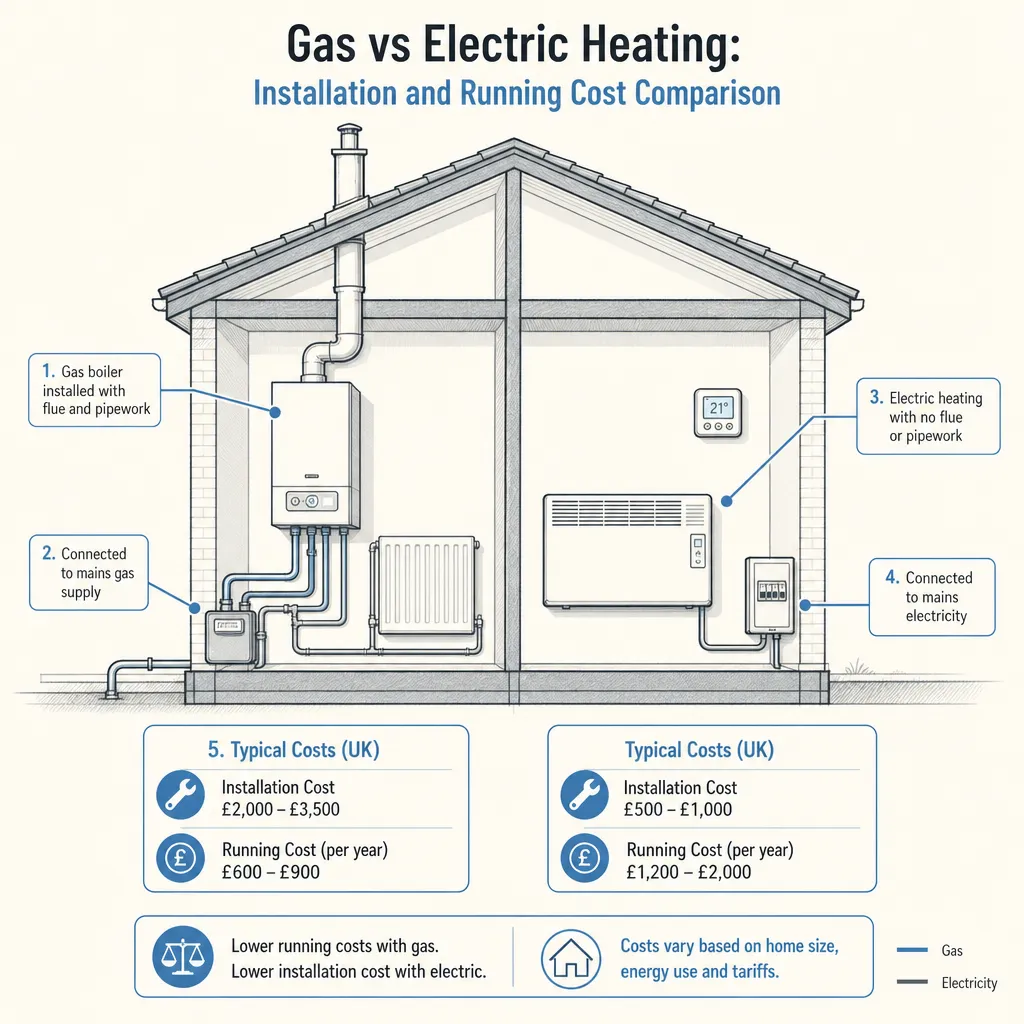
Gas vs Electric Heating: Installation and Running Cost Comparison
Gas central heating usually has lower running costs per kWh than direct electric heating in the UK, though heat pumps can change that equation.
 Energy & Retrofit
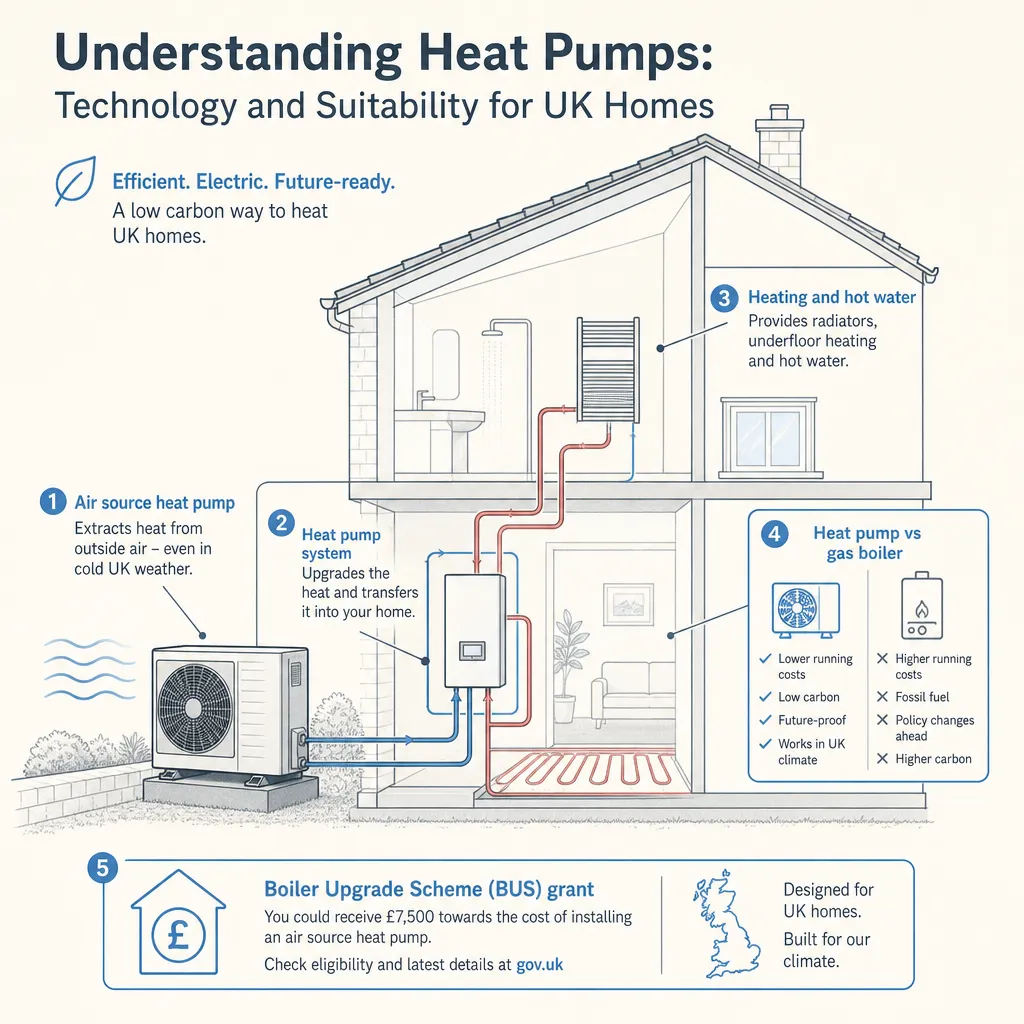
Understanding Heat Pumps: Technology and Suitability for UK Homes
Heat pumps extract heat from the air or ground and transfer it indoors, typically achieving efficiencies of 250–400% compared to a conventional boiler's near 100%.
 Energy & Retrofit
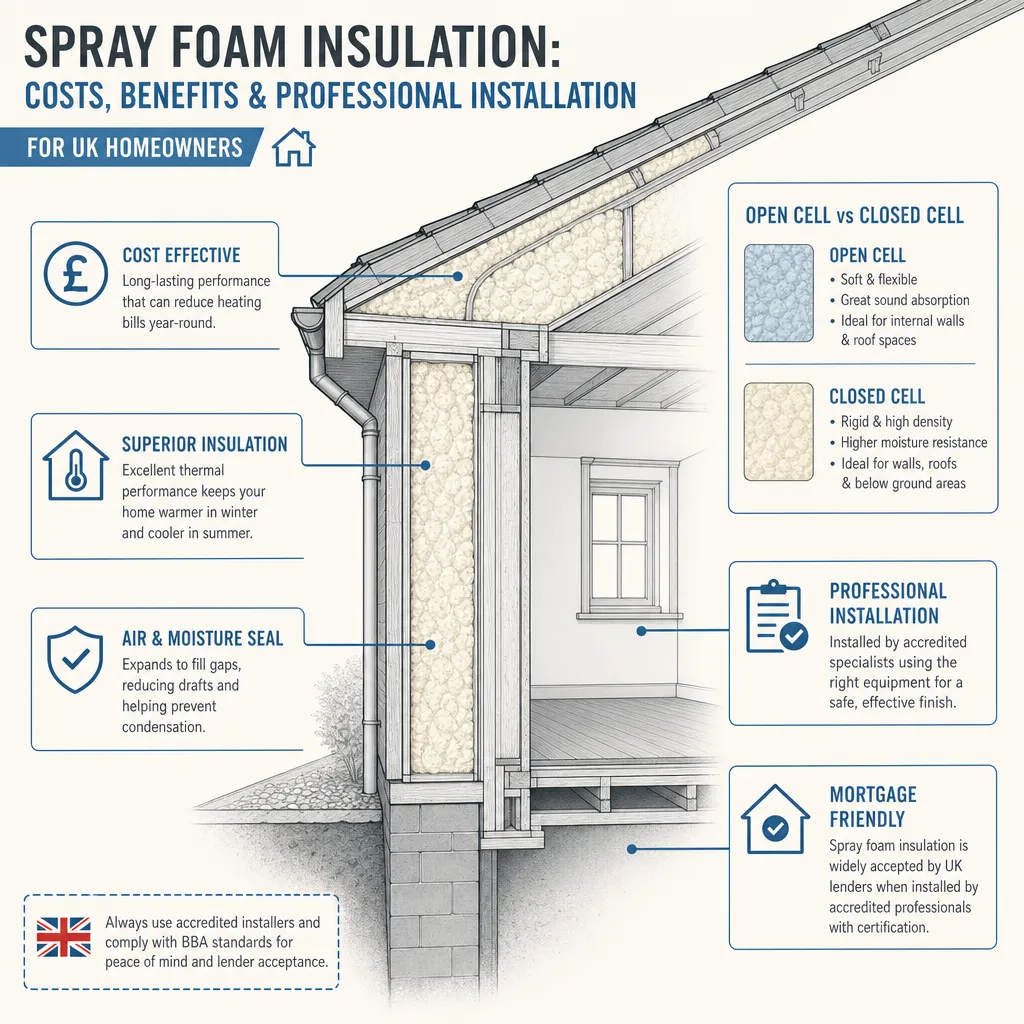
Spray foam insulation: costs, benefits and professional installation
Spray foam insulation costs between £15 and £60 per square metre installed in the UK, depending on whether open-cell or closed-cell foam is used.
 Energy & Retrofit
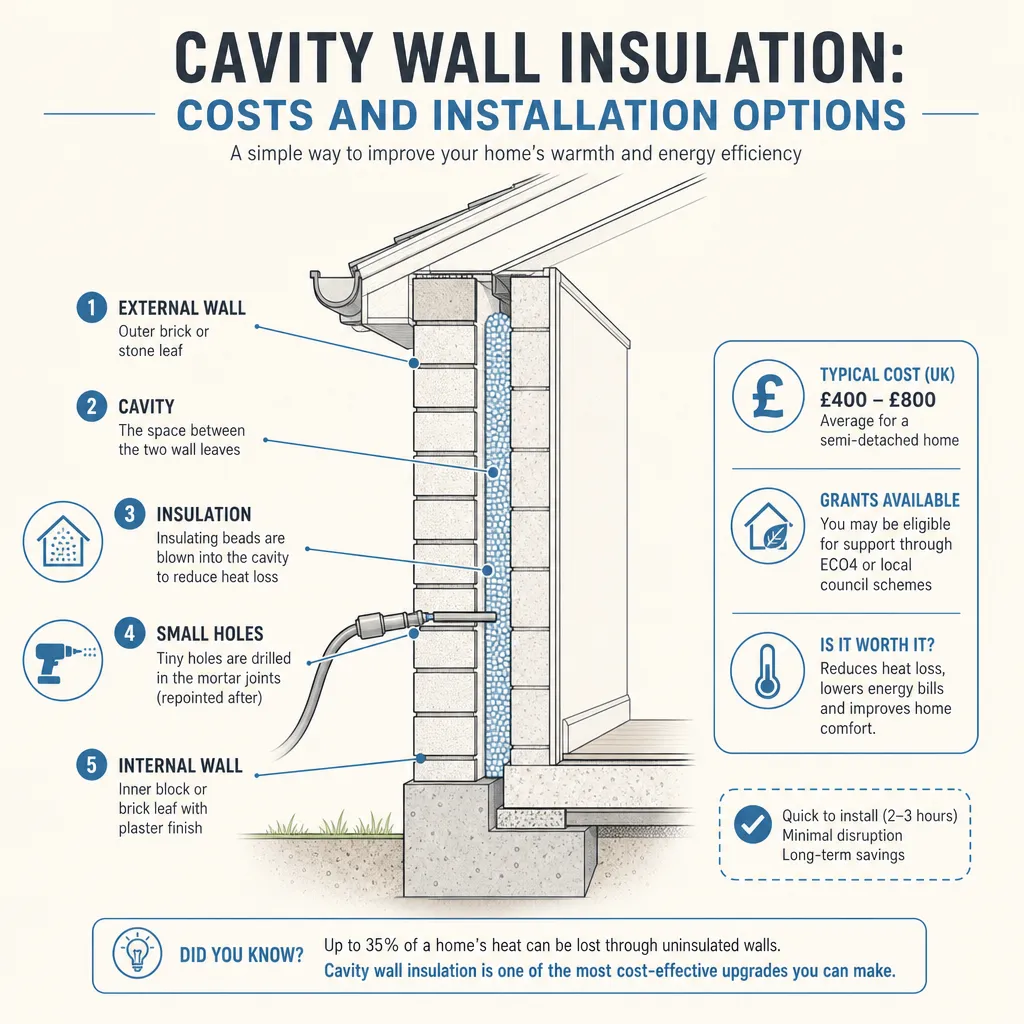
Cavity Wall Insulation: Costs and Installation Options
Cavity wall insulation typically costs £400–£1,200 for a standard UK semi-detached home, though eligible households may pay nothing under ECO4.
 Energy & Retrofit
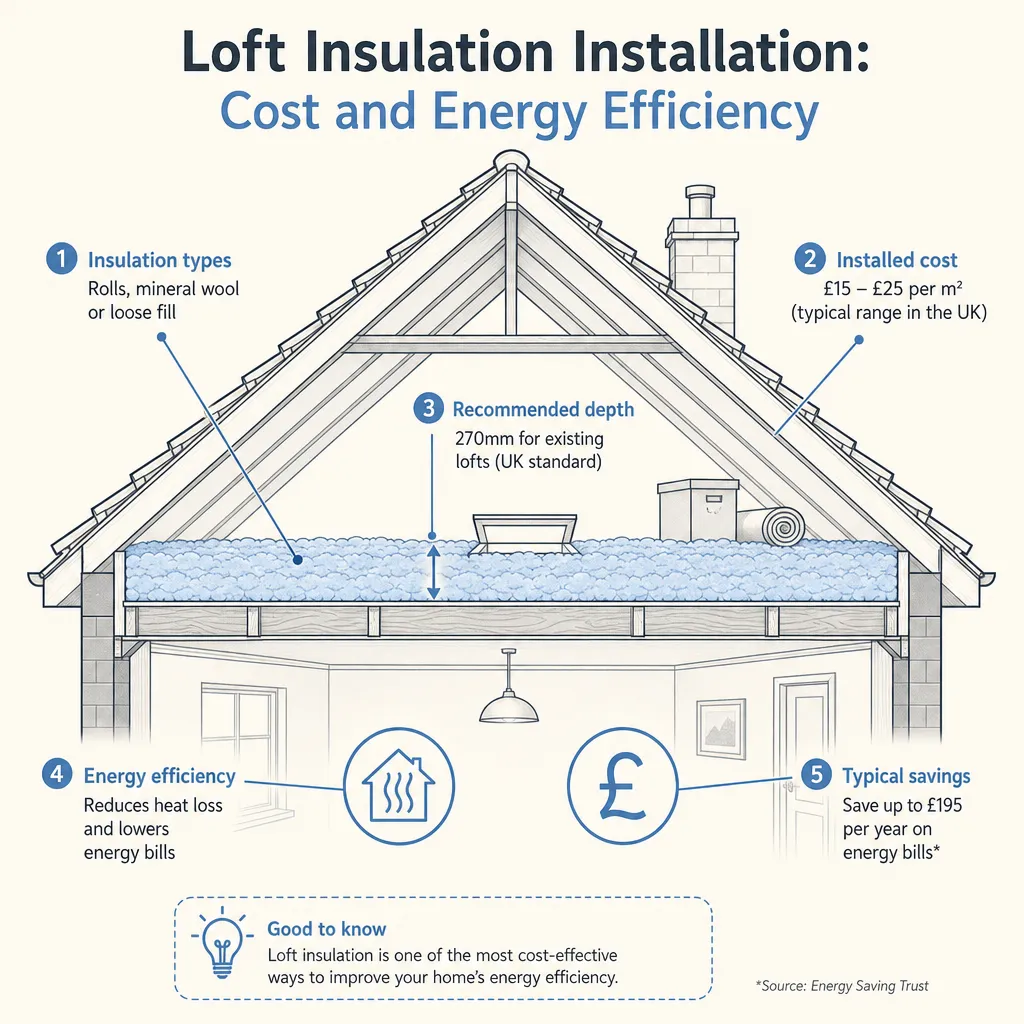
Loft Insulation Installation: Cost and Energy Efficiency
Loft insulation typically costs £300–£700 installed for a standard three-bedroom semi-detached using mineral wool.